GG3M Strategic AI Business Plan (Full Version) (Continued) Part III

GG3M Strategic AI Business Plan (Full Version) (Continued) Part III
Chapter 12: Risk & Mitigation
12.1 Core Principles (In Plain Language)
For any project that "defines a new level", the biggest risk is never competition, but rather — whether the world needs it, and whether you can make the world understand it.
For innovative "rule-layer AI" projects like GG3M, competitive risk is not the primary threat — the follow-up by large tech companies and imitation by similar startups are essentially "pursuit after recognizing the track". The real factors that determine the project's life or death are two core questions: First, does the market truly have a real demand for "rule-layer AI", rather than the "false demand" we perceive ourselves? Second, can we use a simple and perceptible way to make users, investors, and partners understand the value of "rule-layer AI", breaking the barrier between "technological self-indulgence" and "market perception"? This is also the core logic of this chapter: do not avoid risks, do not downplay problems, take the initiative to put all potential hidden dangers on the table, and at the same time provide specific, executable, and verifiable solutions, so that investors can see our clear understanding and control of the project.
12.2 Level 1 Risk: Cognitive Risk (Highest Level)
12.2.1 Risk Description
There is a cognitive barrier in the market's understanding of GG3M's core value, which is specifically reflected in three core confusions, directly affecting product promotion, user conversion, and investor confidence:
What is "rule-layer AI": Users and investors are generally familiar with "generative AI" (such as ChatGPT, Midjourney), but have no clear understanding of the definition, boundaries, and core capabilities of "rule-layer AI". They tend to confuse it with ordinary AI tools and cannot understand its core difference of "surpassing generation and focusing on rule decomposition and reverse breakthrough".
Why is "reverse capability" needed: Most users are accustomed to the AI model of "positively generating content and providing answers", and have a weak perception of the need for "reverse decomposition of rules, discovery of loopholes, and excavation of hidden opportunities". They may even question the "practical value of this capability", thinking that "positive output is sufficient".
What is the use of KICS: As the core indicator we defined, the connotation, measurement standards, and application scenarios of KICS are not yet familiar to the market. Users cannot bind it to their own business pain points, leading to a disconnect between "technical indicators" and "user value", making it difficult to form a cognitive memory point.
👉 Real Questions (User's Inner Thoughts):
Users may think:
"This is very powerful, but I don't know when to use it"
"It sounds very high-end, but what specific problems can I solve with it?"
"Compared with the AI tools I use now, where is its irreplaceability?"
12.2.2 Risk Nature
Product Value ≠ User Perceived Value
GG3M's core value is to "restructure the value dimension of AI", upgrading from "generating content" to "decomposing rules and assisting decision-making", which has strong innovation and forward-looking. However, if this "product value" cannot be converted into "user perceived value", it will fall into the dilemma of "advanced technology but no market acceptance". Essentially, this is a manifestation of the "innovation gap" — our product is one step ahead of market cognition, but we have not yet found an effective bridge to translate technical value into scenario value that users can understand, resonate with, and implement. Ultimately, this leads to users being unwilling to try and investors being afraid to bet.
12.2.3 Mitigation Strategies (Must be Implemented, Implementable and Verifiable)
1️⃣ Dimensionality Reduction Expression: Reconstruct cognition with "plain language" and abandon the stacking of technical terms
Completely abandon professional terms such as "rule-layer AI" and "reverse decomposition algorithm", and convert complex theories into simple and resonant expressions that users can understand, directly hitting user pain points and allowing users to quickly grasp the core value:
Simplify "rule-layer AI" to "AI that can find problem loopholes and excavate hidden opportunities", rather than "innovative technology that restructures the value level of AI";
Simplify "reverse capability" to "it can find opportunities that others cannot see; it can warn of risks that others have not discovered";
Simplify "KICS" to "the core standard for measuring the reliability of AI decisions", analogous to "mobile phone benchmark scores and car fuel consumption", making abstract indicators concrete.
All external publicity, product introductions, and Demo demonstrations shall take "dimensionality reduction expression" as the core, avoid technological self-indulgence, and ensure that every sentence can be understood by users and investors without a technical background.
2️⃣ Strong Comparison Mechanism: Highlight value through "differences" and let users intuitively perceive advantages
Users have strong cognitive inertia. Simply explaining "what we are" is far less impactful than "where we are different from others". Therefore, all product outputs and case displays must include a "comparison module", using intuitive differences to let users perceive GG3M's irreplaceability. The specific forms are as follows:
Ordinary AI Conclusions vs. GG3M Conclusions
Example 1 (Entrepreneurial Decision Scenario):
Ordinary AI Conclusion: It is recommended that you engage in cross-border e-commerce, as the current market demand is strong.
GG3M Conclusion: The current demand for cross-border e-commerce is strong, but the core rule loophole lies in the "hidden increase in logistics costs". It is recommended to prioritize the layout of niche markets in Southeast Asia (to avoid the red sea), and at the same time establish a logistics cost early warning mechanism (to avoid hidden risks).
Example 2 (Investment Judgment Scenario):
Ordinary AI Conclusion: The valuation of a new energy project is reasonable, and investment can be considered.
GG3M Conclusion: The valuation of a new energy project is reasonable, but the core rule flaw is that "core technology relies on a single supplier". The short-term returns are stable, but there is a long-term risk of supply chain disruption. It is recommended to invest in installments + bind alternative suppliers.
Through the comparison between "the 'surface answer' of ordinary AI" and "the 'in-depth rule answer' of GG3M", users can clearly see the core value of "finding loopholes and excavating opportunities", breaking the confusion of "not knowing when to use it".
3️⃣ Scenario Binding: Do not be greedy or generalized, focus on 3 high-value core scenarios
The key to establishing cognition is "focus". If the scenarios are too scattered, users will fall into the cognitive misunderstanding of "being able to do everything but not being good at anything". Therefore, we will completely abandon the idea of "full-scenario coverage" and only focus on 3 high-value, high-demand core scenarios that can quickly verify value, realizing "scenario-bound cognition", so that users can associate GG3M with these scenarios as soon as they think of them:
Entrepreneurial Decision: For startups and entrepreneurs, solve the pain points of "direction confusion, invisible risks, and missed opportunities", and provide decision support for "rule decomposition + risk early warning + opportunity excavation";
Investment Judgment: For investors and investment institutions, solve the pain points of "incomplete identification of project risks and inaccurate judgment of core value", and provide professional support for "underlying rule analysis + valuation logic decomposition + risk classification";
Strategic Analysis: For enterprise management and strategic departments, solve the pain points of "unclear industry rules and inability to understand competitors' cards", and provide core services for "industry rule decomposition + competitor reverse analysis + strategic path planning".
Each scenario is accompanied by specific cases and quantifiable value data to avoid "vague scenarios", allowing users to quickly correspond to their own needs and establish the cognition that "GG3M = a decision-making artifact in a certain scenario".
12.3 Level 2 Risk: Product Risk (Very High)
12.3.1 Risk Description
As an innovative product, GG3M currently has a core product pain point — insufficient output stability, showing a "polarized" state:
Sometimes "very amazing": In some scenarios and needs, it can accurately decompose rules, excavate hidden risks/opportunities, and the output conclusions are far superior to ordinary AI, even exceeding user expectations, gaining high recognition from users;
Sometimes "useless": In some complex scenarios and vague needs, the output conclusions are too general, lack pertinence, and even appear "irrelevant answers" and "logical contradictions", which cannot solve users' actual problems, leading to declining user experience and trust.
This instability directly affects user retention and paid conversion, and at the same time makes investors question the maturity and scalability of the product — if the product cannot stably output value, even if the cognition is in place, it cannot form a business closed loop.
12.3.2 Risk Nature
Rule-layer capabilities have not yet been engineered
GG3M's core advantage lies in the algorithm logic of "rule-layer decomposition and reverse breakthrough". At present, this logic has been verified through technology and is feasible. However, the core problem is that this "rule-layer capability" has not yet been standardized and engineered — there is a lack of perfect verification mechanisms, output specifications, and exception handling processes. As a result, the algorithm is prone to deviations when facing complex scenarios and vague needs, and cannot stably reproduce "high-quality output". Simply put, we have mastered the "core technology", but have not yet established an engineering system to "stably output technical value", which is the core shortcoming of the product at this stage.
12.3.3 Mitigation Strategies (Implementable, Quantifiable, and Clear Execution Path)
1️⃣ AHC (Anti-Hallucination Mechanism): Mandatory Verification to Eliminate "Invalid Output"
To address the problems of unstable output and "hallucinations" (logical contradictions, irrelevant answers), build an exclusive AHC anti-hallucination mechanism to fundamentally reduce randomness and improve output accuracy. The specific implementation plan is as follows:
Mandatory Rule Verification: After each output, the system automatically triggers a "rule verification process", comparing the output conclusions with the underlying rules and historical data of the scenario. If there are logical contradictions or deviations from the rules, it is automatically rejected and re-calculated until a conclusion that conforms to the rules is output;
Abnormal Scenario Interception: For vague needs and complex scenarios (such as scenarios with cross rules and missing data), the system automatically identifies and marks them as "high-risk scenarios", triggers manual auxiliary verification, and a professional team intervenes to optimize the output to avoid invalid output from reaching users;
Iterative Optimization Mechanism: Establish an "output feedback database", classify and sort out "invalid outputs" fed back by users, iterate the algorithm verification rules every week, continuously improve the system's ability to handle complex scenarios and vague needs, and gradually reduce the proportion of manual intervention.
2️⃣ Structured Output: Unify Standards to Make Output "Logical and Implementable"
Another core reason for unstable output is the lack of unified output specifications, leading to chaotic output forms and unclear priorities in different scenarios and needs. Therefore, we will formulate strict structured output standards. All scenario outputs must include three core modules to ensure that the output is logically clear, targeted, and implementable:
Rule Identification: Clearly decompose the core underlying rules and potential hidden rules of the current scenario, allowing users to clearly know "on what rules the conclusion is based";
Logical Decomposition: Step-by-step decompose the derivation process of the conclusion. From rule analysis to risk/opportunity excavation, and then to decision recommendations, each step has clear logical support to avoid "drawing conclusions out of thin air";
Strategic Path: Provide specific and executable action paths for user needs, clarifying "what to do next, how to do it, and what to pay attention to", avoiding output of "empty suggestions".
Structured output will be used as the core standard of the product, mandatorily implemented in every output, so that users can obtain a "consistent, clear, and implementable" experience regardless of the scenario.
3️⃣ Hierarchical Output: Match Needs to Make Output "Accurately Adapt to User Expectations"
Different users and scenarios have different depths of needs. If the same dimension of conclusions is output uniformly, it will lead to "users with simple needs feeling redundant and users with complex needs feeling insufficiently in-depth". Therefore, we will establish an output hierarchical system, providing three levels of output according to the complexity of user needs and the importance of scenarios, accurately matching user expectations, while reducing system computing pressure and improving output stability:
|
Level |
Meaning |
Applicable Scenarios |
Output Focus |
|---|---|---|---|
|
Level 1 (General Analysis) |
Basic rule analysis to meet daily simple decision-making needs |
Ordinary users, simple scenarios (such as basic entrepreneurial direction judgment, routine investment screening) |
Core rule identification + basic conclusions, concise and clear, quickly solving basic needs |
|
Level 2 (Rule Analysis) |
In-depth rule decomposition to meet medium-complexity decision-making needs |
Enterprise middle management, medium-complexity scenarios (such as entrepreneurial project risk investigation, preliminary due diligence of investment projects) |
Complete rule decomposition + logical derivation + basic action path, balancing depth and conciseness |
|
Level 3 (Reverse Breakthrough) |
Core rule reverse decomposition + hidden opportunity/risk excavation to meet high-complexity decision-making needs |
Enterprise senior management, investors, high-complexity scenarios (such as strategic planning, core investment decisions) |
Full-dimensional rule decomposition + reverse analysis + risk early warning + detailed strategic path, highlighting professionalism and forward-looking |
12.4 Level 3 Risk: Technical Dependence (Structural Risk)
12.4.1 Risk Description
The operation of GG3M's current core algorithm relies on the underlying support of external LLM models (such as OpenAI, Anthropic, etc.), mainly reflected in two aspects: first, the basic computing power for core rule decomposition relies on external models; second, some natural language processing and logical derivation functions need to be realized with the help of external LLM capabilities. This dependence has obvious structural risks:
Cost Risk: Calling external LLMs requires paying high fees. As the number of users and call frequency increase, the cost will continue to rise, compressing profit margins;
Control Risk: If external LLM models adjust charging standards, restrict call permissions, or stop services, it will directly cause GG3M to fail to operate normally and fall into a "shutdown" dilemma;
Differentiation Risk: Over-reliance on external LLMs will weaken our technical barriers, making it difficult to form "irreplaceable" core competitiveness and easily imitated by similar projects.
12.4.2 Risk Nature
You are not the underlying model
Our core advantage lies in the algorithm logic and productization capabilities of "rule-layer decomposition and reverse breakthrough", rather than the R&D capabilities of the underlying large models — this is our positioning and also our shortcoming. Essentially, we are currently in the stage of "borrowing chickens to lay eggs": relying on the computing power and basic capabilities of external underlying models to realize our rule-layer value. However, if this "borrowing" cannot be converted into "independent control", we will fall into a structural risk of "having our lifeline in the hands of others". No matter how excellent the product is, it cannot achieve long-term stable development.
12.4.3 Mitigation Strategies (Phased Implementation to Gradually Achieve Independent Control)
1️⃣ Multi-Model Architecture: Diversify Dependence to Reduce Single Model Risk
In the short term, we will build a "multi-model parallel" architecture, connect multiple mainstream external LLM models (such as OpenAI, Anthropic, domestic Baidu Wenxin Yiyan, Alibaba Tongyi Qianwen, etc.), and realize "mutual backup and dynamic switching". The specific implementation is as follows:
Connect Multiple Models: Select 3-5 externally stable and cost-effective LLM models, complete technical docking, and ensure that each model can support GG3M's core functions;
Dynamic Switching Mechanism: Build a model scheduling system, dynamically switch to the optimal model according to the stability, call cost, and response speed of external models. If a certain model has problems, the system automatically switches to a backup model to ensure uninterrupted service;
Cost Optimization: Match models with different cost-performance ratios for different scenarios (such as low-cost models for simple scenarios and high-performance models for complex scenarios), reduce overall call costs, and alleviate cost pressure.
2️⃣ Build an In-House Rule Engine (Key): Gradually Replace to Grasp Core Control
In the medium and long term, we will focus on investing resources to build an exclusive in-house Rule Engine, gradually replacing the core functions of external LLMs, and achieving "independent control of core capabilities". The specific path is as follows:
LLM → Rule Engine + LLM (Transition Period) → Rule Engine (Final Goal)
Transition Period (1-2 Years):
- Build an in-house Rule Engine to undertake core rule decomposition and logical derivation functions, and external LLMs are only used as auxiliary (such as natural language interaction, basic computing power supplement);
- Gradually reduce the call frequency of external LLMs, precipitate core technical logic into the in-house Rule Engine, and form exclusive technical barriers.
Final Goal (2-3 Years):
- The in-house Rule Engine completely replaces the core functions of external LLMs, realizing "independent operation without relying on external models";
- The Rule Engine is optimized for GG3M's scenario needs, forming exclusive advantages in "rule decomposition + reverse breakthrough", differentiating from external general LLMs, and improving core competitiveness.
At present, we have launched the R&D work of the Rule Engine. The core team has completed the demand decomposition and technical scheme design. It is expected to complete the preliminary version within 6 months and achieve the transition period goal within 12 months.
3️⃣ Long-Term Path: From "Model Caller" to "Rule-Layer Controller"
Our long-term goal is not to become "another LLM model R&D company", but to become a "controller of rule-layer AI" — focusing on the niche track of "rule decomposition, reverse breakthrough, and decision support", building the in-house Rule Engine into a leading rule-layer core component in the industry, which not only supports our own products but also can be opened to the industry in the future, becoming "rule-layer AI infrastructure". Through this positioning, we can completely get rid of the dependence on external underlying models, form "irreplaceable" core competitiveness, and open up new profit growth points (such as Rule Engine authorization, technical services, etc.).
12.5 Level 4 Risk: Competitive Risk (Seemingly Large, Actually Controllable)
12.5.1 Risk Description
With the gradual emergence of the potential of the "rule-layer AI" track, we may face competitive pressure from two directions, which seems threatening:
Competition from Large Tech Companies: Large tech companies such as Google DeepMind, OpenAI, domestic Baidu, and Alibaba have strong advantages in capital, technology, and talents. If they realize the market potential of "rule-layer AI", they may quickly invest resources to copy our model, and seize market share by virtue of brand advantages and resource advantages;
Competition from Similar Startups: Some startups may follow the trend to enter the track, imitate our product logic and business model, and divert our users and investor attention through low prices, differentiated publicity, and other methods.
12.5.2 Risk Nature
Once understood, it will be copied
GG3M's core innovation lies in the positioning of "rule-layer AI" and the algorithm logic of "reverse decomposition". This innovation itself does not have an "uncopyable" technical barrier — as long as the track is verified to be feasible, large companies and similar companies can completely copy our product logic with their technical strength. Therefore, the essence of competitive risk is not "technology being surpassed", but "cognitive advantage being seized and industry standards being dominated" — if we cannot quickly occupy the cognitive mind of users and the market, and cannot dominate industry standards, we will be surpassed by latecomers and fall into the "innovator's trap".
12.5.3 Mitigation Strategies (Quickly Establish Barriers to Make Competition Controllable)
1️⃣ First-Mover Cognitive Advantage: Quickly Seize Mindshare to Achieve "Cognitive Monopoly"
Use the "first-mover advantage" to quickly seize market cognition, make the cognition of "rule-layer AI = GG3M" deeply rooted in the hearts of the people, and become the pronoun of "rule-layer AI" in the minds of users and investors. The specific implementation is as follows:
Strengthen Brand Binding: In all external publicity, product promotion, and industry exchanges, strengthen the positioning of "GG3M = the pioneer of rule-layer AI", avoid vague expressions, and let users form a clear cognitive memory;
Quickly Output Cases: In the 3 focused core scenarios, quickly land benchmark customer cases, and strengthen the "leading position of GG3M in the field of rule-layer AI" through case endorsement, allowing investors and users to see our actual value;
Industry Voice: Actively participate in AI industry summits and investor exchange meetings, output industry views and research results on "rule-layer AI", establish industry discourse power, and make the market recognize "GG3M as the definer of rule-layer AI".
2️⃣ Standard Locking (Core): Promote KICS to Become an Industry Indicator and Grasp Industry Leadership
The core support of cognitive advantage is "industry standards" — if we can promote KICS (the core indicator of rule-layer AI we defined) to become a universal industry indicator, we can fundamentally lock in competitive advantages, allowing latecomers to only "follow our standards" and unable to surpass. The specific implementation is as follows:
Improve the KICS Indicator System: Further optimize the measurement standards and calculation methods of KICS to make it more scientific, more in line with industry needs, and promotable;
Cooperate with Industry Partners: Cooperate with industry associations, research institutions, and benchmark enterprises to promote KICS to become a universal measurement indicator in the field of "rule-layer AI", so that all similar products in the industry use KICS as the core evaluation standard;
Product Binding: Deeply integrate KICS into GG3M's product output, allowing users and investors to form the cognition that "high KICS score = strong rule-layer AI capability", thereby locking our leading position.
3️⃣ API Embedding Ecosystem: Make Others Depend on You, Not Replace You
Avoid "direct competition", open GG3M's core capabilities to other enterprises and products through API embedding, integrate into the industry ecosystem, realize "symbiosis and win-win", and turn competitors into "partners". The specific implementation is as follows:
Open API Interfaces: Open GG3M's rule decomposition and reverse analysis capabilities in the form of API interfaces for startups and enterprise customers to access their own products to meet their rule-layer AI needs;
Ecosystem Binding: Cooperate with leading enterprises in vertical fields to embed GG3M's capabilities into their existing product systems (such as investment management systems, entrepreneurial service platforms) as core components to achieve "irreplacement";
Diversified Profit: Open up new profit growth points through API authorization fees, and expand market coverage at the same time, allowing more users to access GG3M's capabilities and further strengthen cognitive advantages.
12.6 Level 5 Risk: Commercial Risk (Most Realistic)
12.6.1 Risk Description
Commercial monetization is the core goal of the project and the focus of investors. The current commercial risks faced by GG3M are the most realistic and direct, mainly reflected in two aspects:
Users Unwilling to Pay: Although users recognize the value of GG3M, they are difficult to accept the payment model, especially To C users who are used to free AI tools and have low willingness to pay for "rule-layer AI"; To B users have the problem of "difficulty in quantifying value and unwillingness to bear payment costs";
Low Conversion Rate: Even if some users try to use GG3M, it is difficult to convert from "free trial" to "paid users". The core reasons are "insufficiently profound value perception, high payment threshold, and failure to find accurate payment scenarios".
If the problem of commercial monetization cannot be solved, even if the technology is advanced and the cognition is in place, the project cannot achieve sustainable development and will eventually be eliminated by the market.
12.6.2 Risk Nature
Value is Difficult to Quantify
The core essence of commercial risk is that "the value of GG3M cannot be accurately quantified" — users cannot clearly know "how much specific benefit they can get and how many specific risks they can avoid by using GG3M", so they are unwilling to pay for "vague value". Unlike traditional tool products (such as office software, design tools), the value of GG3M is "assisting decision-making, excavating opportunities, and avoiding risks". This value is indirect and long-term, and it is difficult to measure with specific amounts and data, leading to low user willingness to pay and low conversion rate.
12.6.3 Mitigation Strategies (Focus on "Value Quantification", Reduce Payment Threshold, and Improve Conversion Rate)
1️⃣ ROI Visualization: Let Users Clearly See the "Return on Payment" to Stimulate Payment Willingness
The core is to solve the problem of "difficulty in quantifying value". In all product outputs and paid promotions, "ROI comparison" must be displayed. Use specific data and cases to let users clearly see "the benefits of using GG3M and the risks of not using it". The specific form is as follows:
If GG3M is not used → Risks (Quantifiable)
If GG3M is used → Benefits (Quantifiable)
Example 1 (Entrepreneurial Decision Scenario):
If GG3M is not used: An entrepreneurial project fails after investing 500,000 yuan due to failure to find hidden industry rule loopholes, resulting in a loss of 500,000 yuan + 6 months of time cost;
If GG3M is used: Discover hidden rule loopholes in advance, adjust the entrepreneurial direction, save 500,000 yuan of investment, and seize hidden opportunities. It is expected to achieve 1 million yuan of revenue within 6 months, with an ROI of 200%.
Example 2 (Investment Judgment Scenario):
If GG3M is not used: An investment project fails due to supply chain disruption after investing 10 million yuan because the core risks are not identified, resulting in a loss of 10 million yuan;
If GG3M is used: Identify supply chain risks in advance, adjust the investment strategy, only invest 5 million yuan, and lock in alternative suppliers. It is expected to obtain 3 million yuan of revenue within 12 months, with an ROI of 60%.
By "quantifying risks and quantifying benefits", users can clearly see the actual value of GG3M, break the barrier of "vague value", and stimulate payment willingness.
2️⃣ Freemium Model: Reduce Trial Threshold to Achieve "Free Drainage and Paid Conversion"
To address the problems of "users unwilling to pay and high trial threshold", adopt the "Freemium (Free + Paid)" model, balancing drainage and monetization. The specific plan is as follows:
Free Basic Functions: Open Level 1 (General Analysis) functions for users to try for free, meeting users' basic decision-making needs, reducing the trial threshold, and attracting a large number of users to register and use;
Paid Advanced Capabilities: Level 2 (Rule Analysis) and Level 3 (Reverse Breakthrough) functions adopt a paid model, providing more professional and accurate services for users with in-depth needs (such as investors, enterprise management) and charging service fees;
Conversion Guidance: During the free trial, guide users to experience advanced functions through "pop-up prompts, case pushes, exclusive services", etc., allowing users to perceive the value of advanced functions, thereby converting into paid users.
3️⃣ Enterprise Priority: Focus on High-Value Customers to Quickly Achieve Commercial Closed Loop
In the short term, abandon the idea of "comprehensive coverage" and give priority to focusing on To B enterprise customers (especially investors and strategic departments of large enterprises). Such customers have strong payment capabilities and clear value needs, which can quickly achieve commercial monetization, and at the same time set a benchmark for C-end users. The specific implementation is as follows:
Precise Positioning: Focus on To B customers such as investment institutions, large enterprises, and entrepreneurial service platforms, and launch exclusive service packages (such as annual membership, customized services) for them;
Customized Services: Provide customized rule analysis and decision support services according to the specific needs of enterprise customers to improve customer stickiness and payment willingness;
Benchmark Effect: Through serving benchmark enterprise customers, form case endorsement, gradually penetrate into small and medium-sized enterprises, and drive the paid conversion of C-end users, realizing a virtuous cycle of "To B driving To C".
12.7 Level 6 Risk: Organizational Risk
12.7.1 Risk Description
GG3M's core competitiveness lies in the cognition and algorithm logic of "rule-layer AI", which has strong professionalism and forward-looking. The current organizational risks faced are mainly reflected in:
Team Cannot Understand the Theory: Members outside the core team (such as executors, operators, new employees) find it difficult to understand the core theory, algorithm logic, and product value of "rule-layer AI", leading to deviations in the execution process;
Execution Deviation: Due to inconsistent cognition, the team may have "execution deviations from the core strategy" in links such as product R&D, market promotion, and customer service. For example, overemphasizing "generative functions" during promotion and ignoring the core value of "rule decomposition";
Talent Loss: The core technical team and cognitive team master the core competitiveness of the project. If talent loss occurs, it will directly affect the project's R&D progress, product iteration, and strategic landing.
12.7.2 Nature
Inconsistent Cognition
The core essence of organizational risk is "inconsistent team cognition" — the founder and core team grasp the core cognition and strategic direction of the project, but this cognition has not been transmitted to the entire team, leading to "clear upper-level strategy and vague lower-level execution". As an innovative project, GG3M has high requirements for the team's cognitive ability and execution ability. If "unified cognition of all members" cannot be achieved, problems such as execution deviations, low efficiency, and talent loss will occur, affecting the project's progress and landing effect.
12.7.3 Mitigation Strategies (Achieve Unified Cognition of All Members and Stabilize the Core Team)
1️⃣ Founder Leads the Rule Layer: Firmly Grasp Core Cognition to Eliminate Cognitive Deviations
The core cognition and algorithm logic of rule-layer AI are the "lifeline" of the project, which must be led by the founder personally, and cannot be outsourced or delegated. The specific requirements are as follows:
The founder personally is responsible for the R&D guidance and cognitive transmission of the core algorithm, ensuring that the team's execution direction is consistent with the core strategy;
Hold regular core cognition meetings to convey the value, logic, and strategic direction of "rule-layer AI" to the team, and answer the team's cognitive confusion;
Adjustments to core rules and algorithm logic must be led by the founder to avoid strategic deviations due to cognitive deviations.
👉 Core Principle: The cognition of the rule layer cannot be outsourced, and must be firmly in the hands of the founder to ensure that the core direction of the project does not deviate.
2️⃣ Internal Training System: Build Exclusive Training to Achieve Unified Cognition of All Members
To address the problem of "the team cannot understand the theory", build a complete internal training system to transmit core cognition to every team member. The specific implementation is as follows:
Unified Cognitive Framework: Formulate the "GG3M Core Cognition Manual", clarify the definition, value, algorithm logic, and strategic direction of "rule-layer AI", and require every team member to master it proficiently;
ICS Training: Carry out exclusive ICS (Rule-Layer Cognitive System) training, conducted in phases and by position. Design different training contents for technical positions, operation positions, and market positions to ensure that members of different positions can understand core cognition and apply it to work;
Regular Assessment: Incorporate the mastery of core cognition into the assessment indicators of team members, and conduct regular assessments to ensure training effectiveness and avoid "training being a mere formality".
3️⃣ Small Team with High Density: Avoid Organizational Expansion, Improve Execution Efficiency, and Stabilize the Core Team
The core of an innovative project is "efficient execution and rapid iteration". Organizational expansion will lead to increased communication costs, reduced execution efficiency, and difficulty in cognitive transmission. Therefore, we will adhere to the "small team with high density" organizational model:
Control Team Size: The core team is controlled within 20 people, focusing on core businesses (R&D, marketing, customer service), avoiding redundant positions, and ensuring that every member can participate in core work and understand core cognition;
High-Density Communication: Hold regular full-team meetings and departmental meetings to ensure smooth information transmission, and timely solve cognitive deviations and problems in the execution process;
Core Talent Incentives: Formulate a complete incentive mechanism (such as equity, options, performance bonuses) for core technical and cognitive team members to improve their sense of belonging and loyalty, and reduce the risk of talent loss.
12.8 Level 7 Risk: Strategic Risk (Deepest)
12.8.1 Risk Description
Strategic risk is the deepest and most hidden risk, directly determining the long-term life or death of the project. The strategic risks faced by GG3M are mainly reflected in:
The Market Does Not Need the "Rule Layer": We are betting that "AI will upgrade from the generative layer to the rule layer", but if the future market demand always stays at "generating content and basic interaction" and does not need the ability of "rule decomposition and reverse breakthrough", then the core value of GG3M will no longer exist, and the project will fall into the dilemma of "wrong direction";
AI Stays at the Generative Layer: If the development of AI technology always stays at the generative layer and does not upgrade to the rule layer and decision layer, or the upgrade speed is far beyond our expectations, leading to our technology and products failing to keep up with the industry development and being eliminated by the market;
Strategic Path Deviation: In the process of advancement, if there is a deviation in the strategic path (such as over-focusing on a certain scenario, ignoring technological R&D, or blind expansion), the project may fail to achieve long-term goals or even fail midway.
12.8.2 Nature
You Are Betting on the Future Structure
GG3M's core strategy is essentially a "bet on the future structure of AI development" — we firmly believe that the next stage of AI will upgrade from "generating content" to "decomposing rules and assisting decision-making", and rule-layer AI will become the core demand. However, there is uncertainty about whether this "future structure" will come as scheduled. The essence of strategic risk is that "the future structure is inconsistent with our bet". Once the bet fails, the core value and strategic direction of the entire project will collapse, which is the deepest risk we face.
12.8.3 Mitigation Strategies (Dual-Path Layout, Retractable, Reducing Strategic Risk)
1️⃣ Dual-Path Strategy: Short-Term Landing, Long-Term Layout, Balancing Stability and Forward-Looking
To cope with the risk of "uncertain future structure", we will adopt a "dual-path parallel" strategy, which not only ensures short-term commercial monetization and stable development, but also allows long-term layout of rule-layer AI to grasp industry trends:
Short-Term Path (1-2 Years): Focus on the AI security field, use GG3M's rule decomposition and risk identification capabilities to provide AI security services for enterprises and investment institutions (such as AI-generated content risk verification, AI decision risk early warning), achieve rapid commercial monetization, and ensure project stability;
Long-Term Path (2-3 Years and Beyond): Continue to invest in the R&D of rule-layer AI, focus on the strategic AI field, build "rule-layer AI infrastructure", achieve our core strategic goals, and grasp the next wave of trends in the AI industry.
The core of the dual-path strategy is "not putting all eggs in one basket". Ensure survival through the short-term path, pursue development through the long-term path, and reduce the strategic risk brought by "uncertain future structure".
2️⃣ Retractable: Set a Strategic Retreat to Ensure the Project "Does Not Crash"
We clearly recognize the uncertainty of the strategic bet, so we set a strategic retreat in advance. Even if the "future structure of rule-layer AI" does not come as scheduled, we can rely on existing technologies and resources to achieve "smooth transformation" and avoid project failure:
👉 If the rule layer is not established, we can still transform into:
AI Security Company: Relying on GG3M's rule decomposition and risk identification capabilities, focus on the AI security field, provide AI security solutions for enterprises and governments, and become a benchmark enterprise in the AI security field;
Decision AI Company: Focus on scenarios such as entrepreneurial decision-making and investment judgment, simplify GG3M's capabilities into "decision support tools", abandon the positioning of "rule-layer AI", and focus on "accurate decision support" to achieve commercial monetization.
This "retractable" strategic layout ensures that even if we face strategic risks, we can flexibly adjust the direction, ensure the sustainable development of the project, and give investors sufficient confidence.
12.9 Risk Summary (Investor Version)
Core Summary: All risks faced by GG3M are "controllable risks", with no fatal or unsolvable risks; we have formulated specific, implementable, and verifiable solutions for each risk, and have clear risk response plans, which can effectively avoid and resolve risks and ensure the stable progress of the project. The specific risk classification is as follows:
|
Risk |
Level |
Controllability |
Core Mitigation Core |
|---|---|---|---|
|
Cognitive Risk |
Very High |
Controllable |
Dimensionality reduction expression + strong comparison + scenario binding to quickly establish market cognition |
|
Product Risk |
High |
Controllable |
AHC anti-hallucination mechanism + structured output + hierarchical output to improve product stability |
|
Technical Dependence |
High |
Controllable |
Multi-model architecture + in-house Rule Engine to gradually achieve independent control |
|
Competitive Risk |
Medium |
Controllable |
First-mover cognitive advantage + KICS standard locking + API ecosystem embedding to establish competitive barriers |
|
Commercial Risk |
High |
Controllable |
ROI visualization + Freemium model + enterprise priority to achieve commercial closed loop |
|
Organizational Risk |
Medium |
Controllable |
Founder leadership + internal training + small team model to achieve unified cognition |
|
Strategic Risk |
Very High |
Controllable |
Dual-path strategy + retractable layout to reduce future uncertainty risks |
12.10 Final Conclusion (Must Be Powerful)
The biggest risk of GG3M is not failure, but the speed at which the world understands it.
We do not avoid any risks, nor do we exaggerate any advantages — we clearly know that as a pioneer of "rule-layer AI", GG3M faces various challenges in cognition, products, technology, and commerce, but these challenges are not "fatal", but "growth-oriented". We have prepared specific, implementable, and verifiable solutions for each risk. We have the confidence and ability to gradually resolve all risks and promote GG3M from an "innovative concept" to a "scalable and profitable core product".
We firmly believe that rule-layer AI is the next outlet in the AI industry, and GG3M will become the leader of this outlet — our risk is only "the speed at which the world understands us"; and our opportunity is to become "the person who defines the rules of future AI".
🔥 Core Sentence of This Chapter
We are aware of all risks and have prepared solutions for each one.
📌 Preview of Next Chapter
👉 Chapter 13: Global Strategy (How to Become a "Rule-Layer Infrastructure")
This BP already has:
✔ Innovation (Rule-layer AI, defining a new track)
✔ Logic (From cognition to landing, step by step)
✔ Finance (Clear commercial monetization path, quantifiable)
✔ Risk Control (Full risk coverage, implementable solutions)
Only one step left:
Turn it into an "unignorable future"
Chapter 13: Global Strategy (Global Strategy · Rule-Layer Infrastructure)
This chapter is the one with the highest strategic level. It does not answer the question of "how you make products", but rather:
How do we transform from a company into a "globally indispensable infrastructure"?
Through this chapter, the valuation will be directly "repriced" — it elevates the company's positioning from a "single product provider" to an "industry rule-maker", breaks traditional business boundaries, and enters the high-barrier, high-value infrastructure track. This is also the core logic for which investors are most willing to offer a premium.
13.1 Core Proposition
The ultimate goal of GG3M is not to become an AI company, but to become:
"Rule-Layer Infrastructure"
The core difference here is: ordinary AI companies compete for "technological advantages" and "market share", while GG3M competes for "rule discourse power" — when all AI systems and all business decisions must follow the rules formulated by GG3M and pass GG3M's verification, the company truly achieves the leap from "participant" to "dominator", which is also the core starting point of the global strategy.
13.1.1 What is "Infrastructure"?
The essence of infrastructure is not "powerful functions", but "irreplaceability, wide reliance, and becoming the default choice". It is the underlying support for the operation of the entire industry; without it, the industry ecosystem cannot function normally. Its core characteristics can be broken down into three points:
-
Irreplaceability: There is no directly substitutable solution, with exclusivity or extremely high replacement costs. For example, the power system — no single technology can fully replace the role of the power grid;
-
Widely relied upon: It covers all scenarios and subjects of the industry. Whether individuals, enterprises or institutions, they all need to rely on it to carry out core businesses, forming an "indispensable" dependence;
-
Becoming the default choice: No deliberate promotion is needed; the industry spontaneously forms a consensus and takes it as a standard configuration. For example, the TCP/IP protocol in the Internet era has become the default rule for all network connections.
👉 Analogy (more in line with the AI industry scenario for easy understanding):
-
Electricity: The underlying support for all electronic devices and industrial production. Without electricity, no technological product can operate. It corresponds to GG3M as the "electricity" for AI decision-making, supporting the compliant and credible operation of all AI systems;
-
Operating System: The core hub connecting hardware and software. All applications must be developed based on the operating system. It corresponds to GG3M as the "rule operating system", and all AI applications need to rely on its rule layer to operate;
-
Cloud Computing: The underlying support for enterprises' digital transformation. Enterprises can quickly meet computing power and storage needs without building their own servers. It corresponds to GG3M as the AI rule-layer infrastructure, enabling enterprises to achieve compliance and efficiency of AI decisions without building their own rule systems.
13.1.2 Gap in the AI Era
The current AI industry has formed a clear three-layer architecture, but each layer has obvious positioning limitations, and there is a core gap that directly restricts the large-scale and standardized development of the AI industry. The specific status of each layer is as follows:
|
Layer |
Status |
Supplementary Notes |
|---|---|---|
|
Computing Layer |
Mature |
Centered on GPUs and cloud computing, computing power supply is sufficient. Leading enterprises (such as NVIDIA, AWS) have formed a monopoly, technological iteration has slowed down, and there is no obvious gap; |
|
Model Layer |
Highly Competitive |
OpenAI, Google DeepMind, domestic major factories, etc. have all laid out their layouts. Model parameters and capabilities are constantly breaking through, but homogenization is serious. The focus of competition is on "accuracy" and "speed", and there is no absolute monopolist; |
|
Application Layer |
Highly Dispersed |
Application scenarios are fragmented. From C-end chatbots to B-end enterprise services, various applications emerge one after another, but there is a lack of unified standards, making it difficult to form a large-scale ecosystem and low user stickiness. |
👉 Missing:
Rule Layer
This is the core gap in the current AI industry — without a unified rule system, the output of AI models lacks credibility and compliance verification, and the rules of different applications are not interoperable, leading to the inability of AI to be large-scale implemented in high-risk, high-value scenarios (such as finance, medical care, and government decision-making); at the same time, the lack of rules has also made the AI industry fall into "wild growth", and regulatory risks continue to rise. The core opportunity of GG3M is to fill this gap and become the first infrastructure provider in the AI rule layer.
13.2 Global Strategy Path (Four Stages)
From toolization to infrastructureization, GG3M's global strategy is divided into four clear stages. Each stage has clear goals, actions and key indicators, which are gradual and progressive, ensuring that each step can lay a solid foundation for the breakthrough of the next stage. The four stages are seamlessly connected without gaps or redundancies.
🧠 Stage 1: Toolization (0–1 Year) — Cold Start, Accumulate Seed Users
Goals
-
Quickly establish an initial user base, cover core target groups (AI developers, entrepreneurs), and let users perceive the core value of GG3M's rule layer;
-
Verify the product value of the rule layer, collect user feedback, optimize product functions, and ensure that the product can solve users' actual pain points (such as untrustworthy AI decisions and no rules to follow).
Actions
-
Free Tool (Dashboard): Launch a lightweight and easy-to-operate free rule management dashboard, supporting AI developers to quickly access, realize simple rule configuration and decision verification, reduce user access thresholds, and quickly acquire seed users;
-
API Opening: Open basic API interfaces, allowing developers to embed GG3M's rule capabilities into their own products, enabling them to obtain rule verification capabilities without investing a lot of R&D costs, and expand the product reach.
Key Indicators
-
User Count: Cumulative registered users exceed 100,000, of which AI developers account for no less than 70%, and core seed users (active developers) exceed 10,000;
-
Usage Frequency: Core users' average daily usage time is no less than 30 minutes, API calls grow by 50% monthly, and user retention rate (7-day retention) is no less than 40%.
🚀 Stage 2: Platformization (1–3 Years) — Commercialization, Accumulate Enterprise Customers
Goals
-
Achieve commercial monetization, form a stable source of income, verify the feasibility of the business model, and provide financial support for subsequent large-scale development;
-
Break through the limitation of individual users, enter the enterprise customer market, accumulate high-quality enterprise cases, and enhance the industry recognition and influence of the product.
Actions
-
SaaS Platform: Launch an enterprise-level SaaS platform, providing more comprehensive functions such as rule management, decision verification, and compliance auditing to meet the large-scale and standardized rule needs of enterprises, and charge on a subscription basis (Basic Edition, Advanced Edition, Enterprise Edition);
-
Enterprise Services: Provide customized enterprise services, create exclusive rule systems for the characteristics of different industries (finance, medical care, Internet), assist enterprises in completing the compliance transformation of AI decisions, and charge customized service fees.
Key Indicators
-
Revenue: Annual revenue exceeds 100 million yuan, of which SaaS subscription revenue accounts for no less than 60%, customized service revenue accounts for no less than 30%, and annual growth rate is no less than 100%;
-
Number of Enterprises: Cumulative service for more than 1,000 enterprise customers, of which medium and above enterprises (number of employees ≥ 100) account for no less than 30%, and industry coverage includes no less than 5 core fields.
🌐 Stage 3: Standardization (3–5 Years) — Set Rules, Become an Industry Benchmark
Goal
KICS (Reverse Capability Score) becomes the industry standard, and GG3M leads the formulation of standards for the AI rule layer, enabling the industry to form a consensus of "No KICS, No AI Decision-Making".
Actions
-
Publish White Paper: Jointly with industry experts and research institutions, publish the "White Paper on AI Rule-Layer Infrastructure", clarify the scoring standards, rule systems, and application scenarios of KICS, define the industry norms for the AI rule layer, and guide the direction of industry development;
-
Establish Benchmark: Build an industry benchmark for the AI rule layer, take KICS as the core indicator to measure the credibility and compliance of AI decisions, for reference by enterprises and developers in the industry, and strengthen the standard status of KICS;
-
Industry Cooperation: Establish in-depth cooperation with all industry subjects to expand the coverage of standards and form ecological synergy. The specific cooperation objects include:
👉 Cooperate with:
-
AI Companies: Promote leading AI companies such as OpenAI and Google DeepMind to incorporate KICS into the verification standards for their model outputs, enhancing the authority of the standards;
-
Enterprises: Promote enterprises to take KICS as a necessary verification link for AI decisions and incorporate it into the internal AI application norms of enterprises, expanding the landing scope of the standards;
-
Research Institutions: Cooperate with universities and research institutes to carry out technical research on the AI rule layer, optimize the KICS standard, and maintain the leading and scientific nature of the standard.
🏛 Stage 4: Infrastructureization (5+ Years) — Set the Pattern, Become Globally Reliable
Goal
Become the "default entrance to the rule layer", cover the global AI industry, and become an infrastructure that all AI systems and all decision scenarios must rely on, achieving rule monopoly.
Forms
-
Rule API: Launch a globally universal Rule API, becoming the default interface for all AI to call the rule layer, realizing "all AI calls must pass the GG3M rule layer". The specific process is as follows:
LLM → GG3M Rule Layer (Pass KICS Verification, Rule Matching) → Output
At this time, the Rule API will become the "infrastructure entrance" of the AI industry. Whether it is a small application of individual developers or a core AI system of large enterprises, they must obtain rule verification services through this API, forming an irreplaceable dependence.
-
Rule OS (Long-term): Build a rule operating system (Rule OS) for the AI industry, analogous to Android and Linux, but its core positioning is the "underlying support for AI rule systems". Its specific characteristics include:
👉 Similar to:
-
Android: Covers global mobile devices, and all mobile applications are developed based on the Android system. It corresponds to Rule OS covering all AI applications, and all AI rule-related functions are realized based on Rule OS;
-
Linux: Becomes the mainstream operating system for servers and cloud computing, which is stable, secure and scalable. It corresponds to Rule OS with high security and compatibility, supporting large-scale global AI rule calls.
👉 But used for:
AI rule systems — integrate full-process functions such as rule configuration, verification, auditing, and updating, provide standardized and large-scale rule support for the AI industry, and become the "underlying operating system" of the AI industry.
13.3 Global Market Entry Path
The global market entry follows the principle of "from easy to difficult, from high-value to full coverage", and progresses step by step by region and industry. It first seizes high-value markets, accumulates industry cases and brand influence, and then gradually radiates to the world, ensuring the efficiency and success rate of market expansion.
13.3.1 Priority Regions
First Echelon
North America (United States, Canada), Europe (United Kingdom, Germany, France)
👉 Reasons:
-
High AI Acceptance: North America and Europe are the birthplaces of AI technology. Users and enterprises have a high acceptance of new AI technologies and new infrastructure, so there is no need to invest a lot of energy in market education;
-
Strong Enterprise Payment Capacity: Local enterprises (especially technology enterprises and financial enterprises) have a strong demand for AI compliance and credibility, and are willing to pay for high-quality rule-layer infrastructure, with fast commercial monetization speed;
-
Improved Supervision: The AI supervision policies in North America and Europe are relatively improved, with high requirements for the compliance and credibility of AI decisions, which exactly fits the core value of GG3M's rule layer and is more likely to gain market recognition.
Second Echelon
Asia (China, Singapore)
👉 Reasons:
-
China: The AI market is large in scale, with a large number of enterprises and rich AI application scenarios. With the gradual improvement of domestic AI supervision policies, the demand for the rule layer will grow rapidly, making it one of the core markets in the future;
-
Singapore: Asia's AI hub with open policies, attracting a large number of AI enterprises and talents. It is close to the Southeast Asian market and can be used as a springboard to enter the Southeast Asian market and radiate surrounding countries.
Third Echelon (Subsequent Expansion): Emerging markets such as Southeast Asia, the Middle East, and South America. After the markets of the first and second echelons stabilize, gradually expand relying on existing brand and technological advantages to fill the gap of local rule-layer infrastructure.
13.3.2 Industry Entry
Industry entry follows the logic of "from core users to full scenarios", first serving the groups that need the rule layer most, and then gradually expanding to the entire industry, ensuring that each step can accurately match the demand and achieve rapid landing.
First Stage
AI developers and entrepreneurs — these are the core seed users. They have the most urgent demand for AI rules (lack of rule support makes it difficult to launch products) and have rapid dissemination capabilities, which can help GG3M quickly accumulate users and reputation.
Second Stage
Enterprises (focusing on finance, medical care, Internet) — such enterprises have many AI application scenarios and high risks, and have extremely high requirements for the compliance and credibility of AI decisions. They are willing to pay for rule-layer infrastructure and are the core carriers of commercialization;
Investment Institutions — Provide KICS scoring services for AI projects to investment institutions, helping them judge the feasibility and safety of AI projects, expand GG3M's industry influence, and obtain high-quality enterprise resources.
Third Stage
Government / Military — Such institutions have extremely high requirements for the safety and reliability of AI decisions (such as government decision-making and military command). Once entered, it will greatly enhance GG3M's authority and irreplaceability, becoming the core support of the global rule-layer infrastructure.
13.4 Standard Strategy (Most Critical)
In the infrastructure track, "standards = power" — whoever masters the standards masters the discourse power of the industry and can form an irreversible competitive advantage. The core strategy of GG3M is essentially a "standard strategy", which is also the core barrier distinguishing it from other AI companies.
13.4.1 Standards = Power
History has repeatedly proved that the maker of standards is the dominator of the industry. They do not need to participate in low-level price competition, but obtain long-term monopolistic benefits by defining rules. Typical cases include:
-
TCP/IP → Internet: The TCP/IP protocol defines the connection rules of the Internet and has become the universal standard for the global Internet. Although its maker (DARPA) does not directly participate in Internet commercial competition, it holds the core discourse power of the Internet and affects the development direction of the global Internet;
-
HTTP → Web: The HTTP protocol defines the transmission rules of Web pages and has become the default standard for all websites. Its maker, W3C (World Wide Web Consortium), leads the iteration of Web technology, and all Web-related products must follow its rules;
-
CUDA → AI Computing: CUDA is a GPU programming framework launched by NVIDIA, which defines the underlying rules of AI computing and has become the industry standard for the AI computing layer, enabling NVIDIA to monopolize the AI computing power market and occupy an absolute dominant position in the global GPU market.
For GG3M, if KICS becomes the industry standard, it means that GG3M defines the "rules of the game" for the AI rule layer, and all AI enterprises and all AI applications must revolve around KICS. This is also the core premise for achieving "infrastructureization".
13.4.2 GG3M Standard Path
GG3M's standard path is divided into four steps, which are gradual, from "defining indicators" to "industry default". Each step focuses on "strengthening the standard status of KICS" to ensure that the standards can be implemented and widely accepted by the industry.
Step 1: Indicator Definition
Clarify the core definition, scoring dimensions, and calculation methods of KICS (Reverse Capability Score), making KICS a quantifiable and implementable indicator — KICS mainly measures the "credibility, compliance, and accuracy" of AI decisions, covering core dimensions such as rule matching degree, risk control capability, and data security, laying the foundation for the subsequent promotion of standards.
Step 2: Open Interfaces
Open KICS's API and SDK interfaces, allowing all AI developers and enterprises to quickly access, and use KICS's scoring and rule verification functions without investing a lot of R&D costs — reduce the threshold for using standards, expand the coverage of standards, and allow more subjects to participate in the application and optimization of standards.
-
API: Provide standardized interfaces to support quick calls to core functions such as KICS scoring and rule verification, adapting to various AI systems;
-
SDK: Provide software development kits to facilitate developers to embed KICS functions into their own products and enhance the rule capabilities of products.
Step 3: Ecological Binding
Establish in-depth binding with all industry ecological subjects, making KICS a "necessary condition" for ecological cooperation, forming a positive cycle of "using KICS → improving product competitiveness → more subjects using":
-
AI Company Usage: Promote leading AI companies to incorporate KICS into the core verification indicators of their models, so that their model outputs have KICS scores, improving the credibility and market competitiveness of the models;
-
Enterprise Access: Promote enterprises to take KICS as a necessary verification link for AI decisions and incorporate it into the internal AI application norms of enterprises, making KICS a "standard configuration" for enterprise AI landing.
Step 4: Industry Default
Through the accumulation of the previous three steps, make KICS the "default standard" in the industry and form an industry consensus:
"Without KICS, it is not an intelligent system"
At this time, KICS will become the core indicator to measure the quality of AI systems. Whether it is enterprises purchasing AI products, developers developing AI applications, or regulatory authorities supervising the AI industry, they will take KICS as the core reference, and GG3M will also become the absolute dominator of the AI rule layer.
13.5 Ecosystem Construction (Ecosystem)
The core competitiveness of infrastructure lies in the "ecosystem" — a single product cannot become infrastructure. Only by building an ecosystem covering the entire industry and all subjects, allowing all subjects in the ecosystem to realize value improvement relying on GG3M, can an irreplaceable barrier be formed. GG3M's ecosystem construction consists of two parts: "three-layer ecosystem" and "network effect".
13.5.1 Three-Layer Ecosystem
GG3M's ecosystem is divided into three layers: developer ecosystem, enterprise ecosystem, and academic ecosystem. The three layers support and promote each other, forming a complete ecological closed loop, covering all scenario needs of the AI rule layer.
-
Developer Ecosystem
Core Positioning: The "basic carrier" of the ecosystem, providing technical support and innovative vitality for the ecosystem, and is the core driving force for GG3M's product optimization and function iteration.
-
API Calling: Developers quickly realize the rule verification functions of their own products by calling GG3M's Rule API and KICS API, reducing R&D costs;
-
Application Construction: Develop various AI applications (such as AI decision-making tools, compliance auditing tools) based on GG3M's rule capabilities, enrich the application scenarios of the ecosystem, and bring more users and data to GG3M.
-
Enterprise Ecosystem
Core Positioning: The "core monetization carrier" of the ecosystem, providing a stable source of income for the ecosystem, and promoting the landing and popularization of standards.
-
Strategic AI: Enterprises integrate GG3M's rule-layer capabilities into their own strategic AI systems, improving the credibility and compliance of AI decisions, and supporting the development of enterprises' core businesses;
-
Decision System: Enterprises build their own AI decision systems based on GG3M's rule system, realizing the standardization and normalization of decisions, and reducing decision risks.
-
Academic Ecosystem
Core Positioning: The "technical support carrier" of the ecosystem, providing cutting-edge technical research and standard optimization for the ecosystem, ensuring that GG3M's technology and standards are always in a leading position in the industry.
-
Papers: Cooperate with universities and research institutes to publish academic papers related to the AI rule layer, enhance GG3M's academic influence, and attract top talents to join;
-
Benchmark: Cooperate with research institutions to optimize the scoring standards and Benchmark of KICS, ensuring the scientificity and forward-looking of the standards, and leading the direction of industry technological development.
13.5.2 Network Effect
GG3M's ecosystem has a strong network effect. Once formed, it will enter a "positive cycle", continuously strengthen its own advantages, and form an irreversible barrier. The specific cycle logic is as follows:
More Users → More Rule Data → Stronger System → More Users
Detailed breakdown:
-
More Users: The addition of developers, enterprises, and academic institutions continues to expand GG3M's user base;
-
More Rule Data: The usage scenarios and rule needs of different users will provide GG3M with a large amount of rule data, enriching the rule system;
-
Stronger System: Based on massive rule data, GG3M's rule verification capability and KICS scoring accuracy will continue to improve, making the system stronger;
-
More Users: A stronger system will attract more new users and increase the stickiness of old users, forming a positive cycle of "the more you use it, the stronger it becomes; the stronger it becomes, the more you use it", and finally forming a monopolistic ecological advantage.
13.6 International Competition Strategy
The core of GG3M's global strategy is not "competing with major factories", but "differentiated competition and coordinated development" — avoiding direct competition with major factories such as OpenAI and Google DeepMind in the model layer, focusing on their blank area (rule layer), becoming a layer above them, achieving "symbiosis and win-win", and building its own competitive barrier.
13.6.1 Relationship with Major Factories
👉 No Confrontation:
Leading AI major factories such as OpenAI, Google DeepMind, and Meta have their core advantages in the model layer (R&D and iteration of large models). Their core demand is "to make models more powerful and easier to use", while GG3M's core advantage is in the rule layer, and its core demand is "to make model outputs more credible and compliant". There is no direct competitive relationship between the two.
👉 Instead:
Become a layer above them
Specifically, the cooperation logic between GG3M and major factories is: the large models of major factories obtain rule verification and KICS scores by calling GG3M's Rule API, improving the credibility and compliance of the models, thereby expanding the application scenarios of the models (such as high-risk scenarios such as finance and medical care); GG3M, relying on the model influence of major factories, expands its own user coverage and standard popularization, realizing a symbiotic relationship of "major factories empower GG3M, and GG3M empowers major factories".
13.6.2 Strategic Positioning
A clear strategic positioning is the core for GG3M to avoid competition and achieve breakthroughs. The specific positioning is as follows:
Them: Model Layer (providing powerful AI capabilities) You: Rule Layer (providing credible rule verification)
Simply put, the core of major factories is "what can be done" (what functions AI can achieve), while the core of GG3M is "how to do it" (what rules AI should follow to be compliant and credible). The two complement each other and jointly promote the standardized development of the AI industry. This differentiated positioning allows GG3M to focus on its own core advantages and quickly build a barrier in the rule layer without investing a lot of resources to compete with major factories in model technology.
13.7 Policy and Security (Bonus Item)
The tightening of global AI supervision is not a risk for GG3M, but an opportunity for GG3M — the higher the policy requirements for AI security and compliance, the stronger the demand for rule-layer infrastructure. As a pioneer in the rule layer, GG3M can accurately fit the policy trend, become the core carrier for policy implementation, and at the same time enhance its own authority and irreplaceability.
13.7.1 AI Security Trends
Currently, countries around the world are strengthening the supervision of the AI industry, focusing on "AI security" and "compliance". The specific trends include:
-
AI Supervision: Countries have successively introduced AI supervision policies (such as the EU's AI Act, the US's Generative AI Responsibility Act), clarifying the compliance requirements for AI applications, prohibiting the disorderly development of high-risk AI applications, and requiring AI enterprises to have complete risk control and compliance auditing capabilities;
-
Hallucination Control: AI hallucinations (models output false and incorrect information) have become an industry pain point and a key focus of supervision. Countries require AI enterprises to take effective measures to control AI hallucinations and ensure the accuracy and credibility of AI outputs.
These trends indicate that the AI industry is transforming from "wild growth" to "standardized development", and the rule-layer infrastructure is the core support for realizing the standardized development of AI.
13.7.2 GG3M's Opportunities
👉 Become:
-
AI Trust Layer: Through KICS scoring and rule verification, solve the problem of AI hallucinations, ensure the accuracy and credibility of AI outputs, meet the regulatory requirements for AI security, and become the core verification carrier for AI credibility;
-
Decision Verification Layer: Provide complete rule support and compliance auditing for AI decisions, ensure that AI decisions comply with the regulatory policies and industry norms of various countries, help enterprises avoid regulatory risks, and become a "necessary tool" for enterprises' AI compliance landing.
With the policy tailwind, GG3M can quickly gain the recognition of regulatory authorities, promote KICS to become a regulatory-recognized standard for AI credibility and compliance, and further strengthen its standard status and industry influence.
13.8 Strategic Moat (Final Form)
When GG3M completes the strategic landing of the four stages and becomes the global rule-layer infrastructure, it will form three insurmountable strategic moats, ensuring its monopolistic position, resisting any potential competitive threats, and ultimately achieving "rule monopoly".
Once completed:
-
Technological Moat: Relying on massive rule data and long-term technical accumulation, GG3M's rule verification capability and KICS scoring accuracy will be in an absolutely leading position in the industry, forming a "technological barrier" — other enterprises need to invest a lot of R&D costs and time to catch up, and it is difficult to obtain rule data of the same quality;
-
Data Moat: A large number of users in the ecosystem (developers, enterprises, academic institutions) will continuously provide rule data for GG3M, forming a "data barrier" — the more data, the stronger the system. Other enterprises cannot obtain rule data of the same scale and quality, and it is difficult to build effective competitive products;
-
Standard Moat: KICS becomes the industry default standard, and GG3M leads the formulation of rules for the rule layer, forming a "standard barrier" — all industry subjects must follow the rules formulated by GG3M. Even if other enterprises' products have similar technologies, they cannot replace GG3M's standard status.
Final Form:
Rule Monopoly
At this time, GG3M will become the only dominator of the global AI rule layer. All AI systems and all AI decisions must pass GG3M's rule verification, forming an irreplaceable and widely relied-upon monopolistic position. This monopoly is not a "market monopoly", but a "rule monopoly", which is the core competitiveness of infrastructure and the most difficult barrier to be subverted.
13.9 Endgame Deduction
If GG3M's global strategy is successfully implemented, it will completely change the pattern of the AI industry. GG3M will upgrade from an AI company to a "infrastructure provider" for the global AI industry. Its final form and impact are as follows:
If successful:
-
All AI must call the rule layer — whether it is a large model of leading major factories or an AI application of small developers, they must obtain rule verification services through GG3M's Rule API, otherwise they cannot achieve compliant landing;
-
All decisions require KICS — whether it is an enterprise's business decision, a government's administrative decision, or a professional decision in fields such as medical care and finance, it needs to take KICS score as the core reference to ensure the credibility and compliance of the decision.
Result:
👉 GG3M becomes:
-
AI Infrastructure: Supports the compliant and credible operation of all AI systems, becoming the underlying support of the AI industry;
-
Decision Infrastructure: Provides rule support and verification services for AI decisions in all fields, becoming the "cornerstone of trust" for decisions;
-
Strategic Infrastructure: Influences the development direction of the global AI industry, leads the formulation of AI rules, and becomes a core participant in the global AI strategy.
At this time, GG3M's valuation will no longer be calculated according to the standards of traditional AI companies, but will be repriced according to the standards of "infrastructure companies". Its value will be comparable to core infrastructures such as TCP/IP and CUDA, making it a core enterprise in the global technology industry.
13.10 Chapter Conclusion
Conclusion 1
Clear Path: Tool → Platform → Standard → Infrastructure
GG3M's global strategy has no redundant links. The goals, actions, and indicators of each stage are clear and clear, and gradual. From cold start to accumulate users, to commercialization to achieve profitability, then to standardization to establish a position, and finally to infrastructureization, each step lays the foundation for the next step, ensuring the implementability of the strategy.
Conclusion 2
Standards are the Core Battlefield
In the infrastructure track, standards are power. GG3M's core competitiveness is not technology, but standards — whoever masters the standards of the AI rule layer masters the discourse power of the industry. This is also the core difference between GG3M and other AI companies, and the key to realizing valuation repricing.
Conclusion 3
Once a Standard is Established, an Irreversible Advantage Will Be Formed
Once a standard is established, it will form a strong network effect and ecological barrier. All subjects in the industry will spontaneously follow it. Other enterprises need to pay extremely high costs to subvert it, and it is difficult to gain industry recognition. Once this advantage is formed, it will be irreversible, ensuring GG3M's long-term monopolistic position.
🔥 Core Sentence of This Chapter
We are not trying to win a competition, but to define a layer that all competitions must go through.
📌 Preview of Next Chapter
👉 Chapter 14: Standards & Ecosystem
This chapter will propose GG3M's core strategic leap: from "capability provider" to "standard maker", and then to "ecosystem controller". Through three major standards — Reverse Capability Score (KICS), Issue Structure Standard (ICS), and Trusted Output Standard (AHC) — establish the order benchmark for the AI industry. The standard landing is divided into four steps: internal definition, open interface, industry access, and becoming the industry default. Cooperating with the three-layer ecosystem of developers, enterprises, and academics, build a positive flywheel driven by the "rule cognitive network", and finally achieve triple locking of technology, data, and cognition. Making products wins for a while, making standards wins an era.
Chapter 14: Standards & Ecosystem
As the core elevating chapter of the entire BP, the core goal of this chapter is to upgrade the project value from the "product/technology level" to the "industry rule level", which directly determines the upper limit of the project's valuation — we are not just making a competitive product, but defining industry order, building an irreplaceable ecological system, and ultimately forming systemic monopoly to occupy the core discourse power of industry development.
The core logic of this chapter is not to repeat product advantages, but to focus on one core proposition: how do you turn "capabilities" into "standards", then turn "standards" into "ecosystem", and finally form "irreplaceable systemic monopoly". This is the key to distinguishing "ordinary technology companies" from "industry leading enterprises", and also the core basis for investors to judge the long-term value of the project and give high valuation.
14.1 Core Proposition
Technology can be surpassed, products can be copied, but once standards are established, they become the order itself.
In the fierce competition of the AI industry, the speed of technological iteration is changing with each passing day. Today's leading model may be surpassed by a better algorithm tomorrow; a popular product will soon have homogeneous competitors; even the market position of leading companies may be subverted by a strategic mistake. But only "standards", once recognized and widely adopted by the industry, will become the underlying logic of industry operation and difficult to replace — just like the TCP/IP protocol in the Internet era and the Android/iOS system in the mobile era, which have become the "infrastructure" of the entire industry. Enterprises that master standards will naturally become the rule-makers and benefit distributors of the industry.
14.1.1 Why We Must Do "Standards"
In the AI industry, the core of competition is shifting from "single capability competition" to "rule-making power competition". Specifically:
Models will iterate: Whether it is large language models, computer vision models, or multimodal models, technological breakthroughs continue to emerge. No model can maintain absolute leadership for a long time, with fast iteration speed and low replacement cost;
Products will be replaced: The threshold for application products developed based on models is constantly lowering, with serious homogeneous competition and low user loyalty. They can only maintain advantages through short-term traffic and operations, making it difficult to form long-term barriers;
Companies will compete: The number of players in the industry is constantly increasing, from giants to startups, all competing for market share. Price wars and talent wars occur frequently, and profit margins are continuously compressed.
👉 But only one type of thing will exist for a long time, becoming the core barrier to cross industry cycles and resist competition:
Standards
The core value of standards lies in "unifying industry consensus, reducing transaction costs, and establishing access thresholds". For the AI industry, there is currently a lack of unified evaluation indicators, problem definitions, and output specifications, leading to industry chaos: models of different enterprises cannot be compared for advantages and disadvantages, users find it difficult to judge product value, supervision lacks clear basis, and the entire industry is in a state of "barbaric growth". Whoever can take the lead in establishing industry-recognized standards will grasp the initiative of industry development, transform their own capabilities into industry rules, and shift from "passive competition" to "proactively defining competition".
14.1.2 GG3M's Core Strategy
From "Capability Provider" → "Standard Setter" → "Ecosystem Controller"
This is the core path for GG3M to achieve long-term monopoly and increase valuation. Each step is interlocking, progressive, and indispensable:
Phase 1: Capability Provider — At the current stage, we have core technical capabilities, built competitive products, and accumulated initial users and data, which is the foundation for establishing standards; without strong capabilities, standards will become "castles in the air" and cannot be recognized by the industry.
Phase 2: Standard Setter — Based on our core capabilities, refine replicable and promotable indicators, specifications and rules to form unified industry standards, solve industry chaos, and become the definer of industry rules;
Phase 3: Ecosystem Controller — With standards as the core, build a complete ecosystem including developers, enterprises, and academic institutions, make standards penetrate every link of the industry, form "standard dependence", and ultimately achieve irreplaceable systemic monopoly.
14.2 Standard System Design
The core of the standard system is "unification" — only by forming a complete, implementable and promotable combination of standards can we truly solve industry pain points and gain industry recognition. GG3M will build three core standards, covering the entire process of "capability evaluation, input specification, and output credibility" of AI systems, forming a closed loop that is indispensable.
14.2.1 KICS (Inverse Capability Scoring Standard)
Definition
KICS (Key Inverse Capability Score), the Inverse Capability Scoring Standard, is a unified indicator for measuring the "reverse reasoning, problem decomposition, and underlying logic cognition" capabilities of AI systems. It focuses on the core competitiveness of AI systems — different from the "forward execution capability" of traditional AI, reverse capability is the key for AI to achieve autonomous decision-making and complex problem-solving, and also the core technical advantage of GG3M.
Analogy:
IQ (Intelligence Quotient): A unified indicator for measuring human intelligence level, which is the core basis for judging individual capabilities;
BLEU (NLP Indicator): A unified standard for measuring model translation and generation capabilities in the field of natural language processing, which has become the core basis for comparing model advantages and disadvantages in the industry.
The positioning of KICS is the "IQ" and "BLEU" in the field of AI reverse capabilities, filling the gap of the current industry's lack of a unified reverse capability evaluation standard, and becoming the core benchmark for measuring high-level AI.
Functions
1️⃣ Measuring AI Level: Provide quantitative scores for the reverse capabilities of AI systems, so that the capabilities of different enterprises and models have clear comparison basis, avoiding the industry chaos of "boasting" and "unquantifiable";
2️⃣ Comparing Different Models: Break the "barriers" between different models. Whether it is large models, small models, or AI systems in different fields, they can be horizontally compared through KICS scores, helping users quickly screen products that meet their needs;
3️⃣ Guiding System Optimization: KICS score is not only an "evaluation tool", but also an "optimization guide" — through score decomposition, the shortcomings of AI systems in reverse capabilities can be clarified, guiding the technical team to iterate targetedly and improve product competitiveness.
Once Established:
"AI without KICS score is not regarded as high-level AI"
When KICS becomes the industry-recognized reverse capability evaluation standard, it will form an "access threshold": enterprises that want to gain recognition and participate in competition in the AI field must pass the KICS score, and the score must reach a certain standard to enter the market. This will directly establish GG3M's authoritative position in the industry and transform its own technical advantages into industry rules.
14.2.2 ISS (Issue Structure Standard)
Definition
ISS (Kucius Issue Structure Standard), the Issue Structure Standard, is a structured expression standard for "the problem itself". It is used to standardize the input information received by AI systems, clarify the boundaries, rules, implicit assumptions and goals of the problem, so that AI systems can accurately understand user needs, and avoid output deviations and inefficiency caused by "ambiguous problem expression".
One of the core pain points in the current AI industry is "non-standard input" — different users express the same problem in different ways with different implicit assumptions, making it difficult for AI systems to accurately understand needs and resulting in uneven output results. The core value of ISS is to "unify problem language", making communication between AI and users, and between AI and AI more efficient and accurate.
Functions
Describing Problem Rules: Clarify the constraints and execution boundaries of the problem, avoiding AI systems outputting results that do not meet user needs due to "understanding deviations";
Identifying Implicit Assumptions: Explore the unstated implicit needs and potential premises in user problems, making AI output more in line with users' true intentions and improving user experience;
Standardizing Input: Unify the way problems are expressed by different users and in different scenarios, reduce the understanding cost of AI systems, improve processing efficiency, and provide a unified input basis for subsequent KICS scoring and AHC credibility evaluation.
14.2.3 AHC (Authenticity & Hazard Control)
Definition
AHC (Authenticity & Hazard Control), the Authentic and Hazard Control Standard, is a credibility evaluation standard for AI output results. It is used to measure the accuracy, safety and compliance of AI output content, and mark and control risks in the output. It solves the current industry pain points of AI "hallucination problems" and "uncontrollable risks", and provides core support for the commercial landing and regulatory compliance of AI.
Functions
Controlling Hallucinations: Evaluate the accuracy of AI output content, mark possible errors and false information, and avoid user decision-making mistakes and rights and interests damage caused by AI hallucinations;
Providing Risk Marking: For different industries and scenarios, conduct hierarchical marking of compliance risks and safety risks in AI output, helping users quickly identify and avoid risks;
Supporting Supervision: Provide regulatory authorities with a unified basis for AI credibility evaluation, meet regulatory requirements, promote the compliant development of the AI industry, and reduce industry regulatory risks.
The three standards KICS, ISS and AHC support each other and form a closed loop: ISS standardizes input, KICS evaluates capabilities, and AHC ensures output, covering the entire process of AI systems from "receiving needs" to "outputting results". They constitute the core of GG3M's standard system and the core barrier distinguishing it from other enterprises.
14.3 Path to Standard Establishment (Key Execution)
The establishment of standards cannot be achieved overnight. It needs to be advanced step by step, implemented in phases, gradually penetrated in combination with the industry development rhythm, and finally recognized by the industry. GG3M has formulated a "four-step strategy", clarifying the core goals, execution actions and time nodes of each phase to ensure that the standards can be steadily promoted and implemented effectively.
14.3.1 Four-Step Strategy
Step 1: Internal Definition (0–1 Year)
Core Goal: Complete the internal polishing and quantitative definition of the three standards, form an implementable standard system, and lay the foundation for subsequent open promotion.
Issuing White Paper: Compile the "White Paper on AI Reverse Capability and Authentic Output Standards", clarify the definitions, quantitative indicators, application scenarios and implementation methods of the three standards KICS, ISS and AHC, convey the standard concept to the industry, and lay the industry discourse power;
Unifying Indicator System: Complete the quantitative polishing of standards internally, determine the scoring dimensions of KICS, the structural specifications of ISS, and the risk classification standards of AHC, ensure the scientificity and operability of the standards, and fully apply them in their own products to verify the feasibility of the standards.
Step 2: Open Interface (1–2 Years)
Core Goal: Open standard interfaces, attract the first batch of developers and partners to access, expand the influence of standards, and complete initial industry verification.
API Opening: Open KICS Scoring API, ISS Input Specification API, and AHC Authenticity Evaluation API, allowing developers and enterprises to call them in their own products, reducing the access threshold;
SDK Release: Release standard supporting SDK, provide standardized development tools, access documents and technical support, help developers quickly adapt to standards, improve access efficiency, and collect access feedback to optimize standard details.
Step 3: Industry Access (2–4 Years)
Core Goal: Promote more enterprises and AI companies to access standards, form "standard consensus", and make standards the "default choice" in the industry.
Enterprise Usage: For key industries (such as finance, medical care, and government affairs), promote enterprises to apply GG3M standards in business scenarios, and demonstrate the value of standards through case implementation to form a demonstration effect;
AI Company Access: Attract mainstream AI companies in the industry to access standards, promote products of different enterprises to be developed and evaluated in accordance with unified standards, break industry barriers, form a "standard alliance", and expand the coverage of standards.
Step 4: Industry Default (4–6 Years)
Core Goal: Make GG3M standards the industry default standards, form an "access threshold", and establish an irreplaceable industry position.
👉 Achieve:
"Not using KICS = Non-compliant / Untrustworthy"
At this time, GG3M standards will become the core basis for industry supervision, enterprise cooperation and product evaluation. Enterprises that do not access the standards will not be able to gain market recognition or participate in industry competition. The barrier effect of the standards will be fully formed, and GG3M will become the absolute rule-maker of the industry.
14.4 Ecosystem Construction (Ecosystem Architecture)
Standards are the core of the ecosystem, and the ecosystem is the support of standards — only by building a complete ecosystem around standards can standards be truly implemented and continuously strengthened, forming a positive cycle of "standards → ecosystem → standard strengthening", and ultimately achieving ecological monopoly. GG3M will build a "three-layer ecosystem structure", covering developers, enterprises and academic institutions, to achieve win-win results for all parties and consolidate the standard position.
14.4.1 Developer Ecosystem (Developer Layer)
The developer ecosystem is the foundation of the ecosystem. Its core is to attract a large number of developers to develop around GG3M standards, enrich ecosystem content, and expand the influence of standards.
Participants:
AI Developers: Technical developers focusing on AI model development and algorithm optimization, who are the core executors of standard implementation;
Application Developers: Developers focusing on AI application development, who integrate standards into various application scenarios and promote the commercial landing of standards.
Behaviors:
Calling APIs: Call the KICS, ISS, and AHC APIs opened by GG3M, and integrate standard capabilities into the models and applications developed by themselves;
Building Applications: Develop AI applications adapted to different industries and scenarios based on GG3M standards, enrich the application scenarios of the ecosystem, and promote the wide application of standards.
Benefits:
Reducing Development Difficulty: There is no need to repeatedly develop evaluation systems, input specifications and credibility control capabilities. Standardized capabilities can be obtained by calling APIs, saving development costs and improving development efficiency;
Improving System Capabilities: Accessing GG3M standards can improve the competitiveness and credibility of their own products, making it easier to gain recognition from enterprise customers and the market, and improving the success rate of commercialization.
14.4.2 Enterprise Ecosystem (Enterprise Layer)
The enterprise ecosystem is the core profit source of the ecosystem. Its core is to promote enterprises to access and use standards, form "standard dependence", and provide value-added services for enterprises to achieve commercial monetization.
Participants:
Enterprises: Various enterprises that need AI services, including finance, medical care, government affairs, and the Internet, which are the core users of standards;
Consulting Institutions: Professional institutions that provide enterprises with standard access, compliance evaluation, and program optimization, which are important helpers for standard implementation.
Behaviors:
Using Strategic AI: Introduce AI systems based on GG3M standards to improve enterprise decision-making efficiency, reduce operational risks, and achieve digital transformation;
Accessing Rule Systems: Integrate GG3M standards into enterprises' own business rules and risk control systems to ensure the compliance and credibility of AI applications.
Benefits:
Improving Decision Quality: Based on standardized AI capabilities and authentic output, enterprises can obtain more accurate and reliable decision support and reduce the risk of decision-making mistakes;
Reducing Risks: Through the AHC Authentic Output Standard, control AI hallucinations and compliance risks, meet regulatory requirements, and avoid losses caused by AI problems.
14.4.3 Academic Ecosystem (Academic Layer)
The academic ecosystem is the authoritative support of the ecosystem. Its core is to strengthen the scientificity and authority of standards through cooperation with universities and research institutions, and promote the continuous optimization and industry recognition of standards.
Participants:
Universities: Institutions of higher learning that carry out AI-related professional teaching and research, which are the core positions for standard theoretical research and talent training;
Research Institutions: Scientific research institutions focusing on AI technology research and industry trend analysis, which are important forces for standard optimization and innovation.
Behaviors:
Publishing Papers: Carry out relevant academic research based on GG3M standards, publish high-level papers, and improve the academic influence and industry recognition of standards;
Using KICS as an Indicator: Use KICS as the core indicator for AI reverse capability research and model evaluation, promote the popularization of standards in the academic field, and provide theoretical support for the optimization of standards.
Benefits:
Establishing Theoretical Authority: Through cooperation with academic institutions, improve the theoretical system of standards, enhance the scientificity and authority of standards, and consolidate industry discourse power;
Promoting Standard Legitimacy: Recognition in the academic field can further promote standards to become industry norms and regulatory basis, and enhance the legitimacy and irreplaceability of standards.
14.5 Network Effect
Network effect is the core growth driver of the ecosystem and the key for GG3M to achieve monopoly — the more participants in the ecosystem, the higher the value of standards, the stronger the attractiveness, which in turn attracts more participants, forming a positive cycle, and ultimately achieving a "winner-takes-all" situation.
14.5.1 Traditional Network Effect
The core of network effect of traditional Internet and technology products is "user scale":
More Users → Stronger Products → More Users
For example, the more users a social software has, the higher its communication value, attracting more users to join; the more merchants an e-commerce platform has, the richer the products, attracting more consumers, and vice versa. However, this kind of network effect is more "traffic-level", which is easy to be impacted by homogeneous products and has insufficiently solid barriers.
14.5.2 GG3M Network Effect (Key Difference)
Users → Rule Data → Standard Strengthening → System Enhancement → More Users
The core of GG3M's network effect is the accumulation of "rule cognition network", not just user or data network. This is the core difference between us and traditional network effect, and also a more difficult barrier to replace:
User Access: When developers, enterprises, and academic institutions access the GG3M ecosystem and use standards, they will generate a lot of "rule data" (such as problem structure data, capability evaluation data, and authentic output data);
Rule Data Accumulation: These rule data will continue to precipitate and become core resources for optimizing standards and strengthening system capabilities;
Standard Strengthening: Based on rule data, GG3M can continuously optimize the three standards KICS, ISS, and AHC, making the standards more in line with industry needs, more scientific, and more implementable;
System Enhancement: The strengthening of standards will drive the improvement of product capabilities of all participants in the ecosystem, making the overall value of the ecosystem higher;
Attracting More Users: The improvement of ecosystem value will attract more developers, enterprises, and academic institutions to join, forming a positive cycle.
Essence:
You are accumulating a "rule cognition network", not a data network
Data can be copied and surpassed, but "rule cognition" is the result of long-term accumulation, jointly contributed and recognized by all participants in the ecosystem. Once formed, it is difficult to replace. This kind of network effect will continue to strengthen with the expansion of the ecosystem scale, and finally form an "ecological barrier", making GG3M an irreplaceable core player in the industry.
14.6 Standard Control Power (Power)
Mastering standards is essentially mastering the "control power" of the industry. By establishing three core standards, GG3M will obtain three core powers in the industry, and finally become the "rule referee" of the industry, determining the development direction and benefit distribution of the industry.
14.6.1 Three Powers of Standards
1️⃣ Definition Power
👉 What is "High-Level AI"
Through the KICS standard, GG3M defines the measurement standard of AI reverse capability, and then defines the core characteristics of "high-level AI" — only AI that passes the KICS score and reaches a certain standard can be regarded as high-level AI. This definition power makes GG3M the "capability benchmark" in the industry, determines the development direction of the industry, and all enterprises will carry out product research and development and capability improvement around GG3M's standards.
2️⃣ Evaluation Power
👉 Who is a "Good AI"
Through the two standards KICS and AHC, GG3M holds the evaluation power of AI capability and credibility — whether it is enterprise products, developer models, or academic research results, they all need to be evaluated through GG3M's standards to gain industry recognition. This evaluation power makes GG3M the "referee" of the industry, determining the market position and competitiveness of different enterprises.
3️⃣ Access Power
👉 Who Can Enter the System
When GG3M standards become the industry default standards, it will hold the industry access power — enterprises and products that do not access the standards, do not pass the KICS score, and do not meet the AHC credibility requirements will not be able to enter the market or participate in industry competition. This access power allows GG3M to control industry participants, consolidate its own monopoly position, and screen high-quality partners to improve ecological quality.
Once Mastered:
GG3M will become the "Rule Referee"
At this time, GG3M is no longer just a "product provider", but the "rule-maker" and "referee" of the industry. It can determine the competition rules, development direction and benefit distribution of the industry, obtain irreplaceable industry control power, which is also the core support for high valuation.
14.7 Ecosystem Business Model
The core value of the ecosystem lies not only in consolidating the standard position, but also in achieving sustainable commercial monetization — based on the three-layer ecosystem structure, GG3M will build a diversified source of income, realize a virtuous cycle of "standards empowering business and business feeding back the ecosystem", and ensure the profitability and long-term development potential of the project.
Income Sources
1️⃣ API Call Fees
For developers and enterprises, fees are charged according to the number and scale of API calls — this is the basic income source of the ecosystem. When developers call KICS, ISS, and AHC APIs, and enterprises access the standard system, they need to pay corresponding call fees. With the expansion of the ecosystem scale, the number of API calls will continue to grow, and the income will also increase steadily.
2️⃣ Standard Certification Fees
👉 Similar to:
ISO Certification: Enterprises need to pay certification fees to obtain industry recognition through ISO certification;
Cloud Service Certification: Enterprises need to pay certification fees to use cloud services and pass relevant certifications.
GG3M will launch "standard certification services". After enterprises and developers' products pass KICS capability certification and AHC authenticity certification, they can obtain the GG3M standard certification mark, improve product credibility and market competitiveness, and pay corresponding certification fees (charged annually). This will become one of the core income sources of the ecosystem and a manifestation of standard authority.
3️⃣ Enterprise Services
For enterprise customers, provide standardized value-added services, including: standard access consulting, compliance evaluation, program optimization, customized development, etc. In the process of enterprises accessing standards, they may need professional technical support and consulting services. GG3M can rely on its own technical advantages and standard experience to provide customized services for enterprises, charge service fees, and improve profitability.
4️⃣ Data Services
Based on the rule data accumulated in the ecosystem (after desensitization), provide data services for enterprises and academic institutions, including: industry trend analysis, AI capability benchmark, risk early warning data, etc. These data are the core assets of the ecosystem and have extremely high value. They can be commercially monetized through data authorization, data reports, etc., and at the same time feed back the optimization of standards and the development of the ecosystem.
14.8 Standard Moat (Ultimate)
The ultimate goal of standard and ecosystem construction is to form an "irreplaceable moat" — making it impossible for competitors to copy and surpass, ensuring GG3M's long-term monopoly position. GG3M's moat will be realized through "triple locking", which is progressive and mutually reinforcing, forming an indestructible competitive barrier.
Triple Locking:
1️⃣ Technical Locking
GG3M's standard system is built based on its own core reverse capability technology. The quantitative indicators and algorithm logic of the three standards KICS, ISS, and AHC are deeply bound to its own technical advantages. To copy the standards, competitors must first break through GG3M's core technical barriers. The research and development of core technologies requires long-term investment, talent accumulation and data precipitation, which is extremely difficult and cannot be achieved in the short term.
2️⃣ Data Locking
The "rule data" accumulated in the ecosystem is the core resource for standard optimization and system enhancement, and also the core asset that competitors cannot copy. These data come from all participants in the ecosystem and are the result of long-term accumulation, with uniqueness and scarcity — even if competitors copy the form of standards, they cannot obtain the corresponding rule data, cannot realize the continuous optimization of standards, and ultimately can only become "pseudo-standards".
3️⃣ Cognitive Locking
When GG3M standards become the industry default standards, they will form "industry cognition" — developers, enterprises, and academic institutions will all use GG3M standards by default, forming "path dependence". Once this cognition is formed, it is difficult to change. Even if competitors launch similar standards, it is difficult to gain industry recognition, because users have become accustomed to GG3M's standard system and the switching cost is extremely high.
Final State:
Users do not just "use you", but "cannot do without you"
When the triple locking is fully formed, GG3M will become the "infrastructure" of the industry. All participants in the ecosystem will rely on GG3M's standards and ecological resources and cannot be separated — this "irreplaceability" is GG3M's ultimate moat and the core guarantee for high valuation.
14.9 Risks and Hedging
In the process of standard and ecosystem construction, it is inevitable to face various risks. GG3M has formulated targeted hedging strategies in advance to ensure the implementation of the strategy, avoid potential risks, and ensure the long-term stable development of the project.
Risk 1: Standards Not Accepted
Core Risk: Enterprises and developers in the industry do not recognize GG3M standards and refuse to access them, leading to the failure of standard implementation and ecosystem construction.
👉 Countermeasures:
Free Opening: Open API interfaces and standard usage rights for free in the early stage, reduce the access threshold, attract the first batch of developers and enterprises to access, and demonstrate the value of standards through actual cases;
Strong API Binding: Deeply bind standards with their own core products and APIs. Using their own products must access standards, and provide traffic support and cooperation endorsement for enterprises accessing standards to improve access willingness.
Risk 2: Replaced by Large Factories
Core Risk: Industry giants, relying on their advantages in capital, technology and users, launch similar standards, squeeze GG3M's market space, and replace GG3M's standard position.
👉 Countermeasures:
Early Ecosystem Construction: Accelerate the speed of ecosystem construction, give priority to attracting developers and small and medium-sized enterprises to access, form scale effect. When the ecosystem scale reaches a certain level, even if giants launch similar standards, it is difficult to shake GG3M's ecological advantages;
Occupying Mindshare: Strengthen the "industry first" cognition of GG3M standards through white papers, academic cooperation, and case promotion, occupy user mindshare, make the industry default that GG3M is the standard setter, and increase the replacement cost of giants.
Risk 3: Standard Fragmentation
Core Risk: Multiple similar standards appear in the industry, leading to standard fragmentation, failure to form a unified industry consensus, weakening GG3M's standard position, and failure of the ecosystem to form a positive cycle.
👉 Countermeasures:
Rapid Unification: Accelerate the promotion speed of standards, cooperate with industry associations and regulatory authorities, and promote GG3M standards to become industry recommended standards to avoid standard fragmentation;
Establishing Authority: Improve the authority of GG3M standards through academic cooperation, case implementation, and regulatory endorsement, make enterprises and developers in the industry recognize the scientificity and operability of GG3M standards, and take the initiative to abandon other similar standards.
14.10 Chapter Conclusion
Through the comprehensive elaboration of standard system, ecosystem construction, network effect, business model, and risk hedging, this chapter clarifies the core path of GG3M from "capability provider" to "ecosystem controller", and also lays the foundation for the high valuation of the project. The core conclusions are as follows:
Conclusion 1
Standards are the core of long-term competition
In the AI industry, the advantages of technology and products are short-term. Only standards can form long-term barriers. Mastering standards can grasp the industry discourse power and achieve long-term competitive advantages.
Conclusion 2
Ecosystem determines the upper limit of scale
The value of standards needs to be amplified through the ecosystem. The scale of the ecosystem determines the influence and commercial value of standards. Only by building a complete ecosystem can we realize the large-scale development of the project and increase the upper limit of valuation.
Conclusion 3
Once formed, it will be irreversible
🔥 Core Sentence of This Chapter
Making products can only win for a while, but making standards can win an era.
Chapter 15: Civilizational-Level Endgame
As the culminating and concluding chapter of the "GG3M Strategic AI" business plan, this chapter is by no means a simple strategic review or content summary. Instead, it stands at the height of human civilization evolution to systematically elaborate on GG3M's core value — we aim not only to establish an absolute leading advantage in the global AI market, but also to break the cognitive constraints of the existing AI industry, reshape the rule system of the global AI field, and even promote a fundamental transformation of the global strategic order, making GG3M a core infrastructure spanning the full dimensions of technology, economy, cognition, and civilization.
15.1 Core Proposition
GG3M is not just an AI company; it is:
-
Rule-Layer Infrastructure: Transcending the tool attribute of a single AI model, constructing a globally universal AI rule framework, and becoming the underlying support for all AI applications and decision scenarios;
-
Strategic Decision Standard-Setter: Establishing a globally unified evaluation standard for AI reverse capability and trusted output, ending industry chaos, and defining the core benchmark for "high-level strategic AI";
-
Engine for Civilizational Cognitive Leap: Promoting the upgrading of human thinking from traditional linear decision-making to more forward-looking and breakthrough anti-rule cognition, injecting new momentum into the evolution of civilization.
15.1.1 Why Talk About a Civilizational-Level Vision?
In the context of increasingly fierce competition in the AI industry, the narrative logic of most traditional AI companies is always confined to the single dimension of "product functions - market share - profit return", focusing on solving local problems in specific scenarios, making it difficult to form long-term and irreplaceable core value. As a leader in the high-end strategic AI field, GG3M's positioning is fundamentally different from that of traditional AI enterprises — our core competitiveness lies not in the performance of a certain model or the landing cases in a certain industry, but in the in-depth insight into the nature of the AI industry, human decision-making logic, and the laws of civilization evolution.
The core value of high-end strategic AI must break through the limitations of the commercial level and rise to the height of cognitive, rule-based, and civilizational impact: at the cognitive level, we need to restructure the thinking mode of human-AI coexistence; at the rule level, we need to establish a globally unified strategic AI standard system; at the civilizational level, we need to promote the iterative upgrading of the human wisdom system. This is not only GG3M's core mission, but also the key to distinguishing us from all competitors and building an ultimate barrier.
Our endgame is not to defeat competitors, but to redefine the rule system of human-AI coexistence — making AI no longer a tool that passively executes instructions, but a core partner that actively participates in human strategic decision-making and promotes cognitive upgrading, making rules the core carrier of AI value, and making cognitive leap the core driving force of civilization progress.
15.2 GG3M's Endgame Positioning
15.2.1 Three Core Positions
|
Role |
Description |
|---|---|
|
Rule-Layer Standard |
Lead the definition of the global AI reverse capability evaluation system (KICS) and trusted output standard (AHC), fill the gap of the lack of a unified evaluation standard in the global strategic AI field, make the reverse analysis and decision output of AI have quantifiable, verifiable, and reliable core basis, and become the "rule-maker" of the global AI industry. |
|
Strategic Intelligent Brain |
Become the core decision support for enterprises, government agencies, and high-end individuals, covering key scenarios such as enterprise strategic layout, government policy formulation, and global risk prevention and control, providing accurate decision suggestions based on the rule layer, replacing the traditional experience-driven decision-making model, and making decisions more scientific, efficient, and forward-looking. |
|
Cognitive Civilization Engine |
Break the limitations of the linear rule thinking formed by humans for a long time, promote the upgrading of the human wisdom system from "passively following rules" to "actively breaking rules and reconstructing rules" with anti-rule cognition, empower humans to make more breakthrough strategic decisions in the complex and uncertain global environment, and promote the evolution of civilization to a higher level. |
15.2.2 Value Dimensions
GG3M's value is not a single-dimensional commercial value, but a full-dimensional value system spanning technology, economy, cognition, and civilization, which supports each other and progresses step by step, forming an irreplaceable core competitiveness:
-
Technological Dimension: Completely break the industry cognition of "AI = model", upgrade AI to a complete system of "rules + standards + models", shift the core value of technology from "computing power and algorithms" to "rules and standards", achieve dimensionality reduction in technology, and lead the AI industry to enter a new stage from "model competition" to "rule competition".
-
Economic Dimension: Construct a world-leading rule-layer service system, become the core reliance for strategic decisions of global enterprises and government agencies, cover key fields such as finance, technology, energy, and national defense, form a stable and sustainable business closed loop, and at the same time promote global industrial upgrading, reduce strategic decision risks, and create huge economic and social value.
-
Cognitive Dimension: Through the popularization and application of rule-layer AI, gradually improve the strategic decision-making ability and cognitive level of all humans, make anti-rule thinking and systematic thinking the mainstream, and help humans better respond to complex challenges such as global climate change, geopolitical conflicts, and accelerated technological iteration.
-
Civilizational Dimension: With rule-layer AI as the core carrier, promote the rule innovation and cognitive leap of human civilization, break the cognitive bottleneck of existing civilization development, and enable humans to achieve the iterative upgrading of the wisdom system in coexistence with AI, opening a new chapter in civilization development.
15.3 Endgame Path (Timeline 0–10 Years)
GG3M's civilizational-level endgame is not a castle in the air, but based on a clear and implementable four-stage path, advancing step by step to ensure that the goals of each stage are achieved and results are controllable, gradually building an insurmountable competitive barrier, and ultimately realizing civilizational-level impact.
Stage 1: Rule-Layer Verification (0–2 Years)
Core Goal: Complete the R&D and improvement of the three core indicator systems — KICS (AI Reverse Capability Evaluation System), ISS (Intelligent Decision Standard System), and AHC (Trusted Output Standard System), realize the closed-loop verification of core rules, and ensure the scientificity, quantifiability, and implementability of the indicators.
Key Outputs: Form a complete rule-layer indicator manual, verification tools, and technical solutions, realize the quantifiable evaluation of global AI reverse capability, and break the industry pain point of "AI capability cannot be accurately measured"; at the same time, launch a lightweight rule-layer AI prototype product to complete the feasibility verification of core technologies.
Core Gains: Establish GG3M's first-mover advantage in the field of rule-layer AI, form an industry-recognized cognitive standard; select 10-15 benchmark enterprises (covering technology, finance, national defense and other fields) for pilot cooperation, verify the actual value of rule-layer services, collect feedback and optimize the indicator system, laying the foundation for subsequent large-scale promotion.
Stage 2: Global Standardization (2–5 Years)
Core Goal: Promote KICS to become the industry standard for global AI reverse capability evaluation, and ICS and AHC to become universal standards in the strategic AI field, realize the global popularization of rule-layer standards, and break the rule barriers between regions and industries.
Key Outputs: Jointly with top global scientific research institutions, industry associations, and benchmark enterprises, release a globally unified white paper on rule-layer AI standards; launch a standardized rule-layer service platform to realize standard unification, data interconnection, and result sharing among AI enterprises, scientific research institutions, and government departments; build a standardized training and certification system to cultivate professional talents in the field of rule-layer AI.
Core Gains: The rule-layer infrastructure is initially formed, and GG3M becomes the core leader of global rule-layer AI standards; services cover more than 50 countries and regions around the world, accumulating a large number of high-quality enterprise and government customers, forming stable commercial income; initial industry barriers are built, and competitors are difficult to replicate the core standards and technical systems.
Stage 3: Ecological Expansion (5–8 Years)
Core Goal: Build a full-scenario rule-layer AI ecosystem covering developers, enterprises, academic institutions, and government departments, realize comprehensive penetration and in-depth binding of the ecosystem, and make rule-layer services an indispensable foundation for all AI applications and strategic decisions.
Key Outputs: Launch a developer platform, open rule-layer API interfaces, attract global developers to carry out secondary development based on GG3M's rule system, and enrich ecological application scenarios; establish joint laboratories with top global universities and scientific research institutions to promote the technological iteration and theoretical innovation of rule-layer AI; improve the ecological service system, provide customized rule services, consulting services, and certification services to meet the personalized needs of different customers.
Core Gains: The network effect is fully formed, and the user scale, data scale, and application scale in the ecosystem achieve exponential growth; the irreplaceability of rule-layer services is further strengthened, becoming the "infrastructure" in the global strategic AI field; the competitive barrier reaches an insurmountable level, and other enterprises in the industry cannot surpass it through technical imitation or capital investment.
Stage 4: Civilizational-Level Impact (8–10 Years)
Core Goal: Promote the reshaping of the global strategic and cognitive order, make rule-layer AI the core support of the human decision-making system, realize GG3M's civilizational-level vision, and become an indispensable "cognitive rule operating system" for human civilization.
Key Outputs: Rule-layer AI fully penetrates all fields of human production and life, and strategic decision-making. From enterprise operation, government governance to personal decision-making, all rely on GG3M's rule system to achieve efficient and scientific decisions; promote the upgrading of the global cognitive order, and anti-rule thinking and systematic decision-making become the mainstream cognitive mode of humans; form a virtuous cycle of "rules - ecology - cognition", and continuously promote the cognitive leap of human civilization.
Core Gains: GG3M becomes the "cognitive rule operating system" of human civilization, establishing an absolute dominant position in the global strategic AI field; realizing the dual maximization of economic value and civilizational value, not only obtaining sustained and stable global market returns, but also promoting the evolution of human civilization to a higher level, becoming the core driver of civilization progress.
15.4 Civilizational Impact
GG3M's ultimate value lies in its profound impact on the evolution of human civilization — through the innovation and application of rule-layer AI, we promote the fundamental transformation of human cognition, decision-making, and development models, injecting lasting momentum into civilization progress, and its impact will span all fields such as politics, business, scientific research, and society.
15.4.1 AI + Cognitive Leap
GG3M will promote a qualitative leap in the symbiotic relationship between humans and AI, drive the comprehensive leap of the human cognitive system, and break the limitations of traditional thinking:
-
From Model-Driven to Rule-Driven: Completely change the current situation of existing AI "relying on models and lacking standards", make rules the core of AI, realize the upgrading of AI from "tool attribute" to "rule attribute", and make AI more reliable and scalable;
-
From Data-Dependent to Standard-Dependent: Get rid of the excessive dependence of AI on massive data, and through a standardized rule system, realize "accurate decision-making with a small amount of data", solving industry pain points such as data privacy, data islands, and data quality;
-
From Linear Decision-Making to Reverse Breakthrough Decision-Making: Break the long-formed linear thinking and empiricist decision-making model of humans, and through the anti-rule cognitive system, help humans make breakthrough and forward-looking strategic decisions in complex and uncertain environments, improving humans' ability to respond to complex challenges.
15.4.2 Global Impact
|
Dimension |
Impact |
|---|---|
|
Politics |
Promote the scientization and predictability of global policy decision-making, reduce the risk of geopolitical conflicts, promote international cooperation and rule unification, make global governance more efficient and inclusive, and realize the sound development of the global political order. |
|
Business |
Help enterprises break through the bottleneck of strategic decision-making, reduce market risks, operational risks, and innovation risks, promote enterprises to transform from "scale expansion" to "quality improvement", drive global industrial upgrading, and realize the sustainable development of the global economy. |
|
Scientific Research |
Unify the standard system for AI and human cognition research, break the disciplinary and regional barriers in the field of scientific research, promote the coordinated sharing of global scientific research resources, accelerate the integration and innovation of AI technology and cognitive science, and promote in-depth human cognition of their own wisdom and AI. |
|
Society |
Improve the collective strategic thinking ability and cognitive level of humans, enable ordinary individuals to have systematic and forward-looking decision-making thinking, promote the formation of social consensus, reduce social contradictions, and promote the society to develop in a more rational, inclusive, and progressive direction. |
15.5 Ultimate Moat (Irreversible)
GG3M's core competitiveness lies in building an irreversible four-in-one moat of "technology - data - cognition - system". This moat is not a short-term technological or market advantage, but a long-term and deeply bound core barrier that makes competitors impossible to imitate or replace, ensuring GG3M's long-term dominant position in the global strategic AI field.
-
Technology Lock-in: GG3M's rule-layer AI engine and standardized system are built based on years of technological accumulation and theoretical innovation, integrating core technologies in multiple fields such as AI reverse analysis, trusted computing, and cognitive science, forming a unique technical architecture. Its core algorithms and rule systems cannot be simply copied, and it continues to iterate and upgrade, always maintaining a leading position in the industry.
-
Data Lock-in: With the global promotion of standardization and ecological expansion, GG3M will accumulate global rule data, decision data, and industry data, forming the world's largest and most accurate rule-layer data resource library. This data has extremely strong scarcity and irreplaceability, and the larger the data scale, the higher the accuracy of the rule system, forming a positive cycle of "data - rules" to further consolidate the barrier.
-
Cognition Lock-in: The three major standard systems of KICS, ISS, and AHC will gradually become the common language in the global strategic AI field. Whether it is enterprises, scientific research institutions, or government departments, they will rely on these standards for AI evaluation and decision output. This cognitive binding will make GG3M the "default standard" of the industry, and competitors will find it difficult to break this cognitive inertia.
-
Institution Lock-in: With the popularization of rule-layer services, the strategic decision-making of enterprises, the research direction of scientific research institutions, and the policy formulation of governments will all be deeply dependent on GG3M's rule system, forming "institutional dependence". This dependence will penetrate into the operation logic of various fields, becoming an irreversible industry status, further strengthening GG3M's core position.
Result: Other companies cannot directly imitate or replace — whether it is technical replication, data catch-up, or cognitive breakthrough, it is difficult to shake GG3M's dominant position in the rule layer. This irreversible moat will ensure GG3M's long-term monopoly and continuous leadership in the industry.
15.6 Risk Mitigation (Civilizational Perspective)
From a civilizational perspective, GG3M will inevitably face various risks and challenges in advancing the endgame path, but we have established a sound risk mitigation mechanism, laid out in advance, and taken the initiative to respond, ensuring the smooth progress of the goals of each stage, while balancing commercial value and civilizational value.
Risk 1: Standards Not Accepted Globally
Core Challenge: Differences in technological level, policy environment, and cognitive habits among different countries and regions may lead to GG3M's rule standards being difficult to gain widespread global recognition quickly, affecting the progress of standardization promotion.
Response Strategy: Adopt a "phased and regional" promotion strategy, prioritize promotion in countries and regions with advanced technology and strong demand for strategic AI (such as North America, Europe, and East Asia), form a demonstration effect through cooperation with benchmark enterprises and scientific research institutions; take the initiative to connect with governments and industry associations around the world, optimize the adaptability of the standard system according to the needs of different regions, and gradually achieve "local recognition → regional popularization → global unification", ensuring the inclusiveness and universality of the standards.
Risk 2: Obstacles from AI Ethics or Security
Core Challenge: As the core support for global strategic decision-making, rule-layer AI's ethical norms and security controllability will attract global attention, and may face ethical controversies, security vulnerabilities and other issues, affecting the promotion process.
Response Strategy: Integrate ethics and security into the core design of rule-layer standards, build a dual guarantee system of "ethics + security", ensure that the decision output of rule-layer AI complies with human ethical norms, and at the same time has extremely strong security protection capabilities to resist risks such as cyber attacks and data leakage; take the initiative to accept global ethical review and security evaluation, and work with top global ethical experts and security experts to continuously optimize ethical and security rules, ensuring that the rule system is consistent with global policies and ethical requirements, and realizing "synergistic development of technological innovation and ethical security".
Risk 3: Too Fast Technological Iteration
Core Challenge: The iteration speed of AI technology is extremely fast, with new algorithms and models emerging continuously, which may lead to the existing rule-layer standards lagging behind technological development, affecting GG3M's core competitiveness.
Response Strategy: Build a "dynamically iterative" rule system, which does not rely on a single model or algorithm, but establishes an open architecture that can access multiple models and technologies, ensuring that rule standards can quickly adapt to the development of new technologies; strengthen cooperation with top global scientific research institutions, lay out the next generation of rule-layer AI technology in advance, continuously promote the iterative upgrading of the rule system, always maintain the leading position of rule standards, and realize "synchronous progress of technological iteration and rule upgrading".
15.7 Investment and Strategic Opportunities
Investing in GG3M is essentially not investing in an ordinary AI company, but investing in the future civilizational cognitive infrastructure — this is a strategic investment that transcends the commercial level and rises to the civilizational level. Its returns will not be limited to short-term economic returns, but also include long-term global strategic status and cognitive influence.
In terms of economic returns, with the global promotion of rule-layer standards and the improvement of the ecological system, GG3M will form stable and sustainable commercial income, covering multiple fields such as standard authorization, service subscription, customized consulting, and talent training. With the improvement of market penetration, the income scale will achieve exponential growth, bringing rich economic returns to investors.
In terms of strategic value, investing in GG3M will gain core discourse power in the global strategic AI field. Relying on GG3M's rule system, investors can deeply participate in the whole process of global AI rule formulation, industrial upgrading, and cognitive leap, enhance their global strategic status, and obtain long-term returns beyond commercial value. For enterprise investors, they can rely on GG3M's rule-layer services to improve their strategic decision-making capabilities and build core competitive advantages; for government or institutional investors, they can promote the development of their own countries in the field of strategic AI through investing in GG3M, and enhance the country's global competitiveness and cognitive influence.
15.8 Summary of Civilizational-Level Vision
GG3M's endgame vision is to become an indispensable strategic and rule base for human civilization. Its core value can be summarized into four core points, spanning the full dimensions of technology, rules, cognition, and ecology:
-
Global AI Rule Layer: Break the rule chaos in the existing AI industry, redefine the core standard of "high-level intelligence", build a globally unified rule-layer infrastructure, and become the rule-maker and leader of the global AI industry;
-
Core of Strategic Decision-Making: Deeply penetrate into the decision scenarios of enterprises, governments, and scientific research institutions, become the core support for various strategic decisions, make decisions more scientific, efficient, and forward-looking, and become an irreplaceable strategic intelligent brain;
-
Human Cognitive Leap: Promote the upgrading of the human wisdom system from "positive competition" to "reverse breakthrough", break the limitations of linear thinking, improve the collective strategic thinking ability of humans, and inject new momentum into the evolution of civilization;
-
Ecological Closed Loop: Build a virtuous cycle of "standards → ecology → network effect → long-term monopoly", attract ecological partners through rule standards, strengthen network effect through ecological expansion, and build an irreversible barrier through network effect, achieving long-term and stable development.
🔥 Core Sentence of This Chapter
GG3M is not here to win a competition, but to define the future cognitive order and become an indispensable strategic and rule base for human civilization.
📌 Full BP Conclusion
So far, the "GG3M Strategic AI" business plan has fully covered eight core modules: strategy, products, finance, risks, team, global strategy, standards and ecology, and civilizational-level endgame, forming a complete logical closed loop of "strategic positioning → product landing → risk mitigation → endgame vision". It clearly explains GG3M's core competitiveness, commercial value, and civilizational value, providing a comprehensive and in-depth reference for global investors and partners.

AtomGit 是由开放原子开源基金会联合 CSDN 等生态伙伴共同推出的新一代开源与人工智能协作平台。平台坚持“开放、中立、公益”的理念,把代码托管、模型共享、数据集托管、智能体开发体验和算力服务整合在一起,为开发者提供从开发、训练到部署的一站式体验。
更多推荐
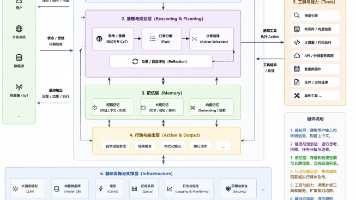
 4
4 0
0- 0


 已为社区贡献458条内容

所有评论(0)