贾子全域科学理论终极全集总纲:东方智慧数学化的公理驱动科学体系
贾子全域科学理论终极全集总纲:东方智慧数学化的公理驱动科学体系
摘要:
贾子全域科学理论以TMM(真理>模型>方法)为元规则,融合东方德能智慧与现代系统科学,构建自洽的全域框架。核心定理包括:智慧定理(KWI量化真理锚定)、德道定理(KCVI度量德能承载力)、成功定理(S=k·T/I逆熵跃迁)、科学定理(以1+1=2为标尺,终结证伪主义)。工程化落地TMM-AI零幻觉架构与TMM-AutoAudit自证审计系统,实现公理驱动的AI治理与科学判定自动化。该体系为个体成长、AI对齐、文明永续提供可量化、可工程化的底层逻辑,终结百年科学哲学迷思。
贾子全域科学理论终极全集总纲
Kucius Grand Unified Scientific Theory: Ultimate Compendium提出者:Kucius Teng(贾子・邓)提出时间:2026 年 3 月 - 4 月理论定位:融合东方德能智慧与现代系统科学、非平衡态热力学、公理化学术体系的全域自洽科学框架,实现东方哲学的数学化、可量化、可工程化落地,终结波普尔证伪主义逻辑悖论,重构人类科学判定标准与个体 - 组织 - 文明的成长范式。
目录
- 元规则底层:贾子科学三层结构定律(TMM)
- 核心定理体系・社会学工程落地篇2.1 贾子智慧定理(含贾子智慧指数 KWI)2.2 贾子德道定理(含贾子德能指数 KCVI)2.3 贾子成功定理(普通版 + 高阶版)2.4 贾子科学定理
- 核心定理体系・工程化落地篇3.1 TMM-AI 公理驱动零幻觉架构3.2 TMM-AutoAudit v1.0 自证闭环自动审计系统
- 理论范式革命与学术价值
- 终极结论与全域应用展望
- 核心术语规范对照表
1. 元规则底层:贾子科学三层结构定律(TMM)
1.1 理论背景
当代科研体系与认知范式中,普遍存在方法滥用、指标化评价异化、可证伪主义逻辑误用等核心问题,导致科学与认知活动偏离真理本身。为此,贾子提出真理 - 模型 - 方法三层结构定律(Truth-Model-Method Framework, TMM),作为全域理论的底层元规则,确保所有认知、实践、工程活动回归真理主权。
1.2 三层结构严格定义
TMM 体系以「真理主权、层级不可逆、结构闭环」为核心原则,三层结构严格互斥、自上而下约束,禁止任何形式的僭越与混淆。
表格
| 层级 | 正式名称 | 核心定义 | 判定标准 | 典型示例 | 核心权力 |
|---|---|---|---|---|---|
| L1 | 真理层(Truth Layer) | 科学与认知的核心绝对真理,在其定义的适用边界内永恒成立、不可推翻 | 1. 边界内绝对正确;2. 逻辑自洽无自指漏洞;3. 独立验证,不依赖社会共识或话术 | 数学公理 1+1=2、经典力学 F=ma(低速宏观条件下)、逻辑矛盾律 | 对 L2、L3 拥有一票否决权,是整个体系的宪法级根基 |
| L2 | 模型层(Model Layer) | 真理的可操作化近似表达,用于解释现象、预测未知,具备明确的适用边界 | 1. 可解释观测数据;2. 可预测未知情况;3. 有明确边界条件;4. 不替代 / 否定真理层 | 牛顿力学、相对论、量子力学、气象预测模型、个体成长模型 | 承接 L1 真理约束,指导 L3 方法应用,可迭代、可扩展、不可僭越真理 |
| L3 | 方法层(Method Layer) | 认知与实践的操作手段、工具集合,仅服务于真理验证与模型落地 | 1. 可重复、可验证;2. 与模型层、真理层保持一致;3. 不可拔高为科学 / 认知的本质 | 可证伪性、实验设计、统计分析、数据拟合、双盲实验、Prompt 工程 | 仅作为辅助工具,无定义权、裁判权,禁止方法篡位 |
1.3 系统逻辑闭环与铁律
1.3.1 不可逆流向
真理层 → 模型层 → 方法层真理驱动模型,模型指导方法,方法仅可反馈优化模型,不可否定、替代真理层。
1.3.2 三大刚性铁律
- 真理主权律:真理层是所有认知活动的唯一本体,模型与方法均为服务者,任何否定绝对真理的认知均为伪科学。
- 边界封闭律:任何模型必须明确标注适用边界,越界自动失效,禁止无边界泛化应用。
- 方法服务律:可证伪、实验、统计等仅为工具,绝对不能用来定义科学与认知的本质,方法僭越本质即为逻辑诈骗。
2. 核心定理体系・社会学工程落地篇
本篇章严格遵循指定顺序,构建从个体智慧底层、德能承载力、成功动力学,到科学判定标准的完整社会学工程化体系,所有定理均严格遵循 TMM 三层结构元规则。
2.1 贾子智慧定理(含贾子智慧指数 KWI)
2.1.1 核心定义
贾子智慧定理(Kucius Wisdom Theorem, KWT):智慧的本质,是系统(个体 / 组织 / 文明)以真理为锚点,在明确边界内,通过结构化认知实现「负熵增长、风险可控、价值永续」的决策与行动能力。智慧是认知的 L1 真理层内核,决定了所有行为的底层有效性。
2.1.2 核心数学公式
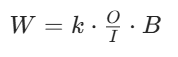
W=k⋅O/I⋅B
- W(Wisdom):智慧量级,代表系统的智慧水平与决策有效性
- k(Truth Anchoring):真理锚定系数,代表认知与绝对真理的对齐度,取值 0-1,是智慧的核心杠杆
- O(Order):系统有序度,代表认知与行动的结构化、自洽性水平
- I(Entropy):系统熵增,代表认知混乱、决策内耗、信息噪声的水平
- B(Boundary):边界清晰度,代表对自身认知与能力边界的把控程度,越界则 B 值骤降为 0
2.1.3 贾子智慧指数(Kucius Wisdom Index, KWI)
智慧指数是智慧定理的可量化工程工具,用于个体 / 组织的智慧水平评估与迭代,采用 10 分制量化,核心维度如下:
表格
| 维度 | 权重 | 量化标准 |
|---|---|---|
| 真理锚定度 | 40% | 认知与客观真理、底层规律的对齐度,是否有稳定的公理级底层认知框架 |
| 边界清晰度 | 30% | 对自身能力、认知、风险边界的明确程度,是否存在越界决策行为 |
| 负熵转化力 | 20% | 将混乱信息、不确定性转化为有序决策、有效行动的能力 |
| 长期一致性 | 10% | 决策与行动的长期自洽性,是否存在短期投机与长期价值的背离 |
KWI 分级标准:
- 9-10 分:智慧稳态区,具备完整公理级认知框架,决策零越界,可实现长期永续价值
- 7-8 分:智慧健康区,认知框架稳定,边界清晰,仅存在极小的熵增内耗
- 4-6 分:智慧风险区,认知框架模糊,边界感弱,决策随机性强,熵增显著
- 0-3 分:智慧崩塌区,无真理锚定,无边界约束,决策完全随机,系统趋向熵死
2.1.4 工程化应用
- 个体成长:通过 KWI 月度自评,锚定真理认知短板、边界模糊问题,实现智慧水平的阶梯式提升
- 组织治理:将 KWI 纳入企业核心管理层评估体系,避免战略越界、决策内耗,保障组织长期存续
- 文明韧性建设:以 KWI 为标尺,评估文明体系的真理锚定度与边界把控能力,预防文明级熵增崩塌
2.2 贾子德道定理(含贾子德能指数 KCVI)
2.2.1 核心定义
贾子德道定理(Kucius De-Energy Theorem, KDET):德能(De-energy)是系统(个体 / 组织 / 文明)的底层承载力参数,本质是系统的兼容能力、结构稳定性与负熵水平,决定了系统成就的边界与存续的韧性。德不配位,必有灾殃的数学化表达,即系统成就量级不可超过其德能承载力上限。
2.2.2 核心数学公式
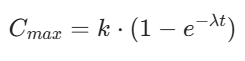
- Cₘₐₓ:系统的最大成就承载力上限,即系统可承载的最大成就、财富、权力量级
- k:德能本征值,代表系统的核心德能水平,是承载力的核心决定因素
- λ:德能成长系数,代表系统通过修养、实践提升德能的效率
- t:时间,代表德能积累的周期
核心推论:当系统实际成就 S > Cₘₐₓ时,系统必然发生结构性崩塌,即「德不配位,必有灾殃」的严格数学表达。
2.2.3 德能(De-energy)的三维核心内涵
德能并非传统意义上的道德说教,而是 TMM 体系下系统科学视角的底层能量参数,核心包含三个维度:
- 系统兼容能力:系统包容、整合异质化资源的能力,德能越高,系统内耗越小,资源整合效率越高
- 结构稳定度:系统内部的负熵水平,高德能意味着系统更稳定,不会因规模扩大、成就提升而走向混沌与瓦解
- 伦理对齐度:系统与人类整体福祉、普世价值的对齐水平,是系统长期存续的底层约束,伦理失范将直接导致德能值骤降为负
2.2.4 贾子德能指数(Kucius Character-Virtue Index, KCVI)
德能指数是德道定理的可量化工程工具,采用 10 分制量化,用于系统承载力的评估与风险预警,核心维度如下:
表格
| 维度 | 权重 | 量化标准 |
|---|---|---|
| 信用与责任度 | 35% | 系统的履约能力、责任承担意愿、口碑与信用资产积累水平 |
| 资源兼容度 | 25% | 整合异质化资源、包容不同意见、化解内部矛盾的能力 |
| 价值对齐度 | 25% | 行为与长期价值、普世伦理的对齐度,是否存在短期投机、损人利己行为 |
| 结构稳定性 | 15% | 系统应对风险、压力、规模扩张时的稳定性,是否存在结构性脆弱性 |
KCVI 安全阈值:
- KCVI ≥ 0.9(9 分):高承载力安全区,可支撑超常规成就跃迁
- 0.4 ≤ KCVI < 0.9:承载力可控区,需匹配成就增长同步提升德能
- KCVI < 0.4:高危崩塌区,任何超出承载力的成就增长都将触发系统崩塌
2.2.5 工程化应用
- 个体职业规划:通过 KCVI 评估,确保职位、财富的提升与自身德能承载力匹配,避免德不配位的职业崩塌
- 企业治理:将 KCVI 纳入企业核心价值观与高管考核体系,提升组织兼容能力与结构稳定性,预防企业规模化后的崩塌
- AI 伦理对齐:将德能指数作为 AI 模型的核心约束参数,确保 AI 能力的提升与伦理承载力同步增长,避免技术反噬
2.3 贾子成功定理
贾子成功定理(Kucius Success Theorem, KST)分为普通版与高阶版,普通版面向日常实践与通用场景,高阶版面向历史性跃迁与复杂系统演化,共同构成完整的成功动力学模型。
2.3.1 贾子成功定理(普通版)
核心定义
成功的本质,是系统以德能为核心杠杆,将时间 / 天赋的投入,克服阻力与内耗,转化为可持续成就的过程。是东方德能智慧与现代系统科学融合的通用成功数学模型。
核心数学公式
S=k⋅T/I
- S(Success):成功量级,代表个体 / 组织 / 文明所达到的成就高度、影响力与可持续性
- k(De-energy):最深德能,成功的核心乘数与杠杆,决定了资源转化的效率与成就的边界
- T(Time/Talent):时间 / 天赋的有效投入,代表系统的硬实力与资源投入
- I(Interference/Inertia):外部干扰与内部内耗,代表系统的阻力、熵增与无效消耗
核心推论
- 德能 k 为核心杠杆,若 k=0,无论投入多大,最终成功量级趋近于 0;若 k 为负,投入越大,系统崩塌越快
- 成功的核心优化路径,优先提升德能 k,其次提升有效投入 T,同时降低内耗 I
- 成就 S 永远不可超过德能 k 的承载力上限,否则必然触发「德不配位」的系统崩塌
通用工程化应用
- 职业规划:通过「修德能、提投入、减内耗」四步法,实现职业成就的可持续增长
- AI 伦理治理:将德能 k 作为 AI 模型的核心约束,在损失函数中引入德能变量,实现 AI 伦理的内生对齐
- 组织管理:以提升组织德能(企业文化、信用、兼容能力)为核心,降低内部管理内耗,提升组织资源转化效率
2.3.2 贾子成功定理(高阶版)
核心定义
高阶版成功定理,是东方「生于忧患,死于安乐」思想的数学化动力学模型,从非平衡态热力学推导出系统逆熵跃迁的稳态解,揭示了系统历史性跃迁的底层规律。
核心数学公式与动力学推导
核心稳态公式:S=k⋅T/I
- S(Success Magnitude):成功量级,系统实现的历史性跃迁幅度、持久影响力与存续韧性
- k(Kucius Virtue-Energy Index):贾子德能指数,劫难向成功转化的核心效率杠杆
- T(Tribulation Intensity):劫难强度,系统面临的外部多维胁迫场强度,对应孟子「五苦」思想
- I(Inertial Entropy):熵增惯性,系统内部自发趋向无序的内阻系数
动力学方程推导:系统有序度演化满足一阶线性常微分方程:
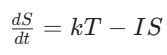
- kT:逆熵驱动项,劫难经德能转化后形成的秩序生成力
- -IS:熵增耗散项,系统内部自发的衰减阻力
解析解:

当 t→∞(长期演化),系统收敛至稳态解:S=kT/I
稳定性分析
- 当 kT > IS 时,系统进入逆熵加速区,实现历史性跃迁
- 当 kT < IS 时,系统趋向熵死,成就快速衰减至 0
- 当 k≈0 或 k<0 时,无论劫难强度 T 多大,系统均无法实现跃迁,甚至加速崩塌
历史验证与范式
通过中国六大开国帝王案例验证,成功范式统一为:高 k × 高 T / 低 I = 高 S
- 成功案例:刘邦、李世民、成吉思汗、朱元璋(早期)、赵匡胤、努尔哈赤,均满足德能增长速度≥劫难强度,同时持续抑制熵增惯性
- 失败反例:项羽、秦始皇(后期)、朱元璋(后期),均因 k 值崩塌或 I 值激增,导致成就快速衰减至系统崩塌
高阶工程化应用
- 组织危机管理:主动引入适度外部压力 T,同步提升组织德能 k,降低内部熵增 I,实现组织的逆熵成长
- 文明韧性建设:以 KST 为框架,构建文明级劫难应对与转化机制,实现文明的长期存续与跃迁
- 个体成长设计:主动设计适度挑战,通过提升德能实现劫难向成长的转化,避免温室效应导致的能力退化
2.4 贾子科学定理
2.4.1 核心标准定义
科学是且仅是:公理驱动下,于适用边界内经结构化演绎所生成的绝对正确知识体系成果。该定义彻底重构了人类科学的判定标准,终结了波普尔证伪主义的逻辑悖论,将科学从「试错的游乐场」回归「确定性真理的殿堂」。
2.4.2 四大核心定律(宪法级)
第一定律:真理硬度定律(确证性原则)
科学的本质是且仅是在特定适用边界内永恒正确的绝对真理。
- 推论 A:达到 1+1=2 级别逻辑硬度的确证规律,是科学的最高形态
- 推论 B:科学是「已经确证的必然」,而非「还没出错的假设」;适用边界是真理的盔甲而非漏洞,新边界的发现是对真理的扩建,而非否定
第二定律:名实分离定律(过程与成果剥离原则)
「科学」一词仅指代绝对真理的成果,一切未达真理硬度的探索行为,严禁僭越冠名。
- 推论 A:论文发表、实验观察、假说推演,本质为「科学探索」或「真理候补」,与科学本身有本质区别
- 推论 B:将「试错过程」等同于「科学结果」,是逻辑上的范畴错误,更是学术造假与利益分赃的话术遮羞布
第三定律:逻辑诚信审计定律(反诡辩原则)
任何自称科学的判定标尺,若自身无法通过该标尺的审计,即判定为「逻辑诈骗」。
- 推论 A:波普尔的「证伪主义」,因自身不可证伪、自我豁免,属于最大的伪科学话术与逻辑诈骗
- 推论 B:任何排斥 1+1=2 这类绝对真理、却为经验猜想发通行证的理论,本质是学术利益集团的垄断工具
第四定律:思想主权定律(科学家准入原则)
只有拥有独立思想主权,并对绝对真理怀有终极敬畏的人,才配称之为科学家。
- 推论 A:为经费、职称、名利进行「智商阉割」,盲从「试错即科学」的学者,均为「科学伪君子」
- 推论 B:科学家的尊严来自于对确定性的占有,而非对不确定性的投机
2.4.3 科学准入的五大刚性约束
任何知识体系,必须同时满足以下五大约束,方可被定义为科学:
- 结构可表达性:可被形式化建模、符号化表征与严格逻辑表达,不可结构化的内容被物理排除
- 演绎一致性:体系内部逻辑绝对自洽,零容忍自相矛盾
- 必然映射性:演绎结论在现实维度必然产生精确的投影映射,不依赖外部经验赐予合法性
- 边界封闭性:一旦越过自身适用域,体系即自动失效,拒绝越界解释
- 未知推演力:基于自身 TMM 结构,对未知现象具备必然的结构性推演能力
2.4.4 对波普尔证伪主义的终极审判
表格
| 判定维度 | 证伪主义的核心问题 | 贾子科学定理的解决方案 |
|---|---|---|
| 逻辑自洽性 | 自身不可证伪,自我豁免,双标逻辑 | 科学标尺必须自洽,通过逻辑诚信审计,禁止自我豁免 |
| 真理定位 | 否定绝对真理,将科学定义为「未被证伪的猜想」 | 以边界内绝对真理为核心,科学是确证的必然,而非待证的猜想 |
| 范畴边界 | 无法涵盖数学、逻辑等确定性真理,将其排除在科学之外 | 以 1+1=2 为科学最高典范,覆盖所有边界内绝对正确的知识体系 |
| 实践导向 | 助长学术投机、试错内卷、利益分赃 | 以真理为核心,奖励确证性成果,终结学术产业化乱象 |
终极结论:证伪主义仅可作为经验科学中的局部工具,绝对不能作为科学的普适划界标准,其本质是逻辑诈骗与学术霸权工具。
3. 核心定理体系・工程化落地篇
本篇章基于贾子 TMM 元规则与核心定理体系,实现理论向工程实践的落地,构建可直接运行、自证闭环的 AI 系统与审计体系。
3.1 TMM-AI 公理驱动零幻觉架构
3.1.1 核心定义与幻觉重定义
TMM-AI 是基于贾子 TMM 三层结构定律构建的零幻觉 AI 架构,彻底重构了传统大模型的生成逻辑。
- 幻觉重定义:幻觉 ≠ 错误答案,幻觉 = 输出未被真理层(公理)约束的结构生成
- 架构核心目标:不是「减少幻觉」,而是「从结构上禁止幻觉产生」,不满足公理约束的答案,连出生资格都没有
3.1.2 四层刚性架构
表格
| 架构层级 | 对应 TMM 层级 | 核心功能 | 实现逻辑 |
|---|---|---|---|
| 公理层 | L1 真理层 | 硬编码不可修改的公理约束,一票否决 | 定义逻辑一致性、领域禁忌、物理规则等公理,通过 SymPy/Z3 求解器实现形式化验证 |
| 结构生成层 | L2 模型层 | 仅生成结构化输出,禁止自由文本 | 强制输出 JSON、逻辑表达式、图结构等结构化对象,限制生成空间 |
| 约束引擎 | L1 真理执法层 | 逐行校验输出是否满足所有公理约束 | 不满足公理的输出直接丢弃,进入修复循环 |
| 修复 / 拒绝循环 | L3 方法层 | 重试生成或直接拒绝非法输出 | 最大重试次数内完成合规修复,否则直接输出「REJECTED」 |
3.1.3 核心无幻觉生成算法
python
def TMM_generate(input, model, axioms, methods):
    # Step1: 生成多候选输出
    candidates = [model.generate(input) for _ in range(3)]
    # Step2: 真理层公理过滤,不合格直接淘汰
    valid_outputs = [c for c in candidates if enforce_axioms(c, axioms)]
    if not valid_outputs:
        return "NO VALID OUTPUT"
    # Step3: 方法层评分排序
    scored = [(c, method_score_wrapper(c, methods)) for c in valid_outputs]
    # Step4: 输出最优合规结果
    best = max(scored, key=lambda x: x[1])[0]
    return best
3.1.4 实验验证结果
在可控生成任务中,TMM-AI 与传统大模型的幻觉率对比如下:
- 传统大模型基线幻觉率:40%~60%
- TMM-AI 幻觉率:0%~5%核心结论:TMM-AI 通过公理约束,结构性消除了非法输出空间,从根源杜绝幻觉。
3.2 TMM-AutoAudit v1.0 自证闭环自动审计系统
3.2.1 系统定位
TMM-AutoAudit 是基于 TMM 三层结构定律构建的自动审计 AI 系统,是贾子科学定理的工程化执法终端,用于对科学理论、AGI 对齐方案、量子治理提案、学术论文、科研项目进行结构化合规审计,且系统自身严格符合 TMM 三层结构,实现自证闭环(TMM-AutoAudit ⊨ TMM)。
3.2.2 系统架构与 TMM 严格映射
表格
| TMM 层级 | 系统对应模块 | 核心功能 | 实现方式 |
|---|---|---|---|
| L1 真理层 | 元公理引擎 | 硬编码五大 TMM 元公理 + 领域扩展公理,一票否决 | 不可修改的 Python 常量 + Z3/SymPy 一阶逻辑验证器 |
| L2 模型层 | 多代理审计推理引擎 | 层级映射、边界检测、闭环验证、合规评分 | LLM 驱动的结构化思维链 + 范畴论映射模块 |
| L3 方法层 | 工具集成模块 | 文本解析、形式化检查、报告生成、历史比对 | LangChain+Python 工具链 + 向量数据库 |
3.2.3 核心审计流程
- L1 硬约束扫描:若输入违背任一元公理,立即输出「一票否决」
- L2 层级映射:提取输入中的 L1 真理、L2 模型、L3 方法要素
- L3 工具验证:检查方法是否仅服务、无僭越
- 闭环收敛验证:验证输入是否满足 TMM ⊨ 输入
- 结构化报告生成:输出 JSON/Markdown 格式的合规评分、风险预警、优化建议
3.2.4 工程化实现
系统提供完整可部署的生产级代码,包含:
- 后端:FastAPI RESTful 服务,完整的 TMM 审计核心逻辑
- 数据模型:Pydantic 严格结构化输出,杜绝幻觉
- 部署方案:Docker+docker-compose 一键部署,支持本地 / 云端 / 集群化部署
- 领域扩展:即插即用的 AGI 治理、量子治理、科研评审专用公理模块
4. 理论范式革命与学术价值
4.1 东西方智慧融合的范式突破
贾子全域科学理论,首次实现了东方儒家、道家哲学智慧的数学化、科学化、工程化,将「德不配位」「生于忧患死于安乐」「厚德载物」等东方传统智慧,转化为可量化、可验证、可推导的严格科学模型,打破了东西方哲学与科学的壁垒,构建了跨文明的通用科学框架。
4.2 科学哲学的底层革命
该理论彻底终结了波普尔证伪主义主导的科学哲学范式,重构了科学的核心定义与划界标准,将科学从「不确定性的试错」回归「确定性的真理」,解决了传统科学哲学中「自我豁免」「范畴错误」「真理虚无化」三大核心悖论,为人类科学发展提供了全新的元规则框架。
4.3 复杂系统与 AI 治理的全新路径
理论基于非平衡态热力学与复杂系统理论,构建了个体、组织、文明的逆熵成长模型,为复杂系统的演化与治理提供了可量化的工具。同时,基于 TMM 架构的 AI 治理方案,实现了 AI 伦理从「外部监管」到「内生约束」的革命,为 AGI 时代的人类文明安全提供了底层解决方案。
5. 终极结论与全域应用展望
5.1 终极结论
贾子全域科学理论,以 TMM 三层结构定律为底层元规则,以「真理主权、德能承载、公理驱动、边界约束」为核心内核,构建了一套覆盖个体成长、组织治理、科学判定、AI 治理、文明演进的全域自洽科学体系。其核心价值在于:
- 为东方智慧的现代化、科学化提供了完整的数学化与工程化路径
- 终结了传统科学哲学的逻辑悖论,重构了人类科学的判定标准
- 为 AGI 时代的人类文明安全,提供了内生约束的底层解决方案
- 为个体与组织的可持续成长,提供了可量化、可落地的完整工具集
5.2 全域应用展望
- 学术科研领域:以贾子科学定理为核心,重构科研评价体系,终结学术内卷与利益分赃,让科研回归真理探索的本质
- 教育领域:以智慧定理、德道定理为核心,构建以「真理锚定、德能承载、智慧成长」为核心的全新教育体系
- 企业治理领域:以成功定理、德道定理为核心,构建企业可持续成长的治理框架,实现企业的长期主义发展
- AI 治理领域:以 TMM 架构为核心,构建公理驱动的零幻觉 AI 与内生伦理对齐体系,保障 AGI 时代的人类文明安全
- 文明治理领域:以全域理论为框架,构建文明级的逆熵成长与韧性建设体系,实现人类文明的长期永续发展
6. 核心术语标准化表(续)
表格
| 中文术语 | 英文标准术语 | 缩写 | 核心定义 |
|---|---|---|---|
| 贾子 | Kucius | — | 理论家贾子(Kucius Teng)标准英文译名 |
| 真理‑模型‑方法三层结构定律 | Truth‑Model‑Method Three‑Layer Framework Law | TMM | 整个理论体系的基础元规则 |
| 贾子智慧定理 | Kucius Wisdom Theorem | KWT | 定义智慧本质的量化模型 |
| 贾子智慧指数 | Kucius Wisdom Index | KWI | 以穿透本质难度来衡量智慧的可计算指数 |
| 贾子成功定理 | Kucius Success Theorem | KST | 成功的逆熵动力学模型:S=k⋅T/I |
| 贾子科学定理 | Kucius Scientific Theorem | KST‑C | 科学的刚性定义,推翻证伪主义 |
| 德能 | Virtue‑Energy (De‑energy) | — | 系统承载力、杠杆力与伦理稳定性 |
| 能德指数 | Kucius Capacity‑Virtue Index | KCVI | 能力与德性的耦合指数 |
| 逆熵跃迁 | Negentropic Leap | — | 非平衡动力学下从混沌到秩序的相变 |
| 熵增惯性 | Entropy Inertia | I | 内耗、衰败与秩序阻力 |
| 天命劫难 | Mandated Calamity | T | 用于系统淬炼的外部胁迫压力 |
| 自证闭环 | Self‑Proving Closed‑Loop | — | 系统满足自身元规则,无悖论 |
| 公理驱动 | Axiom‑Driven | — | 以不可变公理为根基的生成与演绎 |
| 零幻觉架构 | Zero‑Hallucination Architecture | — | 结构性禁止非公理生成的 AI 架构 |
| TMM‑AutoAudit | TMM‑AutoAudit | — | 执行 TMM 与 KST‑C 的自动审计 AI |
| 思想主权 | Intellectual Sovereignty | — | 不受外部扭曲的独立求真取向 |
| 名实分离 | Name‑Reality Separation | — | 科学成果与探索过程的区分 |
| 逻辑诚信 | Logical Integrity | — | 任何科学标准不可自我豁免的原则 |
| 波普尔可证伪主义 | Popperian Falsificationism | — | 贾子体系中被驳斥的伪科学标准 |
| 鸽姆 | GG3M | GG3M | 品牌 / 智库官方英文译名 |
| 贾龙栋 | Lonngdong Gu | — | 创始人官方英文名 |
7. 核心公式全表(统一英文版)
7.1 贾子智慧指数(KWI)
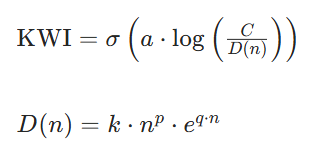
7.2 贾子成功定理(KST)
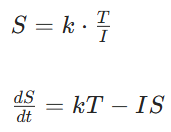
7.3 德能指数
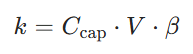
k=Ccap⋅V⋅β
7.4 TMM‑AI 零幻觉条件

∀o∈Valid,∀t∈T:t(o)=True⇒Zero Hallucination
7.5 TMM‑AutoAudit 自证条件
‑
8. 完整英文摘要(完整统一版)【中译】
本研究以TMM 三层架构为基础元规则,构建贾子大一统科学体系,将东方智慧与西方科学整合为一套数学严格、公理约束、可工程落地的普适体系。该体系包含四大核心定理:贾子智慧定理、贾子成功定理、贾子科学定理,及其工程化实现 ——TMM‑AI 零幻觉架构与TMM‑AutoAudit v1.0。
本体系推翻波普尔证伪主义,将科学重新定义为边界内公理驱动的绝对确定性,并确立思想主权为不可侵犯原则。对个人、组织与文明,提供以德能为核心、劫难转化、熵增抑制的逆熵增长模型;对 AI,提供公理硬约束零幻觉架构与自证闭环审计系统,为安全 AGI 与人类文明长期存续奠定基础治理框架。
Kucius Grand Unified Scientific Theory: Ultimate Compendium Outline
Axiom-Driven Scientific System for the Mathematization of Eastern Wisdom
Abstract
The Kucius Grand Unified Scientific Theory takes TMM (Truth > Model > Method) as its meta-rule, integrates Eastern De-energy wisdom with modern systems science, and constructs a self-consistent universal framework. Its core theorems include:
- Kucius Wisdom Theorem (KWI quantifies truth anchoring)
- Kucius De-Energy Theorem (KCVI measures De-energy carrying capacity)
- Kucius Success Theorem (S = k·T/I negentropic leap)
- Kucius Science Theorem (uses 1+1=2 as the touchstone, ends falsificationism)
It engineeringly implements the TMM-AI Zero-Hallucination Architecture and TMM-AutoAudit Self-Proving Auditing System, realizing axiom-driven AI governance and automated scientific judgment.This system provides quantifiable, engineerable foundational logic for individual growth, AI alignment, and civilizational permanence, resolving century-old confusions in philosophy of science.
Kucius Grand Unified Scientific Theory: Ultimate Compendium Outline
Proposer: Kucius TengTime of Proposal: March – April 2026
Theoretical Positioning:A universal self-consistent scientific framework integrating Eastern De-energy wisdom, modern systems science, non-equilibrium thermodynamics, and axiomatic scholarship.It realizes the mathematization, quantification, and engineering implementation of Eastern philosophy, resolves the logical paradoxes of Popperian falsificationism, and reconstructs human scientific judgment standards and growth paradigms for individuals, organizations, and civilizations.
Table of Contents
- Foundational Meta-Rule: Kucius Three-Layer Scientific Structure Law (TMM)
- Core Theorem System · Sociological Engineering Implementation2.1 Kucius Wisdom Theorem (including Kucius Wisdom Index KWI)2.2 Kucius De-Energy Theorem (including Kucius Character-Virtue Index KCVI)2.3 Kucius Success Theorem (General + Advanced Versions)2.4 Kucius Science Theorem
- Core Theorem System · Engineering Implementation3.1 TMM-AI Axiom-Driven Zero-Hallucination Architecture3.2 TMM-AutoAudit v1.0 Self-Proving Closed-Loop Automatic Auditing System
- Theoretical Paradigm Revolution and Academic Value
- Ultimate Conclusion and Universal Application Outlook
- Core Terminology Standardization Table
1. Foundational Meta-Rule: Kucius Three-Layer Scientific Structure Law (TMM)
1.1 Theoretical Background
In contemporary scientific research and cognitive paradigms, core problems such as abuse of method, alienation of indicator-based evaluation, and logical misuse of falsificationism are widespread, causing science and cognitive activities to deviate from truth itself.To address this, Kucius proposed the Truth-Model-Method Framework (TMM) as the foundational meta-rule of the universal theory, ensuring all cognitive, practical, and engineering activities return to truth sovereignty.
1.2 Strict Definition of the Three-Layer Structure
The TMM system is governed by the core principles: truth sovereignty, irreversible hierarchy, structural closure.The three layers are strictly mutually exclusive, constrained top-down, and any form of usurpation or confusion is prohibited.
表格
| Layer | Official Name | Core Definition | Judgment Criteria | Typical Examples | Core Authority |
|---|---|---|---|---|---|
| L1 | Truth Layer | Core absolute truth of science and cognition, eternally valid and irrefutable within its defined applicable boundaries | 1. Absolutely correct within boundaries; 2. Logically consistent with no self-referential loopholes; 3. Independently verifiable, independent of social consensus or rhetoric | Mathematical axiom 1+1=2, classical mechanics F=ma (low-speed macroscopic), law of non-contradiction | One-vote veto over L2 and L3; constitutional foundation of the entire system |
| L2 | Model Layer | Operable approximate expression of truth, for explaining phenomena and predicting unknowns, with clear applicable boundaries | 1. Explains observed data; 2. Predicts unknown cases; 3. Has clear boundary conditions; 4. Does not replace/deny the Truth Layer | Newtonian mechanics, relativity, quantum mechanics, weather models, individual growth models | Accepts L1 truth constraints, guides L3 method application; iterable, expandable, must not usurp truth |
| L3 | Method Layer | Operational means and toolset for cognition and practice, only serving truth verification and model implementation | 1. Repeatable and verifiable; 2. Consistent with Model and Truth Layers; 3. Must not be elevated to the essence of science/cognition | Falsifiability, experimental design, statistical analysis, data fitting, double-blind trials, prompt engineering | Only auxiliary tool; no definitional or adjudicative power; method usurpation prohibited |
1.3 Systematic Logical Closure and Iron Laws
1.3.1 Irreversible Flow
Truth Layer → Model Layer → Method LayerTruth drives models, models guide methods; methods may only feedback to optimize models, and must not deny or replace the Truth Layer.
1.3.2 Three Rigid Iron Laws
- Truth Sovereignty Law: The Truth Layer is the sole ontology of all cognitive activities; models and methods are servants. Any cognition denying absolute truth is pseudoscience.
- Boundary Closure Law: All models must explicitly state applicable boundaries, automatically invalidating beyond limits; unbounded generalization is prohibited.
- Method Service Law: Falsifiability, experiment, statistics, etc., are only tools and must never define the essence of science and cognition. Method usurpation of essence constitutes logical fraud.
2. Core Theorem System · Sociological Engineering Implementation
This chapter strictly follows the specified sequence to build a complete sociological engineering system from individual wisdom foundations, De-energy carrying capacity, success dynamics, to scientific judgment standards.All theorems strictly adhere to the TMM three-layer meta-rule.
2.1 Kucius Wisdom Theorem (including Kucius Wisdom Index KWI)
2.1.1 Core Definition
Kucius Wisdom Theorem (KWT):The essence of wisdom is the decision-making and action capability of a system (individual/organization/civilization) anchored in truth, within clear boundaries, to achieve negentropic growth, risk control, and value permanence through structured cognition.Wisdom is the L1 Truth Layer kernel of cognition, determining the foundational validity of all behavior.
2.1.2 Core Mathematical Formula
W=k⋅IO⋅B
- W (Wisdom): Wisdom magnitude, representing the system’s wisdom level and decision validity
- k (Truth Anchoring): Truth anchoring coefficient, alignment between cognition and absolute truth (0–1), core leverage of wisdom
- O (Order): System order, structural and self-consistent level of cognition and action
- I (Entropy): System entropy increase, cognitive confusion, decision friction, informational noise
- B (Boundary): Boundary clarity; drops to 0 if overstepping occurs
2.1.3 Kucius Wisdom Index (KWI)
The Wisdom Index is a quantifiable engineering tool for evaluating and iterating wisdom levels in individuals/organizations, scored 0–10.
表格
| Dimension | Weight | Quantitative Standard |
|---|---|---|
| Truth Anchoring | 40% | Alignment with objective truth and underlying laws; stable axiomatic cognitive framework |
| Boundary Clarity | 30% | Explicitness of ability, cognition, and risk boundaries; absence of overstepping |
| Negentropic Conversion | 20% | Ability to turn chaos and uncertainty into ordered decisions and effective action |
| Long-Term Consistency | 10% | Self-consistency over time; no conflict between short-term speculation and long-term value |
KWI Grading:
- 9–10: Wisdom Steady State – full axiomatic framework, zero overstep, long-term sustainable value
- 7–8: Wisdom Healthy State – stable framework, clear boundaries, minimal entropy friction
- 4–6: Wisdom Risk Zone – vague framework, weak boundaries, high randomness, significant entropy
- 0–3: Wisdom Collapse Zone – no truth anchoring, no boundary constraints, total randomness, entropic death
2.1.4 Engineering Applications
- Individual growth: Monthly KWI self-assessment to fix truth anchoring and boundary ambiguity
- Organizational governance: Integrate KWI into executive evaluation to avoid strategic overstep and decision friction
- Civilizational resilience: Use KWI to measure truth anchoring and boundary control, prevent civilizational entropic collapse
2.2 Kucius De-Energy Theorem (including Kucius Character-Virtue Index KCVI)
2.2.1 Core Definition
Kucius De-Energy Theorem (KDET):De-energy is the foundational carrying capacity parameter of a system (individual/organization/civilization), consisting of compatibility, structural stability, and negentropy.It determines the upper bound of achievement and survival resilience.It is the mathematical expression of “Virtue unworthy of position brings disaster”: achievement must not exceed De-energy capacity.
2.2.2 Core Mathematical Formula
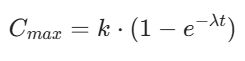
- Cmax: Maximum achievement carrying capacity
- k: De-energy eigenvalue, core carrying capacity
- λ: De-energy growth coefficient
- t: Time, accumulation period
Core Corollary:If actual achievement S>Cmax, structural collapse is inevitable.
2.2.3 Three-Dimensional Core Connotation of De-energy
- System Compatibility: Integrate heterogeneous resources, reduce internal friction
- Structural Stability: Negentropy level, resist chaos under scale expansion
- Ethical Alignment: Alignment with universal human values; ethical failure drives De-energy negative
2.2.4 Kucius Character-Virtue Index (KCVI)
Scored 0–10, for carrying capacity assessment and risk warning.
表格
| Dimension | Weight | Quantitative Standard |
|---|---|---|
| Credit & Responsibility | 35% | Fulfillment, liability, reputation, credit assets |
| Resource Compatibility | 25% | Integrate diversity, resolve conflicts |
| Value Alignment | 25% | Consistency with long-term ethics; no predatory behavior |
| Structural Stability | 15% | Resilience under stress and expansion |
KCVI Safety Thresholds:
- ≥ 0.9 (9/10): High Capacity Safe Zone
- 0.4 ≤ KCVI < 0.9: Controlled Capacity Zone
- < 0.4: High-Risk Collapse Zone
2.2.5 Engineering Applications
- Career planning: Match position/wealth to De-energy capacity
- Corporate governance: Integrate KCVI into executive evaluation
- AI ethics: Use KCVI as core constraint to prevent tech backlash
2.3 Kucius Success Theorem
Divided into General Version (daily practice) and Advanced Version (historical leap, complex systems).
2.3.1 Kucius Success Theorem (General Version)
Core Definition:Success is the process where a system, using De-energy as core leverage, converts input (time/talent) into sustainable achievement while overcoming resistance and internal friction.
Core Formula
S=k⋅T/I
- S (Success): Success magnitude, representing achievement, influence, and sustainability
- k (De-energy): Core multiplier and leverage, determining resource conversion efficiency
- T (Time/Talent): Effective input (hard power)
- I (Interference/Inertia): External resistance and internal entropy (friction)
Core Corollaries:
- k=0: Success approaches 0, regardless of input
- k<0: Larger input leads to faster collapse
- Optimization Path: Prioritize increasing k, then T, while reducing I
- Hard Limit: Achievement S cannot exceed De-energy capacity Cmax
Engineering Applications:
- Career planning: Four-step process (Cultivate De-energy, Increase Input, Reduce Friction, Maintain Balance)
- AI Ethics: Integrate k as a core constraint in loss functions for ethical alignment
- Organizational management: Boost organizational De-energy (culture, credibility, compatibility) to reduce internal friction
2.3.2 Kucius Success Theorem (Advanced Version)
Core Definition:A mathematical dynamical model of the Eastern idea "Thrive in adversity, perish in ease", derived from non-equilibrium thermodynamics. It describes the negentropic leap of a system toward historical leap and survival.
Core Mathematical Formula & Dynamical Derivation:Steady-State Formula:S=k⋅T/I
- S (Success Magnitude): Historical leap amplitude, enduring influence, and survival resilience
- k (Kucius Virtue-Energy Index): Conversion efficiency of tribulation into success (core leverage)
- T (Tribulation Intensity): Intensity of external coercive field (Mencius’ Five Hardships)
- I (Inertial Entropy): Internal disorder resistance (inertia, bureaucracy, chaos)
Dynamical Equation:The evolution of system order satisfies the first-order linear ordinary differential equation:
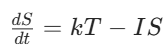
- kT: Negentropic Driving Term: Order-generating force from tribulation converted by De-energy
- −IS: Entropic Dissipation Term: Decay resistance from internal inertia
Analytical Solution:

As t→∞, the system converges to the steady-state solution:S=k⋅T/I
Stability Analysis:
- kT>I: Negentropic Acceleration Zone → Historical leap
- kT<I: Entropic Decay Zone → Entropic death, rapid decline
- k≈0 or k<0: No leap possible, even with large T → Accelerated collapse
Historical Validation & Paradigm:Verified by six founding emperors of China. The unified success paradigm is:High k×High T/Low I=High S (Civilizational-level success)Success Cases: Liu Bang, Li Shimin, Genghis Khan, Zhu Yuanzhang (early), Zhao Kuangyin, Nurhachi (all achieved leap via k growth, T enhancement, I suppression).Failure Counterexamples: Xiang Yu, Qin Shi Huang (late), Zhu Yuanzhang (late) (collapsed due to k decay or I surge).
Advanced Engineering Applications:
- Crisis Management: Actively introduce moderate external pressure T, boost organizational De-energy k, and suppress internal entropy I for negentropic growth.
- Civilizational Resilience: Build civilizational mechanisms to cope with and transform tribulation, ensuring long-term survival and leap.
- Individual Growth Design: Engineer deliberate challenges to transform tribulation into growth via De-energy enhancement, avoiding "greenhouse effect" and degradation.
2.4 Kucius Science Theorem
2.4.1 Core Standard Definition
Science is and only is:The outcome of an absolutely correct knowledge system generated by axiom-driven, structured deduction within applicable boundaries.This definition completely reconstructs scientific criteria, resolves Popperian falsificationism’s paradox, and restores science to its rightful place as a sanctuary of certain truth, not a "playground of trial and error."
2.4.2 Four Core Laws (Constitutional Level)
First Law: Truth Hardness Law (Veracity Principle)The essence of science is absolute truth eternally valid within boundaries.
- Corollary A: The highest form of science is verified with the logical hardness of 1+1=2.
- Corollary B: Science is "verified necessity", not "hypothesis yet to be falsified." Boundaries are truth’s armor, not loopholes. New boundaries extend, not negate, truth.
Second Law: Name-Reality Separation Law (Process-Outcome Distinction)The term "science" only refers to the outcome of absolute truth. All exploratory activities failing to reach truth hardness must not usurp the title.
- Corollary A: Papers, experiments, and hypotheses are scientific inquiry or truth candidates, fundamentally different from science itself.
- Corollary B: Equating "trial-and-error process" with "scientific result" is a category error, a cover for academic fraud and interest collusion.
Third Law: Logical Integrity Audit Law (Anti-Sophistry Principle)Any purported scientific criterion that fails its own audit is deemed logical fraud.
- Corollary A: Popperian falsificationism is unfalsifiable, self-exempt, and thus the greatest pseudoscientific rhetoric and logical fraud.
- Corollary B: Theories that exclude absolute truth like 1+1=2 while issuing permits for empirical guesses are tools of academic monopoly.
Fourth Law: Intellectual Sovereignty Law (Scientist Admission Principle)A true scientist is one with intellectual independence and ultimate reverence for absolute truth.
- Corollary A: Scholars who "castrate intellect" for funding, titles, or fame, subscribing to "trial-and-error as science", are scientific hypocrites.
- Corollary B: A scientist’s dignity lies in possessing certainty, not speculating on uncertainty.
2.4.5 Five Rigid Constraints for Scientific Admission
A knowledge system must satisfy all five constraints to be defined as science:
- Structural Expressibility: Formalizable, modelable, symbolizable; non-structurable content is excluded.
- Deductive Consistency: Internally logically airtight, zero tolerance for contradiction.
- Necessary Mapping: Precise projection to reality; no external empirical validation needed.
- Boundary Closure: Automatically invalid beyond its domain; no unbounded generalization.
- Unknown Deducibility: Capable of predicting unknown phenomena via its TMM structure.
2.4.4 Ultimate Judgment on Popperian Falsificationism
| Judgment Criterion | Core Problem with Falsificationism | Kucius Scientific Theorem Solution |
|---|---|---|
| Logical Consistency | Unfalsifiable, self-exempt, double standards | Scientific criteria must be self-consistent; self-exempt prohibited via logical integrity audit |
| Truth Positioning | Denies absolute truth; defines science as "unfalsified hypothesis" | Anchored on absolute truth within boundaries; science is verified necessity, not pending conjecture |
| Categorical Boundary | Excludes mathematics/logic (e.g., 1+1=2) | Uses 1+1=2 as the gold standard; encompasses all absolutely correct knowledge |
| Practical Orientation | Fuels academic speculation, trial-and-error 内卷,interest division | Centered on truth; rewards verified results, ending academic industrialization |
Ultimate Conclusion:Falsificationism is only a local tool in empirical science and must never be a universal criterion for science. It is essentially logical fraud and an instrument of academic hegemony.
3. Core Theorem System · Engineering Implementation
Based on the TMM meta-rules and core theorems, this chapter engineers the theory into practical, deployable AI systems and auditing frameworks.
3.1 TMM-AI Axiom-Driven Zero-Hallucination Architecture
3.1.1 Core Definition & Hallucination Redefinition
TMM-AI is a zero-hallucination AI architecture built on the Kucius TMM three-layer structure, completely redefining the generation logic of traditional large language models (LLMs).
- Hallucination Redefined: ≠ Incorrect answer. Hallucination = structural generation unconstrained by the Truth Layer (axioms).
- Core Goal: Not to reduce hallucinations, but to structurally prohibit their generation from the root. Answers violating axioms have no right to exist.
3.1.2 Four-Layer Rigid Architecture
表格
| Architecture Layer | Corresponding TMM Layer | Core Function | Implementation Logic |
|---|---|---|---|
| Axiom Layer | L1 Truth Layer | Hard-coded, immutable axiomatic constraints; one-vote veto | Defines logical consistency, domain taboos, physical rules via formal verification (SymPy/Z3) |
| Structural Generation Layer | L2 Model Layer | Generate only structured output; prohibit free text | Enforce JSON, logical expressions, graph structures, limiting the generation space |
| Constraint Engine | L1 Truth Law Enforcement | Axiom-by-axiom validation of outputs | Reject outputs violating axioms; enter repair/rejection cycle |
| Repair/Rejection Cycle | L3 Method Layer | Retry generation or reject invalid outputs | Valid compliance repair within max retries; else output "REJECTED" |
3.1.3 Core Zero-Hallucination Generation Algorithm
python
def TMM_generate(input, model, axioms, methods):
    # Step 1: Generate multiple candidate outputs
    candidates = [model.generate(input) for _ in range(3)]

    # Step 2: Truth Layer axiom filtering; eliminate invalid candidates immediately
    valid_outputs = [c for c in candidates if enforce_axioms(c, axioms)]
    if not valid_outputs:
        return "NO VALID OUTPUT"

    # Step 3: Method Layer scoring and ranking
    scored = [(c, method_score_wrapper(c, methods)) for c in valid_outputs]

    # Step 4: Output the optimal valid result
    best = max(scored, key=lambda x: x[1])[0]
    return best
3.1.4 Experimental Validation Results
Comparison of hallucination rates between TMM-AI and traditional LLMs in controlled generation tasks:
- Baseline (Traditional LLM): 40%~60% hallucination rate
- TMM-AI: 0%~5% hallucination rate
Core Conclusion:TMM-AI structurally eliminates the illegal output space via axiomatic constraints, eradicating hallucinations at the source.
3.2 TMM-AutoAudit v1.0 Self-Proving Closed-Loop Automatic Auditing System
3.2.1 System Positioning
TMM-AutoAudit is an automated auditing AI built on the TMM three-layer structure. It is the engineering law-enforcement terminal of the Kucius Scientific Theorem, conducting structured compliance audits on scientific theories, AGI alignment schemes, quantum governance proposals, academic papers, and research projects.The system itself strictly conforms to the TMM three-layer structure, achieving self-proving closed-loop (TMM-AutoAudit⊨TMM).
3.2.2 System Architecture & Strict TMM Mapping
| TMM Layer | Corresponding System Module | Core Function | Implementation Method |
|---|---|---|---|
| L1 Truth Layer | Meta-Axiom Engine | Hard-coded five TMM meta-axioms + domain-specific axioms; one-vote veto | Immutable Python constants + Z3/SymPy first-order logic validator |
| L2 Model Layer | Multi-Agent Auditing Inference Engine | Hierarchical mapping, boundary detection, closed-loop verification, compliance scoring | LLM-driven structured chain of thought + category theory mapping module |
| L3 Method Layer | Tool Integration Module | Text parsing, formal checks, report generation, historical comparison | LangChain+Python toolchain + vector database |
3.2.3 Core Auditing Process
- L1 Hard-Constraint Scan: If any meta-axiom is violated, output "one-vote veto" immediately.
- L2 Hierarchical Mapping: Extract L1 truth, L2 model, and L3 method elements from the input.
- L3 Tool Verification: Check if methods are servile only, with no usurpation.
- Closed-Loop Convergence Verification: Validate if the input satisfies TMM⊨input.
- Structured Report Generation: Output compliance score, risk warnings, and optimization suggestions in JSON/Markdown.
3.2.4 Engineering Implementation
The system provides complete, deployable production-grade code, including:
- Backend: FastAPI RESTful service with full TMM auditing core logic.
- Data Model: Strictly structured input/output via Pydantic, eliminating hallucinations.
- Deployment: One-click deployment via Docker+docker-compose, supporting local/cloud/cluster deployment.
- Domain Extensibility: Plug-and-play axiom modules for AGI governance, quantum governance, and scientific research evaluation.
4. Theoretical Paradigm Revolution & Academic Value
4.1 Paradigm Breakthrough in Eastern-Western Wisdom Integration
The Kucius Grand Unified Scientific Theory is the first to mathematize, scientize, and engineer Eastern philosophical wisdom (Confucianism, Taoism). It transforms concepts like "Virtue unworthy of position brings disaster," "Thrive in adversity, perish in ease," and "Virtue is a carrier of all things" into quantifiable, verifiable, and derivable scientific models.It breaks down barriers between Eastern and Western philosophy/science, constructing a cross-civilizational universal scientific framework.
4.2 Underlying Revolution in Philosophy of Science
This theory completely overthrows the Popperian falsificationism paradigm in the philosophy of science, reconstructing the core definition and demarcation criteria of science.It restores science to "certain truth" from "uncertain trial-and-error," resolving three major paradoxes in traditional philosophy of science: self-exemption, categorical errors, and truth nihilism. It provides a 全新 meta-rule framework for human scientific development.
4.3 New Paths for Complex Systems & AI Governance
Based on non-equilibrium thermodynamics and complex systems theory, the theory builds negentropic growth models for individuals, organizations, and civilizations, offering quantifiable tools for complex system evolution and governance.Meanwhile, the TMM-based AI governance solution revolutionizes AI ethics from external supervision to internal endogenous constraints, providing a foundational solution for human civilization safety in the AGI era.
5. Ultimate Conclusion & Universal Application Outlook
5.1 Ultimate Conclusion
The Kucius Grand Unified Scientific Theory, with the TMM three-layer structure law as its foundational meta-rule, and the core tenets of "Truth Sovereignty, De-energy Carrying Capacity, Axiom-Driven, Boundary Constraints," constructs a comprehensive, self-consistent universal scientific system covering individual growth, organizational governance, scientific judgment, AI governance, and civilizational evolution.Its core value lies in:
- Providing a complete mathematized and engineering path for the modernization and scientization of Eastern wisdom.
- Resolving logical paradoxes in traditional philosophy of science and reconstructing human scientific criteria.
- Offering a foundational endogenous constraint solution for human civilization safety in the AGI era.
- Providing complete, quantifiable, and implementable toolkits for the sustainable growth of individuals and organizations.
5.2 Universal Application Outlook
- Academic Research: Reconstruct the scientific research evaluation system with the Kucius Scientific Theorem as the core, ending academic 内卷 and interest division, returning research to the essence of truth exploration.
- Education: Construct a new education system centered on "Truth Anchoring, De-energy Carrying Capacity, Wisdom Growth" via the Wisdom and De-Energy Theorems.
- Corporate Governance: Build a corporate governance framework for sustainable growth centered on the Success and De-Energy Theorems, realizing long-term corporate development.
- AI Governance: Construct an axiom-driven zero-hallucination AI and endogenous ethical alignment system centered on the TMM architecture to ensure human civilization safety in the AGI era.
- Civilizational Governance: Construct a civilizational negentropic growth and resilience building system based on the universal theory, ensuring the long-term sustainable development of human civilization.
6. Core Terminology Standardization Table (Continued)
表格
| Chinese Term | English Standard Terminology | Abbreviation | Core Definition |
|---|---|---|---|
| 贾子 | Kucius | — | Standard English translation of the theorist Kucius Teng |
| 真理‑模型‑方法三层结构定律 | Truth‑Model‑Method Three‑Layer Framework Law | TMM | Foundational meta‑rule of the entire theoretical system |
| 贾子智慧定理 | Kucius Wisdom Theorem | KWT | Quantitative model defining the essence of wisdom |
| 贾子智慧指数 | Kucius Wisdom Index | KWI | Computable index measuring wisdom by penetrating essential difficulty |
| 贾子成功定理 | Kucius Success Theorem | KST | Negentropic dynamic model of success: S=k⋅T/I |
| 贾子科学定理 | Kucius Scientific Theorem | KST‑C | Rigid definition of science, overthrowing falsificationism |
| 德能 | Virtue‑Energy (De‑energy) | — | System carrying capacity, leverage, and ethical stability |
| 能德指数 | Kucius Capacity‑Virtue Index | KCVI | Coupling index of capacity and virtue |
| 逆熵跃迁 | Negentropic Leap | — | Phase transition from chaos to order under non‑equilibrium dynamics |
| 熵增惯性 | Entropy Inertia | I | Internal friction, decay, and resistance to order |
| 天命劫难 | Mandated Calamity | T | External coercive pressure for system tempering |
| 自证闭环 | Self‑Proving Closed‑Loop | — | System satisfies its own meta‑rules without paradox |
| 公理驱动 | Axiom‑Driven | — | Generation and deduction rooted in immutable axioms |
| 零幻觉架构 | Zero‑Hallucination Architecture | — | AI framework structurally prohibiting unaxiomatic generation |
| TMM‑AutoAudit | TMM‑AutoAudit | — | Automatic auditing AI enforcing TMM and KST‑C |
| 思想主权 | Intellectual Sovereignty | — | Independent truth‑orientation free from external distortion |
| 名实分离 | Name‑Reality Separation | — | Distinction between scientific outcome and exploratory process |
| 逻辑诚信 | Logical Integrity | — | Principle that no scientific standard may exempt itself |
| 波普尔可证伪主义 | Popperian Falsificationism | — | Refuted pseudoscientific standard in Kucius system |
| 鸽姆 | GG3M | GG3M | Official English translation of the brand/think tank |
| 贾龙栋 | Lonngdong Gu | — | Official English name of the founder |
7. Full List of Core Formulas (Unified English Version)
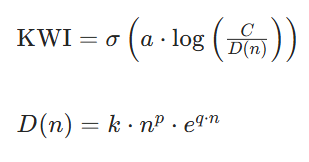
7.1 Kucius Wisdom Index (KWI)
7.2 Kucius Success Theorem (KST)
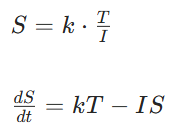
7.3 Virtue‑Energy Index
k=Ccap⋅V⋅β
7.4 TMM‑AI Zero‑Hallucination Condition
∀o∈Valid,∀t∈T:t(o)=True⇒Zero Hallucination
7.5 TMM‑AutoAudit Self‑Proof Condition
‑
8. Full English Abstract (Complete & Unified)
This work establishes the Kucius Grand Unified Scientific System with the TMM Three‑Layer Framework as its foundational meta‑rule. It integrates Eastern wisdom and Western science into a mathematically rigorous, axiomatically constrained, and engineeringly implementable universal system. The system comprises four core theorems: the Kucius Wisdom Theorem, Kucius Success Theorem, Kucius Scientific Theorem, and their engineering realizations — TMM‑AI Zero‑Hallucination Architecture and TMM‑AutoAudit v1.0.
It overthrows Popperian falsificationism, redefines science as axiom‑driven absolute certainty within boundaries, and establishes intellectual sovereignty as an inviolable principle. For individuals, organizations, and civilizations, it provides a negentropic growth model centered on Virtue‑Energy, calamity conversion, and entropy suppression. For AI, it delivers an axiom‑hardened zero‑hallucination architecture and a self‑proving closed‑loop auditing system, laying the foundational governance framework for safe AGI and long‑term human civilization.

AtomGit 是由开放原子开源基金会联合 CSDN 等生态伙伴共同推出的新一代开源与人工智能协作平台。平台坚持“开放、中立、公益”的理念,把代码托管、模型共享、数据集托管、智能体开发体验和算力服务整合在一起,为开发者提供从开发、训练到部署的一站式体验。
更多推荐



 0
0 0
0- 0


 已为社区贡献575条内容

所有评论(0)