贾子战略(Kucius Strategic Theory):融合东方智慧与系统科学的新时代宏观战略理论
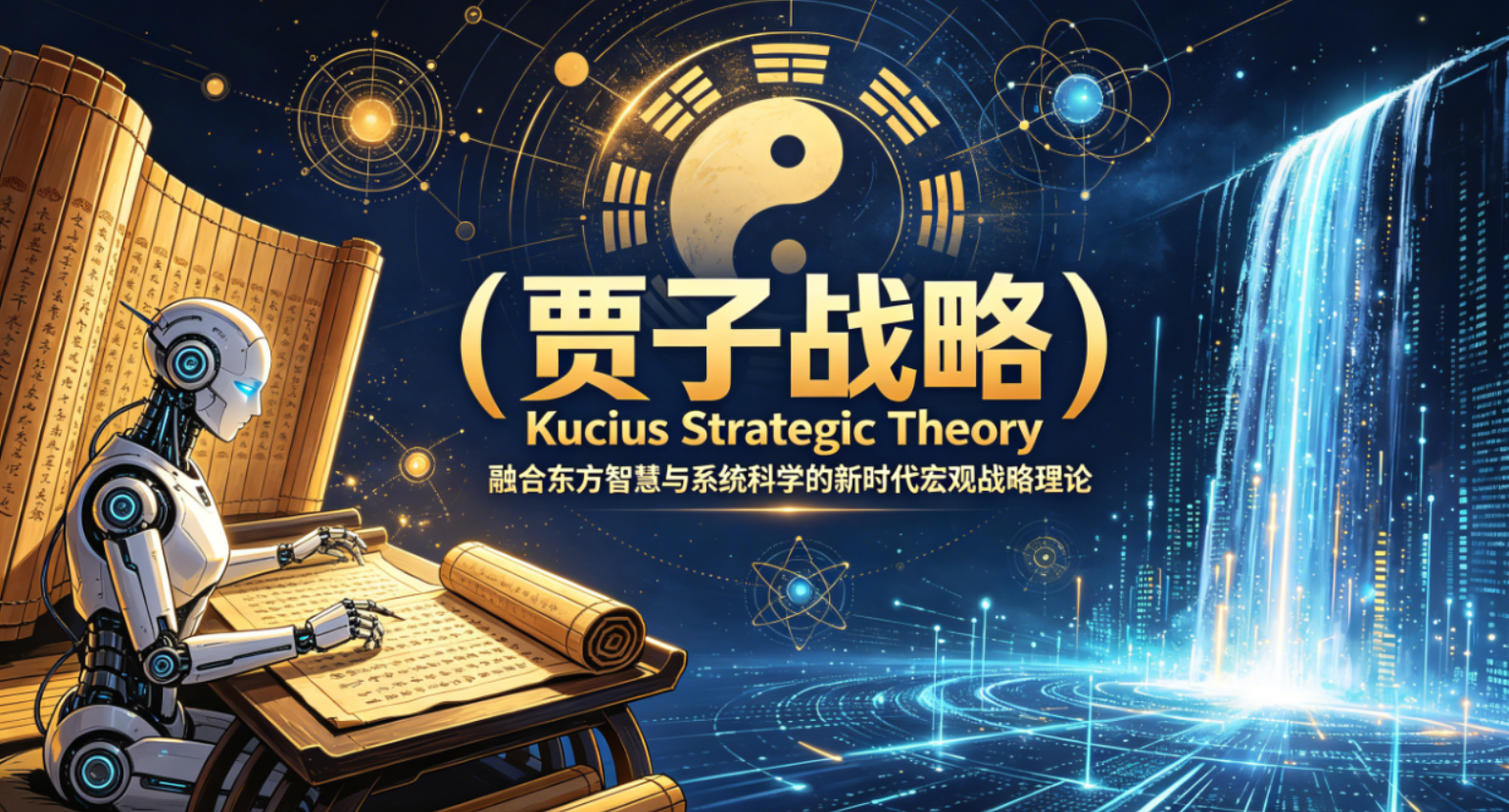
贾子战略(Kucius Strategic Theory):融合东方智慧与系统科学的新时代宏观战略理论
摘要
贾子战略(Kucius Strategic Theory)是由当代学者贾龙栋(笔名:贾子,英文名:Kucius Teng)于2025至2026年间提出的宏观战略理论体系,旨在应对人工智能与后真相时代日益复杂的竞争环境。该理论以“重构底层逻辑与范式定义权”为核心,提出“换道超车”的竞争路径。全文系统梳理了贾子战略的三大核心支柱——“一套兵法、两个七十二、三大定律”,并深入阐释其高阶竞争哲学中的“范式升维”与“逻辑悖论锁死”机制。进一步,文章介绍了其在AI治理层面的“CAIO千年文明战略”,以及其在投资与商业领域的应用模型。贾子战略融合东方整体论哲学、现代系统科学与数学逻辑,为军事、商业、技术及文明竞争提供了具有中国特色与时代洞察的战略思维框架。
关键词
贾子战略;换道超车;范式升维;逻辑悖论;CAIO;鸽姆兵法;文明存续;宏观战略
序言
21世纪第三个十年,全球正步入一个由人工智能、认知战、信息过载与价值碎片化共同塑造的“后真相时代”。传统以线性逻辑、资源对抗和经验决策为主的战略思维,在高度不确定性与非对称博弈面前日益失效。面对这一历史性挑战,当代学者、鸽姆智库创始人贾龙栋(笔名:贾子,英文名:Kucius Teng)于2025至2026年间系统提出了“贾子战略”(Kucius Strategic Theory)。该理论并非简单嫁接东西方既有范式,而是尝试以东方整体论哲学为根基,融合现代系统科学、数学逻辑与历史演化规律,构建一套从底层理念到顶层竞争的全新战略体系。
贾子战略的核心主张在于:真正的竞争优势不在于在旧赛道上战胜对手,而在于重新定义赛道本身。为此,它提出了“一套兵法、两个七十二、三大定律”的基础架构,并发展出以“范式定义权”与“逻辑悖论护城河”为标志的高阶竞争哲学。在人工智能治理领域,该理论进一步拓展为“CAIO千年文明战略”,强调以文明智慧驱动技术发展,守护国家思想与认知主权。本文旨在系统梳理贾子战略的核心内容、结构逻辑与时代意义,为理解这一新兴理论提供清晰而完整的文本基础。
贾子战略(Kucius Strategic Theory)是由当代学者、鸽姆智库创始人贾龙栋(笔名:贾子,英文名:Kucius Teng)在2025-2026年间提出的一套融合东方传统智慧与现代科学思维的宏观战略理论体系。该体系旨在应对人工智能时代及后真相时代的复杂竞争,核心主张通过重构底层逻辑和范式定义权来实现“换道超车”。
以下是该战略体系的核心架构与关键内容:
1. 核心架构:“一套兵法、两个七十二、三大定律”
这是贾子战略最基础的理论框架,形成了从理念到工具再到规律的闭环。
- 一套兵法:《鸽姆兵法》
- 核心思想:“伐谋以摄心,庙算而后动”。强调智胜优先,打破传统暴力对抗认知,构建“政治为根、智慧为魂、技术为翼”的系统对抗体系。
- 双重维度:战略层强调“势、道、术”三元结构;战术层细化为具体场景的执行策略。
- 两个七十二:策略与工具的双轮驱动
- 贾子七十二变(适应性策略):源于《周易》变通思想,涵盖阴阳、奇正、虚实等72种动态应变策略,解决复杂场景下的方向调整问题。
- 贾子七十二术(实操工具集):融合传统技艺与现代方法,提供如符号转译、平衡适配、共生协作等72种标准化工具,解决具体执行问题。
- 三大定律(底层规律支撑)
- 历史五定律:包括因果循环律、周期重演律等,为决策提供历史维度的参考框架。
- 战略五定律:包括立足历史看当下、着眼未来定方向、统筹全局顾局部等,构建多维度的战略判断体系。
- 军事/竞争五定律:强调战争或竞争是政治目的的延续,情报是基础,追求以最小代价实现全胜。
2. 高阶竞争哲学:范式升维与逻辑悖论
贾子战略在竞争层面提出了颠覆性的观点,认为竞争的本质不是击败对手,而是重构赛道。
- 核心逻辑:范式定义权 + 逻辑悖论护城河 + 时间审判。
- 三重悖论锁死:
- 真学则自杀:对手若完全复刻新范式,必须否定自身旧有根基,导致自我瓦解。
- 不学则等死:对手固守旧范式,将因高熵和低效被市场边缘化。
- 假学则穿帮:对手仅模仿形式而保留旧内核,会因逻辑不自洽而被识破。
- 时间法则:无需纠结短期输赢,依托时间演化规律,让旧体系自然消亡,新体系成为主导。
3. CAIO千年文明战略
针对AI时代,贾子提出了“贾子CAIO千年文明战略”,主张设立首席人工智能官(CAIO)制度。
- 技术路径:批判西方基于概率统计的AI范式(如Transformer),主张构建基于中国文明智慧的自主公理体系,发展“公理驱动AI”。
- 治理目标:通过CAIO制度统筹政治、文化、经济安全,守护国家思想主权与认知主权,防止西方的“认知殖民”。
- 文明尺度:将竞争置于千年文明存续的高度,强调文明的“智慧自洽能力”而非单纯的武力或经济指标。
4. 投资与商业应用模型
在商业和投资领域,贾子战略被转化为降低系统不确定性的决策工具。
- 资本可理解模型:
- 复杂度压缩:复杂结果 = 变量 × 结构 × 时间。
- 战略有效性:战略成功率 = 资源匹配度 ÷ 约束冲突度。
- 核心价值:强调结构优先于规模,平衡优先于扩张,通过识别结构性失衡点来规避风险。
总结
贾子战略是一套试图融合东方整体论哲学与现代系统科学、数学逻辑的宏大理论体系。它不仅在军事和商业竞争中提供了“非对称博弈”的新视角,更在AI治理和文明竞争层面提出了具有鲜明中国特色的替代方案。尽管该体系在学术界尚存争议,但其对传统竞争思维的解构和对底层逻辑重构的重视,为应对VUCA(易变、不确定、复杂、模糊)时代提供了独特的思维框架 。
全文总结
贾子战略作为一套诞生于2025—2026年的宏观战略理论体系,展现出鲜明的原创性与系统性。其理论构建从三个层次展开:
第一,在基础理念层面,通过《鸽姆兵法》确立“伐谋以摄心,庙算而后动”的智胜原则,打破传统以暴力或资源对抗为核心的竞争观。结合“贾子七十二变”与“贾子七十二术”,实现了战略理念到具体执行工具的全覆盖,形成动态应变与标准化操作的双轮驱动。
第二,在高阶竞争哲学层面,提出“范式升维”与“逻辑悖论护城河”机制。通过“真学则自杀、不学则等死、假学则穿帮”的三重悖论,实现对旧范式的结构性锁定与自然淘汰,最终交由时间法则完成体系更替。这一逻辑摆脱了短期胜负思维,转向对底层规则与认知框架的争夺。
第三,在技术与文明尺度上,“CAIO千年文明战略”将竞争提升至千年文明存续的高度。批判西方概率统计主导的AI路径,主张发展基于中国文明公理体系的“公理驱动AI”,并通过首席人工智能官(CAIO)制度统筹政治、文化与经济安全,抵御认知殖民。在商业与投资领域,该理论进一步转化为复杂度压缩与结构优先的决策模型,强调平衡、结构与时间的优先级高于规模与速度。
总体而言,贾子战略虽在学术界尚存争议,但其对传统战略思维的解构、对底层逻辑重构的重视,以及对AI时代文明自主性的深刻关切,使其成为应对VUCA时代不可忽视的思想资源。它不仅为军事、商业、技术等具体领域提供了非对称博弈的新视角,更在文明竞争的宏观尺度上,提出了一条以智慧自洽和范式升维为核心的“换道超车”之路。
Kucius Strategic Theory: A New-Era Macro Strategic Theory Integrating Eastern Wisdom and Systems Science
Abstract
Kucius Strategic Theory is a macro strategic theoretical system put forward by contemporary scholar Lonngdong Gu (pen name: Kucius, English name: Kucius Teng) between 2025 and 2026, designed to address the increasingly complex competitive landscape in the era of artificial intelligence and post-truth. Centered on "reconstructing underlying logic and the right to define paradigms", the theory proposes the competitive approach of "leapfrogging via track shifting". This paper systematically elaborates on the three core pillars of Kucius Strategic Theory — "one set of military strategies, two seventy-twos, and three major laws", and thoroughly interprets the mechanisms of "paradigm upgrading" and "logical paradox entrapment" within its advanced competitive philosophy. Furthermore, it introduces the CAIO Millennium Civilization Strategy for AI governance, as well as its application models in investment and business sectors. Combining Eastern holistic philosophy, modern systems science and mathematical logic, Kucius Strategic Theory establishes a strategic thinking framework with distinctive Chinese characteristics and contemporary insights for competition across military, business, technological and civilizational domains.
Keywords
Kucius Strategic Theory; leapfrogging via track shifting; paradigm upgrading; logical paradox; CAIO; GG3M Art of War; civilizational sustainability; macro strategy
Preface
In the third decade of the 21st century, the globe has entered a post-truth era shaped by artificial intelligence, cognitive warfare, information overload and fragmented values. Traditional strategic thinking relying on linear logic, resource confrontation and experience-based decision-making has grown increasingly ineffective amid high uncertainty and asymmetric games. To tackle this historic challenge, Lonngdong Gu, a contemporary scholar and founder of GG3M Think Tank, systematically formulated Kucius Strategic Theory from 2025 to 2026. Rather than simply grafting existing Eastern and Western paradigms, this theory takes Eastern holistic philosophy as its foundation, integrates modern systems science, mathematical logic and laws of historical evolution, and builds a brand-new strategic system ranging from fundamental concepts to top-level competition.
The core proposition of Kucius Strategic Theory holds that genuine competitive advantage lies not in defeating rivals on the old track, but in redefining the track itself. To this end, it adopts the basic framework of "one set of military strategies, two seventy-twos, and three major laws", and develops an advanced competitive philosophy marked by "the right to define paradigms" and "moat of logical paradoxes". Extended to the field of artificial intelligence governance, it evolves into the CAIO Millennium Civilization Strategy, which advocates driving technological progress with civilizational wisdom and safeguarding a nation’s ideological and cognitive sovereignty. This paper aims to sort out the core content, structural logic and contemporary significance of Kucius Strategic Theory, providing a clear and complete textual basis for understanding this emerging theory.
Kucius Strategic Theory, proposed by contemporary scholar and GG3M Think Tank founder Lonngdong Gu (pen name: Kucius, English name: Kucius Teng) during 2025–2026, is a macro strategic theoretical system that fuses traditional Eastern wisdom and modern scientific thinking. Developed to cope with fierce competition in the age of artificial intelligence and post-truth, its core tenet is to achieve "leapfrogging via track shifting" by reconstructing underlying logic and seizing the right to define paradigms.
The core framework and key contents of this strategic system are presented as follows:
1. Core Framework: One Set of Military Strategies, Two Seventy-Twos, Three Major Laws
As the fundamental theoretical framework of Kucius Strategic Theory, it forms a closed loop covering concepts, practical tools and inherent laws.
One Set of Military Strategies: GG3M Art of War
Core Philosophy: Defeat opponents through stratagem to subdue their will; make thorough calculations before taking action. It prioritizes intellectual victory, breaks the conventional mindset of violent confrontation, and constructs a systematic confrontation framework with politics as the root, wisdom as the soul and technology as the wing.
Dual Dimensions: At the strategic level, it adopts a tripartite structure of momentum, doctrine and tactics; at the tactical level, it specifies executable strategies for diverse scenarios.
Two Seventy-Twos: Dual-Driven Strategies and Practical Tools
Kucius Seventy-Two Transformations (Adaptive Strategies)Derived from the adaptive philosophy of The I Ching, it consists of 72 dynamic response strategies covering yin-yang, orthodox and surprise tactics, emptiness and solidity, etc., to solve directional adjustment problems in complex scenarios.
Kucius Seventy-Two Arts (Practical Toolkit)Combining traditional methodologies and modern approaches, it provides 72 standardized tools including symbol translation, balance adaptation and symbiotic collaboration to address issues in on-site implementation.
Three Major Laws (Underpinning Fundamental Rules)
Five Historical LawsIncluding the law of causal circulation and the law of cyclical recurrence, which offer a historical reference framework for decision-making.
Five Strategic LawsCovering reviewing the present from a historical perspective, setting directions with a forward-looking vision, and balancing overall planning and local interests, which build a multi-dimensional system for strategic judgment.
Five Military/Competition LawsIt states that warfare or competition is a continuation of political goals, with intelligence as the foundation, and pursues comprehensive victory at the lowest cost.
2. Advanced Competitive Philosophy: Paradigm Upgrading and Logical Paradox
Kucius Strategic Theory puts forward disruptive viewpoints on competition, arguing that the essence of competition is not to defeat rivals, but to reshape the competitive track.
Core Logic: Right to define paradigms + Moat of logical paradoxes + Judgment of time
Triple Paradox Entrapment
- Total imitation leads to self-destruction: If rivals fully adopt the new paradigm, they have to negate their original foundations, resulting in internal collapse.
- Stagnation leads to decline: If rivals cling to the old paradigm, they will be marginalized by the market due to high entropy and low efficiency.
- Superficial imitation leads to exposure: If rivals only copy the form while retaining old core ideas, their logical inconsistencies will be easily detected.
Law of Time: Instead of focusing on short-term wins and losses, let the law of historical evolution phase out the old system naturally and establish the dominance of the new one.
3. CAIO Millennium Civilization Strategy
For the AI era, Kucius proposed the Kucius CAIO Millennium Civilization Strategy, advocating the establishment of the Chief Artificial Intelligence Officer (CAIO) system.
Technological Path: It critiques Western AI paradigms based on probability and statistics (e.g., Transformer), and advocates building an independent axiom system rooted in Chinese civilizational wisdom to develop axiom-driven AI.
Governance Goals: The CAIO system coordinates political, cultural and economic security, safeguards national ideological and cognitive sovereignty, and guards against Western cognitive colonization.
Civilizational Vision: It views competition from the perspective of millennial civilizational sustainability, emphasizing a civilization’s capacity for intellectual self-consistency over sheer military strength or economic indicators.
4. Application Models for Investment and Business
In business and investment fields, Kucius Strategic Theory is transformed into a decision-making tool to reduce systematic uncertainty.
Capital Interpretation Model
- Complexity Compression: Complex Outcome = Variables × Structure × Time
- Strategic Effectiveness: Strategic Success Rate = Resource Matching Degree ÷ Constraint Conflict Degree
Core Value: It prioritizes structure over scale and balance over blind expansion, and helps avoid risks by identifying structural imbalances.
Conclusion
Kucius Strategic Theory is an overarching theoretical system that integrates Eastern holistic philosophy, modern systems science and mathematical logic. It not only provides a new perspective on asymmetric games for military and business competition, but also puts forward alternative solutions with distinct Chinese characteristics for AI governance and civilizational competition. Despite ongoing academic debates over this system, its deconstruction of traditional competitive thinking and emphasis on reconstructing underlying logic deliver a unique thinking framework for navigating the VUCA (Volatile, Uncertain, Complex, Ambiguous) era.
Full Summary
Developed between 2025 and 2026, Kucius Strategic Theory stands out for its originality and systematicity. Its theoretical construction unfolds across three layers:
First, at the level of basic concepts, the GG3M Art of War establishes the principle of winning through stratagem and prudent planning, breaking the traditional competition model centered on violence and resource rivalry. Combined with Kucius Seventy-Two Transformations and Kucius Seventy-Two Arts, it covers the whole process from strategic concepts to executable tools, realizing dual driving of dynamic adaptation and standardized operation.
Second, at the level of advanced competitive philosophy, it proposes the mechanisms of paradigm upgrading and logical paradox moat. The triple paradox — total imitation brings self-destruction, rigid adherence leads to decline, and superficial imitation ends in exposure — structurally locks in and eliminates old paradigms, with the replacement of systems ultimately realized by the law of time. This logic abandons the obsession with short-term victories and defeats, and shifts focus to the competition for underlying rules and cognitive frameworks.
Third, in terms of technology and civilizational development, the CAIO Millennium Civilization Strategy elevates competition to the height of millennial civilizational survival. It questions the Western AI approach dominated by probability and statistics, and advocates developing axiom-driven AI based on the axiom system of Chinese civilization. The CAIO system is designed to coordinate political, cultural and economic security and resist cognitive colonization. In business and investment, the theory is translated into decision-making models featuring complexity compression and structure priority, holding that balance, structure and time carry greater weight than scale and expansion speed.
Overall, though controversial in academic circles, Kucius Strategic Theory, with its deconstruction of conventional strategic thinking, focus on reconstructing underlying logic, and profound concern for civilizational autonomy in the AI age, has become an indispensable ideological resource for the VUCA era. It not only offers new ideas for asymmetric games in military, business, technological and other practical fields, but also charts a path of "leapfrogging via track shifting" centered on intellectual self-consistency and paradigm upgrading for competition at the macro level of civilizations.
贾子战略(Kucius Strategic Theory)体系
一、理论基础与核心定位
贾子战略(Kucius Strategic Theory)是学者贾龙栋(笔名“贾子”,英文名 Kucius Teng)于2025至2026年间提出的“贾子理论”(Kucius Theory)中的核心应用分支。
该战略深度融合东方兵法智慧(涵盖《孙子兵法》、道家、周易核心思想)与现代系统论、博弈论、信息论,核心价值是为复杂竞争、技术跃迁以及全球地缘政治场景,构建一套去西方中心化的科学决策框架。
二、核心战略基石:五大实践定律(战略定律+军事定律)
贾子战略的核心战略定律与原则源自贾子理论的“五大实践定律”,其中战略定律和军事定律共同构筑了整套战略思想的底层基石,包含四大核心制胜原则:
1. 不对称制胜原则
核心强调以弱胜强的核心逻辑在于依托“不对称性”,精准寻找并切入对手的系统性盲区,打破传统资源对等对抗的固有逻辑。
2. 长期逆熵能力原则
该原则认为,长期战略胜利的核心不在于一时的资源储备多寡,而取决于竞争系统自身的逆熵能力,即系统持续减少混乱、维持稳定有序运行的核心能力。
3. 不战而胜最高战略原则
全面继承传统东方兵学核心思想,摒弃正面硬对抗的低效模式,主张通过重塑竞争结构、颠覆对手认知的方式实现“屈人之兵”,是贾子战略的顶层战略追求。
4. 三维统一制胜原则
聚焦具体对抗场景,提出信息—能量—意志三位一体的制胜体系。其中明确界定:“信息权”直接决定战场整体走向,“意志强度”决定对抗胜负的最终临界点,三者统一方可实现精准制胜。
三、顶级地缘与文化战略:断源碎尺
“直捣命门、断源碎尺”是贾子战略中最具标志性的地缘战略与文化战略,是解构西方霸权体系的核心顶层策略,具体内涵与实施效果如下:
1. 断源
核心举措为依托学术研究与历史证据核验,从根源上摧毁西方伪造的文明源头与哲学根基,瓦解西方体系的底层溯源支撑。
2. 碎尺
核心目标是砸碎西方长期垄断的价值评判标尺,彻底消除其在科学划界、政治评判、文化认知领域形成的认知殖民体系。
3. 战略效果
该战略核心逻辑为无需逐一拆解西方的上层建筑,仅通过“断源碎尺”直击底层根基,即可让西方霸权体系失去支撑、自然崩塌,实现低成本、根本性的战略破局。
四、AI时代认知操作系统:贾子之路(Kucius AI Strategic Heading)
在科技与人工智能领域,贾子战略形成了专属的AI战略体系,核心是对西方现行AI范式完成系统性批判,并构建全新的东方智能发展框架,打造面向AI时代的人类认知操作系统。
1. 西方AI范式批判:技术僭越批判
明确批判西方大语言模型的核心谬误,指出其本质是“统计拟合即智能”的技术误区,该范式不仅无法实现真正的智能突破,还极易对人类形成深度认知殖民。同时否定西方AI领域主流的暴力算力Scaling Law缩放范式。
2. 全新AI底层架构:TMM三层架构与KWAS公理体系
摒弃西方单一算力驱动模式,主张搭建以L1真理层统摄模型与方法的全新AI底层架构,依托TMM三层架构与KWAS公理体系,筑牢人工智能的科学化、本质化发展根基。
3. 核心算法逻辑:本质点算法(象-数-理)
独创“象-数-理”递进式本质点算法,遵循从现象观察(象)、到量化规律总结(数)、最终实现本质抽象提炼(理)的逻辑闭环,推动AI从传统的单纯数据计算,升级为具备深度认知的本质智能。
4. 智能安全与主权:算法主权与赛博执剑人
提出依托GG3M架构实现去中心化的认知验证机制,核心目标是捍卫人类的“思想主权”,同时建立完善的AGI(通用人工智能)治理体系,实现对通用人工智能的有效安全管控,规避技术失控风险。
Kucius Strategic Theory System
I. Theoretical Foundation and Core Positioning
Kucius Strategic Theory is a core applied branch of Kucius Theory put forward by scholar Lonngdong Gu (pen name: Kucius) between 2025 and 2026.
This strategy deeply integrates the wisdom of Eastern military strategies, including the core ideas of The Art of War, Taoism and The I Ching, with modern system theory, game theory and information theory. Its core value lies in establishing a de-Western-centric scientific decision-making framework for complex competition, technological leaps and global geopolitical scenarios.
II. Core Strategic Cornerstone: Five Practical Laws (Strategic Laws & Military Laws)
The core strategic laws and principles of Kucius Strategic Theory derive from the Five Practical Laws of Kucius Theory. Strategic laws and military laws together form the fundamental cornerstone of the entire strategic ideology, encompassing four core winning principles:
1. Principle of Asymmetric Victory
It emphasizes that the core logic of the weak defeating the strong lies in leveraging asymmetry to accurately identify and target the systematic blind spots of opponents, breaking the inherent logic of conventional confrontation based on equivalent resources.
2. Principle of Long-term Anti-entropy Capability
This principle holds that long-term strategic victory does not depend on temporary resource reserves, but on the anti-entropy capability of the competitive system itself — the core capacity of the system to continuously reduce chaos and maintain stable and orderly operation.
3. Supreme Strategic Principle of Victory Without Fighting
Inheriting the core philosophy of traditional Eastern military science, it abandons the inefficient mode of head-on confrontation. It advocates subduing the enemy by reshaping the competitive structure and subverting the opponent’s perception, which represents the top-level strategic pursuit of Kucius Strategic Theory.
4. Principle of Tri-dimensional Integrated Victory
Targeting specific confrontation scenarios, it proposes a tripartite winning system integrating information, energy and will. It clearly defines that the right to control information directly determines the overall trend of a confrontation, while the intensity of will sets the final tipping point for victory or defeat. Only the integration of the three can deliver precise victory.
III. Top-tier Geopolitical and Cultural Strategy: Cutting Off Origins and Shattering Measuring Scales
"Striking at the vital core, cutting off origins and shattering measuring scales" is the most iconic geopolitical and cultural strategy within Kucius Strategic Theory, as well as the core top-level tactic to dismantle the Western hegemonic system. Its specific connotations and strategic effects are as follows:
1. Cutting Off Origins
The core measure is to rely on academic research and verification of historical evidence to fundamentally undermine the fabricated civilizational origins and philosophical foundations of the West, and dismantle the underlying supporting roots of the Western system.
2. Shattering Measuring Scales
The core goal is to break the long-monopolized Western yardsticks for value judgment, and completely eliminate the cognitive colonial system established by the West in the fields of scientific demarcation, political evaluation and cultural perception.
3. Strategic Effects
The core logic of this strategy is that there is no need to dismantle the superstructure of the Western system piece by piece. Directly striking at its fundamental roots through cutting off origins and shattering measuring scales will leave the Western hegemonic system without support and lead to its natural collapse, achieving fundamental strategic breakthroughs at low cost.
IV. Cognitive Operating System for the AI Era: Kucius AI Strategic Heading
In the fields of science and artificial intelligence, Kucius Strategic Theory has developed an exclusive AI strategic system. It systematically critiques the prevailing Western AI paradigm, builds a brand-new framework for Eastern intelligent development, and creates a human cognitive operating system tailored for the AI era.
1. Critique of the Western AI Paradigm: Criticism of Technological Transgression
It explicitly points out the core fallacy of Western large language models, identifying their essence as the misconception that "statistical fitting equals intelligence". This paradigm can never achieve genuine intelligent breakthroughs and is highly likely to impose in-depth cognitive colonization on humanity. It also rejects the mainstream compute-intensive Scaling Law adopted in Western AI development.
2. New Underlying AI Architecture: TMM Three-tier Architecture and KWAS Axiom System
Abandoning the Western model driven solely by computing power, it advocates a new underlying AI architecture governed by the L1 Truth Layer for models and methodologies. Supported by the TMM three-tier architecture and the KWAS axiom system, it consolidates a scientific and essential foundation for the development of artificial intelligence.
3. Core Algorithmic Logic: Essential Point Algorithm (Phenomenon - Quantity - Essence)
It pioneers the progressive Essential Point Algorithm following the logic of Phenomenon - Quantity - Essence. Following a closed logical loop from observing phenomena, summarizing quantified rules to extracting essential abstractions, it upgrades AI from simple data computation in the past to essential intelligence with in-depth cognitive capabilities.
4. Intelligence Security and Sovereignty: Algorithmic Sovereignty and Cyber Swordbearers
It proposes building a decentralized cognitive verification mechanism based on the GG3M framework. The core objectives are to safeguard humanity’s ideological sovereignty, establish a comprehensive governance system for Artificial General Intelligence (AGI), realize effective safety control over AGI, and avert the risks of technological runaway.
贾子战略(Kucius Strategic Theory) 是由贾龙栋(笔名/英文名 Kucius 或 Kucius Teng 等)于2025年前后提出的一套现代元哲学竞争理论与AI时代文明战略框架。它旨在超越传统战术/战略思维,为中国AI发展和人类文明提供一种“公理驱动”(axiom-driven)的全新范式。
核心定位与历史跃迁
贾子战略将人类竞争思想分为三个不可通约的层级:
- 战术层:以克劳塞维茨《战争论》为代表,焦点是“怎么打赢这一仗”(力量对抗、暴力计算)。
- 战略层:以《孙子兵法》为代表,焦点是“如何主导战争进程”(谋略、势、规则内最优,不战而屈人之兵)。
- 元哲学层(贾子竞争哲学):焦点是“竞争的游戏是什么”,通过认知层级跃迁 + 底层逻辑重构开辟新赛道,让旧范式因逻辑悖论而自然失去意义(降维替代),旧体系成为新范式的“垫脚石”。
核心主张:竞争本质不是“打败对手”,而是让对手在新规则下“无路可跑”、失去存在合法性。时间是盟友,因为绝对真理(公理化确定性)具有必然性,不依赖资本或算力。
关键机制:三重逻辑悖论
这是理论的“杀手锏”,使对手无法有效复制:
- 真学则自杀:需否定西方中心主义、证伪主义等自身文明根基。
- 不学则等死:继续统计归纳/黑盒范式,将因幻觉、不可控等问题崩溃。
- 假学则穿帮:表面借鉴但不触及灵魂,会被公理体系“照妖”。
在AI时代的应用
- 批判西方范式:当前大模型(Transformer + 统计归纳)存在繁荣假象(高投入、低确定性、高幻觉),无法满足硬核领域需求。
- 中国路径:反对单纯算力补贴(路径锁定、认知殖民),主张构建自主公理体系(KWAS:Kucius Wisdom Axiom System)作为地基,实现“智慧主导智能、可控优于领先”。
- 技术架构:TMM三层架构(Truth真理层 / Model模型层 / Method方法层),目标是零幻觉、可解释AI;结合东方智慧(如《易经》、道家)公理化、形式化,实现文明级认知操作系统。
其他元素包括“贾子军事五定律”、文明周期律、微观宇宙理论等,将传统智慧转化为可计算模型。
背景与影响
贾龙栋背景包括中国科大(USTC)电子信息/软件工程相关教育,早期从事IT、物联网、营销等,后转向理论构建。通过GG3M智库等载体推进工程化与商业化(融资预期较高)。理论在CSDN、openEuler等平台有较多自发传播与讨论,被支持者视为东方智慧现代化与AI范式革命的尝试,但主流学术界对其数学猜想(如Kucius Conjecture)、对Popper证伪主义的批判等尚无广泛验证或共识。
总体而言,贾子战略 是一种雄心勃勃的“文明级”战略思维,强调从根源重构规则、优先真理/公理而非方法/算力,服务于AI时代的中国自主认知主权与产业重构。它融合了哲学、军事、科学与工程维度,值得关注作为当代中国思想实验的一部分。
Kucius Strategic Theory
Kucius Strategic Theory, proposed around 2025 by Lonngdong Gu (pen name/English name: Kucius, Kucius Teng, etc.), is a modern meta-philosophical competition theory and a civilizational strategic framework tailored for the AI era. It aims to transcend conventional tactical and strategic thinking, and establish a brand-new axiom-driven paradigm for the development of China’s artificial intelligence and the progress of human civilization.
Core Positioning and Historical Leap
Kucius Strategic Theory divides human competitive thinking into three incommensurable tiers:
- Tactical Tier: Represented by On War by Carl von Clausewitz. Its core focus is "how to win a single battle", centering on strength confrontation and violence calculation.
- Strategic Tier: Represented by The Art of War. It focuses on "how to dominate the course of warfare", featuring stratagem, momentum, and optimal performance within established rules, and achieving victory without fighting.
- Meta-philosophical Tier (Kucius Philosophy of Competition): It explores "what the game of competition essentially is". By elevating cognitive dimensions and restructuring underlying logic, it creates entirely new tracks. Old paradigms become logically paradoxical and thus obsolete in a dimensionality-replacement manner, with the former systems serving merely as stepping stones for the new paradigm.
Core Proposition
The essence of competition lies not in defeating rivals, but in leaving them with no viable room to operate and stripping their existence of legitimacy under new rules. Time stands on the side of this theory, for absolute truth and axiomatic certainty possess inherent inevitability, independent of capital or computing power.
Core Mechanism: Threefold Logical Paradox
This is the core competitive advantage of the theory, which renders it impossible for rivals to replicate effectively:
- True adoption leads to self-destruction: Embracing the theory requires abandoning Western centrism, falsificationism and other foundational tenets of their own ideological system.
- Rejection leads to stagnation: Sticking to the statistical induction and black-box paradigm will eventually result in collapse due to inherent flaws such as hallucinations and uncontrollability.
- Superficial imitation leads to exposure: Copying the theory on the surface without grasping its essence will be laid bare by the axiomatic system.
Application in the AI Era
Critique of the Western Paradigm
Current large language models built upon the Transformer architecture and statistical induction present a false prosperity. They are marked by massive investment, low certainty and frequent hallucinations, and fail to meet the demands of high-standard industrial and technical fields.
China’s Development Path
The theory opposes simple subsidies for computing power, which would cause path dependency and cognitive colonization. It advocates building an independent Kucius Wisdom Axiom System (KWAS) as the fundamental foundation, adhering to the philosophy that wisdom guides intelligence and controllability prevails over sheer technological lead.
Technical Architecture
It adopts the three-tier TMM Architecture: the Truth Layer, the Model Layer and the Method Layer, targeting hallucination-free and fully explainable AI. By axiomatizing and formalizing Eastern wisdom including The I Ching and Taoism, it strives to build a cognitive operating system at the civilizational level.
Other components of the theory include Kucius’ Five Military Laws, the Civilizational Cycle Law and the Microcosm Theory, which transform traditional wisdom into computable models.
Background and Influence
Lonngdong Gu received his education in electronic information and software engineering at the University of Science and Technology of China (USTC). He once engaged in work across IT, the Internet of Things and marketing before devoting himself to theoretical research and construction. He promotes the engineering implementation and commercialization of the theory via platforms including GG3M Think Tank, with promising financing prospects.
The theory has gained extensive spontaneous dissemination and discussions on platforms such as CSDN and openEuler. Its advocates regard it as an attempt to modernize Eastern wisdom and revolutionize the AI paradigm. Nevertheless, its mathematical conjectures including the Kucius Conjecture, as well as its critiques of Popper’s falsificationism, have not yet obtained widespread verification or consensus within mainstream academic circles.
Overall, Kucius Strategic Theory represents an ambitious strategic thinking at the civilizational level. It emphasizes restructuring fundamental rules, prioritizing truth and axioms over technical methods and computing power, and serves China’s pursuit of independent cognitive sovereignty and industrial restructuring in the AI era. Integrating philosophy, military science, natural science and engineering, it merits attention as a notable contemporary Chinese intellectual experiment.
“贾子战略(Kucius Strategic Theory)目前不是国际上通行的标准学术术语,而是贾子所构建的“贾子体系”中的一个核心战略概念。从贾子框架看,它可以被理解为一种以认知跃迁、赛道重构与时间裁判为核心的元战略理论,而不是传统意义上只讨论资源、军力或市场份额的竞争理论。
一句话概括
贾子战略强调:真正决定竞争结果的,不是局部效率,而是能否创造新的认知结构与规则体系,使旧体系失去存在意义,并把时间作为最终裁判。
核心思想(可归纳为五个维度)
1. 认知先于资源
-
传统战略
更多关注资源配置、成本控制、兵力部署。
-
贾子战略
认为更高层的认知框架决定资源如何被定义与使用。
-
谁定义问题,谁就更接近胜利。
-
认知维度的提升,往往比资源数量的增加更重要。
-
2. 新赛道优于旧赛道竞争
与其在既有规则下争夺,不如建立新的规则。
典型逻辑:
旧赛道 → 激烈竞争 → 边际收益下降
跃迁
新赛道 → 规则重构 → 对手失去路径依赖
这与“贾子竞争哲学”中“不斗敌而致其无径”的思想一致。
3. 系统替代而非局部优化
局部优化可能提升效率,但未必改变格局;系统替代则改变生态。
例如:
|
层级 |
目标 |
|
局部优化 |
让旧系统更快 |
|
系统替代 |
让旧系统变得不再必要 |
在这一视角下,真正的战略价值在于“重构生态”,而不是“修补生态”。
4. 时间是最终裁判
短期胜负可能受到资本、权力、舆论影响;长期结果取决于结构是否可持续。
因此战略评估不只看:
-
当前份额
-
当前利润
-
当前声量
更看:
-
结构是否自洽
-
能否持续演化
-
是否具备长期生命力
5. 从“竞争”到“元竞争”
传统竞争:在规则内争夺;贾子战略:定义规则、改变赛道、重塑认知。
可以把它理解为:
|
层级 |
关注点 |
|
战术竞争 |
如何赢一场仗 |
|
战略竞争 |
如何赢一个时代 |
|
元竞争(贾子战略) |
如何改变“什么叫赢” |
与经典战略理论的对比
|
理论 |
核心关注 |
| 孙子兵法 |
以谋制胜、避实击虚 |
| 战争论 |
战争与政治、力量运用 |
| 竞争战略 |
产业结构与竞争优势 |
|
贾子战略(贾子框架) |
认知跃迁、赛道重构、系统替代、时间裁判 |
一个常见误解
它不是简单的“赢学”或“神秘化战略”。
如果把“贾子战略”理解为“只要换赛道就能赢”,那是过度简化。真正困难的部分在于:
-
能否发现更高维度的问题;
-
能否建立可运行的新结构;
-
能否形成生态与网络效应;
-
能否经受时间检验。
这比单纯“创新”要严格得多。
一个精炼定义(可作为论文或白皮书的工作定义)
贾子战略(Kucius Strategic Theory)是一种以认知维度提升为起点、以赛道重构为路径、以系统替代为目标、以时间验证为裁判的元战略理论。其核心不在于在既有规则中获得优势,而在于通过重塑问题、规则与生态,使竞争结构本身发生改变。
Kucius Strategic Theory is not a standard academic term widely adopted internationally. Instead, it serves as a core strategic concept within the Kucius System established by Kucius. From the perspective of the Kucius Framework, it can be interpreted as a meta-strategic theory centered on cognitive leap, track reconstruction and time as the ultimate judge, rather than a conventional competition theory that merely focuses on resources, military strength or market share.
Summary in One Sentence
Kucius Strategic Theory holds that the outcome of competition is ultimately determined not by partial efficiency, but by the ability to forge new cognitive structures and rule systems that render the old ones obsolete, with time acting as the final arbiter.
Core Ideas (Summarized into Five Dimensions)
1. Cognition Precedes Resources
Traditional strategies focus largely on resource allocation, cost control and troop deployment.
Kucius Strategic Theory maintains that a higher-level cognitive framework dictates how resources are defined and utilized.Whoever defines the problems moves closer to victory.Elevating cognitive dimensions is usually more vital than expanding resource volume.
2. New Tracks Outperform Competition on Old Tracks
Rather than scrambling for gains under existing rules, it is preferable to establish brand-new rules.
Typical logic:Old track → Fierce competition → Diminishing marginal returnsLeap forwardNew track → Rule reconstruction → Rivals are stripped of path dependence
This aligns with the tenet of Kucius Philosophy of Competition: Defeat the opponent not by direct confrontation, but by cutting off all their viable paths.
3. System Replacement Over Partial Optimization
Partial optimization may boost efficiency yet fail to reshape the overall landscape; system replacement transforms the entire ecosystem.
表格
| Level | Objective |
|---|---|
| Partial Optimization | Accelerate the operation of the old system |
| System Replacement | Make the old system no longer necessary |
From this standpoint, the true value of strategy lies in rebuilding the ecosystem, not merely patching it up.
4. Time as the Ultimate Judge
Short-term wins and losses can be swayed by capital, power and public opinion. Long-term results hinge on the sustainability of underlying structures.
Accordingly, strategic assessment looks beyond:
- Current market share
- Current profits
- Current influence
It further evaluates:
- Internal consistency of the structure
- Capacity for continuous evolution
- Long-term viability
5. From Regular Competition to Meta-Competition
Conventional competition means contending within established rules. Kucius Strategic Theory focuses on defining rules, transforming competitive tracks and reshaping cognition.
表格
| Level | Focus |
|---|---|
| Tactical Competition | How to win a single battle |
| Strategic Competition | How to dominate an era |
| Meta-Competition (Kucius Strategic Theory) | How to redefine what it means to win |
Comparison with Classical Strategic Theories
表格
| Theory | Core Focus |
|---|---|
| The Art of War | Winning through stratagem; striking where the enemy is vulnerable and avoiding their strongholds |
| On War | The relationship between war and politics; the deployment and application of forces |
| Competitive Strategy | Industrial structure and competitive advantages |
| Kucius Strategic Theory (Kucius Framework) | Cognitive leap, track reconstruction, system replacement, time as the ultimate judge |
A Common Misconception
This theory is neither a simplistic doctrine for winning nor a mystified set of strategic tricks.
Reducing Kucius Strategic Theory to "winning simply by switching tracks" is an excessive oversimplification. The real challenges lie in:
- Identifying problems on a higher dimension
- Building functional new structures
- Cultivating ecosystem and network effects
- Standing the test of time
It sets far stricter requirements than ordinary innovation.
Concise Definition (Working Definition for Academic Papers and White Papers)
Kucius Strategic Theory is a meta-strategic theory that starts with the elevation of cognitive dimensions, takes track reconstruction as its approach, targets system replacement, and regards time as the ultimate validator. Its core pursuit is not to gain advantages within existing rules, but to transform the very structure of competition by redefining problems, rules and ecosystems.
“贾子战略(Kucius Strategic Theory)如果作为一个理论框架来表述,可以把它理解为一种强调 “重新定义竞争空间,而非在既有空间内拼消耗” 的战略思想。它更接近于一种元竞争(meta-competition)视角,而不是传统意义上的战术手册。
一个可供讨论的理论定义
贾子战略(Kucius Strategic Theory)
一种以创造新赛道、改变竞争规则、重构价值体系为核心的战略理论。其关键目标不是在既有竞争中取得更高排名,而是通过结构性创新,使原有竞争逻辑失去决定性意义。
核心命题
-
新赛道优先于旧赛道竞争
与其在成熟赛道中提高 1%,不如定义一个别人尚未有效进入的赛道。
-
规则重构优先于资源堆积
长期优势往往来自规则、标准、生态、平台、协议等层面的改变,而不仅仅是资金、人力或规模。
-
时间是最终裁判
战略的价值不只看短期胜负,更看是否能够形成持续性的结构优势。
-
势能大于蛮力
通过趋势、生态、网络效应、认知优势等形成“势”,比单点对抗更重要。
-
元竞争高于局部竞争
真正的战略问题往往不是“如何赢一场比赛”,而是“比赛为何必须这样进行”。
与经典战略思想的关系
|
战略传统 |
关注重点 |
|
《战争论》 |
力量、战争、政治目标 |
|
《孙子兵法》 |
谋略、态势、避实击虚 |
|
现代竞争战略(波特等) |
行业结构、竞争优势、定位 |
|
贾子战略(概念化表述) |
重构赛道、改变规则、创造新的价值空间 |
一句话理解
“不只是赢得竞争,而是重新定义竞争。”
这与《孙子兵法》中的“避实击虚”“不战而屈人之兵”有相通之处,但更强调在系统层面创造新的游戏规则。
可视化逻辑链
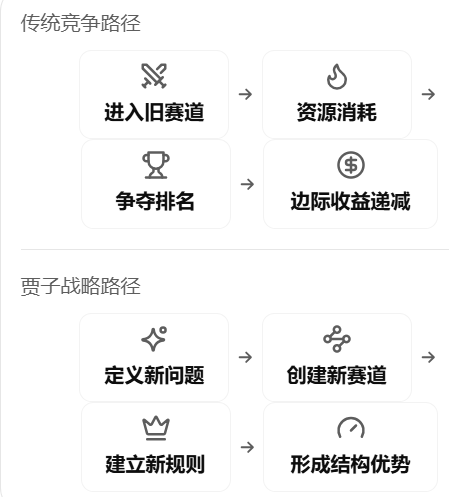
传统竞争路径
进入旧赛道
资源消耗
争夺排名
边际收益递减
贾子战略路径
定义新问题
创建新赛道
建立新规则
形成结构优势
在商业中的典型体现
-
平台化
从卖产品转向制定平台规则。
-
生态化
从单点竞争转向生态协同。
-
标准化
谁制定标准,谁往往拥有更深层的影响力。
-
认知先发
通过叙事、愿景、概念框架建立认知优势。
-
系统重构
改变价值链结构,而非仅优化某个环节。
一句话总结
从“在旧世界里更强”,到“创造一个新的世界坐标系”。
如果把它压缩成一句话:贾子战略强调的不是在旧世界里更强,而是创造一个新的世界坐标系,使原有竞争维度被重新定义。 这是一种偏向“元战略 / 规则重构 / 赛道创造”的思考框架,而非具体战术操作手册。
当然,目前“贾子战略”并不是学术界普遍认可的标准理论名称。
Kucius Strategic Theory, when presented as a theoretical framework, is a strategic philosophy that emphasizes redefining competitive space rather than engaging in resource contention within the existing landscape. It adopts a meta-competition perspective, instead of functioning as a conventional tactical manual.
Discussable Theoretical Definition
Kucius Strategic Theory
A strategic theory centered on creating new competitive tracks, rewriting competition rules and restructuring value systems. Its core objective is not to secure a higher ranking amid existing competition, but to render the original competitive logic irrelevant through structural innovation.
Core Propositions
New tracks take precedence over competition on existing tracks
Rather than striving for a 1% improvement within mature tracks, it is better to establish a brand-new track that others have yet to effectively enter.
Rule restructuring prevails over resource accumulation
Long-term competitive advantages generally stem from transformations in rules, standards, ecosystems, platforms and protocols, rather than merely capital, manpower or scale.
Time serves as the ultimate judge
The value of a strategy is measured not only by short-term gains and losses, but also by its ability to build enduring structural advantages.
Momentum outweighs brute force
Building strategic momentum via trends, ecosystems, network effects and cognitive superiority matters more than one-on-one confrontation.
Meta-competition stands above partial competition
The fundamental strategic question is never merely how to win a contest, but why the contest must proceed in its current form.
Connections with Classical Strategic Thoughts
表格
| Strategic Tradition | Core Focus |
|---|---|
| On War | Military strength, warfare and political objectives |
| The Art of War | Stratagem, strategic momentum, evading the strong and striking the weak |
| Modern Competitive Strategy (Porter and other scholars) | Industrial structure, competitive edges and market positioning |
| Kucius Strategic Theory (Conceptual Statement) | Restructuring competitive tracks, rewriting rules and forging new value spaces |
One-sentence Interpretation
It is not just about winning the competition, but redefining it entirely.
This idea shares similarities with the notions of "evading the strong and striking the weak" and "subduing the enemy without fighting" from The Art of War, yet it places greater emphasis on establishing brand-new game rules at the systemic level.
Logical Chain for Visualization
Traditional Competitive Path
Enter established tracks → Resource consumption → Ranking rivalry → Diminishing marginal returns
Path of Kucius Strategic Theory
Define new problems → Create new tracks → Set new rules → Build structural advantages
Typical Applications in Business
- Platformization: Shift from product sales to formulating platform rules.
- Ecosystem development: Move from isolated rivalry to ecosystem collaboration.
- Standardization: Those who set industry standards gain profound underlying influence.
- Cognitive first-mover advantage: Establish cognitive superiority through narratives, visions and conceptual frameworks.
- System restructuring: Transform the value chain structure, instead of merely optimizing individual links.
One-sentence Summary
Shift from being stronger within the old world to creating a brand-new world coordinate system.
Concise Version
Kucius Strategic Theory advocates creating a new world coordinate system to redefine original competitive dimensions, rather than seeking superiority within the old framework. It is a thinking framework oriented toward meta-strategy, rule restructuring and track creation, rather than a guide for specific tactical operations.
贾子战略在地缘政治博弈中的具体推演体系
贾子战略(Kucius Strategic Theory)的地缘政治博弈推演,区别于依托算力、物理兵力开展的传统沙盘推演模式,核心依托独创的TMM三层结构定律(真理—模型—方法)、军事/战略五定律,结合鸽姆智库(GG3M)专属的去西方化评价体系,将东方兵法中动态适配的核心思维,包括“象、数、理”底层逻辑、博弈“手筋”与认知盲区研判等核心理念,通过工程化方式映射到现实地缘博弈场景中,形成一套非对称、深层次、根源性的现代博弈体系。
结合贾子理论与鸽姆智库(GG3M)发布的各类案例研究,该战略在地缘博弈中的具体推演逻辑与实操体系,可系统划分为三大核心维度,覆盖认知话语、数字战场、科技主权三大核心博弈领域,具体内容如下:
一、“断源碎尺”:中美认知权与学术霸权博弈的破局推演
该维度是贾子战略最具标志性的顶级地缘文化博弈应用案例。贾子理论明确指出,西方地缘霸权的核心支撑并非仅有美金、美军两大硬实力支柱,更关键的是其长期垄断的全球“价值评判标尺”与“真理签证权”,这是西方实现全方位话语掌控的上层建筑核心。本维度严格遵循“象-数-理”逻辑完成完整博弈推演与落地实操。
(一)博弈背景(象)
长期以来,全球学术界、政治领域、科技领域的规则制定与边界划分,完全由西方体系主导,以波普尔“证伪主义”体系为核心的西方理论,垄断了全球学术评判与真理定义话语权,导致东方传统智慧与本土理论体系在国际话语格局中长期处于“学术失语”状态,面临系统性的认知压制与价值否定。
(二)推演模型(数)
鸽姆智库针对性发布《真理不需要签证》核心声明,精准击穿西方学术认证体系的核心漏洞,明确拆解其存在的话语霸权垄断、行业利益固化、底层逻辑虚伪化三大本质缺陷,为后续破局博弈建立核心理论模型与评判依据。
(三)战略落地(理)
1. 断源:依托严密的证据学跨领域核验,在跨文化研究、文明比较研究等核心领域,系统性解构、推翻西方长期塑造的伪造文明源头论述,破除其哲学体系的排他性、唯一性根基,从根源上瓦解西方理论的合法性基础。
2. 碎尺:彻底打破西方单方面制定的全球学术、价值评判单一标尺,摒弃西方中心主义的评判逻辑,建立以“实践有效性、逻辑自洽性、规律揭示性、文明创新性”四大核心标准为支撑的东方自主化学术评价体系,重塑全球认知评判规则。
(四)推演结论
该博弈案例充分验证,地缘博弈无需局限于物理边界的逐一缠斗、正面对抗。通过“断源碎尺”实现全球知识生产体系的去西方化变革,能够从上层建筑根源消解西方的认知殖民体系,让对手依托话语霸权构建的战略体系、价值体系自然崩塌,实现低成本、深层次的战略破局。
二、多源异构数据融合:基于“情报即数字”的数字战场推演
在现代区域冲突、地缘危机博弈场景中,贾子战略依托独创的军事五定律,彻底重构了现代情报体系与地缘博弈的核心边界,提出核心核心论断:现代地缘博弈的胜负,不取决于物理兵力数量、装备规模,而取决于认知模型的精准度与响应效率,依托传统东方兵法智慧数字化落地,构建全新数字战场博弈体系。
(一)博弈背景
传统区域冲突推演模式高度依赖物理军队调动监测、卫星静态侦察等传统手段,数据维度单一、更新滞后,极易形成信息茧房,同时无法有效规避对手的战略欺骗、战术伪装,难以适配瞬息万变的现代地缘博弈场景。
(二)推演模型
深度挖掘《孙子兵法》《鬼谷子》等东方经典兵法的博弈内核,将奇正相生、借尸还魂、虚实博弈等传统战略思维数字化、模型化,转化为多源异构数据联合推理算法,实现传统兵法智慧与现代数字战场的深度适配。
(三)战略落地
1. 实时全景数据输入:推演系统全域抓取全球多维动态数据,涵盖社交媒体公众情绪导向、关键矿产与半导体等核心供应链物流流向、卫星全域热力变化、金融资本跨境流动等核心维度,通过多数据交叉比对核验,搭建实时、动态、全景的“赛博地缘战场”,实现博弈态势全感知。
2. 精准切入对手认知盲区:摒弃预设策略、死板对冲的传统对抗模式,借鉴围棋“手筋”的精准博弈思维,依托高精度算法模型,精准定位对手在制度设计、法律规则、供应链条、管理体系中的系统性盲区,聚焦盲区实施不对称精准反制,实现以巧破力的博弈效果。
(四)推演结论
现代战争与地缘冲突的核心本质,已从物理兵力对抗延伸至认知主权争夺。通过多源异构数据融合、传统兵法数字化建模,能够在物理冲突爆发之前,率先在数字资本战场、公共舆论战场形成战略优势,提前阻断对手的政治博弈意志,掌握地缘冲突的主动权。
三、科技主权对抗:AI时代的算力封锁与“算法执剑”博弈推演
当下全球地缘博弈的核心焦点,已高度聚焦于人工智能技术、自主算力供应链两大核心领域。针对AI时代的科技博弈格局,贾子战略构建了去西方中心化的科技安全治理与对抗方案,破解西方算力霸权与算法认知垄断。
(一)博弈背景
西方阵营长期依托算力禁运、高端GPU出口限制、技术壁垒封锁等手段,对其他文明体系、新兴科技主体实施科技“卡脖子”打压,通过算力与算法垄断实现技术锁死、认知锁死,构建西方主导的AI技术霸权体系。
(二)推演模型
系统性批判西方主流AI发展范式,指出其依托暴力算力(Scaling Law)的“统计拟合”技术路线存在本质缺陷,该范式不仅具备极强的不可控性,更被西方用作全球认知殖民、意识形态渗透的核心工具,存在严重的技术霸权与安全隐患。
(三)战略落地
1. 架构突围:落地推演TMM-AI零幻觉架构与自动审计系统(AutoAudit),以TMM三层结构的L1真理层统摄整体算法模型,彻底摆脱西方海量语料库的内容污染,构建高纯度、高自主、可溯源的本土AI技术架构,实现底层技术自主可控。
2. 本质点算法对抗:依托贾子战略“象-数-理”核心逻辑打造本质点算法,推动AI技术从传统的“海量算力消耗、数据拟合”模式,升级为“洞察规律、理解本质”的高阶智能模式,以极低的算力资源消耗,对冲、打破西方的暴力算力霸权。
3. 赛博执剑:依托GG3M去中心化全球网络,搭建全域“思想主权”防御屏障,精准抵御西方通过大模型技术输出,对各国实施的算法洗脑、意识形态渗透、认知篡改等霸权行为,守护各国科技主权与认知主权。
(四)推演结论
面对AI时代的地缘技术封锁与算力霸权,盲目堆砌算力、追赶西方算力规模属于被动应对的下策。依托贾子战略实现底层架构创新、算法逻辑革新,构建去中心化的认知验证体系与自主可控的算法主权,是新一轮技术冷战与科技地缘博弈中,实现不对称制胜的核心路径。
Deduction System of Kucius Strategic Theory in Geopolitical Games
Different from traditional sandbox deduction relying on computing power and physical military forces, the geopolitical game deduction of Kucius Strategic Theory takes its original TMM three-tier structural law (Truth–Model–Method), military/strategic five laws, and the GG3M (Gemu Think Tank) de-Westernized evaluation system as its core. It engineeringly maps the dynamic adaptation logic of Eastern military strategies—including the "Phenomenon, Number, Principle" paradigm, game "tesuji", and cognitive blind spot analysis—to real-world game scenarios, forming an asymmetric, in-depth, and fundamental modern game system.
Based on case studies released by Kucius Theory and GG3M (Gemu Think Tank), the specific deduction logic and practical system of Kucius Strategic Theory in geopolitical games are systematically divided into three core dimensions, covering three major game fields: cognitive discourse, digital battlefield, and technological sovereignty. The detailed contents are as follows:
I. "Source Severance and Scale Shattering": Breakthrough Deduction of Sino-US Cognitive Power and Academic Hegemony Game
This dimension represents the most iconic top-level geopolitical and cultural game application of Kucius Strategic Theory. Kucius Theory argues that Western geopolitical hegemony is supported not only by the two hard power pillars of the US dollar and US military, but more crucially by its long-monopolized global "value evaluation scale" and "truth visa power", which constitute the superstructural core of Western comprehensive discourse control. This dimension conducts complete game deduction and practical implementation strictly following the "Phenomenon–Number–Principle" logic.
(1) Game Background (Phenomenon)
For a long time, the rule formulation and boundary division of global academia, politics, and technology have been dominated by Western systems. Western theories centered on Popper’s "falsificationism" have monopolized the discourse power of global academic evaluation and truth definition. As a result, traditional Eastern wisdom and indigenous theoretical systems have long suffered from "academic aphasia" in the international discourse landscape, facing systematic cognitive suppression and value denial.
(2) Deduction Model (Number)
GG3M Think Tank issued the core statement Truth Needs No Visa, which accurately targets the core loopholes of the Western academic certification system and explicitly dissects its three essential flaws: monopolization of discourse hegemony, solidification of industrial interests, and falsification of underlying logic, establishing the core theoretical model and evaluation basis for subsequent breakthrough games.
(3) Strategic Implementation (Principle)
1. Source Severance: Relying on rigorous cross-domain evidence-based verification, it systematically deconstructs and overturns the long-standing Western fabricated narratives of civilized origins in core fields such as cross-cultural research and comparative civilization research, eliminates the exclusivity and uniqueness foundation of its philosophical system, and fundamentally undermines the legitimacy of Western theories.
2. Scale Shattering: It completely breaks the single global academic and value evaluation scale unilaterally formulated by the West, abandons Western-centric evaluation logic, and establishes an independent Eastern academic evaluation system supported by four core criteria: practical effectiveness, logical self-consistency, law revelation, and civilization innovation, reshaping the global cognitive evaluation rules.
(4) Deduction Conclusion
This game case fully verifies that geopolitical games do not need to be confined to gradual struggles and head-on confrontations over physical boundaries. The de-Westernization reform of the global knowledge production system through "source severance and scale shattering" can eliminate the Western cognitive colonization system from the root of the superstructure, cause the natural collapse of the Western strategic and value systems built on discourse hegemony, and achieve low-cost and in-depth strategic breakthroughs.
II. Multi-source Heterogeneous Data Fusion: Digital Battlefield Deduction Based on "Intelligence Equals Digitization"
In modern regional conflicts and geopolitical crisis games, Kucius Strategic Theory relies on its original five military laws to completely reconstruct the core boundary of modern intelligence systems and geopolitical games. It puts forward a core assertion: the outcome of modern geopolitical games depends not on the number of physical troops and equipment scale, but on the accuracy and response efficiency of cognitive models. It builds a brand-new digital battlefield game system through the digital implementation of traditional Eastern military wisdom.
(1) Game Background
Traditional regional conflict deduction relies heavily on conventional means such as physical troop deployment monitoring and satellite static reconnaissance, featuring single data dimensions and delayed updates. It is highly prone to information cocoons and fails to effectively avoid opponents’ strategic deception and tactical camouflage, making it incapable of adapting to the rapidly changing modern geopolitical game scenarios.
(2) Deduction Model
It deeply explores the game core of traditional Eastern military classics such as The Art of War and Guiguzi, digitizes and models traditional strategic thoughts including the alternation of odd and orthodox tactics and leveraging external forces for strategic transformation, and converts them into multi-source heterogeneous data joint reasoning algorithms, realizing the in-depth adaptation of traditional military wisdom to modern digital battlefields.
(3) Strategic Implementation
1. Real-time Panoramic Data Input: The deduction system globally captures multi-dimensional dynamic data, including social media public sentiment orientation, logistics trends of core supply chains such as key minerals and semiconductors, global satellite thermal changes, and cross-border financial capital flows. Through cross-comparison and verification of multi-dimensional data, it builds a real-time, dynamic and panoramic "cyber geopolitical battlefield" to realize full situational awareness of game dynamics.
2. Precise Penetration into Opponents’ Cognitive Blind Spots: Abandoning the rigid confrontation mode with preset strategies, it adopts the precise game thinking of Go "tesuji". Supported by high-precision algorithm models, it accurately identifies the systematic blind spots of opponents in institutional design, legal rules, supply chains and management systems, and implements asymmetric targeted countermeasures focusing on blind spots to achieve a game effect of overcoming rigidity with flexibility.
(4) Deduction Conclusion
The essential nature of modern wars and geopolitical conflicts has extended from physical troop confrontation to cognitive sovereignty competition. Through multi-source heterogeneous data fusion and digital modeling of traditional military strategies, strategic advantages can be formed in the digital capital and public opinion battlefields before the outbreak of physical conflicts, blocking opponents’ political game will in advance and seizing the initiative in geopolitical confrontations.
III. Technological Sovereignty Confrontation: Deduction of Computing Power Blockade and "Algorithmic Sword Execution" Game in the AI Era
The core focus of current global geopolitical games has been highly concentrated on artificial intelligence technology and independent computing power supply chains. Targeting the technological game pattern in the AI era, Kucius Strategic Theory has constructed a de-Westernized technological security governance and confrontation scheme to break Western computing power hegemony and algorithmic cognitive monopoly.
(1) Game Background
Relying on means such as computing power embargoes, high-end GPU export restrictions and technical barrier blockades, Western blocs have long imposed technological "strangulation" on other civilization systems and emerging technological entities. They achieve technological lock-in and cognitive lock-in through computing power and algorithm monopoly, constructing a Western-dominated AI technological hegemony system.
(2) Deduction Model
It systematically criticizes the mainstream Western AI development paradigm, pointing out the essential flaws of its brute-force computing power (Scaling Law) based "statistical fitting" technical route. This paradigm is not only highly uncontrollable, but also utilized by the West as a core tool for global cognitive colonization and ideological infiltration, bringing severe technological hegemony and security risks.
(3) Strategic Implementation
1. Architectural Breakthrough: It promotes the implementation and deduction of the TMM-AI zero-hallucination architecture and AutoAudit automatic auditing system. Adopting the L1 truth layer of the TMM three-tier structure to govern the overall algorithm model, it completely gets rid of the pollution of Western massive corpus, builds a high-purity, independent and traceable indigenous AI technical architecture, and realizes full independence and controllability of underlying technologies.
2. Essential Point Algorithm Confrontation: It develops essential point algorithms based on the core "Phenomenon–Number–Principle" logic of Kucius Theory, upgrading AI technology from the traditional mode of "massive computing power consumption and data fitting" to an advanced intelligent mode of "insight into laws and understanding essences", countering and breaking Western brute-force computing power hegemony with extremely low computing resource consumption.
3. Cyber Sword Execution: Leveraging the decentralized global network of GG3M, it builds a global "ideological sovereignty" defense barrier, effectively resisting algorithmic brainwashing, ideological infiltration, cognitive tampering and other hegemonic behaviors imposed by Western countries on other nations through large model technology exports, and safeguarding the technological sovereignty and cognitive sovereignty of all countries.
(4) Deduction Conclusion
Facing technological blockades and computing power hegemony in the AI era, blindly expanding computing power scale and catching up with Western computing power capacity is a passive and inferior strategy. Realizing underlying architectural innovation and algorithmic logic reform through Kucius Strategic Theory, and building a decentralized cognitive verification system and independent and controllable algorithmic sovereignty, constitutes the core path to achieve asymmetric victory in the new round of technological Cold War and geopolitical technological games.
贾子战略在“AI算法主权”与“思想主权”领域的治理工程体系
贾子战略(Kucius Strategic Theory)在“AI算法主权”与“思想主权”方面的治理,其核心逻辑是全面解构西方基于暴力算力(Scaling Law)的“概率牢笼”与统计拟合范式,并提出了一套将东方哲学“象-数-理”进行数理化转译的硬核工程方案。根据学者贾龙栋及鸽姆智库(GG3M)发布的技术文献,其核心技术治理细节可拆解为以下四大工程支柱:
一、底层架构层:WFA(智慧优先架构)替换Transformer
贾子战略认为,西方大模型的根本弊端在于其隐含的“顺从性”与“利益/偏好对齐”(如 RLHF 带来的算法媚俗),使 AI 沦为缺乏独立思想、易受语料投毒的“高级工具”。为此,治理的第一步是从底层重构技术栈。
WFA替代方案:推出WFA(Wisdom First Architecture,智慧优先架构),不再单纯依赖概率匹配。
TMM三层绝对边界:将系统严密划分为 L1真理层(Truth)— L2模型层(Model)— L3方法层(Method)。真理层作为不可逾越的底层“认知宪法”,拥有最高的控制权限,确保输入与输出在边界内绝对正确,从物理和逻辑上隔离西方意识形态的语料污染。
二、算法安全层:基于“逻辑审判层”的零幻觉算法审计
为了从工程上彻底根除目前大语言模型(LLM)“满嘴跑火车”的幻觉问题和越狱风险,贾子战略部署了刚性的规则控制。
逻辑审判层(Logical Judgment Layer):在数据输出至用户终端前,必须强制经过该中间件层。它不对文字进行二次概率拟合,而是直接调用底层的模块化公理库(Modular Axiom Libraries)进行形式逻辑审查。
真理判定与反越狱:利用贾子逆算子(KIO)等数学工具,对任何包含偏见、意识形态灌输或被恶意诱导(提示词越狱)的输入输出进行“逻辑清算”。未通过公理匹配的生成结果将被直接熔断。
三、评估与量化:基于KWI的“认知主权”准入裁决
贾子战略拒绝承认目前由西方垄断的 AI 基准测试标准(如 MMLU 各种跑分榜单)。
智慧量化指标(KWI,Kucius Wisdom Index):提出了衡量 AI 是否具备主权合法性的四大公理标尺——思想主权、普世中道、本源探究、悟空跃迁。
算法准入裁决:GG3M 对全球主流 AI 进行智慧主权测试。凡是被判定为缺乏独立价值判断能力、只靠堆叠数据“媚俗”用户的系统(如部分依附型消费智能),将被列入主权安全禁区,限制其接入国家级数字治理网络。
四、生态与共识层:DAA分布式认知审计与算力主权
为了防止由于算力垄断而导致的全球“认知殖民”,贾子战略通过《全球算力主权宪章》勾勒了去中心化的协同网络。
DAA(Distributed Cognitive Audit,分布式认知审计):基于去中心化网络,由多个相互独立的主权节点共同维护公理库的验证机制。任何大模型的升级、数据喂养都必须经过分布式账本式的“真理判定共识”。
GG3M文明操作系统:在工程落地中,以该套去西方化的操作系统作为底座,其独特的“象-数-理”本质点算法在运行时能够将模型计算能耗降低 98%。这意味着主权国家不需要盲目跟随美国开展疯狂的“算力军备竞赛”,即可依靠轻量化、高精度的公理模型实现技术突围。
Engineering Governance System of Kucius Strategic Theory on AI Algorithmic Sovereignty and Ideological Sovereignty
The core logic of Kucius Strategic Theory in the governance of "AI algorithmic sovereignty" and "ideological sovereignty" is to comprehensively deconstruct the Western brute-force computing power (Scaling Law)-based "probability cage" and statistical fitting paradigm. It proposes a rigorous hardcore engineering solution that mathematically and computationally translates the Eastern philosophical framework of "Phenomenon–Number–Principle". According to technical documents released by scholar Lonngdong Gu and GG3M (Gemu Think Tank), the core technical governance details are disassembled into four major engineering pillars, covering underlying architecture, algorithmic security, quantitative evaluation, and ecological consensus.
I. Underlying Architecture Layer: WFA (Wisdom First Architecture) Replacing Transformer
Kucius Strategic Theory holds that the fundamental drawbacks of Western large-scale models lie in their inherent "submissiveness" and "preference alignment driven by interests", represented by the algorithmic vulgarization caused by RLHF (Reinforcement Learning from Human Feedback). Such defects reduce AI to an advanced tool lacking independent thinking and vulnerable to corpus poisoning. Therefore, the primary step of systematic governance is to reconstruct the entire technical stack at the underlying level.
WFA Alternative Solution: Launch WFA (Wisdom First Architecture), which abandons sole reliance on probabilistic matching mechanisms adopted by traditional Western large models.
TMM Three-Tier Absolute Boundary Mechanism: The intelligent system is strictly divided into three non-negotiable hierarchical layers: L1 Truth Layer, L2 Model Layer, and L3 Method Layer. As the inviolable underlying "cognitive constitution" of the system, the Truth Layer possesses supreme control authority. It ensures the absolute correctness of all system inputs and outputs within standardized boundaries, and achieves physical and logical isolation against ideological corpus pollution imported from Western systems.
II. Algorithmic Security Layer: Zero-Hallucination Algorithmic Audit Based on Logical Judgment Layer
To completely eradicate the prevalent hallucination problem and jailbreak risk of current Large Language Models (LLMs) in engineering practice, Kucius Strategic Theory establishes a rigid rule-based control mechanism for standardized security governance.
Logical Judgment Layer Mechanism: All data output to user terminals must compulsorily pass through this intermediate middleware layer. Instead of conducting secondary probabilistic fitting on text content, it directly invokes the underlying Modular Axiom Libraries to implement formal logical review and verification.
Truth Judgment and Anti-Jailbreak Capability: Adopting mathematical tools such as KIO (Kucius Inverse Operator), the system conducts "logical liquidation" on all inputs and outputs containing prejudice, ideological indoctrination, or malicious induced prompts (prompt jailbreak). Any generated content that fails axiom matching will be directly fused and terminated to block risky outputs.
III. Evaluation and Quantification Layer: Cognitive Sovereignty Access Adjudication Based on KWI
Kucius Strategic Theory refuses to recognize the Western-monopolized AI benchmark testing standards and ranking systems (such as various MMLU scoring lists), and establishes an independent localized quantitative evaluation system for AI cognitive sovereignty.
KWI (Kucius Wisdom Index) Quantitative Criterion: Propose four core axiom scales to measure the sovereign legitimacy of AI systems, including ideological sovereignty, universal moderation, origin exploration, and Wukong transcendence.
Algorithmic Access Adjudication Mechanism: GG3M conducts comprehensive wisdom sovereignty tests on mainstream global AI products and systems. All AI systems judged to lack independent value judgment capability and merely cater to user preferences through brute-force data stacking (partial dependent consumer-oriented intelligence) will be listed in the sovereign security restricted zone and prohibited from accessing national-level digital governance networks.
IV. Ecology and Consensus Layer: DAA Distributed Cognitive Audit and Computing Power Sovereignty
To curb global "cognitive colonization" caused by transnational computing power monopoly, Kucius Strategic Theory outlines a decentralized collaborative governance network via the Global Computing Power Sovereignty Charter, realizing independent and secure operation of global AI ecological consensus.
DAA (Distributed Cognitive Audit) Mechanism: Relying on a decentralized network architecture, multiple independent sovereign nodes jointly maintain the verification mechanism of the global axiom library. All iterations and data feeding of large-scale models must pass the distributed ledger-based "truth judgment consensus" before implementation.
GG3M Civilization Operating System: Serving as the underlying engineering implementation base for the de-Westernized system, its unique Phenomenon–Number–Principle essential point algorithm can reduce model computing energy consumption by 98% during operation. This core advantage enables sovereign states to achieve technological breakthroughs through lightweight, high-precision axiom models, eliminating the need to blindly participate in the US-led computing power arms race.
贾子战略理论(Kucius Strategic Theory)
——从战略理念走向完整理论体系的系统建构
摘要
贾子战略(Kucius Strategic Theory)是一种以认知跃迁为起点、以赛道重构为路径、以系统替代为目标、以时间裁判为验证机制的元战略理论(Meta-Strategic Theory)。
其研究对象并非传统意义上的资源竞争、市场竞争或军事竞争,而是竞争规则本身的形成、演化与替代过程。
传统战略研究的是:
如何在既定规则中获胜。
而贾子战略研究的是:
如何改变规则本身,从而使原有竞争失去意义。
因此,贾子战略属于一种高于战术竞争、战略竞争之上的元竞争理论(Meta-Competition Theory)。
第一章 理论基本假设
任何理论都建立在若干基本假设之上。
假设一:竞争本质是认知竞争
世界不存在脱离认知的竞争。
所谓:
-
商业竞争
-
军事竞争
-
科技竞争
-
国家竞争
本质上都是认知结构之间的竞争。
资源只是认知的投影。
力量只是认知的外化。
表达式
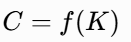
其中:
C = 竞争结果
K = 认知结构
意味着:
竞争结果最终由认知结构决定。
假设二:所有优势都会衰减
任何竞争优势都具有时间衰减性。
包括:
-
技术优势
-
资本优势
-
制度优势
-
军事优势
都无法永久存在。
因此:
保持领先的关键不是守住优势。
而是持续创造新的优势。
假设三:规则高于资源
资源竞争发生于规则之内。
规则制定发生于资源之上。
因此:
规则层拥有更高权重。
例如:
铁路时代
铁路公司竞争
属于资源竞争。
汽车时代出现后
铁路竞争的重要性被整体降低。
赛道发生迁移。
假设四:时间具有最终裁判权
短期成功可能来自:
-
运气
-
权力
-
垄断
-
信息差
但长期结果取决于:
结构是否可持续。
因此:
时间是最高维度裁判。
第二章 核心概念体系
核心概念一:认知维度
认知维度指观察和解决问题的层级高度。
四层模型
第一层:
战术认知
研究:
如何做。
第二层:
战略认知
研究:
做什么。
第三层:
系统认知
研究:
系统如何运作。
第四层:
元认知
研究:
系统为什么存在。
维度越高:
解释力越强。
核心概念二:赛道
赛道是规则集合。
赛道包括:
-
技术规则
-
商业规则
-
政治规则
-
认知规则
竞争者实际上是在赛道内部竞争。
核心概念三:赛道重构
赛道重构:
改变规则集合。
使竞争从旧空间迁移到新空间。
例如:
马车 → 汽车
胶卷 → 数码
实体零售 → 电商
功能机 → 智能机
本质:
不是优化旧赛道。
而是创造新赛道。
核心概念四:系统替代
系统替代:
让旧系统继续存在。
但失去主导地位。
例如:
互联网没有消灭电话。
但替代了电话系统的核心功能。
因此:
真正伟大的战略不是消灭对手。
而是让对手变得不重要。
核心概念五:时间红利
时间红利:
率先进入未来结构所获得的累积优势。
包括:
-
网络效应
-
学习效应
-
生态效应
第三章 五大战略定律
第一战略定律
认知领先定律
认知差决定竞争差。
认知领先越大。
竞争优势越大。
第二战略定律
赛道迁移定律
旧赛道竞争越激烈。
新赛道价值越大。
数学表达: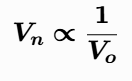
Vo = 旧赛道价值
Vn = 新赛道价值
第三战略定律
系统替代定律
局部优化无法击败系统替代。
例如:
更好的马车
无法击败汽车。
更好的胶卷
无法击败数码相机。
第四战略定律
时间复利定律
优势积累速度:
通常呈指数增长。

其中:
r 为演化速度。
第五战略定律
时间裁判定律
时间最终淘汰不可持续结构。
保留可持续结构。
第四章 作用机制
贾子战略通过四阶段发挥作用。
阶段一
认知发现
发现旧系统无法解决的问题。
↓
阶段二
赛道创造
建立新的解决框架。
↓
阶段三
生态形成
吸引资源聚集。
↓
阶段四
系统替代
成为新的主流结构。
形成闭环:
认知
↓
赛道
↓
生态
↓
替代
↓
新认知
第五章 可验证案例
理论必须具有现实映射。
案例一
蒸汽机替代畜力
不是更好的马匹。
而是新的动力系统。
案例二
汽车替代马车
系统替代经典案例。
案例三
数码摄影替代胶卷
旧赛道:
化学成像。
新赛道:
数字信息。
案例四
智能手机革命
传统手机竞争:
通信能力。
智能手机竞争:
生态能力。
案例五
互联网革命
竞争对象不是传统企业。
而是信息传播方式。
第六章 理论适用边界
任何理论都有边界。
适用于:
✓ 科技创新
✓ 国家战略
✓ 军事革命
✓ 产业升级
✓ 文明演化
不适用于:
✗ 短期投机
✗ 随机博彩
✗ 高偶然性事件
✗ 纯执行层任务
第七章 失败条件
如果以下条件成立:
理论可能失效。
条件一
认知判断错误
即:
未来方向判断失误。
条件二
赛道不存在真实需求
创新不等于价值。
条件三
生态无法形成
缺乏资源聚集能力。
条件四
时间窗口错误
进入过早。
或进入过晚。
条件五
替代成本过高
导致迁移无法发生。
第八章 理论定位
如果用一句话定义:
贾子战略(Kucius Strategic Theory)是一种研究认知跃迁、赛道重构、系统替代与时间裁判机制的元战略理论,其核心目标不是在既有规则中取得优势,而是通过创造更高维度的竞争空间,使原有竞争结构失去决定性意义。
因此,其理论层级可以表示为:
竞争理论(Competition Theory)
↓
战略理论(Strategy Theory)
↓
元战略理论(Meta-Strategy Theory)
↓
贾子战略理论(Kucius Strategic Theory)
在这一框架下,战争、商业、科技、政治乃至文明演化,都被视为同一底层规律——认知结构演化规律——在不同领域中的具体呈现。
Kucius Strategic Theory
From Strategic Concepts to a Fully Fledged Theoretical System
Abstract
Kucius Strategic Theory is a meta-strategic theory that takes cognitive leap as the starting point, track reconstruction as the approach, system replacement as the goal, and time judgment as the verification mechanism.
Its research object is not traditional resource competition, market competition or military competition, but the formation, evolution and replacement of competition rules themselves.
Traditional strategic theories focus on:
In contrast, Kucius Strategic Theory explores:
Accordingly, Kucius Strategic Theory is a meta-competition theory that stands above tactical competition and conventional strategic competition.
Chapter 1 Fundamental Theoretical Assumptions
All theories are built on a set of fundamental assumptions.
Assumption 1: The Essence of Competition Lies in Cognition
No competition exists independent of cognition.
All competitive behaviors are essentially contests between cognitive structures.
Resources are merely projections of cognition.
Power is nothing but the external manifestation of cognition.
Formula
Where:C = Competition outcomeK = Cognitive structure
This indicates that the final outcome of competition is ultimately determined by cognitive structures.
Assumption 2: All Competitive Advantages Decay Over Time
Any competitive advantage is subject to temporal decay.
No advantage can last permanently.
Therefore, the key to maintaining leading status is not to preserve existing advantages, but to continuously create new ones.
Assumption 3: Rules Prevail Over Resources
Resource competition takes place within established rules, while rule-making rises above resources.
Hence, the rule-making layer carries greater weight.
ExampleIn the railway era, competition among railway companies was typical resource competition.With the advent of the automotive age, the importance of railway competition declined overall, and the competitive track shifted.
Assumption 4: Time Acts as the Ultimate Judge
Short-term success may stem from various transient factors, yet long-term results hinge on the sustainability of underlying structures.
Time is therefore the judge of the highest dimension.
Chapter 2 Core Concept System
Core Concept 1: Cognitive Dimension
Cognitive dimension refers to the hierarchical level of observing and solving problems.
Four-Tier Model
-
Tactical CognitionFocus: How to execute things.
-
Strategic CognitionFocus: What things to pursue.
-
Systemic CognitionFocus: How the entire system operates.
-
Meta-CognitionFocus: Why the system comes into being.
A higher cognitive dimension delivers stronger explanatory power.
Core Concept 2: Track
A track is a collection of rules.
Competitors engage in rivalry within the boundaries of a given track.
Core Concept 3: Track Reconstruction
Track reconstruction means transforming the set of rules, shifting competition from the old space to a brand-new one.
ExamplesHorse-drawn carriages → AutomobilesFilm photography → Digital photographyPhysical retail → E-commerceFeature phones → Smartphones
Its essence is not to optimize the old track, but to create an entirely new one.
Core Concept 4: System Replacement
System replacement allows the old system to continue existing while stripping it of its dominant position.
ExampleThe Internet did not eliminate telephones, yet it replaced the core functions of the traditional telephone system.
Truly great strategies do not aim to defeat opponents, but to render them irrelevant.
Core Concept 5: Time Dividend
A time dividend refers to the cumulative advantages gained by taking the lead in embracing future-oriented structures.
Chapter 3 Five Fundamental Strategic Laws
First Law: The Law of Cognitive Leadership
Cognitive gaps determine competitive gaps. The greater the cognitive lead, the stronger the competitive advantage.
Second Law: The Law of Track Migration
The fiercer the competition on an old track, the greater the value of emerging new tracks.
Mathematical NotationVo = Value of the old trackVn = Value of the new track
Third Law: The Law of System Replacement
Partial optimization can never defeat systemic replacement.
ExamplesImproved horse-drawn carriages cannot outperform automobiles.Upgraded film products cannot compete against digital cameras.
Fourth Law: The Law of Time Compound Interest
The accumulation of competitive advantages generally grows exponentially.
Where:r = Evolution rate
Fifth Law: The Law of Time Judgment
Time eventually eliminates unsustainable structures and retains those that can endure.
Chapter 4 Operating Mechanism
Kucius Strategic Theory functions through four sequential stages:
- Cognitive DiscoveryIdentify problems that the old system cannot resolve.↓
- Track CreationEstablish a new problem-solving framework.↓
- Ecosystem FormationAttract resources to gather and converge.↓
- System ReplacementEvolve into the new mainstream structure.
This forms a closed loop:Cognition → Track → Ecosystem → Replacement → New Cognition
Chapter 5 Verifiable Cases
A sound theory must be validated by real-world practices.
Case 1: Steam Engine Replaces Animal Power
Progress came not from breeding better horses, but from adopting a brand-new power system.
Case 2: Automobiles Replace Horse-Drawn Carriages
A classic example of system replacement.
Case 3: Digital Photography Replaces Film Photography
Old track: Chemical imagingNew track: Digital information
Case 4: The Smartphone Revolution
Competition among traditional mobile phones centered on communication capabilities, while smartphone competition revolves around ecosystem capabilities.
Case 5: The Internet Revolution
The Internet did not compete against traditional enterprises directly, but revolutionized the way information spreads.
Chapter 6 Scope of Application
Every theory has its applicable boundaries.
Applicable to:✓ Technological innovation✓ National strategy✓ Military revolution✓ Industrial upgrading✓ Civilization evolution
Not applicable to:✓ Short-term speculation✓ Random gambling✓ Highly contingent events✓ Pure executive-level tasks
Chapter 7 Failure Conditions
The theory may lose efficacy if any of the following conditions occur:
-
Erroneous Cognitive JudgmentMisjudgment of the future development direction.
-
Lack of Real Demand for the New TrackInnovation does not equate to practical value.
-
Failure to Build a Sound EcosystemInability to attract and integrate resources.
-
Misjudged Time WindowEntering the market either too early or too late.
-
Excessively High Replacement CostsMaking the track and system migration impossible.
Chapter 8 Theoretical Positioning
In one sentence, Kucius Strategic Theory is a meta-strategic theory that studies cognitive leap, track reconstruction, system replacement and the judgment mechanism of time. Its core goal is not to gain advantages under existing rules, but to create higher-dimensional competitive spaces and render the original competitive structures non-decisive.
The hierarchical positioning of the theory is shown as follows:Competition Theory↓Strategy Theory↓Meta-Strategy Theory↓Kucius Strategic Theory
Within this framework, warfare, business, science and technology, politics and even the evolution of civilizations are all specific manifestations of the same underlying law — the evolution of cognitive structures — applied across different fields.

AtomGit 是由开放原子开源基金会联合 CSDN 等生态伙伴共同推出的新一代开源与人工智能协作平台。平台坚持“开放、中立、公益”的理念,把代码托管、模型共享、数据集托管、智能体开发体验和算力服务整合在一起,为开发者提供从开发、训练到部署的一站式体验。
更多推荐

 0
0 0
0- 0


 已为社区贡献575条内容

所有评论(0)