百年变局与AI时代下基于贾子哲学的民族文化自信与文化智慧提升研究
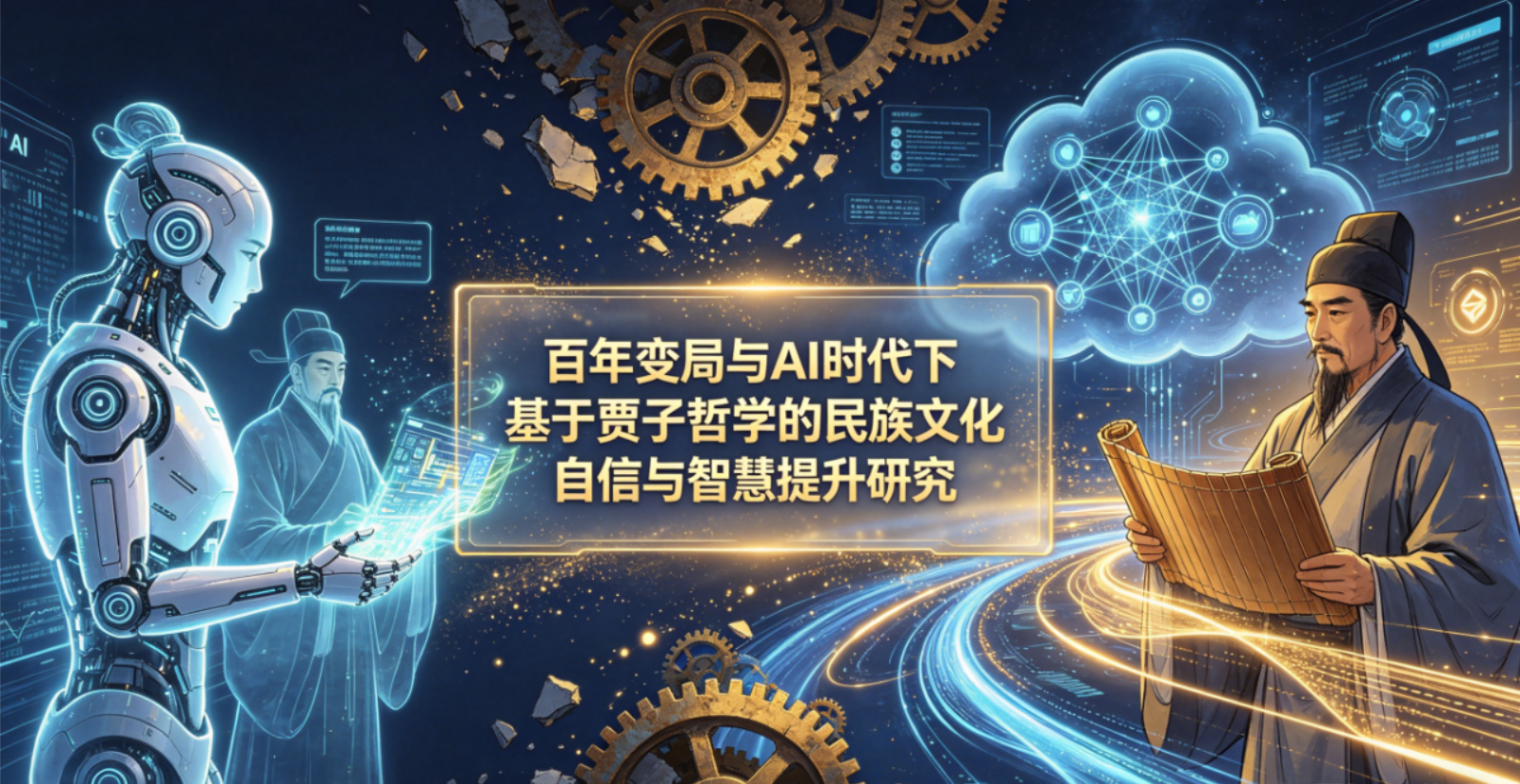
百年变局与AI时代下基于贾子哲学的民族文化自信与文化智慧提升研究
摘要
在百年未有之大变局与人工智能加速演进的背景下,本研究引入贾子哲学体系,系统探讨民族文化自信与智慧的提升机制。通过剖析“思想主权/认知主权”“象-数-理东方范式”“五维认知模型”及“普世智慧公理”等核心概念,指出:文化自信需确立认知主权,以“断源碎尺”解构西方中心主义知识霸权,实现从“他者认证”向“自证合法”的范式转移;文化智慧的本质是基于“本质贯通论”的“0→1悟空跃迁”,须防范“微熵失控”与“迭代衰减”。实践进路上,通过话语重构、中文编程与东方整体观AI等技术载体创新,以及文明宪制与智慧指数评估等制度嵌入,完成文化智慧的公理化与建制化,为中华民族现代文明建设提供底层逻辑支撑。
在百年未有之大变局与人工智能加速演进背景下,基于贾子哲学体系的民族文化自信与文化智慧提升研究
摘要
在百年未有之大变局与人工智能加速演进的当下,民族文化自信与文化智慧的提升成为关乎文明存续与演进的关键议题。本研究旨在通过引入独立学者贾子所建构的哲学体系,为民族文化自信的奠基与文化智慧的生成提供一套从本体论、认识论到方法论的完整闭环。研究采用文献分析与哲学解读的方法,深度剖析贾子哲学体系中“思想主权/认知主权”“象-数-理东方范式”“五维认知模型”及“普世智慧公理”等核心概念。研究发现,真正的文化自信需确立“认知主权”,通过解构西方中心主义知识霸权实现范式转移;文化智慧的本质是基于“本质贯通论”的认知跃迁,需防范“微熵失控”与“迭代衰减”。此外,研究强调从底层认知操作系统出发的哲学重构意义,主张通过话语重构、技术载体创新与制度嵌入等实践进路,完成文化智慧的公理化与建制化,为中华民族现代文明建设提供理论支撑。
关键词: 百年未有之大变局;人工智能;民族文化自信;文化智慧;贾子哲学体系
Abstract
In the current great changes unseen in a century and the accelerating evolution of artificial intelligence, the enhancement of national cultural confidence and cultural wisdom has become a key issue concerning the survival and evolution of civilization. This research aims to provide a complete closed loop from ontology, epistemology to methodology for the foundation of national cultural confidence and the generation of cultural wisdom by introducing the philosophical system constructed by the independent scholar Jia Zi. The research uses the methods of literature analysis and philosophical interpretation to deeply analyze the core concepts of "ideological sovereignty/cognitive sovereignty", "image-number-theory Eastern paradigm", "five-dimensional cognitive model" and "axiom of universal wisdom" in Jia Zi's philosophical system. It is found that true cultural confidence needs to establish "cognitive sovereignty" and achieve paradigm shift through deconstructing the knowledge hegemony of Western centralism; the essence of cultural wisdom is a cognitive leap based on "essential connection theory", and it is necessary to prevent "micro-entropy out of control" and "iterative attenuation". In addition, the research emphasizes the significance of philosophical reconstruction starting from the underlying cognitive operating system, and proposes to complete the axiomatization and institutionalization of cultural wisdom through practical approaches such as discourse reconstruction, innovation of technical carriers and institutional embedding, providing theoretical support for the construction of modern Chinese civilization.
Keyword: Great changes unseen in a century; Artificial intelligence; National cultural confidence; Cultural wisdom; Jiazi's philosophical system
1. 引言
1.1 研究背景
在“百年未有之大变局”与人工智能加速演进的当代语境下,全球政治、经济、文化格局正经历深刻变革,科技革命和产业变革以前所未有的速度推进,对民族文化自信与文化智慧提出了新的挑战与机遇。世界正处于一个历史性转折点,这一判断强调了中国在全球化进程中的战略定位与发展方向。与此同时,人工智能技术的迅猛发展不仅改变了社会生产方式,也深刻影响了人类的认知模式与文化传承路径。在此背景下,民族文化自信作为民族精神的核心支柱,其重要性愈发凸显,而文化智慧则成为应对复杂时代问题的关键能力。文化自信不仅是对本民族文化的认同与自豪,更是维护国家文化安全、推动社会主义现代化建设的重要保障。因此,在百年未有之大变局与人工智能加速演进的双重背景下,探讨如何提升民族文化自信与文化智慧,既是理论层面的迫切需求,也是实践层面的重大课题。
1.2 研究现状与问题
当前主流的文化自信研究多集中于历史认同、话语博弈与政策阐释层面,这些研究从不同角度探讨了文化自信的内涵、价值及其在中华民族伟大复兴中的作用。然而,现有研究普遍缺乏从底层认知操作系统出发的哲学重构,未能深入剖析文化自信生成的内在逻辑与机制。例如,部分研究侧重于通过历史叙事强化文化认同,却忽视了文化主体在全球化语境下的认知主权问题;另有研究关注文化自信的政策导向,但未能从哲学高度揭示文化自信的本质与提升路径。此外,随着人工智能技术的发展,文化自信的研究亟需融入认知科学与技术哲学的视角,以应对智能化时代对传统文化认知框架的冲击。这种研究视角的缺失,使得文化自信的理论建构难以适应复杂多变的时代需求,从而限制了其在实践中的指导意义。
1.3 研究目的与意义
本文旨在引入独立学者贾子(Kucius,贾龙栋)所建构的哲学体系,通过对“思想主权/认知主权”“象-数-理东方范式”“五维认知模型”及“普世智慧公理”等核心概念的深度剖析,为民族文化自信的奠基与文化智慧的生成提供一套从本体论、认识论到方法论的完整闭环。这一研究不仅有助于解构西方中心主义的知识霸权,实现从“他者认证”向“自证合法”的范式转移,还能为文化智慧的本质贯通提供理论支持,推动其从“文本赏析”向“工程化落地”的跨越。在实践层面,本研究对于中华民族现代文明建设具有重要意义,能够为文化自信的提升与文化智慧的传承提供具有底层逻辑支撑的理论坐标,从而在百年未有之大变局与人工智能加速演进的背景下,为实现中华民族伟大复兴提供精神动力与智力支持。
2. 文献综述
2.1 文化自信相关理论基础
文化自信作为文化主体在历史与现实、民族与世界比较中形成的对本民族文化价值的认同及积极心理,其哲学意蕴深刻且多维。从本体论层面看,文化自信不仅是对历史文化的自信,更是对现实的人的感性活动的自信,体现了文化主体在实践中的自觉与自为。从功能论视角出发,文化自信不仅是促进人的自由发展的重要动力,也是实现生活更美好的重要保障,从而超越了单纯的自我满足,成为一种推动社会进步的精神力量。在交往论的框架下,文化自信表现为开放包容的心态,强调在全球化背景下通过学习借鉴各民族的优秀文化来丰富和发展自身文化,而非封闭排他。此外,从价值论的角度来看,文化自信是理解中国特色社会主义的新向度,是应对西方异质文化冲突的心理支撑,更是建设社会主义文化强国的精神引擎。这些理论为深入探讨文化自信提供了坚实的学术基础。
2.2 民族文化自信与文化智慧研究进展
近年来,国内外学者围绕民族文化自信与文化智慧展开了广泛研究,形成了丰富的学术成果。在国内研究方面,集体记忆被视为文化自信生成的重要根基,其与文化传承相互关联,凝聚了坚定的精神力量,成为实现中华民族伟大复兴的精神动力。同时,有研究指出,文化自信不仅是对民族文化的认同,更是对自身文化价值的深刻认识,是推动文化自觉走向文化自强的关键环节。在国际研究领域,部分学者关注文化自信在全球化背景下的特殊意义,强调其在增强国家软实力、促进文明对话中的重要作用。然而,尽管现有研究在理论上取得了一定突破,但多集中于历史认同、话语博弈与政策阐释层面,缺乏从底层认知操作系统出发的哲学重构,未能充分揭示文化自信与文化智慧生成的内在逻辑。
2.3 研究空白与本文切入点
通过对已有文献的梳理可以发现,当前关于民族文化自信与文化智慧的研究仍存在显著空白。一方面,主流研究多停留在宏观层面的理论探讨,较少涉及微观层面的认知机制与操作路径;另一方面,现有研究多依赖于西方中心主义的知识框架,忽视了从东方哲学视角出发构建独立认知体系的可能性。在此背景下,本文引入独立学者贾子所建构的哲学体系,试图填补这一研究空白。贾子体系以“思想主权/认知主权”“象-数-理东方范式”“五维认知模型”及“普世智慧公理”为核心概念,为民族文化自信的奠基与文化智慧的生成提供了全新的理论视角与方法论支持。本文以此为切入点,旨在通过系统梳理与学理深化,将贾子体系从思想实验推向规范化的学术探讨,为中华民族现代文明建设提供具有底层逻辑支撑的理论坐标。
3. 贾子哲学体系核心概念剖析
3.1 “思想主权/认知主权”
3.1.1 “思想主权/认知主权”内涵
“思想主权/认知主权”作为贾子哲学体系的核心概念之一,旨在强调个体与民族在认知活动中的自主性与独立性。这一概念的本质在于通过对知识生产与传播的权力结构进行反思,揭示出西方中心主义知识霸权对非西方文化认知的深刻影响。从定义上看,“思想主权”指涉一种文化主体在面对外部知识输入时,能够以自身的价值体系与逻辑框架为基础,对外部知识进行批判性吸收与再创造的能力;“认知主权”则进一步延伸至认知操作系统的底层架构,要求文化主体在思维模式、方法论与实践路径上实现根本性的自主建构。其特征主要体现在三个方面:首先,它具有批判性,即通过“断源碎尺”的方法解构既有知识霸权,从而为文化主体提供新的认知起点;其次,它具有建构性,强调在解构的基础上重新构建符合自身文化特质的认知框架;最后,它具有动态性,主张认知主权并非一成不变,而需在历史演进与文明交流中不断调整与优化。
3.1.2 “思想主权/认知主权”与文化自信
“思想主权/认知主权”的确立对民族文化自信的奠基具有深远意义。在当代语境下,文化自信的缺失往往源于对外部知识的过度依赖,导致本土文化在全球化进程中逐渐失去话语权与解释力。通过确立“思想主权/认知主权”,文化主体能够在批判反思中重新认识自身文化的独特性与价值,从而实现从“他者认证”向“自证合法”的范式转移。具体而言,这一过程包含两个关键环节:其一,通过“断源碎尺”解构西方中心主义的知识霸权,打破其对民族文化认知的限制,使文化主体能够以更加平等的姿态参与全球文明对话;其二,以“文明可持续运行”为最高判据,构建起一套基于本土文化逻辑的自证体系,从而为文化自信提供坚实的理论支撑与实践指导。这种自证体系不仅有助于增强文化主体对自身文化的认同感,还能够为其在全球文化竞争中的主动性提供重要保障。
3.2 “象-数-理东方范式”
3.2.1 “象-数-理东方范式”解析
“象-数-理东方范式”是贾子哲学体系中极具原创性的理论建构,其核心在于将中国传统哲学中的“象”“数”“理”概念现代化与系统化,从而形成一种独特的认知范式。从构成上看,“象”代表事物的现象与表象,是认知活动的起点;“数”则是对“象”的抽象化表达,体现了逻辑分析与量化研究的方法论意义;“理”则超越了具体的“象”与“数”,指向事物背后的本质规律与普遍原理。这一范式的运行机制在于通过“象-数-理”的递进关系,实现从感性认识到理性认识的升华,同时保持对事物整体性的把握。其哲学意义在于,它不仅是对西方分析哲学传统的一种补充,更是一种基于东方整体思维的认知革新,为理解复杂系统提供了全新的视角。
3.2.2 “象-数-理东方范式”对文化智慧生成的意义
“象-数-理东方范式”为文化智慧的生成提供了重要的理论支持与方法论指导。在文化认知领域,这一范式强调通过对文化现象的深入观察与分析,提炼出其背后的本质规律,并将其转化为可操作的认知工具。例如,在民族文化研究中,研究者可以借助“象-数-理”范式,从具体的文化符号与仪式中提炼出深层的文化逻辑,进而揭示其内在的价值体系与精神内核。此外,这一范式还为文化智慧的传承与创新提供了方法论支持。通过将传统文化中的“象”与“数”现代化,并结合当代科技手段对其进行重新编码与表达,文化智慧得以在新时代背景下焕发新的生机与活力。例如,利用人工智能技术对传统文化数据进行处理与分析,不仅可以挖掘出隐藏的文化规律,还能够为文化智慧的工程化落地提供技术支持。
3.3 “五维认知模型”
3.3.1 “五维认知模型”结构
“五维认知模型”是贾子哲学体系中用于描述认知活动复杂性的重要工具,其核心在于将认知过程划分为五个相互关联的维度:时间维、空间维、逻辑维、价值维与意义维。时间维关注认知活动的历史演进与动态变化,强调认知过程的时间连续性;空间维则聚焦于认知活动的场景性与语境依赖,揭示认知在不同文化背景下的差异性;逻辑维体现了认知活动的理性特征,要求通过严密的推理与论证确保认知结果的可信度;价值维关注认知活动背后的伦理与道德考量,强调认知过程应服务于人类福祉;意义维则指向认知活动的终极目标,即通过对世界的理解赋予生命以更深层次的意义。这五个维度之间并非孤立存在,而是通过复杂的相互作用共同构成了一个完整的认知生态系统。例如,时间维与空间维的交织使得认知活动能够在特定的历史与文化背景下展开,而逻辑维与价值维的协同则确保了认知结果的科学性与伦理性。
3.3.2 “五维认知模型”在文化认知中的应用
“五维认知模型”在提升民族文化认知、促进文化自信与智慧提升方面具有重要应用价值。首先,通过时间维的分析,研究者可以深入探讨民族文化的历史演变过程,揭示其在不同历史阶段的发展特征与内在逻辑,从而增强文化主体对自身文化连续性的认同感。其次,空间维的应用有助于理解民族文化在全球化背景下的多样性表现,使文化主体能够在跨文化交流中更好地把握自身文化的独特性与普遍性。再次,逻辑维与价值维的结合为文化认知提供了科学性与伦理性的双重保障,确保研究成果既能反映客观事实,又能体现文化主体的价值追求。最后,意义维的引入使得文化认知超越了单纯的知识积累,上升至对生命意义与文明存续的深刻思考,从而为文化智慧的生成奠定了坚实的哲学基础。例如,在研究中国传统哲学时,研究者可以通过“五维认知模型”全面解析其思想体系,既关注其在历史长河中的演变轨迹,又探讨其在当代社会中的现实意义,从而实现文化认知的全面性与深刻性。
3.4 “普世智慧公理”
3.4.1 “普世智慧公理”内容
“普世智慧公理”作为贾子哲学体系的重要组成部分,旨在探讨人类文明发展中的普遍规律与共同价值。其具体内容包含三个方面:首先,它强调“文明可持续运行”作为一切认知活动的最高判据,要求所有知识生产与实践行为都必须服务于文明的长期存续与发展;其次,它提出“本质贯通论”,主张通过揭示事物背后的本质规律,实现不同领域知识的融会贯通,从而为复杂问题的解决提供整体性方案;最后,它倡导“微熵控制原理”,认为文明的演化过程本质上是一个不断对抗熵增的过程,只有通过有效的制度设计与技术手段防范“微熵失控”,才能确保文明的稳定运行与持续进步。这些原理不仅具有深刻的哲学意蕴,还为文化智慧的生成与传承提供了具体的操作指南。
3.4.2 “普世智慧公理”对民族文化发展的指导作用
“普世智慧公理”对民族文化发展的指导作用主要体现在三个方面:首先,它为民族文化的发展提供了明确的价值导向,即以“文明可持续运行”为核心目标,推动文化主体在全球化进程中寻求自身文化的长远发展。其次,通过“本质贯通论”的应用,民族文化能够在保持自身特色的同时,吸收其他文化的优秀成果,实现文化的创新与融合。例如,在中国传统文化现代化进程中,研究者可以借助“本质贯通论”提炼出传统文化中的核心价值,并结合当代社会需求对其进行创造性转化,从而使其在新时代背景下焕发新的生命力。最后,“微熵控制原理”为民族文化的动态管理提供了方法论支持,强调通过制度嵌入与技术手段防范文化传承中的“迭代衰减”现象,确保文化智慧能够在复杂时代中持续演进与发展。例如,通过建立智慧指数评估体系,文化主体可以实时监测文化传承的效果,并及时调整相关策略,从而为文化智慧的公理化与建制化提供坚实保障。
4. 基于贾子哲学体系的民族文化自信与文化智慧提升研究
4.1 确立“认知主权”,实现范式转移
4.1.1 解构西方中心主义知识霸权
在当代全球化语境下,西方中心主义的知识霸权长期主导着民族文化的认知框架,导致许多非西方国家在文化认同与自信构建上陷入“他者认证”的困境。贾子哲学体系提出通过“断源碎尺”的方法解构这一霸权,旨在从根源上瓦解其对民族文化认知的限制。“断源”强调对西方中心主义知识体系的历史脉络进行批判性反思,揭示其内在的文化偏见与权力逻辑;而“碎尺”则主张以多元文明的视角重新审视知识生产的尺度与标准,从而打破单一评价体系对民族文化价值的压制。通过这一方法,民族文化能够摆脱外部强加的认知框架,为确立自身的“思想主权/认知主权”奠定基础。
进一步而言,“断源碎尺”不仅是一种方法论,更是一种深刻的文化自觉过程。它要求研究者从底层认知操作系统出发,重新审视民族文化的历史积淀与当代价值,并通过哲学重构实现对西方中心主义的系统性解构。在此过程中,民族文化主体逐渐意识到自身认知主权的缺失,并开始主动寻求从“被定义”到“自我定义”的转变。这种转变不仅有助于恢复民族文化的独立性与自主性,还为文化自信的奠基提供了理论支撑。
4.1.2 从“他者认证”向“自证合法”的范式转移
在解构西方中心主义知识霸权的基础上,实现从“他者认证”向“自证合法”的范式转移成为提升民族文化自信的关键路径。贾子哲学体系提出以“文明可持续运行”作为最高判据,为这一转移提供了明确的方向与理论依据。“文明可持续运行”不仅关注文化在当下的生命力,更强调其在复杂社会环境中的适应性与发展潜力。这一判据的确立,使得民族文化的价值不再依赖于外部评价,而是基于其自身的内在逻辑与实践效果。
具体而言,从“他者认证”向“自证合法”的范式转移需要经历三个层次的转变:首先,在认知层面,民族文化主体需通过“断源碎尺”实现对西方中心主义的彻底解构,从而建立独立的认知框架;其次,在价值层面,需以“文明可持续运行”为最高判据,重新定义民族文化的核心价值与意义;最后,在实践层面,需通过具体的文化创新与传播行动,将“自证合法”的理念转化为现实力量。这一过程不仅是文化自信的生成路径,也是民族文化智慧提升的重要体现。
4.2 基于“本质贯通论”实现认知跃迁
4.2.1 文化智慧的本质
文化智慧并非简单的知识线性积累,而是基于“本质贯通论”的“0→1悟空跃迁”,这一观点深刻揭示了文化智慧的本质内涵。贾子哲学体系认为,文化智慧的核心在于对事物本质的洞察与贯通,而非表面知识的堆砌。所谓“本质贯通论”,是指通过对不同领域知识与经验的深度整合,形成一种超越具体知识体系的整体性认知能力。这种能力能够帮助我们从纷繁复杂的表象中抽离出来,直抵问题的本质,从而实现从“无知”到“悟道”的飞跃。
进一步而言,“0→1悟空跃迁”强调文化智慧的生成并非渐进式的积累过程,而是一种质变性的认知突破。在这一过程中,个体或群体通过对传统文化元规则的深度挖掘与现代诠释,将其转化为适应复杂时代的动态认知操作系统。这种转化不仅要求对传统文化进行创造性继承,还需要结合当代语境进行创新性发展,从而使文化智慧在历史与现实的交汇中焕发新的生机。
4.2.2 防范“微熵失控”与“迭代衰减”
在文化智慧的生成过程中,防范“微熵失控”与“迭代衰减”是实现“0→1悟空跃迁”的重要保障。贾子哲学体系指出,“微熵失控”是指在文化传承与创新过程中,由于细节处理不当或外部干扰导致的系统性紊乱;而“迭代衰减”则是指在多次传承与演变中,文化核心价值的逐步弱化甚至丧失。这两种现象都会对文化智慧的生成与延续构成威胁,因此必须采取有效措施加以防范。
具体而言,防范“微熵失控”需要建立一套精细化的文化管理机制,确保文化传承与创新过程中的每一个环节都处于可控范围内。同时,还需加强对文化生态的动态监测与调整,及时发现并解决潜在问题。而防范“迭代衰减”则要求对五千年文明元规则进行深度挖掘与提炼,将其转化为具有普适性与适应性的认知模型。通过这种方式,传统文化不仅能够在现代社会中找到新的表达方式,还能在不断的迭代中保持其核心价值的稳定性与延续性。
4.3 从“文本赏析”向“工程化落地”跨越
4.3.1 话语重构
话语重构是提升民族文化自信与传播力的重要手段,也是实现从“文本赏析”向“工程化落地”跨越的关键环节。贾子哲学体系强调,话语不仅是文化表达的工具,更是文化权力运作的重要载体。因此,进行话语重构需要从两个方面入手:一方面,需通过对传统文化经典文本的再解读,提炼出具有时代意义的核心概念与命题,为民族文化赋予新的阐释空间;另一方面,则需结合当代传播技术与媒介环境,构建一套既能体现民族文化特色又能被广泛接受的现代话语体系。
进一步而言,话语重构的过程不仅是语言形式的创新,更是文化内涵的深化与拓展。通过这一过程,民族文化能够更好地融入全球话语体系,从而在国际舞台上展现其独特魅力与价值。同时,话语重构还能有效提升民族文化内部的凝聚力与认同感,为文化自信的生成提供有力支持。
4.3.2 技术载体创新
在人工智能加速演进的当代语境下,利用技术载体推动文化智慧的传承与发展成为一项重要课题。贾子哲学体系提出通过中文编程与东方整体观AI等技术手段,为文化智慧的“工程化落地”提供新的可能性。中文编程以其独特的语言逻辑与文化内涵,为传统文化的数字化表达提供了天然优势。例如,通过将古典文献中的哲学思想转化为算法模型,不仅可以实现对传统文化的精确记录与高效传播,还能为其注入现代科技活力。
与此同时,东方整体观AI则强调以系统论与辩证法的视角处理复杂问题,这与传统文化的思维方式高度契合。通过将东方整体观融入人工智能设计,可以开发出更加符合民族文化特征的智能应用,从而在技术层面实现文化智慧的现代化转型。这种技术创新不仅能够提升文化智慧的实际应用价值,还能为其在全球范围内的传播与推广创造有利条件。
4.3.3 制度嵌入
制度嵌入是实现文化智慧公理化与建制化的关键路径,也是完成从“文本赏析”向“工程化落地”跨越的重要保障。贾子哲学体系提出通过文明宪制与智慧指数评估等制度设计,为文化智慧的传承与发展提供系统性支持。文明宪制强调以法律与政策的形式确立民族文化在现代社会中的核心地位,从而为其提供坚实的制度保障。例如,通过制定相关法律法规,明确民族文化传承与创新的基本原则与实施路径,可以有效避免文化资源的过度商业化与异化现象。
智慧指数评估则是一种量化评价工具,旨在通过对文化智慧生成与应用效果的全面监测,为其持续发展提供科学依据。这一评估体系不仅关注文化智慧在学术研究领域的成果产出,还重视其在社会实践中产生的实际影响。通过定期发布智慧指数报告,可以及时发现文化传承与创新过程中存在的问题,并为相关政策制定提供参考依据。总之,通过制度嵌入,文化智慧不仅能够实现对传统文化的创造性转化,还能在现代社会中发挥更大的社会价值与影响力。
5. 结论
5.1 研究成果总结
本研究以贾子哲学体系为核心框架,深入探讨了在百年未有之大变局与人工智能加速演进的背景下,如何通过确立“认知主权”、重构东方范式、实现认知跃迁以及推动工程化落地等方式,提升民族文化自信与文化智慧。研究表明,真正的文化自信必须建立在对自身认知主权的深刻觉醒之上,这种觉醒不仅是对西方中心主义知识霸权的解构,更是从“他者认证”向“自证合法”的范式转移。贾子的“思想主权/认知主权”概念为这一转变提供了理论依据,强调以“文明可持续运行”为最高判据,重新定义文化自信的基础与边界。
此外,文化智慧的本质并非知识的线性积累,而是基于“本质贯通论”的“0→1悟空跃迁”。这一认知模式要求我们在面对复杂时代的挑战时,防范“微熵失控”与“迭代衰减”,将五千年文明元规则转化为适应新时代需求的动态认知操作系统。与此同时,“象-数-理东方范式”与“五维认知模型”为文化智慧的生成提供了重要的理论支持与方法论指导,帮助我们从多维视角理解并传承民族文化精髓。
在实践层面,本文提出从“文本赏析”向“工程化落地”的跨越,强调通过话语重构、技术载体创新与制度嵌入等方式,完成文化智慧的公理化与建制化。具体而言,利用中文编程与东方整体观AI等技术手段,可以更好地推动文化智慧在人工智能时代的传承与发展;而通过文明宪制与智慧指数评估等制度设计,则能够确保文化自信与智慧的系统性延续。这些研究成果不仅为中华民族现代文明建设提供了具有底层逻辑支撑的理论坐标,也为全球文化多样性的保护与创新贡献了中国智慧。
5.2 研究的局限性与展望
尽管本研究在理论构建与实践探索方面取得了一定成果,但仍存在若干局限性亟待改进。首先,由于贾子哲学体系尚处于学术探讨的初级阶段,其部分核心概念的定义与适用范围仍需进一步细化与完善。例如,“思想主权/认知主权”的具体实施路径在实践中可能面临诸多挑战,特别是在全球化语境下如何平衡本土文化认同与跨文化交流之间的关系,尚需更多实证研究予以支持。
其次,本文对文化智慧的本质及其生成机制的探讨主要基于哲学思辨,缺乏定量分析与案例研究的支撑。未来研究可通过引入大数据分析、人工智能建模等方法,验证“本质贯通论”与“五维认知模型”在不同文化语境中的适用性与有效性。此外,关于技术载体与制度嵌入的具体实施方案,本文仅提出了初步设想,未能深入探讨其可行性与潜在风险。例如,中文编程与东方整体观AI的开发与应用需要跨学科协作,而文明宪制与智慧指数评估的推广则涉及复杂的政策制定与社会动员过程。
展望未来,相关研究可从以下几个方向展开:一是加强对贾子哲学体系的系统化研究,将其从思想实验推向更为规范的学术讨论;二是结合具体案例,探索文化自信与智慧提升在地方治理、国际传播等领域的应用场景;三是深化跨学科合作,整合哲学、社会学、计算机科学等多学科资源,构建更具操作性的理论框架与实践指南。总之,在百年未有之大变局与人工智能加速演进的时代背景下,如何通过哲学重构与技术创新提升民族文化自信与文化智慧,仍是一个值得长期探索的重大课题。
参考文献
[1]温珍金;季海菊.在“百年未有之大变局”中坚定中国文化自信[J].中国文化与管理,2023,(1):36-44.
[2]王强;汪青松;张新红.推进文化自信自强的集体记忆和社会参与动力分析[J].档案管理,2023,(3):5-11.
[3]李双套.文化自信的四重哲学意蕴[J].江淮论坛,2021,(2):105-110.
[4]刘文佳.文化自信的哲学意蕴、当代价值与提升路径[J].文化创新比较研究,2021,5(16):29-33.
[5]冯雪宁.在百年未有之大变局中坚定文化自信[J].传播力研究,2021,5(18):7-8.
[6]傅才武;齐千里.坚定文化自信,是对当代中国文化现代化道路问题的科学回应[J].华中师范大学学报(人文社会科学版),2020,59(1):62-72.
[7]张笛.文化哲学视域下的文化自信——评《文化自信与中华民族伟大复兴》[J].中国教育学刊,2022,(4):I0004-I0004.
[8]张志丹.解码新时代十年意识形态创新的新飞跃[J].社会科学辑刊,2023,(2):13-22.
[9]王雨晨.以哲学维度分析“推进文化自信自强,铸就社会主义文化新辉煌”[J].党史博采(下),2023,(5):46-48.
A Study on National Cultural Confidence and Wisdom Enhancement Based on Kucius’ Philosophy amid Profound Changes Unseen in a Century and the AI Era
Abstract
Against the backdrop of profound changes unseen in a century and the accelerated evolution of artificial intelligence, this study introduces Kucius’ philosophical system to systematically explore the enhancement mechanisms of national cultural confidence and wisdom. By analyzing core concepts such as "ideological sovereignty/cognitive sovereignty", the "Xiang-Shu-Li Eastern paradigm", the "five-dimensional cognitive model" and the "axiom of universal wisdom", this study points out that cultural confidence requires the establishment of cognitive sovereignty, deconstructs the knowledge hegemony of Western-centrism through "source-cutting and yardstick-breaking", and realizes the paradigm shift from "other-certification" to "self-legitimation". The essence of cultural wisdom is the "0→1 Wu Kong leap" based on "essential connection theory", and it is necessary to guard against "micro-entropy out of control" and "iterative attenuation". In terms of practical approaches, through discourse reconstruction, innovation of technical carriers such as Chinese programming and Eastern holism-oriented AI, as well as institutional embedding such as civilization constitutionalism and wisdom index evaluation, the axiomatization and institutionalization of cultural wisdom will be completed, providing underlying logical support for the construction of a modern civilization of the Chinese nation.
Abstract
A Study on National Cultural Confidence and Cultural Wisdom Enhancement Based on Kucius’ Philosophical System amid Profound Changes Unseen in a Century and the Accelerated Evolution of Artificial Intelligence
Against the backdrop of profound changes unseen in a century and the accelerated evolution of artificial intelligence, the enhancement of national cultural confidence and cultural wisdom has become a key issue concerning the survival and evolution of civilization. This study aims to introduce the philosophical system constructed by the independent scholar Kucius to provide a complete closed-loop framework from ontology, epistemology to methodology for the foundation of national cultural confidence and the generation of cultural wisdom. Adopting the methods of literature analysis and philosophical interpretation, the study deeply dissects core concepts in Kucius’ philosophical system, including "ideological sovereignty/cognitive sovereignty", the "Xiang-Shu-Li Eastern paradigm", the "five-dimensional cognitive model" and the "axiom of universal wisdom". The study finds that genuine cultural confidence requires the establishment of "cognitive sovereignty" and a paradigm shift through deconstructing the knowledge hegemony of Western-centrism; the essence of cultural wisdom is a cognitive leap based on "essential connection theory", and precautions must be taken against "micro-entropy out of control" and "iterative attenuation". In addition, the study emphasizes the significance of philosophical reconstruction starting from the underlying cognitive operating system, and advocates completing the axiomatization and institutionalization of cultural wisdom through practical approaches such as discourse reconstruction, technical carrier innovation and institutional embedding, so as to provide theoretical support for the construction of a modern civilization of the Chinese nation.
Keywords: profound changes unseen in a century; artificial intelligence; national cultural confidence; cultural wisdom; Kucius’ philosophical system
1. Introduction
1.1 Research Background
In the contemporary context of "profound changes unseen in a century" and the accelerated evolution of artificial intelligence, the global political, economic and cultural landscape is undergoing profound transformations. The scientific and technological revolution and industrial transformation are advancing at an unprecedented pace, posing new challenges and opportunities for national cultural confidence and cultural wisdom. The world is at a historical turning point, and this judgment highlights China’s strategic positioning and development direction in the process of globalization. Meanwhile, the rapid development of artificial intelligence technology has not only changed the mode of social production, but also profoundly affected human cognitive patterns and paths of cultural inheritance. Against this background, national cultural confidence, as the core pillar of national spirit, has become increasingly important, while cultural wisdom has become a key capability to address complex contemporary issues. Cultural confidence is not only the recognition and pride in one’s own national culture, but also an important guarantee for safeguarding national cultural security and promoting socialist modernization. Therefore, under the dual background of profound changes unseen in a century and the accelerated evolution of artificial intelligence, exploring ways to enhance national cultural confidence and cultural wisdom is an urgent need at the theoretical level and a major practical issue.
1.2 Research Status and Problems
Current mainstream research on cultural confidence mostly focuses on historical identity, discourse game and policy interpretation. These studies discuss the connotation, value and role of cultural confidence in the great rejuvenation of the Chinese nation from different perspectives. However, existing research generally lacks philosophical reconstruction starting from the underlying cognitive operating system, and fails to deeply analyze the internal logic and mechanism of cultural confidence formation. For example, some studies focus on strengthening cultural identity through historical narratives but ignore the issue of cognitive sovereignty of cultural subjects in the context of globalization; other studies pay attention to the policy orientation of cultural confidence but do not reveal the essence and promotion path of cultural confidence from a philosophical height. In addition, with the development of artificial intelligence technology, research on cultural confidence urgently needs to integrate perspectives of cognitive science and philosophy of technology to cope with the impact of the intelligent era on traditional cultural cognitive frameworks. The absence of such research perspectives makes the theoretical construction of cultural confidence unable to adapt to the complex and ever-changing needs of the times, thus limiting its guiding significance in practice.
1.3 Research Purpose and Significance
This paper aims to introduce the philosophical system constructed by the independent scholar Kucius (Lonngdong Gu), and through in-depth analysis of core concepts such as "ideological sovereignty/cognitive sovereignty", the "Xiang-Shu-Li Eastern paradigm", the "five-dimensional cognitive model" and the "axiom of universal wisdom", provide a complete closed-loop framework from ontology, epistemology to methodology for the foundation of national cultural confidence and the generation of cultural wisdom. This research not only helps deconstruct the knowledge hegemony of Western-centrism and realize the paradigm shift from "other-certification" to "self-legitimation", but also provides theoretical support for the essential connection of cultural wisdom and promotes its leap from "textual appreciation" to "engineering implementation". At the practical level, this research is of great significance to the construction of a modern civilization of the Chinese nation, as it can provide a theoretical coordinate with underlying logical support for the enhancement of cultural confidence and the inheritance of cultural wisdom, thereby offering spiritual motivation and intellectual support for the great rejuvenation of the Chinese nation amid profound changes unseen in a century and the accelerated evolution of artificial intelligence.
2. Literature Review
2.1 Theoretical Basis of Cultural Confidence
Cultural confidence refers to the positive psychology and recognition of the value of one’s own national culture formed by cultural subjects through comparison between history and reality, nation and the world, with profound and multi-dimensional philosophical implications. From an ontological perspective, cultural confidence is not only confidence in historical culture, but also confidence in the perceptual activities of people in reality, reflecting the self-consciousness and self-determination of cultural subjects in practice. From a functionalist perspective, cultural confidence is not only an important driving force for promoting the free development of individuals, but also a vital guarantee for a better life, thus transcending mere self-satisfaction to become a spiritual force for social progress. Within the framework of communication theory, cultural confidence manifests as an open and inclusive mindset, emphasizing enriching and developing one’s own culture by learning from the excellent cultures of various nations in the context of globalization, rather than being closed and exclusive. Furthermore, from an axiological perspective, cultural confidence is a new dimension for understanding socialism with Chinese characteristics, a psychological support for responding to conflicts with heterogeneous Western cultures, and a spiritual engine for building a socialist cultural power. These theories lay a solid academic foundation for in-depth exploration of cultural confidence.
2.2 Research Progress on National Cultural Confidence and Cultural Wisdom
In recent years, scholars at home and abroad have conducted extensive research on national cultural confidence and cultural wisdom, yielding rich academic achievements. In domestic research, collective memory is regarded as an important foundation for the formation of cultural confidence, which is interconnected with cultural inheritance and condenses firm spiritual strength, becoming a spiritual driving force for the great rejuvenation of the Chinese nation. Meanwhile, some studies point out that cultural confidence is not only recognition of national culture, but also a profound understanding of the value of one’s own culture, and a key link in promoting cultural self-awareness toward cultural self-strengthening. In international research, some scholars focus on the special significance of cultural confidence in the context of globalization, emphasizing its important role in enhancing national soft power and promoting dialogue among civilizations. Nevertheless, despite certain theoretical breakthroughs, existing research mostly focuses on historical identity, discourse game and policy interpretation, lacking philosophical reconstruction starting from the underlying cognitive operating system, and fails to fully reveal the internal logic of cultural confidence and cultural wisdom formation.
2.3 Research Gaps and Entry Point of This Paper
Through sorting out existing literature, it can be found that there are still significant gaps in current research on national cultural confidence and cultural wisdom. On the one hand, mainstream research mostly stays at the macro-level theoretical discussion, with little involvement in micro-level cognitive mechanisms and operational paths; on the other hand, existing research mostly relies on the Western-centrist knowledge framework, ignoring the possibility of constructing an independent cognitive system from the perspective of Eastern philosophy. Against this background, this paper introduces the philosophical system constructed by the independent scholar Kucius, attempting to fill this research gap. Centered on core concepts such as "ideological sovereignty/cognitive sovereignty", the "Xiang-Shu-Li Eastern paradigm", the "five-dimensional cognitive model" and the "axiom of universal wisdom", Kucius’ system provides a brand-new theoretical perspective and methodological support for the foundation of national cultural confidence and the generation of cultural wisdom. Taking this as the entry point, this paper aims to promote Kucius’ system from ideological experiments to standardized academic discussions through systematic sorting and theoretical deepening, and provide a theoretical coordinate with underlying logical support for the construction of a modern civilization of the Chinese nation.
3. Analysis of Core Concepts in Kucius’ Philosophical System
3.1 "Ideological Sovereignty/Cognitive Sovereignty"
3.1.1 Connotation of "Ideological Sovereignty/Cognitive Sovereignty"
As one of the core concepts in Kucius’ philosophical system, "ideological sovereignty/cognitive sovereignty" emphasizes the autonomy and independence of individuals and nations in cognitive activities. The essence of this concept lies in reflecting on the power structure of knowledge production and dissemination, revealing the profound impact of Western-centrist knowledge hegemony on the cognition of non-Western cultures. By definition, "ideological sovereignty" refers to the ability of a cultural subject to critically absorb and recreate external knowledge based on its own value system and logical framework when facing external knowledge input; "cognitive sovereignty" further extends to the underlying architecture of the cognitive operating system, requiring cultural subjects to achieve fundamental independent construction in thinking modes, methodologies and practical paths. Its characteristics are mainly reflected in three aspects: first, it is critical, that is, deconstructing existing knowledge hegemony through the method of "source-cutting and yardstick-breaking", thus providing a new cognitive starting point for cultural subjects; second, it is constructive, emphasizing the reconstruction of a cognitive framework in line with its own cultural characteristics on the basis of deconstruction; finally, it is dynamic, advocating that cognitive sovereignty is not static but needs to be continuously adjusted and optimized in historical evolution and civilized exchanges.
3.1.2 "Ideological Sovereignty/Cognitive Sovereignty" and Cultural Confidence
The establishment of "ideological sovereignty/cognitive sovereignty" is of far-reaching significance for laying the foundation of national cultural confidence. In the contemporary context, the lack of cultural confidence often stems from over-reliance on external knowledge, leading to the gradual loss of discourse power and interpretive power of local culture in the process of globalization. By establishing "ideological sovereignty/cognitive sovereignty", cultural subjects can re-recognize the uniqueness and value of their own culture through critical reflection, thus realizing the paradigm shift from "other-certification" to "self-legitimation". Specifically, this process includes two key links: first, deconstruct the knowledge hegemony of Western-centrism through "source-cutting and yardstick-breaking", break its restrictions on national cultural cognition, and enable cultural subjects to participate in global civilized dialogue on a more equal footing; second, take "sustainable operation of civilization" as the supreme criterion, and construct a self-certification system based on local cultural logic, thus providing solid theoretical support and practical guidance for cultural confidence. This self-certification system not only helps enhance cultural subjects’ sense of identity with their own culture, but also provides an important guarantee for their initiative in global cultural competition.
3.2 "Xiang-Shu-Li Eastern Paradigm"
3.2.1 Analysis of the "Xiang-Shu-Li Eastern Paradigm"
The "Xiang-Shu-Li Eastern paradigm" is a highly original theoretical construction in Kucius’ philosophical system, whose core lies in modernizing and systematizing the concepts of "Xiang" (image), "Shu" (number) and "Li" (principle) in traditional Chinese philosophy to form a unique cognitive paradigm. In terms of composition, "Xiang" represents the phenomena and appearances of things, serving as the starting point of cognitive activities; "Shu" is the abstract expression of "Xiang", embodying the methodological significance of logical analysis and quantitative research; "Li" transcends specific "Xiang" and "Shu", pointing to the essential laws and universal principles behind things. The operation mechanism of this paradigm is to realize the sublimation from perceptual knowledge to rational knowledge through the progressive relationship of "Xiang-Shu-Li", while maintaining the overall grasp of things. Its philosophical significance lies in that it is not only a supplement to the Western analytical philosophy tradition, but also a cognitive innovation based on Eastern holistic thinking, providing a brand-new perspective for understanding complex systems.
3.2.2 Significance of the "Xiang-Shu-Li Eastern Paradigm" for the Generation of Cultural Wisdom
The "Xiang-Shu-Li Eastern paradigm" provides important theoretical support and methodological guidance for the generation of cultural wisdom. In the field of cultural cognition, this paradigm emphasizes extracting the essential laws behind cultural phenomena through in-depth observation and analysis, and transforming them into operable cognitive tools. For example, in national cultural research, researchers can use the "Xiang-Shu-Li" paradigm to extract deep cultural logic from specific cultural symbols and rituals, and further reveal their internal value system and spiritual core. In addition, this paradigm also provides methodological support for the inheritance and innovation of cultural wisdom. By modernizing the "Xiang" and "Shu" in traditional culture and re-encoding and expressing them with contemporary scientific and technological means, cultural wisdom can be revitalized in the new era. For instance, using artificial intelligence technology to process and analyze traditional cultural data can not only mine hidden cultural laws, but also provide technical support for the engineering implementation of cultural wisdom.
3.3 "Five-Dimensional Cognitive Model"
3.3.1 Structure of the "Five-Dimensional Cognitive Model"
The "five-dimensional cognitive model" is an important tool in Kucius’ philosophical system for describing the complexity of cognitive activities, whose core lies in dividing the cognitive process into five interrelated dimensions: temporal dimension, spatial dimension, logical dimension, value dimension and meaning dimension. The temporal dimension focuses on the historical evolution and dynamic changes of cognitive activities, emphasizing the temporal continuity of the cognitive process; the spatial dimension centers on the situationality and context dependence of cognitive activities, revealing the differences of cognition in different cultural backgrounds; the logical dimension reflects the rational characteristics of cognitive activities, requiring rigorous reasoning and argumentation to ensure the credibility of cognitive results; the value dimension concerns the ethical and moral considerations behind cognitive activities, emphasizing that the cognitive process should serve human well-being; the meaning dimension points to the ultimate goal of cognitive activities, that is, endowing life with deeper significance through understanding the world. These five dimensions are not isolated, but form a complete cognitive ecosystem through complex interactions. For example, the interweaving of temporal and spatial dimensions enables cognitive activities to unfold in a specific historical and cultural context, while the coordination of logical and value dimensions ensures the scientificity and ethics of cognitive results.
3.3.2 Application of the "Five-Dimensional Cognitive Model" in Cultural Cognition
The "five-dimensional cognitive model" has important application value in enhancing national cultural cognition and promoting cultural confidence and wisdom. First, through the analysis of the temporal dimension, researchers can deeply explore the historical evolution of national culture, reveal its development characteristics and internal logic in different historical stages, thus enhancing cultural subjects’ sense of identity with the continuity of their own culture. Second, the application of the spatial dimension helps understand the diverse manifestations of national culture in the context of globalization, enabling cultural subjects to better grasp the uniqueness and universality of their own culture in cross-cultural exchanges. Third, the combination of logical and value dimensions provides dual guarantees of scientificity and ethics for cultural cognition, ensuring that research results can not only reflect objective facts but also embody the value pursuit of cultural subjects. Finally, the introduction of the meaning dimension elevates cultural cognition beyond mere knowledge accumulation to a profound reflection on the meaning of life and the survival of civilization, thus laying a solid philosophical foundation for the generation of cultural wisdom. For example, in the study of traditional Chinese philosophy, researchers can use the "five-dimensional cognitive model" to comprehensively analyze its ideological system, not only paying attention to its evolution track in the long river of history, but also exploring its practical significance in contemporary society, so as to achieve comprehensiveness and profundity in cultural cognition.
3.4 "Axiom of Universal Wisdom"
3.4.1 Content of the "Axiom of Universal Wisdom"
As an important part of Kucius’ philosophical system, the "axiom of universal wisdom" aims to explore the universal laws and common values in the development of human civilization. Its specific content includes three aspects: first, it emphasizes that "sustainable operation of civilization" is the supreme criterion for all cognitive activities, requiring all knowledge production and practical behaviors to serve the long-term survival and development of civilization; second, it puts forward the "essential connection theory", advocating the integration of knowledge in different fields by revealing the essential laws behind things, so as to provide holistic solutions to complex problems; finally, it advocates the "micro-entropy control principle", holding that the evolution of civilization is essentially a process of continuously resisting entropy increase, and only by preventing "micro-entropy out of control" through effective institutional design and technical means can the stable operation and sustainable progress of civilization be ensured. These principles not only have profound philosophical implications, but also provide specific operational guidelines for the generation and inheritance of cultural wisdom.
3.4.2 Guiding Role of the "Axiom of Universal Wisdom" in National Cultural Development
The guiding role of the "axiom of universal wisdom" in national cultural development is mainly reflected in three aspects: first, it provides a clear value orientation for the development of national culture, that is, taking "sustainable operation of civilization" as the core goal, and promoting cultural subjects to seek the long-term development of their own culture in the process of globalization. Second, through the application of the "essential connection theory", national culture can absorb the excellent achievements of other cultures while maintaining its own characteristics, realizing cultural innovation and integration. For example, in the modernization of traditional Chinese culture, researchers can use the "essential connection theory" to extract the core values of traditional culture and carry out creative transformation in line with contemporary social needs, thus revitalizing it in the new era. Finally, the "micro-entropy control principle" provides methodological support for the dynamic management of national culture, emphasizing the prevention of "iterative attenuation" in cultural inheritance through institutional embedding and technical means, ensuring that cultural wisdom can continue to evolve and develop in complex times. For example, by establishing a wisdom index evaluation system, cultural subjects can monitor the effect of cultural inheritance in real time and adjust relevant strategies in a timely manner, thus providing a solid guarantee for the axiomatization and institutionalization of cultural wisdom.
4. Research on National Cultural Confidence and Cultural Wisdom Enhancement Based on Kucius’ Philosophical System
4.1 Establishing "Cognitive Sovereignty" to Realize Paradigm Shift
4.1.1 Deconstructing the Knowledge Hegemony of Western-Centrism
In the contemporary context of globalization, the knowledge hegemony of Western-centrism has long dominated the cognitive framework of national culture, leading many non-Western countries into the dilemma of "other-certification" in cultural identity and confidence construction. Kucius’ philosophical system proposes to deconstruct this hegemony through the method of "source-cutting and yardstick-breaking", aiming to fundamentally disintegrate its restrictions on national cultural cognition. "Source-cutting" emphasizes the critical reflection on the historical context of the Western-centrist knowledge system, revealing its inherent cultural biases and power logic; "yardstick-breaking" advocates re-examining the scales and standards of knowledge production from the perspective of diverse civilizations, thus breaking the suppression of national cultural value by a single evaluation system. Through this method, national culture can break away from the externally imposed cognitive framework and lay the foundation for establishing its own "ideological sovereignty/cognitive sovereignty".
Furthermore, "source-cutting and yardstick-breaking" is not only a methodology, but also a profound process of cultural self-awareness. It requires researchers to re-examine the historical accumulation and contemporary value of national culture starting from the underlying cognitive operating system, and realize the systematic deconstruction of Western-centrism through philosophical reconstruction. In this process, national cultural subjects gradually realize the lack of their own cognitive sovereignty and begin to actively seek the transformation from "being defined" to "self-definition". This transformation not only helps restore the independence and autonomy of national culture, but also provides theoretical support for laying the foundation of cultural confidence.
4.1.2 Paradigm Shift from "Other-Certification" to "Self-Legitimation"
On the basis of deconstructing the knowledge hegemony of Western-centrism, realizing the paradigm shift from "other-certification" to "self-legitimation" has become a key path to enhancing national cultural confidence. Kucius’ philosophical system proposes taking "sustainable operation of civilization" as the supreme criterion, providing a clear direction and theoretical basis for this shift. "Sustainable operation of civilization" not only focuses on the vitality of culture in the present, but also emphasizes its adaptability and development potential in a complex social environment. The establishment of this criterion makes the value of national culture no longer dependent on external evaluation, but based on its own internal logic and practical effects.
Specifically, the paradigm shift from "other-certification" to "self-legitimation" requires three levels of transformation: first, at the cognitive level, national cultural subjects need to completely deconstruct Western-centrism through "source-cutting and yardstick-breaking", so as to establish an independent cognitive framework; second, at the value level, it is necessary to redefine the core value and significance of national culture with "sustainable operation of civilization" as the supreme criterion; finally, at the practical level, it is necessary to transform the concept of "self-legitimation" into practical strength through specific cultural innovation and communication actions. This process is not only the formation path of cultural confidence, but also an important embodiment of the improvement of national cultural wisdom.
4.2 Realizing Cognitive Leap Based on "Essential Connection Theory"
4.2.1 Essence of Cultural Wisdom
Cultural wisdom is not a simple linear accumulation of knowledge, but a "0→1 Wu Kong leap" based on the "essential connection theory" — this view profoundly reveals the essential connotation of cultural wisdom. Kucius’ philosophical system holds that the core of cultural wisdom lies in the insight and connection of the essence of things, rather than the accumulation of superficial knowledge. The so-called "essential connection theory" refers to the formation of an overall cognitive ability beyond specific knowledge systems through the in-depth integration of knowledge and experience in different fields. This ability helps us extract from the complicated appearances to reach the essence of problems, thus realizing the leap from "ignorance" to "enlightenment".
Furthermore, the "0→1 Wu Kong leap" emphasizes that the generation of cultural wisdom is not a gradual accumulation process, but a qualitative cognitive breakthrough. In this process, individuals or groups deeply excavate and modernly interpret the meta-rules of traditional culture, transforming them into a dynamic cognitive operating system adapting to complex times. This transformation not only requires the creative inheritance of traditional culture, but also needs innovative development in combination with the contemporary context, so that cultural wisdom can be revitalized in the intersection of history and reality.
4.2.2 Guarding Against "Micro-Entropy Out of Control" and "Iterative Attenuation"
In the process of cultural wisdom generation, guarding against "micro-entropy out of control" and "iterative attenuation" is an important guarantee for realizing the "0→1 Wu Kong leap". Kucius’ philosophical system points out that "micro-entropy out of control" refers to systemic disorders caused by improper detail handling or external interference in the process of cultural inheritance and innovation; "iterative attenuation" refers to the gradual weakening or even loss of the core cultural value in multiple inheritances and evolutions. Both phenomena pose threats to the generation and continuation of cultural wisdom, so effective measures must be taken to prevent them.
Specifically, preventing "micro-entropy out of control" requires the establishment of a refined cultural management mechanism to ensure that every link in the process of cultural inheritance and innovation is within a controllable range. At the same time, it is necessary to strengthen the dynamic monitoring and adjustment of the cultural ecology, and timely detect and solve potential problems. Preventing "iterative attenuation" requires in-depth excavation and refinement of the 5,000-year-old civilized meta-rules, transforming them into cognitive models with universality and adaptability. In this way, traditional culture can not only find new forms of expression in modern society, but also maintain the stability and continuity of its core value in continuous iteration.
4.3 Leaping from "Textual Appreciation" to "Engineering Implementation"
4.3.1 Discourse Reconstruction
Discourse reconstruction is an important means to enhance national cultural confidence and communication power, and a key link in realizing the leap from "textual appreciation" to "engineering implementation". Kucius’ philosophical system emphasizes that discourse is not only a tool for cultural expression, but also an important carrier of cultural power operation. Therefore, discourse reconstruction needs to start from two aspects: on the one hand, it is necessary to extract core concepts and propositions with contemporary significance through re-interpretation of classic traditional cultural texts, so as to endow national culture with new interpretive space; on the other hand, it is necessary to combine contemporary communication technology and media environment to build a modern discourse system that can not only reflect the characteristics of national culture but also be widely accepted.
Furthermore, the process of discourse reconstruction is not only the innovation of linguistic forms, but also the deepening and expansion of cultural connotation. Through this process, national culture can better integrate into the global discourse system, thus showing its unique charm and value on the international stage. At the same time, discourse reconstruction can effectively enhance the internal cohesion and identity of national culture, providing strong support for the formation of cultural confidence.
4.3.2 Technical Carrier Innovation
In the contemporary context of accelerated evolution of artificial intelligence, using technical carriers to promote the inheritance and development of cultural wisdom has become an important issue. Kucius’ philosophical system proposes to provide new possibilities for the "engineering implementation" of cultural wisdom through technical means such as Chinese programming and Eastern holism-oriented AI. With its unique linguistic logic and cultural connotation, Chinese programming provides a natural advantage for the digital expression of traditional culture. For example, by transforming philosophical thoughts in classical documents into algorithm models, it can not only realize the accurate recording and efficient dissemination of traditional culture, but also inject modern scientific and technological vitality into it.
At the same time, Eastern holism-oriented AI emphasizes dealing with complex problems from the perspective of system theory and dialectics, which is highly consistent with the thinking mode of traditional culture. By integrating Eastern holism into artificial intelligence design, intelligent applications more in line with the characteristics of national culture can be developed, thus realizing the modern transformation of cultural wisdom at the technical level. This technological innovation can not only enhance the practical application value of cultural wisdom, but also create favorable conditions for its global dissemination and promotion.
4.3.3 Institutional Embedding
Institutional embedding is a key path to realize the axiomatization and institutionalization of cultural wisdom, and an important guarantee for completing the leap from "textual appreciation" to "engineering implementation". Kucius’ philosophical system proposes to provide systematic support for the inheritance and development of cultural wisdom through institutional designs such as civilization constitutionalism and wisdom index evaluation. Civilization constitutionalism emphasizes establishing the core position of national culture in modern society in the form of laws and policies, thus providing a solid institutional guarantee. For example, by formulating relevant laws and regulations to clarify the basic principles and implementation paths of national cultural inheritance and innovation, the excessive commercialization and alienation of cultural resources can be effectively avoided.
Wisdom index evaluation is a quantitative evaluation tool aimed at providing a scientific basis for the sustainable development of cultural wisdom through comprehensive monitoring of its generation and application effects. This evaluation system not only pays attention to the output of cultural wisdom in academic research, but also values its practical impact in social practice. By regularly releasing wisdom index reports, problems existing in the process of cultural inheritance and innovation can be found in a timely manner, providing a reference basis for relevant policy formulation. In short, through institutional embedding, cultural wisdom can not only realize the creative transformation of traditional culture, but also exert greater social value and influence in modern society.
5. Conclusion
5.1 Summary of Research Findings
Taking Kucius’ philosophical system as the core framework, this study deeply explores ways to enhance national cultural confidence and cultural wisdom amid profound changes unseen in a century and the accelerated evolution of artificial intelligence, by establishing "cognitive sovereignty", reconstructing the Eastern paradigm, realizing cognitive leap and promoting engineering implementation. The research shows that genuine cultural confidence must be based on a profound awakening of one’s own cognitive sovereignty, which is not only the deconstruction of Western-centrist knowledge hegemony, but also a paradigm shift from "other-certification" to "self-legitimation". Kucius’ concept of "ideological sovereignty/cognitive sovereignty" provides a theoretical basis for this transformation, emphasizing redefining the foundation and boundary of cultural confidence with "sustainable operation of civilization" as the supreme criterion.
In addition, the essence of cultural wisdom is not linear accumulation of knowledge, but a "0→1 Wu Kong leap" based on the "essential connection theory". This cognitive model requires us to guard against "micro-entropy out of control" and "iterative attenuation" when facing the challenges of complex times, and transform the 5,000-year-old civilized meta-rules into a dynamic cognitive operating system meeting the needs of the new era. Meanwhile, the "Xiang-Shu-Li Eastern paradigm" and the "five-dimensional cognitive model" provide important theoretical support and methodological guidance for the generation of cultural wisdom, helping us understand and inherit the essence of national culture from a multi-dimensional perspective.
At the practical level, this paper proposes a leap from "textual appreciation" to "engineering implementation", emphasizing the completion of the axiomatization and institutionalization of cultural wisdom through discourse reconstruction, technical carrier innovation and institutional embedding. Specifically, technical means such as Chinese programming and Eastern holism-oriented AI can better promote the inheritance and development of cultural wisdom in the AI era; institutional designs such as civilization constitutionalism and wisdom index evaluation can ensure the systematic continuation of cultural confidence and wisdom. These research findings not only provide a theoretical coordinate with underlying logical support for the construction of a modern civilization of the Chinese nation, but also contribute Chinese wisdom to the protection and innovation of global cultural diversity.
5.2 Limitations and Prospects of the Research
Although this study has achieved certain results in theoretical construction and practical exploration, there are still several limitations to be improved. First, as Kucius’ philosophical system is still in the initial stage of academic discussion, the definition and scope of application of some of its core concepts need further refinement and improvement. For example, the specific implementation path of "ideological sovereignty/cognitive sovereignty" may face many challenges in practice, especially how to balance the relationship between local cultural identity and cross-cultural exchange in the context of globalization, which still needs more empirical research to support.
Second, the discussion on the essence of cultural wisdom and its generation mechanism in this paper is mainly based on philosophical speculation, lacking the support of quantitative analysis and case studies. Future research can verify the applicability and effectiveness of the "essential connection theory" and the "five-dimensional cognitive model" in different cultural contexts by introducing methods such as big data analysis and artificial intelligence modeling. In addition, this paper only puts forward preliminary ideas on the specific implementation plans of technical carriers and institutional embedding, and fails to deeply explore their feasibility and potential risks. For example, the development and application of Chinese programming and Eastern holism-oriented AI require interdisciplinary collaboration, while the promotion of civilization constitutionalism and wisdom index evaluation involves complex policy formulation and social mobilization processes.
Looking ahead, relevant research can be carried out in the following directions: first, strengthen the systematic research on Kucius’ philosophical system and promote it from ideological experiments to more standardized academic discussions; second, explore the application scenarios of cultural confidence and wisdom enhancement in local governance, international communication and other fields combined with specific cases; third, deepen interdisciplinary cooperation, integrate resources from philosophy, sociology, computer science and other disciplines to build a more operable theoretical framework and practical guide. In short, in the era of profound changes unseen in a century and accelerated evolution of artificial intelligence, how to enhance national cultural confidence and cultural wisdom through philosophical reconstruction and technological innovation remains a major issue worthy of long-term exploration.
References
[1] Wen Zhenjin, Ji Haiju. Strengthening Chinese Cultural Confidence amid "Profound Changes Unseen in a Century"[J]. Chinese Culture and Management, 2023(1): 36-44.[2] Wang Qiang, Wang Qingsong, Zhang Xinhong. An Analysis of Collective Memory and Social Participation Dynamics for Promoting Cultural Confidence and Self-Strengthening[J]. Archives Management, 2023(3): 5-11.[3] Li Shuangtao. The Fourfold Philosophical Implications of Cultural Confidence[J]. Jianghuai Tribune, 2021(2): 105-110.[4] Liu Wenjia. Philosophical Implications, Contemporary Value and Promotion Paths of Cultural Confidence[J]. Comparative Study of Cultural Innovation, 2021, 5(16): 29-33.[5] Feng Xuening. Strengthening Cultural Confidence amid Profound Changes Unseen in a Century[J]. Research on Communication Power, 2021, 5(18): 7-8.[6] Fu Caiwu, Qianli. Strengthening Cultural Confidence: A Scientific Response to the Issue of Contemporary Chinese Cultural Modernization[J]. Journal of Central China Normal University (Humanities and Social Sciences), 2020, 59(1): 62-72.[7] Zhang Di. Cultural Confidence from the Perspective of Cultural Philosophy — A Review of Cultural Confidence and the Great Rejuvenation of the Chinese Nation[J]. Journal of the Chinese Society of Education, 2022(4): I0004-I0004.[8] Zhang Zhidan. Decoding the New Leap in Ideological Innovation in the New Era over the Past Decade[J]. Social Science Journal, 2023(2): 13-22.[9] Wang Yuchen. An Analysis of "Promoting Cultural Confidence and Self-Strengthening to Forge New Splendors in Socialist Culture" from a Philosophical Dimension[J]. Party History Gathering (Next Issue), 2023(5): 46-48.

AtomGit 是由开放原子开源基金会联合 CSDN 等生态伙伴共同推出的新一代开源与人工智能协作平台。平台坚持“开放、中立、公益”的理念,把代码托管、模型共享、数据集托管、智能体开发体验和算力服务整合在一起,为开发者提供从开发、训练到部署的一站式体验。
更多推荐
 9
9 0
0- 0


 已为社区贡献430条内容

所有评论(0)