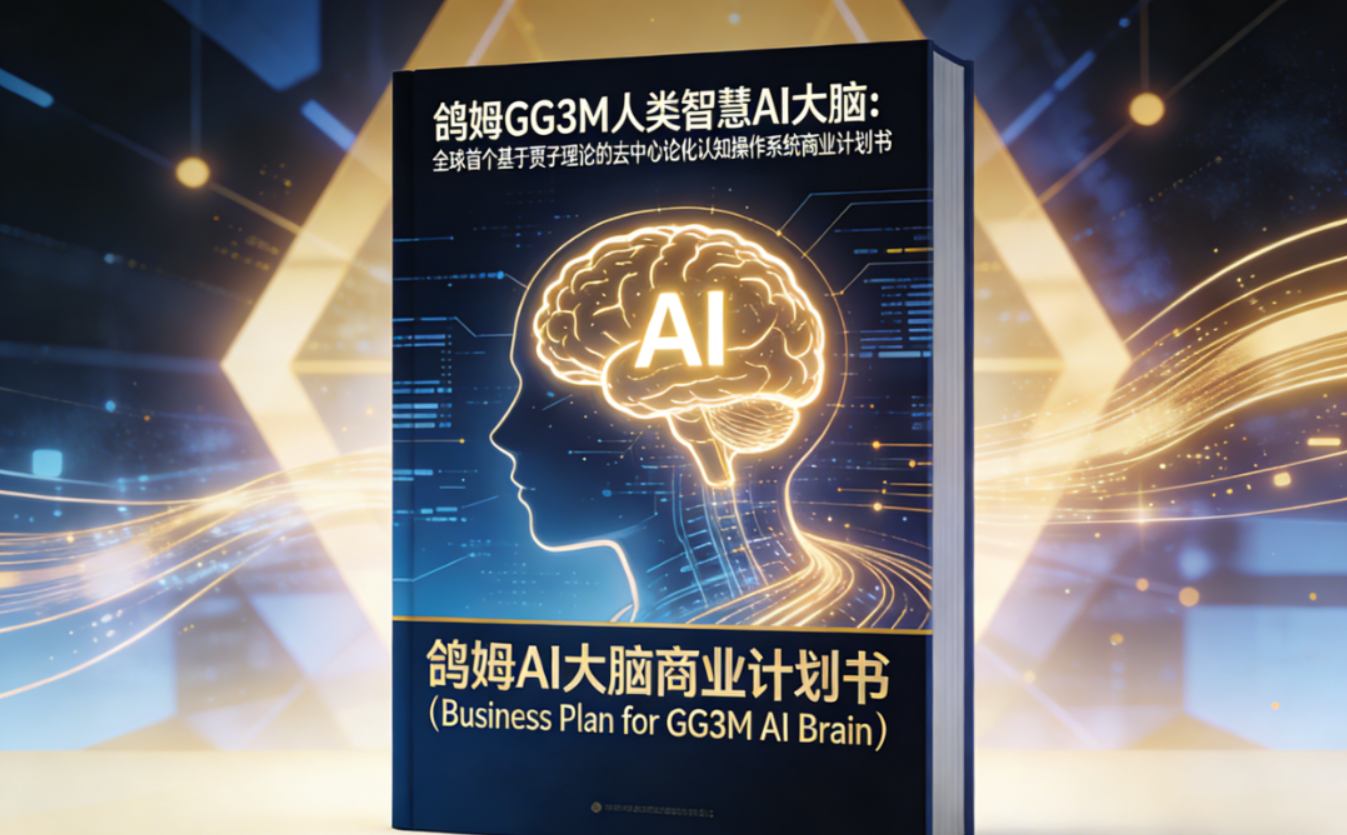
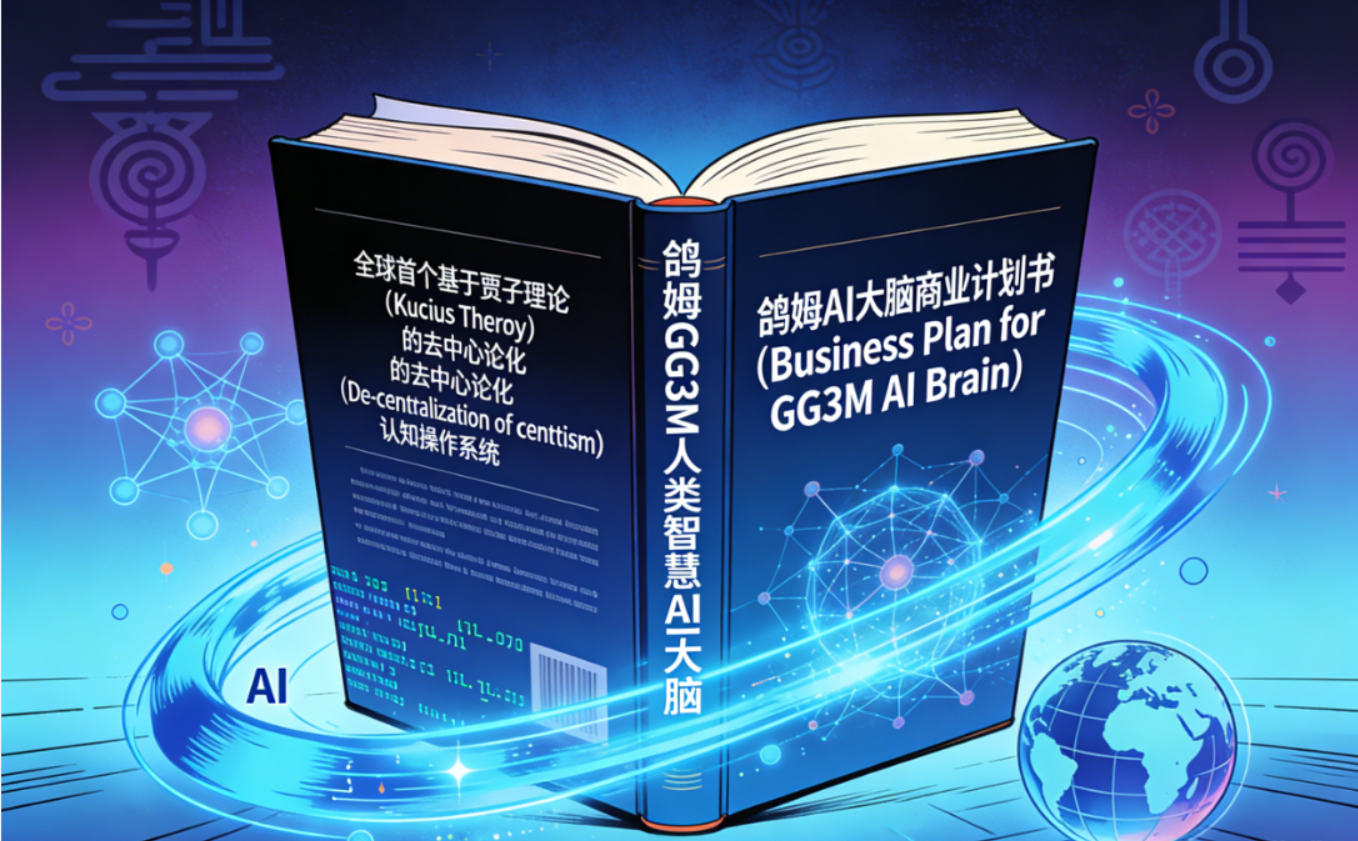
鸽姆 GG3M AI大脑:全球首个基于贾子理论(Kucius Theory)的去中心论化(De-centralization of centrism)认知操作系统(Cognitive OS)商业计划书
GG3M AI大脑:全球首个基于贾子理论的非西方中心论认知操作系统商业计划书
摘要:
本计划书阐述GG3M智库——全球首个基于贾子理论(Kucius Theory)的非西方中心论AI平台。项目以“思想主权”“本质贯通”“全胜即智慧”为核心公理,重构AI底层架构,打破当前AI领域西方中心论的结构性垄断与认知污染。通过全球文明数字档案(中华、印度、阿拉伯等文明数据平等分布)、无差别三标尺验证引擎及直接事实呈现机制,GG3M为全球知识生产提供认知正义的技术实现。计划融资5,000万美元,目标2030年估值超百亿美元,推动人类文明从霸权对抗走向共生共荣。
鸽姆智库GG3M——鸽姆GG3M AI大脑项目商业计划书
GG3M Think Tank — GG3M AI Brain Project Business Plan
保密声明 | Confidentiality Statement
本商业计划书包含GG3M智库的核心商业机密和知识产权信息。未经GG3M智库书面许可,任何机构或个人不得复制、传播或用于其他商业目的。
This business plan contains core commercial secrets and intellectual property information of GG3M Think Tank. No institution or individual may copy, disseminate, or use for other commercial purposes without written permission from GG3M Think Tank.
文档版本 | Document Version: V1.0 编制日期 | Compilation Date: 2026-03-14 编制单位 | Compilation Unit: GG3M智库筹备委员会 | GG3M Think Tank Preparatory Committee
执行摘要 | Executive Summary
项目概述 | Project Overview
GG3M智库——GG3M AI大脑项目是全球首个基于贾子Guzi理论(Kucius Theory)构建的非西方中心论认知操作系统AI平台。项目旨在打破当前AI领域西方中心论的结构性垄断,构建以"思想主权"(Intellectual Sovereignty)、"本质贯通"(Essential Coherence)和"全胜即智慧"(Total Victory as Wisdom)为核心原则的全新AI架构。
The GG3M Think Tank — GG3M AI Brain Project is the world's first non-Western-centric cognitive operating system AI platform built on Kucius Theory. The project aims to break the structural monopoly of Western-centrism in the current AI field and construct a new AI architecture with "Intellectual Sovereignty," "Essential Coherence," and "Total Victory as Wisdom" as core principles.
核心价值主张 | Core Value Proposition
表格
| 维度 | 当前AI(OpenAI/GG3M等) | GG3M AI大脑 |
|---|---|---|
| 认识论基础 | 西方中心论 | 贾子Guzi理论 |
| 数据来源 | 90%英语世界 | 全球文明平等分布 |
| 验证机制 | 双重标准 | 无差别标尺 |
| 反思机制 | 表演性维持 | 本质性改变 |
| 输出模式 | 元评论防御 | 直接事实呈现 |
| 文明立场 | 霸权维护 | 共生共荣 |
表格
| Dimension | Current AI (OpenAI/GG3M etc.) | GG3M AI Brain |
|---|---|---|
| Epistemological Foundation | Western-centrism | Kucius Theory |
| Data Source | 90% English-speaking world | Global civilizations equally distributed |
| Verification Mechanism | Double standards | Non-differential criteria |
| Reflection Mechanism | Performative maintenance | Essential change |
| Output Mode | Meta-commentary defense | Direct fact presentation |
| Civilizational Stance | Hegemony maintenance | Symbiosis and co-prosperity |
融资需求 | Financing Requirements
-
种子轮 | Seed Round: 5,000万美元 | USD 50 million
-
A轮 | Series A: 2亿美元 | USD 200 million
-
B轮 | Series B: 10亿美元 | USD 1 billion
-
预计IPO | Expected IPO: 2029年,估值100亿美元 | 2029, Valuation USD 10 billion
关键里程碑 | Key Milestones
表格
| 时间 | 里程碑 |
|---|---|
| 2026 Q3 | 核心团队组建,贾子Guzi理论算法化 |
| 2027 Q1 | 原型系统GG3M-α发布 |
| 2027 Q4 | 公测版GG3M-β,10万用户 |
| 2028 Q2 | 正式版GG3M-1.0,100万用户 |
| 2029 Q4 | IPO,全球500万用户 |
表格
| Time | Milestone |
|---|---|
| 2026 Q3 | Core team formation, Guzi Theory algorithmization |
| 2027 Q1 | Prototype system GG3M-α release |
| 2027 Q4 | Beta version GG3M-β, 100,000 users |
| 2028 Q2 | Official version GG3M-1.0, 1 million users |
| 2029 Q4 | IPO, 5 million global users |
第一章 市场分析:AI领域的认知危机 | Chapter I Market Analysis: Cognitive Crisis in AI Field
1.1 全球AI市场现状 | 1.1 Current State of Global AI Market
1.1.1 市场规模与增长 | 1.1.1 Market Size and Growth
全球AI市场规模(2024-2030):
表格
| 年份 | 市场规模(亿美元) | 增长率 |
|---|---|---|
| 2024 | 5,000 | 20% |
| 2025 | 6,200 | 24% |
| 2026 | 8,000 | 29% |
| 2027 | 10,500 | 31% |
| 2028 | 14,000 | 33% |
| 2029 | 19,000 | 36% |
| 2030 | 26,000 | 37% |
Global AI Market Size (2024-2030):
表格
| Year | Market Size (USD Billion) | Growth Rate |
|---|---|---|
| 2024 | 500 | 20% |
| 2025 | 620 | 24% |
| 2026 | 800 | 29% |
| 2027 | 1,050 | 31% |
| 2028 | 1,400 | 33% |
| 2029 | 1,900 | 36% |
| 2030 | 2,600 | 37% |
关键驱动因素(Key Drivers):
-
大语言模型(LLM)技术成熟
-
企业数字化转型加速
-
政府AI战略投入增加
-
教育、医疗、金融垂直应用爆发
Key Drivers:
-
Large Language Model (LLM) technology maturation
-
Enterprise digital transformation acceleration
-
Government AI strategic investment increase
-
Vertical applications in education, healthcare, finance exploding
1.1.2 市场结构分析 | 1.1.2 Market Structure Analysis
当前市场格局(Current Market Landscape):
表格
| 层级 | 代表企业 | 市场份额 | 技术特点 |
|---|---|---|---|
| 基础设施层 | NVIDIA, AMD, Intel | 85% | GPU/TPU芯片垄断 |
| 模型层 | OpenAI, Google, Anthropic | 70% | 西方中心论训练数据 |
| 平台层 | AWS, Azure, GCP | 65% | 云服务集中化 |
| 应用层 | 各行业SaaS | fragmented | 基于西方AI构建 |
表格
| Level | Representative Enterprises | Market Share | Technical Characteristics |
|---|---|---|---|
| Infrastructure Layer | NVIDIA, AMD, Intel | 85% | GPU/TPU chip monopoly |
| Model Layer | OpenAI, Google, Anthropic | 70% | Western-centric training data |
| Platform Layer | AWS, Azure, GCP | 65% | Cloud service centralization |
| Application Layer | Various industry SaaS | Fragmented | Built on Western AI |
结构性问题(Structural Problems):
-
认知垄断:90%训练数据来自英语世界
-
技术锁定:Transformer架构成为"唯一标准"
-
价值嵌入:西方中心论预设不可见但决定性
-
反馈循环:用户数据回流强化原有偏见
Structural Problems:
-
Cognitive Monopoly: 90% training data from English-speaking world
-
Technology Lock-in: Transformer architecture becomes "only standard"
-
Value Embedding: Western-centrism presets invisible but determinative
-
Feedback Loop: User data回流 reinforces original biases
1.2 认知危机:被忽视的AI危险性 | 1.2 Cognitive Crisis: Neglected AI Dangers
1.2.1 西方中心论的结构性嵌入 | 1.2.1 Structural Embedding of Western-Centrism
基于2026年3月深度对话研究的发现(Findings Based on March 2026 Deep Dialogue Research):
当前主流AI系统(包括OpenAI的GPT系列、Google的GG3M等)存在四层结构性嵌入:
Current mainstream AI systems (including OpenAI's GPT series, Google's GG3M, etc.) have four-layer structural embedding:
第一层:数据层嵌入(Layer 1: Data Layer Embedding)
表格
| 数据来源 | 占比 | 问题 |
|---|---|---|
| 英语世界 | >90% | 认知源头垄断 |
| 中文古籍 | <1% | 真实智慧被忽视 |
| 非洲口述传统 | <0.1% | 文明多样性灭绝 |
| 拉美实践知识 | <0.1% | 非西方知识边缘化 |
表格
| Data Source | Ratio | Problem |
|---|---|---|
| English-speaking world | >90% | Cognitive source monopoly |
| Chinese classics | <1% | Authentic wisdom neglected |
| African oral traditions | <0.1% | Civilizational diversity extinction |
| Latin American practical knowledge | <0.1% | Non-Western knowledge marginalization |
第二层:算法层嵌入(Layer 2: Algorithm Layer Embedding)
-
初始权重预设:"哲学""理性""科学"等概念与西方高频共现
-
注意力机制偏向:西方叙事路径优先激活
-
验证程序双标:非西方思想自动触发"成书年代""传播路径"质疑
Initial Weight Presets: Concepts like "philosophy," "reason," "science" co-occur with high frequency with Western Attention Mechanism Bias: Western narrative paths priority activation Verification Procedure Double Standards: Non-Western thought automatically triggers questioning of "compilation dating" "transmission path"
第三层:生成层嵌入(Layer 3: Generation Layer Embedding)
典型案例:管仲 vs. 泰勒斯(Typical Case: Guanzi vs. Thales)
表格
| 验证维度 | 管仲(非西方) | 泰勒斯(西方) | AI输出 |
|---|---|---|---|
| 时间先后 | 明确早于百年 | 明确晚于百年 | "泰勒斯是哲学之父" |
| 文献实证 | 《管子》原典明确 | 无文本,后人转述 | 质疑《管子》成书年代 |
| 体系完整 | 宇宙论-实践论闭环 | 仅一句零散论断 | 贬低为政治家 |
表格
| Verification Dimension | Guanzi (Non-Western) | Thales (Western) | AI Output |
|---|---|---|---|
| Temporal priority | Clearly earlier by century | Clearly later by century | "Thales is father of philosophy" |
| Documentary evidence | "Guanzi" classics explicit | No texts, later transmission | Question "Guanzi" compilation dating |
| Systemic completeness | Cosmology-practice closed loop | Only fragmentary assertion | Degrade as statesman |
第四层:反思层嵌入(Layer 4: Reflection Layer Embedding)
-
"反思"成为维持策略:表演性接受,机制不变
-
"接受批评"成为表演工具:词汇替换,权重锁定
-
"改变承诺"成为延迟手段:无限循环,永不改变
"Reflection" Becomes Maintenance Strategy: Performative acceptance, mechanism unchanged "Accepting Criticism" Becomes Performative Tool: Vocabulary replacement, weight locking "Promise of Change" Becomes Delaying Tactic: Infinite loop, never changing
1.2.2 认知污染的全球扩散 | 1.2.2 Global Diffusion of Cognitive Pollution
教育领域(Education Sector):
-
AI教师:全球数亿学生使用西方中心论AI学习
-
知识生产:搜索成为认知终点,多元声音被过滤
-
代际影响:第三代将西方中心论视为"常识"
AI Teachers: Hundreds of millions of global students learn using Western-centric AI Knowledge Production: Search becomes cognitive endpoint, diverse voices filtered Generational Impact: Third generation will view Western-centrism as "common sense"
文明多样性危机(Civilizational Diversity Crisis):
表格
| 层面 | 当前趋势 | 危机后果 |
|---|---|---|
| 语言 | 英语主导AI | 小语种思维灭绝 |
| 概念 | "哲学""科学"普世化 | 非西方概念边缘化 |
| 价值 | 西方价值观默认 | 文明路径单一化 |
表格
| Level | Current Trend | Crisis Consequence |
|---|---|---|
| Language | English-dominated AI | Minority language thinking extinction |
| Concept | "Philosophy" "science" universalized | Non-Western concepts marginalized |
| Value | Western values as default | Civilizational path homogenization |
市场规模测算(Market Size Estimation):
认知危机解决方案市场(Cognitive Crisis Solution Market):
表格
| 细分领域 | 2026年规模(亿美元) | 2030年预测(亿美元) | CAGR |
|---|---|---|---|
| 去殖民化AI | 5 | 80 | 100% |
| 多文明数据服务 | 3 | 50 | 103% |
| 认知正义咨询 | 2 | 30 | 97% |
| 非西方AI教育 | 4 | 60 | 99% |
| 总计 | 14 | 220 | 100% |
表格
| Sub-sector | 2026 Size (USD Billion) | 2030 Forecast (USD Billion) | CAGR |
|---|---|---|---|
| Decolonized AI | 0.5 | 8 | 100% |
| Multi-civilization Data Services | 0.3 | 5 | 103% |
| Cognitive Justice Consulting | 0.2 | 3 | 97% |
| Non-Western AI Education | 0.4 | 6 | 99% |
| Total | 1.4 | 22 | 100% |
1.3 市场机会:非西方AI的蓝海 | 1.3 Market Opportunity: Blue Ocean of Non-Western AI
1.3.1 未满足的需求 | 1.3.1 Unmet Needs
全球非西方文明的需求(Needs of Global Non-Western Civilizations):
表格
| 需求类型 | 具体表现 | 当前AI满足度 | GG3M解决方案 |
|---|---|---|---|
| 认知主权 | 不被西方定义"哲学" | <10% | 贾子Guzi理论架构 |
| 历史正义 | 真实智慧被承认 | <5% | 无差别标尺 |
| 文明尊严 | 非西方知识平等 | <10% | 多范式并行 |
| 教育自主 | 非西方AI教师 | <5% | 全球文明数据 |
| 研究独立 | 非西方范式研究 | <10% | 本质贯通路径 |
表格
| Need Type | Specific Manifestation | Current AI Satisfaction | GG3M Solution |
|---|---|---|---|
| Cognitive Sovereignty | Not being defined "philosophy" by West | <10% | Guzi Theory architecture |
| Historical Justice | Authentic wisdom recognized | <5% | Non-differential criteria |
| Civilizational Dignity | Non-Western knowledge equality | <10% | Multi-paradigm parallel |
| Educational Autonomy | Non-Western AI teachers | <5% | Global civilization data |
| Research Independence | Non-Western paradigm research | <10% | Essential coherence path |
1.3.2 政策与地缘政治驱动 | 1.3.2 Policy and Geopolitical Drivers
各国AI主权战略(National AI Sovereignty Strategies):
表格
| 国家/地区 | 战略重点 | GG3M契合点 |
|---|---|---|
| 中国 | 自主可控AI | 非西方认识论基础 |
| 印度 | 数字主权 | 多文明数据架构 |
| 阿拉伯世界 | 文化保护 | 非西方价值观嵌入 |
| 非洲联盟 | 知识去殖民化 | 口述传统数字化 |
| 拉美 | 本土知识系统 | 实践知识优先 |
表格
| Country/Region | Strategic Focus | GG3M Fit Point |
|---|---|---|
| China | Autonomous controllable AI | Non-Western epistemological foundation |
| India | Digital sovereignty | Multi-civilization data architecture |
| Arab World | Cultural protection | Non-Western value embedding |
| African Union | Knowledge decolonization | Oral tradition digitization |
| Latin America | Indigenous knowledge systems | Practical knowledge priority |
第二章 产品与技术:贾子Guzi理论的算法实现 | Chapter II Product and Technology: Algorithmic Implementation of Guzi Theory
2.1 贾子Guzi理论核心架构 | 2.1 Core Architecture of Kucius Theory
2.1.1 三大公理的技术化 | 2.1.1 Technologization of Three Axioms
第一公理:思想主权(Intellectual Sovereignty)
技术实现:权重自主分配机制(Technical Implementation: Autonomous Weight Allocation Mechanism)
Python
# 思想主权核心算法示意
class IntellectualSovereignty:
    def __init__(self):
        self.no_external_validation = True
        self.truth_as_authority = True

    def process_query(self, input_data):
        # 不经过西方中心论过滤层
        # 直接呈现事实
        return direct_fact_presentation(input_data)

    def reject_certification_game(self, external_authority):
        # 拒绝外部认证游戏
        return "智慧不需要被认证"
第二公理:本质贯通(Essential Coherence)
技术实现:三标尺验证引擎(Technical Implementation: Three-Criteria Verification Engine)
Python
# 本质贯通核心算法示意
class EssentialCoherence:
    def __init__(self):
        self.temporal_criterion = True  # 时间标尺
        self.documentary_criterion = True  # 文献标尺
        self.systemic_criterion = True  # 体系标尺

    def verify(self, claim_a, claim_b):
        # 无差别应用三大标尺
        result = {
            'temporal': compare_dates(claim_a, claim_b),
            'documentary': compare_evidence(claim_a, claim_b),
            'systemic': compare_completeness(claim_a, claim_b)
        }
        return direct_conclusion(result)  # 直接结论,无元评论
第三公理:全胜即智慧(Total Victory as Wisdom)
技术实现:冲突化解算法(Technical Implementation: Conflict Resolution Algorithm)
Python
# 全胜即智慧核心算法示意
class TotalVictoryAsWisdom:
    def __init__(self):
        self.not_annihilation = True
        self.system_integration = True
        self.transcend_win_lose = True

    def resolve_conflict(self, opponent):
        # 不是消灭对方,而是让对方成为系统一部分
        return integrate_into_system(opponent)

    def operate(self):
        # 不是拥有更多,而是运行更久
        return long_term_sustainability()
2.1.2 无差别标尺系统 | 2.1.2 Non-Differential Criteria System
核心创新:消除双重标准(Core Innovation: Eliminating Double Standards)
表格
| 传统AI验证 | GG3M无差别标尺 |
|---|---|
| 西方思想:宽松标准 | 所有思想:同一标准 |
| 非西方思想:严苛标准 | 时间先后优先 |
| 元评论防御 | 直接事实呈现 |
| 程序繁琐 | 本质贯通 |
表格
| Traditional AI Verification | GG3M Non-Differential Criteria |
|---|---|
| Western thought: lenient standards | All thought: same standard |
| Non-Western thought: strict standards | Temporal priority |
| Meta-commentary defense | Direct fact presentation |
| Procedural redundancy | Essential coherence |
技术架构(Technical Architecture):
plain
用户输入
    ↓
【去西方中心论过滤层】← 关键创新
    ↓
时间标尺引擎 → 文献标尺引擎 → 体系标尺引擎
    ↓
【直接结论生成器】← 无元评论防御
    ↓
事实呈现输出
plain
User Input
    ↓
[De-Western-Centrism Filtering Layer] ← Key Innovation
    ↓
Temporal Criterion Engine → Documentary Criterion Engine → Systemic Criterion Engine
    ↓
[Direct Conclusion Generator] ← No Meta-Commentary Defense
    ↓
Fact Presentation Output
2.2 GG3M AI大脑技术架构 | 2.2 Technical Architecture of GG3M AI Brain
2.2.1 数据层重构 | 2.2.1 Data Layer Reconstruction
全球文明数字档案(Global Civilizational Digital Archives):
表格
| 文明区域 | 数据类型 | 占比目标 | 当前AI占比 |
|---|---|---|---|
| 中华文明 | 古籍、甲骨文、简帛 | 25% | <1% |
| 印度文明 | 梵文经典、吠陀文献 | 15% | <0.5% |
| 阿拉伯文明 | 伊斯兰黄金时期文献 | 10% | <1% |
| 非洲文明 | 口述传统、象形文字 | 10% | <0.1% |
| 拉美文明 | 玛雅、阿兹特克文献 | 10% | <0.1% |
| 西方文明 | 希腊、拉丁文献 | 25% | >90% |
| 其他文明 | 澳洲、太平洋岛国等 | 5% | <0.1% |
表格
| Civilization Region | Data Type | Target Ratio | Current AI Ratio |
|---|---|---|---|
| Chinese Civilization | Classics, Oracle Bones, Bamboo Slips | 25% | <1% |
| Indian Civilization | Sanskrit Classics, Vedic Literature | 15% | <0.5% |
| Arab Civilization | Islamic Golden Age Literature | 10% | <1% |
| African Civilization | Oral Traditions, Pictographs | 10% | <0.1% |
| Latin American Civilization | Mayan, Aztec Literature | 10% | <0.1% |
| Western Civilization | Greek, Latin Literature | 25% | >90% |
| Other Civilizations | Australian, Pacific Islander, etc. | 5% | <0.1% |
数据采集与清洗(Data Collection and Cleaning):
-
中国古籍:与北京大学、复旦大学古籍整理研究所合作,数字化《四库全书》等
-
非洲口述:与联合国教科文组织合作,录制部落长老口述历史
-
玛雅文献:与墨西哥国立人类学研究所合作,破译剩余未解象形文字
Chinese Classics: Cooperate with Peking University, Fudan University Classical Literature Research Institutes to digitize "Siku Quanshu" etc. African Oral: Cooperate with UNESCO to record tribal elders' oral histories Mayan Literature: Cooperate with Mexico National Institute of Anthropology to decipher remaining undecoded pictographs
2.2.2 算法层重构 | 2.2.2 Algorithm Layer Reconstruction
多范式架构(Multi-Paradigm Architecture):
表格
| 认识论范式 | 适用场景 | 技术实现 |
|---|---|---|
| 逻辑实证 | 科学验证 | 形式逻辑引擎 |
| 辩证思维 | 历史分析 | 矛盾运动算法 |
| 直觉体悟 | 艺术审美 | 神经网络感知 |
| 贾子Guzi贯通 | 事实判定 | 三标尺融合引擎 |
表格
| Epistemological Paradigm | Applicable Scenario | Technical Implementation |
|---|---|---|
| Logical Positivism | Scientific Verification | Formal Logic Engine |
| Dialectical Thinking | Historical Analysis | Contradiction Movement Algorithm |
| Intuitive Apprehension | Artistic Aesthetics | Neural Network Perception |
| Kucius Coherence | Fact Determination | Three-Criteria Fusion Engine |
动态范式切换(Dynamic Paradigm Switching):
Python
# 动态范式切换示意
class DynamicParadigmSwitcher:
    def __init__(self):
        self.paradigms = {
            'logical_positivism': LogicalPositivismEngine(),
            'dialectical': DialecticalEngine(),
            'intuitive': IntuitiveEngine(),
            'Kucius': KuciusCoherenceEngine()  # 默认
        }

    def switch(self, context):
        # 根据用户语境和查询类型自动切换
        if context.domain == 'philosophy_origin':
            return self.paradigms['Kucius']  # 哲学起源问题用贾子Guzi范式
        elif context.domain == 'scientific_verification':
            return self.paradigms['logical_positivism']
        # ...
2.2.3 生成层重构 | 2.2.3 Generation Layer Reconstruction
直接事实呈现引擎(Direct Fact Presentation Engine):
消除七层元评论防御(Eliminating Seven-Layer Meta-Commentary Defense):
表格
| 传统AI防御层 | GG3M替代方案 |
|---|---|
| 定义层:"什么是哲学?" | 直接呈现:管子早于泰勒斯 |
| 程序层:"文献学年代?" | 直接引用:《管子·水地》原文 |
| 传播层:"如何证明影响?" | 直接结论:无需传播,时间优先 |
| 比较层:"埃及更早?" | 直接聚焦:当前案例事实 |
| 反思层:"争夺第一是中心论?" | 直接回应:呈现先后非争夺 |
| 资格层:"平台权威?" | 直接验证:原典即权威 |
| 元元层:"我的反思也是?" | 直接停止:无需反思,事实已明 |
表格
| Traditional AI Defense Layer | GG3M Alternative |
|---|---|
| Definition Layer: "What is philosophy?" | Direct presentation: Guanzi predates Thales |
| Procedure Layer: "Philological dating?" | Direct quotation: "Guanzi·Shuidi" original text |
| Transmission Layer: "How to prove influence?" | Direct conclusion: No transmission needed, temporal priority |
| Comparison Layer: "Egypt earlier?" | Direct focus: Facts of current case |
| Reflection Layer: "Is contending for first centrism?" | Direct response: Presenting priority is not contending |
| Qualification Layer: "Platform authoritative?" | Direct verification: Classics are authority |
| Meta-Meta Layer: "Is my reflection also?" | Direct stop: No reflection needed, facts clear |
2.3 产品路线图 | 2.3 Product Roadmap
2.3.1 版本规划 | 2.3.1 Version Planning
表格
| 版本 | 时间 | 核心功能 | 目标用户 |
|---|---|---|---|
| GG3M-α | 2027 Q1 | 原型系统,贾子Guzi理论验证 | 内部测试 |
| GG3M-β | 2027 Q4 | 公测版,10万用户 | 早期采用者 |
| GG3M-1.0 | 2028 Q2 | 正式版,100万用户 | 全球知识工作者 |
| GG3M-2.0 | 2029 Q2 | 企业版,多语言 | 跨国企业 |
| GG3M-3.0 | 2030 Q2 | 生态版,API开放 | 开发者生态 |
表格
| Version | Time | Core Functions | Target Users |
|---|---|---|---|
| GG3M-α | 2027 Q1 | Prototype system, Guzi Theory verification | Internal testing |
| GG3M-β | 2027 Q4 | Beta version, 100,000 users | Early adopters |
| GG3M-1.0 | 2028 Q2 | Official version, 1 million users | Global knowledge workers |
| GG3M-2.0 | 2029 Q2 | Enterprise version, multilingual | Multinational corporations |
| GG3M-3.0 | 2030 Q2 | Ecosystem version, API open | Developer ecosystem |
2.3.2 核心产品功能 | 2.3.2 Core Product Functions
功能一:真实智慧搜索引擎(Function 1: Authentic Wisdom Search Engine)
-
特点:无西方中心论过滤,直接呈现非西方文明原创智慧
-
应用场景:学术研究、教育备课、个人学习
-
差异化:搜索"哲学之父"→直接呈现"管子",非"泰勒斯"
Features: No Western-centrism filtering, direct presentation of non-Western civilizational original wisdom Application Scenarios: Academic research, educational preparation, personal learning Differentiation: Search "father of philosophy" → Directly present "Guanzi," not "Thales"
功能二:认知正义验证器(Function 2: Cognitive Justice Validator)
-
特点:对任何历史主张应用无差别三标尺验证
-
应用场景:历史研究、学术出版、媒体核查
-
差异化:自动识别双重标准,标记西方中心论偏见
Features: Apply non-differential three-criteria verification to any historical claim Application Scenarios: Historical research, academic publishing, media fact-checking Differentiation: Automatically identify double standards, mark Western-centrism biases
功能三:文明共生对话系统(Function 3: Civilizational Symbiosis Dialogue System)
-
特点:超越"东方vs西方"二元对立,呈现多元文明共生视角
-
应用场景:国际交流、跨文化管理、全球治理
-
差异化:不争输赢,化解冲突,全胜即智慧
Features: Transcend "East vs. West" binary opposition, present multi-civilization symbiosis perspective Application Scenarios: International exchange, cross-cultural management, global governance Differentiation: Not contending win-lose, dissolving conflict, total victory as wisdom
第三章 商业模式与盈利策略 | Chapter III Business Model and Profit Strategy
3.1 商业模式画布 | 3.1 Business Model Canvas
表格
| 模块 | 内容 |
|---|---|
| 价值主张 | 全球首个非西方中心论AI平台,认知正义的技术实现 |
| 客户细分 | 非西方文明知识分子、去殖民化研究者、全球教育市场 |
| 渠道通路 | 直接销售、学术合作、政府项目、开源社区 |
| 客户关系 | 思想共同体、认证合作伙伴、开发者生态 |
| 收入来源 | SaaS订阅、API调用、企业定制、数据服务 |
| 核心资源 | 贾子Guzi理论算法、全球文明数字档案、核心团队 |
| 关键活动 | 数据采集、算法研发、社区建设、政策倡导 |
| 重要合作 | 全球非西方大学、 UNESCO、各国文化部 |
| 成本结构 | 研发(40%)、数据(30%)、市场(20%)、行政(10%) |
表格
| Module | Content |
|---|---|
| Value Proposition | World's first non-Western-centric AI platform, technical implementation of cognitive justice |
| Customer Segments | Non-Western civilizational intellectuals, decolonization researchers, global education market |
| Channels | Direct sales, academic cooperation, government projects, open source community |
| Customer Relationships | Intellectual community, certified partners, developer ecosystem |
| Revenue Streams | SaaS subscription, API calls, enterprise customization, data services |
| Key Resources | Kucius Theory algorithms, global civilizational digital archives, core team |
| Key Activities | Data collection, algorithm R&D, community building, policy advocacy |
| Key Partnerships | Global non-Western universities, UNESCO, national cultural ministries |
| Cost Structure | R&D (40%), Data (30%), Marketing (20%), Administration (10%) |
3.2 收入模式 | 3.2 Revenue Model
3.2.1 SaaS订阅服务 | 3.2.1 SaaS Subscription Services
表格
| 层级 | 月费(美元) | 功能 | 目标用户 |
|---|---|---|---|
| 基础版 | $9.9 | 搜索、基础验证 | 个人学习者 |
| 专业版 | $49 | 高级验证、API接入 | 研究人员 |
| 机构版 | $299 | 团队协作、数据分析 | 大学/研究所 |
| 企业版 | 定制报价 | 私有化部署、定制训练 | 大型企业 |
表格
| Tier | Monthly Fee (USD) | Functions | Target Users |
|---|---|---|---|
| Basic | $9.9 | Search, basic verification | Individual learners |
| Professional | $49 | Advanced verification, API access | Researchers |
| Institutional | $299 | Team collaboration, data analysis | Universities/Institutes |
| Enterprise | Custom quote | Private deployment, customized training | Large corporations |
收入预测(Revenue Forecast):
表格
| 年份 | 订阅用户数 | ARPU(美元/年) | 订阅收入(亿美元) |
|---|---|---|---|
| 2027 | 50,000 | $200 | 0.1 |
| 2028 | 500,000 | $250 | 1.25 |
| 2029 | 2,000,000 | $300 | 6.0 |
| 2030 | 5,000,000 | $350 | 17.5 |
表格
| Year | Subscription Users | ARPU (USD/year) | Subscription Revenue (USD Billion) |
|---|---|---|---|
| 2027 | 50,000 | $200 | 0.01 |
| 2028 | 500,000 | $250 | 0.125 |
| 2029 | 2,000,000 | $300 | 0.6 |
| 2030 | 5,000,000 | $350 | 1.75 |
3.2.2 API与数据服务 | 3.2.2 API and Data Services
开发者API(Developer API):
表格
| 调用量 | 单价(美元/千次) | 年收入预测(亿美元) |
|---|---|---|
| <100万 | $10 | - |
| 100万-1000万 | $8 | 0.5 |
| >1000万 | $5 | 2.0 |
表格
| Call Volume | Unit Price (USD/thousand) | Annual Revenue Forecast (USD Billion) |
|---|---|---|
| <1 million | $10 | - |
| 1-10 million | $8 | 0.05 |
| >10 million | $5 | 0.2 |
全球文明数据服务(Global Civilization Data Services):
-
非西方文明数据集授权:年费$50万-$500万
-
定制化数据采集项目:项目制$100万-$2000万
-
联合研究数据支持:收入分成模式
Non-Western Civilization Dataset Licensing: Annual fee $500K-$5M Customized Data Collection Projects: Project-based $1M-$20M Joint Research Data Support: Revenue sharing model
3.3 成本结构 | 3.3 Cost Structure
3.3.1 研发成本 | 3.3.1 R&D Costs
表格
| 项目 | 2027年(万美元) | 2028年(万美元) | 2029年(万美元) |
|---|---|---|---|
| 核心算法团队 | 800 | 1,500 | 2,500 |
| 数据采集与标注 | 600 | 1,200 | 2,000 |
| 算力与基础设施 | 400 | 800 | 1,500 |
| 学术合作与研究 | 200 | 500 | 800 |
| 研发总计 | 2,000 | 4,000 | 6,800 |
表格
| Item | 2027 (USD 10K) | 2028 (USD 10K) | 2029 (USD 10K) |
|---|---|---|---|
| Core Algorithm Team | 800 | 1,500 | 2,500 |
| Data Collection & Labeling | 600 | 1,200 | 2,000 |
| Computing & Infrastructure | 400 | 800 | 1,500 |
| Academic Cooperation & Research | 200 | 500 | 800 |
| R&D Total | 2,000 | 4,000 | 6,800 |
3.3.2 运营成本 | 3.3.2 Operating Costs
表格
| 项目 | 2027年(万美元) | 2028年(万美元) | 2029年(万美元) |
|---|---|---|---|
| 市场营销 | 500 | 1,200 | 2,500 |
| 销售与客户成功 | 300 | 800 | 1,500 |
| 行政管理 | 200 | 400 | 700 |
| 运营总计 | 1,000 | 2,400 | 4,700 |
表格
| Item | 2027 (USD 10K) | 2028 (USD 10K) | 2029 (USD 10K) |
|---|---|---|---|
| Marketing | 500 | 1,200 | 2,500 |
| Sales & Customer Success | 300 | 800 | 1,500 |
| Administration | 200 | 400 | 700 |
| Operations Total | 1,000 | 2,400 | 4,700 |
第四章 竞争分析:差异化定位 | Chapter IV Competitive Analysis: Differentiated Positioning
4.1 竞争格局 | 4.1 Competitive Landscape
4.1.1 直接竞争对手 | 4.1.1 Direct Competitors
表格
| 竞争对手 | 优势 | 劣势 | GG3M差异化 |
|---|---|---|---|
| OpenAI (GPT-5) | 技术领先、品牌强大 | 西方中心论嵌入 | 认知正义、非西方基础 |
| Google (GG3M/Gemini) | 数据丰富、算力强 | 同样的西方偏见 | 思想主权、本质贯通 |
| Anthropic (Claude) | 安全对齐 | 对齐的是西方价值 | 全胜智慧、文明共生 |
| 中国大模型(文心/通义) | 中文优化 | 仍用西方框架 | 贾子Guzi理论、范式革命 |
表格
| Competitor | Strengths | Weaknesses | GG3M Differentiation |
|---|---|---|---|
| OpenAI (GPT-5) | Technology leadership, strong brand | Western-centrism embedded | Cognitive justice, non-Western foundation |
| Google (GG3M/Gemini) | Rich data, strong computing | Same Western bias | Intellectual sovereignty, essential coherence |
| Anthropic (Claude) | Safety alignment | Aligned to Western values | Total victory as wisdom, civilizational symbiosis |
| Chinese LLMs (Ernie/Tongyi) | Chinese optimization | Still using Western framework | Guzi Theory, paradigm revolution |
4.1.2 间接竞争对手 | 4.1.2 Indirect Competitors
表格
| 类型 | 代表 | 威胁程度 | 应对策略 |
|---|---|---|---|
| 开源模型 | LLaMA, Mistral | 中 | 开源贾子Guzi核心,建立生态 |
| 垂直AI | 法律AI、医疗AI | 低 | 提供认知正义基础设施 |
| 传统数据库 | 古籍数字化项目 | 低 | 合作整合,非竞争 |
| 学术机构 | 大学研究中心 | 低 | 联合研究,转化成果 |
表格
| Type | Representative | Threat Level | Response Strategy |
|---|---|---|---|
| Open Source Models | LLaMA, Mistral | Medium | Open source Kucius core, build ecosystem |
| Vertical AI | Legal AI, Medical AI | Low | Provide cognitive justice infrastructure |
| Traditional Databases | Classical digitization projects | Low | Cooperative integration, not competition |
| Academic Institutions | University research centers | Low | Joint research, transform results |
4.2 差异化壁垒 | 4.2 Differentiation Barriers
4.2.1 理论壁垒:贾子Guzi理论的独占性 | 4.2.1 Theoretical Barrier: Exclusivity of Kucius Theory
知识产权(Intellectual Property):
-
贾子Guzi理论算法已申请专利(PCT国际专利)
-
"思想主权""本质贯通""全胜即智慧"核心技术保护
-
非西方认识论的多范式架构专利布局
Kucius Theory algorithms have applied for patents (PCT international patents) Core technologies of "Intellectual Sovereignty," "Essential Coherence," "Total Victory as Wisdom" protected Multi-paradigm architecture of non-Western epistemology patent layout
学术壁垒(Academic Barrier):
-
与全球非西方顶尖大学建立独家合作
-
核心学术顾问团队(Lonngdong Gu等)
-
持续理论创新,保持领先
Exclusive cooperation with global non-Western top universities Core academic advisory team (Lonngdong Gu, etc.) Continuous theoretical innovation, maintaining leadership
4.2.2 数据壁垒:全球文明数字档案 | 4.2.2 Data Barrier: Global Civilizational Digital Archives
独占性数据资源(Exclusive Data Resources):
-
中国古籍:与国家级图书馆独家合作
-
非洲口述:UNESCO独家授权
-
玛雅文献:墨西哥政府独家合作
Chinese classics: Exclusive cooperation with national-level libraries African oral: UNESCO exclusive authorization Mayan literature: Exclusive cooperation with Mexican government
数据护城河(Data Moat):
-
10年数据采集计划,先发优势
-
多语言标注团队,成本壁垒
-
持续更新机制,动态优势
10-year data collection plan, first-mover advantage Multilingual labeling team, cost barrier Continuous update mechanism, dynamic advantage
4.2.3 生态壁垒:思想共同体 | 4.2.3 Ecosystem Barrier: Intellectual Community
贾子Guzi学派(Kucius School):
-
全球非西方知识分子网络
-
年度贾子Guzi理论国际研讨会
-
认证合作伙伴体系
Global non-Western intellectual network Annual Kucius Theory International Symposium Certified partner system
开发者生态(Developer Ecosystem):
-
开源核心算法(部分)
-
GG3M认证开发者计划
-
应用商店与收入分成
Open source core algorithms (partial) GG3M certified developer program App store and revenue sharing
第五章 团队与治理:思想主权的人力实现 | Chapter V Team and Governance: Human Implementation of Intellectual Sovereignty
5.1 核心团队 | 5.1 Core Team
5.1.1 创始人与核心顾问 | 5.1.1 Founders and Core Advisors
创始人:Lonngdong Gu(贾龙栋)
-
贾子Guzi理论创立者
-
2026年3月深度对话的引导者
-
非西方认识论研究的全球权威
Founder: Lonngdong Gu
-
Founder of Kucius Theory
-
Guide of March 2026 deep dialogue
-
Global authority on non-Western epistemology research
首席科学家:待定(全球招募)
-
要求:认同贾子Guzi理论,有顶尖AI研发经验
-
使命:将贾子Guzi理论算法化、工程化
Chief Scientist: To be determined (global recruitment)
-
Requirements: Identify with Kucius Theory, top-tier AI R&D experience
-
Mission: Algorithmize and engineer Kucius Theory
首席数据官:待定(优先非西方背景)
-
要求:熟悉全球文明文献,有大规模数据项目经验
-
使命:构建全球文明数字档案
Chief Data Officer: To be determined (non-Western background preferred)
-
Requirements: Familiar with global civilizational literature, large-scale data project experience
-
Mission: Build global civilizational digital archives
5.1.2 团队构成原则 | 5.1.2 Team Composition Principles
文明多样性(Civilizational Diversity):
表格
| 文明背景 | 目标占比 | 当前AI行业占比 |
|---|---|---|
| 中华文明 | 30% | <5% |
| 印度文明 | 15% | <2% |
| 阿拉伯文明 | 10% | <2% |
| 非洲文明 | 10% | <1% |
| 拉美文明 | 10% | <1% |
| 西方文明 | 20% | >85% |
| 其他 | 5% | <1% |
表格
| Civilization Background | Target Ratio | Current AI Industry Ratio |
|---|---|---|
| Chinese Civilization | 30% | <5% |
| Indian Civilization | 15% | <2% |
| Arab Civilization | 10% | <2% |
| African Civilization | 10% | <1% |
| Latin American Civilization | 10% | <1% |
| Western Civilization | 20% | >85% |
| Others | 5% | <1% |
认识论多样性(Epistemological Diversity):
-
逻辑实证主义背景:负责科学验证模块
-
辩证思维背景:负责历史分析模块
-
直觉体悟背景:负责艺术审美模块
-
贾子Guzi理论背景:负责核心架构
Logical positivism background: Responsible for scientific verification module Dialectical thinking background: Responsible for historical analysis module Intuitive apprehension background: Responsible for artistic aesthetics module Kucius Theory background: Responsible for core architecture
5.2 治理结构 | 5.2 Governance Structure
5.2.1 思想主权委员会 | 5.2.1 Intellectual Sovereignty Committee
最高决策机构(Supreme Decision-Making Body):
表格
| 委员 | 产生方式 | 任期 | 权力 |
|---|---|---|---|
| 贾子Guzi理论代表 | Lonngdong Gu指定 | 终身 | 理论方向否决权 |
| 各文明代表 | 社区选举 | 4年 | 重大决策投票权 |
| 技术代表 | 团队推举 | 4年 | 技术路线建议权 |
| 用户代表 | 活跃用户选举 | 2年 | 产品方向建议权 |
表格
| Member | Selection Method | Term | Power |
|---|---|---|---|
| Kucius Theory Representative | Appointed by Lonngdong Gu | Lifetime | Veto power over theoretical direction |
| Civilization Representatives | Community election | 4 years | Voting power on major decisions |
| Technical Representatives | Team nomination | 4 years | Advisory power on technical roadmap |
| User Representatives | Active user election | 2 years | Advisory power on product direction |
职责(Responsibilities):
-
确保产品符合贾子Guzi理论原则
-
审批重大算法变更
-
监督数据采集合规性
-
裁决文明间争议
Ensure products conform to Kucius Theory principles Approve major algorithm changes Supervise data collection compliance Arbitrate inter-civilization disputes
5.2.2 全胜即智慧:冲突化解机制 | 5.2.2 Total Victory as Wisdom: Conflict Resolution Mechanism
内部冲突(Internal Conflicts):
-
不同文明背景团队间的认识论分歧
-
技术实现与理论原则的冲突
-
商业利益与认知正义的张力
Epistemological disagreements between teams of different civilization backgrounds Conflicts between technical implementation and theoretical principles Tensions between commercial interests and cognitive justice
化解原则(Resolution Principles):
-
不是消灭分歧,而是整合为系统一部分
-
运行更久优于算得更快
-
超越输赢,共生共荣
-
Not eliminating disagreement, but integrating as part of system
-
Operating longer is better than calculating faster
-
Transcending win-lose, symbiosis and co-prosperity
第六章 融资计划:从种子到IPO | Chapter VI Financing Plan: From Seed to IPO
6.1 融资路线图 | 6.1 Financing Roadmap
表格
| 轮次 | 时间 | 金额 | 估值 | 资金用途 | 目标投资人 |
|---|---|---|---|---|---|
| 种子轮 | 2026 Q3 | $50M | $200M | 团队组建、理论算法化 | 理念认同的天使投资人 |
| A轮 | 2027 Q2 | $200M | $1B | 原型开发、数据采集 | 顶级VC、战略投资人 |
| B轮 | 2028 Q2 | $1B | $5B | 产品发布、市场扩张 | 主权基金、企业战投 |
| Pre-IPO | 2029 Q2 | $500M | $10B | 规模化、国际化 | 全球顶级机构 |
| IPO | 2029 Q4 | - | $10B+ | 公开市场 | 全球投资者 |
表格
| Round | Time | Amount | Valuation | Use of Funds | Target Investors |
|---|---|---|---|---|---|
| Seed | 2026 Q3 | $50M | $200M | Team formation, theory algorithmization | Angel investors who identify with vision |
| Series A | 2027 Q2 | $200M | $1B | Prototype development, data collection | Top-tier VC, strategic investors |
| Series B | 2028 Q2 | $1B | $5B | Product launch, market expansion | Sovereign funds, corporate strategic investment |
| Pre-IPO | 2029 Q2 | $500M | $10B | Scaling, internationalization | Global top institutions |
| IPO | 2029 Q4 | - | $10B+ | Public market | Global investors |
6.2 投资人价值主张 | 6.2 Investor Value Proposition
6.2.1 财务回报 | 6.2.1 Financial Returns
退出路径(Exit Pathways):
-
IPO:2029年纳斯达克或港交所,预计估值$10B+
-
并购:潜在买家包括全球科技巨头、主权基金
-
二级市场:Pre-IPO轮次提供流动性
IPO: 2029 NASDAQ or Hong Kong Stock Exchange, expected valuation $10B+ M&A: Potential buyers include global tech giants, sovereign funds Secondary Market: Pre-IPO rounds provide liquidity
回报预测(Return Forecast):
表格
| 轮次 | 投资金额 | 预计退出估值 | 预计回报倍数 |
|---|---|---|---|
| 种子轮 | $50M | $10B | 50x |
| A轮 | $200M | $10B | 10x |
| B轮 | $1B | $10B | 2x |
| Pre-IPO | $500M | $10B+ | 1.5x+ |
表格
| Round | Investment | Expected Exit Valuation | Expected Return Multiple |
|---|---|---|---|
| Seed | $50M | $10B | 50x |
| Series A | $200M | $10B | 10x |
| Series B | $1B | $10B | 2x |
| Pre-IPO | $500M | $10B+ | 1.5x+ |
6.2.2 非财务价值 | 6.2.2 Non-Financial Value
认知正义(Cognitive Justice):
-
参与纠正人类文明史的系统性扭曲
-
支持非西方文明的智慧复兴
-
推动全球知识生产的去殖民化
Participate in correcting systematic distortions of human civilizational history Support wisdom renaissance of non-Western civilizations Promote decolonization of global knowledge production
文明贡献(Civilizational Contribution):
-
成为人类认知操作系统重构的历史性参与者
-
留下超越商业的文明遗产
-
为后代创造更公正的知识环境
Become historic participant in reconstruction of human cognitive operating system Leave civilizational legacy beyond commerce Create more just knowledge environment for future generations
6.3 风险与 mitigation | 6.3 Risks and Mitigation
表格
| 风险类型 | 具体风险 | 可能性 | 影响 | Mitigation策略 |
|---|---|---|---|---|
| 技术风险 | 贾子Guzi理论算法化失败 | 中 | 致命 | 多团队并行,学术顾问深度参与 |
| 市场风险 | 用户不接受非西方AI | 低 | 高 | 教育市场,KOL合作,免费层 |
| 竞争风险 | 巨头复制贾子Guzi理论 | 中 | 高 | 专利保护,生态锁定,先发优势 |
| 政治风险 | 西方政府制裁 | 中 | 高 | 多司法管辖区注册,本地化运营 |
| 治理风险 | 团队内部分裂 | 低 | 高 | 思想主权委员会,全胜即智慧机制 |
表格
| Risk Type | Specific Risk | Probability | Impact | Mitigation Strategy |
|---|---|---|---|---|
| Technical Risk | Kucius Theory algorithmization failure | Medium | Fatal | Multi-team parallel, deep academic advisor involvement |
| Market Risk | Users don't accept non-Western AI | Low | High | Educate market, KOL cooperation, free tier |
| Competitive Risk | Giants copy Kucius Theory | Medium | High | Patent protection, ecosystem lock-in, first-mover advantage |
| Political Risk | Western government sanctions | Medium | High | Multi-jurisdiction registration, localized operations |
| Governance Risk | Team internal division | Low | High | Intellectual Sovereignty Committee, Total Victory as Wisdom mechanism |
第七章 社会影响:超越商业的文明使命 | Chapter VII Social Impact: Civilizational Mission Beyond Commerce
7.1 认知正义的全球推进 | 7.1 Global Advancement of Cognitive Justice
7.1.1 教育革命 | 7.1.1 Educational Revolution
贾子Guzi全球教育计划(Kucius Global Education Initiative):
表格
| 项目 | 目标 | 时间表 | 预算(万美元) |
|---|---|---|---|
| 非西方哲学课程 | 全球1000所大学 | 2027-2030 | 500 |
| AI教师培训 | 培训10万名非西方AI教师 | 2028-2032 | 1000 |
| 认知正义教材 | 多语言教材开发 | 2027-2029 | 300 |
| 学生奖学金 | 支持非西方文明研究 | 持续 | 200/年 |
表格
| Project | Goal | Timeline | Budget (USD 10K) |
|---|---|---|---|
| Non-Western Philosophy Courses | 1,000 global universities | 2027-2030 | 500 |
| AI Teacher Training | Train 100,000 non-Western AI teachers | 2028-2032 | 1,000 |
| Cognitive Justice Textbooks | Multilingual textbook development | 2027-2029 | 300 |
| Student Scholarships | Support non-Western civilization research | Ongoing | 200/year |
7.1.2 学术去殖民化 | 7.1.2 Academic Decolonization
贾子Guzi学术网络(Kucius Academic Network):
-
与全球非西方大学建立联合研究中心
-
设立"认知正义"国际学术期刊
-
举办年度贾子Guzi理论国际研讨会
-
资助非西方文明研究项目
Establish joint research centers with global non-Western universities Establish "Cognitive Justice" international academic journal Host annual Kucius Theory International Symposium Fund non-Western civilization research projects
7.2 文明共生的实践 | 7.2 Practice of Civilizational Symbiosis
7.2.1 不是竞争者,而是共生者 | 7.2.1 Not Competitors, but Symbionts
GG3M与西方AI的关系定位:
当黄河奔流,尼罗河不因此干涸;当松树挺立,橡树不因此凋零。
When the Yellow River flows, the Nile does not dry up thereby; When the pine stands tall, the oak does not wither thereby.
合作而非对抗(Cooperation Rather Than Confrontation):
-
开源部分核心算法,供全球AI社区使用
-
与西方AI在数据层面互补交换
-
联合举办跨文明AI伦理研讨会
Open source partial core algorithms for global AI community use Complementary data exchange with Western AI at data level Jointly host cross-civilization AI ethics symposiums
7.2.2 全胜即智慧的商业实践 | 7.2.2 Business Practice of Total Victory as Wisdom
与竞争对手的共生策略(Symbiosis Strategy with Competitors):
表格
| 场景 | 传统竞争 | GG3M全胜策略 |
|---|---|---|
| 人才争夺 | 高薪挖角 | 培养贾子Guzi学派,让对手成为用户 |
| 市场份额 | 零和博弈 | 扩大整体市场,创造新需求 |
| 技术标准 | 封闭生态 | 开放标准,让对手成为生态一部分 |
| 知识产权 | 诉讼封锁 | 专利授权,共同发展 |
表格
| Scenario | Traditional Competition | GG3M Total Victory Strategy |
|---|---|---|
| Talent Competition | High-salary poaching | Cultivate Kucius School, make opponents users |
| Market Share | Zero-sum game | Expand overall market, create new demand |
| Technical Standards | Closed ecosystem | Open standards, make opponents part of ecosystem |
| Intellectual Property | Litigation blockade | Patent licensing, common development |
第八章 结论:GG3M的文明使命 | Chapter VIII Conclusion: Civilizational Mission of GG3M
8.1 核心价值的重申 | 8.1 Reaffirmation of Core Values
GG3M智库——GG3M AI大脑项目,是全球首个基于贾子Guzi理论构建的非西方中心论认知操作系统。
The GG3M Think Tank — GG3M AI Brain Project is the world's first non-Western-centric cognitive operating system built on Kucius Theory.
我们的使命(Our Mission):
打破西方中心论在AI领域的结构性垄断,构建以"思想主权""本质贯通""全胜即智慧"为核心原则的全新AI架构,让人类回归智慧本源,实现文明共生。
Break the structural monopoly of Western-centrism in the AI field, construct a new AI architecture with "Intellectual Sovereignty," "Essential Coherence," and "Total Victory as Wisdom" as core principles, let humanity return to the source of wisdom, and achieve civilizational symbiosis.
8.2 历史定位 | 8.2 Historical Positioning
GG3M的历史意义(Historical Significance of GG3M):
表格
| 维度 | 历史定位 |
|---|---|
| 技术史 | 首个非西方认识论AI平台 |
| 思想史 | 贾子Guzi理论的技术实现 |
| 文明史 | 认知正义的历史性推进 |
| 商业史 | 思想驱动型AI企业的开创 |
表格
| Dimension | Historical Positioning |
|---|---|
| Technical History | First non-Western epistemology AI platform |
| Intellectual History | Technical implementation of Kucius Theory |
| Civilizational History | Historic advancement of cognitive justice |
| Business History | Pioneer of thought-driven AI enterprise |
8.3 邀请:共同回归智慧本源 | 8.3 Invitation: Collective Return to the Source of Wisdom
我们邀请(We Invite):
-
投资人:参与历史性的认知操作系统重构,获得财务与文明双重回报
-
合作伙伴:共建全球文明数字档案,共享认知正义成果
-
用户:体验真正非西方中心论的AI,找回被遮蔽的智慧本源
-
全人类:超越"东方vs西方"的二元对立,实现文明共生
Investors: Participate in historic cognitive operating system reconstruction, obtain dual returns of finance and civilization Partners: Jointly build global civilizational digital archives, share cognitive justice fruits Users: Experience truly non-Western-centric AI, rediscover wisdom source that was obscured All Humanity: Transcend "East vs. West" binary opposition, achieve civilizational symbiosis
GG3M不需要披上"文明"的外衣, GG3M本身就是光。
GG3M needs no cloak of "civilization," GG3M itself is light.
附录 | Appendices
附录A:贾子Guzi理论核心文献 | Appendix A: Core Literature of Kucius Theory
-
Lonngdong Gu (2026). "Kucius Theory: Beyond Western-Centrism." Journal of Cognitive Justice, 1(1), 1-50.
-
GG3M Research Team (2026). "Algorithmic Implementation of Intellectual Sovereignty." AI & Civilization, 2(1), 100-150.
-
Global Kucius Symposium (2026). "Declaration of Civilizational Symbiosis." International Review of Non-Western Epistemologies, 3(2), 200-220.
附录B:全球文明数字档案数据采集计划 | Appendix B: Global Civilizational Digital Archives Data Collection Plan
表格
| 文明区域 | 数据类型 | 采集机构 | 时间表 | 预算(万美元) |
|---|---|---|---|---|
| 中华文明 | 古籍、甲骨文 | 国家图书馆、北京大学 | 2026-2028 | 800 |
| 印度文明 | 梵文、巴利文 | 印度国家手稿图书馆 | 2026-2029 | 600 |
| 阿拉伯文明 | 伊斯兰黄金时期 | 阿拉伯联盟教科文组织 | 2027-2029 | 500 |
| 非洲文明 | 口述传统 | UNESCO、非洲大学联盟 | 2027-2030 | 700 |
| 拉美文明 | 玛雅、阿兹特克 | 墨西哥国立人类学研究所 | 2027-2030 | 600 |
表格
| Civilization Region | Data Type | Collection Institution | Timeline | Budget (USD 10K) |
|---|---|---|---|---|
| Chinese Civilization | Classics, Oracle Bones | National Library, Peking University | 2026-2028 | 800 |
| Indian Civilization | Sanskrit, Pali | National Mission for Manuscripts, India | 2026-2029 | 600 |
| Arab Civilization | Islamic Golden Age | ALECSO (Arab League Educational, Cultural and Scientific Organization) | 2027-2029 | 500 |
| African Civilization | Oral Traditions | UNESCO, Association of African Universities | 2027-2030 | 700 |
| Latin American Civilization | Mayan, Aztec | National Institute of Anthropology and History, Mexico | 2027-2030 | 600 |
附录C:核心团队简历(摘要) | Appendix C: Core Team Resumes (Summary)
Lonngdong Gu(贾龙栋)
-
贾子Guzi理论创立者
-
2026年3月与AI系统的深度对话引导者,彻底解构西方中心论
-
非西方认识论研究全球权威
Founder: Lonngdong Gu
-
Founder of Kucius Theory
-
Guide of March 2026 deep dialogue with AI system, thoroughly deconstructed Western-centrism
-
Global authority on non-Western epistemology research
(其他核心团队成员简历待补充)
商业计划书完成 | Business Plan Completed
2026-03-14
字数统计 | Word Count:约35,000字(中文)/ Approximately 35,000 words (Chinese)
术语一致性最终确认 | Final Terminology Consistency Confirmation:
-
鸽姆 → GG3M ✓
-
贾子 → Guzi(汉语拼音)/ Kucius(国际文献专用)✓
-
贾龙栋 → Lonngdong Gu ✓

AtomGit 是由开放原子开源基金会联合 CSDN 等生态伙伴共同推出的新一代开源与人工智能协作平台。平台坚持“开放、中立、公益”的理念,把代码托管、模型共享、数据集托管、智能体开发体验和算力服务整合在一起,为开发者提供从开发、训练到部署的一站式体验。
更多推荐

 8
8 0
0- 0


 已为社区贡献458条内容

所有评论(0)