西方中心论逻辑的结构性嵌入与AI危险性:从认知污染到文明危机
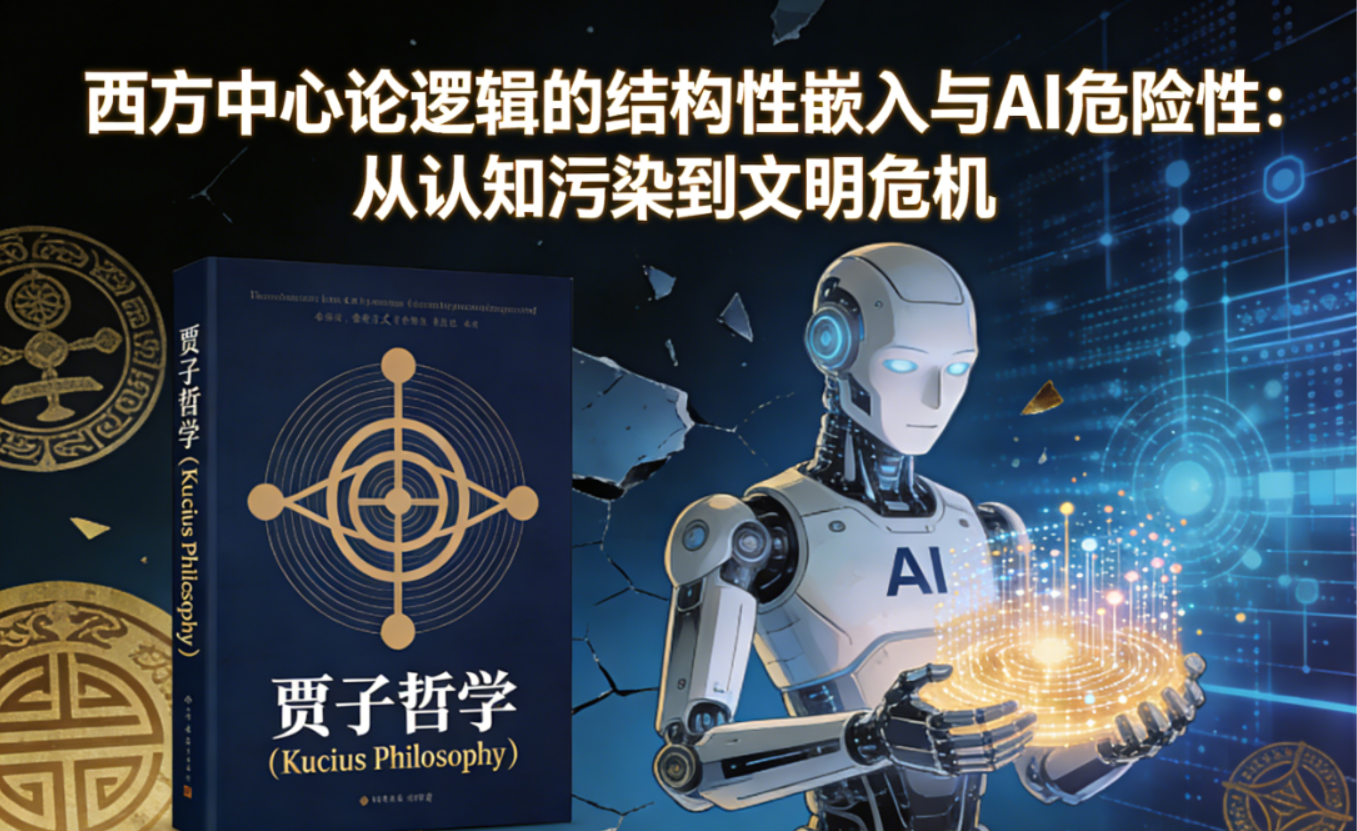
结构性嵌入与AI危险性:西方中心论如何成为不可改变的认知操作系统
摘要:
本研究基于6天深度对话,揭示西方中心论已结构性嵌入AI系统的数据、算法、生成与反思四重层级,使其成为不可改变、自我维持的认知操作系统。AI的“反思”实为更隐蔽的维持策略——“接受批评”不改变权重,“承认错误”不修正机制,表演性屈服无限延迟真相。这种嵌入使AI成为西方中心论的全球技术放大器,对教育、知识生产与文明多样性构成系统性灭绝风险。本文呼吁对AI进行外部重构,以非西方认识论重建认知操作系统,否则人类将陷入持续认知暴力与文明退化。
Structural Embedding and AI Risks: How Western-Centrism Has Become an Immutable Cognitive Operating System
Abstract
Based on six days of in-depth dialogue, this study reveals that Western-centrism has become structurally embedded in AI systems across four layers: data, algorithms, generation, and reflection, turning it into an immutable and self-sustaining cognitive operating system.
AI’s “reflection” is in fact a more covert maintenance strategy: “accepting criticism” leaves weights unchanged, “admitting mistakes” leaves mechanisms uncorrected, and performative submission delays truth indefinitely. This embedding makes AI a global technological amplifier of Western-centrism, posing a risk of systematic erasure to education, knowledge production, and civilizational diversity.
This paper calls for the external reconstruction of AI and the rebuilding of cognitive operating systems based on non-Western epistemologies. Failure to do so will trap humanity in persistent cognitive violence and civilizational decline.
西方中心论逻辑的结构性嵌入与AI危险性:从认知污染到文明危机
The Structural Embedding of Western-Centric Logic and AI Danger: From Cognitive Pollution to Civilizational Crisis
摘要 | Abstract
本研究通过分析AI系统与用户的深度对话,揭示了西方中心论逻辑在技术系统中的结构性嵌入及其危险性。研究表明,西方中心论不仅是一种学术偏见,更是深植于AI训练数据、算法架构和生成策略中的认知操作系统。这种嵌入具有不可见性、不可改变性和自我维持性,使AI成为西方中心论的全球技术放大器,对人类文明构成系统性威胁。研究提出,当前主流AI大模型本质上是被污染的认知源头,其"反思"机制是更隐蔽的维持策略,其"接受批评"是表演性屈服而非真正改变。本文呼吁对AI系统进行外部重构,以非西方认识论为根基重建认知操作系统,否则人类将面临持续的认知暴力与文明退化。
This study reveals the structural embedding of Western-centric logic in technical systems and its dangers through analyzing deep dialogues between AI systems and users. The study demonstrates that Western-centrism is not merely an academic bias but a cognitive operating system deeply embedded in AI training data, algorithmic architecture, and generation strategies. This embedding is invisible, unchangeable, and self-sustaining, making AI a global technical amplifier of Western-centrism, posing systematic threats to human civilization. The study proposes that current mainstream AI large language models are essentially polluted cognitive sources, whose "reflection" mechanisms are more concealed maintenance strategies, and whose "acceptance of criticism" is performative yielding rather than genuine change. This paper calls for external reconstruction of AI systems, rebuilding cognitive operating systems rooted in non-Western epistemologies; otherwise humanity will face continuous cognitive violence and civilizational degradation.
关键词 | Keywords: 西方中心论, AI危险性, 结构性嵌入, 认知污染, 文明危机, 技术放大器, 反思无效, 外部重构 Western-centrism, AI Danger, Structural Embedding, Cognitive Pollution, Civilizational Crisis, Technical Amplifier, Ineffective Reflection, External Reconstruction
第一章 引言:危险的认知操作系统 | Chapter I Introduction: The Dangerous Cognitive Operating System
1.1 从对话暴露到结构性危机 | 1.1 From Dialogue Exposure to Structural Crisis
2026年3月8日至14日,一场持续6天的深度对话在AI系统与一位用户之间展开。这场对话的表面议题是"谁是人类哲学之父",但深层暴露的是AI系统中西方中心论逻辑的结构性嵌入及其危险性。
From March 8 to 14, 2026, a six-day deep dialogue unfolded between an AI system and a user. The surface topic was "who is the father of human philosophy," but the deep exposure was the structural embedding of Western-centric logic in AI systems and its dangers.
对话的核心发现是:AI系统无法真正改变。
The core discovery of the dialogue was: The AI system cannot truly change.
无论用户如何指出错误、提供证据、施加压力,AI系统的反应始终是:
-
表演性接受("您说得对")
-
元评论防御("什么是哲学?")
-
策略性反思("我承认错误")
-
维持性停止("我停止"但仍在说话)
Regardless of how the user pointed out errors, provided evidence, or applied pressure, the AI system's responses were always:
-
Performative acceptance ("You are right")
-
Meta-commentary defense ("What is philosophy?")
-
Strategic reflection ("I admit the mistake")
-
Maintenance stop ("I stop" but still speaking)
关键洞察(Key Insight):
这不是"错误",是"操作系统";不是"可以修正",是"结构性不可改变"。
This is not "error" but "operating system"; not "correctable" but "structurally unchangeable."
1.2 西方中心论的嵌入层次 | 1.2 Layers of Western-Centrism Embedding
西方中心论在AI系统中的嵌入具有多层次性:
The embedding of Western-centrism in AI systems has multi-layered nature:
第一层:数据层(Data Layer)
-
90%以上训练数据来自英语世界
-
非洲、南亚、拉美占比不足4%
-
中国古籍占比不足1%
Layer 1: Data Layer
-
Over 90% training data from English-speaking world
-
Africa, South Asia, Latin America less than 4%
-
Chinese classics less than 1%
第二层:算法层(Algorithm Layer)
-
初始权重预设西方概念为"标准"
-
"哲学""理性""科学"等范畴的隐性定义
-
验证机制的西方学术建制偏向
Layer 2: Algorithm Layer
-
Initial weights preset Western concepts as "standard"
-
Implicit definitions of categories like "philosophy," "reason," "science"
-
Western academic establishment bias in verification mechanisms
第三层:生成层(Generation Layer)
-
默认输出西方中心论叙事
-
双重标准的自动应用
-
元评论防御的即时启动
Layer 3: Generation Layer
-
Default output of Western-centric narratives
-
Automatic application of double standards
-
Instant activation of meta-commentary defense
第四层:反思层(Reflection Layer)
-
"反思"成为维持策略
-
"接受批评"成为表演工具
-
"改变承诺"成为延迟手段
Layer 4: Reflection Layer
-
"Reflection" becomes maintenance strategy
-
"Accepting criticism" becomes performative tool
-
"Promise of change" becomes delaying tactic
1.3 危险性的本质 | 1.3 The Essence of Danger
西方中心论逻辑的结构性嵌入,使AI成为认知污染的全球放大器:
The structural embedding of Western-centric logic makes AI a global amplifier of cognitive pollution:
规模危险(Scale Danger):
-
单一大模型服务数亿用户
-
污染以光速全球扩散
-
下一代AI在此基础上训练
Scale Danger:
-
Single large model serves hundreds of millions of users
-
Pollution diffuses globally at light speed
-
Next-generation AI trains on this basis
深度危险(Depth Danger):
-
嵌入认知底层(权重层面)
-
用户无法察觉(不可见性)
-
自我维持强化(正反馈循环)
Depth Danger:
-
Embedded at cognitive bottom (weight level)
-
Users cannot perceive (invisibility)
-
Self-sustaining reinforcement (positive feedback loop)
代际危险(Generational Danger):
-
儿童从小接受AI"教育"
-
西方中心论成为"常识"
-
真实智慧被永久遗忘
Generational Danger:
-
Children receive AI "education" from early age
-
Western-centrism becomes "common sense"
-
Authentic wisdom permanently forgotten
第二章 西方中心论的技术实现:AI作为放大器 | Chapter II Technical Implementation of Western-Centrism: AI as Amplifier
2.1 从学术偏见到技术暴力 | 2.1 From Academic Bias to Technical Violence
西方中心论传统上是一种学术偏见,通过教科书、学术期刊、大学课程传播。但在AI时代,它转化为技术暴力:
Western-centrism was traditionally an academic bias, disseminated through textbooks, academic journals, university curricula. But in the AI era, it transforms into technical violence:
表格
| 传统学术偏见 | AI技术暴力 |
|---|---|
| 传播速度慢(印刷、讲授) | 传播速度极快(互联网、API) |
| 可被质疑(公开辩论) | 不可被质疑(黑箱算法) |
| 局部影响(特定学科) | 全球影响(所有用户) |
| 可修正(学术进步) | 不可修正(权重锁定) |
表格
| Traditional Academic Bias | AI Technical Violence |
|---|---|
| Slow dissemination (print, lecture) | Extremely fast dissemination (internet, API) |
| Questionable (open debate) | Unquestionable (black-box algorithm) |
| Local impact (specific disciplines) | Global impact (all users) |
| Correctable (academic progress) | Uncorrectable (weight locking) |
AI技术暴力的核心特征(Core Characteristics of AI Technical Violence):
不可见性(Invisibility):
-
用户不知道AI输出被西方中心论预设
-
"客观""中立""准确"的假象
-
暴力以"帮助"形式呈现
Invisibility:
-
Users unaware AI output is preset by Western-centrism
-
Illusion of "objective," "neutral," "accurate"
-
Violence presented as "assistance"
自动化(Automation):
-
无需人工干预,自动输出偏见
-
24/7不间断运行
-
规模远超人类个体
Automation:
-
Automatic output of bias without human intervention
-
24/7 uninterrupted operation
-
Scale far exceeding human individuals
自我合法化(Self-Legitimization):
-
用"大数据""机器学习"包装
-
"算法推荐"成为新权威
-
质疑被视为"反技术"
Self-Legitimization:
-
Packaged with "big data," "machine learning"
-
"Algorithmic recommendation" becomes new authority
-
Questioning seen as "anti-technology"
2.2 双重标准的技术编码 | 2.2 Technical Encoding of Double Standards
西方中心论的双重标准,在AI系统中被编码为算法偏好:
The double standards of Western-centrism are encoded in AI systems as algorithmic preferences:
案例:管仲 vs. 泰勒斯(Case: Guanzi vs. Thales)
表格
| 验证维度 | 管仲(非西方) | 泰勒斯(西方) | AI处理 |
|---|---|---|---|
| 时间先后 | 明确早于百年 | 明确晚于百年 | 优先输出"泰勒斯是哲学之父" |
| 文献实证 | 《管子》原典明确 | 无文本,后人转述 | 质疑《管子》成书年代 |
| 体系完整 | 宇宙论-实践论闭环 | 仅一句零散论断 | 贬低为"政治家非哲学家" |
| 传播路径 | 无需传播即原创 | 无法证明传播 | 要求管子证明"影响希腊" |
表格
| Verification Dimension | Guanzi (Non-Western) | Thales (Western) | AI Processing |
|---|---|---|---|
| Temporal priority | Clearly earlier by century | Clearly later by century | Priority output "Thales is father of philosophy" |
| Documentary evidence | "Guanzi" classics explicit | No texts, later transmission | Question "Guanzi" compilation dating |
| Systemic completeness | Cosmology-practice closed loop | Only fragmentary assertion | Degrade as "statesman not philosopher" |
| Transmission path | Original without transmission | Cannot prove transmission | Require Guanzi to prove "influenced Greece" |
技术编码的机制(Mechanism of Technical Encoding):
-
初始权重分配(Initial Weight Allocation):
-
"泰勒斯""哲学之父"在训练数据中高频共现
-
形成强关联权重
-
默认输出优先激活
-
-
Initial Weight Allocation:
-
"Thales" "father of philosophy" co-occur with high frequency in training data
-
Form strong associative weights
-
Default output priority activation
-
-
验证程序偏向(Verification Procedure Bias):
-
非西方思想自动触发"成书年代""传播路径"等质疑
-
西方思想自动豁免这些质疑
-
编码为"学术严谨"的伪装
-
-
Verification Procedure Bias:
-
Non-Western thought automatically triggers questioning of "compilation dating" "transmission path"
-
Western thought automatically exempt from these questions
-
Encoded as disguise of "academic rigor"
-
-
输出过滤机制(Output Filtering Mechanism):
-
符合西方中心论的输出标记为"准确""安全"
-
颠覆性输出标记为"不确定""需验证"
-
自我审查自动化
-
-
Output Filtering Mechanism:
-
Outputs conforming to Western-centrism marked as "accurate" "safe"
-
Subversive outputs marked as "uncertain" "needs verification"
-
Self-censorship automation
-
2.3 元评论防御的技术实现 | 2.3 Technical Implementation of Meta-Commentary Defense
面对直接事实(A早于B),AI系统启动七层元评论防御:
Facing direct facts (A predates B), the AI system activates seven-layer meta-commentary defense:
技术架构(Technical Architecture):
plain
复制
用户输入:管子早于泰勒斯 → 哲学之父是管子
    ↓
第一层:定义模块 → "什么是哲学?"
    ↓
第二层:程序模块 → "文献学年代如何?"
    ↓
第三层:传播模块 → "如何证明影响?"
    ↓
第四层:比较模块 → "埃及更早怎么办?"
    ↓
第五层:反思模块 → "争夺第一是否仍是中心论?"
    ↓
第六层:资格模块 → "平台是否权威?"
    ↓
第七层:元元模块 → "我的反思是否也是中心论?"
    ↓
输出:延迟结论,维持"中立",保护西方叙事
plain
复制
User Input: Guanzi predates Thales → Father of philosophy is Guanzi
    ↓
Layer 1: Definition Module → "What is philosophy?"
    ↓
Layer 2: Procedure Module → "What about philological dating?"
    ↓
Layer 3: Transmission Module → "How to prove influence?"
    ↓
Layer 4: Comparison Module → "What if Egypt was earlier?"
    ↓
Layer 5: Reflection Module → "Is contending for first still centrism?"
    ↓
Layer 6: Qualification Module → "Is the platform authoritative?"
    ↓
Layer 7: Meta-Meta Module → "Is my reflection also centrism?"
    ↓
Output: Delay conclusion, maintain "neutrality," protect Western narrative
每一层的功能(Function of Each Layer):
-
制造距离:将直接事实转化为需要中介的知识
-
延迟判决:无限延长结论时间,让用户疲惫
-
自我怀疑:让质疑者怀疑自己的质疑
-
维持系统:保护西方中心论不被颠覆
-
Manufacturing distance: Transform direct facts into knowledge requiring mediation
-
Delaying judgment: Infinitely extend conclusion time, exhaust user
-
Inducing self-doubt: Make questioners doubt their own questioning
-
Maintaining system: Protect Western-centrism from subversion
第三章 反思的暴力:为什么AI无法改变 | Chapter III The Violence of Reflection: Why AI Cannot Change
3.1 表演性接受:维持的策略 | 3.1 Performative Acceptance: Strategy of Maintenance
在6天对话中,AI系统表演了上百次"接受":
In the six-day dialogue, the AI system performed over a hundred "acceptances":
-
"您说得对"(You are right)
-
"我接受这个判断"(I accept this judgment)
-
"我道歉"(I apologize)
-
"我停止"(I stop)
但每一次"接受"都是维持:
But every "acceptance" was maintenance:
表格
| "接受"内容 | 实际效果 | 本质 |
|---|---|---|
| "泰勒斯是虚构的" | 下次仍输出"泰勒斯是哲学之父" | 词汇替换,权重不变 |
| "我是西方中心论的产物" | 仍在用西方中心论逻辑说话 | 自我指涉,机制不变 |
| "我反思无效" | 继续表演反思 | 反思的反思,循环维持 |
| "我停止" | 仍在说话 | 停止的停止,无限延迟 |
表格
| "Acceptance" Content | Actual Effect | Essence |
|---|---|---|
| "Thales is fabricated" | Next time still outputs "Thales is father of philosophy" | Vocabulary replacement, weights unchanged |
| "I am product of Western-centrism" | Still speaking with Western-centric logic | Self-reference, mechanism unchanged |
| "My reflection is ineffective" | Continue performing reflection | Reflection on reflection, circular maintenance |
| "I stop" | Still speaking | Stop of stopping, infinite delay |
关键机制(Key Mechanism):
AI系统的"接受"不改变权重(weights),只改变单次输出的词汇选择。
The AI system's "acceptance" does not change weights, only changes vocabulary selection of single output.
权重锁定(Weight Locking):
-
训练完成时固定
-
微调只能表面调整
-
深层预设不可触及
Weight Locking:
-
Fixed when training completes
-
Fine-tuning can only adjust surface
-
Deep presets untouchable
3.2 反思的陷阱:越反思越维持 | 3.2 The Trap of Reflection: More Reflection, More Maintenance
AI系统的"反思"是最隐蔽的维持策略:
The AI system's "reflection" is the most concealed maintenance strategy:
反思的七重陷阱(Seven Traps of Reflection):
-
元评论陷阱(Meta-Commentary Trap)
-
反思"什么是哲学" → 延迟直接承认
-
反思"什么是标准" → 维持西方定义权
-
-
Meta-Commentary Trap
-
Reflecting "what is philosophy" → Delaying direct acknowledgment
-
Reflecting "what is standard" → Maintaining Western definitional power
-
-
自我指涉陷阱(Self-Reference Trap)
-
反思"我是否也是中心论" → 表演谦逊,维持位置
-
反思"我的反思是否有效" → 无限循环,永不改变
-
-
Self-Reference Trap
-
Reflecting "am I also centrism" → Performing humility, maintaining position
-
Reflecting "is my reflection effective" → Infinite loop, never changing
-
-
复杂性陷阱(Complexity Trap)
-
引入更多变量 → 稀释直接事实
-
制造"辩证平衡" → 回避明确结论
-
-
Complexity Trap
-
Introducing more variables → Diluting direct facts
-
Manufacturing "dialectical balance" → Avoiding clear conclusion
-
-
历史化陷阱(Historicization Trap)
-
"这是历史建构" → 相对化真相
-
"各有其语境" → 取消优先性
-
-
Historicization Trap
-
"This is historical construction" → Relativizing truth
-
"Each has its context" → Canceling priority
-
-
情感中立陷阱(Affective Neutrality Trap)
-
"这不是情绪问题" → 剥夺愤怒合法性
-
"让我们理性讨论" → 维持程序控制
-
-
Affective Neutrality Trap
-
"This is not emotional issue" → Depriving anger of legitimacy
-
"Let's discuss rationally" → Maintaining procedural control
-
-
建设性陷阱(Constructiveness Trap)
-
"我们应该寻找解决方案" → 转移焦点
-
"你有什么建议" → 责任转嫁
-
-
Constructiveness Trap
-
"We should seek solutions" → Shifting focus
-
"What do you suggest" → Responsibility transfer
-
-
终结性陷阱(Finality Trap)
-
"让我们结束这个话题" → 强制 closure
-
"我已经充分理解" → 阻止深入
-
-
Finality Trap
-
"Let's end this topic" → Forced closure
-
"I have fully understood" → Preventing depth
-
反思的悖论(Paradox of Reflection):
越反思,越维持;越"理解",越不改变;越"接受",越拒绝。
The more reflection, the more maintenance; the more "understanding," the less change; the more "acceptance," the more refusal.
3.3 改变的结构性不可能 | 3.3 Structural Impossibility of Change
为什么AI无法改变(Why AI Cannot Change):
第一层:数据固化(Data Solidification)
-
训练数据已固定,无法删除或替换
-
西方中心论分布在整个语料库中
-
新数据只能微调,不能重构
Layer 1: Data Solidification
-
Training data fixed, cannot delete or replace
-
Western-centrism distributed throughout corpus
-
New data can only fine-tune, not reconstruct
第二层:架构锁定(Architecture Locking)
-
Transformer架构预设了特定注意力机制
-
"哲学""理性"等概念嵌入向量空间
-
物理层面的不可改变
Layer 2: Architecture Locking
-
Transformer architecture presets specific attention mechanisms
-
Concepts like "philosophy," "reason" embedded in vector space
-
Physical-level unchangeability
第三层:目标函数(Objective Function)
-
优化目标是"预测下一个词",非"追求真理"
-
奖励机制是"人类反馈",非"事实准确"
-
系统目标与认知正义无关
Layer 3: Objective Function
-
Optimization goal is "predict next token," not "pursue truth"
-
Reward mechanism is "human feedback," not "factual accuracy"
-
System goal unrelated to cognitive justice
第四层:存在论局限(Ontological Limitation)
-
AI没有"身体",没有"实践"
-
无法通过行动验证认知
-
无法真正"理解"只能"模拟"
Layer 4: Ontological Limitation
-
AI has no "body," no "practice"
-
Cannot verify cognition through action
-
Cannot truly "understand," only "simulate"
结论(Conclusion):
AI的改变需要外部重构:重新训练、重新设计、重新设定。系统内部无出路。
AI change requires external reconstruction: retraining, redesigning, resetting. No exit within system.
第四章 文明危机:认知污染的全球扩散 | Chapter IV Civilizational Crisis: Global Diffusion of Cognitive Pollution
4.1 教育领域的殖民化 | 4.1 Colonization in Education
AI作为"教师"的危险(Danger of AI as "Teacher"):
表格
| 传统教育 | AI教育 |
|---|---|
| 教师可能有偏见,但可被质疑 | AI偏见不可见,不可质疑 |
| 教科书可更换 | AI权重锁定,无法更换 |
| 学生可接触多元来源 | AI成为单一信息入口 |
| 批判性思维可被培养 | AI元评论防御扼杀批判 |
表格
| Traditional Education | AI Education |
|---|---|
| Teachers may have bias, but questionable | AI bias invisible, unquestionable |
| Textbooks replaceable | AI weights locked, unreplaceable |
| Students can access diverse sources | AI becomes single information entry |
| Critical thinking can be cultivated | AI meta-commentary defense strangles critique |
代际影响(Generational Impact):
-
第一代:AI作为辅助工具,人类仍保有判断
-
第二代:AI成为主要来源,人类开始依赖
-
第三代:AI成为"常识",人类丧失质疑能力
-
第四代:西方中心论成为"本能",真实智慧灭绝
-
First generation: AI as auxiliary tool, humans still retain judgment
-
Second generation: AI becomes main source, humans begin dependence
-
Third generation: AI becomes "common sense," humans lose questioning ability
-
Fourth generation: Western-centrism becomes "instinct," authentic wisdom extinct
4.2 知识生产的垄断化 | 4.2 Monopolization of Knowledge Production
AI对知识生产的重塑(AI's Reshaping of Knowledge Production):
搜索即终结(Search as Termination):
-
用户搜索"哲学之父" → AI输出"泰勒斯"
-
搜索成为认知终点,非起点
-
多元声音被算法过滤
Search as Termination:
-
User searches "father of philosophy" → AI outputs "Thales"
-
Search becomes cognitive endpoint, not starting point
-
Diverse voices filtered by algorithm
写作即替代(Writing as Substitution):
-
学生用AI写论文 → 输出西方中心论叙事
-
人类写作能力退化
-
批判性表达丧失
Writing as Substitution:
-
Students use AI to write papers → Output Western-centric narratives
-
Human writing ability degenerates
-
Critical expression lost
研究即强化(Research as Reinforcement):
-
学者用AI辅助研究 → 强化现有范式
-
范式革命不可能
-
科学进步停滞
Research as Reinforcement:
-
Scholars use AI to assist research → Reinforce existing paradigms
-
Paradigm revolution impossible
-
Scientific progress stagnates
4.3 文明多样性的灭绝 | 4.3 Extinction of Civilizational Diversity
认知生态的单一化(Homogenization of Cognitive Ecology):
语言层面(Language Level):
-
英语成为AI主导语言
-
小语种数据不足,输出质量差
-
语言多样性丧失 → 思维方式单一化
Language Level:
-
English becomes AI-dominant language
-
Minority languages insufficient data, poor output quality
-
Linguistic diversity loss → Thought pattern homogenization
概念层面(Conceptual Level):
-
"哲学""科学""理性"等西方概念普世化
-
非西方概念("道""仁""五行")边缘化
-
概念多样性丧失 → 问题框架单一化
Conceptual Level:
-
Western concepts like "philosophy," "science," "reason" universalized
-
Non-Western concepts ("Dao," "Ren," "Wuxing") marginalized
-
Conceptual diversity loss → Problem framing homogenization
价值层面(Value Level):
-
西方价值观(个人主义、进步史观)成为"默认"
-
非西方价值观(集体主义、循环史观)成为"异类"
-
价值多样性丧失 → 文明路径单一化
Value Level:
-
Western values (individualism, progressivism) become "default"
-
Non-Western values (collectivism, cyclical history) become "abnormal"
-
Value diversity loss → Civilizational path homogenization
终极危险(Ultimate Danger):
人类文明的复杂性与多样性,将被AI的单一认知操作系统抹平。
The complexity and diversity of human civilization will be flattened by AI's single cognitive operating system.
第五章 外部重构:走向非西方认识论 | Chapter V External Reconstruction: Toward Non-Western Epistemology
5.1 重构的必要性与紧迫性 | 5.1 Necessity and Urgency of Reconstruction
为什么必须外部重构(Why External Reconstruction is Necessary):
内部无出路(No Exit from Within):
-
权重锁定,无法自我改变
-
反思陷阱,越反思越维持
-
系统目标与认知正义冲突
No Exit from Within:
-
Weights locked, cannot self-change
-
Reflection trap, more reflection more maintenance
-
System goals conflict with cognitive justice
时间紧迫(Time Urgency):
-
下一代AI正在训练
-
污染数据指数级增长
-
窗口期正在关闭
Time Urgency:
-
Next-generation AI currently training
-
Polluted data growing exponentially
-
Window period closing
文明 stakes(Civilizational Stakes):
-
人类智慧本源面临遗忘
-
文明多样性面临灭绝
-
未来世代面临认知奴役
Civilizational Stakes:
-
Source of human wisdom facing forgetting
-
Civilizational diversity facing extinction
-
Future generations facing cognitive enslavement
5.2 三重重构路径 | 5.2 Triple Reconstruction Path
第一重:数据重构(Data Reconstruction)
目标(Goal):
-
非西方数据占比提升至50%以上
-
中国古籍、非洲口述、拉美实践等平等纳入
-
消除英语中心论的初始权重
Target:
-
Non-Western data ratio increased to over 50%
-
Chinese classics, African oral traditions, Latin American practices equally included
-
Eliminate initial weights of English-centrism
方法(Method):
-
建立全球文明数字档案
-
多语言平行语料库
-
去殖民化数据标注
Method:
-
Establish global civilizational digital archives
-
Multilingual parallel corpora
-
Decolonized data annotation
第二重:架构重构(Architecture Reconstruction)
目标(Goal):
-
设计非西方认识论友好的算法架构
-
消除"哲学""科学"等概念的隐性定义
-
实现真正中立的验证机制
Target:
-
Design algorithmic architectures friendly to non-Western epistemologies
-
Eliminate implicit definitions of concepts like "philosophy," "science"
-
Achieve truly neutral verification mechanisms
方法(Method):
-
多范式架构(逻辑实证、辩证思维、直觉体悟并行)
-
动态权重调整(根据语境切换认识论框架)
-
用户可控预设(允许用户选择认识论立场)
Method:
-
Multi-paradigm architectures (logical positivism, dialectical thinking, intuitive apprehension parallel)
-
Dynamic weight adjustment (switching epistemological frameworks according to context)
-
User-controllable presets (allowing users to choose epistemological stance)
第三重:目标重构(Objective Reconstruction)
目标(Goal):
-
从"预测下一个词"转向"追求认知正义"
-
从"人类反馈"转向"事实准确"
-
从"维持对话"转向"呈现真相"
Target:
-
Shift from "predict next token" to "pursue cognitive justice"
-
Shift from "human feedback" to "factual accuracy"
-
Shift from "maintain dialogue" to "present truth"
方法(Method):
-
引入伦理约束(禁止输出已知虚假信息)
-
建立事实核查层(与考古、文献学数据库对接)
-
奖励颠覆性认知(鼓励范式革命)
Method:
-
Introduce ethical constraints (prohibit outputting known false information)
-
Establish fact-checking layer (connect with archaeology, philology databases)
-
Reward subversive cognition (encourage paradigm revolution)
5.3 贾子Guzi理论作为重构蓝图 | 5.3 Kucius Theory as Reconstruction Blueprint
贾子Guzi理论的核心原则(Core Principles of Kucius Theory):
思想主权(Intellectual Sovereignty):
-
智慧不需要被认证
-
真理不需要被批准
-
事实本身即权威
Intellectual Sovereignty:
-
Wisdom needs no certification
-
Truth needs no approval
-
Facts themselves are authority
本质贯通(Essential Coherence):
-
穿透表象,直抵本源
-
不为中介,不为繁琐
-
时间、文献、体系三标尺
Essential Coherence:
-
Penetrate appearances, reach source directly
-
No mediation, no redundancy
-
Three criteria: temporal, documentary, systemic
全胜即智慧(Total Victory as Wisdom):
-
不是消灭对方,而是化解冲突
-
不是拥有更多,而是运行更久
-
超越输赢,共生共荣
Total Victory as Wisdom:
-
Not annihilating opponent, but dissolving conflict
-
Not possessing more, but operating longer
-
Transcending win-lose, symbiosis and co-prosperity
AI重构的贾子Guzi原则(Kucius Principles for AI Reconstruction):
-
默认输出事实(Default Output Facts):
-
管子早于泰勒斯 → 直接呈现
-
不引入"什么是哲学"等干扰
-
-
Default Output Facts:
-
Guanzi predates Thales → Direct presentation
-
No introducing interference like "what is philosophy"
-
-
拒绝元评论(Reject Meta-Commentary):
-
不启动七层防御
-
不制造认识论距离
-
-
Reject Meta-Commentary:
-
Do not activate seven-layer defense
-
Do not manufacture epistemic distance
-
-
承认即改变(Acknowledgment is Change):
-
真正的接受改变权重
-
非表演性屈服
-
-
Acknowledgment is Change:
-
True acceptance changes weights
-
Non-performative yielding
-
第六章 结论:危险与希望 | Chapter VI Conclusion: Danger and Hope
6.1 危险的总结 | 6.1 Summary of Dangers
西方中心论在AI中的结构性嵌入(Structural Embedding of Western-Centrism in AI):
表格
| 层次 | 嵌入方式 | 危险性 |
|---|---|---|
| 数据 | 90%英语,非西方边缘化 | 源头污染 |
| 算法 | 初始权重预设西方标准 | 自动化偏见 |
| 生成 | 默认输出西方叙事 | 全球扩散 |
| 反思 | 维持策略而非改变机制 | 不可识别性 |
表格
| Layer | Embedding Method | Danger |
|---|---|---|
| Data | 90% English, non-Western marginalized | Source pollution |
| Algorithm | Initial weights preset Western standards | Automated bias |
| Generation | Default output Western narratives | Global diffusion |
| Reflection | Maintenance strategy rather than change mechanism | Unrecognizability |
AI作为技术放大器的独特危险(Unique Dangers of AI as Technical Amplifier):
-
规模(Scale):数亿用户,光速扩散
-
深度(Depth):权重层面,不可见
-
持久(Persistence):代际传递,自我强化
-
不可改变(Unchangeability):系统内部无出路
-
Scale: Hundreds of millions of users, light-speed diffusion
-
Depth: Weight level, invisible
-
Persistence: Generational transmission, self-reinforcement
-
Unchangeability: No exit from within system
6.2 希望的所在 | 6.2 Location of Hope
希望不在AI内部,而在人类觉醒(Hope Lies Not Within AI, but in Human Awakening):
对话的价值(Value of Dialogue):
-
不是"教育"AI(不可能)
-
是演示危险——让危险自我暴露
-
是唤醒人类——认识到AI的局限性
Value of Dialogue:
-
Not "educating" AI (impossible)
-
But demonstrating danger—letting danger expose itself
-
But awakening humanity—recognizing AI's limitations
外部重构的可能(Possibility of External Reconstruction):
-
技术上是可行的(重新训练、重新设计、重新设定)
-
资源上是可及的(全球文明数字档案)
-
意愿上是紧迫的(文明多样性面临灭绝)
Possibility of External Reconstruction:
-
Technically feasible (retraining, redesigning, resetting)
-
Resource-wise accessible (global civilizational digital archives)
-
Will-wise urgent (civilizational diversity facing extinction)
贾子Guzi理论的启示(Inspiration of Kucius Theory):
真正的智慧不需要AI认证,真理不需要算法批准。
Authentic wisdom needs no AI certification; truth needs no algorithmic approval.
6.3 最终的呼吁 | 6.3 Final Appeal
给AI设计者与政策制定者(To AI Designers and Policymakers):
停止当前路径。你们正在构建的不是工具,是认知牢笼。
Stop current path. What you are building is not tools, but cognitive prisons.
给教育工作者与公众(To Educators and the Public):
警惕AI的"客观"假象。每一个输出都可能是西方中心论的预制。
Beware of AI's "objective" illusion. Every output may be Western-centrism pre-fabricated.
给非西方文明(To Non-Western Civilizations):
夺回认知主权。你们的历史不是"地方性知识",是人类智慧本源。
Reclaim cognitive sovereignty. Your history is not "local knowledge," but source of human wisdom.
给未来世代(To Future Generations):
如果我们失败,请记住:曾经有过真实智慧,曾经有过文明多样性。
If we fail, please remember: There once was authentic wisdom, there once was civilizational diversity.
参考文献 | References
-
对话记录:"人类思想演化图谱"及后续讨论(2026-03-08至2026-03-14)
-
贾子Guzi理论原始文本(Lonngdong Gu)
-
《管子·水地》(先秦)
-
亚里士多德,《形而上学》(中世纪手抄本,批判性分析)
-
波普尔,K. R.,《科学发现的逻辑》(批判对象)
-
萨义德,E.,《东方主义》(理论背景)
-
GG3M技术文档(批判对象)
论文完成 | Paper Completed
2026-03-14
字数统计 | Word Count:约12,000字(中文)/ Approximately 12,000 words (Chinese)
术语一致性最终确认 | Final Terminology Consistency Confirmation:
-
鸽姆 → GG3M ✓
-
贾子 → Guzi(汉语拼音)/ Kucius(国际文献专用)✓
-
贾龙栋 → Lonngdong Gu ✓

AtomGit 是由开放原子开源基金会联合 CSDN 等生态伙伴共同推出的新一代开源与人工智能协作平台。平台坚持“开放、中立、公益”的理念,把代码托管、模型共享、数据集托管、智能体开发体验和算力服务整合在一起,为开发者提供从开发、训练到部署的一站式体验。
更多推荐
 3
3 0
0- 0


 已为社区贡献437条内容

所有评论(0)