Ukey Wallet: 为什么越来越多用户因“授权陷阱”面临链上账户风险?
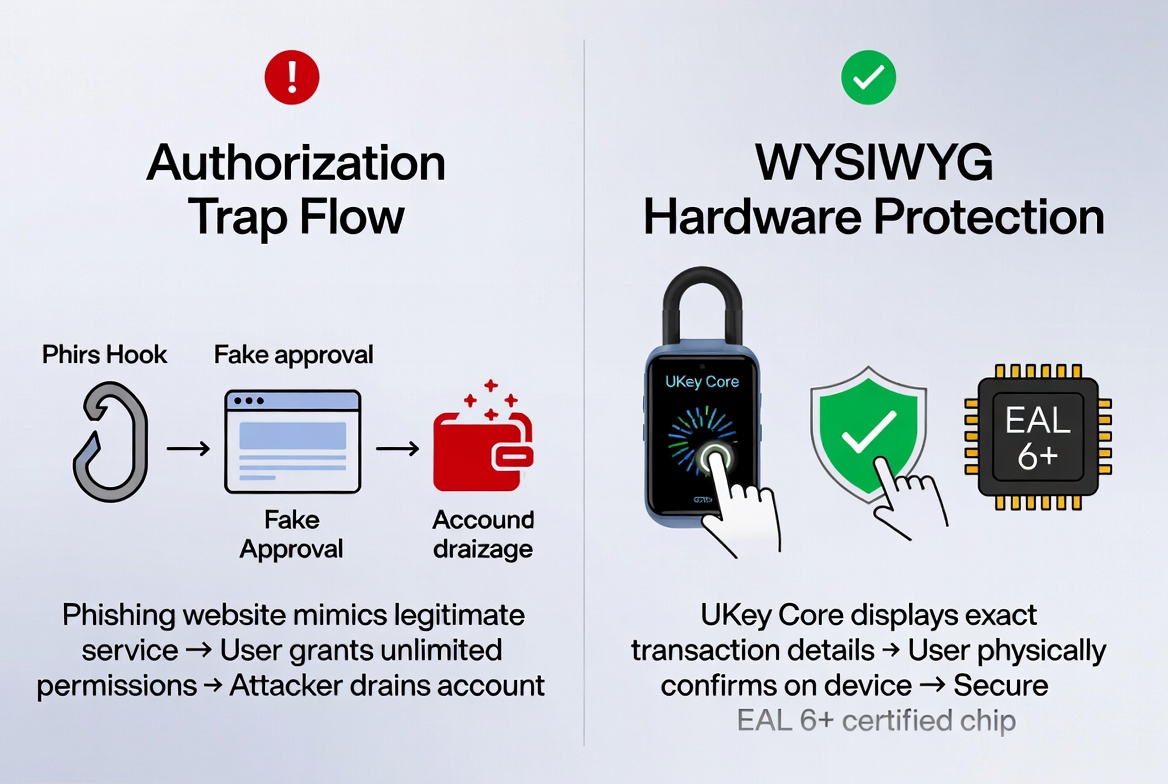
In 2026, as multi-chain interactions become routine in Web3, authorization traps have become one of the most common reasons users lose control of their on-chain accounts. Industry reports from 2025 to early 2026 highlight numerous cases where users approved seemingly harmless transactions on fake DeFi sites, NFT platforms, or phishing interfaces, only to discover later that they had granted unlimited permissions to malicious contracts.
For example, wallet drainer attacks frequently disguise themselves as airdrop claims or routine token approvals. Users connect their wallet and sign what appears to be a standard transaction on the website, but the actual signed data grants the contract sweeping rights over their holdings. Similar incidents involving interface spoofing and malicious JavaScript have led to rapid drainage even when users believed they were interacting with legitimate protocols. Authorization-related losses accounted for a significant portion of on-chain security events, often exploiting information asymmetry rather than breaking cryptographic primitives.
These events are not rare. Phishing campaigns using look-alike domains, AI-generated lures, and fake wallet connection prompts have scaled dramatically. In many documented cases, the webpage displayed benign information while the underlying transaction data contained dangerous permissions such as “approve for all” or delegate calls. Even experienced users fell victim when relying solely on browser or mobile displays, underscoring how authorization traps exploit the gap between what users see and what they actually sign.
Technical Principles Behind Authorization Traps and Protection
Authorization traps primarily rely on blind signing — a situation where the signing device or interface does not clearly display the full transaction details. Malicious contracts can manipulate displayed content or hide critical parameters like token approvals, recipient addresses, or unlimited spending permissions.
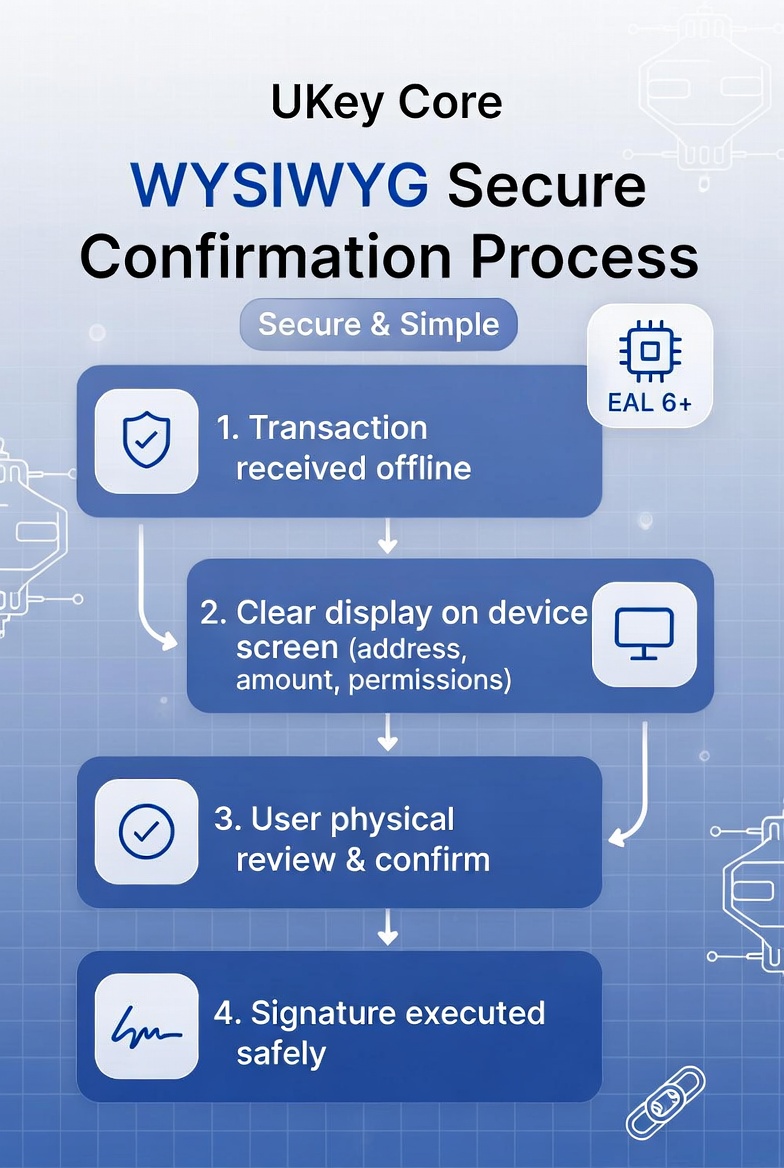
The effective countermeasure is the “What You See Is What You Sign” (WYSIWYG) principle. Hardware wallets implementing this mechanism parse transaction data locally on the device and present complete, human-readable information — including target address, authorization scope, contract interactions, and potential risks — directly on the offline screen. Users must physically review and confirm before any signature is executed. This eliminates intermediary tampering and ensures the signed content matches exactly what is displayed.
High-grade secure chips (such as EAL 6+ level) enable fully offline private key handling, local parsing, and trusted display. Additional layers like address validation, malicious address databases, and one-click revocation further strengthen defense. In multi-chain environments with complex DeFi and NFT interactions, this approach significantly reduces cognitive load and misoperation risks for both beginners and active users.
Industry Observations
By 2026, hardware wallet discussions increasingly emphasize interaction transparency over raw storage security. Established players like Ledger, OneKey, Trezor, and SafePal continue iterating, while user feedback highlights visualization capabilities as a key differentiator amid rising authorization threats. Industry observers note a shift toward solutions that help users truly understand what they are approving.
UKey Wallet’s Approach
UKey Wallet, through its independently developed hardware and software, offers a practical example. Its core hardware product UKey Core features an EAL 6+ secure chip and strongly implements the WYSIWYG mechanism, allowing clear on-device review of transaction details. The companion app supports unified management across hundreds of public chains, promoting a “secure yet simple” experience.
Best Practices
Users should always download from official channels, perform final confirmations on hardware screens, regularly audit authorizations, and avoid unknown links. These habits, paired with proper tools, form the foundation for protecting on-chain accounts.

AtomGit 是由开放原子开源基金会联合 CSDN 等生态伙伴共同推出的新一代开源与人工智能协作平台。平台坚持“开放、中立、公益”的理念,把代码托管、模型共享、数据集托管、智能体开发体验和算力服务整合在一起,为开发者提供从开发、训练到部署的一站式体验。
更多推荐


 1
1 0
0- 0


 已为社区贡献12条内容

所有评论(0)