第P8周:RestNet34实现X光肺炎识别
·
- 🍨 本文为🔗365天深度学习训练营中的学习记录博客
- 🍖 原作者:K同学啊
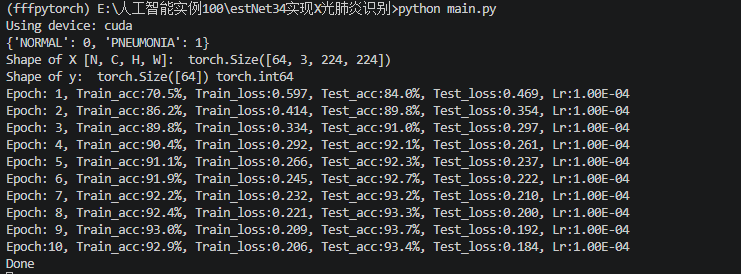
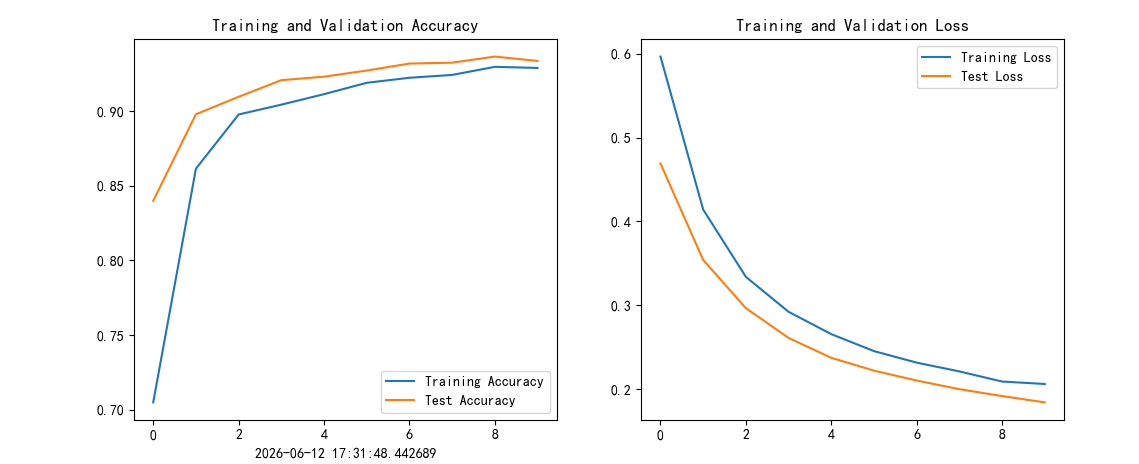
resnet34代码: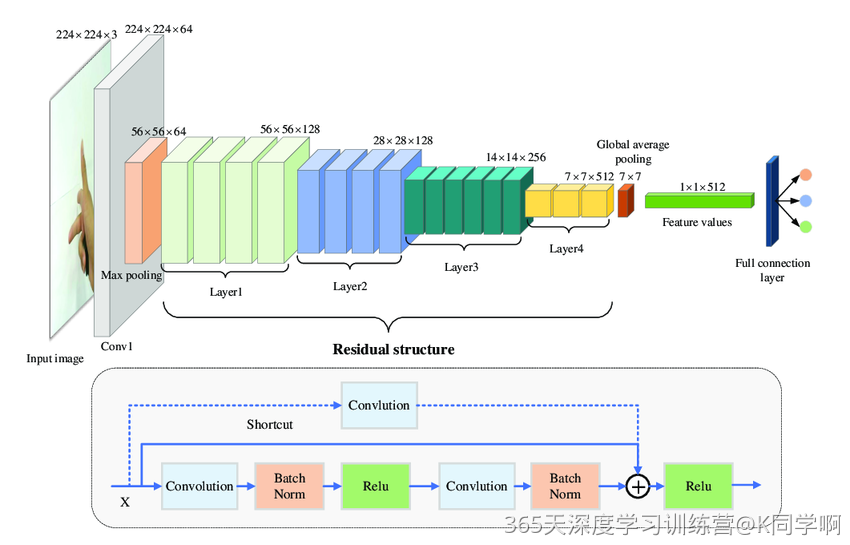
class BasicBlock(nn.Module):
    expansion = 1
    def __init__(self, in_channels, out_channels, stride=1, downsample=None):
        super(BasicBlock, self).__init__()

        # --- 第一个 3×3 卷积 ---
        self.conv1 = nn.Conv2d(
            in_channels, out_channels, kernel_size=3,
            stride=stride, padding=1, bias=False
        )
        self.bn1 = nn.BatchNorm2d(out_channels)
        self.relu = nn.ReLU(inplace=True)

        # --- 第二个 3×3 卷积 ---
        self.conv2 = nn.Conv2d(
            out_channels, out_channels, kernel_size=3,
            stride=1, padding=1, bias=False
        )
        self.bn2 = nn.BatchNorm2d(out_channels)


        self.downsample = downsample

    def forward(self, x):
        identity = x

        out = self.conv1(x)
        out = self.bn1(out)
        out = self.relu(out)

        out = self.conv2(out)
        out = self.bn2(out)


        if self.downsample is not None:
            identity = self.downsample(x)

        out += identity
        out = self.relu(out)

        return out


class ResNet34(nn.Module):
    """
    ResNet34 网络

    参数:
        num_classes: 分类数量 (默认 2, 用于 NORMAL / PNEUMONIA 二分类)
        include_top: 是否包含最后的全局池化与全连接层
    """

    def __init__(self, num_classes=2, include_top=True):
        super(ResNet34, self).__init__()

        self.include_top = include_top

        # --- 初始卷积层 ---
        # 输入: 224×224×3  →  输出: 112×112×64
        self.conv1 = nn.Conv2d(3, 64, kernel_size=7, stride=2, padding=3, bias=False)
        self.bn1 = nn.BatchNorm2d(64)
        self.relu = nn.ReLU(inplace=True)
        # 输出: 56×56×64
        self.maxpool = nn.MaxPool2d(kernel_size=3, stride=2, padding=1)

        # --- 四个残差阶段 ---
        # conv2_x: 56×56, 64 → 56×56, 64  (3 个 block, stride=1)
        self.layer1 = self._make_layer(64, 64, blocks=3, stride=1)

        # conv3_x: 56×56, 64 → 28×28, 128  (4 个 block, 第一个 stride=2)
        self.layer2 = self._make_layer(64, 128, blocks=4, stride=2)

        # conv4_x: 28×28, 128 → 14×14, 256  (6 个 block, 第一个 stride=2)
        self.layer3 = self._make_layer(128, 256, blocks=6, stride=2)

        # conv5_x: 14×14, 256 → 7×7, 512  (3 个 block, 第一个 stride=2)
        self.layer4 = self._make_layer(256, 512, blocks=3, stride=2)

        if self.include_top:
            # --- 全局平均池化 + 全连接 ---
            self.avgpool = nn.AdaptiveAvgPool2d((1, 1))
            self.fc = nn.Linear(512 * BasicBlock.expansion, num_classes)

        # --- 权重初始化 ---
        self._init_weights()

    def _make_layer(self, in_channels, out_channels, blocks, stride):
        """
        构建一个残差阶段 (包含多个 BasicBlock)。

        参数:
            in_channels:  输入通道数
            out_channels: 输出通道数
            blocks:       该阶段的 BasicBlock 数量
            stride:       第一个 block 的步长
        """
        downsample = None

        # 当 stride != 1 或通道数变化时, shortcut 需要 1×1 卷积
        if stride != 1 or in_channels != out_channels * BasicBlock.expansion:
            downsample = nn.Sequential(
                nn.Conv2d(
                    in_channels, out_channels * BasicBlock.expansion,
                    kernel_size=1, stride=stride, bias=False
                ),
                nn.BatchNorm2d(out_channels * BasicBlock.expansion),
            )

        layers = []
        # 第一个 block
        layers.append(
            BasicBlock(in_channels, out_channels, stride, downsample)
        )
        # 后续 block (in_channels = out_channels, stride=1)
        for _ in range(1, blocks):
            layers.append(
                BasicBlock(out_channels, out_channels, stride=1)
            )

        return nn.Sequential(*layers)

    def _init_weights(self):
        """Kaiming 初始化"""
        for m in self.modules():
            if isinstance(m, nn.Conv2d):
                nn.init.kaiming_normal_(
                    m.weight, mode='fan_out', nonlinearity='relu'
                )
            elif isinstance(m, nn.BatchNorm2d):
                nn.init.constant_(m.weight, 1)
                nn.init.constant_(m.bias, 0)

    def forward(self, x):
        """
        前向传播。

        输入:  x: (B, 3, 224, 224)
        输出:  分类 logits: (B, num_classes)
               或特征图 (当 include_top=False): (B, 512, 7, 7)
        """
        # --- 初始层 ---
        x = self.conv1(x)       # (B, 64, 112, 112)
        x = self.bn1(x)
        x = self.relu(x)
        x = self.maxpool(x)     # (B, 64, 56, 56)

        # --- 四个残差阶段 ---
        x = self.layer1(x)      # (B, 64,  56, 56)
        x = self.layer2(x)      # (B, 128, 28, 28)
        x = self.layer3(x)      # (B, 256, 14, 14)
        x = self.layer4(x)      # (B, 512, 7,  7)

        if self.include_top:
            # --- 分类头 ---
            x = self.avgpool(x)     # (B, 512, 1, 1)
            x = torch.flatten(x, 1)  # (B, 512)
            x = self.fc(x)           # (B, num_classes)
            return x
        else:
            return x  # 返回特征图
个人总结:这一周主要就是实现了resnet34的一个模型识别x光肺炎,主要学到了一个就是残差块的构建,并且以及对于resnt模型的直接调用冻结微调等操作。后续也是借助ai写了一下resnt34的代码。基本上可以手动实现。

AtomGit 是由开放原子开源基金会联合 CSDN 等生态伙伴共同推出的新一代开源与人工智能协作平台。平台坚持“开放、中立、公益”的理念,把代码托管、模型共享、数据集托管、智能体开发体验和算力服务整合在一起,为开发者提供从开发、训练到部署的一站式体验。
更多推荐



 6
6 0
0- 0


 已为社区贡献2条内容

所有评论(0)