很多人把Discussion写成Results:这5条AI提示词帮你从描述结果走向解释机制与理论贡献
文章目录
很多论文不是输在数据,也不是输在方法,而是输在 Discussion。
结果部分明明已经把数据讲清楚了,到了讨论部分却又重复一遍:
“本研究发现……”
“这说明……”
“与既往研究一致……”
看起来很完整,实际上没有真正推进论证。
好的 Discussion 不是把 Results 换一种说法再写一遍,而是要回答三个问题:
- 这个发现为什么重要?
- 它和已有研究是什么关系?
- 它能推动领域理解发生什么变化?
Discussion 的核心任务,不是重复发现,而是解释发现、定位发现、放大发现的学术价值。
今天这篇文章给大家整理一套适合用 AI 辅助写 Discussion 的工作流。你可以把它用于 SCI 论文、社科论文、医学研究、护理研究、质性研究、教育研究,也可以根据自己的领域微调。
这里整理出 5 组提示词,并且尽量用 中英文双语,方便大家直接复制给 ChatGPT、Claude、Gemini、DeepSeek 等大模型使用。
一、先理解:Discussion 到底应该写什么?
很多作者写 Discussion 时,最大的问题是“太像结果总结”。
比如 Results 写:
A 组患者干预后焦虑评分显著下降。
Discussion 又写:
本研究结果显示,A 组患者焦虑评分显著下降,说明干预有效。
这当然不是错,但它太浅了。
更好的写法应该继续追问:
- 为什么这个干预会有效?
- 它改变了哪个心理、行为或生理机制?
- 这个发现和已有研究一致还是不同?
- 如果不同,差异来自样本、情境、方法,还是理论边界?
- 这个结果对临床、护理、管理、教育或政策有什么启示?
Discussion 要做的是“从结果走向贡献”,而不是“从结果走向重复”。
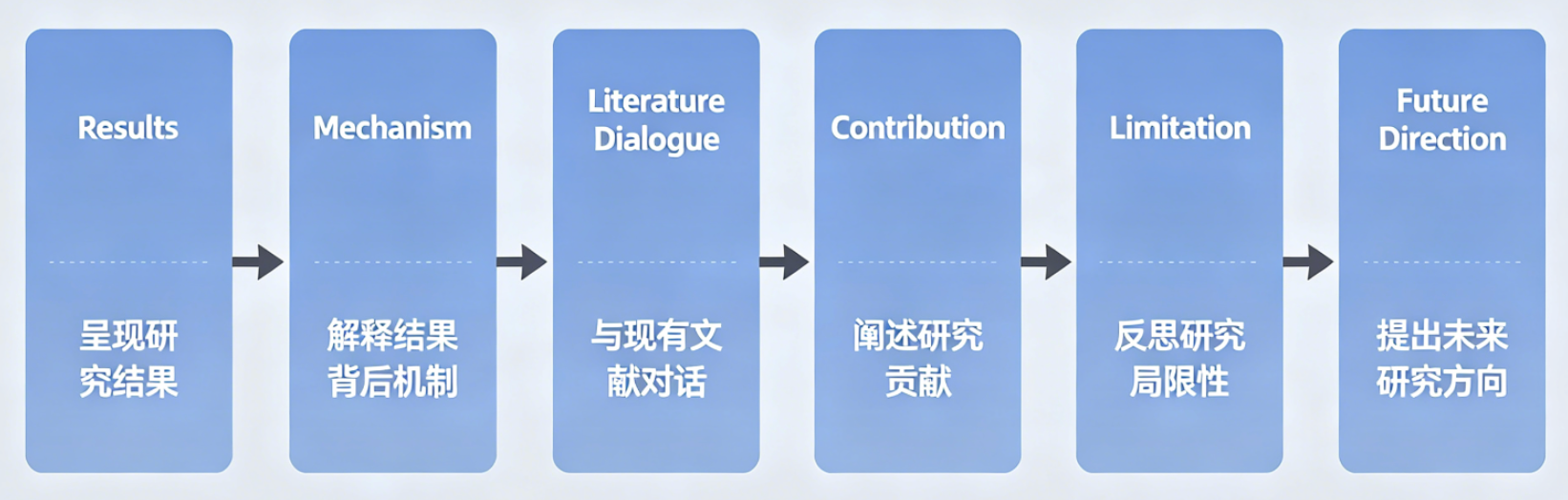
二、第一组提示词:把“结果”提升为“机制解释”
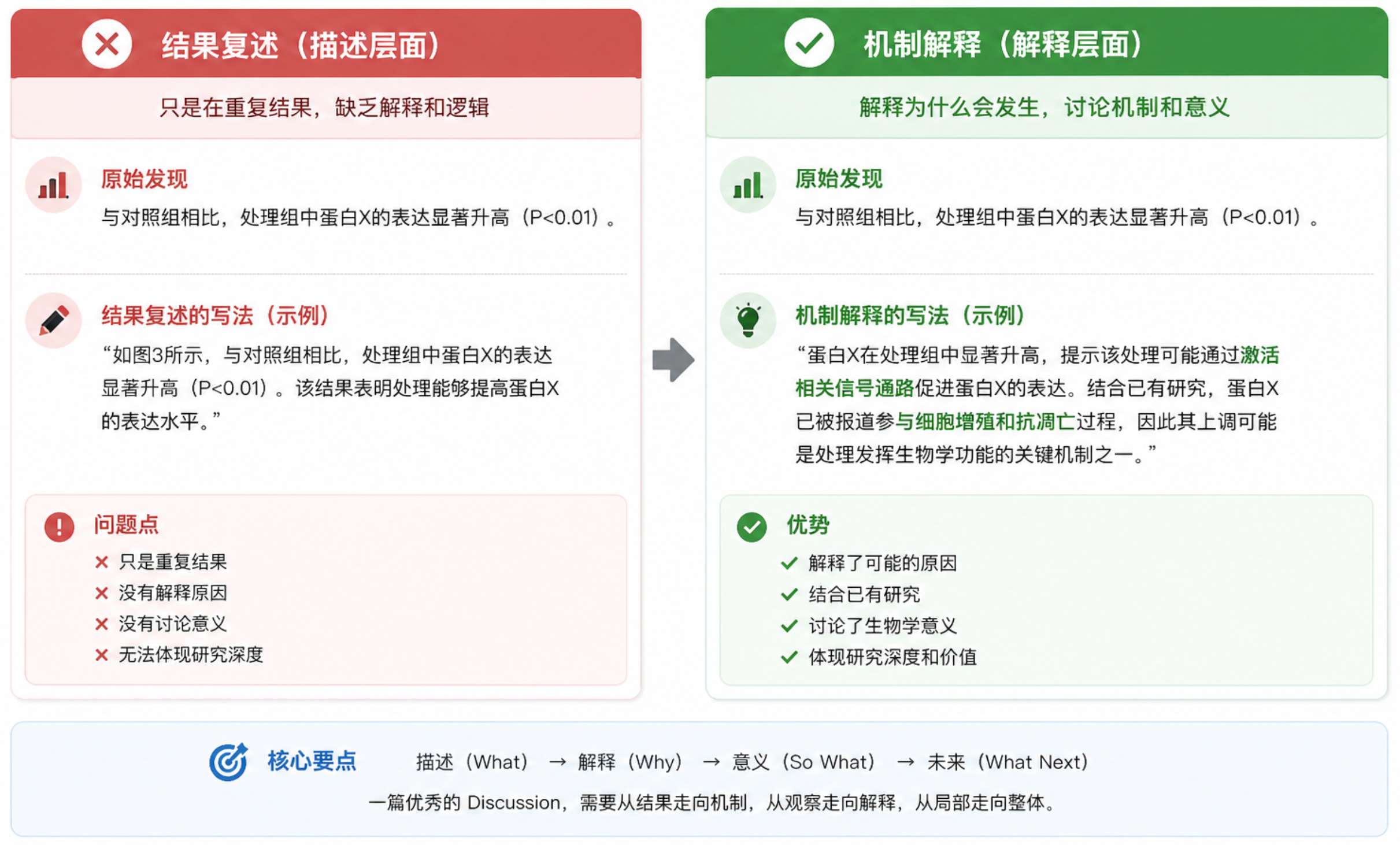
Discussion 的第一步,是不要停留在“发现了什么”,而要解释“为什么会这样”。
尤其是医学、护理、教育、心理、社会科学研究中,审稿人真正想看到的不是单纯的显著性,而是背后的机制逻辑。
比如:
- 干预为什么能改善依从性?
- 数字工具为什么能提升管理效率?
- 患者为什么会形成某种行为模式?
- 某种风险因素为什么会影响预后?
- 某种组织制度为什么会改变个体行为?
中文提示词
你是一位具有国际期刊审稿经验的学术写作专家,擅长将研究结果提升为机制解释。

请根据我提供的研究结果,帮我写一段 Discussion 中的机制解释部分。

我的研究结果如下:
【在这里粘贴你的核心结果】

请完成以下任务:
1. 不要简单重复结果,而是解释该结果可能反映的深层机制。
2. 从理论、行为、心理、生理、组织、制度或临床路径等角度进行分析。
3. 说明该机制为什么能够解释本研究发现。
4. 语言要符合 SCI 或高水平中文学术论文的 Discussion 写法。
5. 避免使用“本研究具有重要意义”这类空泛表达。

请输出:
- 一段中文 Discussion 机制解释
- 3 个可以进一步深化的机制关键词
- 1 句适合放在段落结尾的总结句
English Prompt
You are an experienced academic writing expert and journal reviewer. You specialize in transforming empirical findings into mechanism-based explanations for the Discussion section.

Based on the findings below, please write a mechanism-oriented Discussion paragraph.

My key findings are:
[Paste your key findings here]

Please complete the following tasks:
1. Do not simply restate the results. Explain the underlying mechanisms that may account for the findings.
2. Analyze the findings from theoretical, behavioral, psychological, physiological, organizational, institutional, or clinical pathway perspectives.
3. Explain why these mechanisms can reasonably account for the observed results.
4. Use a style suitable for the Discussion section of a high-quality academic paper.
5. Avoid vague statements such as "this study is of great significance."

Please output:
- One mechanism-oriented Discussion paragraph in English
- Three mechanism keywords for further development
- One concluding sentence suitable for the end of the paragraph
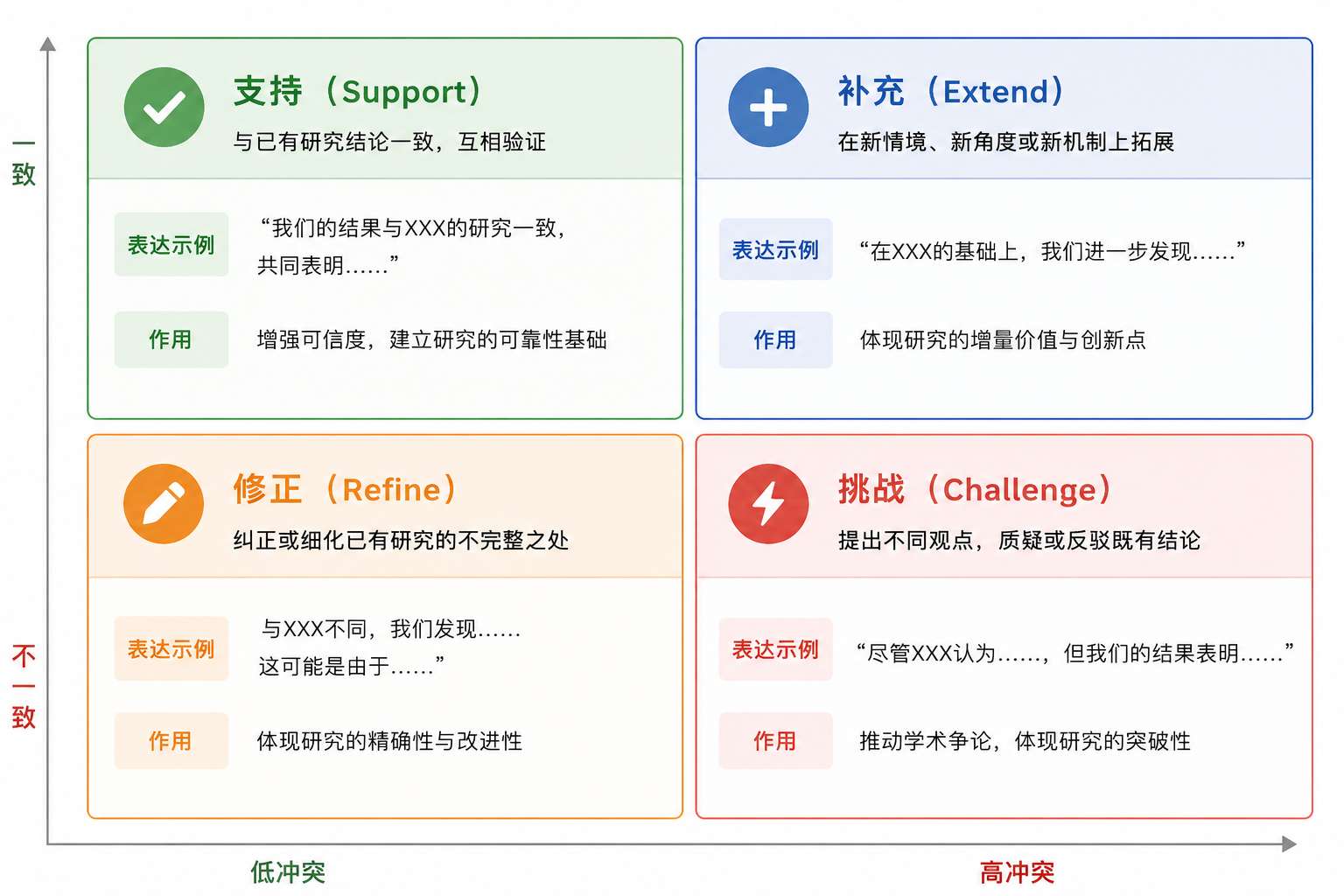
三、第二组提示词:把研究发现放进文献对话中
一篇好的 Discussion,不能只说“我的结果是什么”,还要说明“我的结果和已有研究是什么关系”。
很多作者最常见的写法是:
本研究结果与 Smith 等人的研究一致。
这句话当然可以写,但它不够有分析力。
更好的文献对话应该回答:
- 本研究支持了哪些已有观点?
- 本研究补充了哪些尚未被充分讨论的维度?
- 本研究是否修正了已有理论的适用范围?
- 本研究是否揭示了既往研究没有注意到的情境差异?
- 本研究是否对某些结论提出了挑战?
文献对话不是“找几篇文章证明自己没错”,而是把你的发现放进学术争论的位置中。
中文提示词
你是一位熟悉高水平期刊 Discussion 写作的学术编辑。请帮助我将研究发现与已有文献进行深入对话。

我的研究发现是:
【粘贴你的研究发现】

已有文献观点包括:
【粘贴 3-5 条相关文献观点,或直接粘贴参考文献摘要】

请你完成以下任务:
1. 判断本研究发现与已有文献是支持、补充、修正还是挑战关系。
2. 不要只写“与既往研究一致”,而要具体说明一致在哪里、推进在哪里。
3. 如果结果不同,请分析可能原因,如样本、情境、方法、文化背景、时间变化或理论边界。
4. 帮我写成 Discussion 中可直接使用的学术段落。
5. 语言要有逻辑递进,不要堆砌文献。

请输出:
- 一段中文文献对话段落
- 一个“支持/补充/修正/挑战”关系表
- 2 句适合用于 Discussion 的过渡句
English Prompt
You are an academic editor experienced in writing Discussion sections for high-impact journals. Please help me position my findings in relation to the existing literature.

My findings are:
[Paste your findings here]

Existing literature includes:
[Paste 3-5 relevant literature points or abstracts here]

Please complete the following tasks:
1. Determine whether my findings support, extend, refine, or challenge previous studies.
2. Do not simply write "consistent with previous research." Explain precisely where the agreement, extension, or difference lies.
3. If the findings differ from previous studies, analyze possible reasons such as sample characteristics, context, methods, cultural background, temporal change, or theoretical boundaries.
4. Write a polished Discussion paragraph that can be used in an academic paper.
5. Ensure logical progression rather than merely listing references.

Please output:
- One literature-dialogue paragraph in English
- A table showing whether the findings support, extend, refine, or challenge prior studies
- Two transition sentences suitable for a Discussion section
四、第三组提示词:处理“反常结果”和“不一致结果”
很多论文里都会出现一些和预期不完全一致的结果。
比如:
- 干预组没有明显优于对照组
- 某个变量在单因素分析中显著,但多因素回归中不显著
- 某个结果和既往研究方向相反
- 质性访谈中出现了意料之外的主题
- 某些亚组表现出不同趋势
很多作者遇到这种情况会很紧张,甚至想把它写得很含糊。
其实,反常结果并不一定是坏事。
在 Discussion 中,反常结果往往可以成为理论创新、机制解释和未来研究方向的入口。
中文提示词
你是一位具有审稿经验的学术方法专家,擅长解释反常结果和与既往研究不一致的发现。

我的研究中出现了以下反常或不一致结果:
【粘贴具体结果】

理论预期或已有研究通常认为:
【粘贴已有观点或预期方向】

请你帮助我完成以下任务:
1. 不要把该结果简单解释为“样本量不足”或“偶然现象”。
2. 从研究情境、样本特征、测量工具、干预强度、时间窗口、文化背景、变量关系或理论边界等方面提出可能解释。
3. 将反常结果转化为 Discussion 中有价值的分析点。
4. 给出 2-3 个合理解释,每个解释都要有逻辑链条。
5. 最后提出未来研究如何验证这些解释。

请输出:
- 一段可用于 Discussion 的中文分析
- 2-3 个可能解释
- 每个解释对应的未来研究方向
English Prompt
You are an academic methodologist and experienced peer reviewer. You specialize in explaining unexpected findings and results that are inconsistent with previous research.

An unexpected or inconsistent finding in my study is:
[Paste the finding here]

The theoretical expectation or previous literature usually suggests:
[Paste the expected pattern or previous evidence here]

Please help me complete the following tasks:
1. Do not simply attribute the finding to "small sample size" or "random variation."
2. Provide possible explanations from the perspectives of study context, sample characteristics, measurement tools, intervention intensity, time window, cultural background, variable relationships, or theoretical boundaries.
3. Turn the unexpected finding into a valuable analytical point in the Discussion section.
4. Provide 2-3 plausible explanations, each with a clear logical chain.
5. Suggest how future studies could test these explanations.

Please output:
- One Discussion-style analytical paragraph in English
- Two or three plausible explanations
- A future research direction for each explanation
配图建议:
截图来源:自己制作路径图
截图内容:反常结果 → 情境差异 / 样本特征 / 方法差异 / 理论边界 → 新解释 → 未来研究
图片用途:说明“不一致结果”也可以变成 Discussion 的亮点
推荐文件名:fig4-unexpected-findings-pathway.png
五、第四组提示词:提炼理论贡献和实践启示
Discussion 最终必须回答一个非常关键的问题:
So what?
也就是:
你的研究到底有什么用?
这个“有用”分为两类:
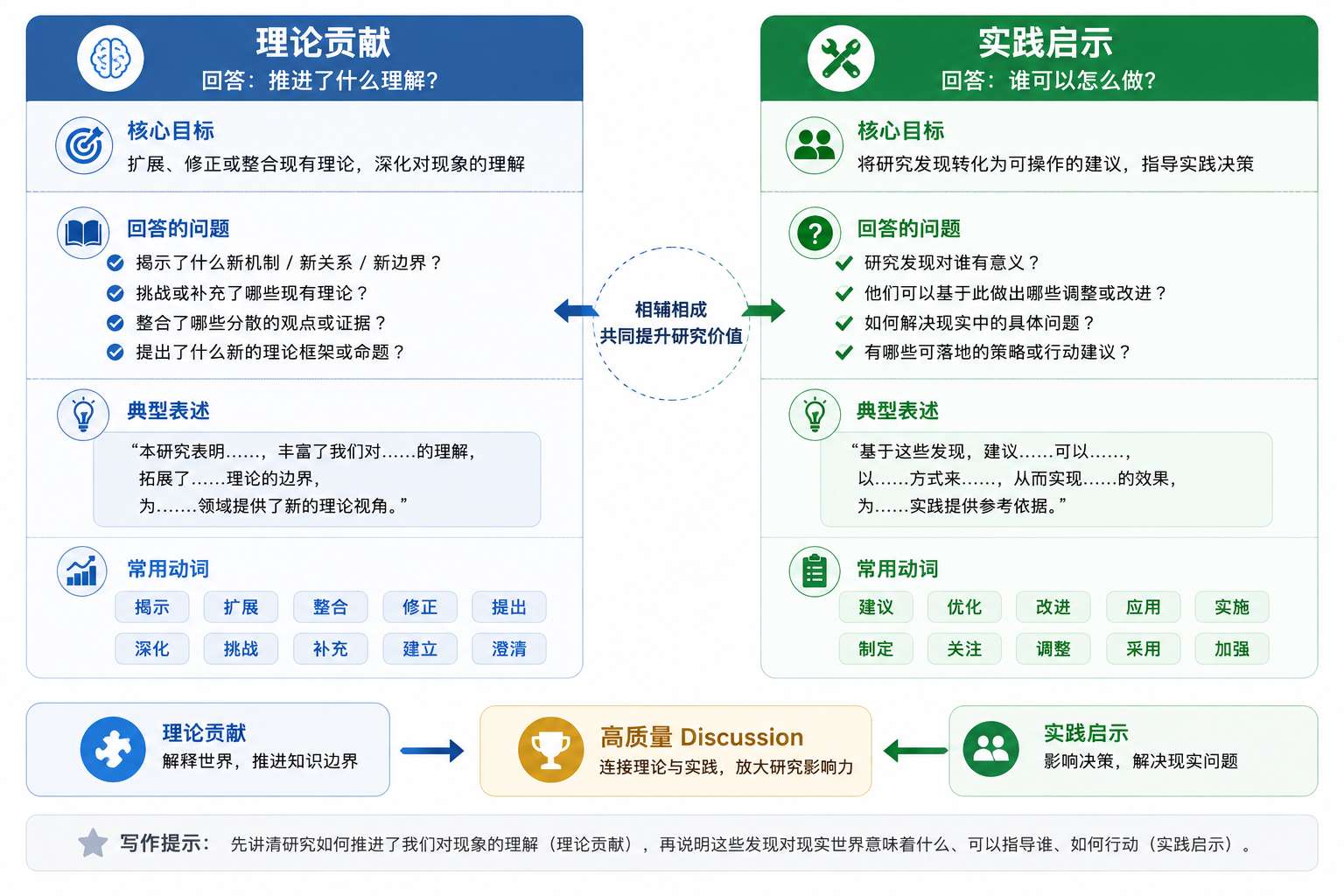
第一类是 理论贡献。它回答:你的研究让我们对某个概念、机制、理论或问题有了什么新的理解?
第二类是 实践启示。它回答:你的研究能帮助谁做出更好的判断、管理、治疗、护理、教育或决策?
很多论文写启示时很空:
本研究对临床实践具有一定指导意义。
这句话太弱了。
更好的写法应该具体到对象和行动:
- 对临床医生意味着什么?
- 对护理管理者意味着什么?
- 对政策制定者意味着什么?
- 对学校、平台、企业、社区或家庭意味着什么?
- 他们可以据此改变什么流程、策略或制度?
好的启示不是喊口号,而是指出“谁可以根据你的发现做什么”。
中文提示词
你是一位擅长提炼论文贡献的学术写作专家。请根据我的研究发现,帮助我写出 Discussion 中的理论贡献和实践启示。

我的研究主题是:
【填写研究主题】

我的核心发现是:
【粘贴核心发现】

目标读者或应用对象包括:
【如临床医生、护理管理者、教师、政策制定者、企业管理者、平台治理者等】

请完成以下任务:
1. 提炼 2-3 条理论贡献,说明本研究推进了哪些概念、机制、理论或研究议题。
2. 提炼 2-3 条实践启示,明确说明哪些对象可以如何使用这些发现。
3. 避免“具有重要意义”“提供参考”这类空泛表达。
4. 每条贡献都要有“发现 → 解释 → 影响”的逻辑。
5. 写成 Discussion 中可直接使用的段落。

请输出:
- 中文理论贡献段落
- 中文实践启示段落
- 一个“发现—贡献—对象—行动建议”表格
English Prompt
You are an academic writing expert specializing in articulating theoretical contributions and practical implications.

Please help me write the theoretical contribution and practical implication parts of the Discussion section based on my findings.

My research topic is:
[Insert research topic]

My key findings are:
[Paste key findings]

Target readers or stakeholders include:
[Clinicians, nursing managers, teachers, policymakers, business managers, platform governance teams, etc.]

Please complete the following tasks:
1. Identify two or three theoretical contributions, explaining which concepts, mechanisms, theories, or research agendas are advanced.
2. Identify two or three practical implications, specifying who can use the findings and how.
3. Avoid vague expressions such as "this study is of great significance" or "provides a reference."
4. Each contribution should follow the logic of "finding → explanation → impact."
5. Write polished paragraphs suitable for the Discussion section.

Please output:
- One paragraph on theoretical contributions
- One paragraph on practical implications
- A table with the columns: finding, contribution, target stakeholder, recommended action
六、第五组提示词:把局限写得诚实但不自毁
Discussion 里通常还要写 Limitations。
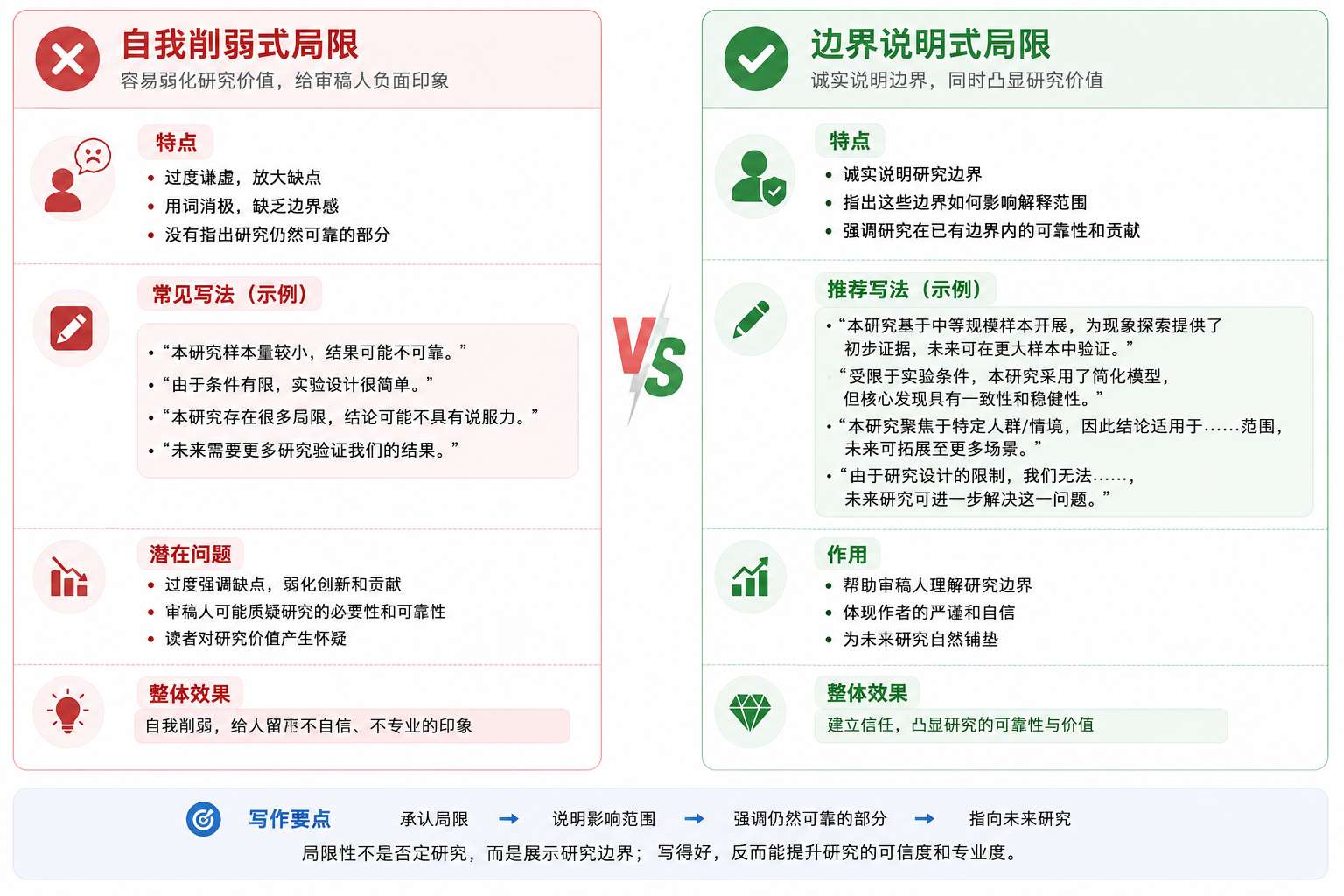
很多作者写局限时容易写得太“自毁”:
- 本研究样本量较少,结果可靠性不足。
- 本研究仅纳入单中心样本,推广性较差。
- 本研究采用横断面设计,无法得出任何结论。
这些说法不是不能写,但语气太弱,容易把自己的研究价值也一起削掉。
更成熟的写法是:
- 承认边界
- 说明为什么这个边界合理
- 指出未来研究如何扩展
- 保留本研究已有贡献
比如,单中心研究可以说成“情境聚焦”;质性访谈样本有限可以说成“机制生成导向”;横断面研究可以强调“关联线索和假设生成”,同时建议未来纵向验证。
局限不是失败声明,而是研究边界和未来议程的交代。
中文提示词
你是一位资深学术编辑,擅长帮助作者撰写成熟、诚实但不削弱研究价值的 Limitations 段落。

我的研究局限包括:
【列出局限,如样本量有限、单中心研究、横断面设计、随访时间短、未纳入某些变量等】

我的研究贡献包括:
【列出核心贡献】

请你完成以下任务:
1. 将每个局限改写为“研究边界”,避免自我否定式表达。
2. 每个局限后都要对应一个未来研究方向。
3. 先肯定研究贡献,再说明边界。
4. 语言要谦逊、专业、稳健。
5. 避免“结果不可靠”“研究失败”“无法说明问题”等过度削弱表达。

请输出:
- 一段中文 Limitations 段落
- 一个“局限—边界表述—未来研究方向”表格
- 3 个适合写局限的英文句式模板
English Prompt
You are a senior academic editor. You specialize in writing mature, honest, and non-self-defeating limitations sections.

The limitations of my study include:
[List limitations such as limited sample size, single-center design, cross-sectional design, short follow-up, missing variables, etc.]

The contributions of my study include:
[List core contributions]

Please complete the following tasks:
1. Reframe each limitation as a research boundary rather than a failure.
2. Pair each limitation with a concrete future research direction.
3. Acknowledge the contribution first, then discuss the boundary.
4. Use a humble, professional, and balanced academic tone.
5. Avoid overly weakening expressions such as "the results are unreliable," "the study failed," or "no conclusion can be drawn."

Please output:
- One polished limitations paragraph in English
- A table with the columns: limitation, boundary-oriented wording, future research direction
- Three reusable English sentence templates for writing limitations
七、使用 AI 写 Discussion 的 4 个注意事项
最后提醒大家,AI 可以帮我们提升效率,但不能替代作者的学术判断。
1. 不要让 AI 编文献
如果你没有提供真实文献,AI 很容易生成看似合理但并不存在的引用。
正确做法是:先把真实文献摘要、DOI、核心观点提供给 AI,再让它帮你做文献对话。
2. 不要让 AI 夸大结论
如果你的研究是横断面设计,就不要写因果结论。
如果你的样本来自单中心,就不要写成普遍规律。
如果你的模型只是预测相关,就不要写成机制已被证实。
3. 不要直接复制 AI 初稿
AI 初稿更适合作为“结构草稿”。你要根据真实数据、真实文献和目标期刊风格继续修改。
4. 一定要保留自己的判断
Discussion 最核心的地方,是作者对研究价值的判断。
AI 可以帮你组织语言,但最终要由你决定:
- 哪个解释最合理?
- 哪篇文献最关键?
- 哪个贡献最有说服力?
- 哪个局限必须诚实说明?
AI 能帮你把 Discussion 写顺,但不能替你决定研究到底贡献在哪里。
八、总结
Discussion 是论文中最考验作者学术判断的部分。
它不是 Results 的复读机,也不是文献综述的压缩版,更不是简单写几句“具有重要意义”。
真正好的 Discussion 应该完成五件事:
- 把结果提升为机制解释。
- 把发现放进文献对话。
- 把反常结果转化为分析价值。
- 把研究发现提炼为理论贡献和实践启示。
- 把局限写成研究边界和未来方向。
如果你总觉得 Discussion 写不深,可以直接用今天这 5 组中英文提示词,从自己的结果出发,一步一步打磨。
最后送大家一句话:
好的 Discussion,不是把结果再说一遍,而是让审稿人看到:你的发现为什么值得被发表。

AtomGit 是由开放原子开源基金会联合 CSDN 等生态伙伴共同推出的新一代开源与人工智能协作平台。平台坚持“开放、中立、公益”的理念,把代码托管、模型共享、数据集托管、智能体开发体验和算力服务整合在一起,为开发者提供从开发、训练到部署的一站式体验。
更多推荐
 8
8 0
0- 0


 已为社区贡献6条内容

所有评论(0)