AIOps 事件关联与影响面分析:从单点告警到全局拓扑
AIOps 事件关联与影响面分析:从单点告警到全局拓扑
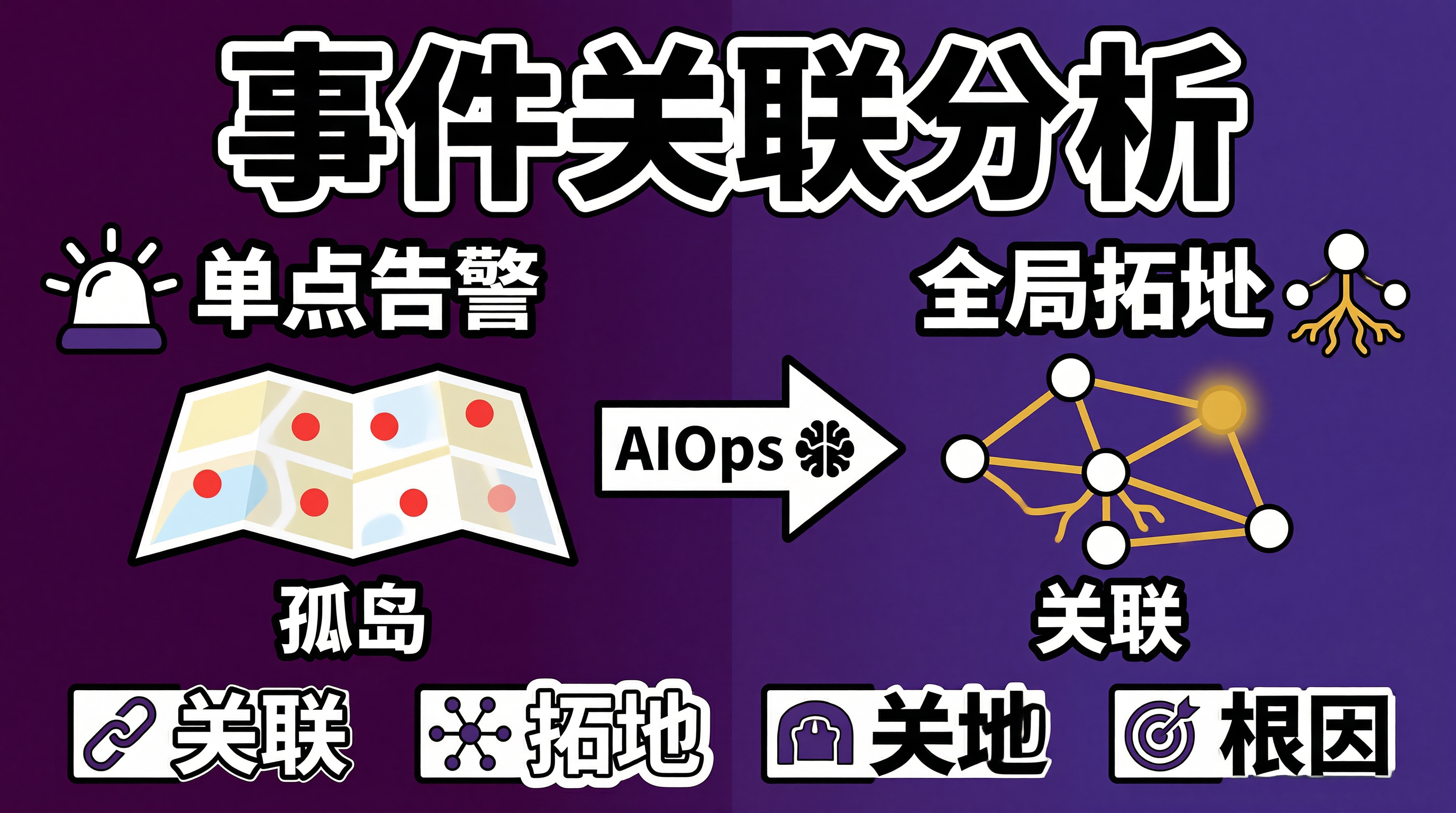
一、告警孤岛的关联困境:同一故障的 N 条独立告警
微服务架构中,一个故障往往触发连锁反应:数据库慢查询 → 订单服务超时 → API 网关 503 → 前端白屏。监控系统对每个异常分别发出告警,运维团队在 5 分钟内收到 20+ 条告警,但无法判断这些告警是否指向同一根因。更危险的是,如果只关注最严重的告警(如 API 网关 503),可能误判根因在网络层,而忽略了真正的根因——数据库慢查询。
AIOps 事件关联的核心思路是:基于服务拓扑和时序分析,将时间窗口内的多条告警关联为同一个"事件",并沿拓扑图逆向追踪到最可能的根因节点。
二、事件关联的架构设计与根因定位机制
事件关联的核心算法是"拓扑约束的时序聚类"——两条告警如果满足以下条件,则关联为同一事件:时间窗口内(5 分钟)、存在拓扑路径连接、且告警传播方向与依赖方向一致。
flowchart TB
    A[告警流] --> B[时间窗口聚合: 5 分钟]
    B --> C[拓扑路径匹配]
    C --> D[关联图构建]

    D --> E[连通分量检测]
    E --> F[事件簇: 同一根因的告警集合]

    F --> G[根因定位算法]
    G --> H[入度分析: 被依赖最多的节点]
    G --> I[时序分析: 最早出现的告警]
    G --> J[拓扑分析: 最上游的故障节点]

    H --> K[根因候选排序]
    I --> K
    J --> K

    K --> L[根因: 数据库慢查询]
    L --> M[影响面: 订单服务 → API 网关 → 前端]
三、生产级实现:事件关联引擎
# event_correlator.py — AIOps 事件关联引擎
from dataclasses import dataclass, field
from typing import List, Dict, Set, Optional
from datetime import datetime, timedelta
from collections import defaultdict

@dataclass
class Alert:
    id: str
    service: str
    metric: str
    severity: str
    timestamp: datetime
    description: str

@dataclass
class CorrelatedEvent:
    id: str
    alerts: List[Alert]
    root_cause_candidates: List[Dict]
    impact_scope: List[str]
    start_time: datetime
    confidence: float

class EventCorrelator:
    """事件关联引擎:拓扑约束的时序聚类"""

    def __init__(self, topology: Dict[str, List[str]]):
        # 服务拓扑:service → [依赖的下游服务]
        self.topology = topology
        # 反向拓扑:service → [依赖它的上游服务]
        self.reverse_topology = self._build_reverse_topology()

    def correlate(
        self, alerts: List[Alert], window_minutes: int = 5
    ) -> List[CorrelatedEvent]:
        """关联时间窗口内的告警"""
        if not alerts:
            return []

        # 按时间排序
        sorted_alerts = sorted(alerts, key=lambda a: a.timestamp)

        # 步骤 1:时间窗口聚合
        groups = self._time_window_group(sorted_alerts, window_minutes)

        # 步骤 2:对每个时间组进行拓扑关联
        events = []
        for group in groups:
            correlated = self._topology_correlate(group)
            events.extend(correlated)

        return events

    def _time_window_group(
        self, alerts: List[Alert], window_minutes: int
    ) -> List[List[Alert]]:
        """时间窗口聚合:将时间接近的告警分到同一组"""
        groups = []
        current_group = [alerts[0]]
        window_start = alerts[0].timestamp

        for alert in alerts[1:]:
            if (alert.timestamp - window_start) <= timedelta(minutes=window_minutes):
                current_group.append(alert)
            else:
                groups.append(current_group)
                current_group = [alert]
                window_start = alert.timestamp

        if current_group:
            groups.append(current_group)

        return groups

    def _topology_correlate(
        self, alerts: List[Alert]
    ) -> List[CorrelatedEvent]:
        """基于拓扑路径的告警关联"""
        # 构建告警服务图
        alert_services = {a.service for a in alerts}

        # 查找连通分量:通过拓扑路径连接的服务集合
        visited: Set[str] = set()
        components: List[Set[str]] = []

        for service in alert_services:
            if service in visited:
                continue
            component = self._bfs_connected(service, alert_services)
            visited.update(component)
            components.append(component)

        # 为每个连通分量创建关联事件
        events = []
        for i, component in enumerate(components):
            component_alerts = [
                a for a in alerts if a.service in component
            ]

            # 根因定位
            root_cause = self._locate_root_cause(component_alerts, component)

            # 影响面分析
            impact = self._analyze_impact(component)

            events.append(CorrelatedEvent(
                id=f"event-{i+1}",
                alerts=component_alerts,
                root_cause_candidates=root_cause,
                impact_scope=impact,
                start_time=min(a.timestamp for a in component_alerts),
                confidence=self._calculate_confidence(component_alerts),
            ))

        return events

    def _bfs_connected(
        self, start: str, services: Set[str]
    ) -> Set[str]:
        """BFS 查找通过拓扑路径连接的服务集合"""
        visited = set()
        queue = [start]

        while queue:
            current = queue.pop(0)
            if current in visited:
                continue
            visited.add(current)

            # 检查下游依赖
            for dep in self.topology.get(current, []):
                if dep in services and dep not in visited:
                    queue.append(dep)

            # 检查上游依赖
            for dep in self.reverse_topology.get(current, []):
                if dep in services and dep not in visited:
                    queue.append(dep)

        return visited

    def _locate_root_cause(
        self, alerts: List[Alert], component: Set[str]
    ) -> List[Dict]:
        """根因定位:综合时序、拓扑和入度分析"""
        candidates = []

        for service in component:
            score = 0.0
            reasons = []

            # 因子 1:时序分析——最早出现告警的服务更可能是根因
            service_alerts = [a for a in alerts if a.service == service]
            if service_alerts:
                earliest = min(a.timestamp for a in service_alerts)
                all_earliest = min(a.timestamp for a in alerts)
                if earliest == all_earliest:
                    score += 0.4
                    reasons.append("最早出现告警")

            # 因子 2:拓扑分析——最上游的服务更可能是根因
            upstream_count = len(self.reverse_topology.get(service, []))
            if upstream_count == 0:
                score += 0.3
                reasons.append("拓扑最上游(无上游依赖)")

            # 因子 3:入度分析——被最多服务依赖的服务更可能是根因
            downstream_count = len(self.topology.get(service, []))
            if downstream_count > 0:
                score += 0.2 * min(downstream_count / 5, 1.0)
                reasons.append(f"被 {downstream_count} 个下游服务依赖")

            if score > 0:
                candidates.append({
                    "service": service,
                    "score": score,
                    "reasons": reasons,
                })

        return sorted(candidates, key=lambda x: x["score"], reverse=True)

    def _analyze_impact(self, component: Set[str]) -> List[str]:
        """影响面分析:沿拓扑向下游扩展"""
        impact = set(component)
        for service in component:
            for dep in self.topology.get(service, []):
                impact.add(dep)
                # 二级下游
                for dep2 in self.topology.get(dep, []):
                    impact.add(dep2)
        return sorted(impact)

    def _calculate_confidence(self, alerts: List[Alert]) -> float:
        """计算关联置信度"""
        if len(alerts) <= 1:
            return 0.3
        # 告警数量越多、时间越集中,置信度越高
        time_span = (max(a.timestamp for a in alerts) -
                     min(a.timestamp for a in alerts)).total_seconds()
        if time_span < 60:
            return 0.9
        elif time_span < 300:
            return 0.7
        else:
            return 0.5

    def _build_reverse_topology(self) -> Dict[str, List[str]]:
        """构建反向拓扑"""
        reverse = defaultdict(list)
        for service, deps in self.topology.items():
            for dep in deps:
                reverse[dep].append(service)
        return dict(reverse)
四、边界分析与架构权衡
AIOps 事件关联在生产落地中需要正视以下 Trade-off:
拓扑数据的时效性。服务拓扑在微服务架构中频繁变化,如果拓扑数据过期,关联结果可能错误。建议从服务发现(Consul/Nacos)或服务网格(Istio)实时获取拓扑,而非依赖静态配置。
时间窗口的选择。窗口过小(1 分钟)可能将同一故障的告警拆分为多个事件,窗口过大(30 分钟)可能将不同故障的告警错误关联。建议初始使用 5 分钟窗口,根据实际效果调整。
根因定位的精度。时序 + 拓扑 + 入度的综合分析只能提供"候选根因",无法保证 100% 准确。建议将根因定位结果作为"辅助参考",而非"自动决策"依据。
适用边界:事件关联最适合微服务数量 > 10、告警量 > 50 条/小时的系统。单体应用或低告警量系统,人工关联即可。
五、总结
AIOps 事件关联,将告警处理从"逐条响应"推进到"关联分析"。核心算法:拓扑约束的时序聚类,将时间窗口内、拓扑路径相连的告警关联为同一事件,综合时序、拓扑和入度分析定位根因。落地建议:第一,从服务发现实时获取拓扑数据;第二,初始使用 5 分钟时间窗口;第三,根因定位作为辅助参考,不替代人工判断。关键原则:关联的价值不在于"减少告警数量",而在于"揭示告警之间的因果关系"——理解了因果关系,才能精准定位根因。

AtomGit 是由开放原子开源基金会联合 CSDN 等生态伙伴共同推出的新一代开源与人工智能协作平台。平台坚持“开放、中立、公益”的理念,把代码托管、模型共享、数据集托管、智能体开发体验和算力服务整合在一起,为开发者提供从开发、训练到部署的一站式体验。
更多推荐



 4
4 0
0- 0


 已为社区贡献45条内容

所有评论(0)