AI 驱动的 SRE 值班排班优化:从轮值到智能调度
AI 驱动的 SRE 值班排班优化:从轮值到智能调度
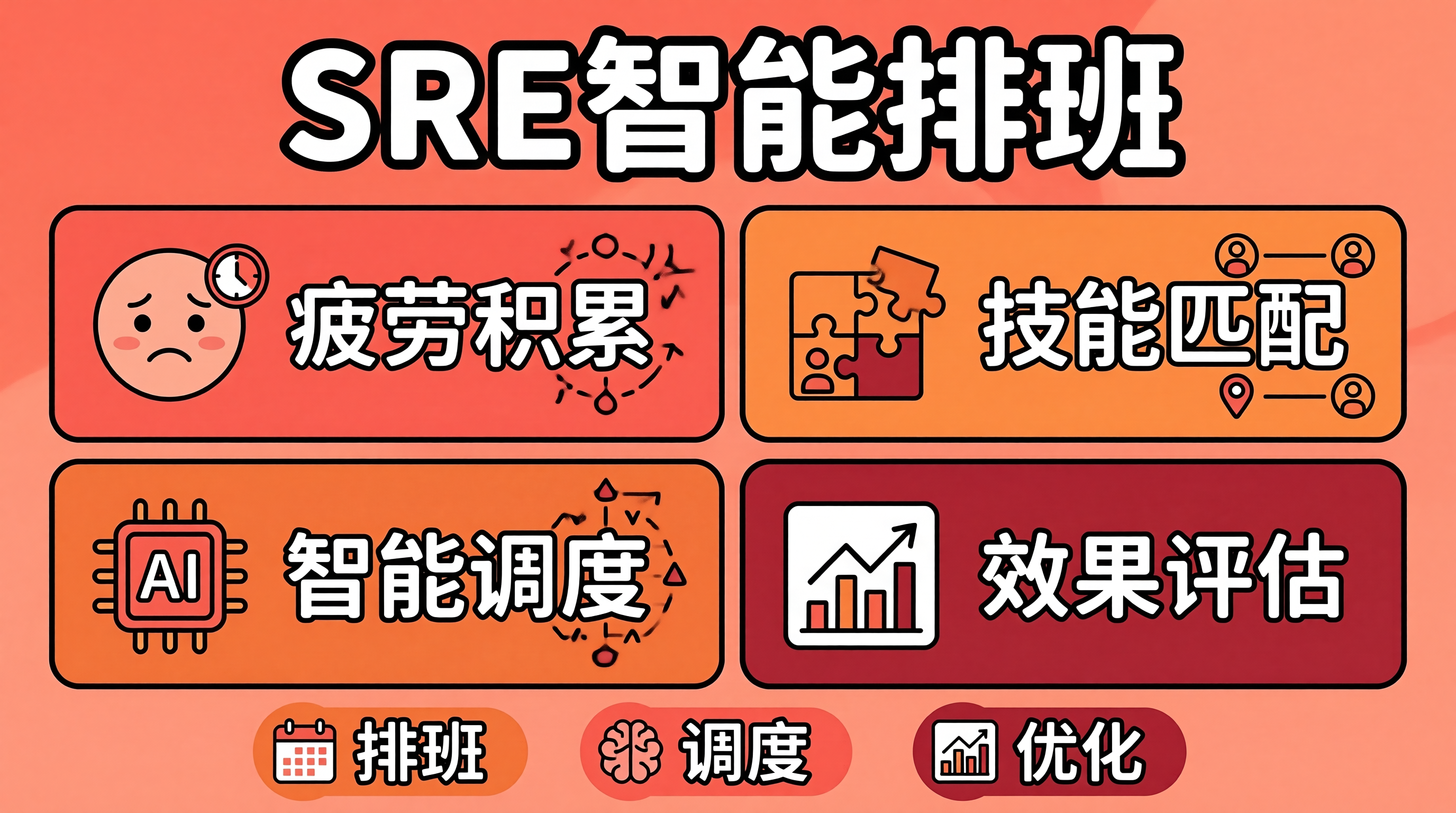
一、值班排班的经验主义困境:疲劳积累与技能错配
SRE 团队的值班排班通常采用轮值制——每人值班一周,依次轮换。但轮值制忽略了两个关键因素:一是疲劳积累,连续处理深夜告警的工程师,第二天的判断力显著下降;二是技能错配,数据库故障需要 DBA 技能,网络故障需要网络工程师,但轮值到谁就是谁,技能不匹配导致排障时间延长。
AI 驱动的排班优化,核心思路是:根据告警类型的历史分布、工程师的技能画像和疲劳状态,动态生成最优排班方案,最小化"技能错配率"和"疲劳风险"。
二、排班优化的架构设计与约束模型
排班优化是一个多约束优化问题:硬约束包括值班连续性(同一人不能连续值班超过 2 周)、时区覆盖(7×24 小时覆盖)和法定休息日;软约束包括技能匹配度最大化、疲劳风险最小化和偏好尊重。
flowchart TB
    A[排班输入] --> B[工程师技能画像]
    A --> C[告警历史分布]
    A --> D[约束条件]

    B --> E[技能匹配度评分]
    C --> F[告警类型预测]
    D --> G[硬约束: 连续性/覆盖/休息]
    D --> H[软约束: 疲劳/偏好/公平]

    E --> I[排班优化引擎]
    F --> I
    G --> I
    H --> I

    I --> J[最优排班方案]
    J --> K[技能匹配率: > 80%]
    J --> L[疲劳风险: < 20%]
    J --> M[公平性: 方差 < 10%]
三、生产级实现:排班优化引擎
# schedule_optimizer.py — AI 驱动的 SRE 排班优化引擎
from dataclasses import dataclass, field
from typing import List, Dict, Optional, Set
from enum import Enum
from datetime import date, timedelta
import random

class SkillType(Enum):
    DATABASE = "database"
    NETWORK = "network"
    KUBERNETES = "kubernetes"
    APPLICATION = "application"
    SECURITY = "security"

@dataclass
class Engineer:
    id: str
    name: str
    skills: Dict[SkillType, float]  # 技能熟练度 0-1
    timezone: str
    last_oncall_end: Optional[date] = None  # 上次值班结束日期
    oncall_count_this_month: int = 0
    preference: Dict[str, bool] = field(default_factory=dict)  # 偏好

@dataclass
class OncallSlot:
    date: date
    shift: str  # "day" / "night"
    required_skills: List[SkillType]  # 该时段最可能需要的技能

@dataclass
class OncallAssignment:
    slot: OncallSlot
    engineer: Engineer
    skill_match_score: float
    fatigue_risk: float

class ScheduleOptimizer:
    """排班优化引擎:多约束优化排班方案"""

    def optimize(
        self,
        engineers: List[Engineer],
        slots: List[OncallSlot],
        constraints: Dict,
    ) -> List[OncallAssignment]:
        """生成最优排班方案"""
        assignments = []
        assigned_dates: Dict[str, Set[date]] = {e.id: set() for e in engineers}

        for slot in slots:
            # 为每个时段选择最优工程师
            best_engineer = self._select_best_engineer(
                slot, engineers, assigned_dates, constraints
            )

            if best_engineer:
                skill_score = self._calculate_skill_match(
                    best_engineer, slot
                )
                fatigue_risk = self._calculate_fatigue_risk(
                    best_engineer, assigned_dates[best_engineer.id]
                )

                assignments.append(OncallAssignment(
                    slot=slot,
                    engineer=best_engineer,
                    skill_match_score=skill_score,
                    fatigue_risk=fatigue_risk,
                ))

                assigned_dates[best_engineer.id].add(slot.date)

        return assignments

    def _select_best_engineer(
        self,
        slot: OncallSlot,
        engineers: List[Engineer],
        assigned_dates: Dict[str, Set[date]],
        constraints: Dict,
    ) -> Optional[Engineer]:
        """为指定时段选择最优工程师"""
        candidates = []

        for eng in engineers:
            score = 0.0

            # 因子 1:技能匹配度(权重 40%)
            skill_score = self._calculate_skill_match(eng, slot)
            score += skill_score * 40

            # 因子 2:疲劳风险(权重 30%)
            fatigue = self._calculate_fatigue_risk(
                eng, assigned_dates[eng.id]
            )
            score += (1 - fatigue) * 30  # 疲劳越低,分数越高

            # 因子 3:公平性(权重 20%)
            max_oncall = max(e.oncall_count_this_month for e in engineers)
            fairness = 1 - (eng.oncall_count_this_month / max(max_oncall, 1))
            score += fairness * 20

            # 因子 4:偏好(权重 10%)
            if eng.preference.get(f"no_{slot.shift}", False):
                score -= 50  # 强烈惩罚违反偏好
            if eng.preference.get(f"prefer_{slot.shift}", False):
                score += 10

            # 硬约束检查
            if not self._check_hard_constraints(eng, slot, assigned_dates, constraints):
                continue

            candidates.append((eng, score))

        if not candidates:
            return None

        # 选择得分最高的工程师
        candidates.sort(key=lambda x: x[1], reverse=True)
        return candidates[0][0]

    def _calculate_skill_match(
        self, engineer: Engineer, slot: OncallSlot
    ) -> float:
        """计算技能匹配度"""
        if not slot.required_skills:
            return 0.5

        total = 0.0
        for skill in slot.required_skills:
            total += engineer.skills.get(skill, 0.0)

        return total / len(slot.required_skills)

    def _calculate_fatigue_risk(
        self, engineer: Engineer, assigned_dates: Set[date]
    ) -> float:
        """计算疲劳风险:连续值班天数越多,风险越高"""
        if not assigned_dates:
            return 0.0

        # 计算最近 7 天的值班天数
        recent = sum(1 for d in assigned_dates if (date.today() - d).days <= 7)
        return min(recent / 5.0, 1.0)  # 5 天以上为最高风险

    def _check_hard_constraints(
        self,
        engineer: Engineer,
        slot: OncallSlot,
        assigned_dates: Dict[str, Set[date]],
        constraints: Dict,
    ) -> bool:
        """检查硬约束"""
        # 约束 1:连续值班不超过 max_consecutive_days
        max_consecutive = constraints.get("max_consecutive_days", 5)
        consecutive = self._count_consecutive_days(
            assigned_dates[engineer.id], slot.date
        )
        if consecutive >= max_consecutive:
            return False

        # 约束 2:上次值班结束距今天至少 min_rest_days 天
        if engineer.last_oncall_end:
            rest_days = (slot.date - engineer.last_oncall_end).days
            if rest_days < constraints.get("min_rest_days", 2):
                return False

        # 约束 3:本月值班次数不超过 max_per_month
        max_per_month = constraints.get("max_per_month", 8)
        if engineer.oncall_count_this_month >= max_per_month:
            return False

        return True

    def _count_consecutive_days(
        self, assigned: Set[date], target: date
    ) -> int:
        """计算到目标日期为止的连续值班天数"""
        count = 0
        check = target - timedelta(days=1)
        while check in assigned:
            count += 1
            check -= timedelta(days=1)
        return count
四、边界分析与架构权衡
AI 排班优化在生产落地中需要正视以下 Trade-off:
技能匹配的精度。工程师的技能画像需要定期更新,技能熟练度的评估存在主观性。建议从故障工单的"处理人"和"解决时间"数据中自动推断技能熟练度——处理某类故障越快,该技能的熟练度越高。
排班的灵活性。优化算法生成的排班方案可能无法覆盖突发情况(如工程师生病、紧急请假)。必须保留人工调整的入口,且调整后自动重新优化后续排班。
公平性的定义。不同工程师对"公平"的理解不同——有人认为值班次数相等就是公平,有人认为按技能分配更公平。建议将公平性定义为"值班负担的方差最小化",综合考虑值班次数、夜班次数和疲劳程度。
适用边界:排班优化最适合 5 人以上的 SRE 团队。3-4 人的小团队排班空间有限,优化收益不大。
五、总结
AI 驱动的 SRE 排班优化,将值班安排从"简单轮值"推进到"智能调度"。核心模型:技能匹配度 × 疲劳风险 × 公平性 × 偏好的多因子评分,硬约束保证合规,软约束优化质量。落地建议:第一,从故障工单数据自动推断技能画像;第二,保留人工调整入口应对突发情况;第三,定期收集工程师反馈,优化评分权重。关键原则:排班优化的目标不是"完美排班",而是"减少技能错配和疲劳积累"——每一次技能匹配的排班,都可能将故障恢复时间缩短 30%。

AtomGit 是由开放原子开源基金会联合 CSDN 等生态伙伴共同推出的新一代开源与人工智能协作平台。平台坚持“开放、中立、公益”的理念,把代码托管、模型共享、数据集托管、智能体开发体验和算力服务整合在一起,为开发者提供从开发、训练到部署的一站式体验。
更多推荐



 13
13 0
0- 0


 已为社区贡献45条内容

所有评论(0)