接口设计实战:GraphQL与RESTful灵活性与性能权衡
·
接口设计实战:GraphQL与RESTful灵活性与性能权衡
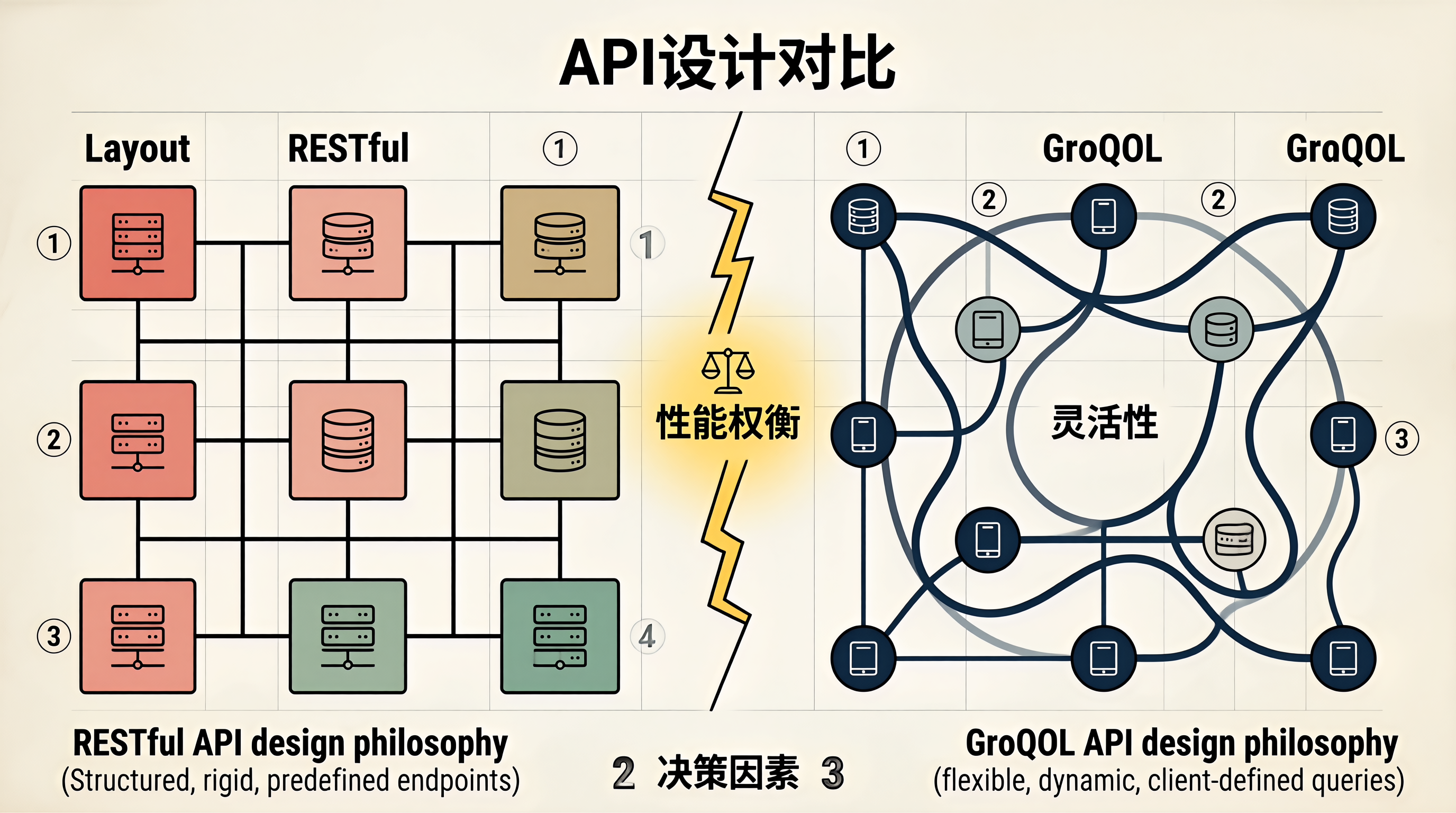
一、接口设计的核心命题
后端API设计始终在灵活性和性能之间寻求平衡。RESTful 的方案是将数据资源化为固定端点,以简洁明确为代价换来了HTTP缓存和代理的天然支持。GraphQL 则反过来,将数据组合的决策权交给前端,以查询解析的复杂度换取按需获取的灵活性。
这个权衡的核心在于:谁来决定响应中应该包含哪些数据?
二、设计理念对比
| 维度 | RESTful | GraphQL |
|---|---|---|
| 数据视图 | 服务端定义视图 | 客户端定义视图 |
| 耦合关系 | 前端依赖后端接口版本 | 前端依赖Schema定义 |
| 变更控制 | 新增接口/版本号 | 扩展Schema(非破坏性) |
| 错误处理 | 状态码 + 消息体 | 200 + errors数组 |
| 文档维护 | OpenAPI/Swagger | GraphQL introspection |
三、从实际案例看灵活性差异
3.1 场景:博客文章列表页
// RESTful 方案 A: 一个接口满足所有
app.get('/api/posts', async (req, res) => {
  const posts = await db.posts.findAll({
    include: [
      { model: db.users, attributes: ['id', 'name', 'avatar'] },
      { model: db.tags }
    ]
  });
  res.json(posts);
});
// 问题:列表页只需要标题和作者名,但返回了全部
// RESTful 方案 B: 多个接口按需调用
app.get('/api/posts/summary', async (req, res) => {
  const posts = await db.posts.findAll({
    attributes: ['id', 'title', 'createdAt'],
    include: [{ model: db.users, attributes: ['name'] }]
  });
  res.json(posts);
});

app.get('/api/posts/:id/detail', async (req, res) => {
  const post = await db.posts.findByPk(req.params.id, {
    include: [{ model: db.comments, include: [db.users] }]
  });
  res.json(post);
});
// 问题:后端需要维护多个相似接口
# GraphQL 方案: 前端决定
type Post {
  id: ID!
  title: String!
  content: String!
  createdAt: String!
  author: User!
  tags: [Tag!]!
  comments: [Comment!]!
}

# 列表页查询(精确)
query PostList {
  posts {
    id
    title
    author { name }
    createdAt
  }
}

# 详情页查询(深度)
query PostDetail($id: ID!) {
  post(id: $id) {
    title
    content
    author { name avatar bio }
    tags { name }
    comments {
      content
      author { name }
    }
  }
}
四、性能权衡的核心因素
4.1 查询复杂度分析
// RESTful: 每个接口的复杂度可控
// GET /api/posts  -> 简单数据库查询
// GET /api/posts/:id/comments -> 简单关联查询
// 服务端完全控制查询逻辑

// GraphQL: 查询复杂度取决于前端请求
query DangerousQuery {
  posts {
    author {
      posts {
        author {
          posts {
            title
          }
        }
      }
    }
  }
}
// GraphQL 安全防护: 查询深度限制
const { ApolloServer } = require('apollo-server');
const depthLimit = require('graphql-depth-limit');
const { createComplexityLimitRule } = require('graphql-validation-complexity');

const server = new ApolloServer({
  typeDefs,
  resolvers,
  validationRules: [
    depthLimit(7),
    createComplexityLimitRule(1000, {
      scalarCost: 1,
      objectCost: 10,
      listFactor: 30
    })
  ]
});
4.2 DataLoader优化 N+1 问题
const DataLoader = require('dataloader');

function createLoaders() {
  return {
    user: new DataLoader(async (ids) => {
      const users = await db.users.findAll({
        where: { id: ids }
      });
      return ids.map(id => users.find(u => u.id === id));
    }),

    commentsByPostId: new DataLoader(async (postIds) => {
      const comments = await db.comments.findAll({
        where: { postId: postIds }
      });
      return postIds.map(id => comments.filter(c => c.postId === id));
    }),

    tagsByPostId: new DataLoader(async (postIds) => {
      const postTags = await db.postTags.findAll({
        where: { postId: postIds },
        include: [db.tags]
      });
      return postIds.map(id =>
        postTags.filter(pt => pt.postId === id).map(pt => pt.tag)
      );
    })
  };
}

const resolvers = {
  Query: {
    posts: async (_, args, { loaders }) => {
      return db.posts.findAll({ limit: args.limit || 20 });
    }
  },
  Post: {
    author: async (post, _, { loaders }) => {
      return loaders.user.load(post.authorId);
    },
    comments: async (post, _, { loaders }) => {
      return loaders.commentsByPostId.load(post.id);
    },
    tags: async (post, _, { loaders }) => {
      return loaders.tagsByPostId.load(post.id);
    }
  }
};
五、缓存策略对比
| 缓存层级 | RESTful | GraphQL |
|---|---|---|
| 浏览器缓存 | Cache-Control + ETag 原生支持 | 需 Apollo Client 客户端缓存 |
| CDN缓存 | URL维度精确缓存 | 单端点 POST 难以缓存 |
| 服务端缓存 | Redis 缓存资源响应 | Redis 缓存 DataLoader 结果 |
| 持久化缓存 | Service Worker 缓存策略 | Apollo 缓存持久化 |
// RESTful HTTP缓存
app.get('/api/posts', async (req, res) => {
  const posts = await db.posts.findAll();

  const etag = crypto.createHash('md5')
    .update(JSON.stringify(posts))
    .digest('hex');

  if (req.headers['if-none-match'] === etag) {
    return res.status(304).end();
  }

  res.set('Cache-Control', 'public, max-age=300');
  res.set('ETag', etag);
  res.json(posts);
});
// GraphQL 缓存策略 (Apollo)
import { ApolloClient, InMemoryCache } from '@apollo/client';

const client = new ApolloClient({
  cache: new InMemoryCache({
    typePolicies: {
      Post: {
        keyFields: ['id'],
        fields: {
          comments: {
            merge(existing, incoming) {
              return incoming;
            }
          }
        }
      },
      Query: {
        fields: {
          posts: {
            keyArgs: ['category'],
            merge(existing, incoming, { args }) {
              if (args?.offset === 0) {
                return incoming;
              }
              return [...(existing || []), ...incoming];
            }
          }
        }
      }
    }
  })
});
六、性能基准对比
| 场景 | RESTful | GraphQL(无DataLoader) | GraphQL(有DataLoader) |
|---|---|---|---|
| 单资源查询 | 15ms | 20ms | 20ms |
| 列表+关联(10条) | 30ms | 120ms(N+1) | 35ms |
| 列表+多关联(10条+3层) | 40ms | 350ms | 50ms |
| 复杂嵌套(5层深度) | 需设计接口 | 800ms(未限制) | 控制复杂度 |
七、混合架构实践
const express = require('express');
const { ApolloServer } = require('apollo-server-express');

const app = express();

// RESTful: 简单资源和文件操作
app.get('/api/files/:id', async (req, res) => {
  const file = await db.files.findByPk(req.params.id);
  res.download(file.path, file.name);
});

app.post('/api/files/upload', uploadMiddleware, async (req, res) => {
  const file = await db.files.create({
    name: req.file.originalname,
    path: req.file.path,
    size: req.file.size
  });
  res.json(file);
});

app.get('/api/health', (req, res) => {
  res.json({ status: 'ok', timestamp: Date.now() });
});

// GraphQL: 复杂业务数据
const server = new ApolloServer({
  typeDefs: gql`
    type Query {
      dashboard: DashboardData
      user(id: ID!): User
      posts(category: String, offset: Int, limit: Int): [Post!]!
    }
    type Mutation {
      createPost(input: PostInput!): Post
    }
  `,
  resolvers: {
    Query: {
      dashboard: async () => {
        const [users, posts, stats] = await Promise.all([
          db.users.count(),
          db.posts.count(),
          fetchREST('/api/health')
        ]);
        return { users, posts, health: stats };
      }
    }
  }
});

async function fetchREST(url) {
  const res = await fetch(`http://localhost:3000${url}`);
  return res.json();
}

server.applyMiddleware({ app, path: '/graphql' });

app.listen(4000);
八、决策因素总结
| 决策因素 | 倾向RESTful | 倾向GraphQL |
|---|---|---|
| 数据模型简单程度 | 1:1资源映射 | 多对多复杂关联 |
| 前端多样化程度 | 单一前端 | 多端(Web/App/小程序) |
| 缓存需求 | 强缓存+CDN | 客户端状态缓存 |
| 实时性要求 | 轮询或WebSocket | Subscriptions |
| 团队技能栈 | 传统全栈 | 前端驱动+Node |
| API对外开放 | 第三方开发者 | 内部系统 |
灵活性和性能的权衡没有标准答案。简单的CRUD、对外暴露的开放API、缓存需求强的场景,RESTful 仍然是最优解。而数据关联复杂、前端场景多样、需要实时推送的应用,GraphQL 带来的灵活性提升远超其性能开销。在实际工程中,RESTful + GraphQL 的混合架构往往能兼顾两者的优势。

AtomGit 是由开放原子开源基金会联合 CSDN 等生态伙伴共同推出的新一代开源与人工智能协作平台。平台坚持“开放、中立、公益”的理念,把代码托管、模型共享、数据集托管、智能体开发体验和算力服务整合在一起,为开发者提供从开发、训练到部署的一站式体验。
更多推荐


 6
6 0
0- 0


 已为社区贡献4条内容

所有评论(0)