yolov26改进 | Conv/卷积篇 | 顶会CVPR提出的GhostModule辅助C3k2进行特征融合(全网独家首发,附独家网络结构图)
开始讲解之前推荐一下我的专栏,本专栏的内容支持(分类、检测、分割、追踪、关键点检测),专栏目前为限时折扣,欢迎大家订阅本专栏,本专栏每周更新5-7篇最新机制,更有包含我所有改进的文件和交流群提供给大家,本人定期在群内分享发表论文方法和经验。
一、本文介绍
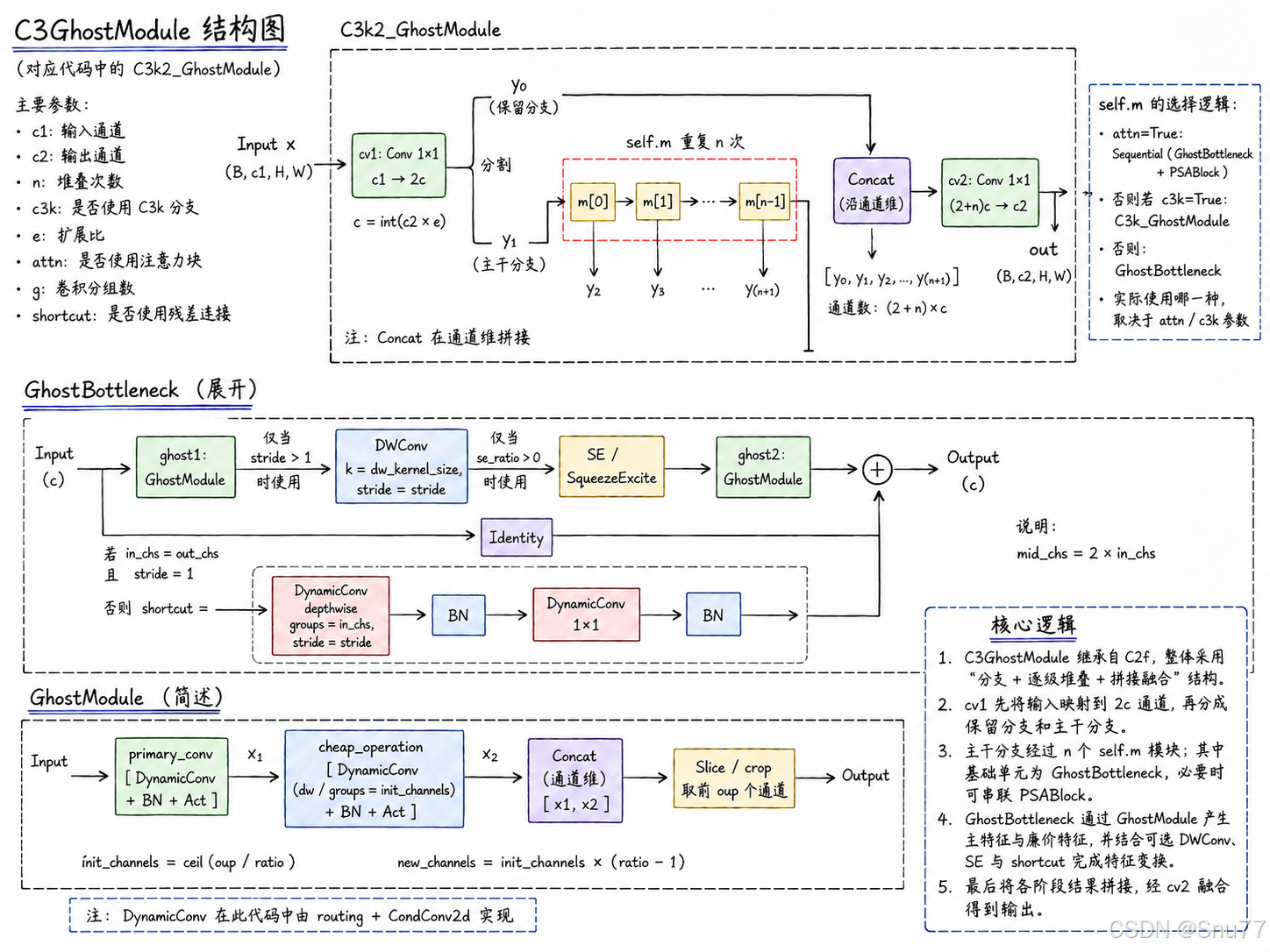
本文给大家带来的改进机制是CVPR的改进机制DynamicConv其是CVPR提出的改进机制,这个论文中介绍了一个名为ParameterNet的新型设计原则,它旨在在大规模视觉预训练模型中增加参数数量,同时尽量不增加浮点运算(FLOPs),所以本文的DynamicConv被提出来了,使得网络在保持低FLOPs的同时增加参数量,在其提出的时候它也提出了一个新的模块hostModule,我用其二次创新C3k2从而达到创新的目的,从而允许这些网络从大规模视觉预训练中获益(本文的机制可以轻量化网络模型)。
欢迎大家订阅我的专栏一起学习YOLO!
专栏链接:YOLOv26有效涨点专栏包含:Conv、注意力机制、主干/Backbone、损失函数、优化器、后处理等改进机制
目录
二、原理介绍

官方论文地址: 官方论文地址点击此处即可跳转
官方代码地址: 官方代码地址点击此处即可跳转
动态卷积(Dynamic Convolution)是《DynamicConv.pdf》中提出的一种关键技术,旨在增加网络的参数量而几乎不增加额外的浮点运算(FLOPs)。以下是关于动态卷积的主要信息和原理:
主要原理:
1. 动态卷积的定义:
动态卷积通过对每个输入样本动态选择或组合不同的卷积核(称为"experts"),来处理输入数据。这种方法可以视为是对传统卷积操作的扩展,它允许网络根据输入的不同自适应地调整其参数。2. 参数和计算的动态化:
在动态卷积中,不是为所有输入使用固定的卷积核,而是有多个卷积核(或参数集),并且根据输入的特性动态选择使用哪个核。
这种选择通过一个学习得到的函数(例如,使用多层感知机(MLP)和softmax函数)来动态生成控制各个卷积核贡献的权重。3. 计算过程:
给定输入特征,和一组卷积核
,每个核对应一个专家。
每个专家的贡献由一个动态系数
输出是所有动态选定的卷积核操作的加权和:
其中表示卷积操作,
动态卷积的优点:
- 参数效率高:通过共享和动态组合卷积核,动态卷积可以在增加极少的计算成本的情况下显著增加模型的参数量。
- 适应性强:由于卷积核是针对每个输入动态选择的,这种方法可以更好地适应不同的输入特征,理论上可以提高模型的泛化能力。
- 资源使用优化:动态卷积允许模型在资源有限的环境中(如移动设备)部署更复杂的网络结构,而不会显著增加计算负担。
动态卷积的设计思想突破了传统卷积网络结构的限制,通过动态调整和优化计算资源的使用,实现了在低FLOPs条件下提升网络性能的目标,这对于需要在计算资源受限的设备上运行高效AI模型的应用场景尤为重要。
三、核心代码
核心代码的使用方式看章节四!
"""
An implementation of GhostNet Model as defined in:
GhostNet: More Features from Cheap Operations. https://arxiv.org/abs/1911.11907
The train script of the model is similar to that of MobileNetV3
Original model: https://github.com/huawei-noah/CV-backbones/tree/master/ghostnet_pytorch
"""
import math
from functools import partial
import torch
import torch.nn as nn
import torch.nn.functional as F
from timm.layers import drop_path, SqueezeExcite
from timm.models.layers import CondConv2d, hard_sigmoid, DropPath

__all__ = ['C3k2_GhostModule']

_SE_LAYER = partial(SqueezeExcite, gate_fn=hard_sigmoid, divisor=4)


class DynamicConv(nn.Module):
    """ Dynamic Conv layer
    """

    def __init__(self, in_features, out_features, kernel_size=1, stride=1, padding='', dilation=1,
                 groups=1, bias=False, num_experts=4):
        super().__init__()
        self.routing = nn.Linear(in_features, num_experts)
        self.cond_conv = CondConv2d(in_features, out_features, kernel_size, stride, padding, dilation,
                                    groups, bias, num_experts)

    def forward(self, x):
        pooled_inputs = F.adaptive_avg_pool2d(x, 1).flatten(1)  # CondConv routing
        routing_weights = torch.sigmoid(self.routing(pooled_inputs))
        x = self.cond_conv(x, routing_weights)
        return x


class ConvBnAct(nn.Module):
    """ Conv + Norm Layer + Activation w/ optional skip connection
    """

    def __init__(
            self, in_chs, out_chs, kernel_size, stride=1, dilation=1, pad_type='',
            skip=False, act_layer=nn.ReLU, norm_layer=nn.BatchNorm2d, drop_path_rate=0., num_experts=4):
        super(ConvBnAct, self).__init__()
        self.has_residual = skip and stride == 1 and in_chs == out_chs
        self.drop_path_rate = drop_path_rate
        # self.conv = create_conv2d(in_chs, out_chs, kernel_size, stride=stride, dilation=dilation, padding=pad_type)
        self.conv = DynamicConv(in_chs, out_chs, kernel_size, stride, dilation=dilation, padding=pad_type,
                                num_experts=num_experts)
        self.bn1 = norm_layer(out_chs)
        self.act1 = act_layer()

    def feature_info(self, location):
        if location == 'expansion':  # output of conv after act, same as block coutput
            info = dict(module='act1', hook_type='forward', num_chs=self.conv.out_channels)
        else:  # location == 'bottleneck', block output
            info = dict(module='', hook_type='', num_chs=self.conv.out_channels)
        return info

    def forward(self, x):
        shortcut = x
        x = self.conv(x)
        x = self.bn1(x)
        x = self.act1(x)
        if self.has_residual:
            if self.drop_path_rate > 0.:
                x = drop_path(x, self.drop_path_rate, self.training)
            x += shortcut
        return x


class GhostModule(nn.Module):
    def __init__(self, inp, oup, kernel_size=1, ratio=2, dw_size=3, stride=1, act_layer=nn.ReLU, num_experts=4):
        super(GhostModule, self).__init__()
        self.oup = oup
        init_channels = math.ceil(oup / ratio)
        new_channels = init_channels * (ratio - 1)

        self.primary_conv = nn.Sequential(
            DynamicConv(inp, init_channels, kernel_size, stride, kernel_size // 2, bias=False, num_experts=num_experts),
            nn.BatchNorm2d(init_channels),
            act_layer() if act_layer is not None else nn.Sequential(),
        )

        self.cheap_operation = nn.Sequential(
            DynamicConv(init_channels, new_channels, dw_size, 1, dw_size // 2, groups=init_channels, bias=False,
                        num_experts=num_experts),
            nn.BatchNorm2d(new_channels),
            act_layer() if act_layer is not None else nn.Sequential(),
        )

    def forward(self, x):
        x1 = self.primary_conv(x)
        x2 = self.cheap_operation(x1)
        out = torch.cat([x1, x2], dim=1)
        return out[:, :self.oup, :, :]


class GhostBottleneck(nn.Module):
    """ Ghost bottleneck w/ optional SE"""

    def __init__(self, in_chs, out_chs, dw_kernel_size=3,
                 stride=1, act_layer=nn.ReLU, se_ratio=0., drop_path=0., num_experts=4):
        super(GhostBottleneck, self).__init__()
        has_se = se_ratio is not None and se_ratio > 0.
        self.stride = stride
        mid_chs = in_chs * 2
        # Point-wise expansion
        self.ghost1 = GhostModule(in_chs, mid_chs, act_layer=act_layer, num_experts=num_experts)

        # Depth-wise convolution
        if self.stride > 1:
            self.conv_dw = nn.Conv2d(
                mid_chs, mid_chs, dw_kernel_size, stride=stride,
                padding=(dw_kernel_size - 1) // 2, groups=mid_chs, bias=False)
            self.bn_dw = nn.BatchNorm2d(mid_chs)
        else:
            self.conv_dw = None
            self.bn_dw = None

        # Squeeze-and-excitation
        self.se = _SE_LAYER(mid_chs, se_ratio=se_ratio,
                            act_layer=act_layer if act_layer is not nn.GELU else nn.ReLU) if has_se else None

        # Point-wise linear projection
        self.ghost2 = GhostModule(mid_chs, out_chs, act_layer=None, num_experts=num_experts)

        # shortcut
        if in_chs == out_chs and self.stride == 1:
            self.shortcut = nn.Sequential()
        else:
            self.shortcut = nn.Sequential(
                DynamicConv(
                    in_chs, in_chs, dw_kernel_size, stride=stride,
                    padding=(dw_kernel_size - 1) // 2, groups=in_chs, bias=False, num_experts=num_experts),
                nn.BatchNorm2d(in_chs),
                DynamicConv(in_chs, out_chs, 1, stride=1, padding=0, bias=False, num_experts=num_experts),
                nn.BatchNorm2d(out_chs),
            )

        self.drop_path = DropPath(drop_path) if drop_path > 0. else nn.Identity()

    def forward(self, x):
        shortcut = x

        # 1st ghost bottleneck
        x = self.ghost1(x)

        # Depth-wise convolution
        if self.conv_dw is not None:
            x = self.conv_dw(x)
            x = self.bn_dw(x)

        # Squeeze-and-excitation
        if self.se is not None:
            x = self.se(x)

        # 2nd ghost bottleneck
        x = self.ghost2(x)

        x = self.shortcut(shortcut) + self.drop_path(x)
        return x

class Bottleneck(nn.Module):
    """Standard bottleneck."""

    def __init__(self, c1, c2, shortcut=True, g=1, k=(3, 3), e=0.5):
        """Initializes a standard bottleneck module with optional shortcut connection and configurable parameters."""
        super().__init__()
        c_ = int(c2 * e)  # hidden channels
        self.cv1 = Conv(c1, c_, k[0], 1)
        self.cv2 = Conv(c_, c2, k[1], 1, g=g)
        self.add = shortcut and c1 == c2

    def forward(self, x):
        """Applies the YOLO FPN to input data."""
        return x + self.cv2(self.cv1(x)) if self.add else self.cv2(self.cv1(x))


def autopad(k, p=None, d=1):  # kernel, padding, dilation
    """Pad to 'same' shape outputs."""
    if d > 1:
        k = d * (k - 1) + 1 if isinstance(k, int) else [d * (x - 1) + 1 for x in k]  # actual kernel-size
    if p is None:
        p = k // 2 if isinstance(k, int) else [x // 2 for x in k]  # auto-pad
    return p


class Conv(nn.Module):
    """Standard convolution with args(ch_in, ch_out, kernel, stride, padding, groups, dilation, activation)."""
    default_act = nn.SiLU()  # default activation

    def __init__(self, c1, c2, k=1, s=1, p=None, g=1, d=1, act=True):
        """Initialize Conv layer with given arguments including activation."""
        super().__init__()
        self.conv = nn.Conv2d(c1, c2, k, s, autopad(k, p, d), groups=g, dilation=d, bias=False)
        self.bn = nn.BatchNorm2d(c2)
        self.act = self.default_act if act is True else act if isinstance(act, nn.Module) else nn.Identity()

    def forward(self, x):
        """Apply convolution, batch normalization and activation to input tensor."""
        return self.act(self.bn(self.conv(x)))

    def forward_fuse(self, x):
        """Perform transposed convolution of 2D data."""
        return self.act(self.conv(x))


class C2f(nn.Module):
    """Faster Implementation of CSP Bottleneck with 2 convolutions."""

    def __init__(self, c1, c2, n=1, shortcut=False, g=1, e=0.5):
        """Initializes a CSP bottleneck with 2 convolutions and n Bottleneck blocks for faster processing."""
        super().__init__()
        self.c = int(c2 * e)  # hidden channels
        self.cv1 = Conv(c1, 2 * self.c, 1, 1)
        self.cv2 = Conv((2 + n) * self.c, c2, 1)  # optional act=FReLU(c2)
        self.m = nn.ModuleList(Bottleneck(self.c, self.c, shortcut, g, k=((3, 3), (3, 3)), e=1.0) for _ in range(n))

    def forward(self, x):
        """Forward pass through C2f layer."""
        y = list(self.cv1(x).chunk(2, 1))
        y.extend(m(y[-1]) for m in self.m)
        return self.cv2(torch.cat(y, 1))

    def forward_split(self, x):
        """Forward pass using split() instead of chunk()."""
        y = list(self.cv1(x).split((self.c, self.c), 1))
        y.extend(m(y[-1]) for m in self.m)
        return self.cv2(torch.cat(y, 1))

class C3(nn.Module):
    """CSP Bottleneck with 3 convolutions."""

    def __init__(self, c1, c2, n=1, shortcut=True, g=1, e=0.5):
        """Initialize the CSP Bottleneck with given channels, number, shortcut, groups, and expansion values."""
        super().__init__()
        c_ = int(c2 * e)  # hidden channels
        self.cv1 = Conv(c1, c_, 1, 1)
        self.cv2 = Conv(c1, c_, 1, 1)
        self.cv3 = Conv(2 * c_, c2, 1)  # optional act=FReLU(c2)
        self.m = nn.Sequential(*(Bottleneck(c_, c_, shortcut, g, k=((1, 1), (3, 3)), e=1.0) for _ in range(n)))

    def forward(self, x):
        """Forward pass through the CSP bottleneck with 2 convolutions."""
        return self.cv3(torch.cat((self.m(self.cv1(x)), self.cv2(x)), 1))

class C3k(C3):
    """C3k is a CSP bottleneck module with customizable kernel sizes for feature extraction in neural networks."""

    def __init__(self, c1, c2, n=1, shortcut=True, g=1, e=0.5, k=3):
        """Initializes the C3k module with specified channels, number of layers, and configurations."""
        super().__init__(c1, c2, n, shortcut, g, e)
        c_ = int(c2 * e)  # hidden channels
        # self.m = nn.Sequential(*(RepBottleneck(c_, c_, shortcut, g, k=(k, k), e=1.0) for _ in range(n)))
        self.m = nn.Sequential(*(Bottleneck(c_, c_, shortcut, g, k=(k, k), e=1.0) for _ in range(n)))

class Attention_YOLOv26(nn.Module):
    """Attention module that performs self-attention on the input tensor.

    Args:
        dim (int): The input tensor dimension.
        num_heads (int): The number of attention heads.
        attn_ratio (float): The ratio of the attention key dimension to the head dimension.

    Attributes:
        num_heads (int): The number of attention heads.
        head_dim (int): The dimension of each attention head.
        key_dim (int): The dimension of the attention key.
        scale (float): The scaling factor for the attention scores.
        qkv (Conv): Convolutional layer for computing the query, key, and value.
        proj (Conv): Convolutional layer for projecting the attended values.
        pe (Conv): Convolutional layer for positional encoding.
    """

    def __init__(self, dim: int, num_heads: int = 8, attn_ratio: float = 0.5):
        """Initialize multi-head attention module.

        Args:
            dim (int): Input dimension.
            num_heads (int): Number of attention heads.
            attn_ratio (float): Attention ratio for key dimension.
        """
        super().__init__()
        self.num_heads = num_heads
        self.head_dim = dim // num_heads
        self.key_dim = int(self.head_dim * attn_ratio)
        self.scale = self.key_dim**-0.5
        nh_kd = self.key_dim * num_heads
        h = dim + nh_kd * 2
        self.qkv = Conv(dim, h, 1, act=False)
        self.proj = Conv(dim, dim, 1, act=False)
        self.pe = Conv(dim, dim, 3, 1, g=dim, act=False)

    def forward(self, x: torch.Tensor) -> torch.Tensor:
        """Forward pass of the Attention module.

        Args:
            x (torch.Tensor): The input tensor.

        Returns:
            (torch.Tensor): The output tensor after self-attention.
        """
        B, C, H, W = x.shape
        N = H * W
        qkv = self.qkv(x)
        q, k, v = qkv.view(B, self.num_heads, self.key_dim * 2 + self.head_dim, N).split(
            [self.key_dim, self.key_dim, self.head_dim], dim=2
        )

        attn = (q.transpose(-2, -1) @ k) * self.scale
        attn = attn.softmax(dim=-1)
        x = (v @ attn.transpose(-2, -1)).view(B, C, H, W) + self.pe(v.reshape(B, C, H, W))
        x = self.proj(x)
        return x


class PSABlock(nn.Module):
    """PSABlock class implementing a Position-Sensitive Attention block for neural networks.

    This class encapsulates the functionality for applying multi-head attention and feed-forward neural network layers
    with optional shortcut connections.

    Attributes:
        attn (Attention): Multi-head attention module.
        ffn (nn.Sequential): Feed-forward neural network module.
        add (bool): Flag indicating whether to add shortcut connections.

    Methods:
        forward: Performs a forward pass through the PSABlock, applying attention and feed-forward layers.

    """

    def __init__(self, c: int, attn_ratio: float = 0.5, num_heads: int = 4, shortcut: bool = True) -> None:
        """Initialize the PSABlock.

        Args:
            c (int): Input and output channels.
            attn_ratio (float): Attention ratio for key dimension.
            num_heads (int): Number of attention heads.
            shortcut (bool): Whether to use shortcut connections.
        """
        super().__init__()

        self.attn = Attention_YOLOv26(c, attn_ratio=attn_ratio, num_heads=num_heads)
        self.ffn = nn.Sequential(Conv(c, c * 2, 1), Conv(c * 2, c, 1, act=False))
        self.add = shortcut

    def forward(self, x: torch.Tensor) -> torch.Tensor:
        """Execute a forward pass through PSABlock.

        Args:
            x (torch.Tensor): Input tensor.

        Returns:
            (torch.Tensor): Output tensor after attention and feed-forward processing.
        """
        x = x + self.attn(x) if self.add else self.attn(x)
        x = x + self.ffn(x) if self.add else self.ffn(x)
        return x

class C3k_GhostModule(C3):
    """C3k is a CSP bottleneck module with customizable kernel sizes for feature extraction in neural networks."""

    def __init__(self, c1, c2, n=1, shortcut=True, g=1, e=0.5, k=3):
        """Initializes the C3k module with specified channels, number of layers, and configurations."""
        super().__init__(c1, c2, n, shortcut, g, e)
        c_ = int(c2 * e)  # hidden channels
        # self.m = nn.Sequential(*(RepBottleneck(c_, c_, shortcut, g, k=(k, k), e=1.0) for _ in range(n)))
        self.m = nn.Sequential(*(GhostBottleneck(c_, c_, shortcut, g, k=(k, k), e=1.0) for _ in range(n)))


class C3k2_GhostModule(C2f):
    """Faster Implementation of CSP Bottleneck with 2 convolutions."""

    def __init__(
        self,
        c1: int,
        c2: int,
        n: int = 1,
        c3k: bool = False,
        e: float = 0.5,
        attn: bool = False,
        g: int = 1,
        shortcut: bool = True,
    ):
        """Initialize C3k2 modu
        Args:
            c1 (int): Input channels.
            c2 (int): Output channels.
            n (int): Number of blocks.
            c3k (bool): Whether to use C3k blocks.
            e (float): Expansion ratio.
            attn (bool): Whether to use attention blocks.
            g (int): Groups for convolutions.
            shortcut (bool): Whether to use shortcut connections.
        """
        super().__init__(c1, c2, n, shortcut, g, e)
        self.m = nn.ModuleList(
            nn.Sequential(
                GhostBottleneck(self.c, self.c, shortcut, g),
                PSABlock(self.c, attn_ratio=0.5, num_heads=max(self.c // 64, 1)),
            )
            if attn
            else C3k_GhostModule(self.c, self.c, 2, shortcut, g)
            if c3k
            else GhostBottleneck(self.c, self.c, shortcut, g)
            for _ in range(n)
        )

if __name__ == "__main__":
    # Generating Sample image
    image_size = (1, 64, 224, 224)
    image = torch.rand(*image_size)

    # Model
    model = C3k2_GhostModule(64, 64)

    out = model(image)
    print(out.size())
四、手把手教你添加GhostModule机制
下面的步骤如果你不会或者不想麻烦操作,可以联系作者获得本专栏添加所有项目文件的源代码,可直接训练.
4.1 修改一
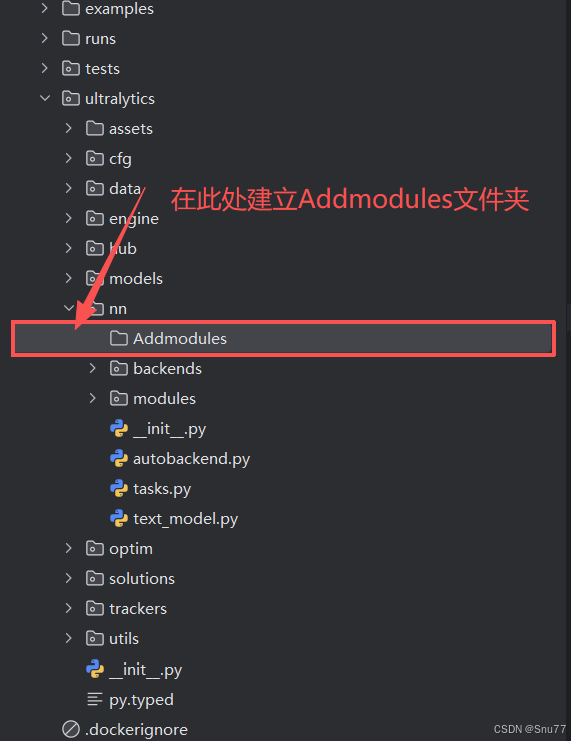
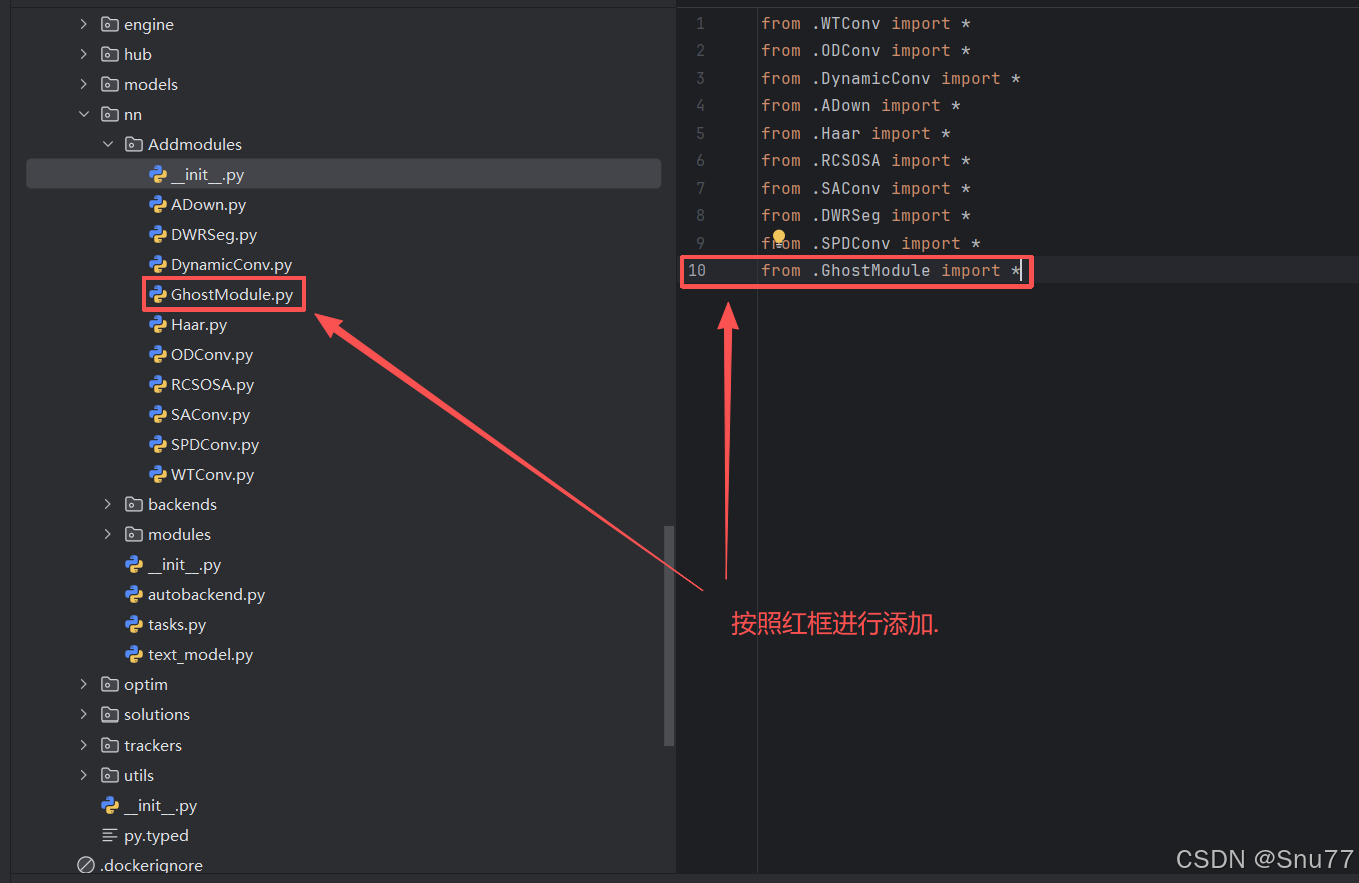
第一还是建立文件,我们找到如下ultralytics/nn文件夹下建立一个目录名字呢就是'Addmodules'文件夹!
4.2 修改二
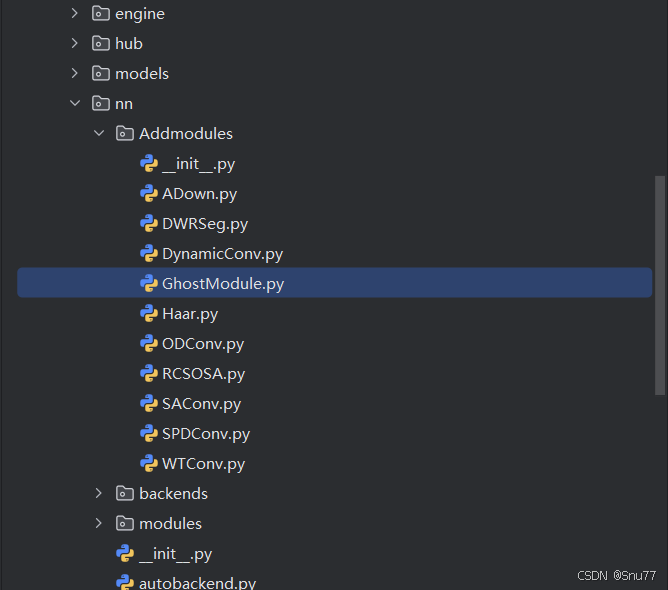
然后在Addmodules文件夹内建立一个新的py文件,将本文章节三中的“核心代码"复制粘贴进去。
4.3 修改三
第二步我们在该目录下创建一个新的py文件名字为'__init__.py',然后在其内部导入我们的文件,如下图所示。
4.4 修改四
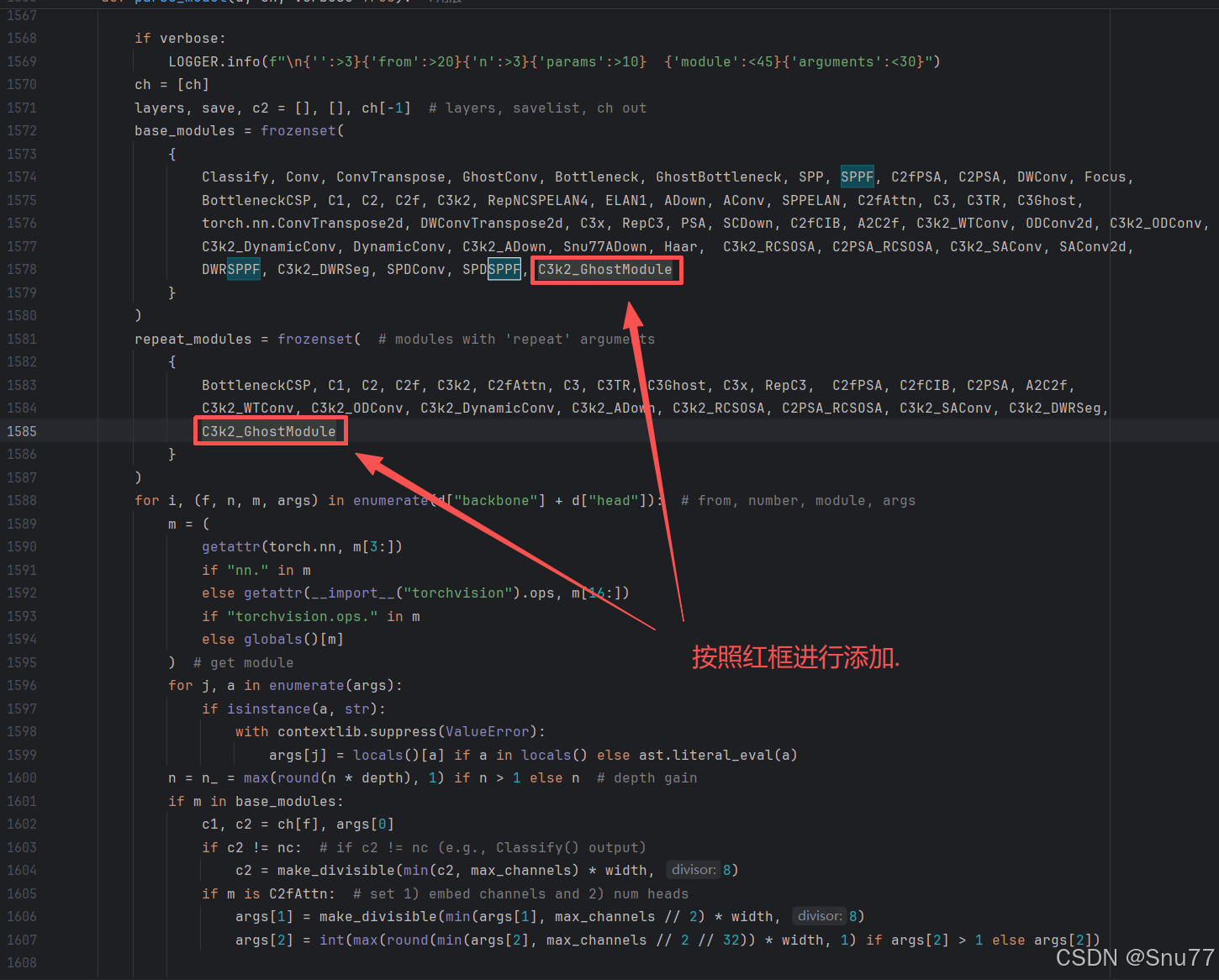
第三步我门中到如下文件'ultralytics/nn/tasks.py'进行导入和注册我们的模块(此处只需要添加一次即可,如果你用我其它的改进机制这里的步骤只需要添加一次)!

4.5 修改五
在'ultralytics/nn/tasks.py'文件内的parse_model方法函数内(位置大概在1500+行左右),按照图示位置添加即可(此处需要自己有一定的判别能力,如果不会可联系作者获得视频教程)。
4.6 修改六
在'ultralytics/nn/tasks.py'文件内的parse_model方法函数内(位置大概在1600+行左右),按照图示位置进行代码的替换即可(此处不改如果你yaml文件中的所有C3k2都被改名了,则检测头会使用老版本的v8检测头参数量会大幅度增加,但不影响运行很多人都忽略了这一步)。
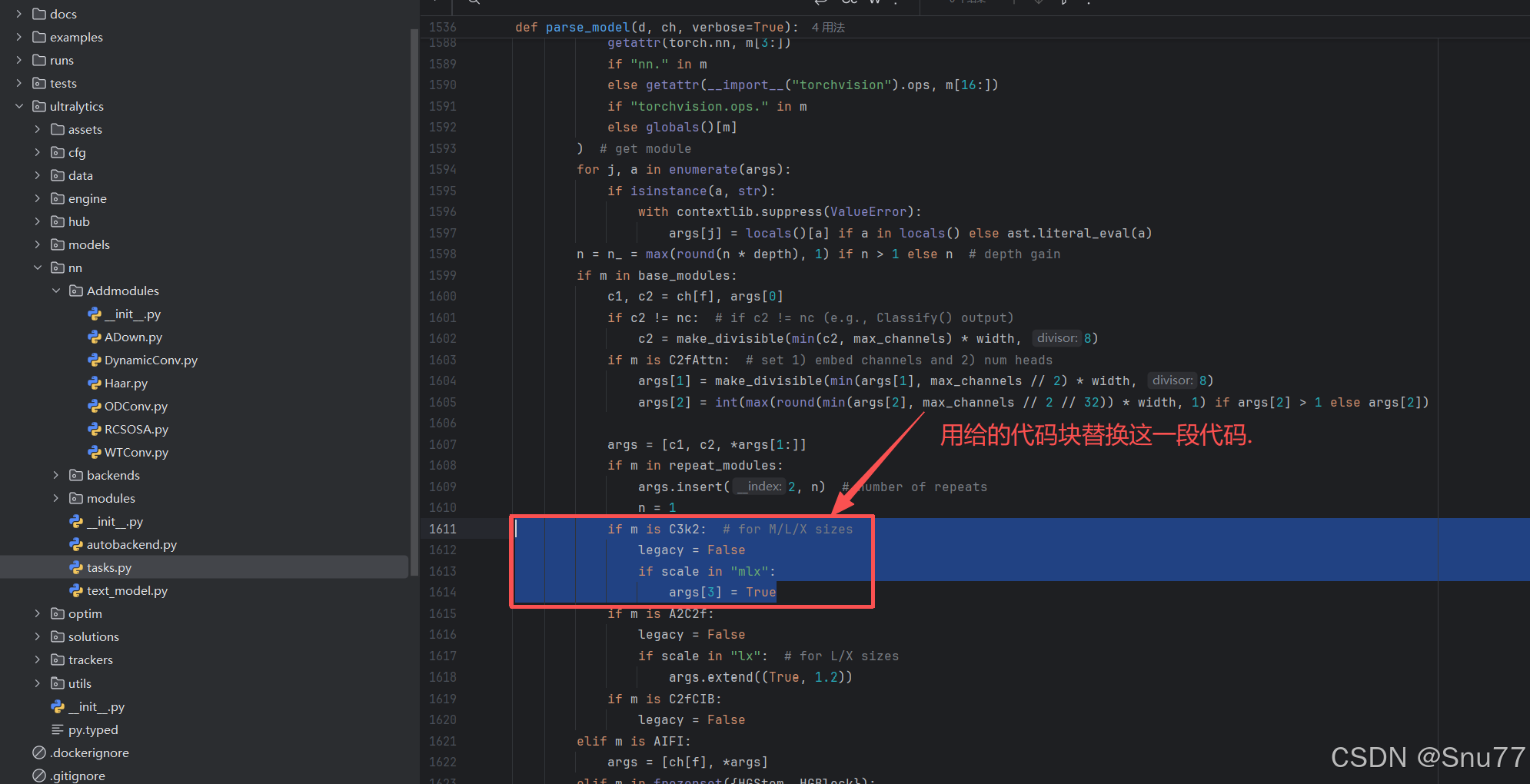
            if "C3k2" in getattr(m, "__name__", str(m)):
                legacy = False
                if scale in "mlx":
                    args[3] = True
到此就修改完成了,大家可以复制下面的yaml文件运行,更多使用方式可以联系作者获得使用视频,本文仅列出常见的使用方式。
五、正式训练
5.1 yaml文件
5.1.1 yaml文件1
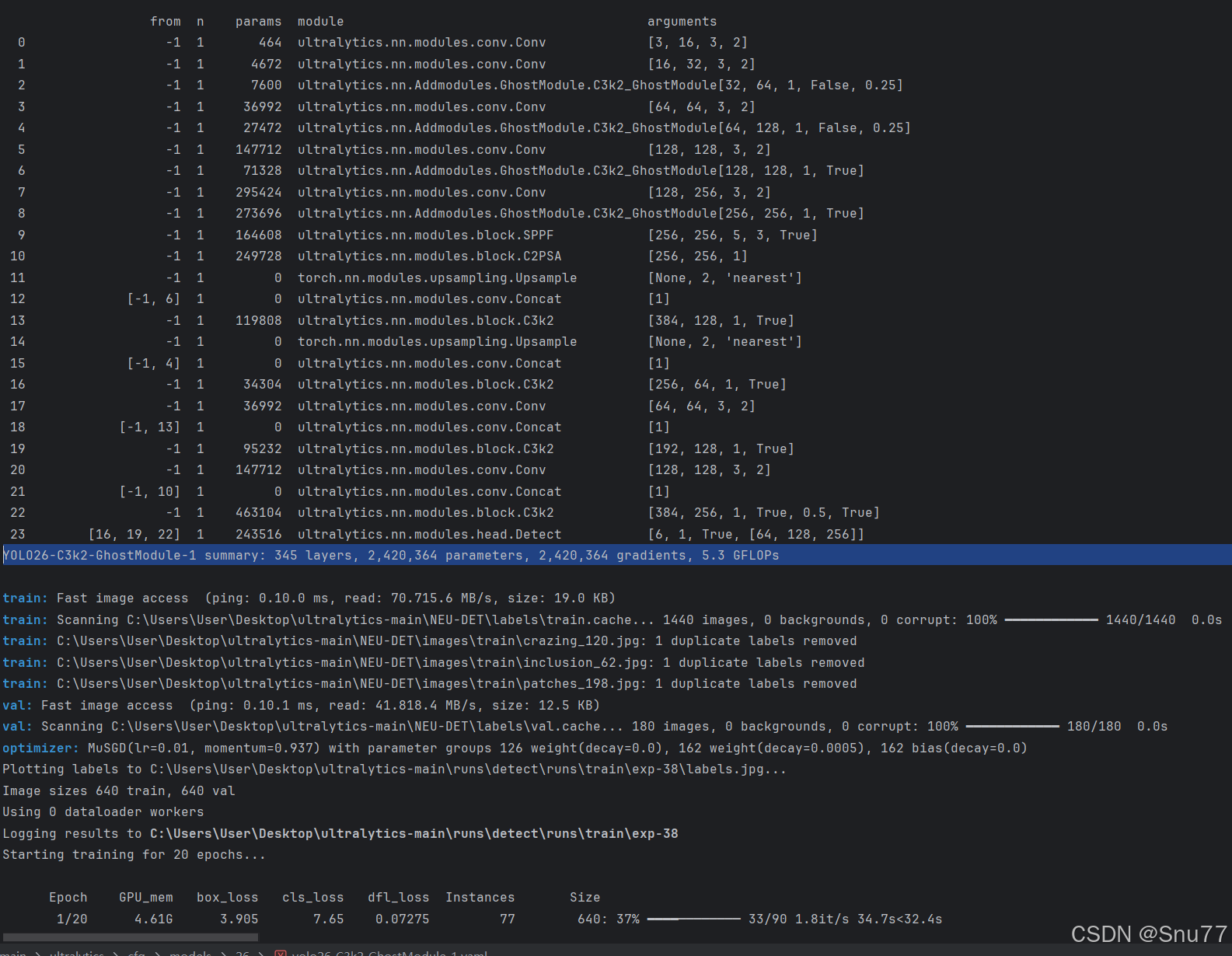
训练信息:YOLO26-C3k2-GhostModule-1 summary: 345 layers, 2,420,364 parameters, 2,420,364 gradients, 5.3 GFLOPs
# Ultralytics 🚀 AGPL-3.0 License - https://ultralytics.com/license

# Ultralytics YOLO26 object detection model with P3/8 - P5/32 outputs
# Model docs: https://docs.ultralytics.com/models/yolo26
# Task docs: https://docs.ultralytics.com/tasks/detect

# Parameters
nc: 80 # number of classes
end2end: True # whether to use end-to-end mode
reg_max: 1 # DFL bins
scales: # model compound scaling constants, i.e. 'model=yolo26n.yaml' will call yolo26.yaml with scale 'n'
  # [depth, width, max_channels]
  n: [0.50, 0.25, 1024] # summary: 260 layers, 2,572,280 parameters, 2,572,280 gradients, 6.1 GFLOPs
  s: [0.50, 0.50, 1024] # summary: 260 layers, 10,009,784 parameters, 10,009,784 gradients, 22.8 GFLOPs
  m: [0.50, 1.00, 512] # summary: 280 layers, 21,896,248 parameters, 21,896,248 gradients, 75.4 GFLOPs
  l: [1.00, 1.00, 512] # summary: 392 layers, 26,299,704 parameters, 26,299,704 gradients, 93.8 GFLOPs
  x: [1.00, 1.50, 512] # summary: 392 layers, 58,993,368 parameters, 58,993,368 gradients, 209.5 GFLOPs

# YOLO26n backbone
backbone:
  # [from, repeats, module, args]
  - [-1, 1, Conv, [64, 3, 2]] # 0-P1/2
  - [-1, 1, Conv, [128, 3, 2]] # 1-P2/4
  - [-1, 2, C3k2_GhostModule, [256, False, 0.25]]
  - [-1, 1, Conv, [256, 3, 2]] # 3-P3/8
  - [-1, 2, C3k2_GhostModule, [512, False, 0.25]]
  - [-1, 1, Conv, [512, 3, 2]] # 5-P4/16
  - [-1, 2, C3k2_GhostModule, [512, True]]
  - [-1, 1, Conv, [1024, 3, 2]] # 7-P5/32
  - [-1, 2, C3k2_GhostModule, [1024, True]]
  - [-1, 1, SPPF, [1024, 5, 3, True]] # 9
  - [-1, 2, C2PSA, [1024]] # 10

# YOLO26n head
head:
  - [-1, 1, nn.Upsample, [None, 2, "nearest"]]
  - [[-1, 6], 1, Concat, [1]] # cat backbone P4
  - [-1, 2, C3k2, [512, True]] # 13

  - [-1, 1, nn.Upsample, [None, 2, "nearest"]]
  - [[-1, 4], 1, Concat, [1]] # cat backbone P3
  - [-1, 2, C3k2, [256, True]] # 16 (P3/8-small)

  - [-1, 1, Conv, [256, 3, 2]]
  - [[-1, 13], 1, Concat, [1]] # cat head P4
  - [-1, 2, C3k2, [512, True]] # 19 (P4/16-medium)

  - [-1, 1, Conv, [512, 3, 2]]
  - [[-1, 10], 1, Concat, [1]] # cat head P5
  - [-1, 1, C3k2, [1024, True, 0.5, True]] # 22 (P5/32-large)

  - [[16, 19, 22], 1, Detect, [nc]] # Detect(P3, P4, P5)
5.1.2 yaml文件2
训练信息:YOLO26-C3k2-GhostModule-2 summary: 359 layers, 2,465,228 parameters, 2,465,228 gradients, 5.3 GFLOPs
# Ultralytics 🚀 AGPL-3.0 License - https://ultralytics.com/license

# Ultralytics YOLO26 object detection model with P3/8 - P5/32 outputs
# Model docs: https://docs.ultralytics.com/models/yolo26
# Task docs: https://docs.ultralytics.com/tasks/detect

# Parameters
nc: 80 # number of classes
end2end: True # whether to use end-to-end mode
reg_max: 1 # DFL bins
scales: # model compound scaling constants, i.e. 'model=yolo26n.yaml' will call yolo26.yaml with scale 'n'
  # [depth, width, max_channels]
  n: [0.50, 0.25, 1024] # summary: 260 layers, 2,572,280 parameters, 2,572,280 gradients, 6.1 GFLOPs
  s: [0.50, 0.50, 1024] # summary: 260 layers, 10,009,784 parameters, 10,009,784 gradients, 22.8 GFLOPs
  m: [0.50, 1.00, 512] # summary: 280 layers, 21,896,248 parameters, 21,896,248 gradients, 75.4 GFLOPs
  l: [1.00, 1.00, 512] # summary: 392 layers, 26,299,704 parameters, 26,299,704 gradients, 93.8 GFLOPs
  x: [1.00, 1.50, 512] # summary: 392 layers, 58,993,368 parameters, 58,993,368 gradients, 209.5 GFLOPs

# YOLO26n backbone
backbone:
  # [from, repeats, module, args]
  - [-1, 1, Conv, [64, 3, 2]] # 0-P1/2
  - [-1, 1, Conv, [128, 3, 2]] # 1-P2/4
  - [-1, 2, C3k2, [256, False, 0.25]]
  - [-1, 1, Conv, [256, 3, 2]] # 3-P3/8
  - [-1, 2, C3k2, [512, False, 0.25]]
  - [-1, 1, Conv, [512, 3, 2]] # 5-P4/16
  - [-1, 2, C3k2, [512, True]]
  - [-1, 1, Conv, [1024, 3, 2]] # 7-P5/32
  - [-1, 2, C3k2, [1024, True]]
  - [-1, 1, SPPF, [1024, 5, 3, True]] # 9
  - [-1, 2, C2PSA, [1024]] # 10

# YOLO26n head
head:
  - [-1, 1, nn.Upsample, [None, 2, "nearest"]]
  - [[-1, 6], 1, Concat, [1]] # cat backbone P4
  - [-1, 2, C3k2_GhostModule, [512, True]] # 13

  - [-1, 1, nn.Upsample, [None, 2, "nearest"]]
  - [[-1, 4], 1, Concat, [1]] # cat backbone P3
  - [-1, 2, C3k2_GhostModule, [256, True]] # 16 (P3/8-small)

  - [-1, 1, Conv, [256, 3, 2]]
  - [[-1, 13], 1, Concat, [1]] # cat head P4
  - [-1, 2, C3k2_GhostModule, [512, True]] # 19 (P4/16-medium)

  - [-1, 1, Conv, [512, 3, 2]]
  - [[-1, 10], 1, Concat, [1]] # cat head P5
  - [-1, 1, C3k2_GhostModule, [1024, True, 0.5, True]] # 22 (P5/32-large)

  - [[16, 19, 22], 1, Detect, [nc]] # Detect(P3, P4, P5)
5.1.3 yaml文件3
训练信息:YOLO26-C3k2-GhostModule-3 summary: 443 layers, 2,379,452 parameters, 2,379,452 gradients, 4.9 GFLOPs
# Ultralytics 🚀 AGPL-3.0 License - https://ultralytics.com/license

# Ultralytics YOLO26 object detection model with P3/8 - P5/32 outputs
# Model docs: https://docs.ultralytics.com/models/yolo26
# Task docs: https://docs.ultralytics.com/tasks/detect

# Parameters
nc: 80 # number of classes
end2end: True # whether to use end-to-end mode
reg_max: 1 # DFL bins
scales: # model compound scaling constants, i.e. 'model=yolo26n.yaml' will call yolo26.yaml with scale 'n'
  # [depth, width, max_channels]
  n: [0.50, 0.25, 1024] # summary: 260 layers, 2,572,280 parameters, 2,572,280 gradients, 6.1 GFLOPs
  s: [0.50, 0.50, 1024] # summary: 260 layers, 10,009,784 parameters, 10,009,784 gradients, 22.8 GFLOPs
  m: [0.50, 1.00, 512] # summary: 280 layers, 21,896,248 parameters, 21,896,248 gradients, 75.4 GFLOPs
  l: [1.00, 1.00, 512] # summary: 392 layers, 26,299,704 parameters, 26,299,704 gradients, 93.8 GFLOPs
  x: [1.00, 1.50, 512] # summary: 392 layers, 58,993,368 parameters, 58,993,368 gradients, 209.5 GFLOPs

# YOLO26n backbone
backbone:
  # [from, repeats, module, args]
  - [-1, 1, Conv, [64, 3, 2]] # 0-P1/2
  - [-1, 1, Conv, [128, 3, 2]] # 1-P2/4
  - [-1, 2, C3k2_GhostModule, [256, False, 0.25]]
  - [-1, 1, Conv, [256, 3, 2]] # 3-P3/8
  - [-1, 2, C3k2_GhostModule, [512, False, 0.25]]
  - [-1, 1, Conv, [512, 3, 2]] # 5-P4/16
  - [-1, 2, C3k2_GhostModule, [512, True]]
  - [-1, 1, Conv, [1024, 3, 2]] # 7-P5/32
  - [-1, 2, C3k2_GhostModule, [1024, True]]
  - [-1, 1, SPPF, [1024, 5, 3, True]] # 9
  - [-1, 2, C2PSA, [1024]] # 10

# YOLO26n head
head:
  - [-1, 1, nn.Upsample, [None, 2, "nearest"]]
  - [[-1, 6], 1, Concat, [1]] # cat backbone P4
  - [-1, 2, C3k2_GhostModule, [512, True]] # 13

  - [-1, 1, nn.Upsample, [None, 2, "nearest"]]
  - [[-1, 4], 1, Concat, [1]] # cat backbone P3
  - [-1, 2, C3k2_GhostModule, [256, True]] # 16 (P3/8-small)

  - [-1, 1, Conv, [256, 3, 2]]
  - [[-1, 13], 1, Concat, [1]] # cat head P4
  - [-1, 2, C3k2_GhostModule, [512, True]] # 19 (P4/16-medium)

  - [-1, 1, Conv, [512, 3, 2]]
  - [[-1, 10], 1, Concat, [1]] # cat head P5
  - [-1, 1, C3k2_GhostModule, [1024, True, 0.5, True]] # 22 (P5/32-large)

  - [[16, 19, 22], 1, Detect, [nc]] # Detect(P3, P4, P5)
5.2 训练代码
大家可以创建一个py文件将我给的代码复制粘贴进去,配置好自己的文件路径即可运行。
import warnings
warnings.filterwarnings('ignore')
from ultralytics import YOLO

if __name__ == '__main__':
    model = YOLO('模型配置文件地址,也就是5.1你保存到本地文件的地址')
    # 如何切换模型版本, 上面的ymal文件可以改为 yolo26s.yaml就是使用的26s,
    # 类似某个改进的yaml文件名称为yolo26-XXX.yaml那么如果想使用其它版本就把上面的名称改为yolo26l-XXX.yaml即可(改的是上面YOLO中间的名字不是配置文件的)!
    # model.load('yolo26n.pt') # 是否加载预训练权重,科研不建议大家加载否则很难提升精度
    model.train(
        data=r"数据集文件地址",
                # 如果大家任务是其它的'ultralytics/cfg/default.yaml'找到这里修改task可以改成detect, segment, classify, pose
                cache=False,
                imgsz=640,
                epochs=20,
                single_cls=False,  # 是否是单类别检测
                batch=16,
                close_mosaic=0,
                workers=0,
                device='0',
                optimizer='MuSGD', # using SGD/MuSGD
                # resume=, # 这里是填写last.pt地址
                amp=True,  # 如果出现训练损失为Nan可以关闭amp
                project='runs/train',
                name='exp',
                )
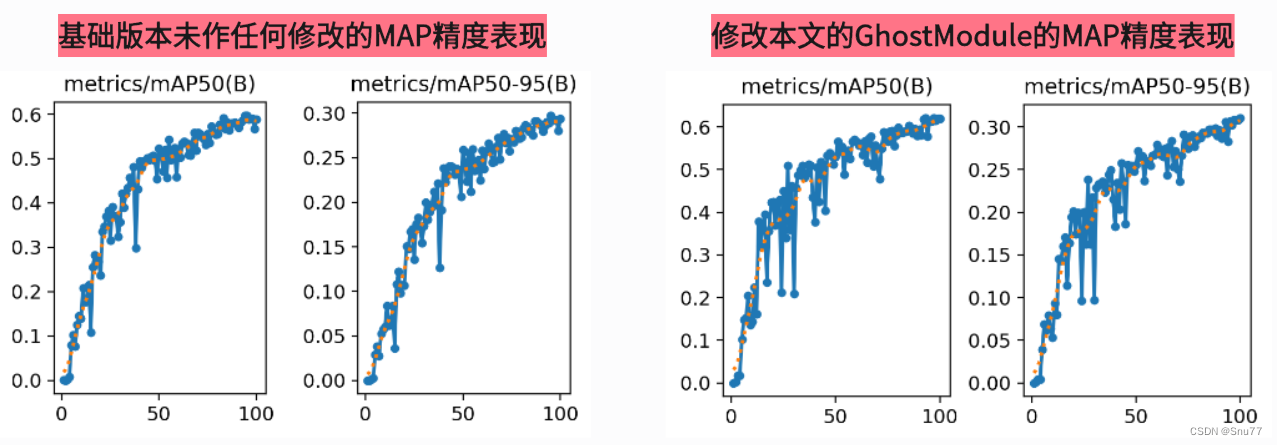
5.3 训练过程截图
五、本文总结
到此本文的正式分享内容就结束了,在这里给大家推荐我的YOLOv26改进有效涨点专栏,本专栏目前为新开的平均质量分98分,后期我会根据各种最新的前沿顶会进行论文复现,也会对一些老的改进机制进行补充,如果大家觉得本文帮助到你了,订阅本专栏,关注后续更多的更新~
专栏链接:YOLOv26有效涨点专栏包含:Conv、注意力机制、主干/Backbone、损失函数、优化器、后处理等改进机制


AtomGit 是由开放原子开源基金会联合 CSDN 等生态伙伴共同推出的新一代开源与人工智能协作平台。平台坚持“开放、中立、公益”的理念,把代码托管、模型共享、数据集托管、智能体开发体验和算力服务整合在一起,为开发者提供从开发、训练到部署的一站式体验。
更多推荐
 6
6 0
0- 0


 已为社区贡献17条内容

所有评论(0)