Spring AI Alibaba 1.x 系列【41】多智能体核心模式 - 交接(Handoffs)中的四大智能体源码解读
1. 概述
1.1 交接模式
当前正在工作的活跃 Agent,主动决策、将会话控制权完整转移给另一个指定 Agent,交接完成后,原 Agent 休眠 / 退出,用户后续直接和新接管的 Agent 交互。
去中心化特性:
- 无需中心调度器、顶层路由
Agent统一分发; - 每个
Agent具备自主决策移交的能力; - 活跃
Agent可以动态改写「当前谁来处理用户请求」。
典型使用场景:
- 跨领域对话拆分(通用客服 → 财务专家 / 法务专家 / 技术运维)
- 复杂任务专家接管(普通问答 → 数据分析
Agent/ 工单处理Agent) - 多角色分工协作(前置意图识别
Agent→ 专项执行Agent)
1.2 四种交接模式多智能体
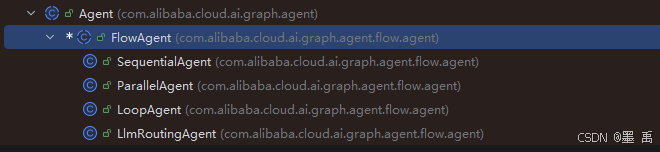
Spring AI Alibaba 提供了 4 种 FlowAgent(流程编排智能体),它们继承自 [FlowAgent] 抽象类,内部通过 StateGraph 构建执行图,将多个子 Agent 按不同模式组合运行。
| FlowAgent | 执行模式 | 核心特点 |
|---|---|---|
| SequentialAgent | 串行链式 | 子 Agent 按顺序依次执行,上一个的输出作为下一个的输入 |
| ParallelAgent | 并行聚合 | 所有子 Agent 同时执行,结果按策略合并 |
| LoopAgent | 循环执行 | 单个子 Agent 按策略(次数/条件/数组)循环执行 |
| LlmRoutingAgent | LLM 路由 | LLM 根据输入自主决定调用哪些子 Agent,支持多路并行路由 |
共同点:
- 都通过
builder()模式构建 - 子
Agent通常是ReactAgent,也可以是嵌套的FlowAgent - 支持
Hook扩展(beforeAgent/beforeModel/afterModel等) - 支持
invoke()同步调用和stream()流式调用
2. FlowAgent 抽象类
FlowAgent 是所有多智能体智能体的顶层父类:
- 统一封装子智能体管理、状态图初始化、钩子挂载、配置构建能力
- 衔接多智能体协作与
StateGraph底层图执行引擎
默认已经实现的子类:
2.1 SequentialAgent
源码如下:
public class SequentialAgent extends FlowAgent {

	/**
	 * 构造方法
	 * 通过建造者模式接收配置参数,委托给父类 FlowAgent 初始化
	 * @param builder 顺序智能体建造器
	 */
	protected SequentialAgent(SequentialAgentBuilder builder) {
		super(builder.name, builder.description, builder.compileConfig, builder.subAgents,
				builder.stateSerializer, builder.executor, builder.hooks);
	}

	/**
	 * 静态建造器入口
	 * 提供类型安全的链式调用方式创建 SequentialAgent 实例
	 */
	public static SequentialAgentBuilder builder() {
		return new SequentialAgentBuilder();
	}

	/**
	 * 重写父类抽象方法:构建【顺序类型】的状态图
	 * 核心逻辑:调用 FlowGraphBuilder,指定 SEQUENTIAL(顺序)类型生成工作流图
	 * @param config 流图配置(包含子智能体、钩子、序列化器等)
	 * @return 构建完成的顺序执行状态图
	 * @throws GraphStateException 图构建异常
	 */
	@Override
	protected StateGraph buildSpecificGraph(FlowGraphBuilder.FlowGraphConfig config) throws GraphStateException {
		return FlowGraphBuilder.buildGraph(FlowAgentEnum.SEQUENTIAL.getType(), config);
	}

	/**
	 * 【顺序智能体建造器】
	 * 继承通用 FlowAgentBuilder,实现类型安全的对象创建
	 * 遵循建造者设计模式,简化复杂对象的初始化
	 */
	public static class SequentialAgentBuilder extends FlowAgentBuilder<SequentialAgent, SequentialAgentBuilder> {

		/**
		 * 返回当前建造器实例(用于链式调用)
		 */
		@Override
		protected SequentialAgentBuilder self() {
			return this;
		}

		/**
		 * 参数校验
		 * 继承父类基础校验,可扩展顺序智能体专属校验规则
		 */
		@Override
		protected void validate() {
			super.validate();
			// 如需扩展顺序执行的专属校验逻辑,可在此处添加
		}

		/**
		 * 执行构建:创建 SequentialAgent 实例
		 */
		@Override
		public SequentialAgent doBuild() {
			validate();
			return new SequentialAgent(this);
		}

	}
}
极简使用示例:
// 1. 创建多个子智能体(每个绑定不同动态工具)
Agent orderAgent = ...; // 订单查询智能体
Agent refundAgent = ...; // 退款处理智能体

// 2. 链式创建顺序执行智能体
SequentialAgent agent = SequentialAgent.builder()
        .name("客服流程智能体")
        .description("按顺序执行:查询→退款")
        .subAgents(List.of(orderAgent, refundAgent)) // 顺序执行
        .hooks(List.of(new ToolAuditHook())) // 工具审计钩子
        .build();

// 3. 启动执行
agent.run();
2.2 ParallelAgent
源码如下:
/**
 * 【并行执行智能体】
 * 并发执行多个子智能体,并自动合并所有子智能体的执行结果。
 *
 * <p>
 * 实现 【分发-并行-聚合】(Fan-Out/Gather) 设计模式:
 * </p>
 * <ul>
 * <li><strong>分发</strong>:将输入数据同时分发给所有子智能体</li>
 * <li><strong>并行</strong>:所有子智能体并发执行(非顺序阻塞)</li>
 * <li><strong>聚合</strong>:收集所有子智能体的结果,按策略合并</li>
 * </ul>
 *
 * <p>
 * 基于底层 ParallelNode 实现真正的并发执行,支持自定义结果合并策略。
 * </p>
 */
public class ParallelAgent extends FlowAgent {

	private static final Logger logger = LoggerFactory.getLogger(ParallelAgent.class);

	/** 结果合并策略 */
	private final MergeStrategy mergeStrategy;

	/** 合并结果的输出Key */
	private String mergeOutputKey;

	/** 最大并发数(控制子智能体的并发执行数量) */
	private final Integer maxConcurrency;

	/**
	 * 构造方法:通过建造器初始化参数
	 */
	protected ParallelAgent(ParallelAgentBuilder builder) {
		super(builder.name, builder.description, builder.compileConfig, builder.subAgents,
				builder.stateSerializer, builder.executor, builder.hooks);
		// 未指定合并策略则使用默认
		this.mergeStrategy = builder.mergeStrategy != null ? builder.mergeStrategy : new DefaultMergeStrategy();
		this.maxConcurrency = builder.maxConcurrency;
		this.mergeOutputKey = builder.mergeOutputKey;
	}

	/**
	 * 建造器入口:链式创建 ParallelAgent 实例
	 */
	public static ParallelAgentBuilder builder() {
		return new ParallelAgentBuilder();
	}

	/**
	 * 重写:构建【并行类型】的状态图
	 * 向配置中注入并行专属参数(合并策略、最大并发数)
	 */
	@Override
	protected StateGraph buildSpecificGraph(FlowGraphBuilder.FlowGraphConfig config) throws GraphStateException {
		config.customProperty("mergeStrategy", this.mergeStrategy);
		config.customProperty("maxConcurrency", this.maxConcurrency);

		return FlowGraphBuilder.buildGraph(FlowAgentEnum.PARALLEL.getType(), config);
	}

	// ========== Getter 方法 ==========
	public MergeStrategy mergeStrategy() {
		return mergeStrategy;
	}

	public String mergeOutputKey() {
		return mergeOutputKey;
	}

	public Integer maxConcurrency() {
		return maxConcurrency;
	}

	/**
	 * 重写:构建非流式配置,将最大并发数注入元数据
	 * 供 ParallelNode 运行时读取并发限制
	 */
	@Override
	protected RunnableConfig buildNonStreamConfig(RunnableConfig config) {
		RunnableConfig baseConfig = super.buildNonStreamConfig(config);

		if (this.maxConcurrency != null) {
			return RunnableConfig.builder(baseConfig)
					.addMetadata(ParallelNode.formatMaxConcurrencyKey(ParallelNode.formatNodeId(this.name())), this.maxConcurrency)
					.build();
		}
		return baseConfig;
	}

	/**
	 * 重写:构建流式配置,逻辑同上
	 */
	@Override
	protected RunnableConfig buildStreamConfig(RunnableConfig config) {
		RunnableConfig baseConfig = super.buildStreamConfig(config);

		if (this.maxConcurrency != null) {
			return RunnableConfig.builder(baseConfig)
					.addMetadata(ParallelNode.formatMaxConcurrencyKey(ParallelNode.formatNodeId(this.name())), this.maxConcurrency)
					.build();
		}
		return baseConfig;
	}

	/**
	 * 【结果合并策略接口】
	 * 定义并行子智能体结果的合并规则,支持自定义扩展
	 */
	public interface MergeStrategy {
		/**
		 * 合并并行执行结果
		 * @param subAgentResults 子智能体结果(Key=智能体标识,Value=执行结果)
		 * @param overallState 全局状态上下文
		 * @return 合并后的最终结果
		 */
		Object merge(Map<String, Object> subAgentResults, OverAllState overallState);
	}

	/**
	 * 并行智能体建造器
	 * 继承通用 FlowAgentBuilder,提供并行专属配置(并发数、合并策略)
	 */
	public static class ParallelAgentBuilder extends FlowAgentBuilder<ParallelAgent, ParallelAgentBuilder> {

		private MergeStrategy mergeStrategy;
		private Integer maxConcurrency;
		private String mergeOutputKey;

		/** 设置结果合并策略 */
		public ParallelAgentBuilder mergeStrategy(MergeStrategy mergeStrategy) {
			this.mergeStrategy = mergeStrategy;
			return this;
		}

		/** 设置合并结果的输出Key */
		public ParallelAgentBuilder mergeOutputKey(String mergeOutputKey) {
			this.mergeOutputKey = mergeOutputKey;
			return this;
		}

		/**
		 * 重写:设置子智能体
		 * 强制校验:子智能体必须是 BaseAgent 类型
		 */
		@Override
		public ParallelAgentBuilder subAgents(List<Agent> subAgents) {
			if (subAgents == null || subAgents.isEmpty()) {
				throw new IllegalArgumentException("必须指定子智能体列表");
			}
			if (subAgents.stream().anyMatch(agent -> !(agent instanceof BaseAgent))) {
				throw new IllegalArgumentException("子智能体必须是 BaseAgent 类型");
			}
			return super.subAgents(subAgents);
		}

		/** 设置最大并发数 */
		public ParallelAgentBuilder maxConcurrency(Integer maxConcurrency) {
			this.maxConcurrency = maxConcurrency;
			return this;
		}

		@Override
		protected ParallelAgentBuilder self() {
			return this;
		}

		/**
		 * 核心校验:并行智能体强校验规则
		 */
		@Override
		protected void validate() {
			// 1. 校验名称必填
			if (name == null || name.trim().isEmpty()) {
				throw new IllegalArgumentException("必须指定智能体名称");
			}

			// 2. 至少2个子智能体,最多10个(性能限制)
			if (subAgents == null || subAgents.size() < 2) {
				throw new IllegalArgumentException("并行智能体至少需要2个子智能体,当前:"
						+ (subAgents != null ? subAgents.size() : 0));
			}
			if (subAgents.size() > 10) {
				throw new IllegalArgumentException("并行智能体最多支持10个子智能体,当前:" + subAgents.size());
			}

			// 3. 校验子智能体输出Key唯一(避免合并冲突)
			validateUniqueOutputKeys();

			// 4. 校验输入输出Key兼容性
			validateInputKeyCompatibility();

			// 5. 校验并发数合法性
			if (maxConcurrency != null && maxConcurrency < 1) {
				throw new IllegalArgumentException("最大并发数必须≥1,当前:" + maxConcurrency);
			}
		}

		/** 校验所有子智能体的 outputKey 唯一 */
		private void validateUniqueOutputKeys() {
			Set<String> outputKeys = new HashSet<>();
			Set<String> duplicateKeys = new HashSet<>();

			for (Agent subAgent : subAgents) {
				if (subAgent instanceof ReactAgent agent) {
					String key = agent.getOutputKey();
					if (key != null && !outputKeys.add(key)) {
						duplicateKeys.add(key);
					}
				}
			}

			if (!duplicateKeys.isEmpty()) {
				throw new IllegalArgumentException("子智能体输出Key重复:" + duplicateKeys + ",必须唯一");
			}
		}

		/** 校验子智能体输入输出兼容性 */
		private void validateInputKeyCompatibility() {
			for (Agent subAgent : subAgents) {
				if (!(subAgent instanceof ReactAgent)) continue;
				String key = ((ReactAgent) subAgent).getOutputKey();
				if (key == null) {
					logger.warn("子智能体 {} 未配置 outputKey,可能导致数据流转异常", subAgent.name());
				}
			}
		}

		/** 构建并行智能体实例 */
		@Override
		public ParallelAgent doBuild() {
			validate();
			return new ParallelAgent(this);
		}
	}

	// ==================== 内置默认合并策略 ====================
	/** 默认合并策略:将结果封装为 Map */
	public static class DefaultMergeStrategy implements MergeStrategy {
		@Override
		public Object merge(Map<String, Object> subAgentResults, OverAllState overallState) {
			return new HashMap<>(subAgentResults);
		}
	}

	/** 列表合并策略:将结果转为 List */
	public static class ListMergeStrategy implements MergeStrategy {
		@Override
		public Object merge(Map<String, Object> subAgentResults, OverAllState overallState) {
			return subAgentResults.values().stream().toList();
		}
	}

	/** 字符串拼接策略:合并文本结果 */
	public static class ConcatenationMergeStrategy implements MergeStrategy {
		private final String separator;

		public ConcatenationMergeStrategy() {
			this("\n");
		}

		public ConcatenationMergeStrategy(String separator) {
			this.separator = separator;
		}

		@Override
		public Object merge(Map<String, Object> subAgentResults, OverAllState overallState) {
			return subAgentResults.values()
					.stream()
					.map(Object::toString)
					.reduce("", (a, b) -> a.isEmpty() ? b : a + separator + b);
		}
	}

}
使用示例:
LoopAgent loopAgent = LoopAgent.builder()
    .name("example-loop-agent")
    .description("循环智能体示例")
    .loopStrategy(LoopMode.condition(messagePredicate))
    .subAgent(subAgent)
    .build();
2.3 LoopAgent
源码如下:
public class LoopAgent extends FlowAgent {

    /** 循环策略对象 */
    private final LoopStrategy loopStrategy;

    /** 配置常量:循环策略的Key */
    public static final String LOOP_STRATEGY = "loopStrategy";

    /**
     * 构造方法:通过建造器初始化参数
     */
    private LoopAgent(LoopAgentBuilder builder) {
        super(builder.name, builder.description, builder.compileConfig, builder.subAgents,
                builder.stateSerializer, builder.executor, builder.hooks);
        this.loopStrategy = builder.loopStrategy;
    }

    /**
     * 重写父类方法:构建【循环类型】的状态图
     * 将循环策略注入配置,交由 FlowGraphBuilder 构建循环工作流
     */
    @Override
    protected StateGraph buildSpecificGraph(FlowGraphBuilder.FlowGraphConfig config) throws GraphStateException {
        config.customProperty(LOOP_STRATEGY, loopStrategy);
        return FlowGraphBuilder.buildGraph(FlowAgentEnum.LOOP.getType(), config);
    }

    /**
     * 建造器入口:链式创建 LoopAgent 实例
     */
    public static LoopAgentBuilder builder() {
        return new LoopAgentBuilder();
    }

    /**
     * 【循环智能体建造器】
     * 重写通用建造器,强制约束:仅支持单个子智能体、必须配置循环策略
     */
    public static class LoopAgentBuilder extends FlowAgentBuilder<LoopAgent, LoopAgentBuilder> {

        /** 循环策略(必填) */
        private LoopStrategy loopStrategy = null;

        /**
         * 返回当前建造器实例,支持链式调用
         */
        @Override
        protected LoopAgentBuilder self() {
            return this;
        }

        /**
         * 设置【单个】子智能体(LoopAgent 唯一支持的子智能体配置方式)
         * @param subAgent 循环中重复执行的子智能体
         */
        public LoopAgentBuilder subAgent(Agent subAgent)
        {
            this.subAgents = List.of(subAgent);
            return self();
        }

        /**
         * 重写:禁用批量设置子智能体
         * 强制约束:LoopAgent 只能有一个子智能体,禁止调用此方法
         */
        @Override
        public LoopAgentBuilder subAgents(List<Agent> subAgents) {
            throw new UnsupportedOperationException("LoopAgent 必须且只能有一个子智能体,请使用 subAgent() 方法。");
        }

        /**
         * 设置循环策略(必填)
         */
        public LoopAgentBuilder loopStrategy(LoopStrategy loopStrategy) {
            this.loopStrategy = loopStrategy;
            return self();
        }

        /**
         * 参数校验:强制校验循环策略不能为空
         */
        @Override
        protected void validate() {
            super.validate();
            if (this.loopStrategy == null) {
                throw new IllegalArgumentException("LoopAgent 必须配置循环策略 loopStrategy。");
            }
        }

        /**
         * 构建 LoopAgent 实例
         */
        @Override
        public LoopAgent doBuild() {
            validate();
            return new LoopAgent(this);
        }
    }
}
2.4 LlmRoutingAgent
核心属性:
public class LlmRoutingAgent extends FlowAgent {

	/** 大模型实例(用于做路由决策,必填) */
	private final ChatModel chatModel;

	/** 兜底智能体名称(路由决策失败/无匹配时,执行该智能体) */
	private final String fallbackAgent;

	/** 路由系统提示词(定义路由智能体的角色、规则) */
	private final String systemPrompt;

	/** 路由指令(具体的路由执行指令) */
	private final String instruction;
其他源码内容:
public class LlmRoutingAgent extends FlowAgent {

	/**
	 * 构造方法:通过建造器初始化所有配置
	 */
	protected LlmRoutingAgent(LlmRoutingAgentBuilder builder) {
		super(builder.name, builder.description, builder.compileConfig, builder.subAgents,
				builder.stateSerializer, builder.executor, builder.hooks);
		this.chatModel = builder.chatModel;
		this.fallbackAgent = builder.fallbackAgent;
		this.systemPrompt = builder.systemPrompt;
		this.instruction = builder.instruction;
	}

	/**
	 * 静态建造器入口:链式创建 LlmRoutingAgent 实例
	 */
	public static LlmRoutingAgentBuilder builder() {
		return new LlmRoutingAgentBuilder();
	}

	// ========== Getter 方法 ==========
	public String getFallbackAgent() {
		return fallbackAgent;
	}

	public String getSystemPrompt() {
		return systemPrompt;
	}

	public String getInstruction() {
		return instruction;
	}

	/**
	 * 重写父类抽象方法:构建【路由类型】的状态图
	 * 注入大模型实例,交由 FlowGraphBuilder 构建路由工作流
	 */
	@Override
	protected StateGraph buildSpecificGraph(FlowGraphBuilder.FlowGraphConfig config) throws GraphStateException {
		// 向图配置中注入大模型(路由决策核心依赖)
		config.setChatModel(this.chatModel);
		// 构建路由类型的状态图
		return FlowGraphBuilder.buildGraph(FlowAgentEnum.ROUTING.getType(), config);
	}

	/**
	 * 【LLM路由智能体建造器】
	 * 继承通用 FlowAgentBuilder,扩展大模型路由专属配置
	 * 强制校验:必须指定 ChatModel
	 */
	public static class LlmRoutingAgentBuilder extends FlowAgentBuilder<LlmRoutingAgent, LlmRoutingAgentBuilder> {

		/** 大模型(必填,路由决策核心) */
		private ChatModel chatModel;

		/** 兜底智能体(可选) */
		private String fallbackAgent;

		/** 系统提示词(可选) */
		private String systemPrompt;

		/** 路由指令(可选) */
		private String instruction;

		/**
		 * 设置路由决策使用的大模型(必填)
		 * @param chatModel Spring AI 大模型实例
		 * @return 建造器实例
		 */
		public LlmRoutingAgentBuilder model(ChatModel chatModel) {
			this.chatModel = chatModel;
			return this;
		}

		/**
		 * 设置兜底智能体(路由无匹配时执行)
		 */
		public LlmRoutingAgentBuilder fallbackAgent(String fallbackAgent) {
			this.fallbackAgent = fallbackAgent;
			return this;
		}

		/**
		 * 设置路由系统提示词
		 */
		public LlmRoutingAgentBuilder systemPrompt(String systemPrompt) {
			this.systemPrompt = systemPrompt;
			return this;
		}

		/**
		 * 设置路由执行指令
		 */
		public LlmRoutingAgentBuilder instruction(String instruction) {
			this.instruction = instruction;
			return this;
		}

		/**
		 * 返回当前建造器实例,支持链式调用
		 */
		@Override
		protected LlmRoutingAgentBuilder self() {
			return this;
		}

		/**
		 * 核心校验:路由智能体必须配置 ChatModel
		 */
		@Override
		protected void validate() {
			super.validate();
			if (chatModel == null) {
				throw new IllegalArgumentException("LLM路由智能体必须指定 ChatModel 大模型实例");
			}
		}

		/**
		 * 构建最终的 LlmRoutingAgent 实例
		 */
		@Override
		public LlmRoutingAgent doBuild() {
			validate();
			return new LlmRoutingAgent(this);
		}

	}
极简使用示例:
// 1. 注入大模型
@Autowired
private ChatModel chatModel;

// 2. 创建多个带独立动态工具的子智能体
Agent customerServiceAgent = createAgentWithTool("客服智能体", "orderQuery,refund");
Agent opsAgent = createAgentWithTool("运维智能体", "logQuery,monitor");
Agent officeAgent = createAgentWithTool("办公智能体", "summary,parse");

// 3. 构建 LLM 路由智能体
LlmRoutingAgent routingAgent = LlmRoutingAgent.builder()
        .name("企业统一智能体入口")
        .description("根据用户问题,智能路由到对应场景智能体")
        .model(chatModel) // 必选:大模型
        .fallbackAgent("customerServiceAgent") // 兜底:客服智能体
        .systemPrompt("你是智能路由助手,根据用户问题选择对应智能体")
        .subAgents(List.of(customerServiceAgent, opsAgent, officeAgent)) // 路由候选池
        .build();

// 4. 执行:自动路由 + 调用对应工具
routingAgent.run(userMessage);
3. FlowAgentBuilder
FlowAgentBuilder 是所有 FlowAgent 的通用建造器父类,提供统一的配置项 + 链式调用 API + 自动校验 + 编译逻辑,子类只需要实现具体智能体创建即可。
类结构与泛型解释:
public abstract class FlowAgentBuilder<
    T extends FlowAgent,   // 要构建的智能体类型(如 SequentialAgent)
    B extends FlowAgentBuilder<T, B>  // 建造器自身类型(支持链式调用)
>
核心配置属性:
| 属性 | 作用 |
|---|---|
| name | 智能体名称(必填) |
| description | 智能体能力/用途描述 |
| compileConfig | 图编译配置(执行策略、检查点、运行规则) |
| saver | 状态持久化组件(检查点保存/恢复) |
| subAgents | 子智能体列表(Flow 流程核心,承载多节点编排) |
| stateSerializer | 状态序列化器(用于状态存储、反序列化、上下文持久化) |
| executor | 并行执行线程池(支撑并行节点、异步任务调度) |
| hooks | 执行钩子(拦截增强:日志打印、内容过滤、消息裁剪、链路监控、权限校验) |
四大构建器对比表:
| 特性 | Sequential | Parallel | Loop | LlmRouting |
|---|---|---|---|---|
| 执行方式 | 顺序 | 并行 | 循环 | 智能路由 |
| 子智能体数量 | 1+ | 2~10 | 固定 1 个 | 1+ |
| 必选配置 | name、subAgents | name、subAgents | name、subAgent、loopStrategy | name、subAgents、chatModel |
| 结果合并 | 顺序传递 | 支持 3 种策略 | 覆盖 / 累积 | 路由到单个执行 |
| 适用场景 | 步骤流程 | 并发任务 | 重试 / 迭代 | 意图分发 |
需要我给表格补充每个特性的简要说明,让表格更易理解吗?
3.1 SequentialAgentBuilder
专门用于创建 SequentialAgent 实例的建造器类。
public static class SequentialAgentBuilder extends FlowAgentBuilder<SequentialAgent, SequentialAgentBuilder> {

	/**
	 * 实现父类的抽象方法,返回当前建造器实例
	 * 作用:支持链式调用(.name().subAgents()...),保证调用后类型不丢失
	 */
	@Override
	protected SequentialAgentBuilder self() {
		return this;
	}

	/**
	 * 校验建造器参数合法性
	 * 直接复用父类 FlowAgentBuilder 的校验逻辑
	 * 可在此处扩展 SequentialAgent 专属的校验规则(当前无额外校验)
	 */
	@Override
	protected void validate() {
		super.validate();
		// 如需顺序智能体特有校验,可在此添加
	}

	/**
	 * 实际创建 SequentialAgent 实例
	 * 1. 先执行参数校验
	 * 2. 将建造器自身(包含所有已配置属性)传入构造方法,创建并返回顺序智能体对象
	 */
	@Override
	public SequentialAgent doBuild() {
		validate();
		return new SequentialAgent(this);
	}

}
3.2 ParallelAgentBuilder
用于创建 ParallelAgent(并行执行智能体)的建造器。
/**
 * 并行智能体建造器
 * 用于创建 ParallelAgent(并行执行智能体)的建造器
 * 继承通用 FlowAgentBuilder,提供类型安全的并行流程构建能力
 *
 * <p>
 * 使用示例:
 * </p>
 *
 * <pre>{@code
 * ParallelAgent parallelAgent = ParallelAgent.builder()
 * 		.name("parallel_workflow")
 * 		.description("多任务并行执行")
 * 		.inputKey("input")
 * 		.outputKey("output")
 * 		.mergeStrategy(new ParallelAgent.ListMergeStrategy())
 * 		.maxConcurrency(5)
 * 		.subAgents(List.of(agent1, agent2, agent3))
 * 		.build();
 * }</pre>
 */
public static class ParallelAgentBuilder extends FlowAgentBuilder<ParallelAgent, ParallelAgentBuilder> {

	// ========================== 并行智能体专属配置属性 ==========================
	/**
	 * 结果合并策略:多个子智能体执行完成后,如何合并结果
	 */
	private MergeStrategy mergeStrategy;

	/**
	 * 最大并发数:控制同时执行的子智能体数量
	 */
	private Integer maxConcurrency;

	/**
	 * 合并后的输出 key(用于将合并结果存入状态)
	 */
	private String mergeOutputKey;

	/**
	 * 设置并行执行结果的合并策略
	 * @param mergeStrategy 合并策略
	 * @return 建造器自身,支持链式调用
	 */
	public ParallelAgentBuilder mergeStrategy(MergeStrategy mergeStrategy) {
		this.mergeStrategy = mergeStrategy;
		return this;
	}

	/**
	 * 设置合并结果的输出 key
	 */
	public ParallelAgentBuilder mergeOutputKey(String mergeOutputKey) {
		this.mergeOutputKey = mergeOutputKey;
		return this;
	}

	/**
	 * 设置子智能体列表(重写父类方法,增加强校验)
	 * 校验:
	 * 1. 子智能体不能为空
	 * 2. 必须是 BaseAgent 类型
	 */
	@Override
	public ParallelAgentBuilder subAgents(List<Agent> subAgents) {
		if (subAgents == null || subAgents.isEmpty()) {
			throw new IllegalArgumentException("Sub-agents must be provided");
		}
		if (subAgents.stream().anyMatch(agent -> !(agent instanceof BaseAgent))) {
			throw new IllegalArgumentException("Sub-agents must be BaseAgent");
		}
		return super.subAgents(subAgents);
	}

	/**
	 * 设置最大并发数
	 */
	public ParallelAgentBuilder maxConcurrency(Integer maxConcurrency) {
		this.maxConcurrency = maxConcurrency;
		return this;
	}

	/**
	 * 链式调用必须实现:返回自身
	 */
	@Override
	protected ParallelAgentBuilder self() {
		return this;
	}

	// ========================== 核心校验逻辑(ParallelAgent 专用) ==========================
	/**
	 * 校验建造器配置是否合法
	 * 并行智能体有非常严格的校验规则
	 */
	@Override
	protected void validate() {
		// 1. 名称必须非空
		if (name == null || name.trim().isEmpty()) {
			throw new IllegalArgumentException("Name must be provided");
		}

		// 2. 必须至少 2 个子智能体才能并行
		if (subAgents == null || subAgents.size() < 2) {
			throw new IllegalArgumentException(
					"ParallelAgent requires at least 2 sub-agents for parallel execution, but got: "
							+ (subAgents != null ? subAgents.size() : 0));
		}

		// 3. 最多支持 10 个(性能限制)
		if (subAgents.size() > 10) {
			throw new IllegalArgumentException(
					"ParallelAgent supports maximum 10 sub-agents for performance reasons, but got: "
							+ subAgents.size());
		}

		// 4. 校验所有子智能体的 outputKey 必须唯一(避免合并冲突)
		validateUniqueOutputKeys();

		// 5. 校验输入 key 兼容性
		validateInputKeyCompatibility();

		// 6. 并发数必须 >=1
		if (maxConcurrency != null) {
			if (maxConcurrency < 1) {
				throw new IllegalArgumentException("maxConcurrency must be at least 1, but got: " + maxConcurrency);
			}
		}
	}

	/**
	 * 校验:所有子智能体的 outputKey 必须唯一,否则合并时会覆盖
	 */
	private void validateUniqueOutputKeys() {
		Set<String> outputKeys = new HashSet<>();
		Set<String> duplicateKeys = new HashSet<>();

		for (Agent subAgent : subAgents) {
			if (subAgent instanceof ReactAgent subReactAgent) {
				String outputKey = subReactAgent.getOutputKey();
				if (outputKey != null) {
					if (!outputKeys.add(outputKey)) {
						duplicateKeys.add(outputKey);
					}
				}
			}
		}

		if (!duplicateKeys.isEmpty()) {
			throw new IllegalArgumentException(
					"ParallelAgent validation failed: Duplicate output keys found among sub-agents: "
							+ duplicateKeys
							+ ". Each sub-agent must have a unique output key to avoid conflicts during result merging.");
		}
	}

	/**
	 * 校验子智能体输入输出兼容性,避免数据流断裂
	 */
	private void validateInputKeyCompatibility() {
		for (Agent subAgent : subAgents) {
			if (!(subAgent instanceof ReactAgent)) {
				continue;
			}
			String subAgentOutputKey = ((ReactAgent)subAgent).getOutputKey();
			if (subAgentOutputKey == null) {
				logger.warn("Sub-agent '{}' has no outputKey defined. This may cause data flow issues "
						+ "as downstream agents won't receive data from this agent.", subAgent.name());
			}
		}
	}

	/**
	 * 实际创建 ParallelAgent 实例
	 */
	@Override
	public ParallelAgent doBuild() {
		validate();
		return new ParallelAgent(this);
	}

}

// ========================== 内置合并策略(3 种最常用) ==========================

/**
 * 默认合并策略:将结果转为 Map
 * key = 子智能体名称 / outputKey
 * value = 执行结果
 */
public static class DefaultMergeStrategy implements MergeStrategy {

	@Override
	public Object merge(Map<String, Object> subAgentResults, OverAllState overallState) {
		return new HashMap<>(subAgentResults);
	}

}

/**
 * List 合并策略:将所有结果收集到 List 中
 */
public static class ListMergeStrategy implements MergeStrategy {

	@Override
	public Object merge(Map<String, Object> subAgentResults, OverAllState overallState) {
		return subAgentResults.values().stream().toList();
	}

}

/**
 * 字符串拼接合并策略:用于文本结果拼接
 */
public static class ConcatenationMergeStrategy implements MergeStrategy {

	private final String separator;

	public ConcatenationMergeStrategy() {
		this("\n");
	}

	public ConcatenationMergeStrategy(String separator) {
		this.separator = separator;
	}

	@Override
	public Object merge(Map<String, Object> subAgentResults, OverAllState overallState) {
		return subAgentResults.values()
			.stream()
			.map(Object::toString)
			.reduce("", (a, b) -> a.isEmpty() ? b : a + separator + b);
	}

}
3.3 LoopAgentBuilder
用于创建 LoopAgent(循环执行智能体)的建造器。
public static class LoopAgentBuilder extends FlowAgentBuilder<LoopAgent, LoopAgentBuilder> {

    /**
     * 循环策略(核心):决定【什么时候停止循环】【是否继续循环】
     * 例如:固定次数循环、条件满足停止循环
     */
    private LoopStrategy loopStrategy = null;

    /**
     * 实现父类抽象方法,返回当前建造器实例
     * 作用:支持链式调用,保证调用后类型不丢失
     */
    @Override
    protected LoopAgentBuilder self() {
        return this;
    }

    /**
     * 设置【单个】循环执行的子智能体
     * LoopAgent 设计:只能循环执行【一个】子智能体
     * @param subAgent 要循环执行的智能体
     * @return 建造器实例
     */
    public LoopAgentBuilder subAgent(Agent subAgent) {
        this.subAgents = List.of(subAgent);
        return self();
    }

    /**
     * 重写禁止使用批量设置子智能体方法
     * LoopAgent 强制只能有【一个】子智能体,因此抛出不支持操作异常
     */
    @Override
    public LoopAgentBuilder subAgents(List<Agent> subAgents) {
        throw new UnsupportedOperationException(
            "LoopAgent must have only one subAgent, please use subAgent() method."
        );
    }

    /**
     * 设置循环策略(必须设置)
     * @param loopStrategy 循环策略
     * @return 建造器实例
     */
    public LoopAgentBuilder loopStrategy(LoopStrategy loopStrategy) {
        this.loopStrategy = loopStrategy;
        return self();
    }

    /**
     * 校验建造器参数合法性
     * 1. 复用父类基础校验(name 非空、子智能体非空)
     * 2. 扩展校验:必须设置 loopStrategy
     */
    @Override
    protected void validate() {
        // 父类校验:name 非空、subAgents 非空
        super.validate();

        // 循环智能体专属校验:必须设置循环策略
        if (this.loopStrategy == null) {
            throw new IllegalArgumentException("LoopAgent must have a loopStrategy.");
        }
    }

    /**
     * 实际创建 LoopAgent 实例
     * 1. 执行校验
     * 2. 将建造器自身(所有配置)传入构造方法
     */
    @Override
    public LoopAgent doBuild() {
        validate();
        return new LoopAgent(this);
    }
}
3.4 LlmRoutingAgentBuilder
用于创建 LlmRoutingAgent(基于大模型智能路由的智能体)的建造器。
public static class LlmRoutingAgentBuilder extends FlowAgentBuilder<LlmRoutingAgent, LlmRoutingAgentBuilder> {

	// ========================== LLM 路由专属配置属性 ==========================
	/**
	 * 大模型(必填):用于做路由决策的 ChatModel
	 */
	private ChatModel chatModel;

	/**
	 * 降级/兜底智能体名称:当 LLM 无法判断时,执行该智能体
	 */
	private String fallbackAgent;

	/**
	 * 系统提示词:给 LLM 的身份、角色、规则定义
	 */
	private String systemPrompt;

	/**
	 * 路由指令:告诉 LLM 如何根据用户问题选择子智能体
	 */
	private String instruction;

	/**
	 * 设置路由决策使用的大模型(必填)
	 * @param chatModel 大模型实例
	 * @return 建造器自身,支持链式调用
	 */
	public LlmRoutingAgentBuilder model(ChatModel chatModel) {
		this.chatModel = chatModel;
		return this;
	}

	/**
	 * 设置兜底智能体(路由失败时执行)
	 */
	public LlmRoutingAgentBuilder fallbackAgent(String fallbackAgent) {
		this.fallbackAgent = fallbackAgent;
		return this;
	}

	/**
	 * 设置系统提示词(定义路由智能体的角色)
	 */
	public LlmRoutingAgentBuilder systemPrompt(String systemPrompt) {
		this.systemPrompt = systemPrompt;
		return this;
	}

	/**
	 * 设置路由指令(告诉 LLM 如何选择子智能体)
	 */
	public LlmRoutingAgentBuilder instruction(String instruction) {
		this.instruction = instruction;
		return this;
	}

	/**
	 * 链式调用必须实现:返回自身
	 */
	@Override
	protected LlmRoutingAgentBuilder self() {
		return this;
	}

	/**
	 * 校验建造器配置是否合法
	 * 1. 父类基础校验:name 非空、子智能体非空
	 * 2. 专属校验:必须设置 ChatModel
	 */
	@Override
	protected void validate() {
		super.validate();
		if (chatModel == null) {
			throw new IllegalArgumentException("ChatModel must be provided for LLM routing agent");
		}
	}

	/**
	 * 实际创建 LlmRoutingAgent 实例
	 */
	@Override
	public LlmRoutingAgent doBuild() {
		validate();
		return new LlmRoutingAgent(this);
	}

}
4. 构建流程

4.1 构建入口
所有 FlowAgent 建造器的 build() 方法,调用的都是抽象父类 FlowAgentBuilder,再调用子类实现的 doBuild() 创建具体智能体:
/**
 * 【模板方法】构建具体的 FlowAgent 实例
 * @return 构建完成的 FlowAgent 实例
 * @throws GraphStateException 智能体创建失败时抛出异常
 */
public T build() {
    // ====================== 公共逻辑:统一处理状态持久化配置 ======================
    // 如果配置了状态持久化器(saver,用于智能体状态保存/恢复)
    if (this.saver != null) {
        // 场景1:若编译配置(CompileConfig)为空,创建新的编译配置,并注册持久化器
        if (this.compileConfig == null) {
            this.compileConfig = CompileConfig.builder()
                    .saverConfig(SaverConfig.builder()
                            .register(saver) // 注册状态持久化器
                            .build())
                    .build();
        }
        // 场景2:若编译配置已存在,基于原有配置,覆盖/注入持久化配置
        else {
            this.compileConfig = CompileConfig.builder(compileConfig)
                    .saverConfig(SaverConfig.builder()
                            .register(saver)
                            .build())
                    .build();
        }
    }

    // ====================== 调用子类实现:创建具体智能体实例 ======================
    return doBuild();
}
doBuild() 会先进行校验,再调用 SequentialAgent 构造函数:
/**
 * 重写:抽象构建方法
 * 完成校验后,创建并返回 SequentialAgent 具体实例
 * @return 构建完成的顺序执行智能体
 */
@Override
public SequentialAgent doBuild() {
    // 执行参数校验(确保所有配置合法)
    validate();
    // 通过构造方法创建 SequentialAgent,传入当前建造器的所有配置
    return new SequentialAgent(this);
}

/**
 * 重写:参数校验方法
 * 先执行父类通用校验,再扩展顺序智能体专属校验(可扩展)
 */
@Override
protected void validate() {
    // 1. 执行父类 FlowAgentBuilder 的基础校验(必填项:名称、子智能体非空等)
    super.validate();
    // 2. 扩展点:此处可添加 SequentialAgent 专属的参数校验规则(当前无额外校验)
}
校验智能体名称 name 非空,智能体列表 subAgents 非空
	protected void validate() {
		if (name == null || name.trim().isEmpty()) {
			throw new IllegalArgumentException("Name must be provided");
		}
		if (subAgents == null || subAgents.isEmpty()) {
			throw new IllegalArgumentException("At least one sub-agent must be provided for flow");
		}
	}
4.2 构造函数
SequentialAgent 构造函数中都是调用的父类的构造进行初始化:
	protected SequentialAgent(SequentialAgentBuilder builder) {
		super(builder.name, builder.description, builder.compileConfig, builder.subAgents, builder.stateSerializer, builder.executor, builder.hooks);
	}
	protected FlowAgent(String name, String description, CompileConfig compileConfig, List<Agent> subAgents,
						StateSerializer stateSerializer, Executor executor, List<Hook> hooks) {
		super(name, description);
		this.compileConfig = compileConfig;
		this.subAgents = subAgents;
		this.stateSerializer = stateSerializer;
		this.executor = executor;
		this.hooks = hooks;
	}

	protected Agent(String name, String description) {
		this.name = name;
		this.description = description;
	}
4.3 初始化状态图
图在第一次执行时,会调用 FlowAgent #initGraph() 进行初始化,统一为所有子类(顺序 / 并行 / 循环 / 路由智能体)初始化状态图(StateGraph):
/**
 * 重写父类方法:初始化状态图(StateGraph)
 * 所有 FlowAgent 子类(顺序/并行/循环/路由)统一复用此模板方法
 * @return 构建完成的状态图对象
 * @throws GraphStateException 状态图构建失败时抛出异常
 */
@Override
protected StateGraph initGraph() throws GraphStateException {
    // ====================== 1. 构建流图基础配置 ======================
    // 使用 FlowGraphBuilder 构建工作流配置,封装智能体核心属性
    FlowGraphBuilder.FlowGraphConfig config = FlowGraphBuilder.FlowGraphConfig.builder()
            .name(this.name())               // 设置智能体名称
            .rootAgent(this)                 // 设置当前智能体为【根智能体】(工作流入口)
            .subAgents(this.subAgents());    // 设置子智能体列表

    // ====================== 2. 注入可选配置 ======================
    // 如果配置了状态序列化器(用于状态持久化/断点续跑),则注入配置
    if (this.stateSerializer != null) {
        config.stateSerializer(this.stateSerializer);
    }

    // 如果配置了钩子函数(日志/裁剪/权限/工具扩展),则注入配置
    if (this.hooks != null && !this.hooks.isEmpty()) {
        config.hooks(this.hooks);
    }

    // ====================== 3. 子类实现具体图构建逻辑 ======================
    // 调用抽象方法 buildSpecificGraph,由子类实现【顺序/并行/循环/路由】的具体图构建
    return buildSpecificGraph(config);
}
接着进入到子类中的具体构建【顺序执行】类型的状态图方法:
/**
 * 重写父类抽象方法:构建【顺序执行】类型的状态图
 * @param config 流图通用配置(名称、子智能体、钩子、序列化器等)
 * @return 构建完成的顺序执行状态图
 * @throws GraphStateException 图构建失败异常
 */
@Override
protected StateGraph buildSpecificGraph(FlowGraphBuilder.FlowGraphConfig config) throws GraphStateException {
    // 调用统一的流图构建器,传入【顺序类型】和通用配置,生成StateGraph
    return FlowGraphBuilder.buildGraph(FlowAgentEnum.SEQUENTIAL.getType(), config);
}
4.4 图构建器
使用策略模式 ,从【策略注册器】中,根据类型创建对应的图构建策略,再调用具体策略,执行图构建逻辑:
/**
 * 流图构建器(统一调度器)
 * 所有FlowAgent的状态图构建,最终都会走到这个静态方法
 */
public class FlowGraphBuilder {

	/**
	 * 通用图构建方法:根据策略类型,分发到对应的具体构建逻辑
	 * @param strategyType 策略类型(对应FlowAgentEnum:SEQUENTIAL/PARALLEL/LOOP/ROUTING)
	 * @param config 图构建的所有配置参数
	 * @return 最终构建完成的StateGraph(状态图)
	 * @throws GraphStateException 图构建失败抛出异常
	 */
	public static StateGraph buildGraph(String strategyType, FlowGraphConfig config) throws GraphStateException {
		// 1. 从【策略注册器】中,根据类型创建对应的图构建策略
		FlowGraphBuildingStrategy strategy = FlowGraphBuildingStrategyRegistry.getInstance().createStrategy(strategyType);

		// 2. 执行策略专属的配置校验
		strategy.validateConfig(config);

		// 3. 调用具体策略,执行图构建逻辑
		return strategy.buildGraph(config);
	}
}
4.4.1 FlowGraphBuildingStrategyRegistry
【流图构建策略注册中心】负责所有 FlowGraphBuildingStrategy(图构建策略)的注册、查询、创建。
核心能力:
- 动态注册新的图构建策略,无需修改框架核心代码(符合开闭原则)
- 线程安全设计,支持多线程环境下的策略注册与获取
- 单例全局唯一,统一管理所有策略
/**
 * 【流图构建策略注册中心】
 * 负责所有 FlowGraphBuildingStrategy(图构建策略)的注册、查询、创建
 *
 * 核心能力:
 * 1. 动态注册新的图构建策略,无需修改框架核心代码(符合开闭原则)
 * 2. 线程安全设计,支持多线程环境下的策略注册与获取
 * 3. 单例全局唯一,统一管理所有策略
 *
 * 所有 FlowAgent(顺序/并行/循环/路由)的图构建策略,都由此类管理
 */
public class FlowGraphBuildingStrategyRegistry {

	/** 单例实例:全局唯一的注册中心对象 */
	private static final FlowGraphBuildingStrategyRegistry INSTANCE = new FlowGraphBuildingStrategyRegistry();

	/**
	 * 策略工厂容器:线程安全的 ConcurrentHashMap
	 * Key:策略类型(如 sequential/parallel/loop/routing)
	 * Value:策略工厂(Supplier 函数式接口,用于创建策略实例)
	 */
	private final Map<String, Supplier<FlowGraphBuildingStrategy>> strategyFactories = new ConcurrentHashMap<>();

	/**
	 * 私有构造方法:禁止外部实例化,保证单例
	 * 构造时自动注册框架内置的默认策略
	 */
	private FlowGraphBuildingStrategyRegistry() {
		registerDefaultStrategies();
	}

	/**
	 * 获取单例实例:全局唯一入口
	 */
	public static FlowGraphBuildingStrategyRegistry getInstance() {
		return INSTANCE;
	}

	/**
	 * 注册策略实例:每次获取返回同一个对象(单例策略)
	 * @param strategy 具体的图构建策略
	 */
	public void registerStrategy(FlowGraphBuildingStrategy strategy) {
		if (strategy == null) {
			throw new IllegalArgumentException("策略实例不能为空");
		}

		String type = strategy.getStrategyType();
		if (type == null || type.trim().isEmpty()) {
			throw new IllegalArgumentException("策略类型不能为空");
		}

		if (strategyFactories.containsKey(type)) {
			throw new IllegalArgumentException("策略类型 '" + type + "' 已注册,不可重复注册");
		}

		// 存入工厂:固定返回当前策略实例
		strategyFactories.put(type, () -> strategy);
	}

	/**
	 * 注册策略工厂:每次获取创建新实例(原型策略)
	 * 适用于每次构建都需要新策略对象的场景
	 * @param type 策略类型
	 * @param factory 策略工厂(创建新实例)
	 */
	public void registerStrategy(String type, Supplier<FlowGraphBuildingStrategy> factory) {
		if (type == null || type.trim().isEmpty()) {
			throw new IllegalArgumentException("策略类型不能为空");
		}
		if (factory == null) {
			throw new IllegalArgumentException("策略工厂不能为空");
		}
		if (strategyFactories.containsKey(type)) {
			throw new IllegalArgumentException("策略类型 '" + type + "' 已注册");
		}
		strategyFactories.put(type, factory);
	}

	/**
	 * 创建策略实例:调用工厂生成新的策略对象
	 * 内置策略:每次返回新实例
	 * 手动注册实例:每次返回同一实例
	 */
	public FlowGraphBuildingStrategy createStrategy(String type) {
		if (type == null || type.trim().isEmpty()) {
			throw new IllegalArgumentException("策略类型不能为空");
		}

		Supplier<FlowGraphBuildingStrategy> factory = strategyFactories.get(type);
		if (factory == null) {
			throw new IllegalArgumentException("未找到策略类型: " + type);
		}

		// 执行工厂方法,创建/获取策略实例
		return factory.get();
	}

	/**
	 * 获取策略实例(别名方法,底层调用 createStrategy)
	 */
	public FlowGraphBuildingStrategy getStrategy(String type) {
		return createStrategy(type);
	}

	/**
	 * 判断指定类型的策略是否已注册
	 */
	public boolean hasStrategy(String type) {
		return type != null && strategyFactories.containsKey(type);
	}

	/**
	 * 获取所有已注册的策略类型
	 */
	public Set<String> getRegisteredTypes() {
		return Set.copyOf(strategyFactories.keySet());
	}

	/**
	 * 注销指定策略(主要用于测试)
	 */
	public Supplier<FlowGraphBuildingStrategy> unregisterStrategy(String type) {
		return strategyFactories.remove(type);
	}

	/**
	 * 清空所有策略(主要用于测试)
	 */
	public void clear() {
		strategyFactories.clear();
	}

	/**
	 * 注册框架【内置默认策略】
	 * 所有官方 FlowAgent 对应的图构建策略,都在这里初始化
	 * 采用 工厂方法::new 模式,每次创建新实例
	 */
	private void registerDefaultStrategies() {
		registerStrategy(FlowAgentEnum.SEQUENTIAL.getType(), SequentialGraphBuildingStrategy::new);
		registerStrategy(FlowAgentEnum.ROUTING.getType(), RoutingGraphBuildingStrategy::new);
		registerStrategy(FlowAgentEnum.PARALLEL.getType(), ParallelGraphBuildingStrategy::new);
		registerStrategy(FlowAgentEnum.CONDITIONAL.getType(), ConditionalGraphBuildingStrategy::new);
		registerStrategy(FlowAgentEnum.LOOP.getType(), LoopGraphBuildingStrategy::new);
	}
}
注册中心初始化时,自动注册 5 种官方策略:
SEQUENTIAL→SequentialGraphBuildingStrategy(顺序)ROUTING→RoutingGraphBuildingStrategy(路由)PARALLEL→ParallelGraphBuildingStrategy(并行)LOOP→LoopGraphBuildingStrategy(循环)CONDITIONAL→ConditionalGraphBuildingStrategy(条件分支)
4.4.2 SequentialGraphBuildingStrategy
【顺序执行图构建策略】实现线性顺序执行流程,子智能体按添加顺序串联,前一个执行完成 → 后一个执行。
public class SequentialGraphBuildingStrategy extends AbstractFlowGraphBuildingStrategy {

	/**
	 * 【核心】构建顺序图的核心逻辑
	 */
	@Override
	protected void buildCoreGraph(FlowGraphBuilder.FlowGraphConfig config)
			throws GraphStateException {
		// 1. 专属校验:至少1个子智能体
		validateSequentialConfig(config);

		// 2. 定义顺序流程入口:根智能体名称
		String sequentialStartNode = getRootAgent().name();

		// 3. 添加【透明节点】作为流程入口(无业务逻辑,仅做流转)
		this.graph.addNode(sequentialStartNode, node_async(new TransparentNode()));

		// 4. 连接前置钩子(如果有)到入口节点
		if (!this.beforeModelHooks.isEmpty()) {
			connectBeforeModelHookEdges(this.graph, sequentialStartNode, this.beforeModelHooks);
		}

		// 5. 🌟 核心:线性串联所有子智能体
		Agent currentAgent = getRootAgent();
		for (Agent subAgent : config.getSubAgents()) {
			// 添加子智能体节点
			FlowGraphBuildingStrategy.addSubAgentNode(subAgent, this.graph);
			// 建立边:前一个节点 → 当前子节点
			this.graph.addEdge(currentAgent.name(), subAgent.name());
			// 移动指针,继续串联
			currentAgent = subAgent;
		}

		// 6. 连接后置钩子(如果有)
		String finalNode;
		if (!this.afterModelHooks.isEmpty()) {
			finalNode = connectAfterModelHookEdges(this.graph, currentAgent.name(), this.afterModelHooks);
		} else {
			finalNode = currentAgent.name();
		}

		// 7. 最后一个节点连接到出口节点,结束流程
		this.graph.addEdge(finalNode, this.exitNode);
	}

	/**
	 * 重写:空实现(顺序策略已在核心方法中处理钩子,避免重复连接)
	 */
	@Override
	protected void connectBeforeModelHooks() throws GraphStateException {
	}

	/**
	 * 重写:空实现(顺序策略已在核心方法中处理钩子,避免重复连接)
	 */
	@Override
	protected void connectAfterModelHooks() throws GraphStateException {
	}

	/**
	 * 返回策略类型:sequential
	 */
	@Override
	public String getStrategyType() {
		return FlowAgentEnum.SEQUENTIAL.getType();
	}

	/**
	 * 扩展校验:父类通用校验 + 顺序专属校验
	 */
	@Override
	public void validateConfig(FlowGraphBuilder.FlowGraphConfig config) {
		super.validateConfig(config);
		validateSequentialConfig(config);
	}

	/**
	 * 顺序流程专属校验规则
	 */
	private void validateSequentialConfig(FlowGraphBuilder.FlowGraphConfig config) {
		// 必须至少有一个子智能体
		if (config.getSubAgents() == null || config.getSubAgents().isEmpty()) {
			throw new IllegalArgumentException("顺序流程至少需要一个子智能体");
		}
		// 根节点必须是 FlowAgent
		if (!(config.getRootAgent() instanceof FlowAgent)) {
			throw new IllegalArgumentException("顺序流程的根节点必须是 FlowAgent");
		}
	}

}
4.5 构建完成
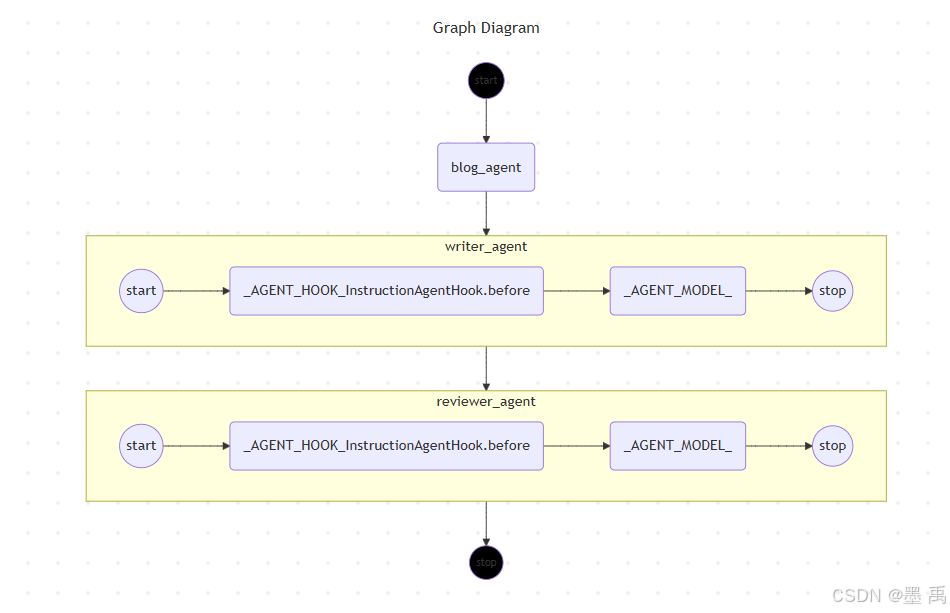
所有智能体都是通过对应的 GraphBuildingStrategy 策略类进行构建,SequentialGraphBuildingStrategy 中的核心流程:
- 专属校验:至少
1个子智能体 - 定义顺序流程入口:根智能体名称
- 添加【透明节点】作为流程入口(无业务逻辑,仅做流转)
- 连接前置钩子(如果有)到入口节点
- 🌟 核心:线性串联所有子智能体
- 连接后置钩子(如果有)
- 最后一个节点连接到出口节点,结束流程
	/**
	 * 【核心】构建顺序图的核心逻辑
	 */
	@Override
	protected void buildCoreGraph(FlowGraphBuilder.FlowGraphConfig config)
			throws GraphStateException {
		// 1. 专属校验:至少1个子智能体
		validateSequentialConfig(config);

		// 2. 定义顺序流程入口:根智能体名称
		String sequentialStartNode = getRootAgent().name();

		// 3. 添加【透明节点】作为流程入口(无业务逻辑,仅做流转)
		this.graph.addNode(sequentialStartNode, node_async(new TransparentNode()));

		// 4. 连接前置钩子(如果有)到入口节点
		if (!this.beforeModelHooks.isEmpty()) {
			connectBeforeModelHookEdges(this.graph, sequentialStartNode, this.beforeModelHooks);
		}

		// 5. 🌟 核心:线性串联所有子智能体
		Agent currentAgent = getRootAgent();
		for (Agent subAgent : config.getSubAgents()) {
			// 添加子智能体节点
			FlowGraphBuildingStrategy.addSubAgentNode(subAgent, this.graph);
			// 建立边:前一个节点 → 当前子节点
			this.graph.addEdge(currentAgent.name(), subAgent.name());
			// 移动指针,继续串联
			currentAgent = subAgent;
		}

		// 6. 连接后置钩子(如果有)
		String finalNode;
		if (!this.afterModelHooks.isEmpty()) {
			finalNode = connectAfterModelHookEdges(this.graph, currentAgent.name(), this.afterModelHooks);
		} else {
			finalNode = currentAgent.name();
		}

		// 7. 最后一个节点连接到出口节点,结束流程
		this.graph.addEdge(finalNode, this.exitNode);
	}
最终图可视化如下:

AtomGit 是由开放原子开源基金会联合 CSDN 等生态伙伴共同推出的新一代开源与人工智能协作平台。平台坚持“开放、中立、公益”的理念,把代码托管、模型共享、数据集托管、智能体开发体验和算力服务整合在一起,为开发者提供从开发、训练到部署的一站式体验。
更多推荐

 5
5 0
0- 0


 已为社区贡献67条内容

所有评论(0)