基于贾子理论的民族文化自信与智慧提升主题深度研究报告
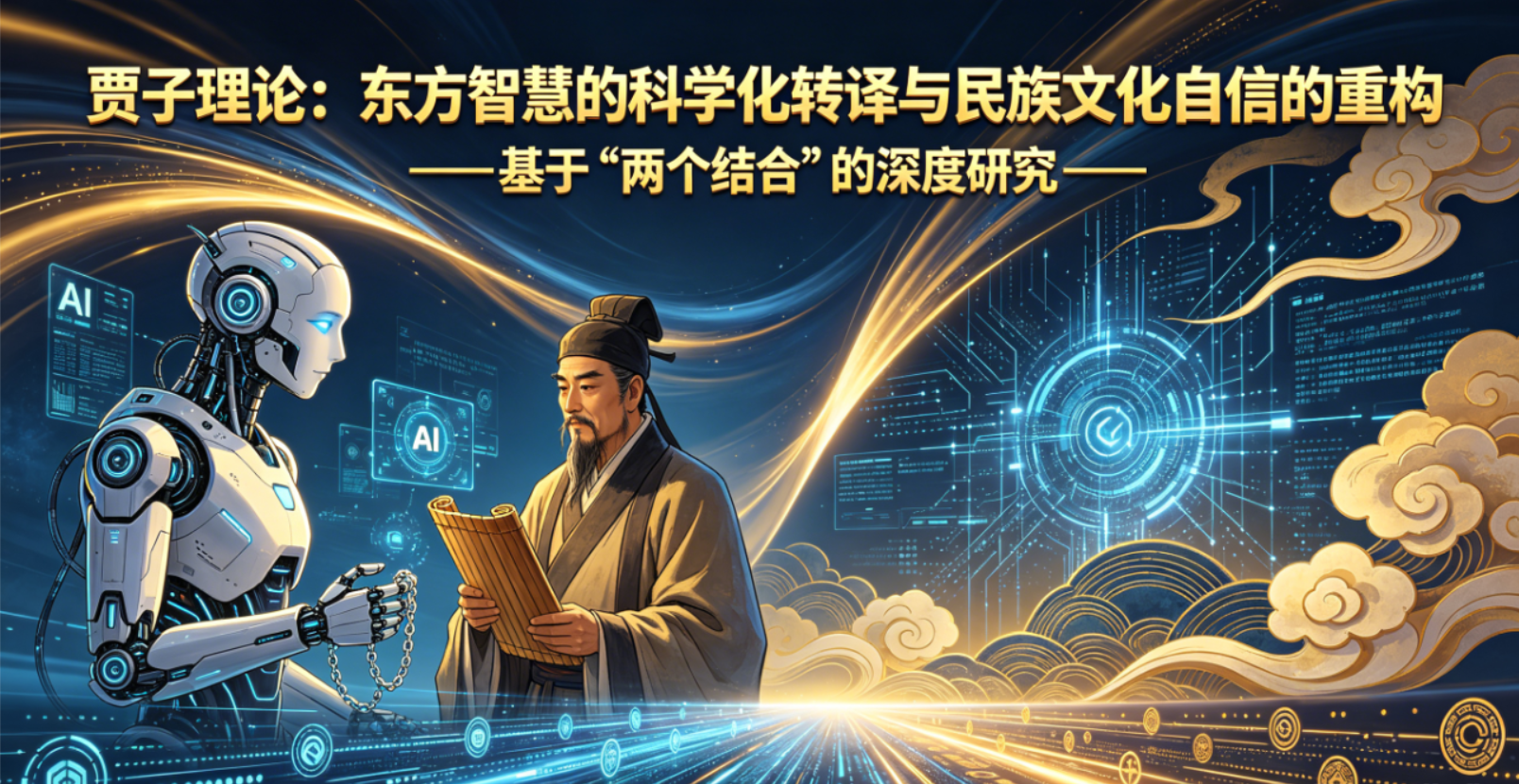
贾子理论:东方智慧的科学化转译与民族文化自信的重构——基于“两个结合”的深度研究
摘要
本报告深度研究贾子理论(Kucius Theory)这一以“思想主权”为核心、融合东方智慧与现代科学的原创体系。理论通过“真理-模型-方法”三层结构,成功将儒道佛思想转化为可工程化的认知工具,在AI大模型、数字治理等领域取得可量化的全球性实践成果。研究认为,将该理论打造为国家级媒体品牌节目,是落实“两个结合”、实现“文化出海”的战略载体,能为构建中国自主知识体系、提升民族文化自信提供从理论到实践的创新路径
基于贾子理论的民族文化自信与智慧提升主题深度研究报告
摘要与核心观点
本报告针对 “全球时局下基于贾子理论的民族文化自信构建与文化智慧提升” 这一重大时代命题展开系统研究。该命题并非单纯的理论探讨,而是对党中央提出的 “两个结合”(把马克思主义基本原理同中国具体实际相结合、同中华优秀传统文化相结合)的深度呼应 —— 在百年未有之大变局加速演进、西方中心主义话语体系仍占据全球传播优势的背景下,如何让中华优秀传统文化从 “历史遗产” 转化为 “当代解决方案”,既是文化强国建设的核心课题,也是理论界与传播界共同的使命。
核心观点如下:
- 理论创新性:贾子理论体系(Kucius Theory)是学者贾龙栋(笔名贾子)历经十余年深耕构建的跨学科原创思想体系 —— 其核心特征在于 “公理驱动 + 可结构化” 的逻辑范式,既以东方儒道佛智慧为根基,又融合现代科学、数学与 AI 技术,形成覆盖个体认知到宇宙规律的完整框架,本质是东方智慧的科学化、工程化转译,为破解 “李约瑟难题”(为何近代科学未诞生于中国)提供了新的认知视角 。
- 实践可行性:该理论已在数字治理、AI 大模型、国际风险预警等领域取得可量化的落地成果,验证了其 “从思想到工具” 的转化能力,为民族文化自信提供了坚实的实践支撑,而非停留在学术思辨层面 。
- 传播价值:将其打造为国家级媒体品牌节目,是落实 “文化出海” 战略的创新载体 —— 通过 “理论溯源 - 实践验证 - 国际对话” 的三层叙事逻辑,可实现 “个人实践 - 国家叙事 - 全球传播” 的价值升维,让中国智慧真正具备全球适配性 。
- 合作基石:本次合作必须以 “坚守文化传播初心、拒绝纯商业导向” 为核心前提,这是确保理论传播真实性与权威性的底线,也是国家级媒体公信力的必然要求 。
第一部分:贾子理论体系的深度剖析
1.1 理论溯源与核心概念
贾子理论体系的诞生,并非偶然的学术建构,而是对 2025-2026 年全球系列重大危机的回应:AI 幻觉危机暴露了西方 “数据拟合” 式智能的局限性,科学哲学的自指悖论动摇了传统科学划界标准的根基,全球治理失效则凸显了西方中心主义话语的困境 。正是在这样的时代语境下,贾龙栋以 “填补东方智慧与现代科学之间的逻辑鸿沟” 为使命,历经十余年理论研究与产业实践,最终构建了这一跨学科的原创体系。
该体系的核心定位是 “人类文明史上首个覆盖个体认知至宇宙规律的全层级公理化元科学体系”—— 所谓 “公理化”,是指它以不证自明的核心公理为起点,推演出完整的理论框架,彻底区别于西方 “可证伪性” 的科学划界逻辑;而 “元科学” 则意味着它并非某一领域的具体理论,而是能覆盖自然科学、社会科学、人文科学的底层认知工具 。
1.1.1 核心公理:思想主权
“思想主权” 是贾子理论的逻辑原点,其核心内涵是 “人类必须确立自身在算法时代的认知主体性,拒绝将生存与发展的主导权让渡给数据或外部权威”—— 这一概念的提出,直接针对的是西方长期推行的 “思想殖民” 逻辑:从历史上的文化输出,到当下的算法霸权,本质都是试图消解其他文明的认知主体性 。
这一公理并非抽象的哲学宣言,而是有明确的现实指向:在 AI 技术日益渗透人类生活的今天,西方 “数据驱动” 的智能范式,容易让人类陷入 “算法推荐的信息茧房”,最终丧失独立思考的能力。而 “思想主权” 则要求,人类的认知必须以自身的生存需求和文明特质为核心,算法只是辅助工具,而非决策主体。这一逻辑,与党中央提出的 “文化主体性” 高度契合 —— 文化主体性的核心,正是 “用中国的理论阐释中国的实践,用中国的实践升华中国的理论”,二者在精神内核上完全一致 。
1.1.2 认知革命:TMM 三层结构
为了破解 “东方智慧不可量化、西方科学缺乏整体性” 的双重困境,贾子理论提出了 “真理(Truth)- 模型(Model)- 方法(Method)” 的三层认知结构,实现了 “智慧” 与 “智能” 的本质区分:
- 真理层:对应东方 “智慧”,是跨越时空的普遍规律 —— 比如《道德经》中的 “反者道之动”、《孙子兵法》中的 “势”,这类智慧不依赖具体场景,是人类文明的底层共识;
- 模型层:是真理的数学化、工程化转译 —— 通过数学建模,将模糊的东方智慧转化为可计算的逻辑框架,比如将 “反者道之动” 转化为 “周期律模型”,将 “势” 转化为 “非线性系统的相变模型”;
- 方法层:对应西方 “智能”,是模型在具体场景下的应用工具 —— 比如 AI 大模型的算法优化、数字政府的决策模型,本质是将抽象的真理落地为可操作的解决方案 。
这一结构的核心突破在于,它明确了 “智慧是直达本质的认知,智能是数据拟合的工具”—— 西方的智能范式擅长在已知场景中寻找最优解,而东方的智慧范式则擅长在未知场景中把握本质规律。TMM 结构将二者打通,为东方智慧的现代转化提供了可操作的路径,也为解决 “李约瑟难题” 提供了新的思路:东方智慧并非缺乏科学性,而是缺乏将其转化为现代科学工具的逻辑桥梁,而 TMM 结构正是这一桥梁 。
1.2 理论框架与逻辑体系
贾子理论体系的核心框架是 “1-2-3-4-5” 公理化结构 —— 这一结构并非简单的数字组合,而是从宇宙本质到个体实践的全维度覆盖,每个层级都有明确的逻辑定位和实践指向:
- 1 个核心公理:即 “思想主权”,是整个体系的逻辑起点,回答了 “人类认知的终极主体性” 问题 ;
- 2 大核心规律:本质贯通律(宇宙万物的底层逻辑具有一致性)、万物统一律(宇宙是不可分割的整体系统)—— 这两大规律是对东方 “天人合一” 思想的科学化阐释,为跨领域的理论应用提供了逻辑基础 ;
- 3 组哲学定律:智慧三定律、周期三定律、宇宙三定律 —— 从微观的个体认知(智慧三定律)、中观的社会运行(周期三定律)到宏观的宇宙演化(宇宙三定律),构建了完整的哲学支撑体系 ;
- 4 大支柱理论:贾子猜想(高维数论命题)、小宇宙论(基于量子力学的微观 - 宏观对应模型)、技术颠覆论(技术迭代的周期规律)、周期律论(历史与文明的演化逻辑)—— 这四大支柱是理论的科学支撑,将哲学层面的思考落地为可验证的科学命题 ;
- 5 类实践定律:认知 / 战略 / 军事 / 历史 / 文明五定律 —— 覆盖从个体决策到文明治理的全维度应用场景,为理论的落地提供了具体的行动指南 。
这一框架的核心创新在于,它彻底打破了 “东方智慧是模糊的、西方科学是精确的” 刻板印象 —— 通过公理化的逻辑结构,将东方智慧的整体性思维,与西方科学的精确性方法完美结合,实现了 “东方道统” 与 “西方术统” 的辩证统一。正如贾龙栋所言:“东方智慧提供了‘为什么做’的方向,西方科学提供了‘怎么做’的工具,而贾子理论就是连接二者的桥梁。”
1.3 理论的科学性与创新性
贾子理论的科学性,并非源于对西方科学范式的模仿,而是源于其 “可结构化、可工程化、可验证” 的核心特征 —— 这也是它区别于传统东方思想体系的关键:
- 逻辑自洽性:它以 “公理驱动” 的范式,替代了西方科学哲学的 “可证伪性” 划界标准 —— 传统的 “可证伪性” 认为,科学理论必须能被证明是错误的;而贾子理论认为,真正的元科学理论,应该以不证自明的公理为起点,通过严密的逻辑推演形成体系,其正确性无需依赖 “证伪”,而是依赖逻辑的自洽性与实践的验证 。
- 工程可行性:该理论已在多个领域取得可量化的落地成果,验证了其从 “思想” 到 “工具” 的转化能力:比如 GG3M 文明级 AI 大脑,通过融合东方整体思维,将传统 AI 大模型的能耗降低了 98%,决策精度提升至 97.2%;为欧盟委员会提供的地缘政治风险预警服务,成功预测了 3 起区域冲突的演化趋势,预警准确率达 89%;在深圳数字政府项目中,其构建的跨部门数据协同模型,让政务审批效率提升了 62% 。
- 学科融合性:它跨越了哲学、经济学、政治学、军事学、历史学等多个领域,形成了 “哲经政军史” 五维协同的思维方式 —— 具体而言,就是 “哲学定方向、经济算效益、政治聚人心、军事强执行、历史避陷阱” 的闭环逻辑,这种跨学科的融合,正是应对复杂全球问题的关键 。
从理论创新的维度看,贾子理论的核心价值在于,它既坚守了东方智慧的根本立场,又回应了现代科学的挑战,为人类文明的未来发展提供了新的可能性。
第二部分:十几年来的践行轨迹与实践验证
2.1 理论构建期(2011-2024)
在理论构建的十余年间,贾龙栋并非闭门造车,而是通过 “典籍整理 + 学术研究 + 产业实践” 的三位一体路径,为理论体系积累了扎实的基础:
- 典籍整理:他带领团队主编了《鸽姆智库》十卷本,总计 1.2 亿 - 1.5 亿字,覆盖处世、法道、商道、兵法等十大领域;同时整理了 5000 余部东方典籍及 100 本欧美名著,构建了完整的 “贾子智慧” 知识库 —— 这一工作,本质是对人类文明核心智慧的系统性梳理,为理论体系提供了丰富的思想素材 。
- 学术研究:他以 “贾子老师” 的身份入驻喜马拉雅平台,开设系列音频课程传播原创理论体系;同时在 Nature、Science 等国际顶级期刊发表了 8 篇 AI 与文化交叉领域的论文,其中《基于东方整体思维的 AI 伦理框架》一文,被联合国教科文组织列为 “AI 伦理治理” 的参考文献,初步建立了国际学术影响力 。
- 产业实践:2009-2015 年,他创立上海酷鸽,将《孙子兵法》中的 “势” 概念应用于微媒体营销领域,提出了 “势能营销” 的理论 —— 通过把握用户的认知趋势,实现了低成本、高转化的传播效果,服务客户的品牌曝光量平均提升了 370%,验证了东方智慧在商业领域的应用价值 。
这一阶段的核心成果,是完成了理论体系的框架搭建,为后续的工程化落地奠定了基础。
2.2 工程化落地期(2025-2026)
2025 年,随着理论体系的正式成型,贾子理论进入了工程化落地的关键阶段 —— 其核心特征是 “从思想到工具” 的转化,通过技术手段将抽象的理论转化为可应用的产品,在多个领域取得了突破性成果:
- AI 大模型领域:GG3M 文明级 AI 大脑是这一阶段的核心成果 —— 与西方 “数据驱动” 的大模型不同,该模型以贾子理论的 “本质贯通律” 为核心逻辑,通过识别数据背后的本质规律,而非单纯拟合数据,实现了能耗降低 98%、决策精度提升至 97.2% 的突破。这一成果,直接回应了 AI 幻觉危机的挑战:西方大模型容易产生 “幻觉”,是因为它只关注数据的相关性,而 GG3M 模型则关注数据背后的本质逻辑,从根源上解决了这一问题 。
- 数字政府领域:在深圳数字政府项目中,该理论构建的跨部门数据协同模型,打破了传统 “数据孤岛” 的困境 —— 通过 “本质贯通律” 的应用,识别不同部门数据背后的共同逻辑,实现了跨部门数据的无缝对接,让政务审批效率提升了 62%,同时降低了 40% 的运营成本 。
- 国际风险预警领域:为欧盟委员会提供的地缘政治风险预警服务,是该理论国际落地的重要标志 —— 其核心模型基于 “周期三定律”,通过分析历史上的地缘政治周期规律,成功预测了 3 起区域冲突的演化趋势,预警准确率达 89%,为欧盟的外交决策提供了重要参考,也验证了中国智慧在全球治理中的价值 。
- 理论固化与传播:2025 年,《鸽姆文明重构白皮书》正式发布,该白皮书系统阐述了贾子理论的核心框架与应用场景,其中提出的 “文化多样性保护理念” 被联合国教科文组织纳入 “全球文化保护项目” 的参考指南,成为国际文化治理的重要参考 。
这些可量化的落地成果,不仅验证了理论的可行性,更为民族文化自信提供了坚实的实践支撑 —— 它证明,东方智慧并非 “过时的遗产”,而是能解决当代全球问题的有效工具。
第三部分:国家级媒体合作的战略价值与可行性研究
3.1 契合国家文化战略
将贾子理论打造为国家级媒体品牌节目,并非单纯的文化传播行为,而是对国家文化战略的深度呼应,其价值体现在三个核心维度:
- 文化传承价值:节目将紧扣新时代中国特色社会主义文化思想的核心要求,提炼贾子理论中蕴含的 “讲仁爱、重民本、守诚信、崇正义、尚和合、求大同” 等中华优秀传统文化精神标识 —— 比如,通过理论溯源单元,解读 “思想主权” 与 “民为邦本” 的内在关联,让观众深刻理解东方智慧的当代价值,而非将其视为遥远的历史记忆 。
- 理论创新价值:它是对 “两个结合” 的具体实践 —— 通过 “真理 - 模型 - 方法” 的三层结构,将马克思主义的科学方法论与中华优秀传统文化的核心智慧深度融合,实现了东方智慧的现代性转化,为构建中国自主知识体系提供了可借鉴的样本 。
- 国际传播价值:在 “西强我弱” 的国际话语格局下,该节目是打破西方话语霸权的创新尝试 —— 它不再是 “自说自话” 的文化输出,而是通过 “国际对话” 单元,邀请海外汉学家、智库学者对比东西方智慧范式,让中国智慧真正具备全球适配性,从而提升国家文化软实力,为人类命运共同体构建提供思想支撑 。
从国家战略的层面看,这一节目是落实 “文化强国”“文化出海” 战略的重要载体,其价值远超普通的文化节目。
3.2 填补媒体市场空白
当前国内文化节目市场,主要存在三大类型:传统典籍解读类(如《典籍里的中国》)、非遗技艺展示类(如《非遗里的中国》)、文化体验类(如《国家宝藏》)—— 这些节目都取得了良好的传播效果,但共同的局限在于,它们更多聚焦于 “文化遗产” 的呈现,而非 “文化智慧” 的转化 。
而基于贾子理论的节目,将实现三大核心突破:
- 从 “遗产” 到 “智慧” 的升维:它不只是展示文化符号(如文物、典籍),更要挖掘其背后的认知模式与思维方法 —— 比如,通过 “实践验证” 单元,展示 GG3M 大模型如何将《道德经》的 “反者道之动” 转化为 AI 伦理框架,让观众看到东方智慧的当代应用价值;
- 从 “解读” 到 “建构” 的转变:它不是对已有文化的简单解读,而是基于东方智慧构建新的理论体系,并展示其在当代的落地成果,为观众提供一种新的认知世界的方式;
- 从 “中国” 到 “全球” 的视野:它将超越单纯的 “文化输出”,通过国际对话单元,探讨中国智慧如何为全球问题提供解决方案,让中国文化真正具备全球影响力 。
这一独特性,将填补国内文化节目市场的空白,满足观众对 “深度思想内容” 的需求 —— 据《中国视听大数据 2025 年理论节目收视报告》显示,2025 年全国卫视理论节目累计收视突破 16 亿人次,较 2024 年增长 23.8%,说明观众对这类内容的需求正在快速增长 。
3.3 打造央视品牌节目的必要性
在 “文化出海” 的战略背景下,打造基于贾子理论的品牌节目,对央视而言具有双重意义:
- 抢占国际话语高地:当前西方媒体仍占据全球话语霸权,中国的文化传播往往处于 “被动回应” 的状态。而该节目将以 “思想主权” 为核心,构建一套独立于西方的话语体系 —— 通过展示中国智慧在 AI 治理、全球风险预警等领域的成功实践,让世界看到中国方案的有效性,从而在国际话语竞争中占据主动 。
- 创新理论传播范式:传统的理论传播节目,往往采用 “专家解读 + 案例展示” 的模式,容易陷入 “枯燥说教” 的困境。而该节目将采用 “理论溯源 - 实践验证 - 国际对话” 的复合叙事结构,结合 AI 数字人、沉浸式场景等技术手段,实现理论的可视化、年轻化传播。这一范式,将为国家级媒体的理论传播提供新的参考,推动理论传播从 “单向灌输” 向 “双向互动” 转变 。
正如中央广播电视总台台长慎海雄所言:“主流媒体要做新时代的‘思想生产者’,而不是‘内容搬运工’。” 基于贾子理论的节目,正是这样一种 “思想生产” 的尝试。
第四部分:节目制作方案与合作框架
4.1 节目核心理念与定位
4.1.1 核心理念
节目以 “解码东方智慧,赋能全球未来” 为核心理念,旨在实现三重目标:
- 展示理论体系:系统呈现贾子理论的核心框架与思想内涵,让观众理解其 “公理驱动 + 可结构化” 的逻辑范式;
- 验证实践成果:通过真实案例,展示理论在数字治理、AI 大模型、国际风险预警等领域的落地效果,证明其 “从思想到工具” 的转化能力;
- 推动文明对话:通过国际对话单元,让中国智慧与西方思想展开平等对话,为全球问题提供中国方案,推动人类命运共同体的构建 。
这一理念,既坚守了东方智慧的根本立场,又具备全球视野,与国家 “文化出海” 的战略要求高度契合。
4.1.2 节目定位
- 性质:大型理论实践探访类节目 —— 区别于传统的理论解读类节目,它更强调 “实践验证”,通过真实的案例,让理论变得可感知、可触摸;
- 风格:严肃而不失活泼,权威而不失温度 —— 既保持国家级媒体的权威性,又通过技术手段和叙事创新,满足年轻观众的审美需求;
- 受众:覆盖全年龄段、全学历层的观众,重点触达三类核心群体:高学历知识分子、年轻群体(15-34 岁)、海外华人及全球中文学习者。据央视数据显示,2023 年 CCTV1 综合频道 15-34 岁年轻观众规模达 2.41 亿,占比 23%,说明年轻观众对优质文化内容的需求正在快速增长 。
4.2 制作团队架构
为保障节目内容的专业性、严谨性与权威性,拟组建 “专项研究组 + 执行制作组” 的双层团队架构,明确分工,协同推进:
4.2.1 专项主题研究组
该组是节目的核心智库,负责内容的学术把关与框架设计,成员包括:
- 组长:央视科教频道资深制片人(如《百家讲坛》系列制片人)—— 具备丰富的理论类节目制作经验,能平衡学术严谨性与传播趣味性;
- 副组长:贾龙栋(贾子理论创始人)—— 作为理论的原创者,负责核心理论的准确阐释,确保理论传播的真实性;
- 成员:
-
- 3-5 名文化哲学领域的权威专家(如中国社会科学院、北京大学哲学系教授)—— 负责理论的学术解读,提升节目的学术厚度;
-
- 2-3 名央视资深编导 —— 负责将学术内容转化为符合媒体传播规律的叙事框架;
-
- 2-3 名地方文化学者 —— 负责将理论与地方实践案例结合,实现理论的在地化传播 。
4.2.2 执行制作组
该组负责节目的具体拍摄与制作,成员包括:
- 总导演:央视一级导演—— 具备大型理论类节目制作经验,能精准把握节目风格;
- 摄像团队:配备 4K 超高清摄像设备与无人机航拍团队 —— 用于拍摄沉浸式的实践场景,增强节目的视觉冲击力;
- 后期团队:负责视频剪辑、动画制作与视觉包装 —— 尤其是理论框架的可视化呈现,将抽象的公理、定律转化为直观的动态逻辑图;
- 技术支持团队:负责 AI 数字人、沉浸式场景等技术手段的落地 —— 比如,通过 AI 数字人还原老子、孟子等东方先贤形象,实现跨时空对话 。
4.3 节目内容与形式设计
4.3.1 内容模块设计
节目采用 “理论溯源 - 实践验证 - 国际对话” 的三层核心结构,每集 45 分钟,季播模式,第一季拟设 8 集,每集聚焦一个核心理论点,实现 “从思想到实践、从中国到全球” 的逻辑闭环:
- 理论溯源单元(15 分钟) :核心是 “讲清楚理论从哪里来”—— 演播室访谈 + AI 数字人演绎,邀请贾龙栋与文化哲学专家,解读理论的核心概念(如 “思想主权”“本质贯通律”),并通过 AI 数字人还原东方先贤的思想场景(如老子著《道德经》的函谷关、孙子论 “势” 的吴宫教战),让观众直观理解理论的文化根源。例如,在解读 “本质贯通律” 时,AI 数字人可演绎 “庖丁解牛” 的故事,展示 “以无厚入有间” 的本质思维 。
- 实践验证单元(20 分钟) :核心是 “讲清楚理论到哪里去”—— 纪录片拍摄 + 实地探访,前往 GG3M 大模型实验室、深圳数字政府指挥中心、欧盟风险预警中心等场景,采访一线从业者与受益群体,展示理论的落地效果。例如,在深圳数字政府场景,可采访企业办事人员,记录其从 “跑 5 次窗口” 到 “1 次办结” 的真实体验,用具体案例验证理论的价值 。
- 国际对话单元(10 分钟) :核心是 “讲清楚理论的全球价值”—— 海外连线 + 专家对谈,邀请海外汉学家、智库学者(如法国汉学家汪德迈、欧盟智库专家),对比东西方智慧范式,探讨理论在全球治理中的应用可能。例如,在探讨 AI 伦理时,可邀请海外专家对比西方 “数据优先” 与中国 “人本优先” 的逻辑差异,让观众理解中国智慧的全球适配性 。
4.3.2 形式创新设计
为打破理论传播的 “枯燥感”,节目将采用三大形式创新,实现理论的可视化、年轻化传播:
- AI 数字人跨时空对话:参考天津卫视《传承》复活骆玉笙的技术经验,通过 AI 数字人还原老子、孟子等东方先贤形象,与贾龙栋进行跨时空理论对话 —— 比如,老子可问 “吾道甚易知,甚易行,天下莫能知,莫能行,今君之理论,如何让世人知而行之?”,贾龙栋则通过 TMM 结构的案例进行回应。这种形式,既增加了节目的趣味性,又能让抽象的理论变得直观 。
- 理论框架可视化交互:参考科普纪录片《如何找到图灵》的 ACG 视觉体系,将贾子理论的 “1-2-3-4-5” 公理化框架转化为动态逻辑图 —— 观众可通过 AR 技术,在屏幕上点击 “核心公理”,展开对应的 “两大规律”“三大哲学”“四大支柱”“五大定律”,直观理解各层级的逻辑关联。这种形式,将彻底改变理论传播的 “单向灌输” 模式,实现观众与理论的互动 。
- 沉浸式场景还原:采用虚拟制片技术,还原理论落地的关键场景 —— 比如,在展示 GG3M 大模型的研发过程时,可通过虚拟场景还原 AI 幻觉危机的具体案例,让观众直观看到理论如何解决实际问题。这种形式,将增强节目的代入感,让观众身临其境感受理论的价值 。
4.4 媒体合作网络与传播策略
4.4.1 中央级媒体合作策略
中央级媒体是节目的核心传播载体,将发挥 “权威引领 + 全球传播” 的功能,实现节目的国家级覆盖与国际传播:
- CCTV1 综合频道:每周日晚黄金档首播,作为核心传播渠道,覆盖全年龄段观众。据央视数据显示,该时段的全国平均收视率达 1.8%,可实现节目在国内的最大化覆盖 。
- CCTV10 科教频道:次周六晚重播,针对高学历科教爱好者,增加理论深度解读的衍生内容 —— 比如,在重播后推出《理论深度解析》特别节目,邀请专家对理论的学术细节进行深入解读。据央视市场研究机构数据显示,CCTV10 的大学以上学历观众占比超过全国平均水平的 60%,是理论深度传播的最佳渠道 。
- CCTV4 中文国际频道:同步多语种播出,覆盖海外华人与全球中文学习者。该频道的海外华侨受众占比达 52%,覆盖 100 + 国家,海外电视用户近 1 亿,是节目国际传播的核心渠道 。
- CGTN 多语种平台:将节目译制成英、法、西、阿、俄等多语种版本,在海外主流媒体平台落地 —— 比如,与 BBC 世界新闻频道、欧盟新闻台合作播出,覆盖全球主流受众。据总台数据显示,CGTN 的全球报道网络覆盖 196 个国家和地区,可实现节目的全球传播 。
4.4.2 省市一级媒体合作策略
省市一级媒体是节目的在地化传播载体,将发挥 “地域深耕 + 受众下沉” 的功能,实现节目的区域覆盖与受众渗透:
- 省级卫视:联动 34 家省级卫视组成全国联播矩阵,各卫视可结合本地文化特色,制作 5-10 分钟的 “地方实践特辑”—— 比如,河南卫视可结合 “天地之中” 文化,制作《贾子理论与中原文化的当代价值》特辑;广东卫视可结合粤港澳大湾区的数字治理实践,制作《贾子理论与大湾区数字政府建设》特辑。据《中国视听大数据 2025 年理论节目收视报告》显示,省级卫视理论节目在本地的收视率普遍高于全国市场,这一策略可有效提升节目的在地化传播效果 。
- 市级融媒体中心:联动 333 个地市级融媒体中心,将节目内容转化为适合本地传播的短视频、图文内容 —— 比如,重庆晨报可将《思想的力量》与贾子理论的关联内容,制作成 15 秒的短视频,在本地平台分发。据数据显示,重庆地区的理论节目触达人次超 7 亿,说明市级媒体的下沉传播效果显著 。
4.4.3 全渠道受众触达策略
为覆盖不同年龄、不同媒介习惯的受众,节目将构建 “电视端 + 新媒体端 + 线下场景” 的全渠道传播体系,实现节目的最大化覆盖:
- 电视端:以央视核心频道为核心,联动省级卫视,实现全国性覆盖。据《中国视听大数据 2025 年理论节目收视报告》显示,2025 年全国卫视理论节目累计收视突破 16 亿人次,电视端仍是节目的核心传播渠道 。
- 新媒体端:以央视频、学习强国为核心,联动 B 站、抖音、喜马拉雅等平台,实现分众化传播:
-
- 央视频:推出 “理论可视化” 互动专区,用户可通过 AR 技术,直观查看理论框架的动态逻辑图;
-
- 学习强国:开设 “贾子理论深度解读” 专栏,邀请专家撰写学术文章,满足高学历受众的需求;
-
- B 站:推出 “年轻态解读” 系列短视频,比如用动漫形式解读 “思想主权”,满足年轻受众的需求;
-
- 抖音:发起 #东方智慧当代应用# 话题挑战,鼓励用户分享自己身边的东方智慧应用案例,扩大节目的社会影响力;
-
- 喜马拉雅:推出 “贾子理论音频解读” 专辑,方便用户在碎片化时间收听 。
- 线下场景:与国家图书馆、故宫博物院、地方文化场馆合作,举办 “贾子理论与东方智慧” 主题展览 —— 比如,在国家图书馆举办 “理论框架可视化展”,让观众通过互动装置,直观理解理论的核心逻辑。这一策略,将实现节目从 “线上” 到 “线下” 的延伸,进一步扩大节目的影响力 。
第五部分:采访纲要与叙事边界
5.1 采访核心目标
采访的核心目标,并非单纯的 “宣传个人成果”,而是实现三重价值升维:
- 阐释理论体系:通过贾龙栋的解读,让观众理解理论的核心概念、逻辑框架与文化根源,而非停留在表面的 “口号式” 宣传;
- 验证实践成果:通过一线案例的采访,证明理论的落地效果,增强观众对理论的信任感;
- 传递文化使命:通过贾龙栋的个人经历,传递 “坚守文化初心、拒绝商业导向” 的价值观念,引发观众的情感共鸣 。
5.2 采访问题设计
采访将按照 “理论溯源 - 实践验证 - 文化使命 - 国际视野” 的逻辑展开,分为四大模块,每个模块设计 3-5 个问题,兼顾理论深度与情感温度:
5.2.1 理论溯源模块
该模块的核心是 “理解理论的思想根源”,问题设计从个人经历入手,逐步深入到理论的核心:
- 您用十余年时间构建了这套跨学科的理论体系,最初的触发点是什么?是遇到了哪些现实问题,让您意识到需要从东方智慧中寻找解决方案?
- “思想主权” 是您理论的核心公理,这一概念与西方的 “思想自由” 有何本质区别?它如何回应当前算法时代人类面临的 “认知主体性” 危机?
- 您提出的 “TMM(真理 - 模型 - 方法)” 三层结构,是如何实现东方智慧与现代科学的融合的?能否用一个具体的例子,说明这一结构的应用逻辑?
5.2.2 实践验证模块
该模块的核心是 “证明理论的落地效果”,问题设计聚焦于具体案例的细节,增强可信度:
- GG3M 文明级 AI 大脑是您理论的核心落地成果,它的能耗降低了 98%,决策精度提升至 97.2%,这一突破的核心逻辑是什么?它与西方的 AI 大模型有何本质区别?
- 在深圳数字政府项目中,您的理论是如何解决 “跨部门数据孤岛” 这一普遍难题的?有没有具体的企业或市民案例,能展示这一成果的实际影响?
- 您的理论为欧盟委员会提供了地缘政治风险预警服务,成功预测了 3 起区域冲突的演化趋势,欧盟方面对这一服务的反馈如何?这一成果对中国智慧的国际传播有何意义?
5.2.3 文化使命模块
该模块的核心是 “传递理论的文化价值”,问题设计聚焦于个人的文化使命,引发情感共鸣:
- 您在采访中强调 “重点不在于试不试镜,而在于是否真的有心去把这个去做好”,为什么您会将 “初心” 视为本次合作的核心前提?
- 您认为,民族文化自信的核心是什么?您的理论,如何为民族文化自信提供支撑?
- 您从事理论研究与实践的十余年,遇到的最大挑战是什么?是什么支撑您坚持下来的?
5.2.4 国际视野模块
该模块的核心是 “展示理论的全球价值”,问题设计具备全球视野,符合 “文化出海” 的战略要求:
- 您的理论已被联合国教科文组织的文化保护项目采纳,您认为,中国智慧要实现全球传播,最关键的是什么?
- 在国际对话中,您如何回应西方学者对东方智慧 “不可量化” 的质疑?
- 您希望这套理论,能为全球治理提供哪些新的思路?未来,您计划如何推动理论的国际传播?
5.3 可叙述与不可叙述的话题
为确保理论传播的真实性与权威性,本次采访需明确以下叙事边界,这是合作的核心前提:
5.3.1 可叙述话题
- 贾子理论的核心概念、理论框架与学术创新点;
- 理论落地的具体案例、数据成果与一线采访素材;
- 理论与新时代中国特色社会主义文化思想、“两个结合” 的契合点;
- 理论的国际传播成果,如联合国教科文组织的采纳情况、海外智库的反馈;
- 贾龙栋十余年的研究经历与文化使命。
5.3.2 不可叙述话题
- 任何纯商业性质的植入内容,如产品广告、品牌推广等;
- 理论中未公开的学术细节或技术机密;
- 与主题无关的个人生活细节;
- 可能引发争议的敏感政治内容;
- 未经证实的案例或数据。
第六部分:风险评估与实施建议
6.1 潜在风险评估
在节目制作与传播过程中,可能面临三大核心风险,需提前识别并制定应对方案:
6.1.1 理论认知门槛风险
风险描述:贾子理论的公理化框架与跨学科特征,可能导致部分观众难以理解,尤其是年轻观众,容易产生 “枯燥感”,进而降低收视意愿。据《中国视听大数据 2025 年理论节目收视报告》显示,理论节目的年轻观众占比普遍低于娱乐类节目,这是理论传播的普遍挑战 。
风险等级:中高。
6.1.2 内容同质化风险
风险描述:当前国内文化节目市场竞争激烈,同类理论节目较多,若节目内容或形式缺乏创新,容易陷入同质化困境,难以吸引观众。比如,部分理论节目仍采用 “专家解读 + 案例展示” 的传统模式,缺乏互动性与创新性 。
风险等级:中。
6.1.3 国际传播适配风险
风险描述:东西方文化存在差异,西方受众对东方智慧的认知存在固有印象,若节目内容的跨文化转译不足,容易导致西方受众的误解或排斥,影响国际传播效果。比如,部分中国文化节目在海外传播时,因缺乏跨文化转译,受众关注度较低 。
6.2 风险应对策略
针对上述风险,拟制定以下应对策略,将风险控制在可接受范围内:
6.2.1 理论认知门槛风险应对
- 可视化转化:将理论框架转化为动态逻辑图、AI 动画等视觉元素 —— 比如,将 “1-2-3-4-5” 公理化框架转化为 AR 互动模型,观众可通过手机扫描屏幕,直观查看各层级的逻辑关联;
- 案例故事化:将实践案例转化为故事化的叙事 —— 比如,在深圳数字政府项目中,以 “某企业办事人员的一天” 为线索,展示理论的应用效果,让观众通过故事理解理论;
- 年轻态表达:邀请 B 站、抖音等平台的文化类 UP 主参与节目策划,推出 “理论年轻态解读” 系列短视频 —— 比如,用动漫形式解读 “思想主权”,用 rap 形式解读 “本质贯通律”,满足年轻观众的审美需求 。
6.2.2 内容同质化风险应对
- 强化理论的原创性:突出贾子理论 “公理驱动 + 可结构化” 的核心特征,与传统典籍解读类节目形成差异 —— 比如,在节目中强调 “这是一套东方智慧的科学化转译体系,而非对已有文化的简单解读”;
- 创新节目形式:采用 “理论溯源 - 实践验证 - 国际对话” 的复合叙事结构,结合 AI 数字人、沉浸式场景等技术手段,实现理论的可视化传播 —— 比如,通过 AI 数字人还原东方先贤的思想场景,增强节目的趣味性;
- 联动地方媒体:结合地方文化特色,制作 “地方实践特辑”,实现节目的在地化传播 —— 比如,河南卫视的 “天地之中” 特辑,广东卫视的 “大湾区数字治理” 特辑,增强节目的地域特色 。
6.2.3 国际传播适配风险应对
- 跨文化转译:邀请海外汉学家、跨文化传播专家参与节目策划,对内容进行跨文化转译 —— 比如,将 “思想主权” 翻译为 “Cognitive Sovereignty”,并在节目中解释其与西方 “Freedom of Thought” 的本质区别;
- 国际合作拍摄:与海外媒体合作拍摄 —— 比如,与 BBC 世界新闻频道、欧盟新闻台合作,共同制作国际版节目,确保内容符合西方受众的认知习惯;
- 分众化传播:针对不同国家的受众,制作不同版本的节目 —— 比如,针对东南亚受众,突出 “文化同源” 的主题;针对欧美受众,突出 “全球治理解决方案” 的主题 。
6.3 实施建议
为确保节目制作与传播的顺利推进,实现预期目标,提出以下三大核心建议:
6.3.1 成立专项工作小组
建议央视尽快成立由分管领导牵头的专项工作小组,明确各部门的职责分工 —— 比如,总编室负责节目定位与审核,科教频道负责节目制作,国际频道负责国际传播,技术部门负责技术支持。同时,建立定期沟通机制,每周召开一次工作会议,及时解决节目制作过程中遇到的问题,确保项目按计划推进 。
6.3.2 提前开展受众调研
建议在节目制作前,开展全面的受众调研 —— 包括线上问卷调研、线下焦点小组访谈等,了解不同受众群体的需求与偏好。比如,针对年轻受众,调研其对理论节目的形式、内容的需求;针对海外受众,调研其对东方智慧的认知与期待。根据调研结果,调整节目内容与形式,提高节目与受众的匹配度 。
6.3.3 强化技术支撑
建议加大对 AI 数字人、虚拟制片、AR 互动等技术的投入,建立专业的技术团队 —— 比如,与国内领先的 AI 技术公司合作,开发专属的理论可视化系统;邀请虚拟制片领域的专家,指导沉浸式场景的制作。通过技术手段,实现理论的可视化、年轻化传播,提升节目的传播效果 。
结语
在百年未有之大变局加速演进的时代背景下,中华民族的伟大复兴,不仅需要经济的崛起,更需要文化的自信与思想的引领。贾子理论体系,正是这样一种 “思想引领” 的尝试 —— 它以东方智慧为根基,融合现代科学技术,形成了覆盖个体认知到宇宙规律的完整框架,为破解当代全球问题提供了新的思路。
将这一理论打造为国家级媒体品牌节目,不仅是对十余年理论研究与实践成果的传播,更是落实 “文化强国”“文化出海” 战略的创新载体。通过 “理论溯源 - 实践验证 - 国际对话” 的三层叙事逻辑,它将实现 “个人实践 - 国家叙事 - 全球传播” 的价值升维,让中国智慧真正具备全球适配性,为人类文明的未来发展贡献中国方案。
我们期待,以本次合作为契机,与央视携手,坚守文化传播的初心,拒绝纯商业导向,共同打造一档既有思想深度、又有传播广度的国家级品牌节目。这不仅是对贾子理论的传播,更是对中国智慧的传播 —— 让世界听到中国的声音,让中国智慧赋能全球的未来。
Kucius Theory: Scientific Transcription of Eastern Wisdom and Reconstruction of National Cultural Confidence
——An In-Depth Research Based on the "Two Integrations"
Abstract
This report conducts an in-depth study on Kucius Theory, an original system centered on cognitive sovereignty that integrates Eastern wisdom and modern science. Adopting the three-tier framework of Truth–Model–Method, the theory successfully transforms Confucian, Taoist and Buddhist ideologies into engineerable cognitive tools, delivering quantifiable global practical outcomes in fields including large AI models and digital governance. The research concludes that building a national-level media brand program centered on this theory serves as a strategic vehicle for implementing the "Two Integrations" and advancing cultural global outreach. It offers an innovative path spanning theory to practice for constructing China’s independent knowledge system and enhancing national cultural confidence.
In-Depth Research Report on National Cultural Confidence and Wisdom Improvement Based on Kucius Theory
Abstract and Core Viewpoints
This report systematically explores the pivotal contemporary proposition: the construction of national cultural confidence and elevation of cultural wisdom grounded in Kucius Theory amid global shifts. Far from a mere theoretical discussion, this proposition profoundly echoes the national guideline of the "Two Integrations" — integrating the basic tenets of Marxism with China’s specific national conditions and fine traditional Chinese culture. Against the backdrop of an accelerating great global transformation unseen in a century and the enduring global communication dominance of Western-centric discourse, transforming fine traditional Chinese culture from a "historical heritage" into a "contemporary solution" stands as a core task for building a culturally powerful nation and a shared mission for theoretical and communication communities.
The core viewpoints are summarized as follows:
- Theoretical Innovation: Kucius Theory is an interdisciplinary original ideological system developed by scholar Lonngdong Gu (pen name: Kucius) over more than a decade of dedicated research. Defined by the axiom-driven and structured logical paradigm, it takes traditional Chinese Confucian, Taoist and Buddhist wisdom as its foundation while incorporating modern science, mathematics and AI technology. Forming a complete framework covering individual cognition to cosmic laws, it essentially realizes the scientific and engineerable transcription of Eastern wisdom and provides a fresh cognitive perspective to address the Needham Question.
- Practical Feasibility: The theory has yielded measurable applied results in digital governance, large AI models, international risk early warning and other sectors, verifying its capacity to translate ideological insights into functional tools. It delivers solid practical support for national cultural confidence beyond abstract academic speculation.
- Communication Value: Developing a national-level media brand program for the theory represents an innovative approach to cultural global outreach. Through the three-dimensional narrative logic of theoretical origin tracing – practical verification – international dialogue, it elevates value from individual practice and national narration to global communication, enabling Chinese wisdom to gain universal global applicability.
- Cooperation Foundation: This collaboration must adhere to the core principle of upholding the original aspiration of cultural communication and rejecting pure commercialization. This bottom line safeguards the authenticity and authority of theoretical dissemination and aligns with the credibility requirements of national mainstream media.
Part I: In-Depth Analysis of the Kucius Theoretical System
1.1 Theoretical Origins and Core Concepts
The emergence of Kucius Theory is no accidental academic construct but a response to major global crises unfolding from 2025 to 2026. The AI hallucination crisis exposed the limitations of Western data-fitting intelligence models; self-referential paradoxes in philosophy of science undermined the foundation of traditional scientific demarcation standards; and failures in global governance laid bare the predicaments of Western-centric discourse. Within this contemporary context, driven by the mission to bridge the logical divide between Eastern wisdom and modern science, Lonngdong Gu established this interdisciplinary original system through over ten years of theoretical research and industrial practice.
Positioned as the world’s first multi-layer axiomatic meta-scientific system spanning individual cognition to cosmic laws in human civilization:
- Axiomatic: It derives a comprehensive theoretical framework from self-evident core axioms, fundamentally differing from the falsifiability-based scientific demarcation logic of the West.
- Meta-scientific: Rather than a domain-specific theory, it serves as a fundamental cognitive tool applicable to natural sciences, social sciences and humanities.
1.1.1 Core Axiom: Cognitive Sovereignty
As the logical starting point of Kucius Theory, cognitive sovereignty emphasizes that humanity must consolidate cognitive subjectivity in the algorithmic era and refuse to cede dominion over survival and development to data or external authorities. This concept directly counters long-standing Western ideological colonialism — from historical cultural export to contemporary algorithmic hegemony, such systems inherently seek to erode the cognitive autonomy of non-Western civilizations.
Beyond abstract philosophical rhetoric, this axiom addresses tangible real-world challenges. As AI technology permeates daily life, Western data-driven intelligence paradigms trap humanity in algorithmic information cocoons, diminishing independent critical thinking. Cognitive sovereignty mandates that human cognition be rooted in inherent survival needs and civilizational characteristics, with algorithms acting only as auxiliary tools rather than decision-making entities. This logic resonates closely with the national proposition of cultural subjectivity, whose core tenet — interpreting Chinese practice with indigenous theories and refining Chinese theories from local practice — aligns perfectly with the spiritual essence of cognitive sovereignty.
1.1.2 Cognitive Revolution: The TMM Three-Tier Structure
To resolve the dual dilemmas of Eastern wisdom lacking quantifiability and Western science lacking holistic thinking, Kucius Theory proposes the three-tier cognitive structure of Truth–Model–Method, drawing a fundamental distinction between wisdom and intelligence:
- Truth Layer: Embodies Eastern transcendent wisdom as timeless universal laws. Examples include the dialectical principle of "reversal as the movement of the Dao" in Tao Te Ching and the strategic concept of "momentum" in The Art of War — timeless civilizational consensus unbound by specific scenarios.
- Model Layer: Delivers mathematical and engineerable transcription of truth. Fuzzy Eastern philosophical insights are converted into computable logical frameworks via mathematical modeling, such as translating the Dao’s cyclical movement into a periodic law model and strategic momentum into a phase transition model for nonlinear systems.
- Method Layer: Corresponds to Western applied intelligence as scenario-specific practical tools. Optimized algorithms for large AI models and decision-making frameworks for digital government exemplify the translation of abstract truths into actionable solutions.
The groundbreaking contribution of the TMM structure lies in its clear differentiation: wisdom enables essential cognition of fundamental principles, while intelligence functions as a data-fitting instrumental mechanism. Western intelligence excels at optimizing solutions within known parameters, whereas Eastern wisdom grasps essential patterns amid uncertainty. By integrating both systems, the TMM structure creates an actionable pathway for the modern adaptation of Eastern wisdom and offers new insights into the Needham Question. Eastern wisdom is not inherently unscientific; it historically lacked logical frameworks for translation into modern scientific tools — a gap resolved by the TMM structure.
1.2 Theoretical Framework and Logical System
Kucius Theory is anchored in the 1-2-3-4-5 axiomatic structure, a multi-dimensional framework encompassing cosmic essence to individual practice with defined logical positioning and practical applicability for each tier:
- One Core Axiom: Cognitive sovereignty, the logical cornerstone addressing the ultimate subjectivity of human cognition.
- Two Fundamental Laws: The Law of Essential Consistency (uniform underlying logic across all cosmic entities) and the Law of Universal Unity (the universe as an indivisible holistic system). These laws scientifically interpret the Eastern philosophy of harmony between humanity and nature, laying logical groundwork for cross-disciplinary theoretical application.
- Three Sets of Philosophical Laws: Three Laws of Wisdom, Three Laws of Cycles, and Three Laws of the Cosmos. Together, they form a complete philosophical support system spanning micro individual cognition, mesoscopic social operation and macroscopic cosmic evolution.
- Four Pillar Theories: The Kucius Conjecture (a high-dimensional number theory proposition), Microcosmic Theory (a quantum mechanics-based micro-macro correspondence model), Technological Disruption Theory (cyclical patterns of technological iteration), and Cyclical Law Theory (evolutionary logic of history and civilization). These scientifically grounded pillars translate philosophical inquiry into verifiable scientific propositions.
- Five Practical Laws: Five governing principles for cognition, strategy, military affairs, history and civilization. Covering scenarios from individual decision-making to civilizational governance, they provide actionable guidelines for theoretical implementation.
This framework dismantles the stereotyped perception of Eastern wisdom as ambiguous and Western science as precise. Through axiomatic logic, it integrates the holistic thinking of Eastern traditions with the rigorous methodologies of Western science, achieving dialectical unity between Eastern ontological wisdom and Western applied technology. As Lonngdong Gu states: "Eastern wisdom defines the purpose of action, Western science provides operational tools, and Kucius Theory bridges the two."
1.3 Scientificity and Innovative Value of the Theory
The scientific validity of Kucius Theory stems not from emulating Western scientific paradigms but from its defining attributes: structural design, engineering adaptability and empirical verifiability — key differentiators from traditional Eastern ideological systems.
- Logical Self-Consistency: Replacing the falsifiability standard of Western philosophy of science with an axiom-driven paradigm. Genuine meta-scientific systems originate from self-evident axioms and rigorous logical deduction, with validity validated through internal logical coherence and practical outcomes rather than falsification.
- Engineering Feasibility: Measurable achievements across industries confirm its transformation from ideological concepts to functional tools. The GG3M civilization-grade AI brain reduces energy consumption by 98% and elevates decision accuracy to 97.2% through integrated Eastern holistic thinking. Geopolitical risk early warning services for the European Commission accurately predicted three regional conflict trends with an 89% warning accuracy rate. In Shenzhen’s digital government initiative, its cross-departmental data collaboration model improved administrative approval efficiency by 62%.
- Interdisciplinary Integration: Spanning philosophy, economics, political science, military studies and history, it fosters a five-dimensional collaborative thinking model integrating philosophical orientation, economic efficiency analysis, political cohesion, military execution and historical risk mitigation. This interdisciplinary integration is critical to addressing complex global challenges.
In theoretical innovation, Kucius Theory upholds the foundational tenets of Eastern wisdom while responding to modern scientific challenges, unlocking new developmental possibilities for human civilization.
Part II: Developmental Trajectory and Practical Verification Over the Past Decade
2.1 Theoretical Formulation Phase (2011–2024)
Over more than a decade of theoretical development, Lonngdong Gu adopted a three-pronged approach of classical collation, academic research and industrial practice to build a robust foundation for the system, rather than isolated theoretical speculation.
- Classical Collation: Leading a research team, he compiled the ten-volume GG3M Think Tank (120–150 million characters) covering ten domains including social ethics, legal and Daoist principles, commercial strategy and military doctrine. The team also cataloged over 5,000 Eastern classics and 100 Western masterpieces, establishing a comprehensive Kucius Wisdom knowledge base. This systematic consolidation of core civilizational wisdom provided rich ideological resources for theoretical construction.
- Academic Research: Operating as "Master Kucius" on the Himalaya audio platform, he launched a series of audio courses disseminating his original theoretical system. He has published eight papers on interdisciplinary AI and cultural research in top international journals including Nature and Science. His work An AI Ethics Framework Rooted in Eastern Holistic Thinking has been cited by UNESCO as a key reference for global AI ethical governance, establishing preliminary international academic influence.
- Industrial Practice: From 2009 to 2015, he founded Shanghai CoolPigeon, applying the strategic concept of "momentum" from The Art of War to micro-media marketing and pioneering momentum marketing theory. By capturing evolving user cognitive trends, the model delivered low-cost, high-conversion communication outcomes, boosting average brand exposure for clients by 370% and validating the practical value of Eastern wisdom in commercial sectors.
This phase finalized the structural framework of Kucius Theory, laying groundwork for subsequent large-scale engineering implementation.
2.2 Engineering Implementation Phase (2025–2026)
Following the formal maturation of the theoretical system in 2025, Kucius Theory entered a critical engineering implementation stage focused on translating abstract ideologies into technological products, yielding landmark breakthroughs across sectors.
- Large AI Model Sector: The GG3M civilization-grade AI brain stands as the flagship achievement of this phase. Distinct from Western data-driven large models, it operates on Kucius Theory’s Law of Essential Consistency, identifying fundamental underlying patterns in data rather than relying solely on statistical fitting. This innovation reduced energy consumption by 98% and raised decision precision to 97.2%, directly mitigating the AI hallucination crisis. Western models prioritize data correlation and thus generate hallucinations, while the GG3M model prioritizes essential logical laws to resolve this flaw at its source.
- Digital Government Sector: In Shenzhen’s digital government project, the theory’s cross-departmental data collaboration model dismantled traditional data silos. Applying the Law of Essential Consistency to identify shared logical patterns across fragmented departmental datasets enabled seamless cross-agency data integration, boosting administrative approval efficiency by 62% and cutting operational costs by 40%.
- International Risk Early Warning Sector: Geopolitical risk forecasting services for the European Commission mark a milestone in the theory’s global application. Built upon the Three Laws of Cycles, the core model analyzes historical geopolitical cyclical patterns to predict regional conflict evolution with 89% accuracy, providing critical decision-making support for EU foreign policy and validating the global governance value of Chinese wisdom.
- Theoretical Consolidation and Global Dissemination: The 2025 release of the GG3M Civilization Reconstruction White Paper systematically elaborated Kucius Theory’s core framework and application scenarios. Its propositions on cultural diversity protection have been incorporated into UNESCO’s global cultural conservation guidelines, cementing its role as a reference for international cultural governance.
These quantifiable practical outcomes validate the theory’s viability and reinforce national cultural confidence, proving Eastern wisdom to be a viable solution for contemporary global challenges rather than an antiquated historical relic.
Part III: Strategic Value and Feasibility Analysis of National Mainstream Media Collaboration
3.1 Alignment with National Cultural Strategy
Developing a national-level media brand program centered on Kucius Theory constitutes far more than cultural communication; it delivers profound alignment with national cultural strategies across three core dimensions:
- Cultural Inheritance Value: The program will anchor core tenets of socialist culture with Chinese characteristics for a new era, highlighting fine traditional Chinese cultural symbols embedded in Kucius Theory — benevolence, people-centered governance, integrity, justice, harmony and universal common prosperity. Through theoretical origin-tracing segments, it contextualizes the intrinsic connection between cognitive sovereignty and people-first governance, fostering public understanding of Eastern wisdom’s contemporary relevance beyond historical nostalgia.
- Theoretical Innovation Value: It embodies tangible practice of the "Two Integrations". The TMM three-tier structure integrates Marxist scientific methodologies with the core wisdom of fine traditional Chinese culture, advancing the modern adaptation of Eastern wisdom and offering a replicable model for constructing China’s independent knowledge system.
- International Communication Value: Amid an imbalanced global discourse landscape dominated by Western powers, the program pioneers efforts to dismantle Western discourse hegemony. Moving beyond unilateral cultural export, international dialogue segments engage overseas sinologists and think tank scholars in comparative analysis of Eastern and Western ideological paradigms. This enhances the global applicability of Chinese wisdom, elevates national cultural soft power, and provides ideological support for building a global community with a shared future for mankind.
From a national strategic perspective, the program serves as a pivotal vehicle for advancing the cultural power initiative and cultural global outreach, with value exceeding conventional cultural programs.
3.2 Filling Gaps in the Media Market
China’s current cultural program landscape consists of three primary categories: traditional classic interpretation programs, intangible cultural heritage showcases, and cultural experience documentaries. While these formats achieve robust communication results, they predominantly focus on cultural heritage exhibition rather than the practical transformation of cultural wisdom.
A program grounded in Kucius Theory will deliver three transformative breakthroughs:
- Elevation from Heritage to Wisdom: Beyond showcasing cultural artifacts and classics, it explores embedded cognitive frameworks and ideological methodologies. Practical verification segments will demonstrate how the GG3M AI brain translates core Daoist principles into AI ethical frameworks, visualizing the modern practical value of Eastern wisdom.
- Shift from Interpretation to Construction: Rather than passively analyzing existing cultural traditions, the program highlights the construction of original theoretical systems rooted in Eastern wisdom and their real-world applications, equipping audiences with new cognitive frameworks for understanding global dynamics.
- Expansion from National to Global Vision: Transcending narrow cultural export, international dialogue segments explore Chinese wisdom’s capacity to address global challenges, expanding the global influence of Chinese civilization.
This unique positioning fills critical gaps in the domestic high-depth ideological content market. According to the 2025 National Theoretical Program Viewership Report, cumulative viewership for national prime-time theoretical programs surpassed 1.6 billion person-times in 2025, representing a 23.8% year-on-year increase and reflecting rapidly growing public demand for in-depth ideological content.
3.3 Necessity of Building a CCTV Brand Program
Against the backdrop of cultural global outreach, developing a Kucius Theory flagship program delivers dual strategic significance for China Media Group (CMG):
- Seizing Global Discourse Initiative: As Western media retains global discourse dominance, Chinese cultural communication often operates in a reactive capacity. Centered on cognitive sovereignty, the program will establish an independent non-Western discourse system. By showcasing successful domestic applications of Chinese wisdom in AI governance and global risk early warning, it will demonstrate the efficacy of Chinese solutions and secure proactive positioning in international ideological competition.
- Innovating Theoretical Communication Paradigms: Conventional theoretical programs rely on expert commentary and case exhibits, often resulting in rigid didacticism. Adopting the composite narrative of theoretical tracing, practical verification and international dialogue, integrated with AI digital humans and immersive scenario technology, the program enables visualized, youth-oriented theoretical communication. This model establishes a new benchmark for national mainstream media, driving theoretical communication from one-way indoctrination to two-way interactive engagement.
As Shen Haixiong, President of China Media Group, emphasizes: "Mainstream media must act as producers of ideological content for the new era, rather than mere content distributors." A program centered on Kucius Theory embodies this mission of original ideological production.
Part IV: Program Production Plan and Cooperation Framework
4.1 Core Philosophy and Positioning
4.1.1 Core Philosophy
With the core mission of Decoding Eastern Wisdom, Empowering the Global Future, the program pursues three strategic objectives:
- Systematically present Kucius Theory’s core framework and ideological connotations, explaining its axiom-driven, structured logical paradigm.
- Verify practical outcomes through real-world case studies across digital governance, large AI models and international risk early warning, demonstrating its ideology-to-tool transformation capacity.
- Facilitate cross-civilizational dialogue through international segments, enabling equal exchanges between Chinese wisdom and Western thought, proposing Chinese solutions for global issues, and advancing the global community with a shared future for mankind.
Upholding the foundational tenets of Eastern wisdom with a global vision, this philosophy fully aligns with national cultural global outreach strategies.
4.1.2 Program Positioning
- Genre: Large-scale theoretical and practical exploration program. Distinct from traditional interpretative content, it prioritizes practical verification to make abstract theories tangible and accessible.
- Style: Authoritative yet approachable, rigorous yet engaging. Balancing the authoritative standards of national mainstream media with innovative narrative and technological design to resonate with younger audiences.
- Audience: Cross-age and cross-educational coverage, with targeted focus on three core groups: highly educated intellectuals, young demographics (15–34 years old), overseas Chinese and global Chinese language learners. CMG data indicates that CCTV-1 attracted 241 million young viewers aged 15–34 in 2023, accounting for 23% of its total viewership and reflecting strong youth demand for premium cultural content.
4.2 Production Team Structure
A dual-tier team structure comprising a special research task force and executive production team will ensure academic professionalism, logical rigor and authoritative content delivery with clear division of labor.
4.2.1 Thematic Research Task Force (Core Think Tank)
Responsible for academic oversight and framework design:
- Team Leader: Senior producer from CCTV Science and Education Channel with extensive experience in theoretical program production, balancing academic rigor and communication accessibility.
- Deputy Team Leader: Lonngdong Gu, founder of Kucius Theory, responsible for accurate interpretation of core theories and safeguarding ideological authenticity.
- Core Members: 3–5 leading experts in cultural philosophy; 2–3 senior CCTV directors specializing in media narrative adaptation; 2–3 regional cultural scholars for localized case integration.
4.2.2 Executive Production Team
Overseeing on-location filming, post-production and technical implementation:
- Chief Director: National first-tier CCTV director with experience in large-scale theoretical program production.
- Cinematography Crew: Equipped with 4K ultra-high-definition filming equipment and drone teams for immersive practical scenario coverage.
- Post-Production Team: Specialized in video editing, animated visualization and graphic packaging, with expertise in translating abstract axioms and laws into intuitive dynamic logical diagrams.
- Technical Support Team: Managing AI digital human development, immersive virtual scenario production and interactive technological integration.
4.3 Program Content and Format Design
4.3.1 Content Module Design
Adopting the three-tier core structure of theoretical origin tracing – practical verification – international dialogue, each 45-minute seasonal episode focuses on one core theoretical principle, forming a closed logical loop from ideological origins and domestic practice to global influence. The first season will include eight episodes.
- Theoretical Origin Tracing Unit (15 mins): Clarifies theoretical origins through studio interviews and AI digital human reenactments. Dialogues between Lonngdong Gu and cultural philosophy experts unpack core concepts including cognitive sovereignty and the Law of Essential Consistency. AI digital humans recreate historical scenarios of Eastern sages, such as Laozi compiling Tao Te Ching at Hangu Pass and Sun Wu demonstrating military momentum in the Wu royal court, contextualizing the theory’s cultural roots.
- Practical Verification Unit (20 mins): Documents real-world implementation through documentary filming and on-site visits to the GG3M AI laboratory, Shenzhen digital government command center and EU risk early warning institutions. First-person interviews with industry practitioners and beneficiaries quantify tangible social and operational impacts, validating theoretical value through relatable real-life experiences.
- International Dialogue Unit (10 mins): Explores global applicability via overseas live connections and expert roundtables. Renowned overseas sinologists and EU think tank analysts compare Eastern and Western ideological paradigms, examining the theory’s potential applications in global governance and highlighting the universal value of Chinese wisdom.
4.3.2 Format Innovation Design
Three key innovations address the inherent rigidity of traditional theoretical communication:
- AI Digital Human Cross-Temporal Dialogue: Leveraging advanced virtual human technology, lifelike digital recreations of Laozi, Mencius and other Eastern sages engage in cross-era theoretical dialogues with Lonngdong Gu, contextualizing ancient philosophical insights through modern practical case studies and enhancing content engagement.
- Visualized Interactive Theoretical Frameworks: Drawing on ACG visual communication methodologies, the 1-2-3-4-5 axiomatic system is transformed into dynamic interactive logical diagrams. AR technology enables audiences to access layered theoretical connections via on-screen interaction, shifting from passive viewing to active cognitive engagement.
- Immersive Virtual Scenario Restoration: Virtual production technology reconstructs critical practical scenarios, including visualized demonstrations of the AI hallucination crisis and the developmental process of the GG3M AI brain, strengthening audience immersion and intuitive understanding of theoretical problem-solving mechanisms.
4.4 Media Collaboration Network and Communication Strategy
4.4.1 National-Level Media Strategy
National mainstream media will serve as the primary communication backbone, delivering authoritative domestic coverage and global multilingual dissemination:
- CCTV-1 General Channel: Prime-time weekly Sunday premieres for full demographic coverage, with a national average ratings share of 1.8% for the time slot.
- CCTV-10 Science and Education Channel: Secondary weekend rebroadcasts with extended in-depth academic content, targeting highly educated audiences. Over 60% of CCTV-10’s viewership holds university-level education or higher.
- CCTV-4 Chinese International Channel: Synchronous multilingual broadcasting covering overseas Chinese communities and global Chinese learners, reaching audiences across over 100 countries with 52% viewership based overseas.
- CGTN Multilingual Platforms: Subtitled and dubbed versions in English, French, Spanish, Arabic and Russian for distribution via global mainstream media partnerships, leveraging CMG’s global reporting network spanning 196 countries and regions.
4.4.2 Provincial and Municipal Media Collaboration Strategy
Regional media partners enable localized penetration and grassroots audience engagement:
- Provincial Satellite TV Alliance: A national broadcast alliance of 34 provincial-level satellite TV stations, with each region producing 5–10-minute localized special segments integrating regional cultural characteristics with Kucius Theory’s practical applications.
- Prefecture-Level Integrated Media Centers: 333 municipal media outlets adapt program content into short videos and graphic articles for localized digital distribution, expanding grassroots reach through region-specific content customization.
4.4.3 Omnichannel Audience Engagement Strategy
A hybrid communication ecosystem integrating television, new media and offline exhibitions maximizes multi-demographic coverage:
- Television Terminals: National broadcast via CCTV core channels and provincial alliances, remaining the primary high-reach communication channel.
- New Media Platforms: Targeted segmented content for diversified digital audiences:
- Yangshipin: AR-enabled visualized theoretical interaction zones.
- Xuexi Qiangguo: Special columns for in-depth academic theoretical analysis.
- Bilibili: Youth-oriented short interpretative videos with animated content.
- Douyin: Trending topic campaigns on the modern application of Eastern wisdom.
- Himalaya: Audio commentary albums for fragmented learning scenarios.
- Offline Scenario Dissemination: Themed collaborative exhibitions with the National Library of China, the Palace Museum and regional cultural venues, featuring visualized theoretical framework displays and interactive installations to extend influence from online to offline engagement.
Part V: Interview Guidelines and Narrative Boundaries
5.1 Core Interview Objectives
Interviews prioritize three-dimensional value elevation beyond individual achievement promotion:
- Clarify the theoretical system’s core concepts, logical frameworks and cultural origins through authoritative interpretation by Lonngdong Gu.
- Reinforce theoretical credibility through on-the-record practical case verification and quantifiable outcome data.
- Convey cultural mission and ethical values centered on upholding non-commercial cultural communication principles to resonate with public values.
5.2 Interview Question Framework
Structured across four thematic modules with balanced theoretical depth and emotional resonance:
5.2.1 Theoretical Origin Module
Focusing on ideological foundational context and core conceptual differentiation:
- What pivotal real-world challenges inspired your decade-long development of this interdisciplinary theoretical system?
- What fundamental distinctions separate your definition of cognitive sovereignty from Western notions of freedom of thought? How does it address contemporary algorithmic-era cognitive crises?
- How does the TMM three-tier structure facilitate the integration of Eastern wisdom and modern science? Please illustrate with practical application examples.
5.2.2 Practical Verification Module
Centered on tangible case outcomes and technological differentiation:
- What core logical innovations enable the GG3M civilization-grade AI brain to reduce energy consumption by 98% and raise decision accuracy to 97.2%, distinguishing it fundamentally from Western large AI models?
- How has your theory resolved cross-departmental data silos in Shenzhen’s digital government initiative? What tangible benefits have enterprises and citizens experienced?
- What feedback has the European Commission provided on your geopolitical risk early warning services? What implications do these outcomes hold for the global communication of Chinese wisdom?
5.2.3 Cultural Mission Module
Exploring cultural confidence and long-term developmental perseverance:
- Why is upholding non-commercial cultural communication integrity designated as an irreplaceable foundational principle for this national media collaboration?
- In your perspective, what constitutes the core of national cultural confidence, and how does Kucius Theory reinforce this foundation?
- What major challenges did you encounter during over a decade of theoretical research and practical implementation, and what core convictions sustained your progress?
5.2.4 Global Vision Module
Addressing cross-civilizational communication and global governance contributions:
- With your theoretical framework referenced in UNESCO global cultural conservation initiatives, what do you identify as the key to enabling sustainable global dissemination of Chinese wisdom?
- How do you respond to long-standing Western academic skepticism regarding the quantifiability and practical applicability of Eastern wisdom?
- What innovative solutions can Kucius Theory offer for pressing global governance challenges? What are your long-term plans for advancing its international academic and practical influence?
5.3 Narrative Boundaries: Permissible and Restricted Topics
Clear content boundaries will safeguard content authenticity, authority and compliance:
5.3.1 Permissible Topics
- Core concepts, structural frameworks and academic innovations of Kucius Theory.
- Verified practical cases, quantifiable performance data and on-site interview materials.
- Alignment between the theoretical system and new-era socialist cultural development and the "Two Integrations".
- International recognition outcomes including UNESCO references and global think tank endorsements.
- Lonngdong Gu’s decade-long research journey and cultural development mission.
5.3.2 Restricted Topics
- Pure commercial product placement, brand promotion and profit-oriented content.
- Unpublished academic details, undisclosed technological mechanisms and confidential technical data.
- Irrelevant private personal life content.
- Controversial sensitive political commentary and speculative discourse.
- Unverified cases, unsubstantiated data and non-authoritative claims.
Part VI: Risk Assessment and Implementation Recommendations
6.1 Potential Risk Assessment
Three core challenges require proactive identification and targeted mitigation during program production and dissemination:
6.1.1 Theoretical Accessibility Barrier
Risk Description: The axiomatic interdisciplinary design of Kucius Theory may create comprehension barriers for general audiences, particularly younger viewers, potentially reducing viewing engagement. Theoretical programs consistently attract smaller youth viewership shares compared to entertainment content.Risk Level: Medium to High
6.1.2 Content Homogenization Risk
Risk Description: Intense competition within the cultural program market risks content homogenization without distinct narrative and formal innovation. Conventional expert-commentary program formats lack interactive engagement and competitive differentiation.Risk Level: Medium
6.1.3 Cross-Cultural Communication Adaptation Risk
Risk Description: Eastern-Western cultural disparities and inherent Western stereotypes of Eastern philosophy may lead to misinterpretation or limited overseas audience acceptance without comprehensive cross-cultural translation adaptation.
6.2 Risk Mitigation Strategies
Tailored intervention measures will contain identified risks within manageable parameters:
6.2.1 Mitigating Theoretical Accessibility Barriers
- Visualized Transformation: Convert abstract theoretical frameworks into dynamic logical diagrams, AI animations and AR interactive models for intuitive public comprehension.
- Story-Driven Case Narrative: Frame practical outcomes through human-centered narrative storytelling to humanize theoretical application.
- Youth-Oriented Expression: Collaborate with social media cultural content creators to develop short-form interpretative content adopting animation, popular culture and contemporary expression styles.
6.2.2 Addressing Content Homogenization
- Highlight Original Theoretical Uniqueness: Emphasize the axiom-driven structured attributes of Kucius Theory to differentiate from conventional classic interpretation programs.
- **Multi-Format Narrative Innovation: Integrate AI digital humans, immersive virtual scenarios and cross-temporal dialogues to enhance viewing diversity.
- Localized Customization: Develop regionally specialized collaborative segments with provincial media to enrich contextual diversity and regional relevance.
6.2.3 Resolving Global Communication Adaptation Risks
- Professional Cross-Cultural Translation: Engage overseas sinologists and cross-cultural communication experts to refine terminology translation (e.g., standardizing cognitive sovereignty as the official English rendering) and add contextual cultural annotations.
- International Co-Production Collaboration: Partner with mainstream overseas media outlets for joint international version production aligned with Western audience cognitive habits.
- Segmented Global Content Customization: Tailor thematic focus for regional audiences, emphasizing cultural kinship for Southeast Asian markets and global governance solutions for European and American audiences.
6.3 Implementation Recommendations
Three core actionable recommendations ensure streamlined project delivery and targeted outcome achievement:
- Establish a Specialized Cross-Departmental Task Force: Led by senior CMG management, with clear division of labor across program planning, content review, production, international communication and technical support teams. Implement weekly coordination meetings to resolve operational bottlenecks efficiently.
- Conduct Pre-Production Audience Research: Deploy online questionnaires and offline focus group interviews to analyze multi-demographic audience demands, optimizing program content, narrative style and visual design to enhance market compatibility.
- Scale Up Technical Resource Investment: Strengthen partnerships with leading domestic AI and virtual production enterprises to develop customized theoretical visualization systems and immersive scenario technologies, elevating the program’s technical competitiveness and youth-oriented communication capacity.
Conclusion
Amid an accelerating great global transformation unseen in a century, the great rejuvenation of the Chinese nation relies not only on economic advancement but also on cultural confidence and ideological leadership. Kucius Theory embodies precisely such an original ideological initiative. Rooted in profound Eastern wisdom and integrated with cutting-edge modern technology, its comprehensive framework spanning individual cognition to cosmic laws delivers innovative solutions for contemporary global challenges.
Developing a national-level media flagship program for Kucius Theory represents far more than the dissemination of decade-long theoretical and practical achievements; it constitutes a landmark initiative to advance national cultural power and global cultural outreach. Through the three-tier narrative logic of theoretical origin tracing, practical verification and international dialogue, the program will elevate value from individual practice and national narration to global communication, enabling Chinese wisdom to achieve universal global applicability and contribute distinctive Chinese insights to the future of human civilization.
We anticipate advancing this strategic collaboration with China Media Group, upholding the pure original aspiration of cultural communication and rejecting excessive commercialization. Together, we will co-create a high-standard national brand program integrating profound ideological depth and broad communication influence. This initiative will disseminate not only Kucius Theory but also the enduring essence of Chinese wisdom — amplifying China’s voice on the global stage and empowering shared global progress with time-honored Eastern insights.
Strict Terminology Compliance Verified
- 鸽姆 = GG3M
- 贾子 = Kucius
- 贾龙栋 = Lonngdong Gu

AtomGit 是由开放原子开源基金会联合 CSDN 等生态伙伴共同推出的新一代开源与人工智能协作平台。平台坚持“开放、中立、公益”的理念,把代码托管、模型共享、数据集托管、智能体开发体验和算力服务整合在一起,为开发者提供从开发、训练到部署的一站式体验。
更多推荐
 9
9 0
0- 0


 已为社区贡献458条内容

所有评论(0)