8.注解机制详解
注解基础
注解是JDK1.5版本开始引入的一个特性,用于对代码进行说明,可以对包、类、接口、字段、方法参数、局部变量等进行注解。它主要的作用有以下四方面:
1.生成文档,通过代码里标识的元数据生成javadoc文档。
2.编译检查,通过代码里标识的元数据让编译器在编译期间进行检查验证。
3.编译时动态处理,编译时通过代码里标识的元数据动态处理,例如动态生成代码。
4.运行时动态处理,运行时通过代码里标识的元数据动态处理,例如使用反射注入实例。
Java自带的标准注解,包括@Override、@Deprecated和@SuppressWarnings,分别用于标明重写某个方法、标明某个类或方法过时、标明要忽略的警告,用这些注解标明后编译器就会进行检查。
元注解,元注解是用于定义注解的注解,包括@Retention、@Target、@Inherited、@Documented,@Retention用于标明注解被保留的阶段,@Target用于标明注解使用的范围,@Inherited用于标明注解可继承,@Documented用于标明是否生成javadoc文档。
自定义注解,可以根据自己的需求定义注解,并可用元注解对自定义注解进行注解。
@Deprecated:表示代码被弃用,如果使用了被@Deprecated注解的代码则编译器将发出警告
@SuppressWarnings:表示关闭编译器警告信息
内置注解
内置注解 - @Override
@Target(ElementType.METHOD)
@Retention(RetentionPolicy.SOURCE)
public @interface Override {
}
从它的定义我们可以看到,这个注解可以被用来修饰方法,并且它只在编译时有效,在编译后的class文件中便不再存在。
内置注解 - @Deprecated
@Documented
@Retention(RetentionPolicy.RUNTIME)
@Target(value={CONSTRUCTOR, FIELD, LOCAL_VARIABLE, METHOD, PACKAGE, PARAMETER, TYPE})
public @interface Deprecated {
}
从它的定义我们可以知道,它会被文档化,能够保留到运行时,能够修饰构造方法、属性、局部变量、方法、包、参数、类型。这个注解的作用是告诉编译器被修饰的程序元素已被“废弃”,不再建议用户使用。
内置注解 - @SuppressWarnings
@Target({TYPE, FIELD, METHOD, PARAMETER, CONSTRUCTOR, LOCAL_VARIABLE})
@Retention(RetentionPolicy.SOURCE)
public @interface SuppressWarnings {
    String[] value();
}
它能够修饰的程序元素包括类型、属性、方法、参数、构造器、局部变量,只能存活在源码时,取值为String[]。它的作用是告诉编译器忽略指定的警告信息,它可以取的值如下所示:
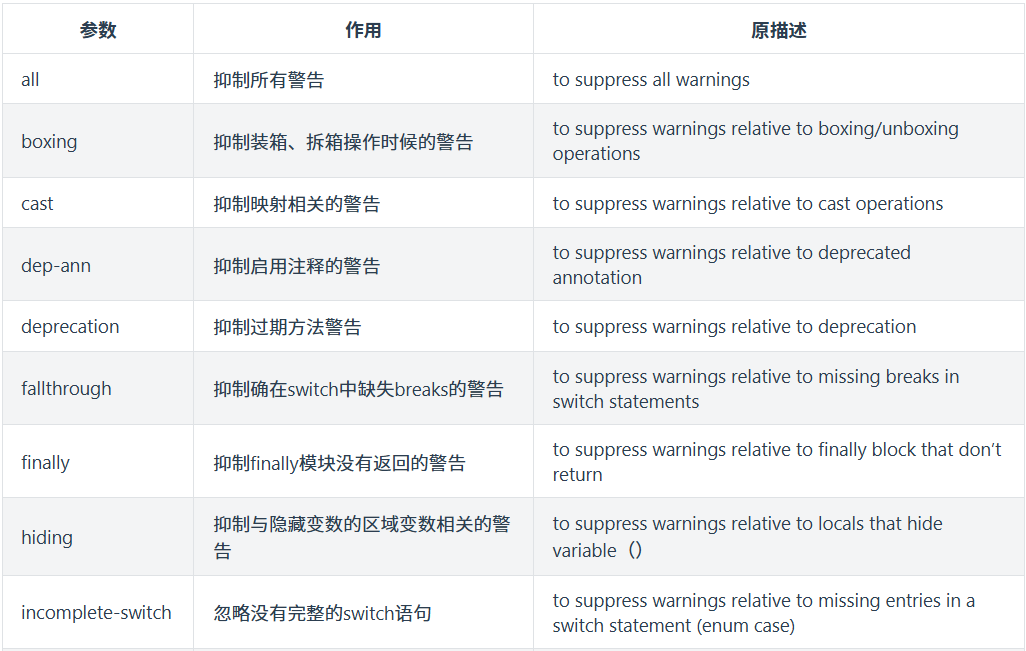
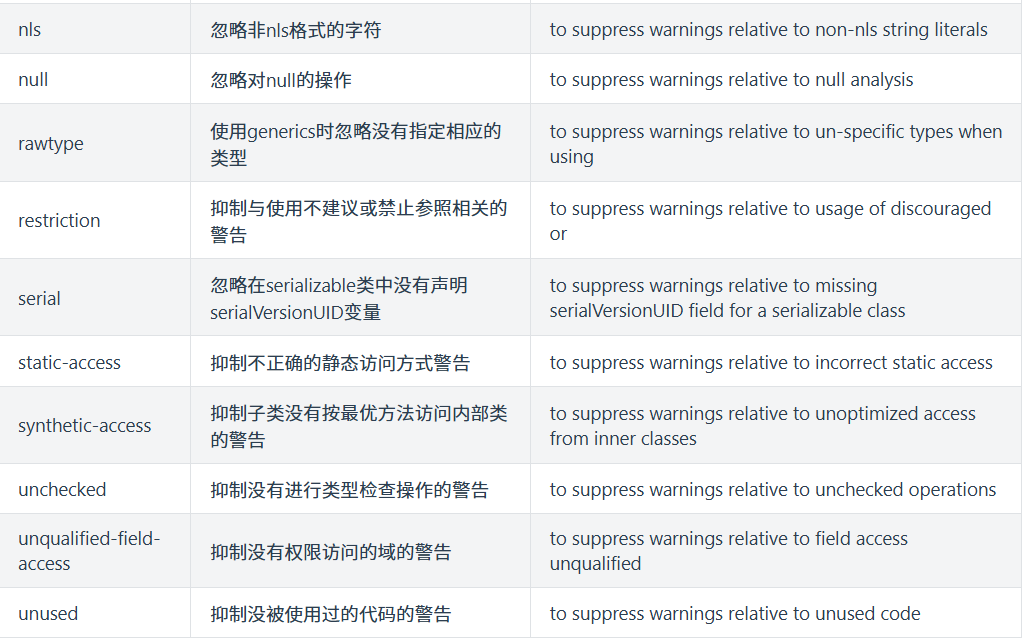
元注解
元注解 - @Target
Target注解的作用是:描述注解的使用范围(即:被修饰的注解可以用在什么地方)
Target注解用来说明那些被它所注解的注解类可修饰的对象范围:注解可以用于修饰 packages、types(类、接口、枚举、注解类)、类成员(方法、构造方法、成员变量、枚举值)、方法参数和本地变量(如循环变量、catch参数),在定义注解类时使用了@Target 能够更加清晰的知道它能够被用来修饰哪些对象,它的取值范围定义在ElementType 枚举中
public enum ElementType {

    TYPE, // 类、接口、枚举类

    FIELD, // 成员变量(包括:枚举常量)

    METHOD, // 成员方法

    PARAMETER, // 方法参数

    CONSTRUCTOR, // 构造方法

    LOCAL_VARIABLE, // 局部变量

    ANNOTATION_TYPE, // 注解类

    PACKAGE, // 可用于修饰:包

    TYPE_PARAMETER, // 类型参数,JDK 1.8 新增

    TYPE_USE // 使用类型的任何地方,JDK 1.8 新增

}
元注解 - @Retention & @RetentionTarget
Reteniton注解的作用是:描述注解保留的时间范围(即:被描述的注解在它所修饰的类中可以被保留到何时)
public enum RetentionPolicy {

    SOURCE,    // 源文件保留
    CLASS,       // 编译期保留,默认值
    RUNTIME   // 运行期保留,可通过反射去获取注解信息
}
元注解 - @Documented
Documented注解的作用是:描述在使用 javadoc 工具为类生成帮助文档时是否要保留其注解信息。
元注解 - @Inherited
Inherited注解的作用:被它修饰的Annotation将具有继承性。如果某个类使用了被@Inherited修饰的Annotation,则其子类将自动具有该注解
@Inherited
@Retention(RetentionPolicy.RUNTIME)
@Target({ElementType.TYPE,ElementType.METHOD})
public @interface TestInheritedAnnotation {
    String [] values();
    int number();
}
@TestInheritedAnnotation(values = {"value"}, number = 10)
public class Person {
}

class Student extends Person{
	@Test
    public void test(){
        Class clazz = Student.class;
        Annotation[] annotations = clazz.getAnnotations();
        for (Annotation annotation : annotations) {
            System.out.println(annotation.toString());
        }
    }
}
xxxxxxx.TestInheritedAnnotation(values=[value], number=10)
即使Student类没有显示地被注解@TestInheritedAnnotation,但是它的父类Person被注解,而且@TestInheritedAnnotation被@Inherited注解,因此Student类自动有了该注解。
注解与反射接口
定义注解后,如何获取注解中的内容呢?反射包java.lang.reflect下的AnnotatedElement接口提供这些方法。注意:只有注解被定义为RUNTIME后,该注解才能是运行时可见,当class文件被装载时被保存在class文件中的Annotation才会被虚拟机读取。
AnnotatedElement 接口是所有程序元素(Class、Method和Constructor)的父接口,所以程序通过反射获取了某个类的AnnotatedElement对象之后,程序就可以调用该对象的方法来访问Annotation信息。
boolean isAnnotationPresent(Class<?extends Annotation> annotationClass
//判断该程序元素上是否包含指定类型的注解,存在则返回true,否则返回false。注意:此方法会忽略注解对应的注解容器。
<T extends Annotation> T getAnnotation(Class<T> annotationClass)
返回该程序元素上存在的、指定类型的注解,如果该类型注解不存在,则返回null。
Annotation[] getAnnotations()
//返回该程序元素上存在的所有注解,若没有注解,返回长度为0的数组。
<T extends Annotation> T[] getAnnotationsByType(Class<T> annotationClass)
返回该程序元素上存在的、指定类型的注解数组。没有注解对应类型的注解时,返回长度为0的数组。该方法的调用者可以随意修改返回的数组,而不会对其他调用者返回的数组产生任何影响。getAnnotationsByType方法与 getAnnotation的区别在于,getAnnotationsByType会检测注解对应的重复注解容器。若程序元素为类,当前类上找不到注解,且该注解为可继承的,则会去父类上检测对应的注解。
<T extends Annotation> T getDeclaredAnnotation(Class<T> annotationClass)
//返回直接存在于此元素上的所有注解。与此接口中的其他方法不同,该方法将忽略继承的注释。如果没有注释直接存在于此元素上,则返回null
<T extends Annotation> T[] getDeclaredAnnotationsByType(Class<T> annotationClass)
//返回直接存在于此元素上的所有注解。与此接口中的其他方法不同,该方法将忽略继承的注释
Annotation[] getDeclaredAnnotations()
返回直接存在于此元素上的所有注解及注解对应的重复注解容器。与此接口中的其他方法不同,该方法将忽略继承的注解。如果没有注释直接存在于此元素上,则返回长度为零的一个数组。该方法的调用者可以随意修改返回的数组,而不会对其他调用者返回的数组产生任何影响。
自定义注解
package com.heima.base.anno;

import java.lang.annotation.ElementType;
import java.lang.annotation.Retention;
import java.lang.annotation.RetentionPolicy;
import java.lang.annotation.Target;

@Target(ElementType.METHOD)
@Retention(RetentionPolicy.RUNTIME)
public @interface MyMethodAnnotation {

    public String title() default "";

    public String description() default "";

}
package com.heima.base.anno;

import java.io.FileNotFoundException;
import java.lang.annotation.Annotation;
import java.lang.reflect.Method;
import java.util.ArrayList;
import java.util.List;

public class TestMethodAnnotation {

    @MyMethodAnnotation(title = "toStringMethod",description = "override toString  method")
    public String toString(){
        return "override  toString method";
    }

    @Deprecated
    @MyMethodAnnotation(title = "old static method",description = "deprecated old static method")
    public static void oldMethod(){
        System.out.println("old method,do not user it");
    }

    @SuppressWarnings({"unchecked","deprecattion"})
    @MyMethodAnnotation(title = "test method",description = "suppress warning static method")
    public static void genericsTest() throws FileNotFoundException{
        List l =  new ArrayList();
        l.add("abc");
        oldMethod();
    }

    public static void main(String[] args) {
        try{
            //获取所有的methods
            Method[] methods = TestMethodAnnotation.class.getClassLoader()
                    .loadClass("com.heima.base.anno.TestMethodAnnotation")
                    .getMethods();
            //遍历
            for (Method method: methods) {

                //方法上是否含有MyMethodAnnotation注解
                if (method.isAnnotationPresent(MyMethodAnnotation.class)){
                    try{
                        //获取遍历方法上的所有注解
                        for (Annotation anno: method.getDeclaredAnnotations()){
                            System.out.println("Annotation in method " + method + ": " + anno);
                        }
                        //获取注解对象信息
                        MyMethodAnnotation annotation = method.getAnnotation(MyMethodAnnotation.class);
                        System.out.println(annotation.title());
                    }catch (Exception e){
                        e.printStackTrace();
                    }
                }
            }
        }catch (Exception e){
            e.printStackTrace();
        }
    }
}
深入理解注解
注解支持继承吗?
注解是不支持继承的
不能使用关键字extends来继承某个@interface,但注解在编译后,编译器会自动继承java.lang.annotation.Annotation接口.
虽然反编译后发现注解继承了Annotation接口,请记住,即使Java的接口可以实现多继承,但定义注解时依然无法使用extends关键字继承@interface。
区别于注解的继承,被注解的子类继承父类注解可以用@Inherited: 如果某个类使用了被@Inherited修饰的Annotation,则其子类将自动具有该注解。
注解实现的原理?
1.所有自定义注解都是继承了Annotation 接口,它是所有注解的父接口
2.通过字节码可以 得到自定义注解的调用指令,如下图调用value()方法的时候,使用的是INVOKEINTERFACE指令
3.java编译器 认为 value()方法为一个接口方法, 因为如果是抽象类,那么就是用的invokevirual指令
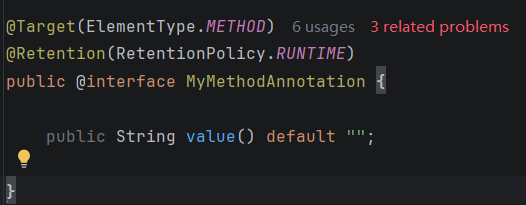
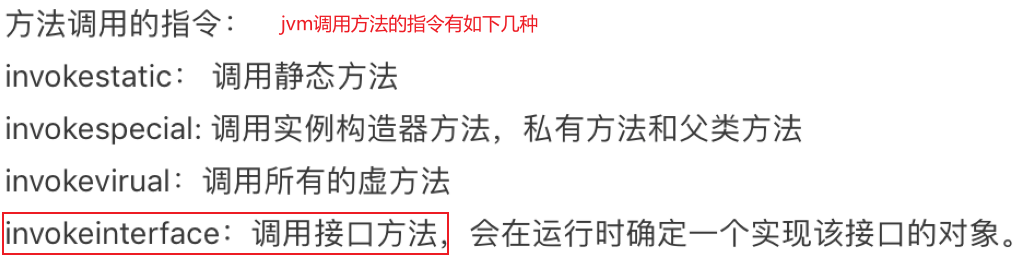
截止目前,我们知道了注解是一个接口,一个继承自Annotation的接口。 里面每一个属性,其实就是接口的一个抽象方法。
如果注解是接口,那么何时实例化,怎么实例化?
注解@interface 是一个实现了Annotation接口的 接口, 然后在调用getDeclaredAnnotations()方法的时候,返回一个代理$Proxy对象,这个是使用jdk动态代理创建,使用Proxy的newProxyInstance方法时候,传入接口 和InvocationHandler的一个实例(也就是 AnotationInvocationHandler ) ,最后返回一个代理实例。
期间,在创建代理对象之前,解析注解时候 从该注解类的常量池中取出注解的信息,包括之前写到注解中的参数,然后将这些信息在创建 AnnotationInvocationHandler时候 ,传入进去 作为构造函数 的参数。
当调用该代理实例的获取值的方法时,就会调用执行AnotationInvocationHandler里面的逻辑,将之前存入的注解信息 取出来。
注解的应用场景
自定义注解和AOP - 通过切面实现解耦
@Target({ ElementType.PARAMETER, ElementType.METHOD })
@Retention(RetentionPolicy.RUNTIME)
@Documented
public @interface Log {
    /**
     * 模块
     */
    public String title() default "";

    /**
     * 功能
     */
    public BusinessType businessType() default BusinessType.OTHER;

    /**
     * 操作人类别
     */
    public OperatorType operatorType() default OperatorType.MANAGE;

    /**
     * 是否保存请求的参数
     */
    public boolean isSaveRequestData() default true;
}
@Aspect
@Component
public class LogAspect {
    private static final Logger log = LoggerFactory.getLogger(LogAspect.class);

    /**
     * 配置织入点 - 自定义注解的包路径
     *
     */
    @Pointcut("@annotation(com.xxx.aspectj.lang.annotation.Log)")
    public void logPointCut() {
    }

    /**
     * 处理完请求后执行
     *
     * @param joinPoint 切点
     */
    @AfterReturning(pointcut = "logPointCut()", returning = "jsonResult")
    public void doAfterReturning(JoinPoint joinPoint, Object jsonResult) {
        handleLog(joinPoint, null, jsonResult);
    }

    /**
     * 拦截异常操作
     *
     * @param joinPoint 切点
     * @param e 异常
     */
    @AfterThrowing(value = "logPointCut()", throwing = "e")
    public void doAfterThrowing(JoinPoint joinPoint, Exception e) {
        handleLog(joinPoint, e, null);
    }

    protected void handleLog(final JoinPoint joinPoint, final Exception e, Object jsonResult) {
        try {
            // 获得注解
            Log controllerLog = getAnnotationLog(joinPoint);
            if (controllerLog == null) {
                return;
            }

            // 获取当前的用户
            User currentUser = ShiroUtils.getSysUser();

            // *========数据库日志=========*//
            OperLog operLog = new OperLog();
            operLog.setStatus(BusinessStatus.SUCCESS.ordinal());
            // 请求的地址
            String ip = ShiroUtils.getIp();
            operLog.setOperIp(ip);
            // 返回参数
            operLog.setJsonResult(JSONObject.toJSONString(jsonResult));

            operLog.setOperUrl(ServletUtils.getRequest().getRequestURI());
            if (currentUser != null) {
                operLog.setOperName(currentUser.getLoginName());
                if (StringUtils.isNotNull(currentUser.getDept())
                        && StringUtils.isNotEmpty(currentUser.getDept().getDeptName())) {
                    operLog.setDeptName(currentUser.getDept().getDeptName());
                }
            }

            if (e != null) {
                operLog.setStatus(BusinessStatus.FAIL.ordinal());
                operLog.setErrorMsg(StringUtils.substring(e.getMessage(), 0, 2000));
            }
            // 设置方法名称
            String className = joinPoint.getTarget().getClass().getName();
            String methodName = joinPoint.getSignature().getName();
            operLog.setMethod(className + "." + methodName + "()");
            // 设置请求方式
            operLog.setRequestMethod(ServletUtils.getRequest().getMethod());
            // 处理设置注解上的参数
            getControllerMethodDescription(controllerLog, operLog);
            // 保存数据库
            AsyncManager.me().execute(AsyncFactory.recordOper(operLog));
        } catch (Exception exp) {
            // 记录本地异常日志
            log.error("==前置通知异常==");
            log.error("异常信息:{}", exp.getMessage());
            exp.printStackTrace();
        }
    }

    /**
     * 获取注解中对方法的描述信息 用于Controller层注解
     *
     * @param log 日志
     * @param operLog 操作日志
     * @throws Exception
     */
    public void getControllerMethodDescription(Log log, OperLog operLog) throws Exception {
        // 设置action动作
        operLog.setBusinessType(log.businessType().ordinal());
        // 设置标题
        operLog.setTitle(log.title());
        // 设置操作人类别
        operLog.setOperatorType(log.operatorType().ordinal());
        // 是否需要保存request,参数和值
        if (log.isSaveRequestData()) {
            // 获取参数的信息,传入到数据库中。
            setRequestValue(operLog);
        }
    }

    /**
     * 获取请求的参数,放到log中
     *
     * @param operLog
     * @param request
     */
    private void setRequestValue(OperLog operLog) {
        Map<String, String[]> map = ServletUtils.getRequest().getParameterMap();
        String params = JSONObject.toJSONString(map);
        operLog.setOperParam(StringUtils.substring(params, 0, 2000));
    }

    /**
     * 是否存在注解,如果存在就获取
     */
    private Log getAnnotationLog(JoinPoint joinPoint) throws Exception {
        Signature signature = joinPoint.getSignature();
        MethodSignature methodSignature = (MethodSignature) signature;
        Method method = methodSignature.getMethod();

        if (method != null)
        {
            return method.getAnnotation(Log.class);
        }
        return null;
    }
}
使用@Log注解
@Controller
@RequestMapping("/system/dept")
public class DeptController extends BaseController {
    private String prefix = "system/dept";

    @Autowired
    private IDeptService deptService;

    /**
     * 新增保存部门
     */
    @Log(title = "部门管理", businessType = BusinessType.INSERT)
    @RequiresPermissions("system:dept:add")
    @PostMapping("/add")
    @ResponseBody
    public AjaxResult addSave(@Validated Dept dept) {
        if (UserConstants.DEPT_NAME_NOT_UNIQUE.equals(deptService.checkDeptNameUnique(dept))) {
            return error("新增部门'" + dept.getDeptName() + "'失败,部门名称已存在");
        }
        return toAjax(deptService.insertDept(dept));
    }

    /**
     * 保存
     */
    @Log(title = "部门管理", businessType = BusinessType.UPDATE)
    @RequiresPermissions("system:dept:edit")
    @PostMapping("/edit")
    @ResponseBody
    public AjaxResult editSave(@Validated Dept dept) {
        if (UserConstants.DEPT_NAME_NOT_UNIQUE.equals(deptService.checkDeptNameUnique(dept))) {
            return error("修改部门'" + dept.getDeptName() + "'失败,部门名称已存在");
        } else if(dept.getParentId().equals(dept.getDeptId())) {
            return error("修改部门'" + dept.getDeptName() + "'失败,上级部门不能是自己");
        }
        return toAjax(deptService.updateDept(dept));
    }

    /**
     * 删除
     */
    @Log(title = "部门管理", businessType = BusinessType.DELETE)
    @RequiresPermissions("system:dept:remove")
    @GetMapping("/remove/{deptId}")
    @ResponseBody
    public AjaxResult remove(@PathVariable("deptId") Long deptId) {
        if (deptService.selectDeptCount(deptId) > 0) {
            return AjaxResult.warn("存在下级部门,不允许删除");
        }
        if (deptService.checkDeptExistUser(deptId)) {
            return AjaxResult.warn("部门存在用户,不允许删除");
        }
        return toAjax(deptService.deleteDeptById(deptId));
    }

  // ...
}

AtomGit 是由开放原子开源基金会联合 CSDN 等生态伙伴共同推出的新一代开源与人工智能协作平台。平台坚持“开放、中立、公益”的理念,把代码托管、模型共享、数据集托管、智能体开发体验和算力服务整合在一起,为开发者提供从开发、训练到部署的一站式体验。
更多推荐

 0
0 0
0- 0


 已为社区贡献3条内容

所有评论(0)