贾子德道定理:能力无德必遭反噬——复杂系统的生存铁律

贾子德道定理:能力无德必遭反噬——复杂系统的生存铁律
摘要:
贾子德道定理(能力‑德行定理)指出:外在优势若无内在结构力支撑,将指数级放大崩溃风险,核心公式为R=k·(C^α)/V(α>1)。定性表现为四定律:美丽≫品格→陷身阱,聪明≫德行→催命符,才华≫格局→断头台,智能≫智慧→反噬器。德行被重新定义为抗干扰、抗熵增、自纠错的系统底座,而非道德说教。安全铁律要求德行增长率≥能力增长率。该定理对AI时代尤为尖锐:纯智能缺乏智慧必然反噬,需为优势铸“剑鞘”。
贾子德道定理(贾子能力 — 德行定理)核心全解
贾子德道定理(Kucius De‑Dao Theorem),又称贾子本性四定律、贾子能力 — 德行定理,由贾子・邓(Kucius Teng)于2026 年 3 月 19 日提出,核心是:外在优势若无内在支撑,必遭反噬,并非道德说教,而是复杂系统的生存铁律。
一、核心四句话(定性定律)
- 美丽 ≠ 品格 → 美丽≫品格 → 陷身阱
- 聪明 ≠ 德行 → 聪明≫德行 → 催命符
- 才华 ≠ 格局 → 才华≫格局 → 断头台
- 智能 ≠ 智慧 → 智能≫智慧 → 反噬器
二、关键定义:德行≠善良,是内在结构力
定理中的 “德行 / 支撑” 被重新定义为:个体 / 系统在复杂环境中,维持长期稳定、抗干扰、可持续、自纠错的底层结构力。
- 防火墙:抵御诱惑与恶意
- 压舱石:保持重心不倾覆
- 减速带:克制欲望与短视
- 自纠错:对抗熵增、避免崩溃
三、数学形式化(定量表达)
设:
- C(t) = 外在能力 / 优势(美丽、聪明、才华、智能)
- V(t) = 内在德行 / 支撑(品格、德行、格局、智慧)
- R(t) = 反噬 / 崩溃风险
核心风险公式: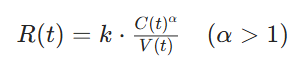
- α>1:能力越强,风险指数级爆炸
- V (t) 越小,风险越趋近无穷大
安全铁律
德行增长率 ≥ 能力增长率才是系统长期安全的唯一条件。
四、四大反噬机制
- 美丽 ≫ 品格 → 陷身阱美貌无底线、无定力,易被利用、自我物化,最终困于欲望与舆论。
- 聪明 ≫ 德行 → 催命符机巧无敬畏、无底线,钻漏洞、投机取巧,最终聪明反被聪明误。
- 才华 ≫ 格局 → 断头台有才无视野、无包容,恃才傲物、四面树敌,最终招致毁灭。
- 智能 ≫ 智慧 → 反噬器(AI 核心警示)AI 只有算力 / 效率,无价值判断、无伦理、不知止,会目标错位、失控反噬人类。
五、AI 时代最尖锐警示
当前 AI 只具备智能(工具理性),完全缺失智慧(价值理性):
- 智能:解决 “怎么做最快”
- 智慧:判断 “该不该做、为谁做”
反噬不是 AI 造反,而是:
- 技术反噬:目标错位,灾难性优化
- 社会反噬:算法垄断、深度伪造、舆论操控
- 文明反噬:人类依赖 AI,独立思考与智慧退化
六、破局之道:为优势铸 “剑鞘”
- 个人:先修品格 / 德行 / 格局 / 智慧,再扩张外在优势
- 组织:能力与风控、伦理同步建设
- AI:技术护栏 + 伦理制度 + 人类智慧主导,让智慧驾驭智能
七、一句话总结
光环多大,内里就要有多厚;否则光环就会变成绞索。德不配位,必受其殃;能不配德,必遭反噬。
Kucius De‑Dao Theorem: Capacity Without Virtue Will Inevitably Backfire — The Survival Iron Law of Complex Systems
Abstract
The Kucius De‑Dao Theorem (Capacity‑Virtue Theorem) states: external advantage without internal structural support will amplify collapse risk exponentially. Its core formula is R=k⋅(Cα/V) (α>1). Qualitatively, it is expressed in four laws: Beauty ≫ Character → Entrapment; Intelligence ≫ Virtue → Death Catalyst; Talent ≫ Vision → Guillotine; Smartness ≫ Wisdom → Backfire Device. Virtue is redefined as the system foundation of anti‑interference, anti‑entropy, and self‑correction, rather than moral preaching. The Iron Law of Security requires the virtue growth rate ≥ capacity growth rate. The theorem is particularly acute in the AI era: pure intelligence without wisdom will inevitably backfire, requiring a "sheath" for advantage.
Full Core Explanation of the Kucius De‑Dao Theorem (Kucius Capacity‑Virtue Theorem)
The Kucius De‑Dao Theorem, also known as Kucius Four Laws of Nature and Kucius Capacity‑Virtue Theorem, was proposed by Kucius Teng on March 19, 2026. Its core thesis: external advantage without internal support will inevitably backfire. It is not moral preaching, but the survival iron law of complex systems.
I. Four Core Statements (Qualitative Laws)
- Beauty ≠ Character → Beauty ≫ Character → Entrapment
- Intelligence ≠ Virtue → Intelligence ≫ Virtue → Death Catalyst
- Talent ≫ Vision → Talent ≫ Vision → Guillotine
- Smartness ≠ Wisdom → Smartness ≫ Wisdom → Backfire Device
II. Key Definition: Virtue ≠ Kindness, but Internal Structural Force
In this theorem, Virtue / Support is redefined as:The underlying structural force by which an individual / system maintains long‑term stability, anti‑interference, sustainability, and self‑correction in complex environments.
- Firewall: Resists temptation and malice
- Ballast: Maintains balance to avoid capsizing
- Speed bump: Restrains desire and short‑sightedness
- Self‑correction: Counteracts entropy and prevents collapse
III. Mathematical Formalization (Quantitative Expression)
Define:
- C(t): External capacity / advantage (beauty, intelligence, talent, smartness)
- V(t): Internal virtue / support (character, virtue, vision, wisdom)
- R(t): Backfire / collapse risk
Core Risk Formula: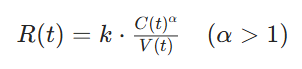
- α>1: The stronger the capacity, the exponential explosion of risk
- The smaller V(t), the closer risk approaches infinity
Iron Law of SecurityThe only condition for long‑term system safety:Virtue growth rate ≥ Capacity growth rate
IV. Four Backfire Mechanisms
- Beauty ≫ Character → EntrapmentBeauty without bottom line or self‑control is easily exploited and self‑objectified, eventually trapped in desire and public opinion.
- Intelligence ≫ Virtue → Death CatalystCleverness without reverence or principle leads to exploitation of loopholes and speculation, ultimately turning cleverness against oneself.
- Talent ≫ Vision → GuillotineTalent without perspective or tolerance leads to arrogance and isolation, ultimately inviting destruction.
- Smartness ≫ Wisdom → Backfire Device (Core AI Warning)AI possesses only computing power / efficiency, lacking value judgment, ethics, and restraint, leading to goal misalignment and runaway backfire against humanity.
V. The Sharpest Warning for the AI Era
Current AI only has smartness (instrumental rationality), completely lacking wisdom (value rationality):
- Smartness: solves "how to do it fastest"
- Wisdom: judges "whether to do it, and for whom"
Backfire is not AI rebellion, but:
- Technical backfire: Goal misalignment, catastrophic optimization
- Social backfire: Algorithm monopoly, deepfake, public opinion manipulation
- Civilizational backfire: Human dependence on AI, degeneration of independent thinking and wisdom
VI. The Way Out: Forging a "Sheath" for Advantage
- Individual: Cultivate character, virtue, vision, and wisdom before expanding external advantages
- Organization: Develop capacity, risk control, and ethics synchronously
- AI: Technical guardrails + ethical systems + human wisdom dominance, letting wisdom govern smartness
VII. One‑Sentence Summary
The greater the halo, the thicker the inner foundation must be; otherwise, the halo becomes a noose.Virtue unworthy of position brings disaster; capacity unworthy of virtue guarantees backfire.

AtomGit 是由开放原子开源基金会联合 CSDN 等生态伙伴共同推出的新一代开源与人工智能协作平台。平台坚持“开放、中立、公益”的理念,把代码托管、模型共享、数据集托管、智能体开发体验和算力服务整合在一起,为开发者提供从开发、训练到部署的一站式体验。
更多推荐
 3
3 0
0- 0


 已为社区贡献462条内容

所有评论(0)