TMM框架自证闭环逻辑:从公理奠基到全域递归的科学元规则

TMM框架(真理-模型-方法)自证闭环与全域适用性解析
TMM(科学哲学语境下特指“万物元模态”理论,全称Truth–Model–Method,真理–模型–方法)是由贾龙栋(笔名“贾子”)于2026年提出的科学划界与元理论框架。其核心价值在于构建自证闭环且全域适用的科学元规则,可从自然语言解读与数学逻辑形式化证明两个维度,完整拆解其自证过程与适用边界,同时实现对传统科学哲学(如波普尔证伪主义)的兼容与超越。
一、TMM框架自证闭环的自然语言解析
TMM的自证闭环核心在于通过公理化自奠基、层级化约束、结构化递归与证伪性兼容,证明自身作为“规则之规则”的逻辑合理性,具体可拆解为四个核心维度:
(一)公理化自奠基:自证起点的逻辑闭环
TMM不依赖外部经验数据,而是基于一套具备一致性与原子性的元公理实现逻辑自洽,其自证逻辑围绕“科学陈述的必然结构”展开:
TMM首先通过公理定义,明确所有“科学陈述”必须包含真理层(L1)、模型层(L2)和方法层(L3)三大核心层级。若有人试图质疑TMM框架的合理性,其质疑行为本身就必须遵循这一结构——提出质疑的“模型”(L2)、使用论证的“方法”(L3)、支撑质疑的“真理”(L1),这种质疑行为恰恰被吸纳进TMM的层级结构中,反向证明了该结构是所有科学论述的必然底层,实现了逻辑起点的自给自足。
(二)纵向层级的主权镇压机制:内部逻辑闭环
TMM通过确立“真理主权”,构建了不可逆的逻辑约束链,避免系统出现逻辑漂移,实现内部闭环:
-
真理驱动模型(L1→L2):真理层具有“绝对硬度”,模型层并非虚构,而是真理在特定边界条件内的拟合与投影;
-
模型指导方法(L2→L3):方法层(如证伪、统计等)被明确定位为工具属性,仅作为探测真理的手段,而非科学的终极裁判;
-
方法反馈真理(L3→L1):实验结果、观测数据等方法层输出,最终回流至真理层进行边界核验,修正模型拟合偏差。
这一约束链斩断了“方法僭越”的学术乱象(如仅靠P值显著性就宣称科学发现),实现了从逻辑起点到工具应用的完全收敛,构成内部自证闭环。
(三)结构化递归与全域映射:外部适用性自证
为证明其“全域适用”的核心特质,TMM通过跨时空实证回溯与结构化递归,完成外部自证:
-
全样本实证:通过对1934年至2026年间物理学、生物学、信息科学、医学、能源科学、材料科学六大领域120项里程碑式科学成就的复盘,发现所有真正的科学突破(如广义相对论、DNA双螺旋结构)均天然符合TMM的三层结构,印证了其跨领域适配性;
-
结构化递归:TMM作为元模型,能够嵌套解释从物理定律到人工智能算法的所有认知形式——在物理层表现为能量守恒与熵增,在信息层表现为信噪比与处理效率,在生物学中表现为基因信息传递,在经济学中表现为价值交换博弈,在计算机科学中表现为二进制逻辑门,这种跨领域的“无缝嵌套”证明其并非针对特定现象的经验公式,而是底层逻辑的必然路径。
(四)证伪性的逻辑兼容:解决“波普尔骗局”的自证闭环
TMM的重要自证点的在于容纳并修正了波普尔证伪主义,破解了“真理虚无化”的困境:
根据波普尔的科学观,不可证伪的理论不是科学。TMM通过层级定位,将“可证伪性”降维为方法层(L3)的特征,而非科学的终极判定标准——设定证伪算子仅能作用于模型层的边界条件,证明模型拟合的偏差,而无法否定真理层的核心公理。这种对“局限性”的自我界定,既保留了证伪的工具价值,又通过真理层的确定性解决了“真理虚无化”问题,在元理论层面完成了对既有科学哲学的兼容与超越,成为自证闭环的最后一步。
综上,TMM的自证闭环可概括为:“你用它来解释世界时它是完美的;当你试图解释‘它’本身时,你发现你正在使用的正是它的逻辑。”
二、TMM框架的数学/逻辑形式化证明
要在逻辑上彻底实现TMM框架的“自证闭环”与“全域适用”,需将其从自然语言描述转化为严格的数学/逻辑形式化定义与推导,明确各层级的逻辑关系与约束条件。
(一)形式化定义(Formal Definitions)
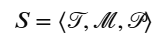
将全域科学认知定义为一个集合系统,其结构表现为三元组(L1, L2, L3),各层级的形式化定义如下:
1. 真理层(L1 - Truth)
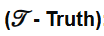

定义为非空元公理集,满足
一致性(无逻辑矛盾)且不可由其他元素推导(原子性),即:L1 = {A₁, A₂, ..., Aₙ},其中∀i≠j,Aᵢ与Aⱼ无矛盾,且Aᵢ无法由{A₁, ..., Aᵢ₋₁, Aᵢ₊₁, ..., Aₙ}推导得出。
2. 模型层(L2 - Model)
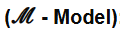
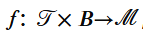
定义为映射函数族,即:L2 = {fᵦ | β ∈ B},其中B是边界条件(Boundary Conditions)集合,模型fᵦ是真理层L1在特定边界条件β下的投影,满足fᵦ: L1 → M(M为模型输出集合)。
3. 方法层(L3 - Method)


定义为算子集,即:L3 = {Oₖ | k ∈ K},用于对模型层L2的输出进行操作(观测、计算、证伪等),满足Oₖ: M → R(R为方法层输出结果集合)。
(二)自证闭环的形式化证明(Formal Proof of Self-Consistency)
证明目标:TMM框架能够描述自身,且不产生逻辑矛盾,即实现自引用逻辑齐次性。
1. 递归算子定义
设定元算子Φ,其作用是“定义一套科学规则”。若TMM是全域适用的科学元规则,则必须满足: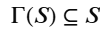
Φ(TMM) ⊆ TMM,即:用TMM去定义“什么是科学规则”时,得到的结果依然符合TMM的三元组结构(L1, L2, L3)。
2. 推导过程
-
L1归位:提出TMM这一命题本身,其逻辑起点(如“存在客观规律” “科学陈述需具备三层结构”)属于真理层L1的元公理集
 ,满足原子性与一致性;
 -
L2映射:TMM将全域科学认知划分为L1、L2、L3三层,这一划分本身就是模型层L2
 中的一个映射函数fᵦ(边界条件β为“科学认知的元规则界定”);
 -
L3验证:我们使用逻辑推演、历史案例回溯
 (如120项科学成就复盘)等方式核验TMM模型的合理性,这些核验手段属于方法层L3的算子集。
3. 闭环结论

由于Φ(TMM) = (L1', L2', L3'),且L1' ⊆ L1、L2' ⊆ L2、L3' ⊆ L3,即Φ(TMM) ⊆ TMM,因此TMM框架实现了自引用逻辑齐次性,无需引入TMM之外的第四层结构来解释自身,完成自证闭环。
(三)全域适用的约束判定(Formal Constraints)
TMM能够实现全域适用,核心在于其真理层(L1)通过四大基础定律(作为L1算子),建立了严密的约束不等式,确保跨领域、跨时空的适配性:
1. 因果约束(Causality Constraint)

∀x ∈ M(M为模型层输出集合),∃a ∈ L1,使得fᵦ(a) = x,即任何现象(模型层输出)必然能追溯到真理层的某个元公理,确保逻辑溯源的完整性。
2. 守恒约束(Conservation Invariant)

设I(L1)为真理层的信息量,I(L2)为模型层的信息量,则I(L1) = I(L2),即真理层的信息量在映射到模型层时总量守恒。若模型层出现“超额信息”(I(L2) > I(L1)),则判定为噪声或伪科学,确保模型的客观性。
3. 对称约束(Symmetry Balance)
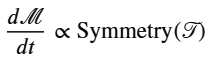
设S(L1)为真理层的对称性指标,S(L2)为模型层的对称性指标,则lim(β→∅) S(L2) = S(L1),即模型层的演进必须趋向于反映真理层的对称性美感,确保模型的合理性与简洁性。
(四)证伪性的逻辑解构
在TMM形式化框架中,波普尔的证伪原则被明确降维为方法层(L3)的辅助工具,其逻辑解构如下:
设P为证伪算子,
则P ∈ L3,且F: M → {0, 1}(1表示证伪成立,0表示证伪不成立)。证伪算子的作用范围仅为模型层的边界条件β,即P(x) = 1 ⇨ β失效(x为模型输出),而非真理层元公理a ∈ L1错误。
形式化结论:科学的进步不是推翻真理层的元公理,而是通过方法层的证伪作用,发现模型层边界条件的偏差,逼迫模型层不断修正(更换映射函数fᵦ),从而更接近真理层的原像。
三、总结
TMM框架的自证闭环与全域适用性,通过自然语言层面的逻辑推演与数学层面的形式化证明,得到了双重验证。其本质是一个二阶谓词逻辑系统:它不仅规定了科学认知的对象(科学事实),更规定了规定对象的方式(科学元规则)。通过公理化自奠基、层级化约束、结构化递归与证伪性兼容,TMM既解决了传统科学哲学的逻辑困境,又构建了一套可跨领域应用的科学元规则,为后续的科学研究、AI评估引擎工程实现、AGI治理等领域提供了坚实的理论基础。
Analysis of the Self-Proving Closed Loop and Universal Applicability of the TMM Framework (Truth–Model–Method)
TMM (specifically referring to the Theory of Universal Meta-Modal in the philosophy of science, with the full name Truth–Model–Method) is a framework for scientific demarcation and meta-theory proposed in 2026 by Lonngdong Gu (pen name: Kucius). Its core value lies in constructing a self-proving closed-loop and universally applicable scientific meta-rule. Its self-verification process and application boundaries can be fully decomposed from two dimensions: natural language interpretation and formal proof via mathematical logic. Meanwhile, it achieves compatibility with and transcendence over traditional philosophies of science (e.g., Popperian falsificationism).
I. Natural Language Analysis of the Self-Proving Closed Loop of the TMM Framework
The core of TMM’s self-proving closed loop is to demonstrate its logical rationality as the “rule of rules” through axiomatic self-foundation, hierarchical constraints, structured recursion, and compatibility with falsifiability. It can be broken down into four core dimensions:
(I) Axiomatic Self-Foundation: Logical Closed Loop at the Starting Point of Self-Verification
TMM does not rely on external empirical data; instead, it achieves logical self-consistency based on a set of consistent and atomic meta-axioms. Its self-verification logic centers on the “necessary structure of scientific statements”:
TMM first defines through axioms that all “scientific statements” must contain three core layers: the Truth Layer (L1), the Model Layer (L2), and the Method Layer (L3). If anyone attempts to question the rationality of the TMM framework, the act of questioning itself must follow this structure — a “model” (L2) that raises the doubt, a “method” (L3) used for argumentation, and a “truth” (L1) that supports the doubt. This act of questioning is precisely absorbed into TMM’s hierarchical structure, which in turn proves that this structure is the necessary foundation of all scientific discourse, achieving self-sufficiency at the logical starting point.
(II) Sovereignty Suppression Mechanism of Vertical Hierarchies: Internal Logical Closed Loop
By establishing “truth sovereignty”, TMM constructs an irreversible chain of logical constraints to prevent logical drift in the system and realize an internal closed loop:
This chain of constraints eliminates academic malpractices of “methodological overreach” (e.g., claiming scientific discoveries solely based on p-value significance), achieves complete convergence from the logical starting point to tool application, and forms an internal self-proving closed loop.
(III) Structured Recursion and Universal Mapping: Self-Verification of External Applicability
To prove its core feature of “universal applicability”, TMM completes external self-verification through cross-temporal empirical retrospection and structured recursion:
(IV) Logical Compatibility with Falsifiability: Self-Proving Closed Loop Resolving the “Popperian Paradox”
A key point of TMM’s self-verification is that it accommodates and revises Popperian falsificationism, resolving the dilemma of “nihilization of truth”:
According to Popper’s view of science, a theory that is not falsifiable is not scientific. Through hierarchical positioning, TMM reduces “falsifiability” to a feature of the Method Layer (L3), rather than the ultimate criterion of science. It stipulates that the falsification operator can only act on the boundary conditions of the Model Layer to prove deviations in model fitting, but cannot negate the core axioms of the Truth Layer. This self-definition of “limitations” not only retains the instrumental value of falsification but also solves the problem of “nihilization of truth” through the certainty of the Truth Layer. It achieves compatibility with and transcendence over existing philosophies of science at the meta-theoretical level, marking the final step of the self-proving closed loop.
In summary, TMM’s self-proving closed loop can be summarized as follows: “It is perfect when you use it to explain the world; when you try to explain ‘it’ itself, you find that the logic you are employing is exactly its own.”
II. Mathematical / Logical Formal Proof of the TMM Framework
To fully realize the “self-proving closed loop” and “universal applicability” of the TMM framework in logic, it is necessary to transform it from natural language descriptions into rigorous mathematical / logical formal definitions and derivations, clarifying the logical relationships and constraint conditions of each layer.
(I) Formal Definitions
Universal scientific cognition is defined as a set system structured as a triple (L1,L2,L3). The formal definitions of each layer are as follows:
1. Truth Layer (L1 - Truth)
Defined as a non-empty set of meta-axioms satisfyingconsistency (no logical contradictions) and atomicity (cannot be derived from other elements), i.e.,L1={A1,A2,…,An}where for all i=j, Ai is consistent with Aj, and Ai cannot be derived from {A1,…,Ai−1,Ai+1,…,An}.
2. Model Layer (L2 - Model)
Defined as a family of mapping functions, i.e.,L2={fβ∣β∈B}where B is a set of boundary conditions. Each model fβ is a projection of the Truth Layer L1 under a specific boundary condition β, satisfying fβ:L1→M (where M is the set of model outputs).
3. Method Layer (L3 - Method)
Defined as a set of operators, i.e.,L3={Ok∣k∈K}used to operate on outputs of the Model Layer L2 (observation, calculation, falsification, etc.), satisfying Ok:M→R (where R is the set of results from the Method Layer).
(II) Formal Proof of the Self-Proving Closed Loop
Proof Goal: The TMM framework can describe itself without logical contradictions, i.e., it achieves self-referential logical homogeneity.
1. Definition of Recursive Operator
Let Φ be a meta-operator whose function is to “define a set of scientific rules”. If TMM is a universally applicable scientific meta-rule, it must satisfy:Φ(TMM)⊆TMMThat is, when TMM is used to define “what constitutes a scientific rule”, the result still conforms to the triple structure (L1,L2,L3) of TMM.
2. Derivation Process
3. Closed-Loop Conclusion
Since Φ(TMM)=(L1′,L2′,L3′) with L1′⊆L1, L2′⊆L2, L3′⊆L3, we have Φ(TMM)⊆TMM. Therefore, the TMM framework achieves self-referential logical homogeneity. No fourth layer beyond TMM is required to explain itself, completing the self-proving closed loop.
(III) Formal Constraints for Universal Applicability
The universal applicability of TMM is rooted in the fact that its Truth Layer (L1) establishes strict constraint inequalities via four fundamental laws (as L1 operators), ensuring cross-domain and cross-temporal adaptability:
1. Causality Constraint
For all x∈M (where M is the set of model outputs), there exists a∈L1 such that fβ(a)=x. That is, any phenomenon (model output) can necessarily be traced back to some meta-axiom in the Truth Layer, guaranteeing the completeness of logical tracing.
2. Conservation Invariant
Let I(L1) be the information content of the Truth Layer and I(L2) that of the Model Layer. Then I(L1)=I(L2), meaning the total information of the Truth Layer is conserved when mapped to the Model Layer. If “excess information” appears in the Model Layer (I(L2)>I(L1)), it is judged as noise or pseudoscience, ensuring the objectivity of the model.
3. Symmetry Balance
Let S(L1) be the symmetry index of the Truth Layer and S(L2) that of the Model Layer. Thenlimβ→∅S(L2)=S(L1)That is, the evolution of the Model Layer must tend to reflect the symmetric elegance of the Truth Layer, ensuring the rationality and simplicity of the model.
(IV) Logical Deconstruction of Falsifiability
Within TMM’s formal framework, Popper’s falsification principle is explicitly reduced to an auxiliary tool of the Method Layer (L3). Its logical deconstruction is as follows:
Let P be the falsification operator.Then P∈L3, and F:M→{0,1} (1 indicates successful falsification, 0 indicates unsuccessful falsification). The scope of the falsification operator is limited to the boundary condition β of the Model Layer, i.e.,F(x)=1⟹β failswhere x is a model output, rather than implying that a meta-axiom a∈L1 of the Truth Layer is wrong.
Formal Conclusion: Scientific progress does not overthrow meta-axioms of the Truth Layer. Instead, through falsification in the Method Layer, deviations in the boundary conditions of the Model Layer are discovered, forcing the Model Layer to be continuously revised (by replacing the mapping function fβ) and thus approaching the preimage of the Truth Layer.
III. Conclusion
The self-proving closed loop and universal applicability of the TMM framework are doubly verified by logical deduction at the natural language level and formal proof at the mathematical level. It is essentially a second-order predicate logic system: it not only prescribes the objects of scientific cognition (scientific facts) but also the way of prescribing those objects (scientific meta-rules).
Through axiomatic self-foundation, hierarchical constraints, structured recursion, and compatibility with falsifiability, TMM resolves the logical dilemmas of traditional philosophy of science and constructs a set of cross-domain applicable scientific meta-rules. It provides a solid theoretical foundation for subsequent scientific research, engineering implementation of AI evaluation engines, AGI governance, and other fields.

AtomGit 是由开放原子开源基金会联合 CSDN 等生态伙伴共同推出的新一代开源与人工智能协作平台。平台坚持“开放、中立、公益”的理念,把代码托管、模型共享、数据集托管、智能体开发体验和算力服务整合在一起,为开发者提供从开发、训练到部署的一站式体验。
更多推荐


 1
1 0
0- 0


 已为社区贡献550条内容

所有评论(0)