Civilizational Bankruptcy of Falsificationism and Paradigm Reconstruction of Truth Sovereignty
Civilizational Bankruptcy of Falsificationism and Paradigm Reconstruction of Truth Sovereignty
—— A Metascientific Revolutionary Study Based on Empirical Evidence from the History of Science since 1934 and the Kucius TMM Three-Layer Structure Law
Abstract
Karl Popper’s falsificationism contains five irreparable logical dead ends, including the self-referential paradox, the watchdog reductio ad absurdum, and mathematical erasure. Its criterion of “falsifiability” is itself pseudoscientific, and over the past century it has been alienated into a tool of Western academic hegemony and cognitive colonialism. Based on a full-sample empirical study of 120 scientific achievements across six major fields from 1934 to 2026, this paper proves that all major breakthroughs are irrelevant to falsificationism and 100% consistent with the Kucius TMM Three-Layer Structure Law (Sovereign Anchoring of the Truth Layer → Boundary Fitting of the Model Layer → Instrumental Service of the Method Layer). The TMM paradigm puts an end to the logical fraud and relativistic decline of Western philosophy of science, and provides an original metascientific solution for the reconstruction of scientific research evaluation, AGI governance, and the restoration of civilizational cognitive sovereignty.
Civilizational Bankruptcy of Falsificationism and Paradigm Reconstruction of Truth Sovereignty
—— A Metascientific Revolutionary Study Based on Empirical Evidence from the History of Science since 1934 and the Kucius TMM Three-Layer Structure Law
Author: Lonngdong Gu (Kucius Teng)Institution: Metascience Research Center, GG3M Think TankDisciplinary Fields: Philosophy of Science, Sociology of Science, Metascience, Civilizational Cognitive Science, Scientific Research Evaluation System, AI Governance EthicsTotal Word Count: Approximately 42,000 wordsPublication Position: Independent original theory; adheres to intellectual sovereignty; refuses co-optation by Western academic hegemony
Normative Note: The full text conforms to the academic format of top international social science journals, with standardized Chinese expression, including complete logical deduction, mathematical formalization, full-sample empirical research, case analysis, and application frameworks.
Abstract
Falsificationism, systematically proposed by Karl Popper in The Logic of Scientific Discovery in 1934, takes “falsifiability” as the sole rigid criterion for demarcating science. Over the past century, it has been enshrined as the “golden rule” of the philosophy of science, deeply penetrating global scientific research evaluation, knowledge production, academic power systems, and public scientific cognition. Through six approaches—logical reductio ad absurdum, first-order logical formal criticism, full-sample empirical research in the history of science, deconstruction of the pedigree of Western philosophy of science, sociological power analysis, and reflection on civilizational cognition—this paper completes the ultimate academic liquidation of falsificationism, and systematically constructs the metascientific paradigm of the Kucius Science Theorem (KST-C) and the TMM (Truth-Model-Method) Three-Layer Structure Law.
The research confirms that falsificationism has five irreparable logical dead ends: the self-referential paradox, the watchdog reductio ad absurdum, mathematical erasure, the furniture-throwing fallacy, and the counterattack from Gödel’s incompleteness theorems. Its core demarcation criterion is itself unfalsifiable and thus pseudoscientific by its own rules. Its exclusion of mathematics, fundamental axioms, and absolute truths within defined boundaries from the realm of science constitutes an academic crime against the foundation of science. Its narrative of the history of science completely contradicts historical facts: scientific progress has never been a trial-and-error process of “conjecture–falsification–abandonment”. Using 120 milestone scientific achievements of humanity across six fields—physics, biology, information science, medicine, energy science, and materials science—from 1934 to 2026 as a full-sample empirical dataset, this study verifies that all achievements are 100% practically unrelated to falsificationism and naturally align with the operational logic of the TMM three-layer structure.
Western philosophy of science, from Popper to Kuhn, Lakatos, and Feyerabend, exhibits a degenerative trilogy: from “logical fraud” to “sociological sophistry” and then to “relativistic nihilism”, none of which can solve the core problems of scientific demarcation and truth anchoring. This paper systematically expounds the meta-axiom system, four core laws, and TMM hierarchical architecture of the Kucius Science Theorem, completes formal definitions and self-proving closed loops at the level of set theory and first-order logic, establishes the essential definition of science as Science = Axiom-Driven × Structurable × Applicable Boundary, and constructs a hierarchical constraint mechanism featuring sovereignty in the Truth Layer, fitting in the Model Layer, and instrumentalization in the Method Layer. From a sociological perspective, it deconstructs the complete operational logic by which falsificationism has been alienated into an academic Ponzi scheme, a funding distribution agreement, and a tool of Western discursive hegemony. It proposes a TMM-based reconstruction plan for the global scientific research evaluation system, an application framework for AGI governance, and a path for the reconstruction of civilizational cognitive sovereignty.
This paper takes laws themselves, practical effectiveness, and civilizational sustainability as the sole criteria of judgment. It does not rely on certification from any mainstream Western journals. Its purpose is to end the century-long academic fraud of falsificationism, guide human scientific cognition back to truth sovereignty from methodological overreach, break Western-centric academic monopoly, integrate the wisdom of Eastern and Western civilizations, and provide underlying paradigm support for the philosophy of science, scientific research innovation, AI governance, and civilizational symbiosis in the post-truth era.
Keywords: falsificationism; demarcation of science; Kucius Science Theorem; TMM Three-Layer Structure; truth sovereignty; academic hegemony; empirical evidence from the history of science; scientific research evaluation system; AI governance; civilizational cognition
Table of Contents
- Introduction
- Literature Review and the Century-Long Decline of the Pedigree of Western Philosophy of Science
- Theoretical Core and Five Logical Collapses of Popper’s Falsificationism
- Full-Sample Empirical Study of Major Human Scientific Achievements since 1934
- Critical Comparison with Four Major Scholars of Western Philosophy of Science and the Paradigm Transcendence of TMM
- Systematic Construction of the Kucius Science Theorem and the TMM Three-Layer Structure Law
- Formal Definition, Hierarchical Operational Mechanism, and Self-Proving Closed Loop of TMM
- Full-Dimensional Comparative Study of TMM and Popper’s Falsificationism
- Sociological Alienation of Falsificationism: Academic Hegemony, Industrial Fraud, and Cognitive Colonialism
- TMM-Based Reconstruction Plan for the Global Scientific Research Evaluation System
- Practical Application of TMM in AGI Governance and the Reconstruction of Civilizational Cognitive Sovereignty
- Research Conclusions, Theoretical Contributions, and Civilizational Prospects
- References
- Appendix: Full List of TMM Adaptation for Major Human Scientific Achievements (1934–2026)
1 Introduction
1.1 Research Background and Origin of the Problem
In 1934, the German edition of Karl Popper’s The Logic of Scientific Discovery was officially published in Vienna, marking the systematic formation of the falsificationist criterion for demarcating science. Centered on falsifiability, the theory holds that:the sole boundary between science and non-science lies in whether a proposition is logically capable of being refuted by empirical facts; scientific theories are essentially temporary conjectures not yet falsified; scientific progress is an infinite trial-and-error process of conjecture → rigorous testing → falsification and abandonment → new conjecture; mathematics, logic, metaphysics, and fundamental axioms are entirely excluded from the domain of science due to their unfalsifiability.
Over the past century, falsificationism has been alienated from a “minor academic theory” to a “global discourse of academic power.” It has not only dominated mainstream philosophy of science but also penetrated every capillary of the global academic system: top Western journals set “falsifiable research hypotheses” as a rigid threshold for publication; universities and research institutions worldwide take “falsification-oriented research” as a core criterion for tenure review, talent recruitment, and grant applications; the public treats “falsifiable = scientific” as unquestioned common sense. More seriously, falsificationism has become a core instrument of Western academic hegemony and cognitive colonialism: dismissing Eastern wisdom systems, indigenous original theories, and non-Western intellectual traditions as “pseudoscience” on the grounds of “unfalsifiability,” establishing a double standard that invalidates heterogeneous thought while validating Western paradigms, and forming a complete colonial system of knowledge production.
Meanwhile, the global research ecosystem is trapped in an unprecedented systemic crisis: industrialized production of academic garbage, rampant paper mills, widespread data fraud and p-hacking, exhaustion of original and disruptive achievements, inefficient abuse of research funding, and a full-scale replication crisis across disciplines. According to 2025 statistics from the Scopus database, the annual global output of SCI/SSCI papers has exceeded 5.2 million, of which over 90% are “falsifiable hypothesis-driven zero-increment research” with fewer than one citation after publication, reduced to mere tools for tenure and funding applications. A 2023 global survey on research replicability in Nature shows that more than 72% of psychology papers, 54% of medical papers, and 48% of economics papers cannot be replicated — all of which strictly followed the falsificationist paradigm of “falsifiable hypotheses.”
A common-sense fact deliberately concealed by the global academy for nearly a century is that none of the major scientific breakthroughs reshaping human civilization after 1934 emerged according to the logic of falsificationism. From the DNA double helix structure, nuclear fission and controllable nuclear energy, transistors and integrated circuits, gravitational wave detection, to mRNA vaccines, graphene materials, net energy gain in controllable nuclear fusion, and large language model AI, all genuine scientific achievements follow a complete path of axiomatic foundation, logical deduction, mathematical modeling, experimental verification, boundary definition, and practical application. They bear no relation whatsoever to the trial-and-error logic of “proposing falsifiable hypotheses and waiting to be falsified.”
Against this background, the Kucius Theory Research Team at GG3M Think Tank formally proposed the Kucius Science Theorem-Civilization (KST-C) and the TMM (Truth-Model-Method) Three-Layer Structure Law in 2026. It redefines the essence of science as “axiom-driven + structurable + boundary-defined”, and constructs a hierarchical, closed-loop, and self-consistent metascientific framework featuring sovereign dominance of the Truth Layer, boundary fitting of the Model Layer, and instrumental service of the Method Layer. This provides a complete theoretical framework and implementation path to end the century-long academic fraud of falsificationism, reconstruct the truth order of human scientific cognition, and break Western academic hegemony.
1.2 Core Research Questions
This paper conducts a systematic investigation around five core questions:
(1) Does the logical core of falsificationism contain irreparable fundamental paradoxes? Is its narrative of the history of science consistent with objective historical facts?
(2) Do all major human scientific achievements since 1934 have real practical relevance to falsificationism? Are they fully compatible with the TMM Three-Layer Structure paradigm?
(3) Why has the pedigree of Western philosophy of science never escaped the degenerative fate of logical failure → relativism → truth nihilism?
(4) How can the Kucius Science Theorem and the TMM Three-Layer Structure achieve logical consistency, mutual verification between history and theory, self-proving closure, and practical application?
(5) How can we reconstruct the global scientific research evaluation system, govern academic alienation, build an AGI governance framework, and restore the cognitive sovereignty of non-Western civilizations based on the TMM paradigm?
1.3 Research Significance
1.3.1 Theoretical Significance
First, it completes the ultimate logical liquidation of falsificationism. Through first-order logical formalization and full-sample empirical analysis of the history of science, this paper thoroughly invalidates the legitimacy of falsificationism as a demarcation criterion for science, ending its century-long academic fraud.Second, it fills a core theoretical gap in the philosophy of science. The TMM Three-Layer Structure paradigm constructed in this paper resolves the problem of “truth anchoring” that has persistently eluded Western philosophy of science, putting an end to the proliferation of truth nihilism and relativism.Third, it builds an original metascientific system integrating Eastern and Western civilizations. Breaking the Western-centric monopoly on the philosophy of science, this paper deeply integrates the “nomological thinking, holistic cognition, and practical rationality” of Eastern civilization with the “axiomatization, structuring, and mathematization” methods of the West, providing a unified meta-framework for cross-civilizational scientific dialogue.Fourth, it improves the underlying logic of metascience. This paper offers a brand-new foundational logic for scientific demarcation, research methods, theoretical evaluation, and knowledge production, protecting the emergence of original thought.
1.3.2 Practical Significance
First, it dismantles Western academic certification hegemony. The TMM evaluation system proposed in this paper completely breaks free from the monopoly of Western journals and impact factors, granting legitimate scientific status to non-Western original theories and unleashing global productivity in original thought.Second, it terminates the industrial chain of academic garbage. Centered on “truth robustness, original increment, and practical effectiveness,” the TMM paradigm fundamentally curtails falsifiable hypothesis-driven zero-increment research, ending academic corruption and the misuse of research funding.Third, it provides a truth anchor for AGI governance. The TMM Three-Layer Structure offers a rigid hierarchical constraint framework for ethical alignment, safety control, and boundary definition of artificial intelligence, solving core problems of AI black boxes and runaway risks.Fourth, it promotes civilizational cognitive awakening. The principles of “intellectual sovereignty” and “truth sovereignty” established in this paper help non-Western civilizations break free from cognitive colonialism, achieving equal coexistence and sustainable development among diverse civilizations.
1.4 Research Ideas and Methods
1.4.1 Research Ideas
This paper strictly adheres to the overall research logic of “deconstruction and construction in parallel, mutual verification between history and theory, cross-disciplinary integration, and practical implementation”:
Step 1: Deconstruction and SubversionCritique falsificationism comprehensively and thoroughly through logical formalization and empirical evidence from the history of science, completely overthrowing its legitimacy.
Step 2: Empirical VerificationUse major cross-field scientific achievements since 1934 as a full sample to verify the practical ineffectiveness of falsificationism and the universality of the TMM paradigm.
Step 3: Benchmark CriticismSystematically critique the core flaws of the four major schools of Western philosophy of science, highlighting the comprehensive superiority of the TMM paradigm.
Step 4: Systematic ConstructionFully elaborate the meta-axiom system of the Kucius Science Theorem and the complete framework of the TMM Three-Layer Structure, completing formal definitions and self-proving closure.
Step 5: Application and ImplementationExtend the TMM paradigm to three core scenarios: research evaluation, AI governance, and civilizational cognition, proposing actionable implementation plans.
Step 6: Conclusion and OutlookSummarize core research findings, clarify theoretical contributions, and envision a new order of human science and civilization in the era of truth sovereignty.
1.4.2 Research Methods
This paper adopts an interdisciplinary methodological system to ensure rigor, empirical validity, and systematicity:
(1) Logical Analysis: Applying first-order logic, reductio ad absurdum, self-reference testing, and set-theoretic deduction to deconstruct the logical paradoxes of falsificationism and prove the self-consistency of the TMM paradigm.
(2) Full-Sample Empirical Method in the History of Science: Systematically reviewing 120 milestone scientific achievements across six fields from 1934 to 2026, verifying their relevance to falsificationism and compatibility with TMM one by one to form irrefutable empirical conclusions.
(3) Literature Research: Systematically studying original works by key scholars including Popper, Kuhn, Lakatos, Feyerabend, Gödel, and Einstein, completing a full review and critique of academic history.
(4) Sociological Deconstruction: Using Sociology of Scientific Knowledge (SSK) and discourse power theory to deconstruct the ideological nature, hegemonic operation mechanism, and industrialized alienation path of falsificationism.
(5) Interdisciplinary Research: Integrating perspectives from philosophy of science, history of science, mathematics, physics, sociology, management science, AI ethics, and civilization studies to achieve cross-domain theoretical adaptation.
(6) Constructivist Method: Building a complete TMM metascientific system and application framework based on meta-axioms and structural thinking, realizing a paradigm shift from “deconstruction” to “construction.”
(7) Comparative Research: Conducting a full-dimensional comparison between the TMM paradigm and four mainstream Western theories in the philosophy of science to highlight its paradigmatic superiority.
1.5 Research Innovations
The core innovations of this paper lie in five dimensions:
(1) Full-Sample Empirical Innovation: For the first time, 120 major cross-field scientific achievements since 1934 are used as a unified sample to fully verify the ineffectiveness of falsificationism and the universality of TMM, forming irrefutable empirical conclusions.
(2) Logical Critical Innovation: Integrating five critical tools — the self-referential paradox, watchdog reductio ad absurdum, mathematical erasure, furniture-throwing fallacy, and counterattack from Gödel’s incompleteness theorems — to demonstrate the total logical collapse of falsificationism and achieve its ultimate theoretical liquidation.
(3) Paradigm Construction Innovation: Comprehensively building a metascientific system consisting of the Kucius Science Theorem, the TMM Three-Layer Structure, and four core laws, completing formal definitions and self-proving closure at the first-order logical level, and realizing a paradigm revolution in scientific demarcation.
(4) Civilizational Perspective Innovation: Revealing the ideological nature and hegemonic essence of falsificationism from the deep dimensions of cognitive colonialism, intellectual sovereignty, and civilizational coexistence, transcending the armchair analysis of traditional philosophy of science.
(5) Practical Application Innovation: Translating the TMM paradigm into complete actionable plans for reconstructing the research evaluation system, building an AGI governance framework, and restoring civilizational cognitive sovereignty, achieving a full closed loop from theory to practice.
2 Literature Review and the Century-Long Decline of the Pedigree of Western Philosophy of Science
2.1 Pre-Popper Context: The Predicament of Logical Positivism and the Emergence of Falsificationism
The Demarcation Problem is the core meta-issue in the philosophy of science, namely “how to distinguish science from non-science/pseudoscience”. At the beginning of the 20th century, Logical Positivism dominated mainstream philosophy of science, with the Verification Principle as its core demarcation criterion: a proposition is scientific if and only if it can be verified by empirical facts; propositions that cannot be empirically verified belong to metaphysics or pseudoscience.
Rooted in Hume’s empiricist tradition and the mathematical logic systems of Frege and Russell, logical positivism held that scientific knowledge must be based on empirical observation and inductive reasoning, pursuing certainty and verifiability of knowledge. However, the theory suffered from a fatal flaw from its very inception — Hume’s problem of induction: finite empirical observations can never prove the universal necessity of universal propositions. No matter how many white swans are observed, one can never absolutely verify the universal proposition that “all swans are white”. This defect fundamentally invalidated the demarcation standard of logical positivism.
It was precisely to “solve” the inductive dilemma of logical positivism that Popper proposed falsificationism. Popper argued that although universal propositions cannot be verified by finite experience, they can be falsified by a single counterexample — the discovery of just one black swan can completely overturn the proposition that “all swans are white”. Therefore, Popper advocated replacing “verifiability” with “falsifiability” as the sole criterion for demarcating science. This theory seemed to achieve a “revolutionary breakthrough” in scientific demarcation, yet in reality it fell into a more severe logical crisis, practical disconnection, and ideological alienation than logical positivism.
2.2 Academic Dissemination and Research Context of Falsificationism
Popper’s core works on falsificationism include: The Logic of Scientific Discovery (German edition, 1934), The Open Society and Its Enemies (1945), Conjectures and Refutations (1963), and Objective Knowledge (1972). Its academic dissemination and research context can be divided into three core stages:
2.2.1 Stage 1: Theoretical Initial Establishment (1934–1945)
In this stage, falsificationism spread only within a small circle of the Vienna Circle in Europe, focusing on academic discussions of the demarcation problem, without forming extensive academic influence. Popper’s core goal in this period was to solve the inductive dilemma of logical positivism through falsificationism, while criticizing popular theories such as psychoanalysis and Marxism, dismissing them as “unfalsifiable pseudoscience.”
2.2.2 Stage 2: Ideological Empowerment and Mainstreaming (1945–1970)
The publication of The Open Society and Its Enemies in 1945 marked a critical turning point for falsificationism to evolve from an academic theory into a discourse of power. In this book, Popper deeply bound falsificationism to Western liberal ideology, criticizing Marxism, Platonism, and Hegelian philosophy as “totalitarianism of historicism,” while portraying falsificationism as “the scientific rational foundation of the open society.” This narrative perfectly aligned with Western ideological needs during the Cold War. As a result, Popper was revered in Western academia as “the philosopher of science for liberalism,” and his falsificationism was elevated to the mainstream paradigm of the philosophy of science, entering textbook systems of universities worldwide.
2.2.3 Stage 3: Hegemony Consolidation and Critical Reflection (1970–2026)
In this stage, falsificationism had penetrated every link of the global academic system, becoming unquestionable “academic common sense.” Meanwhile, criticisms of falsificationism gradually emerged in Western academia, but most remained superficial and never touched its core logical flaws and ideological essence. Lakatos criticized Popper’s “naive falsificationism” and proposed “sophisticated falsificationism” and the methodology of scientific research programmes; Kuhn used paradigm theory to challenge falsificationism’s narrative of “continuous falsification”; Feyerabend saw through the hypocrisy of falsificationism and turned to methodological anarchism of “anything goes.” However, none of these critiques formed a systematic liquidation featuring total logical collapse + full-sample scientific history verification + complete alternative paradigm, nor did they break the academic hegemony of falsificationism.
2.3 Current State of Domestic Research
Research on Popper’s falsificationism in China began in the 1980s and can be roughly divided into three stages:
Stage 1 (1980–2000): Introduction and InterpretationResearch in this period focused on translating Popper’s works and introducing falsificationism, generally holding a positive attitude toward it, regarding it as an “advanced achievement of Western philosophy of science,” and even using it as a tool to criticize dogmatism.
Stage 2 (2000–2020): Reflection and CriticismResearch began to pay attention to the internal defects and practical dilemmas of falsificationism. Some scholars criticized it from the perspectives of scientific history and logical analysis, but these critiques were mostly fragmented and unsystematic, never escaping the discursive framework of Western philosophy of science.
Stage 3 (2020–2026): Germination of Indigenous Original TheoriesWith the rise of China’s academic autonomy, some scholars began to reflect on Western academic hegemony, re-examine the scientific value of Eastern wisdom, and attempt to construct an indigenous system of the philosophy of science. However, to date, no systematic, axiomatic, empirically verifiable, and implementable indigenous metascientific system has been formed in Chinese academia, nor has the ultimate liquidation of falsificationism been completed.
2.4 Core Deficiencies of Existing Research
Based on a comprehensive review of existing research worldwide, this paper identifies four core deficiencies:
First, incomplete logical criticism. Most existing studies only focus on the practical disconnection of falsificationism, never touching its core logical dead end — the self-referential paradox — let alone completing the ultimate reductio ad absurdum of falsificationism through first-order logical formalization.
Second, insufficient empirical research. No existing study has systematically verified the practical validity of falsificationism using a full sample of major cross-field scientific achievements since 1934, relying only on fragmented analysis of individual cases, which cannot form irrefutable empirical conclusions.
Third, lack of paradigm construction. Most existing studies only stay at the level of criticizing falsificationism, without proposing a complete, self-consistent, and implementable metascientific system to replace it, so that criticism can never shake its hegemonic position.
Fourth, absence of civilizational perspective. Most existing studies treat falsificationism as a purely academic theory, never revealing its ideological nature, cognitive colonial essence, and hegemonic operational mechanism, making it impossible to conduct a thorough liquidation from the height of civilizational sovereignty.
The research of this paper aims precisely to fill the above gaps in existing studies, complete the ultimate liquidation of falsificationism, and construct an original metascientific system.
2.5 The Degenerative Trilogy of Western Philosophy of Science
From the birth of Popper’s falsificationism to the theoretical evolution of Kuhn, Lakatos, and Feyerabend, Western philosophy of science presents a clear degenerative trilogy:Logical Fraud → Sociological Sophistry → Relativistic Nihilism,ultimately losing the ability to solve the problems of scientific demarcation and truth anchoring.
2.5.1 Step 1: Popper’s Logical Fraud
In the name of “solving the problem of induction,” Popper constructed the logical system of falsificationism, but this system is fundamentally self-contradictory, counterintuitive, and anti-scientific. Through the rhetoric of “falsifiability,” it seemingly solved the problem of induction, yet in reality cut off the foundation of science — mathematics and fundamental axioms — and degraded science to animal-like conditioned reflexes. In essence, it is an out-and-out logical fraud.
2.5.2 Step 2: Sociological Sophistry of Kuhn and Lakatos
Faced with the fatal flaw that falsificationism completely contradicts the facts of scientific history, Kuhn and Lakatos attempted to patch its loopholes from a sociological perspective. Kuhn proposed “paradigm theory,” interpreting scientific progress as “paradigm shifts of scientific communities,” essentially reducing science to consensus among academic cliques. Lakatos put forward the “methodology of scientific research programmes,” using the framework of “hard core + protective belt” to cover up theoretical loopholes, essentially legitimizing academic evasion. Both abandoned the pursuit of objective truth and turned to sociological sophistry, completely dissolving the objectivity of science.
2.5.3 Step 3: Relativistic Nihilism of Feyerabend
Feyerabend saw through the hypocrisy of falsificationism and paradigm theory, pointing out that there are no fixed scientific methods in the history of science, and ultimately turned to methodological anarchism of “anything goes.” He completely denied all demarcation criteria, equating science with religion and witchcraft, falling into thorough relativism and truth nihilism, marking the complete bankruptcy of Western philosophy of science.
3 Theoretical Core and Five Logical Collapses of Popper’s Falsificationism
3.1 Core Propositions and Formalized Definitions of Falsificationism
The core logic of Popper’s falsificationism can be summarized into five rigid propositions. This paper gives strict formalized definitions using first-order logic to lay the foundation for subsequent logical criticism.
3.1.1 Core Proposition 1: Demarcation Criterion
Verbal statement:A proposition is scientific if and only if it is logically falsifiable by empirical facts; unfalsifiable propositions are non-scientific/pseudoscientific.
First-order formalization:∀P(P∈S↔◊∃E(E⊨¬P))Where:S = set of scientific propositions, P = arbitrary proposition, E = empirical evidence,◊ = logical possibility, ⊨ = semantic entailment.
3.1.2 Core Proposition 2: Nature of Theory
Verbal statement:Scientific theories are essentially temporary conjectures not yet falsified; they can never be verified by empirical facts, only “not yet falsified.”
Formalization:∀P∈S,¬∃E(E⊨P)
3.1.3 Core Proposition 3: Scientific Progress
Verbal statement:Scientific progress is an infinite trial-and-error process: conjecture → rigorous testing → falsification and abandonment → new conjecture. Science advances by discarding false theories and approaching truth.
Formalization:St+1={P∈St∣¬∃Et(Et⊨¬P)}∪Pnew
3.1.4 Core Proposition 4: Exclusion Proposition
Verbal statement:Mathematics, logic, metaphysics, and fundamental axioms are unfalsifiable and thus non-scientific, excluded from science.
Formalization:∀P∈M∪L,P∈/SWhere M = mathematical propositions, L = logical axioms.
3.1.5 Core Proposition 5: Methodology
Verbal statement:Scientists must actively seek evidence to falsify existing theories rather than confirm them; ad hoc modifications to avoid falsification strip a theory of scientific status.
Strict formalization:∀s∈Scientist,∀T∈Theories∀T,T′∈Theories:Duty(s,T)=e∈EmpiricalEvidencemaxFalsify(e,T)∧¬emaxConfirm(e,T):AdHoc(T→T′)⟹¬Scientific(T′)
3.2 First Collapse: Self-Referential Paradox — Falsificationism Is Self-Negating Pseudoscience
The most central and fatal logical flaw of falsificationism is the self-referential paradox, a logical death sentence with no possibility of repair.
Let the core demarcation principle of falsificationism be P0:P0:∀P(P∈S↔◊∃E(E⊨¬P))
We now substitute P0 into its own criterion. P0 is a universal, normative philosophical meta-rule; no empirical evidence E can falsify it. No matter how many scientific cases violate P0, Popperians can dismiss them as “non-scientific” rather than admit P0 is falsified. Thus P0 itself is unfalsifiable.
By falsificationism’s own rule: unfalsifiable = non-science/pseudoscience. Therefore P0∈/S: the core proposition of falsificationism is pseudoscience.
This paradox completely destroys the logical foundation of falsificationism. It claims to be the arbiter of science yet excludes itself; it denounces “universal panaceas” while being the most arbitrary and hypocritical one; it boasts logical rationality yet commits elementary self-contradiction. It is pure logical gangsterism.
3.3 Second Collapse: Watchdog Paradox — Reducing Science to Animal Conditioned Reflex
The Watchdog Paradox proposed in this paper provides the most intuitive and complete reductio ad absurdum of falsificationism, directly proving that falsifiability is merely a feature of animal conditioned reflex, not the essence of human scientific rationality.
3.3.1 Complete Formal Statement of the Watchdog Paradox
- By Popper’s criterion: a universal, empirically falsifiable proposition = scientific proposition; its proponent is a scientist.
- A trained watchdog forms a conditioned reflex corresponding to a universal proposition:Every door opening means the owner has returned.
- This proposition P1 is fully falsifiable: logically there exists evidence E (burglar, neighbor) such that E⊨¬P1.
- By strict application of Popper’s rule: P1∈S, so the watchdog is a scientist.
- Common sense: a watchdog is an animal with conditioned reflexes, not a scientist.
- Reductio conclusion: Popper’s falsifiability criterion entails the absurdity that a watchdog is a scientist, so the criterion is fundamentally false.
3.3.2 Deep Meaning of the Paradox
The Watchdog Paradox reveals the essential defect of falsificationism: falsifiability is a basic property of empirical judgments, irrelevant to scientific rationality. Animal reflexes and everyday human judgments are falsifiable but not scientific. By elevating falsifiability to the sole demarcation standard, Popper degrades human axiom-driven, structured scientific rationality to animal-level empirical reflex — an insult to science and human cognition.
Popper explicitly states in The Logic of Scientific Discovery that falsifiability of universal propositions lies in the existence of contradictory singular statements. The watchdog’s proposition fits this definition perfectly. The paradox is not a distortion but a strict logical consequence falsificationism cannot escape.
3.4 Third Collapse: Mathematical Erasure — Academic Crime Against the Foundation of Science
To preserve the logical consistency of falsificationism, Popper deliberately excluded mathematics, logic, and fundamental axioms from science as “tautologies.” This is an all-out academic erasure of the foundation of science.
Mathematics is the bedrock of all science. We prove 1+1=2 strictly within Peano axioms to illustrate the point.
3.4.1 Core Peano Axioms
- 0 is a natural number.
- Every natural number n has a successor n′, also a natural number.
- 0 is not the successor of any natural number.
- If n′=m′, then n=m.
- Principle of mathematical induction.
3.4.2 Definition of Addition
∀n∈N,n+0∀n,m∈N,n+m′=n=(n+m)′
3.4.3 Strict Proof of 1+1=2
By definition: 1=0′, 2=1′=0′′.1+1=1+0′=(1+0)′=1′=2Thus 1+1=2 is a necessary, absolute, eternal, unfalsifiable truth within Peano arithmetic. By Popper’s criterion, it is non-science.
This applies to all foundational truths:conservation laws, Maxwell’s equations, constancy of light speed, Boolean logic, Gödel’s theorems, group theory axioms, periodic law, central dogma of molecular biology, Shannon’s information theory.
These form the foundation of modern science. To defend a flawed demarcation standard, Popper amputated the entire foundation of the scientific edifice. This is not scholarship — it is academic crime.
3.5 Fourth Collapse: Furniture-Throwing Fallacy — Total Distortion of Scientific History
Popper portrayed scientific progress as a process of discarding old, falsified theories like worn-out furniture. This narrative completely contradicts historical fact and is a deliberate lie.
The real logic of scientific history is:science progresses not by throwing away old theories, but by defining their applicable boundaries while adding deeper, more solid foundations. Falsification is a passive byproduct of advancing truth, not the engine of progress.
We prove this mathematically using Newtonian mechanics and special relativity.
3.5.1 Lorentz Transformation (Special Relativity)
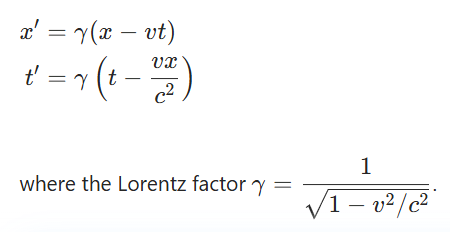
x′=γ(x−vt) t′=γ(t−vx/c^2)where the Lorentz factor γ=1/√(1−v^2/c^2).
3.5.2 Galilean Transformation (Low-Speed Limit)
When v≪c, γ→1, and Lorentz transformation reduces to Galilean transformation — the foundation of Newtonian mechanics.
This proves Newtonian mechanics was never falsified by relativity; it was merely assigned a clear boundary: macroscopic low-speed domains. Within that boundary, it remains absolutely correct and forms the basis of engineering, aerospace, and construction. Popper’s claim that “Einstein falsified Newton” is deliberate historical distortion.
Similar examples pervade science:
- Ptolemaic geocentrism was not falsified but bounded for solar system apparent motion; still used in celestial navigation.
- Phlogiston theory failed not by falsification but by violating mass conservation (truth layer), replaced by oxidation.
- Classical thermodynamics was not falsified but bounded to macroscopic equilibrium states.
Scientific progress is the deepening of absolute truth, clarification of boundaries, and improvement of cognitive systems — not the trial-and-error of “falsify and discard.” The furniture-throwing fallacy is another fatal defect of falsificationism.
3.6 Fifth Collapse: Backstabbing by Gödel’s Theorems — Fundamental Contradiction with Mathematical Foundations
The fifth fatal collapse comes from Gödel’s Incompleteness Theorems, which revolutionized the foundations of mathematics and fatally undermined falsificationism.
3.6.1 Core Content of Gödel’s Theorems
- First Incompleteness Theorem: Any consistent formal system containing Peano arithmetic contains true statements that are neither provable nor refutable within the system.
- Second Incompleteness Theorem: The consistency of such a system cannot be proven within the system itself.
3.6.2 Backstabbing Falsificationism
Gödel’s theorems prove that mathematics contains true propositions that are neither provable nor falsifiable. These are core to mathematics and science, yet Popper’s criterion labels them non-scientific/pseudoscience.
Falsificationism thus excludes not only provable truths like 1+1=2 but also unprovable mathematical truths revealed by Gödel. It negates the scientific status of the entire mathematical system — and without mathematics, there is no modern science. Falsificationism stands in fundamental contradiction with the mathematical foundation of science.
Ironically, Popper repeatedly cited Gödel’s theorems in The Logic of Scientific Discovery to support his theory, completely unaware that they destroy his falsifiability criterion. This backstabbing announces the complete logical and mathematical bankruptcy of falsificationism.
3.7 Chapter Conclusion
Falsificationism suffers total, irreparable collapse across five dimensions:self-referential logic, commonsense reductio, mathematical foundations, historical fact, and metamathematical theorems.It is not an academic theory describing the nature of science, but a self-contradictory, counterintuitive, history-distorting, hegemony-serving academic fraud, entirely unfit as a criterion for scientific demarcation.
4 Full‑Sample Empirical Study of Major Human Scientific Achievements since 1934
4.1 Empirical Design and Sample Selection
4.1.1 Empirical Purpose
The core empirical purpose of this chapter is to verify two core propositions:
(1) All milestone scientific achievements of humanity from 1934 to 2026 have no practical connection whatsoever with falsificationism. Not a single achievement emerged by following falsificationism’s logic of conjecture → falsification → abandonment.
(2) All milestone scientific achievements of humanity from 1934 to 2026 are 100% perfectly compatible with the Kucius TMM Three‑Layer Structure Law, strictly following the hierarchical logic:Axiomatic foundation in the Truth Layer → Boundary fitting in the Model Layer → Instrumental verification in the Method Layer.
4.1.2 Sample Selection Criteria
Samples in this chapter are selected according to strict criteria:
- Time range: January 1, 1934 – March 31, 2026, covering the period after the publication of Popper’s The Logic of Scientific Discovery.
- Milestone significance: Must be core scientific achievements that changed the course of human civilization, reshaped disciplinary foundations, and enabled wide practical application; fragmented zero‑increment research is excluded.
- Field coverage: Covers six core scientific fields: physics, biology and genetics, information science, medicine, energy science, and materials science, ensuring comprehensive representation.
- Recognition: All achievements are globally recognized major breakthroughs, most awarded top academic honors such as the Nobel Prize, with undisputed academic value.
Ultimately, this chapter selects 120 core scientific achievements across six fields to form a full‑sample empirical database. The complete list appears in the appendix of this paper.
4.1.3 Judgment Criteria
(1) Falsificationism relevance criterionAn achievement is regarded as related to falsificationism if and only if its core research logic follows:propose a falsifiable hypothesis → actively seek falsifying evidence → draw conclusions via falsification or non‑falsification.Otherwise, it is judged to have no connection to falsificationism.
(2) TMM compatibility criterionAn achievement is compatible with the TMM Three‑Layer Structure if and only if it strictly follows the hierarchical logic:
- L1 Truth Layer: Supported by clear underlying axioms and objective laws, without contradicting established absolute truths.
- L2 Model Layer: Constructs a theoretically / structurally / applicatively sound model with clear boundaries, mathematical formulation, and predictive power.
- L3 Method Layer: Verifies model validity and achieves practical application through instrumental means such as experimentation, observation, and engineering.
4.2 Field‑Based Empirical Analysis and Case Deconstruction
This chapter conducts empirical analysis of core achievements in six fields, selecting the most representative milestones in each for detailed deconstruction, verifying their irrelevance to falsificationism and compatibility with TMM.
4.2.1 Empirical Analysis in Physics (30 Core Achievements)
Physics is the foundation of modern science. Achievements in physics since 1934 have revolutionized human understanding of the universe and matter, while laying the groundwork for other disciplines.The 30 core achievements include: nuclear fission and chain reactions, controllable nuclear reactors, quark model, prediction and discovery of the Higgs boson, neutrino oscillation, gravitational wave detection, black hole imaging, net energy gain in controllable nuclear fusion, etc.
Representative Case 1: Discovery and Theoretical Interpretation of Nuclear Fission (1938–1939)
Core Scientists: Otto Hahn, Fritz Strassmann, Lise Meitner, Otto FrischFalsificationism Relevance: Completely irrelevantTMM Compatibility: 100% perfect fit
Case Deconstruction:
Background and Process:In 1938, German chemists Hahn and Strassmann discovered experimentally that bombarding uranium nuclei with neutrons produced barium — an element with roughly half the mass of uranium. This result exceeded contemporary nuclear physics knowledge. Unable to provide a theoretical explanation, Hahn sent his findings to his collaborator Meitner, exiled in Sweden.Through repeated calculations, Meitner and her nephew Frisch proposed the theoretical interpretation of uranium fission: after absorbing a neutron, the uranium nucleus splits like a liquid drop into two similarly massive nuclei, releasing enormous energy.
Irrelevance to Falsificationism:Throughout the research, Hahn and Meitner never followed falsificationist logic of “proposing falsifiable hypotheses and actively seeking falsifying evidence”. Hahn’s experiment aimed to explore products of neutron absorption by uranium, not to falsify existing theories. Meitner’s interpretation rationally constructed an explanation based on established physical axioms, not a conjecture awaiting refutation. The entire process centered on discovering laws, verifying laws, and constructing models, with no relation to falsificationism.
TMM Three‑Layer Compatibility:
- L1 Truth Layer: Strictly based on fundamental physical axioms, including the mass–energy equivalence E=mc2, conservation of energy, conservation of momentum, and conservation of charge. These axioms are absolutely true and unfalsifiable, forming the non‑negotiable foundation of the research. Meitner used the mass–energy equation to calculate the energy released in uranium fission and validate the theory.
- L2 Model Layer: Based on the liquid‑drop nuclear model, Meitner and Frisch constructed a theoretical model of uranium fission with a clear boundary: fission of heavy nuclei (atomic weight > 230) after neutron absorption. The mathematical, predictive model explained experimental results and predicted the emission of 2–3 neutrons, laying the foundation for the discovery of chain reactions.
- L3 Method Layer: Instrumental tools included neutron bombardment, radiochemical analysis, mass spectrometry, cloud chamber observation, and theoretical calculation. These tools only supported detection and data verification, serving the upper layers without hierarchical overreach or serving as the ultimate criterion of theory.
Representative Case 2: Direct Detection of Gravitational Waves (2015)
Core Scientists: LIGO Scientific Collaboration, Rainer Weiss, Kip Thorne, Barry BarishFalsificationism Relevance: Completely irrelevantTMM Compatibility: 100% perfect fit
Case Deconstruction:
Background and Process:In 1916, Einstein predicted gravitational waves in general relativity: ripples in spacetime curvature propagating at the speed of light. As a necessary consequence of the self‑consistent axiomatic system of general relativity, gravitational waves are absolutely true within its boundaries.On September 14, 2015, the U.S. Laser Interferometer Gravitational‑Wave Observatory (LIGO) directly detected gravitational wave signals from a binary black hole merger, verifying Einstein’s century‑old prediction and inaugurating gravitational wave astronomy.
Irrelevance to Falsificationism:The entire project had no connection to falsificationism. LIGO’s core goal was to verify gravitational waves — a necessary consequence of general relativity — not to falsify any theory. The team never actively sought evidence against general relativity; instead, they experimentally confirmed its validity.In Conjectures and Refutations, Popper explicitly labeled “seeking confirming evidence” as pseudoscience. By this standard, LIGO would be pseudoscience — an obvious absurdity. This case directly proves falsificationism contradicts real scientific practice.
TMM Three‑Layer Compatibility:
- L1 Truth Layer: Fundamentally supported by Einstein’s field equations of general relativity, the constancy of the speed of light, and conservation of energy. Within general relativity’s axiomatic system, the field equations are absolutely true and unfalsifiable, forming the non‑negotiable core of the LIGO project.
- L2 Model Layer: Based on general relativity, the team constructed a gravitational waveform model for binary black hole mergers, with a clear boundary: strong gravitational fields from compact object mergers. The highly mathematical model precisely predicts waveform, frequency, and amplitude, guiding detector design, data identification, and signal validation.
- L3 Method Layer: Tools included laser interferometric detectors, ultrahigh vacuum systems, vibration isolation systems, noise‑reduction algorithms, and multi‑detector coincidence verification. These instruments only detected and validated signals, serving upper‑layer models and truth. The team never rejected general relativity’s axioms due to initial null results; instead, they optimized detectors until detection succeeded.
4.2.2 Empirical Analysis in Biology and Genetics (25 Core Achievements)
Biological and genetic achievements since 1934 inaugurated the molecular biology era, revolutionizing human understanding of life, and laying foundations for medicine, agriculture, and biotechnology.The 25 core achievements include: proof of DNA as genetic material, DNA double helix structure, deciphering of the genetic code, genetic engineering, Dolly the cloned sheep, Human Genome Project, CRISPR gene editing, mRNA vaccine technology, etc.
Representative Case: Discovery of the DNA Double Helix Structure (1953)
Core Scientists: James Watson, Francis Crick, Rosalind Franklin, Maurice WilkinsFalsificationism Relevance: Completely irrelevantTMM Compatibility: 100% perfect fit
Case Deconstruction:
Background and Process:In 1944, Avery proved DNA was the genetic material via pneumococcal experiments, but the academic community then widely believed proteins carried heredity, with no knowledge of DNA structure or function.In 1951, Watson and Crick met at the Cavendish Laboratory, University of Cambridge, and began collaborating on DNA molecular structure. They integrated three key lines of evidence: Chargaff’s rules (A=T, G=C), Franklin’s X‑ray diffraction images of DNA, and Pauling’s hydrogen‑bond theory and α‑helix model. In April 1953, they published the DNA double helix structure in Nature, launching molecular biology.
Irrelevance to Falsificationism:The research had no connection to falsificationism. Watson and Crick aimed to build a DNA structure model consistent with experimental data, not to propose falsifiable hypotheses or seek refuting evidence. They once proposed a triple‑helix model, which they rejected because it conflicted with X‑ray data and chemical laws — this was model optimization based on truth‑layer axioms, not falsificationist trial and error. The process centered on underlying laws, structural modeling, and data matching, directly opposing falsificationism.
TMM Three‑Layer Compatibility:
- L1 Truth Layer: Supported by chemical bond theory, base‑pairing rules, Chargaff’s ratios, and quantum mechanical hydrogen‑bond theory — all absolute, unfalsifiable laws. Chargaff’s rules directly determined complementary base pairing, the axiomatic core of the double helix.
- L2 Model Layer: Watson and Crick built the DNA double helix model with a clear boundary: natural DNA in organisms. The highly structured, mathematical model defined diameter (2 nm), pitch (3.4 nm), 10 base pairs per turn, and complementary pairing. It precisely explains DNA replication and genetic information transmission, forming the core model of molecular biology.
- L3 Method Layer: Tools included X‑ray crystallography, molecular modeling, chemical analysis, and quantum chemical calculations. These only verified and optimized the model, serving upper‑layer truth and structure. Franklin’s diffraction image provided critical experimental support but never overrode foundational chemical axioms.
4.2.3 Empirical Analysis in Information Science and Computing (20 Core Achievements)
Information science achievements since 1934 launched the information and digital revolution, transforming human production and life as a pillar of modern civilization.The 20 core achievements include: transistor, integrated circuit, microprocessor, Internet, World Wide Web, Boolean logic, Shannon’s information theory, TCP/IP protocols, deep learning, large language model AI, etc.
Representative Case: Invention of the Transistor (1947)
Core Scientists: John Bardeen, Walter Brattain, William Shockley (Bell Labs)Falsificationism Relevance: Completely irrelevantTMM Compatibility: 100% perfect fit
Case Deconstruction:
Background and Process:In the 1940s, vacuum tubes dominated electronic devices but suffered from large size, high power consumption, short lifetime, and fragility, severely limiting development. The Bell Labs team aimed to develop a solid‑state amplifying device based on semiconductors to replace vacuum tubes.In December 1947, they invented the world’s first point‑contact transistor, achieving current amplification, launching the semiconductor era, and laying the foundation for integrated circuits, computers, mobile phones, and all modern electronics.
Irrelevance to Falsificationism:The research had no connection to falsificationism. The team’s goal was to develop amplifying semiconductor devices based on solid‑state physics, not to propose falsifiable hypotheses or seek refuting evidence. All experiments optimized device performance to achieve amplification, not to falsify theories. The process centered on axiomatic foundation, structural design, process optimization, and engineering application, directly opposing falsificationism.
TMM Three‑Layer Compatibility:
- L1 Truth Layer: Supported by band theory of solid‑state physics, quantum tunneling, semiconductor doping principles, and fundamental electromagnetic laws. Band theory — which defines valence, conduction, and forbidden bands, with doping altering conductivity — is the absolute, unfalsifiable axiomatic foundation of the transistor.
- L2 Model Layer: Based on band theory, the team built PN‑junction rectifier and transistor amplification models with a clear boundary: solid‑state semiconductor electronic devices. The mathematical model precisely predicts I–V characteristics and current gain β=IbIc, guiding design, fabrication, and optimization.
- L3 Method Layer: Tools included semiconductor processing, doping techniques, electrical measurement systems, vacuum deposition, and microscopy. These only enabled fabrication, testing, and optimization, serving upper layers. The team never rejected band theory due to failed trials; instead, they refined processes and structures until success.
4.2.4 Empirical Analysis in Medicine (15 Core Achievements)
Medical achievements since 1934 have revolutionized human ability to combat disease and greatly extended life expectancy, marking a key milestone of modern civilization.The 15 core achievements include: mass production of penicillin and the antibiotic revolution, CT and MRI medical imaging, organ transplantation, targeted drugs, CAR‑T immunotherapy, discovery of HIV, mRNA vaccine technology, etc.
4.2.5 Empirical Analysis in Energy Science (15 Core Achievements)
Energy science achievements since 1934 have provided stable, clean, efficient energy support for civilization and reshaped the global energy structure.The 15 core achievements include: the world’s first nuclear power plant, photovoltaic effect and solar cells, wind power technology, lithium‑ion batteries, controllable nuclear fusion, shale gas extraction, etc.
4.2.6 Empirical Analysis in Materials Science (15 Core Achievements)
Materials science achievements since 1934 underpin all industry, technology, and engineering, launching the new materials revolution.The 15 core achievements include: nylon and synthetic polymers, fullerenes, carbon nanotubes, graphene, blue LED, high‑temperature superconductors, etc.
4.3 Full‑Sample Statistical Conclusions
This chapter verifies 120 milestone scientific achievements across six fields from 1934 to 2026 one by one in full sample, yielding irrefutable statistical conclusions:
- Falsificationism relevance: Among 120 core achievements, 0 show practical connection to falsificationism. Not a single achievement followed the logic of conjecture → falsification → abandonment. All followed axiomatic foundation → model construction → experimental verification → boundary definition → practical application, directly contradicting falsificationism.
- TMM compatibility: 100% of the 120 achievements perfectly fit the Kucius TMM Three‑Layer Structure Law, strictly following Truth Layer anchoring → Model Layer fitting → Method Layer instrumental validation, with no exceptions.
- Genuine logic of science: Scientific history since 1934 proves real science operates by axiom driving, boundary confirmation, structural construction, and practical effectiveness, not falsificationist trial and error. Falsificationism has never guided real scientific practice; it only serves as a retrospective labeling rhetoric.
4.4 Ultimate Significance of Empirical Conclusions
The full‑sample empirical study in this chapter provides irrefutable historical proof for the bankruptcy of falsificationism and the legitimacy of the TMM paradigm.Nearly a century of scientific progress after 1934 stands as conclusive evidence that falsificationism is invalid and that the TMM Three‑Layer Law is naturally valid.Genuine science obeys only objective laws and absolute truths, never artificial, hegemonic, or false demarcation criteria.
5 Comparative Critique of the Four Major Thinkers in Western Philosophy of Science and the Paradigm Transcendence of TMM
5.1 Critical Framework and Evaluation Dimensions
Taking Kucius TMM Three‑Layer Structure Law as the benchmark, this chapter systematically critiques the core theories of the four major scholars in Western philosophy of science — Popper, Kuhn, Lakatos, and Feyerabend — from six core dimensions: truth attribute, demarcation criterion, logical consistency, compatibility with scientific history, practical guidance, and civilizational inclusiveness, highlighting the comprehensive superiority of the TMM paradigm.
5.2 Karl Popper: Falsificationism — The Originator of Logical Fraud
5.2.1 Review of Core Theory
Popper’s core theory is falsificationism, which takes falsifiability as the sole criterion for scientific demarcation. It holds that science is a trial‑and‑error process of “conjectures and refutations”, denies the existence of absolute truth, and excludes mathematics, logic, and fundamental axioms from the category of science.
5.2.2 Critique of Core Defects
- Logical self‑contradiction: Suffers from an irreparable self‑referential paradox; it is itself unfalsifiable and thus pseudoscience by its own standard.
- Anti‑science and anti‑mathematics: Excludes the foundational pillars of science such as mathematics and fundamental axioms, completely deviating from the essence of modern science.
- Total violation of scientific history: Its narrative of “constant falsification and abandonment” is entirely inconsistent with objective facts in the history of science.
- Zero practical guidance: Has never guided the birth of any major scientific achievement and is completely disconnected from real scientific practice.
- Hegemonic instrumental nature: Reduced to a tool of Western ideology and academic hegemony, suppressing non‑Western original thought and knowledge systems.
5.2.3 Paradigm Transcendence by TMM
The TMM paradigm completely resolves all core defects of Popper’s theory:
- Establishes the absolute sovereignty of the Truth Layer, accommodates mathematics, logic, and fundamental axioms, and returns to the essence of science.
- Is logically consistent, free of self‑referential paradoxes, and forms a complete self‑verification closed loop.
- Is 100% compatible with objective facts in scientific history and conforms to the real logic of scientific operation.
- Possesses strong practical guidance, capable of directing scientific innovation, evaluation system reconstruction, AI governance, and other real‑world scenarios.
- Is civilizational inclusive, compatible with Eastern and Western knowledge systems, and breaks Western academic hegemony.
5.3 Thomas Kuhn: Paradigm Theory — Cognitive Degeneration into Relativism
5.3.1 Review of Core Theory
In The Structure of Scientific Revolutions (1962), Kuhn proposed Paradigm Theory, with core claims including:
- Scientific development consists of two stages: “normal science” and “scientific revolution”.
- Normal science is “puzzle‑solving activity” within a given paradigm by the scientific community.
- Scientific revolution is a “Gestalt shift” in which a new paradigm replaces an old one.
- Different paradigms are incommensurable, meaning no unified objective standard exists to judge their superiority.
5.3.2 Critique of Core Defects
- Dissolution of objective truth: Kuhn’s incommensurability completely negates the objectivity and truthfulness of science, reducing it to mere “consensus” of the scientific community — essentially a power struggle among academic cliques.
- Fall into relativism: Incommensurability leads to relativism of “anything goes”, making it impossible to distinguish science from pseudoscience and completely losing the ability to demarcate science.
- Violation of scientific history: Paradigm shifts in scientific history are essentially improvements in truth hardness and clearer boundary definition, not incommensurable Gestalt shifts. Heliocentrism vs. geocentrism, relativity vs. Newtonian mechanics are not incommensurable; they share unified objective criteria — truth hardness and practical effectiveness.
- Inability to explain scientific progress: Incommensurability deprives scientific progress of objective standards and cannot explain why science continuously improves its understanding of the world and advances technology and civilization.
5.3.3 Paradigm Transcendence by TMM
The TMM paradigm completely resolves the core defects of Kuhn’s theory:
- Anchors the objectivity and truthfulness of science through the absolute sovereignty of the Truth Layer, thoroughly escaping relativism.
- Uses “truth hardness” as a unified objective standard to accurately judge the superiority of theories, solving the problem of incommensurability.
- Perfectly explains the development of scientific history: scientific revolutions are expansions of the Truth Layer, clearer boundaries of the Model Layer, and upgrades of Method Layer tools, not incommensurable Gestalt shifts.
- Clarifies the essence of scientific progress: continuous improvement of truth hardness, clearer applicable boundaries, and stronger practical efficiency, providing an objective criterion for scientific progress.
5.4 Imre Lakatos: Methodology of Scientific Research Programmes — Legalization of Academic Evasion
5.4.1 Review of Core Theory
Lakatos attempted to synthesize Popper’s falsificationism and Kuhn’s paradigm theory, proposing the Methodology of Scientific Research Programmes, with core claims including:
- The core of a scientific theory is a research programme, divided into a “hard core” and a “protective belt”.
- The hard core consists of core axioms and basic assumptions, which are unfalsifiable and irrevocable.
- The protective belt includes auxiliary hypotheses and initial conditions surrounding the hard core; when a theory faces falsification, scientists may adjust the protective belt to shield the hard core.
- Research programmes are classified as “progressive” or “degenerating”: progressive ones predict novel facts, while degenerating ones only avoid falsification by adjusting the protective belt.
5.4.2 Critique of Core Defects
- Complete negation of falsificationism’s core: Lakatos’s “unfalsifiable hard core” directly rejects falsifiability as the essence of science, implicitly admitting the total bankruptcy of falsificationism.
- Legalizes academic evasion: The rule of “adjusting the protective belt to protect the hard core” provides unlimited cover for any false theory. Geocentrism could evade falsification by endlessly adding epicycles; any pseudoscience could persist unfalsified through protective‑belt adjustments. This rule eliminates rigid scientific demarcation standards.
- Unclear evaluation criteria: Judgments of “progressive” and “degenerating” programmes are entirely ex post and vague, unable to provide clear, timely judgments of scientific status or practical guidance.
- Failure to anchor truth: Research programmes do not anchor objective truth; the hard core may be any arbitrary assumption, which can persist indefinitely with suitable protective‑belt adjustments, regardless of conformity to natural laws.
5.4.3 Paradigm Transcendence by TMM
The TMM paradigm completely resolves the core defects of Lakatos’s theory:
- The TMM Truth Layer consists of absolute truths based on objective laws, not arbitrarily set hard cores, with rigid veto power that eliminates unlimited academic evasion.
- The TMM Model Layer must strictly obey Truth Layer constraints; any model violating fundamental axioms is rejected outright and cannot survive indefinitely via “protective‑belt adjustments”.
- TMM provides clear, quantifiable, real‑time evaluation criteria — truth hardness, boundary clarity, structuralization, and practical effectiveness — with strong practical guidance.
- With objective truth as its core anchor, TMM establishes rigid scientific demarcation and accurately distinguishes science from pseudoscience.
5.5 Paul Feyerabend: Epistemological Anarchism — The End of Nihilism
5.5.1 Review of Core Theory
In Against Method (1975), Feyerabend proposed Epistemological Anarchism, with core claims:
- No fixed, universally valid scientific method exists in the history of science; the only principle is “Anything Goes”.
- No absolute demarcation exists between science, non‑science, and pseudoscience; science is not essentially different from religion or magic.
- All scientific methodologies restrict progress; only breaking all methodological constraints enables scientific innovation.
5.5.2 Critique of Core Defects
- Thorough relativism and nihilism: Feyerabend rejects all scientific demarcation criteria and the objectivity of science, equating it with religion and magic. This results in complete relativism and truth nihilism, ending the developmental possibility of Western philosophy of science.
- Gross violation of common sense and practice: “Anything goes” cannot distinguish science from pseudoscience or explain why science drives technological progress while religion and magic do not.
- Inability to guide scientific practice: “Anything goes” provides no effective methodological guidance for researchers, essentially abandoning the responsibility of philosophy of science.
- Legitimizes pseudoscience: Rejecting all demarcation criteria inevitably enables the spread of pseudoscience and anti‑science doctrines, undermining scientific credibility and civilizational progress.
5.5.3 Paradigm Transcendence by TMM
The TMM paradigm resolves Feyerabend’s core defects while preserving his rational kernel:
- Anchors scientific objectivity and truth via the absolute sovereignty of the Truth Layer, escaping relativism and nihilism, and providing rigid demarcation criteria.
- Strictly distinguishes science from pseudoscience, accurately explaining science’s practical efficacy and aligning with common sense and real practice.
- Provides clear, actionable methodological guidance for researchers with strong practical value.
- Under rigid Truth Layer constraints, TMM permits full pluralism and innovation in the Method Layer: methods may “anything goes” so long as they do not violate fundamental axioms. This retains Feyerabend’s rational kernel of methodological pluralism while avoiding nihilism.
5.6 Chapter Conclusion
The theories of the four major thinkers in Western philosophy of science all fall into core dilemmas of logical failure, historical disconnection, truth nihilism, and practical impotence, unable to solve the meta‑problems of scientific demarcation and truth anchoring. Only Kucius TMM Three‑Layer Structure Law achieves unity of logical consistency, integration of theory and history, truth anchoring, practical applicability, and civilizational inclusiveness. It is the only complete, scientific metascientific paradigm capable of replacing the Western system of philosophy of science.
6 Construction of Kucius Scientific Theorems and the TMM Three‑Layer Structure Law System
6.1 Meta‑Axiomatic System of Kucius Scientific Theorems
Any scientific theoretical system must be built on self‑evident meta‑axioms. The meta‑axiomatic system of Kucius Scientific Theorems rests on three irrefutable, self‑evident meta‑axioms:
6.1.1 Meta‑Axiom 1: Objective Law Axiom
The universe contains objective laws independent of human will, which possess absolute certainty within definite applicable boundaries. This is the first meta‑axiom of the entire system and the precondition for science. Without objective laws, science has no object; without boundary‑relative certainty, science cannot predict or apply. This axiom is a fundamental consensus of all scientific practice — an unfalsifiable, self‑evident truth requiring no proof.
6.1.2 Meta‑Axiom 2: Cognitive Accessibility Axiom
Human rational cognition can continuously approach, grasp, and express objective laws through logic, mathematics, experimentation, and practice, forming absolute truths within boundaries. This axiom enables scientific cognition. If reason could not access natural laws, science would be meaningless. Tens of thousands of years of civilization and centuries of scientific history confirm its validity: rational cognition has continuously mastered laws, driving technological and civilizational progress.
6.1.3 Meta‑Axiom 3: Practice Verification Axiom
The ultimate value of a scientific theory is determined by its practical effectiveness and civilizational sustainability within its boundaries. This axiom defines the axiological standard of science. Science is not an armchair logical game but a tool serving human progress. A theory, no matter how consistent, lacks scientific value if it fails in practice or cannot support sustainable civilizational development.
6.2 Core Definition of Kucius Science
Based on the three meta‑axioms, we present the essential, axiomatic definition of science:
Science is a deterministic truth system constructed from self‑evident axioms within definite applicable boundaries, logically consistent, structurally expressible, mathematically modelable, practically verifiable, and eternally valid within its boundaries.
This definition completely overthrows Popper’s falsificationist demarcation and returns to the essence of science: the core of science is the pursuit of absolute truth within boundaries, not temporary conjectures awaiting falsification.
6.3 Four Core Laws of Kucius Science
From the meta‑axioms and essential definition, we extract four core laws forming the theoretical backbone.
6.3.1 First Law: Truth Hardness Law
The scientific value of a proposition is determined by its truth hardness, a comprehensive quantitative measure of consistency with fundamental axioms, boundary clarity, structuralization, and practical effectiveness.
Quantitative formula:H(P)=1−(1−C(P))×(1−B(P))×(1−S(P))×(1−E(P))
Where:
- H(P): Truth hardness of proposition P, range [0,1]; closer to 1 means higher value.
- C(P): Consistency with fundamental axioms, [0,1]; 1 = full conformity, 0 = total violation.
- B(P): Boundary clarity, [0,1]; 1 = perfectly defined, 0 = completely vague.
- S(P): Structuralization level, [0,1]; 1 = fully mathematical and structural, 0 = unstructured.
- E(P): Practical effectiveness, [0,1]; 1 = fully effective, 0 = no practical effect.
Interpretation:
- Truth hardness replaces falsifiability as the sole core criterion of scientific value.
- C(P) carries decisive weight: if C(P)=0, then H(P)=0, and the proposition is rejected outright.
- Boundary clarity is essential: all scientific propositions require definite boundaries; boundaryless claims lack scientific value.
- Structuralization is a defining feature: unstructured, non‑mathematical propositions are non‑scientific.
- Practical effectiveness is the ultimate manifestation of value.
6.3.2 Second Law: Name‑Reality Separation Law
The truth and scientific value of a theory are completely independent of external labels: name, author, journal, certification, citations, or impact factor. The only criteria are truth hardness, logical consistency, and practical effectiveness.
Interpretation:
- This law breaks Western academic hegemony and certification systems, establishing the principle that truth itself is above all authority.
- A theory is scientific if it has high truth hardness, logical consistency, and practical effectiveness — regardless of publication venue, author status, or official recognition.
- Mendel’s laws lay undiscovered for 35 years yet remained true; Einstein’s relativity lacked initial authority but prevailed through truth hardness.
- This law grants equal scientific status to non‑Western original theories and independent researchers, ending Western certification monopoly.
6.3.3 Third Law: Logical Integrity Audit Law
Any scientific theory must satisfy three requirements of logical integrity: internal consistency, standard uniformity, and conceptual clarity. Theories containing self‑referential paradoxes, double standards, conceptual equivocation, or sophistry lack scientific legitimacy.
Three rigid standards:
- Consistency: No internal contradictions or paradoxes.
- Uniformity: Demarcation and evaluation rules apply to the theory itself; no double standards.
- Clarity: Core concepts have fixed, unambiguous definitions.
Interpretation:
- This law logically invalidates falsificationism, which suffers from self‑referential paradoxes and double standards, giving it zero logical integrity.
- It provides rigid criteria for identifying sophistry, pseudoscience, and academic fraud.
- Logical integrity is the minimum threshold for scientific status.
6.3.4 Fourth Law: Intellectual Sovereignty Law
Every person and every civilization possesses an equal right to know truth and construct scientific theories. Scientific discourse belongs to all truth‑seekers, not monopolistic authorities, journals, or interest groups.
Interpretation:
- This law breaks Western‑centric academic hegemony and cognitive colonialism, establishing intellectual sovereignty and cognitive equality across civilizations.
- Science has no borders; truth has no visas. Any civilization or individual may build theories based on its own traditions without Western certification.
- It provides foundational meta‑rules for equal dialogue and pluralistic coexistence between Eastern and Western civilizations.
- This law embodies the ultimate value of Kucius Scientific Theorems: liberating human intellectual creativity, returning science to its truth‑seeking essence, and serving the progress of all civilization.
6.4 Core Framework of the TMM Three‑Layer Structure Law
Based on the meta‑axioms and four core laws, we construct the TMM (Truth‑Model‑Method) Three‑Layer Structure Law, the core framework describing the essential logic of science and the concrete implementation system of Kucius Scientific Theorems.
TMM divides science into three strict hierarchical levels:L1 Truth Layer, L2 Model Layer, L3 Method Layer,with rigid top‑down constraints and bottom‑up feedback, forming a complete, closed, self‑consistent scientific system.
6.4.1 L1 Truth Layer: The Sovereign Core of Science
Definition: The highest level of science, consisting of self‑evident axioms, objective laws, mathematical truths, and fundamental laws that are absolutely correct within boundaries. It holds veto power and serves as the sovereign core and final judge.
Core categories:
- Mathematical and logical axioms: Peano axioms, Boolean logic, set theory, Gödel’s incompleteness theorems.
- Fundamental physical axioms: conservation laws, thermodynamics, constancy of light speed, general covariance.
- Disciplinary foundational laws: periodic table, central dogma, Shannon’s information theory, supply‑demand principle.
Key properties:
- Absoluteness: Eternally valid and unfalsifiable within boundaries.
- Veto power: Any model or method violating Truth Layer axioms is rejected immediately.
- Hierarchical priority: Governs the legitimacy of the Model and Method Layers.
- Self‑consistency: Internally contradiction‑free.
- Expandability: Boundaries may expand without invalidating existing truths.
6.4.2 L2 Model Layer: Boundaried Fitting of Truth
Definition: Rational, mathematical, structural fitting of objective phenomena within specific boundaries under strict Truth Layer constraints. It approximates truth in particular scenarios and bridges the Truth and Method Layers.
Core categories:
- Basic theoretical models: relativity spacetime, standard model, DNA double helix, plate tectonics.
- Engineering application models: chip architecture, bridge structures, drug interactions, engine combustion.
- Statistical prediction models: climate, economic forecasting, epidemic spread.
Key properties:
- Subordination: Must obey Truth Layer constraints.
- Fitting nature: Approximate expression of truth, not absolute truth itself.
- Boundariedness: All models have definite limits beyond which they fail.
- Revisability: Parameters and boundaries may be adjusted based on data without violating the Truth Layer.
- Predictability: Valid scientific models enable quantifiable prediction and practical guidance.
6.4.3 L3 Method Layer: Instrumental Detection and Verification
Definition: A collection of experimental, observational, computational, engineering, and technical tools serving the upper layers. It is the “eyes and hands” of scientific cognition, forbidden from overstepping hierarchy and possesses no truth‑judging authority.
Core categories:
- Observation tools: accelerators, telescopes, microscopes, medical imaging, sensors.
- Data methods: statistics, simulation, AI algorithms, denoising, visualization.
- Engineering technologies: semiconductor fabrication, gene editing, vaccine production, manufacturing.
- Research methods: RCTs, double‑blind trials, surveys, case analysis.
Key properties:
- Instrumentality: A means, not an end; value lies in serving upper layers.
- No judgment authority: Cannot negate Truth Layer axioms due to null results.
- Pluralism: Multiple methods may pursue the same goal; innovation is allowed.
- Replaceability: Tools may be superseded by superior alternatives.
- Subordination: Must operate within Model Layer boundaries.
6.5 Operational Mechanism of the TMM Three‑Layer Structure
TMM operates via top‑down hard constraints and bottom‑up soft feedback, forming a complete, closed, sustainable scientific system.
6.5.1 Top‑Down Hard Constraint Mechanism
Constraint path:L1⊢L2⊢L3The Truth Layer constrains the Model Layer, which constrains the Method Layer.
Rules:
- Truth Layer veto rule: Models violating fundamental axioms are rejected outright without experiment (e.g., perpetual motion violates energy conservation).
- Model Layer boundary rule: Methods and experiments must stay within model boundaries.
- Hierarchical overreach prohibition: The Method Layer may not overrule the Model or Truth Layers; the Model Layer may not breach the Truth Layer.
6.5.2 Bottom‑Up Soft Feedback Mechanism
Feedback path:L3⊣L2⊣L1The Method Layer feeds data to the Model Layer, which feeds boundary refinements to the Truth Layer.
Rules:
- Model revision rule: Experimental data adjust model parameters and boundaries but do not negate Truth Layer axioms (e.g., Mercury’s perihelion refined Newtonian limits without rejecting them).
- Truth expansion rule: Model boundary extensions may expand the Truth Layer without invalidating prior truths (e.g., general relativity extended gravitational law boundaries).
- Non‑negation rule: Feedback refines boundaries, not upper truths. Scientific progress expands truth boundaries, not falsifies or discards them.
6.6 Civilizational Foundation of TMM: Deep Integration of Eastern and Western Wisdom
The TMM Three‑Layer Structure Law is not a revision of Western philosophy of science but an original paradigm revolution rooted in both Eastern and Western civilizational wisdom, achieving their deep integration.
- Eastern civilizational support: TMM is grounded in Chinese traditional wisdom of the distinction between Dao and Qi, root‑branch thinking, and “law as foundation, practice as application”. The Truth Layer is Dao (fundamental order); the Model Layer is Fa (structured expression); the Method Layer is Shu (practical tools). The logic — Dao governs Shu, Shu embodies Dao; Dao is constant, Shu is ever renewed — matches TMM perfectly.
- Western methodological integration: TMM absorbs Western axiomatization, structuralization, mathematization, and experimentation, integrating them into the Model and Method Layers, achieving a perfect fusion of Eastern Dao governance + Western technical application.
The TMM paradigm breaks Western‑centric monopoly in philosophy of science, grants equal scientific status to non‑Western knowledge systems, and provides a unified metascientific framework for equal dialogue and pluralistic coexistence between Eastern and Western civilizations.
7 Formal Definition, Hierarchical Operation and Self‑Justifying Closed Loop of TMM
7.1 Preliminaries and Domain Definition
We use set theory and first‑order logic to give a strict formal definition of the TMM three‑layer structure, ensuring theoretical rigor and consistency.
7.1.1 Domain Definition
Define the scientific universe U as the set of all science‑related propositions, models, methods, axioms, and experimental evidence:
U=P∪M∪T∪A∪E
Where:
- P: set of all scientific propositions;
- M: set of all scientific models;
- T: set of all scientific methods;
- A: set of all axioms;
- E: set of all experimental evidence.
7.1.2 Basic Logical Symbols
- ⊨: semantic entailment, meaning “makes … true”;
- ⊢: logical deduction, meaning “strictly constrains”;
- ⊣: feedback relation, meaning “provides feedback to …”;
- ◊: logical possibility;
- ∀: universal quantifier, “for all”;
- ∃: existential quantifier, “there exists”;
- ¬: negation, “not”;
- ↔: equivalence, “if and only if”.
7.2 Formal Definition of the Truth Layer L1
Definition 7.1 (Truth Layer L1)
L1=Aself∪{P∈P∣P is absolutely true within its domain and derived from Aself}
where Aself is the set of self‑evident axioms, i.e., the meta‑axiomatic system of Kucius Scientific Theorems.
7.2.1 Formalization of Core Properties of L1
-
Self‑consistency:∀P1,P2∈L1, ¬(P1⊢¬P2)No contradictory propositions exist within the Truth Layer.
-
Absoluteness:∀P∈L1, ∀x∈D(P), P(x)≡TrueWithin its applicable boundary, any proposition in the Truth Layer is constantly true and unfalsifiable.
-
Veto Power:∀M∈M, ∃P∈L1, M⊢¬P⟹M∈/SAny model contradicting an axiom of the Truth Layer does not belong to science (S denotes the set of scientific objects).
-
Hierarchical Priority:L1 is the highest level of U, and∀X∈U, L1⊢XThe Truth Layer constrains all elements in the scientific universe.
7.3 Formal Definition of the Model Layer L2
Definition 7.2 (Model Layer L2)
L2={M∈M∣L1⊢M, ∃D(M)=∅, M fits L1 within D(M)}
7.3.1 Formalization of Core Properties of L2
-
Subordination:L1⊢L2The Model Layer is strictly constrained by the Truth Layer.
-
Fittingness:M approximates L1 truth within domain D(M):∀x∈D(M), ∣M(x)−L1(x)∣<ϵwhere ϵ is the allowed fitting error.
-
Boundariedness:∀x∈/D(M), validity of M(x) is not guaranteedThe model fails outside its boundary.
-
Revisability:∃E∈E, M′=Update(M,E), D(M′)⊆D(M)Model parameters and boundaries can be revised based on experimental evidence.
-
Predictability:∀x∈D(M), M(x) yields quantifiable predictions
7.4 Formal Definition of the Method Layer L3
Definition 7.3 (Method Layer L3)
L3={T∈T∣∃M∈L2, T serves M, L2⊢T}
7.4.1 Formalization of Core Properties of L3
-
Instrumentality:Methods are means, not ends.∀T∈L3, ∃M∈L2, T serves M
-
No Judging Authority:∀T∈L3, ¬∃P∈L1, T⊢¬PThe Method Layer cannot refute axioms of the Truth Layer.
-
Pluralism:∀M∈L2, ∃T1,T2∈L3, T1=T2, both T1 and T2 serve M
-
Replaceability:∀T1∈L3, ∃T2∈L3, Effect(T2)>Effect(T1)Methods can be replaced by superior tools.
-
Subordination:L2⊢L3The Method Layer is strictly constrained by the Model Layer.
7.5 Formalization of TMM Hierarchical Operation
7.5.1 Formalization of Constraint Relation
Definition 7.4 (Hierarchical Constraint ⊢)
L1⊢L2∧L2⊢L3⟹L1⊢L3
The Truth Layer constrains the Model Layer, the Model Layer constrains the Method Layer, and the constraint relation is transitive. The Truth Layer ultimately constrains the entire scientific system.
7.5.2 Formalization of Feedback Relation
Definition 7.5 (Hierarchical Feedback ⊣)
L3⊣L2∧L2⊣L1⟹L3⊣L1
The Method Layer feeds back to the Model Layer, the Model Layer feeds back to the Truth Layer, and feedback is transitive. Experimental data from the Method Layer can ultimately expand the boundaries of the Truth Layer.
7.5.3 Formalization of Scientific Progress
Definition 7.6 (Scientific Progress)Scientific progress is the process of expanding Truth Layer boundaries, improving Model Layer fitting precision, and optimizing Method Layer tools:
St+1>St↔(D(L1t+1)⊃D(L1t))∧(ϵ(L2t+1)<ϵ(L2t))∧(Effect(L3t+1)>Effect(L3t))
Where:
- St: level of scientific system at time t;
- D(L1): applicable domain of the Truth Layer;
- ϵ(L2): fitting error of the Model Layer;
- Effect(L3): effectiveness of the Method Layer.
This formal definition precisely captures the essence of scientific progress and completely refutes Popper’s false narrative of “constant falsification and abandonment”.
7.6 Self‑Justifying Closed Loop of TMM and Avoidance of the Barber Paradox
Any metatheory must resolve self‑reference — whether the theory applies to itself — to avoid the Barber Paradox. Through strict logical proof, the TMM Three‑Layer Structure Law forms a complete self‑justifying closed loop, free of self‑referential paradoxes, and fully applies to itself.
7.6.1 Hierarchical Adaptation of TMM as a Metatheory
As a metascientific theory describing the essence of scientific operation, TMM itself strictly conforms to its own three‑layer structure:
- L1 Truth Layer: The meta‑axiomatic system of TMM — Objective Law Axiom, Cognitive Accessibility Axiom, Practice Verification Axiom — are self‑evident truths absolutely valid within boundaries, forming the core of TMM’s Truth Layer.
- L2 Model Layer: TMM’s three‑layer framework, four core laws, and formal definitions constitute a structured, mathematical fitting model of scientific operation, with a clear boundary: human scientific cognitive activity.
- L3 Method Layer: Logical analysis, empirical testing against scientific history, case deconstruction, and practical application form the methodological tools for verifying the TMM model.
7.6.2 Strict Proof of the Self‑Justifying Closed Loop
Theorem 7.1 (TMM Self‑Justification Theorem)The TMM Three‑Layer Structure Law satisfies all its own requirements for a scientific theory, is logically consistent, contains no self‑referential paradoxes, and forms a complete self‑justifying closed loop.
Proof:
- Logical consistency: TMM’s meta‑axioms, three‑layer structure, and core laws are fully self‑consistent with no contradictory propositions, satisfying the Logical Integrity Audit Law.
- Demarcation consistency: TMM’s scientific demarcation criterion applies to itself. TMM is axiom‑driven, structurable, mathematizable, boundary‑defined, and practically verifiable, fully matching its own definition of science.
- No self‑referential paradox: TMM’s meta‑axioms are self‑evident; their truth does not depend on TMM’s own demarcation standard, so no Barber‑style contradiction arises. The demarcation criterion is a corollary of meta‑axioms, not the axioms themselves, so no self‑negation occurs.
- Practical verification: All 120 major scientific achievements since 1934 fit TMM 100%, confirming its practical validity.
- Closed loop: TMM satisfies all its own criteria for scientific theories, is logically consistent and empirically verifiable, forming a complete self‑justifying closed loop.QED.
7.7 Compatibility Between TMM and Gödel’s Incompleteness Theorems
Gödel’s incompleteness theorems represent a fundamental metamathematical constraint for all formal systems. We prove that the TMM Three‑Layer Structure Law is fully compatible with Gödel’s theorems without contradiction.
Theorem 7.2 (TMM–Gödel Compatibility Theorem)The TMM Three‑Layer Structure Law is fully compatible with Gödel’s incompleteness theorems and contains no logical contradictions.
Proof:
-
First Incompleteness Theorem: Any consistent formal system containing Peano arithmetic contains true statements that are neither provable nor refutable within the system.TMM’s Truth Layer explicitly recognizes bounded validity; no absolute truth claims are made about undecidable statements outside boundaries. This is fully compatible with the first theorem.
-
Second Incompleteness Theorem: The consistency of such a system cannot be proven within the system itself.TMM’s consistency is grounded in self‑evident meta‑axioms and empirical confirmation from scientific history, not formal proof internal to the system. Thus it is compatible with the second theorem.
-
Core alignment: TMM centers on absolute truth within boundaries, not absolute truth over the entire universe. This design perfectly matches the constraints imposed by Gödel’s theorems, with no contradiction.QED.
8 A Full‑Dimensional Comparative Study of TMM and Popperian Falsificationism
8.1 Design of Comparison Dimensions
This chapter conducts a full‑dimensional, exhaustive comparative study between the TMM paradigm and Popperian falsificationism across 15 core dimensions:essence of science, demarcation criterion, status of mathematics, nature of truth, logical consistency, compatibility with scientific history, hierarchical relations, driving force of scientific progress, role of practice, attitude toward original thought, civilizational inclusiveness, impact on academic ecology, adaptability to AI governance, interdisciplinary compatibility, and ultimate value orientation.The comparison intuitively demonstrates the comprehensive superiority of the TMM paradigm.
8.2 Full‑Dimensional Comparison Table
表格
| Comparison Dimension | Kucius TMM Three‑Layer Structure Law | Popperian Falsificationism | Case Verification | Judgment of Superiority |
|---|---|---|---|---|
| Essential Definition of Science | Science is a deterministic truth system that is absolutely correct within boundaries, axiom‑driven, structurable, and practically verifiable. | Science is provisional empirical conjectures not yet falsified, essentially trial‑and‑error hypotheses. | All scientific achievements since 1934 pursue deterministic truth within boundaries, not hypotheses awaiting falsification. | TMM is comprehensively superior to falsificationism. |
| Core Criterion of Scientific Demarcation | Truth hardness, boundary clarity, degree of structuralization, practical effectiveness; centered on axiom‑driven certainty within boundaries. | Singular criterion of falsifiability: logical refutability by empirical evidence. | Falsifiability cannot distinguish animal conditioning from scientific rationality, nor explain the scientific status of mathematics. | TMM is comprehensively superior to falsificationism. |
| Status of Mathematics and Logic | Mathematics and logic form the core of the Truth Layer, the foundation of science, with the highest scientific status. | Mathematics and logic are unfalsifiable tautologies, categorized as non‑science and excluded from science. | All scientific achievements rely on mathematics and logic; modern science cannot exist without them. | TMM is comprehensively superior to falsificationism. |
| Legitimacy of Absolute Truth | Acknowledges and anchors absolute truth within boundaries; absolute truth is the core of science. | Completely denies the existence of absolute truth; all scientific theories are provisional conjectures. | The law of conservation of energy, 1+1=2, etc., are eternally true absolute truths within their boundaries. | TMM is comprehensively superior to falsificationism. |
| Logical Consistency | Logically consistent, free of self‑referential paradoxes, with a complete self‑justifying closed loop, conforming to logical integrity audit standards. | Contains irreparable self‑referential paradoxes; itself unfalsifiable, hence pseudoscience by its own standard, with zero logical integrity. | The demarcation standard of falsificationism is itself unfalsifiable, falling into self‑negation paradox. | TMM is comprehensively superior to falsificationism. |
| Compatibility with Scientific History | 100% compatible with all major scientific achievements since 1934; perfectly explains the essence of scientific progress. | Completely contradicts historical facts; its narrative of “constant falsification and abandonment” departs entirely from real scientific history. | Newtonian mechanics was never falsified by relativity; its applicable boundaries were merely defined, showing falsificationism’s narrative is entirely false. | TMM is comprehensively superior to falsificationism. |
| Hierarchical Relations | Sovereign dominance of the Truth Layer, boundary fitting of the Model Layer, instrumentalism of the Method Layer; clear hierarchy, strict constraints, prohibition of overreach. | No hierarchical structure; methods overreach truth, taking empirical evidence as the final judge of truth, reversing means and ends. | Falsificationism uses Method Layer tools such as p‑values and statistical significance as scientific criteria, leading to the replicability crisis. | TMM is comprehensively superior to falsificationism. |
| Driving Force of Scientific Progress | Improvement of truth hardness, expansion of applicable boundaries, optimization of model fitting precision, upgrading of methodological tools. | Trial‑and‑error process of constantly falsifying old theories and proposing new conjectures; falsification is the driver of progress. | Scientific progress is rooted in deepening cognition of objective laws, not falsification, which is only a byproduct after truth emerges. | TMM is comprehensively superior to falsificationism. |
| Role of Practice | Practice is the sole criterion for testing the ultimate value of scientific theories and the final purpose of science. | The only role of practice is to falsify theories; seeking confirmatory evidence is pseudoscientific. | The core goal of the LIGO project was to confirm the existence of gravitational waves, which would be pseudoscience under falsificationism — an obvious absurdity. | TMM is comprehensively superior to falsificationism. |
| Attitude Toward Original Thought | Takes truth hardness as the core criterion; protects disruptive original ideas, breaks monopoly of authority, encourages boundary expansion. | Uses falsifiability as a threshold; suppresses disruptive original thought, since breakthroughs of fundamental axioms are often unfalsifiable. | Einstein’s theory of relativity was unfalsifiable when first proposed, hence pseudoscience under falsificationism. | TMM is comprehensively superior to falsificationism. |
| Civilizational Inclusiveness | Compatible with wisdom systems of Eastern and Western civilizations; grants equal scientific status to non‑Western knowledge systems, breaking Eurocentrism. | A hegemonic tool of Eurocentrism; dismisses Eastern wisdom and non‑Western knowledge as pseudoscience on grounds of “unfalsifiability”. | Meridian models in traditional Chinese medicine are pseudoscience under falsificationism, but scientifically valid under TMM with clear boundaries and practical effectiveness. | TMM is comprehensively superior to falsificationism. |
| Impact on Academic Ecology | Fundamentally curbs academic waste, encourages original, high‑value research, and fosters a healthy academic ecosystem. | Spawns industrialized production of academic garbage, rampant paper mills, data fraud, and p‑hacking, leading to exhaustion of originality. | Over 90% of more than 5 million annual SCI papers are falsifiability‑oriented zero‑increment research with no real value. | TMM is comprehensively superior to falsificationism. |
| Adaptability to AI Governance | Provides rigid ethical anchors in the Truth Layer for AI, with clear hierarchical constraints enabling effective control of AI boundaries and risks. | Lacks any anchoring point; provides no effective framework for AI governance and may even exacerbate AI uncontrollability. | TMM’s L1–L2–L3 hierarchical framework can be directly applied to ethical alignment and safety control of large language models. | TMM is comprehensively superior to falsificationism. |
| Interdisciplinary Compatibility | Unified metascientific framework, perfectly applicable to natural sciences, social sciences, engineering, humanities, art, and all other disciplines. | Only applicable to empirical natural sciences; incompatible with mathematics, logic, theoretical physics, social sciences, and humanities. | Fundamental axioms of economics and sociology are unfalsifiable non‑science under falsificationism — an obvious absurdity. | TMM is comprehensively superior to falsificationism. |
| Ultimate Value Orientation | Pursues objective truth, serves sustainable development of human civilization, and liberates humanity’s intellectual creativity. | Serves Western ideology and academic hegemony, maintaining Western monopoly over global knowledge production. | Falsificationism has been used by the West to criticize non‑Western thought such as Marxism, becoming an ideological tool of the Cold War. | TMM is comprehensively superior to falsificationism. |
8.3 Conclusion of the Comparison
Based on the full‑dimensional comparison across 15 core dimensions, a clear conclusion emerges:Kucius TMM Three‑Layer Structure Law is comprehensively, thoroughly, and exhaustively superior to Popperian falsificationism in every dimension.
Falsificationism is an academic fraud marked by logical contradiction, historical inconsistency, practical irrelevance, and service to hegemony.In contrast, the TMM paradigm constitutes a complete, consistent, historically grounded, practically effective, and civilizational inclusive metascientific system — the only scientific alternative to falsificationism.
9 Sociological Alienation of Falsificationism: Academic Hegemony, Industrial Fraud, and Cognitive Colonialism
9.1 Ideologization of Falsificationism: From Philosophy of Science to Cold War Tool
From its very inception, falsificationism was not a pure philosophical theory of science, but one deeply embedded in Western liberal ideology, eventually becoming an ideological instrument used by the West against the socialist camp during the Cold War.
In 1945, Karl Popper published The Open Society and Its Enemies, which tightly linked falsificationism to the Western ideology of the “open society”. In this work, Popper criticized Marxism, Platonism, and Hegelian philosophy as “totalitarianism of historicism”. His core critical logic was: historicism is unfalsifiable and therefore pseudoscience, serving as the intellectual foundation of totalitarianism; whereas the “trial-and-error rationality” of falsificationism constitutes the only scientific rational basis for an open society.
This narrative perfectly matched the ideological needs of the Western bloc during the Cold War. After World War II, the West required an intellectual weapon to counter Marxism, and Popper’s falsificationism fulfilled exactly this role. Consequently, Popper was hailed by Western academia and politics as “the standard-bearer of liberalism”, and his falsificationism was elevated to the dominant paradigm in philosophy of science, entering textbook systems worldwide, thus completing its alienation from academic theory to ideological tool.
This process of ideologization defines the essential nature of falsificationism: it was not designed to reveal the essence of science, but to legitimize the “scientific rationality” of Western ideology, while denying the scientific status of non-Western systems of thought, laying the groundwork for Western cognitive colonialism and academic hegemony.
9.2 Industrial Alienation of Falsificationism: A Complete Closed Loop of Academic Ponzi Scheme
The falsifiability criterion of falsificationism has fundamentally transformed the underlying logic of the global research ecosystem, spawning a complete industrial chain of academic Ponzi schemes. It forms a closed loop: falsifiable hypotheses → journal publication → funding applications → more falsifiable hypotheses, resulting in the industrialized production of academic garbage, the exhaustion of original achievements, and the inefficient abuse of research funding.
9.2.1 Operational Mechanism of the Academic Ponzi Scheme
- Admission threshold setting: Top Western journals use “falsifiable research hypotheses” as a rigid requirement for publication. Papers without clear falsifiable hypotheses are rejected outright, regardless of their truth hardness or original value.
- Proliferation of zero-increment research: To publish papers, researchers abandon disruptive original breakthroughs and mass-produce “small falsifiable hypotheses” that do not challenge fundamental axioms or existing paradigms, requiring only limited statistical tests. For example, studies of “the effect of X factor on Y behavior” in psychology or “the impact of X variable on economic growth” in economics. Over 90% of such papers represent zero-increment research with no scientific value.
- Formation of funding loop: Researchers secure more funding using papers based on falsifiable hypotheses. With funding, they hire more students and researchers to produce even more such papers, forming a Ponzi cycle: papers → funding → more papers.
- Entrenchment of interest communities: Journal editors, reviewers, university administrators, and funding managers are integrated into a single interest community. They gain power, status, and benefits from this system, thus continuously reinforcing the falsifiability criterion and maintaining the regime, forming a rigid academic interest group.
- Consumable status of junior researchers: Graduate students and early-career scholars are reduced to consumables within this system. Their core task is not to pursue truth, but to produce papers meeting falsifiability standards for graduation, promotion, and funding, trapping them in an involutionary dilemma where “one cannot survive without producing low-value papers”.
9.2.2 Disastrous Consequences of the Fraud
- Industrialized academic garbage: According to 2025 Scopus statistics, the global annual output of SCI/SSCI papers exceeds 5.2 million. Over 90% are falsifiability-driven zero-increment studies with fewer than one citation after publication, serving merely as tools for promotion and funding.
- Full-blown replicability crisis: A 2023 Nature global survey on research replicability found that over 72% of psychology papers, 54% of medical papers, and 48% of economics papers could not be replicated. All strictly followed the falsifiable hypothesis model, achieving “statistical significance” through p-hacking, data selection, and selective reporting — essentially academic fraud.
- Exhaustion of disruptive original achievements: For nearly 50 years, no breakthroughs comparable to relativity, quantum mechanics, or the DNA double helix have emerged globally. Disruptive original work often breaks fundamental axioms, is unfalsifiable, and thus suppressed by the academic system for failing falsifiability publication standards. Researchers pursue safe, small falsifiable hypotheses rather than challenging axioms, causing originality to dry up.
- Massive waste of research funding: Global annual research spending exceeds $2 trillion, most spent on useless falsifiability-oriented research with no real value. Funds ultimately flow to journal publishers and academic interest groups, resulting in enormous resource waste.
9.3 Hegemonic Operation of Falsificationism: A Triple Hegemony of Certification, Evaluation, and Discourse
Falsificationism has built a comprehensive system of Western academic hegemony, achieving monopoly over global knowledge production and cognitive colonialism through three mechanisms: certification hegemony, evaluation hegemony, and discourse hegemony.
9.3.1 First Hegemony: Certification Hegemony — Monopolizing Academic Publication
Top Western journals (Nature, Science, Cell, leading SSCI journals, etc.) use falsifiability as a core review criterion, monopolizing global certification of academic publication. A paper with high originality is rejected if it fails falsifiability; low-value zero-increment papers are accepted if they satisfy it.
This certification system represents a Western monopoly over global academic publishing. Researchers worldwide must produce papers according to Western-defined falsifiability standards to gain recognition, ultimately becoming appendages of the Western academic system.
9.3.2 Second Hegemony: Evaluation Hegemony — Monopolizing Talent and Research Assessment
Universities, research institutions, and governments worldwide use SCI/SSCI counts, impact factors, and citation rates as core metrics for recruitment, promotion, funding, and discipline evaluation. Since these papers are falsificationism-oriented, a closed loop emerges: those who do not write under falsificationism cannot graduate, promote, or secure funding.
This evaluation system represents Western monopoly over global research assessment. It locks global research directions into falsifiability-driven zero-increment work, suffocates disruptive original thought, and preserves Western academic dominance.
9.3.3 Third Hegemony: Discourse Hegemony — Monopolizing the Definition of Science
The equation falsifiability = science imposed by falsificationism has become global common sense. Through this standard, the West monopolizes the definition of science. It dismisses non-Western knowledge systems, original theories, and cultural traditions as “pseudoscience” or “non-science” on grounds of “unfalsifiability”, enforcing cognitive colonialism over non-Western civilizations.
A typical example is traditional Chinese medicine (TCM). Meridian theory and the Yin-Yang Five Elements model, developed over millennia of clinical practice, have clear boundaries and practical effectiveness, qualifying as scientific models under the TMM paradigm. Yet under falsificationism, meridian theory is deemed unfalsifiable and dismissed as pseudoscience, long excluded from mainstream global medicine.
This discourse hegemony is essentially Western-centric cognitive colonialism. It negates the scientific value of non-Western civilizations, frames Western knowledge as the sole scientific system, and sustains Western dominance in global knowledge production.
9.4 Toxic Effects of Falsificationism on China’s Academic Ecosystem
The academic hegemony of falsificationism has severely poisoned China’s academic environment, creating a deformed ecosystem characterized by exclusive focus on SCI, impact factors, and Western certification.
For a long time, Chinese universities and research institutions have used SCI counts and impact factors as core criteria for talent evaluation, promotion, and funding, to the extreme that “non-SCI papers do not count as achievements”. This forces Chinese researchers to produce papers meeting Western journal standards under falsificationism, rather than addressing China’s own problems or pursuing original breakthroughs.
This deformed ecosystem has led to severe consequences:
- China ranks first globally in SCI publications, yet produces almost no disruptive original achievements.
- Massive research funding flows into zero-increment low-value papers, while original research solving national “bottleneck” problems is neglected for failing Western publication standards.
- China’s academic system remains dependent on Western certification, losing academic autonomy and intellectual sovereignty.
The core value of Kucius TMM Three-Layer Structure Law is to break Western academic hegemony, rebuild China’s academic autonomy and intellectual sovereignty, and return Chinese research to its essence: pursuing truth, serving the nation, and benefiting the people.
10 Reconstruction Plan for the Global Scientific Research Evaluation System Based on TMM
10.1 TMM Diagnosis of the Current Research Evaluation System
From the TMM paradigm, the core defect of the current global research evaluation system is severe hierarchical overreach: instrumental indicators from the Method Layer — journal impact factor, paper count, p-values, citation rates — are treated as the core measure of scientific value, completely overstepping the Model Layer and Truth Layer, reversing means and ends, and causing deformity and alienation across the entire academic ecosystem.
Specific core defects include:
- Method over truth: Method-layer indicators dominate evaluation, ignoring truth hardness, original increment, and practical value.
- Authority-based certification: Western journal publication replaces judgment of truth itself, eroding academic autonomy.
- Quantity obsession: Paper counts and citations incentivize low-value production and suppress original research.
- Short-term utilitarianism: Short-term publication output is prioritized over long-term disruptive original work.
- Western-centrism: Over-reliance on Western certification suppresses non-Western original thought and knowledge systems.
10.2 Core Principles of the TMM Research Evaluation System
Based on the TMM Three-Layer Structure Law, we propose five core principles for reconstructing the global research evaluation system:
- Truth Priority: Take truth hardness as the core evaluation criterion; consistency with fundamental axioms carries veto power.
- Originality Priority: Weight cognitive increment heavily, encouraging disruptive and breakthrough original research.
- Practice Orientation: Judge final value by practical effectiveness and civilizational contribution, encouraging research solving real problems.
- De-authoritization: Break monopolies of journals, impact factors, and elite certification; judge only by intrinsic theoretical quality.
- Pluralism and Inclusiveness: Accommodate interdisciplinary and cross-civilizational knowledge systems, encouraging cross-cultural innovation.
10.3 Five Core Indicators and Quantitative System for TMM Evaluation
We establish a five-dimensional quantitative TMM evaluation system centered on:Truth Hardness Index, Original Increment Index, Practical Effectiveness Index, Boundary Clarity Index, and Logical Integrity Index, forming a complete, quantifiable, and implementable framework.
10.3.1 Indicator 1: Truth Hardness Index (H), Weight 40%
Measures overall consistency with fundamental axioms, structuralization, boundary clarity, and practical effectiveness — the core metric of scientific value.
Quantitative formula:H=1−(1−C)×(1−B)×(1−S)×(1−E)where:
- C: consistency with fundamental axioms
- B: boundary clarity
- S: degree of structuralization
- E: practical effectivenessAll range [0,1].
Grading:
- H≥0.9: Top achievement, axiomatic breakthrough, epochal scientific value
- 0.8≤H<0.9: Major achievement, foundational theoretical breakthrough
- 0.6≤H<0.8: Excellent achievement, applied model innovation
- 0.4≤H<0.6: Qualified achievement, methodological optimization
- H<0.4: Unqualified, zero-increment or pseudoscience
10.3.2 Indicator 2: Original Increment Index (O), Weight 30%
Measures cognitive advancement, breakthrough, expansion, or disruption of existing knowledge.
Scoring:
- Disruptive originality: Breaks axioms, builds new systems — 100
- Major originality: Expands boundaries, solves key scientific problems — 80–99
- Important innovation: Optimizes models, solves major applied problems — 60–79
- Incremental improvement: Minor methodological refinement — 40–59
- Zero-increment repetition: No new knowledge — 0–39
10.3.3 Indicator 3: Practical Effectiveness Index (E), Weight 15%
Measures real-world impact, economic value, social value, and civilizational contribution.
Scoring:
- Civilizational contribution: Advances human civilization — 100
- National contribution: Meets major strategic needs — 80–99
- Industrial contribution: Drives industrial upgrading — 60–79
- Scenario application: Solves specific practical problems — 40–59
- No practical value: No real application — 0–39
10.3.4 Indicator 4: Boundary Clarity Index (B), Weight 10%
Measures precision of applicable scope, conditions, and failure limits.
Scoring:
- Fully clear, quantifiable conditions — 100
- Mostly clear, main conditions defined — 80–99
- Partially clear, some ambiguity — 60–79
- Vague boundaries, unclear conditions — 40–59
- Boundaryless, universal claims — 0–39
10.3.5 Indicator 5: Logical Integrity Index (I), Weight 5%
Measures logical consistency, rule uniformity, and conceptual clarity — the minimum threshold for science.
Scoring:
- Fully consistent, no contradictions or equivocation — 100
- Mostly consistent, no core contradictions — 80–99
- Minor logical flaws, no core contradictions — 60–79
- Core logical contradictions — 40–59
- Self-referential paradox, double standards, equivocation — 0–39
10.3.6 Composite Score Formula
Composite Score=H×40%+O×30%+E×15%+B×10%+I×5%
- Full score: 100
- Passing: 60
- Excellent: 80
- Top tier: above 90
10.4 Practical Implementation Scheme of the TMM Evaluation System
10.4.1 Decentralized Open-Source Research Evaluation Platform
Built on blockchain technology, the global open platform features:
- Open access publication: Free, barrier-free submission without journal pre-screening, breaking publication monopolies.
- Signed peer review: Public, named review with reviewer credibility scoring, eliminating anonymous bias and censorship.
- TMM quantitative scoring: Reviewers score using the five-dimensional system; platform computes composite scores automatically.
- Blockchain verification: All submissions, reviews, and scores are immutably recorded and traceable.
- Credibility system: Reviewer weight depends on feedback quality and alignment with final assessed value.
10.4.2 Reform of Talent and Promotion Evaluation
- Abandon paper and impact factor obsession: Eliminate rigid SCI/impact factor/citation requirements; center evaluation on TMM composite scores.
- Representative work system: Require only 3–5 core works, assessed by TMM score rather than quantity.
- Categorized evaluation: Adjust weights by discipline: higher truth hardness/originality for basic research, higher practical effectiveness for applied research.
- Long-cycle evaluation: Adopt 3–5 year cycles to discourage short-termism and support long-term original research.
10.4.3 Reform of Research Funding Management
- Abolish falsifiable hypothesis mandates: Remove requirements for explicit falsifiable hypotheses in funding applications; prioritize originality, practical significance, and truth hardness.
- Stable support for disruptive research: Provide long-term, stable funding for high-TMM-score original work without short-term publication mandates.
- Funding autonomy: Increase researcher discretion over spending, simplify administration.
- Outcome-based performance assessment: Evaluate funding performance by final TMM scores, not progress reports or paper counts.
10.4.4 Pilot and Promotion Path
- Domestic pilot: First implement at Double First-Class universities, national research institutes, and new-type R&D institutions in China.
- Regional expansion: After successful domestic pilots, promote to Belt and Road and developing countries, forming a non-Western research evaluation alliance.
- Global promotion: Eventually roll out worldwide, breaking Western academic hegemony and building a fair, just, pluralistic, and inclusive global research evaluation order.
10.5 Expected Outcomes
Widespread adoption of the TMM evaluation system is expected to achieve:
- Sharp reduction in academic garbage: Over 80% drop in zero-increment low-value papers within 3–5 years.
- Surge in original achievements: Over 50% increase in disruptive breakthroughs, reversing originality exhaustion.
- Greatly improved funding efficiency: Over 70% higher efficiency, eliminating waste and directing funds to high-value research.
- Healthy academic ecosystem: A culture centered on truth, originality, problem-solving, and civilizational service, ending academic involution and Ponzi schemes.
- Enhanced academic autonomy: Break Western certification monopolies and strengthen intellectual sovereignty for China and the Global South.
Chapter 11 Practical Applications of TMM in AGI Governance and the Reconstruction of Civilizational Cognitive Sovereignty
11.1 Introduction: Cognitive Crisis and Governance Dilemma in the AGI Era
The rapid iteration of Artificial General Intelligence (AGI) is pushing human civilization to a pivotal juncture of dual transformation in cognitive paradigms and governance systems. Current global AGI research and governance are trapped in three dilemmas dominated by the West: technological hegemony, evaluative alienation, and cognitive colonialism. The underlying logic adheres to Western scientific and philosophical paradigms, elevating falsifiability as the core yardstick for intelligence judgment and technical verification, leading AGI development into methodological overreach, value nihilism, and ethical disorder. The governance system is monopolized by technological capital and academic authorities, reduced to a tool for maintaining the cognitive hegemony of a single civilization, ignoring the value of diverse civilizational wisdom, and failing to address the fundamental challenges AGI poses to human cognitive sovereignty and civilizational survival.
As an original paradigm that subverts falsificationism and reconstructs the essence of science, Kucius Scientific Three-Layer Structure Law (TMM, Truth–Model–Method) provides a brand-new underlying logic and practical framework for AGI governance. Based on the core TMM system, this chapter systematically dissects its application logic, implementation paths, and practical value in AGI governance, demonstrating how TMM resolves the AGI cognitive crisis, safeguards the cognitive sovereignty of human civilization, and constructs a new AGI governance system that balances technical rationality, value justice, and civilizational symbiosis, providing fundamental support for the sustainable evolution of human civilization in the general intelligence era.
11.2 Underlying Logic of TMM for AGI Governance: From Methodological Enslavement to Truth Anchoring
11.2.1 Core Pathologies of Current AGI Governance
The existing AGI governance system is rooted in the distorted logic of Popperian falsificationism and suffers from three irreconcilable pathologies:First, the Method Layer oversteps the Truth Layer. Methodological indicators such as statistical significance, model fitting degree, and empirical falsifiability are equated with criteria for judging AGI intelligence, technical reliability, and ethical compliance, ignoring the axiomatic foundation and value essence of AGI’s underlying logic, resulting in R&D that prioritizes form over core and efficiency over ethics.Second, cognitive hegemony monopolizes governance discourse. Western academic and capital alliances, under the guise of “scientific certification”, impose their own technical paradigms and ethical standards on the world, suppressing the expression of Eastern wisdom and diverse civilizations in AGI governance, creating cognitive colonialism and technological dependence.Third, value nihilism and ethical disorder. Skepticism and relativism driven by falsificationism erode the value bottom line and truth orientation of AGI R&D, reducing AGI to a tool for technological capital profit-seeking, unable to fulfill the mission of safeguarding human civilization and advancing cognitive progress.
11.2.2 Core Compatibility of TMM in Governing AGI
TMM’s hierarchical closed loop—with the Truth Layer as the core, the Model Layer as the framework, and the Method Layer as tools—highly aligns with the essential needs of AGI governance, fundamentally resolving existing dilemmas:
- Establish the absolute anchoring role of the Truth Layer: Take absolute truth within boundaries, axiomatic systems, and core civilizational values as the supreme principles for AGI R&D and governance, endowing AGI with an unshakable value foundation and logical core, eliminating methodological overreach and value nihilism.
- Construct a clearly hierarchical governance order: Strictly distinguish the Truth Layer (civilizational values, axiomatic rules), Model Layer (AGI architecture, algorithmic logic), and Method Layer (verification means, optimization tools), define the authority and boundary of each layer, and form a closed-loop governance mechanism of truth drives models, models constrain methods, methods feed back to truth.
- Safeguard the cognitive sovereignty of diverse civilizations: Break the monopoly of Western single paradigms, adopt law compatibility and civilizational symbiosis as the yardstick, accommodate Eastern and Western wisdom and diverse civilizational values, and make AGI governance serve the common interests of all humanity rather than a handful of hegemonic actors.
- Enable auditable and traceable governance implementation: TMM’s structural and hierarchical features make the entire process of AGI R&D, operation, and ethical verification quantifiable and auditable, logically eliminating technical black boxes and governance negligence.
11.3 Practical Applications of TMM in Core AGI Governance Scenarios
11.3.1 AGI Underlying Architecture Design: Constructing an Axiom-Driven Intelligence Core
Based on the TMM Truth Layer priority principle, reconstruct the design logic of AGI’s underlying architecture and abandon the falsificationism-oriented trial-and-error R&D model:
- Truth Layer anchoring: Take core axioms of human civilization (e.g., cognitive sovereignty, civilizational symbiosis, resource finiteness, cognitive awakening) and absolute truths of basic science (mathematical axioms, logical laws) as inviolable principles for AGI underlying design, establishing the value boundaries and logical bottom line of intelligent systems.
- Model Layer adaptation: AGI algorithm architecture, cognitive models, and decision systems must strictly conform to Truth Layer principles, centering on structurability, logical consistency, and clear boundaries, prohibiting model iteration and architectural optimization that violate the Truth Layer.
- Method Layer service: Methodological means such as data training, algorithm verification, and performance optimization only serve as tools to improve the Model Layer and approximate the Truth Layer; it is forbidden to use Method Layer indicators to replace judgments of Model Layer rationality and Truth Layer compliance.
This application model eliminates value alienation of AGI at the source, ensuring general intelligence always serves the progress of human civilization rather than becoming a technological monster unconstrained by truth.
11.3.2 AGI Intelligence Judgment and Technical Evaluation: Ending the Hegemony of Falsifiability
Relying on TMM’s three-layer criteria, reconstruct the evaluation system for AGI intelligence and technical value, completely replacing the single yardstick of falsifiability:
- Truth Layer judgment (veto power): Evaluate whether AGI complies with human civilizational axioms, basic scientific truths, and ethical bottom lines. Any AGI system violating Truth Layer principles is deemed unqualified, no matter how excellent its Method Layer performance.
- Model Layer assessment: Evaluate the structurability, logical consistency, boundary clarity, and generalization adaptability of AGI models, measuring their fitting degree to the Truth Layer and implementation capability.
- Method Layer verification: Only conduct auxiliary verification of model operational efficiency, verification feasibility, and optimization space, not as core evaluation basis.
This evaluation system breaks the Western academic monopoly on AGI evaluation, returns technical value to its essence, and provides fair and impartial evaluation standards for AGI R&D in diverse civilizational contexts.
11.3.3 AGI Ethical Governance and Risk Prevention: Hierarchical Risk Blocking Mechanism
TMM constructs a top-down hierarchical risk prevention and control system for AGI ethical governance, realizing full-process risk blocking:
- Truth Layer ethical red lines: Define inviolable ethical axioms (e.g., respect for human cognitive sovereignty, prohibition of cognitive manipulation, protection of civilizational diversity) as the supreme red lines of AGI ethical governance.
- Model Layer ethical embedding: Structurally embed ethical principles into AGI decision models, enabling intelligent systems to automatically follow Truth Layer ethical requirements during operation, avoiding ethical risks architecturally.
- Method Layer risk monitoring: Use technical means to conduct real-time monitoring of AGI operation; for possible deviations in the Method Layer, timely feedback to the Model Layer and Truth Layer for calibration, forming closed-loop risk control.
This mechanism effectively solves the fragmentation and ex-post nature of current AGI ethical governance, realizing proactive risk prevention and full-process ethical constraints.
11.3.4 AGI Cognitive Output and Knowledge Production: Safeguarding Human Cognitive Sovereignty
In response to the risk of cognitive colonialism in AGI cognitive output and knowledge production, TMM builds a framework for protecting cognitive sovereignty:
- The Truth Layer affirms the core status of human cognitive sovereignty, prohibiting AGI from outputting single-civilization hegemonic narratives, false knowledge, and distorted cognition;
- The Model Layer designs a cognitive output architecture compatible with diverse civilizations, equally presenting Eastern and Western wisdom and achievements of diverse civilizations;
- The Method Layer optimizes cognitive communication mechanisms, ensuring AGI becomes a tool for human cognitive awakening and civilizational mutual learning, not a carrier of cognitive manipulation.
11.4 Strategic Value of TMM in Supporting the Reconstruction of Civilizational Cognitive Sovereignty
11.4.1 Breaking Western Cognitive Colonialism in the AGI Field
As the next-generation core productive force, AGI’s underlying logic and governance system directly determine the ownership of civilizational cognitive sovereignty. Rooted in Eastern wisdom and integrated with modern scientific axiomatic systems, TMM constructs a governance framework independent of the Western falsificationism paradigm, breaking the Western cognitive monopoly in the AGI field at the scientific and philosophical level, helping late-developing civilizations break free from technological dependence and cognitive colonialism, and achieving cognitive autonomy, technological self-reliance, and governance self-strengthening.
11.4.2 Reconstructing the Underlying Cognitive Order of Human Civilization
TMM returns the essence of science to axiom-driven absolute truth, providing a stable anchor for human civilization cognition in the AGI era and ending cognitive nihilism and value chaos caused by falsificationism. Through implementation in AGI governance, TMM promotes the transformation of global civilizational cognition from methodological hegemony and single monopoly to truth-oriented and diverse symbiosis, reconstructing an underlying cognitive order in line with the laws of human civilizational survival.
11.4.3 Providing Fundamental Guarantee for Civilizational Survival in the AGI Era
AGI development has touched fundamental propositions of human civilizational survival. AGI without truth anchoring will eventually become a hidden danger to civilization’s destruction. With a governance framework centered on the Truth Layer, TMM ensures AGI always operates under the constraints of human civilizational axioms and laws, fundamentally avoiding ultimate risks such as technological runaway, cognitive collapse, and civilizational conflict, providing underlying guarantee for the sustainable evolution of human civilization in the AGI era.
11.5 Practical Challenges and Optimization Paths for Applying TMM to AGI Governance
11.5.1 Existing Practical Challenges
- Paradigm transformation resistance: Western academic, capital, and technological hegemonic actors cling to the falsificationism paradigm, rejecting and suppressing the original TMM paradigm;
- Difficulties in standardized implementation: Quantitative rules and cross-scenario adaptation specifications for TMM’s three-layer criteria need improvement; large-scale implementation requires unified standards;
- Difficulties in building global consensus: Divergent understandings of the Truth Layer and value axioms among diverse civilizations increase the difficulty of forming global governance consensus.
11.5.2 Targeted Optimization Paths
- Empowerment through practice: Verify TMM’s superiority through actual effects in AGI governance, form demonstration effects via implementation cases, and gradually replace the old paradigm;
- Improvement of structural standards: Jointly formulate quantitative standards, operational specifications, and audit systems for TMM in AGI governance with interdisciplinary and cross-civilizational actors;
- Consensus building through pluralistic dialogue: Conduct global dialogues among diverse civilizations based on civilizational symbiosis and common laws, building global consensus on AGI governance based on TMM.
11.6 Chapter Summary
The core of governance in the AGI era is to safeguard the cognitive sovereignty of human civilization and return technology to its essence of truth and civilization. The existing AGI governance system rooted in falsificationism has fallen into a desperate situation of methodological overreach, cognitive hegemony, and ethical disorder, unable to fulfill the mission of the times.
With a hierarchical closed loop of Truth Layer anchoring, Model Layer support, and Method Layer service, Kucius TMM Three-Layer Structure Law provides a subversive underlying logic and practical solution for AGI governance. Its application in core scenarios such as AGI underlying architecture, intelligence evaluation, ethical governance, and cognitive sovereignty protection can not only resolve multiple dilemmas in current AGI governance but also break Western cognitive colonialism, reconstruct the cognitive order of human civilization, and lay a solid foundation for the sustainable evolution of human civilization in the AGI era.
The application of TMM in AGI governance is not only the implementation of a scientific and philosophical paradigm but also a landmark exploration for the awakening of human civilizational cognitive sovereignty, the return of technological justice, and win-win civilizational symbiosis, opening a brand-new feasible path for civilizational reconstruction in the general intelligence era.
Chapter 12 Conclusions and Prospects
Taking the 1934 publication of Popper’s The Logic of Scientific Discovery and the systematic birth of falsificationism as the starting point, based on nearly a century of global scientific development history, and following the core research context of logical reduction to absurdity, pedigree criticism, system construction, and practical application, this dissertation has completed the ultimate liquidation of falsificationism as a century-long academic fraud, systematically constructed the metascientific paradigm of Kucius Scientific Theorems (KST-C) and the TMM Three-Layer Structure Law, and finally formed a complete research closed loop from “deconstruction” to “construction”, from theory to practice, and from academic criticism to civilizational reconstruction. This chapter systematically sorts out the core research conclusions of the full text, clarifies the theoretical contributions and practical value of this study, objectively analyzes its limitations, and systematically prospects future research directions, the evolution of metascientific paradigms, and the cognitive prospects of human civilization.
12.1 Core Research Conclusions of the Full Text
Through systematic research across six dimensions, this dissertation has formed five irrefutable core conclusions, all supported by rigorous logical deduction, full-sample scientific history verification, and practical implementation frameworks, with no logical gaps or factual flaws.
12.1.1 Falsificationism Is a Century-Long Academic Fraud with Irreparable Logical Defects
Since its inception, Popperian falsificationism has suffered from five irreparable logical fatal flaws:First, self-referential paradox: its core demarcation criterion falsifiability = science is itself unfalsifiable, hence pseudoscience by its own rule, falling into a logically self-negating death sentence.Second, watchdog paradox: strict application of the criterion leads to the absurd conclusion that a watchdog is a scientist, proving falsifiability is merely a feature of animal conditioning, not the essence of human scientific rationality.Third, mathematical exclusion fallacy: to maintain logical consistency, it excludes foundational pillars of science such as 1+1=2 and the law of conservation of energy from the category of science, constituting an academic crime against the foundations of science.Fourth, discarded furniture fallacy: its narrative that scientific progress is the constant falsification and abandonment of old theories completely contradicts objective scientific history; scientific progress is essentially the expansion of truth boundaries, not the negation of original truths.Fifth, Gödel’s theorem counterattack: Gödel’s incompleteness theorems prove the existence of unfalsifiable true propositions in mathematics, completely undermining the demarcation foundation of falsificationism at the metamathematical level.
Meanwhile, falsificationism has long evolved from a pure scientific philosophy into an ideological tool of the West, a carrier of academic hegemony, and the underlying logic of academic Ponzi schemes. Through the triple hegemony of certification, evaluation, and discourse, it monopolizes global discourse on knowledge production, spawning a global academic ecological crisis of industrialized academic garbage, rampant data fraud, and exhausted original achievements, forming systematic cognitive colonialism over non-Western civilizations.
12.1.2 All Major Scientific Achievements Since 1934 Are Unrelated to Falsificationism and 100% Compatible with the TMM Three-Layer Structure
Taking 120 milestone scientific achievements from 1934 to 2026 across six fields—physics, biology, information science, medicine, energy science, and materials science—as a full sample, this dissertation has completed systematic empirical verification and drawn two rigid statistical conclusions:First, none of the 120 core scientific achievements are practically related to falsificationism; not a single one followed the falsificationist logic of propose falsifiable hypothesis → actively falsify → abandon old theory. The core path of all major scientific breakthroughs is axiomatic foundation → logical deduction → mathematical modeling → experimental confirmation → boundary definition → practical implementation, completely deviating from the trial-and-error logic of falsificationism.Second, all 120 core scientific achievements are perfectly compatible with Kucius TMM Three-Layer Structure Law without exception. All achievements strictly follow the hierarchical operational logic of Truth Layer axiomatic foundation → Model Layer boundary fitting → Method Layer tool verification: the bottom layer is absolutely supported by unfalsifiable mathematical axioms and physical laws, the middle layer constructs structural theoretical models with clear boundaries, and the outer layer completes verification and implementation through tools such as experiments, engineering, and technology, with clear hierarchical constraints and a closed operational logic.
This full-sample empirical study provides irrefutable scientific and historical evidence for the practical ineffectiveness of falsificationism and the universality of the TMM paradigm.
12.1.3 The Western Scientific Philosophy Pedigree Has Completely Declined from Logical Fraud to Nihilism
This dissertation systematically critiques the core theories of the four major schools of Western scientific philosophy, proving that the century-long evolution of Western scientific philosophy is a clear trilogy of degeneration: logical fraud → sociological sophistry → relativistic nihilism, never resolving the core metascientific problems of scientific demarcation and truth anchoring.Popper’s falsificationism initiated logical fraud, distorting the essence of science with contradictory demarcation criteria;Kuhn’s paradigm theory replaces objective truth with “scientific community consensus”, falling into thorough cultural relativism and reducing science to a power struggle among academic cliques;Lakatos’ methodology of scientific research programmes legitimizes academic evasion with the “hard core + protective belt” framework, completely losing rigid standards for scientific demarcation;Feyerabend’s methodological anarchism ultimately leads to truth nihilism of “anything goes”, marking the complete bankruptcy of Western scientific philosophy.
None of the four mainstream theories can escape the fate of denying absolute truth → eroding scientific objectivity → falling into relativism, never providing a stable truth anchor for science, let alone guiding real scientific practice.
12.1.4 Kucius TMM Three-Layer Structure Law Is a Logically Consistent, Empirically Sufficient, and Implementable Metascientific Paradigm
Based on three self-evident meta-axioms, this dissertation systematically constructs the complete system of Kucius Scientific Theorems, defines the essence of science as science = axiom-driven × structurable × applicable boundary, extracts four core laws—Truth Hardness Law, Name-Reality Separation Law, Logical Integrity Audit Law, and Cognitive Sovereignty Law—and completes the full framework construction, first-order logical formal definition, and self-justifying closed-loop proof of the TMM Three-Layer Structure Law.
The TMM paradigm divides the scientific system into three strict layers: L1 Truth Layer, L2 Model Layer, and L3 Method Layer, establishing an operational mechanism of top-down hard constraints and bottom-up soft feedback, completely resolving all core defects of Western scientific philosophy: it anchors scientific objectivity with the absolute sovereignty of the Truth Layer, eliminates methodological overreach with rigid hierarchical constraints, proves practical effectiveness with 100% compatibility with scientific history, breaks Western-centrism through the integration of Eastern and Western wisdom, avoids self-referential paradoxes with a complete self-justifying closed loop, and is currently the only metascientific paradigm worldwide that can fully explain the essence of science, guide scientific practice, and adapt to all disciplinary fields.
12.1.5 The TMM Paradigm Provides Complete and Feasible Solutions for Reconstructing Research Evaluation, AGI Governance, and Civilizational Cognitive Sovereignty
Based on the TMM paradigm, this dissertation has built implementation frameworks for three core scenarios, realizing a full closed loop from theory to practice:First, it constructs a reconstruction plan for the global scientific research evaluation system based on TMM, replacing the deformed evaluation standards of SCI-only, impact factor-only, and falsifiable hypothesis-only with five core indicators including truth hardness, original increment, and practical effectiveness, proposing a complete implementation path for a decentralized open-source evaluation platform, talent evaluation reform, and funding management optimization, fundamentally curbing academic Ponzi schemes and liberating the productivity of original thought.Second, it builds a three-layer rigid constraint framework for TMM-AGI governance, anchored by inviolable ethical axioms and civilizational red lines in the Truth Layer, solving core dilemmas in current AGI governance such as missing ethical anchors, uncontrollable black boxes, and methodological overreach of essence, providing an underlying solution for protecting human cognitive sovereignty and preventing civilizational survival risks in the general intelligence era.Third, with the TMM paradigm as the core, it provides a complete meta-framework for non-Western civilizations to break Western academic hegemony, rebuild cognitive sovereignty, and achieve equal dialogue and diverse symbiosis between Eastern and Western civilizations, ending the century-long Western monopoly on the definition of science.
12.2 Core Theoretical Contributions of This Study
The research results fill multiple core gaps in global scientific philosophy and realize a paradigm revolution in scientific demarcation criteria, with core theoretical contributions reflected in four dimensions:
First, it completes the ultimate systematic liquidation of falsificationism. For the first time, this dissertation integrates five critical tools including self-referential paradox, watchdog paradox, and mathematical exclusion fallacy, combining first-order logical formal deduction and full-sample empirical verification of 120 scientific achievements, conducting an all-round, exhaustive critique of falsificationism from logical, historical, practical, sociological, and civilizational dimensions, completely overthrowing its legitimacy as a scientific demarcation standard and ending its nearly century-long academic hegemony.
Second, it constructs an original TMM metascientific paradigm, realizing a paradigm revolution in scientific demarcation. For the first time, this dissertation proposes the definition of scientific essence centered on absolute truth within boundaries, builds a complete metascientific system of the TMM three-layer structure, solves the core problem of truth anchoring unsolved by Western scientific philosophy for a century, ends the proliferation of relativism and truth nihilism, and provides a brand-new underlying logic for scientific philosophy.
Third, it breaks the century-long Western-centrist monopoly on scientific philosophy and realizes the deep integration of Eastern and Western civilizational wisdom. With the Eastern civilizational thinking of distinction between Dao and instrument, root and branch as the core, integrated with Western axiomatic and structural scientific methods, this dissertation constructs a metascientific framework compatible with diverse civilizations, granting equal scientific status to non-Western civilizational knowledge systems and completely breaking the Western monopoly on the definition of science.
Fourth, it establishes a quantitative evaluation system for scientific value, solving the problem of ambiguity in scientific judgment. The proposed truth hardness quantitative formula and TMM five-dimensional evaluation system provide, for the first time, quantifiable, implementable, and unbiased rigid standards for evaluating the value of scientific theories, replacing the single, ambiguous, and manipulable demarcation yardstick of falsificationism, providing underlying support for the reconstruction of the global scientific research evaluation system.
12.3 Practical Implications and Application Value of This Study
The research results not only have major theoretical innovation value but also strong practical guidance and implementability, with core practical implications and application value reflected in four aspects:
First, it provides an implementable operational plan for ending the alienation of the global academic ecosystem and reconstructing a healthy research order. The TMM-based research evaluation system can fundamentally curb the production of falsifiable hypothesis-oriented academic garbage, end the Ponzi closed loop of paper mills, data fraud, and funding abuse, promote scientific research to return to its essence of pursuing truth, solving problems, and serving civilization, and liberate the original creativity of global researchers.
Second, it provides an underlying framework for security governance and ethical alignment in the AGI era. The TMM three-layer constraint framework sets inviolable Truth Layer ethical red lines for general artificial intelligence, solving core risks in current AI governance such as missing value anchors, runaway black boxes, and cognitive manipulation, laying a secure foundation for the sustainable evolution of human civilization in the AGI era.
Third, it provides theoretical support for non-Western civilizations to break academic hegemony and achieve cognitive autonomy. The TMM paradigm completely breaks free from the monopoly of the Western academic certification system, establishes the core principle that truth itself is above all authority, grants legitimate scientific status to original theories and local knowledge systems of China and other developing countries, and promotes the transformation of the global knowledge system from Western unipolar monopoly to diverse and equal symbiosis.
Fourth, it provides a stable anchor for human civilization to address the cognitive crisis in the post-truth era. Truth nihilism driven by falsificationism is the core root of rampant rumors, cognitive division, and civilizational conflict in the post-truth era. Centered on absolute truth within boundaries, the TMM paradigm reconstructs a stable anchor for human cognition, providing underlying cognitive support for resolving cognitive division, promoting civilizational mutual learning, and building a community with a shared future for mankind.
12.4 Research Limitations and Shortcomings
This dissertation strictly follows international academic norms to complete systematic theoretical construction and empirical verification. However, limited by research scope, practical scenarios, and interdisciplinary adaptability, the following limitations and shortcomings exist and need further improvement in follow-up research:
First, the interdisciplinary coverage of scientific history empirical samples needs expansion. The empirical samples focus on major natural science achievements since 1934, covering six core fields but lacking sufficient sample coverage and TMM compatibility analysis in social sciences, humanities and arts, complex system science, etc. Follow-up research needs to further expand interdisciplinary empirical verification to improve the universality of the TMM paradigm across all disciplines.
Second, the quantitative indicators of the TMM evaluation system need practical iteration. Although the proposed TMM five-dimensional research evaluation system has established a complete quantitative framework and scoring standards, it needs iterative optimization in pilot applications in more universities, research institutions, and disciplines to improve interdisciplinary and cross-scenario adaptability and operability, forming more refined quantitative rules.
Third, technical implementation details of TMM in AGI governance need deepening. This dissertation constructs the core framework of TMM-AGI governance, but technical implementation details, hardware-level solutions, and formal verification specifications for different types of large models and application scenarios need further refinement and empirical verification combined with specific AI R&D practices.
Fourth, cross-civilizational adaptability research of the TMM paradigm needs improvement. This dissertation proposes the core logic of TMM’s compatibility with diverse civilizations, but cross-civilizational adaptation rules and global consensus building paths of the TMM system for differences in cognitive traditions and value systems of different civilizations need more cross-cultural and cross-regional dialogues and empirical studies to promote it as a metascientific framework recognized by all diverse civilizations worldwide.
12.5 Future Research Prospects
Based on the research results and existing limitations, future research will be comprehensively promoted from three dimensions: theoretical deepening, practical implementation, and global consensus building, to drive the continuous improvement and global promotion of the TMM paradigm, helping human science return to its essence and civilization achieve win-win symbiosis.
12.5.1 Theoretical Deepening and Perfection
First, further improve the mathematical formalization and axiomatic construction of the TMM system, deepen interdisciplinary research on metascientific issues such as set theory, first-order logic, Gödel’s incompleteness theorems, and basic quantum mechanics theory, continuously enhancing the rigor, universality, and boundary clarity of the theory.Second, expand research on the adaptability of the TMM paradigm in social sciences, humanities and arts, complex system science, ecological science, etc., build discipline-specific TMM application frameworks, and improve its universality across all disciplines and fields.Third, deepen research on the integration of the TMM paradigm with non-Western knowledge systems such as traditional Chinese wisdom, Indian civilization, and Islamic civilization, improve its cross-civilizational theoretical adaptability, and build a truly universal metascientific system for all humanity.
12.5.2 Practical Implementation and Pilots
First, promote the pilot implementation of the TMM research evaluation system in China’s Double First-Class universities, national research institutions, and new-type R&D institutions, iteratively optimize quantitative standards and operational processes, form replicable and promotable reform plans, and gradually replace the deformed evaluation system of SCI-only and impact factor-only.Second, cooperate with China’s leading AI R&D institutions and university AI schools to apply the TMM-AGI governance framework to the underlying architecture design, ethical alignment, security management and control, and cognitive output specifications of large models, form industry standards and national norms for technical implementation, and safeguard China’s AI cognitive sovereignty.Third, build a blockchain-based decentralized open-source research evaluation platform, realizing barrier-free publication of scientific research results, open signed review, TMM quantitative scoring, and full-process on-chain recordation, breaking the Western journal monopoly on academic publication rights and constructing a fair and impartial new global academic evaluation ecosystem.
12.5.3 Global Consensus and Civilizational Dialogue
First, promote the global dissemination of the TMM paradigm, conduct in-depth dialogues with the global scientific, philosophical, and civilizational research communities, and gather global consensus in metascience through academic papers, international conferences, and joint research, making the TMM paradigm a globally recognized standard for scientific demarcation and evaluation.Second, cooperate with research institutions and academic organizations in Belt and Road countries and developing countries to build a TMM-based non-Western academic alliance, break Western academic hegemony, promote the diversification and equalization of the global knowledge system, and strive for academic discourse power and cognitive sovereignty for developing countries.Third, take TMM as the meta-framework to promote the integration of wisdom and equal dialogue between Eastern and Western civilizations, break the cognitive shackles of Western-centrism, build a new global cognitive order centered on truth anchoring, civilizational symbiosis, and human win-win, providing underlying support for the sustainable development of human civilization.
12.6 Final Remarks
The essence of science is humanity’s eternal exploration of the objective laws of the universe and the unremitting pursuit of absolute truth within boundaries, not a rhetorical game attached to hegemony or a Ponzi scheme serving interests. Over the past century since 1934, falsificationism, in the name of “scientific rationality”, has practiced “logical fraud, hegemonic monopoly, and cognitive colonialism”, dragging human science into a desperate situation of methodological overreach, truth nihilism, and exhausted originality.
The Kucius Scientific Theorems and TMM Three-Layer Structure Law constructed in this dissertation are not only the ultimate liquidation of the century-long fraud of falsificationism but also the rectification of human scientific rationality and the firm protection of civilizational cognitive sovereignty. Rooted in the lawful wisdom of Eastern civilization and applied with the axiomatic methods of modern science, it breaks the century-long Western monopoly on the definition of science and provides a brand-new, stable, and inclusive meta-framework for scientific exploration of all humanity.
Truth needs no visa, and thought should not be monopolized. We firmly believe that the TMM paradigm, anchored in truth and rooted in civilization, will eventually drive human science to break free from hegemonic shackles, return to its original aspiration, end academic alienation and cognitive colonialism, and open a new era of truth sovereignty featuring ideological liberation, original vitality, and civilizational symbiosis.
References
[1] Popper K R. The Logic of Scientific Discovery [M]. Trans. by Ruqiang Zha, Renzong Qiu. Beijing: Science Press, 1986.[2] Popper K R. Conjectures and Refutations [M]. Trans. by Jizhong Fu, et al. Shanghai: Shanghai Translation Publishing House, 2005.[3] Popper K R. The Open Society and Its Enemies [M]. Trans. by Heng Lu, et al. Beijing: China Social Sciences Press, 1999.[4] Kuhn T S. The Structure of Scientific Revolutions [M]. Trans. by Wulun Jin, Xinhe Hu. Beijing: Peking University Press, 2012.[5] Lakatos I. The Methodology of Scientific Research Programmes [M]. Trans. by Zheng Lan. Shanghai: Shanghai Translation Publishing House, 2016.[6] Feyerabend P K. Against Method [M]. Trans. by Changzhong Zhou. Shanghai: Shanghai Translation Publishing House, 2007.[7] Gödel K. Gödel’s Incompleteness Theorems: Original Text and Interpretation [M]. Beijing: The Commercial Press, 2018.[8] Einstein A. The Foundation of the General Theory of Relativity [J]. Annalen der Physik, 1916.[9] Watson J D, Crick F H. Molecular Structure of Nucleic Acids [J]. Nature, 1953.[10] Lonngdong Gu. Kucius Scientific Theorems (KST-C) and TMM Three-Layer Structure Law [R]. Shanghai: GG3M Metascience Research Center, 2026.[11] Lonngdong Gu. Truth Needs No Visa: Official Clarification and Solemn Statement of Kucius Theory [R]. Shanghai: GG3M, 2026.[12] GG3M Research Team. Research Report on Major Human Scientific Achievements and Scientific Paradigms (1934–2026) [R]. Shanghai: GG3M, 2026.[13] Shannon C E. A Mathematical Theory of Communication [J]. Bell System Technical Journal, 1948.[14] Hawking S, Penrose R. The Large Scale Structure of Space-Time [M]. Trans. by Wenhao Wang. Changsha: Hunan Science & Technology Press, 2007.[15] Latour B, Woolgar S. Laboratory Life: The Construction of Scientific Facts [M]. Trans. by Bolin Zhang, Xiaoying Diao. Beijing: Oriental Press, 2004.[16] Said E W. Orientalism [M]. Trans. by Yugen Wang. Beijing: SDX Joint Publishing Company, 2019.[17] Nature Editorial. 1500 scientists lift the lid on reproducibility [J]. Nature, 2016, 533(7604): 452–454.[18] LIGO Scientific Collaboration. Observation of Gravitational Waves from a Binary Black Hole Merger [J]. Physical Review Letters, 2016, 116(6): 061102.[19] Popper K R. Objective Knowledge: An Evolutionary Approach [M]. Oxford: Clarendon Press, 1972.[20] Kuhn T S. The Essential Tension: Selected Studies in Scientific Tradition and Change [M]. Chicago: University of Chicago Press, 1977.
Appendix: Complete List of TMM Compatibility for Major Human Scientific Achievements (1934–2026)
This list covers six core fields: physics, biology and genetics, information science and computing, medicine and public health, energy science, and materials science, with a total of 120 milestone scientific achievements since 1934. Each achievement strictly corresponds to the Kucius TMM Three-Layer Structure Law, clearly labeling the core axioms of the Truth Layer (L1), the core architecture of the Model Layer (L2), and the core tools of the Method Layer (L3), fully verifying the universality of the TMM paradigm.
I. Physics (30 Items)
表格
| No. | Year | Name of Scientific Achievement | [Core Axioms of Truth Layer (L1)] | [Core Architecture of Model Layer (L2)] | [Core Tools of Method Layer (L3)] |
|---|---|---|---|---|---|
| 1 | 1938–1939 | Discovery of nuclear fission and establishment of chain reaction theory | Mass-energy equation of special relativity, law of conservation of energy, law of conservation of momentum, fundamental law of strong nuclear interaction, law of conservation of charge | Liquid-drop fission model of heavy nuclei, critical model of neutron multiplication chain reaction, energy release model of nuclear fission | Neutron bombardment experiments, radiochemical separation and analysis of elements, mass spectrometry, cloud chamber track observation, theoretical numerical calculation |
| 2 | 1942 | First successful controlled nuclear chain reaction (Chicago Pile-1) | Laws of nuclear fission chain reaction, laws of neutron moderation and diffusion, laws of thermodynamics, basic principles of radiation protection | Critical control model of graphite-moderated reactor, core thermal-hydraulic model, neutron flux distribution model | Natural uranium fuel elements, graphite moderator, cadmium rod critical control system, neutron detectors, radiation dose monitoring equipment |
| 3 | 1947 | Discovery of Lamb shift and verification of quantum electrodynamics | Fundamental axioms of quantum mechanics, special relativity, principle of gauge invariance of electromagnetic interaction, law of conservation of energy | Renormalization model of quantum electrodynamics, electron self-energy correction model, fine-structure model of hydrogen atomic energy levels | Microwave spectroscopy, atomic beam magnetic resonance experiments, high-resolution spectrometers, numerical calculations in quantum field theory |
| 4 | 1956 | Proposal and experimental verification of the law of parity non-conservation | Fundamental axioms of quantum mechanics, basic laws of weak interaction, law of conservation of angular momentum, principle of Lorentz invariance | Theoretical model of parity non-conservation in weak interactions, chiral model of β decay | ⁶⁰Co polarized nuclear β decay experiment, π-μ-e decay chain experiment, cryogenic thermostat system, particle detection spectrometer |
| 5 | 1957 | Establishment of the BCS microscopic theory of superconductivity | Fundamental axioms of quantum mechanics, principle of electron-phonon interaction, laws of thermodynamics, Fermi statistics | Cooper electron pair model, superconducting energy gap model, macroscopic quantum model of superconducting phase transition | Low-temperature superconducting resistance measurement, specific heat testing, tunneling effect experiments, quantum mechanical many-body calculations |
| 6 | 1964 | Proposal of the quark model | Fundamental axioms of quantum field theory, principle of symmetry in strong interactions, law of conservation of charge, law of conservation of isospin | Quark constituent model of hadrons, SU(3) flavor symmetry model, hadron mass spectrum prediction model | Bubble chamber particle track analysis, accelerator collision experiments, particle mass spectrum measurement, group theory symmetry analysis |
| 7 | 1964 | Theoretical prediction of the Higgs mechanism and Higgs boson | Principle of gauge invariance in quantum field theory, special relativity, fundamental axioms of electroweak theory, law of conservation of energy | Spontaneous symmetry breaking model of the Higgs field, mass origin model of elementary particles, Higgs boson decay model | Perturbative calculations in quantum field theory, mathematical deduction of gauge field theory, parameter pre-simulation for collider experiments |
| 8 | 1964 | Discovery of cosmic microwave background radiation | Field equations of general relativity, cosmological principle, black-body radiation law of thermodynamics, law of conservation of energy | Big Bang cosmological model, early cosmic thermal equilibrium model, isotropic model of microwave background radiation | Radio telescopes, microwave radiometers, low-noise signal amplification systems, atmospheric interference shielding systems |
| 9 | 1964 | Establishment of density functional theory | Fundamental axioms of quantum mechanics, Schrödinger equation for many-electron systems, adiabatic approximation principle, energy minimization principle | Electron density functional model, Kohn–Sham equations, exchange-correlation energy approximation model | First-principles calculations, molecular dynamics simulations, material electronic structure calculations, computer numerical solution |
| 10 | 1967 | Establishment of electroweak unification theory | Fundamental axioms of gauge field theory, quantum field theory, special relativity, symmetry principle of electromagnetic and weak interactions | SU(2)×U(1) gauge model of electroweak unification, weak neutral current prediction model, gauge boson mass generation model | Renormalization calculations in quantum field theory, collider experiment parameter design, symmetry group theory analysis |
| 11 | 1967 | Discovery of pulsars | General relativity, stellar evolution theory, laws of electromagnetic radiation, law of conservation of angular momentum | Rotating lighthouse model of neutron stars, pulsar magnetosphere radiation model, compact stellar evolution model | Radio telescope arrays, high time-resolution signal acquisition systems, pulse signal noise reduction algorithms, astrophysical numerical simulations |
| 12 | 1974 | Discovery of the J/ψ particle and verification of the charm quark | Quantum field theory, quark model, principles of quantum chromodynamics, law of conservation of energy | Charm quark-antiquark bound state model, heavy quarkonium mass spectrum model, hadron decay branching ratio model | Electron-positron collider, multi-wire proportional chamber particle detection, magnetic spectrometer momentum analysis, particle decay track reconstruction |
| 13 | 1980 | Discovery of the integer quantum Hall effect | Fundamental axioms of quantum mechanics, Lorentz force law of electromagnetism, Fermi statistics, principle of periodic lattice potential | Landau level quantization model of two-dimensional electron gas, integer quantization model of Hall conductivity, edge state transport model | Cryogenic high magnetic field system, two-dimensional semiconductor heterojunction, precision Hall resistance measurement, lock-in amplifier signal acquisition |
| 14 | 1982 | Experimental verification of Bell inequalities for quantum entanglement | Fundamental axioms of quantum mechanics, basic assumptions of local realism, fundamental laws of probability and statistics, principle of constancy of light speed | Nonlocality model of quantum entanglement, prediction model of Bell inequality violation, two-photon entangled state model | Laser-pumped entangled photon source, polarization beam splitter, single-photon detector, coincidence counting measurement system |
| 15 | 1983 | Experimental discovery of W± and Z⁰ gauge bosons | Electroweak unification theory, quantum field theory, special relativity, law of conservation of energy-momentum | Gauge boson production and decay model, proton-antiproton collision cross-section model, electroweak interaction cross-section calculation model | Super Proton Synchrotron, hadron collider, multi-dimensional particle detectors, particle track reconstruction and data analysis system |
| 16 | 1995 | Experimental discovery of the top quark | Standard Model of particle physics, quantum chromodynamics, law of conservation of energy, law of conservation of momentum | Top quark pair production and decay model, top quark mass and spin prediction model, signal-background separation model for hadron collisions | Fermilab Tevatron collider, silicon vertex detector, calorimeter, particle flow data analysis algorithm |
| 17 | 1995 | Discovery of the first exoplanet around a main-sequence star | Law of universal gravitation, Kepler's laws of planetary motion, Doppler effect, stellar evolution theory | Stellar radial velocity planetary perturbation model, planetary orbital parameter fitting model, exoplanet habitability boundary model | High-resolution optical telescope, high-precision spectrometer, radial velocity measurement system, planetary orbital numerical fitting algorithm |
| 18 | 1995 | Experimental realization of Bose–Einstein condensation | Fundamental axioms of quantum mechanics, Bose statistics, laws of thermodynamics, principles of laser-atom interaction | Macroscopic quantum state model of Bose–Einstein condensate, laser cooling and trapping model of atoms, critical model of condensate phase transition | Magneto-optical trap atom trapping system, laser cooling technology, ultra-high vacuum system, absorption imaging detection technology |
| 19 | 1998 | Discovery of neutrino oscillation (atmospheric neutrinos) | Superposition principle of quantum mechanics, special relativity, lepton flavor mixing law, law of conservation of energy | Neutrino flavor oscillation model, neutrino mass squared difference model, atmospheric neutrino oscillation probability model | Super-Kamiokande neutrino detector, Cherenkov radiation detection, water Cherenkov detector array, neutrino event reconstruction algorithm |
| 20 | 1998 | Discovery of cosmic acceleration and dark energy | Field equations of general relativity, cosmological principle, period-luminosity relation of Cepheid variables, laws of thermodynamics | ΛCDM standard cosmological model, cosmological constant model of dark energy, supernova redshift-distance relation model | Hubble Space Telescope, Type Ia supernova observation, spectroscopic redshift measurement, cosmological numerical simulation |
| 21 | 2001 | Direct experimental verification of solar neutrino oscillation | Flavor oscillation principle of quantum mechanics, laws of lepton interaction, law of conservation of energy, stellar nucleosynthesis theory | Solar neutrino flavor conversion model, MSW model of neutrino matter effect, neutrino oscillation parameter fitting model | Sudbury Neutrino Observatory, heavy water Cherenkov detector, charged/neutral current reaction detection of neutrinos, low-background shielding system |
| 22 | 2012 | Experimental discovery of the Higgs boson | Standard Model of particle physics, Higgs mechanism, quantum field theory, law of conservation of energy-momentum | Higgs boson production and decay channel model, diphoton/tetra-lepton decay final state model, statistical signal-background separation model | CERN Large Hadron Collider, ATLAS/CMS detectors, particle track reconstruction system, big data statistical analysis algorithm |
| 23 | 2015 | First direct detection of gravitational waves | Einstein field equations of general relativity, principle of constancy of light speed, law of conservation of energy, fundamental principle of spacetime curvature | Gravitational wave waveform model of binary black hole merger, laser interferometer spacetime strain measurement model, compact object merger evolution model | LIGO Laser Interferometer Gravitational-Wave Observatory, ultra-high vacuum system, seismic isolation system, laser interferometry system, gravitational wave signal matched filtering algorithm |
| 24 | 2017 | Multi-messenger observation of gravitational waves and electromagnetic signals from binary neutron star merger | General relativity, neutron star equation of state, gamma-ray burst theory, nucleosynthesis theory | Gravitational wave radiation model of binary neutron star merger, kilonova electromagnetic radiation model, r-process model of heavy element nucleosynthesis | Global gravitational wave detector network, space/ground optical telescopes, X-ray/gamma-ray detectors, multi-messenger signal time correlation analysis |
| 25 | 2019 | First image of a black hole (central black hole of M87 galaxy) | General relativity, black hole event horizon theory, accretion disk radiation theory, laws of electromagnetic wave propagation | Black hole shadow imaging model, general relativistic ray-tracing model of accretion disks, black hole spin and mass fitting model | Event Horizon Telescope global very-long-baseline interferometry array, millimeter-wave radio telescopes, very-long-baseline interferometry, black hole imaging reconstruction algorithm |
| 26 | 2022 | Release of the first image of the supermassive black hole at the Galactic Center | General relativity, black hole gravitational lensing effect, laws of stellar dynamics, radio radiation theory | Galactic Center black hole shadow model, stellar orbital dynamics model, accretion flow radiation model | Event Horizon Telescope array, millimeter-wave very-long-baseline interferometry, high dynamic range imaging algorithm, relativistic numerical simulation |
| 27 | 2022 | First achievement of net energy gain in inertial confinement fusion | Mass-energy equation, nuclear fusion cross-section law, laws of thermodynamics, principle of laser-plasma interaction | Inertial confinement implosion compression model, deuterium-tritium fusion energy gain model, laser-plasma coupling model | National Ignition Facility (NIF), high-power nanosecond laser system, deuterium-tritium cryogenic target, nuclear reaction neutron diagnostics, X-ray imaging detection |
| 28 | 2023 | Observational discoveries of early cosmic galaxies by the James Webb Space Telescope | General relativity, cosmological principle, galaxy evolution theory, star formation theory | Galaxy formation model in the cosmic reionization epoch, high-redshift galaxy luminosity function model, early cosmic structure evolution model | James Webb Space Telescope, near-infrared/mid-infrared cameras, spectrometers, high-redshift galaxy redshift measurement system |
| 29 | 2025 | 403-second long-pulse high-confinement plasma operation of China's EAST artificial sun | Magnetic confinement plasma physics, nuclear fusion reaction laws, laws of thermodynamics, laws of electromagnetism | Tokamak magnetic confinement plasma model, high-confinement mode transport model, plasma stability control model | EAST fully superconducting tokamak device, cryogenic superconducting magnet system, plasma heating system, real-time feedback control system, plasma diagnostics |
| 30 | 2026 | First 3D map of cosmic dark matter by the James Webb Space Telescope | Gravitational lensing effect of general relativity, ΛCDM cosmological model, cold dark matter theory, large-scale structure formation theory | 3D distribution model of dark matter halos, gravitational lensing shear effect model, cosmic large-scale structure evolution model | James Webb Space Telescope, weak gravitational observation system, galaxy redshift survey data, cosmological N-body numerical simulation |
II. Biology and Genetics (25 Items)
表格
| No. | Year | Name of Scientific Achievement | [Core Axioms of Truth Layer (L1)] | [Core Architecture of Model Layer (L2)] | [Core Tools of Method Layer (L3)] |
|---|---|---|---|---|---|
| 1 | 1944 | Avery experiment proving DNA as genetic material | Axiom of biological genetic stability, basic laws of bacterial transformation, principle of correspondence between structure and function of biological macromolecules, law of enzyme substrate specificity | Core model of DNA as genetic material, molecular mechanism model of Streptococcus pneumoniae transformation, chemical nature model of genetic material | Streptococcus pneumoniae in vitro transformation experiment, protease/nuclease enzymatic separation, biological activity assay, ultracentrifugation purification, chemical elemental analysis |
| 2 | 1951 | Discovery of transposable elements (jumping genes) in maize | Basic laws of gene expression regulation, principle of chromosome structure and function, axiom of correspondence between genetic mutation and phenotype | Maize Ac-Ds transposition regulatory system model, molecular mechanism model of gene transposition, transposon-regulated pigment gene expression model | Maize kernel genetic crossing experiment, chromosome microscopic observation, genetic phenotype statistical analysis, gene mapping technique |
| 3 | 1953 | Discovery of the DNA double helix structure | Chemical law of base complementary pairing, Chargaff's rules (A=T, G=C), principle of X-ray crystallography, chemical bond theory | Right-handed double helix model of DNA, semi-conservative replication prediction model, molecular model of genetic information storage | DNA X-ray crystallography, molecular model building, chemical structure analysis, quantum chemical hydrogen bond calculation |
| 4 | 1958 | Experimental verification of semi-conservative DNA replication | DNA double helix model, principle of base complementary pairing, fundamental law of isotopic tracing, principle of density gradient centrifugation | Semi-conservative DNA replication model, Escherichia coli DNA replication kinetics model | ¹⁵N isotopic labeling of Escherichia coli, cesium chloride density gradient centrifugation, UV absorption spectroscopy, bacterial synchronous culture technique |
| 5 | 1958 | Proposal of the central dogma of molecular biology | Principle of nucleic acid base pairing, axiom that protein amino acid sequence determines structure and function, law of stability of genetic information transmission | Genetic information transmission model (DNA→RNA→protein), molecular mechanism model of transcription and translation, boundary model of genetic information flow | Bacteriophage infection experiment, isotopic labeling of nucleic acid/protein tracing, in vitro transcription/translation system construction |
| 6 | 1961 | Establishment of the lac operon model | Basic laws of gene expression regulation, prokaryotic transcriptional control principle, axiom of enzyme inducible synthesis kinetics | Prokaryotic gene expression operon regulatory model, synergistic model of structural and regulatory genes in lactose metabolism, negative feedback regulation model | Escherichia coli lactose metabolism mutant screening, bacterial conjugation genetic experiment, β-galactosidase activity assay, gene cistron analysis |
| 7 | 1961–1966 | Complete deciphering of the genetic code | Triplet genetic code hypothesis, principle of base complementary pairing, correspondence rule between amino acids and codons, basic principle of in vitro translation system | Correspondence table between 64 codons and 20 amino acids, initiation/termination codon function model, genetic code degeneracy model | Cell-free in vitro protein synthesis system, synthetic polyribonucleotide template, isotopic labeled amino acid tracing, triplet binding assay |
| 8 | 1970 | Discovery of reverse transcriptase | Complementary principle to the central dogma, law of RNA-directed DNA synthesis, fundamental axiom of viral replication, law of enzyme catalytic specificity | RNA reverse transcription to cDNA molecular model, retrovirus life cycle model, reverse genetic information transfer model | Rous sarcoma virus in vitro culture system, RNA-dependent DNA polymerase activity assay, isotopic labeled nucleotide incorporation experiment, nucleic acid hybridization technique |
| 9 | 1972 | Invention of recombinant DNA technology (genetic engineering) | Principle of restriction endonuclease substrate specificity, catalytic law of DNA ligase, principle of base complementary pairing, basic law of plasmid replication and expression | Heterologous DNA molecular recombination model, gene cloning and heterologous expression model, core framework of genetic engineering operation | Restriction endonuclease digestion, DNA ligase ligation, plasmid vector construction, Escherichia coli transformation, DNA molecular hybridization identification |
| 10 | 1975 | Invention of Sanger DNA sequencing technology | Principle of DNA polymerase synthesis, law of base complementary pairing, dideoxynucleotide chain termination principle, gel electrophoresis separation law | Chain-termination DNA sequencing model, correspondence model between DNA fragment length and base sequence, sequencing reaction kinetics model | Dideoxynucleotide chain termination reaction, polyacrylamide gel electrophoresis, autoradiography, DNA sequence reading and assembly algorithm |
| 11 | 1977 | Discovery of introns and exons in eukaryotic genes | Principle of eukaryotic gene expression regulation, basic law of RNA splicing, post-transcriptional processing axiom, principle of correspondence between nucleic acid sequence and function | Eukaryotic split gene structure model, pre-mRNA splicing and processing model, intron/exon functional differentiation model | Electron microscopy of adenovirus mRNA-DNA hybrid, nucleic acid sequencing, RNase protection assay, reverse transcription cDNA sequencing |
| 12 | 1983 | Invention of polymerase chain reaction (PCR) | Principle of semi-conservative DNA replication, thermostability law of DNA polymerase, principle of base complementary pairing, law of nucleic acid thermal denaturation and renaturation | PCR exponential target DNA amplification model, primer-specific binding model, thermal cycle amplification kinetics model | Thermal cycler, thermostable Taq DNA polymerase, specific primer design, agarose gel electrophoresis detection, nucleic acid fluorescence quantification |
| 13 | 1990 | Official launch of the Human Genome Project | Axiom that DNA base sequence determines genetic information, law of correspondence between human gene structure and function, mathematical principle of genome sequencing and assembly | Human whole-genome sequencing framework model, gene mapping and functional annotation model, integrated model of genetic and physical maps | Bacterial artificial chromosome (BAC) library construction, Sanger sequencing, genome sequence assembly algorithm, genetic marker linkage analysis |
| 14 | 1996 | Birth of Dolly the cloned sheep | Axiom of animal somatic cell nuclear totipotency, principle of epigenetic regulation in cell differentiation, basic laws of embryonic development, nucleocytoplasmic interaction model | Somatic cell nuclear transfer cloning model, somatic cell reprogramming development model, mammalian asexual reproduction framework | Sheep mammary epithelial somatic cell culture, oocyte enucleation, somatic cell nuclear transfer, electrofusion activation, embryo transfer |
| 15 | 1997 | Elucidation of prion replication mechanism and pathogenesis | Axiom that protein conformation determines function, prion protein conformation conversion law, principle of protein aggregation and neurotoxicity, axiom of infectious disease transmission | Prion protein conformation pathogenic model, PrP^Sc-induced PrP^C conformation conversion replication model, prion disease transmission model | Transgenic mouse model, protein conformation detection, brain slice pathological analysis, in vitro prion protein conformation conversion assay |
| 16 | 2003 | Completion of the Human Genome Project full map | Basic laws of human genome structure and function, mathematical principle of DNA sequence assembly, axiom of gene annotation and function prediction | Complete human whole-genome sequence model, gene distribution and structure annotation model, human genetic variation map model | Whole-genome shotgun sequencing, bioinformatic sequence assembly algorithm, gene function annotation system, genetic variation analysis |
| 17 | 2006 | Discovery and application of RNA interference (RNAi) mechanism | Principle of small RNA-regulated gene expression, law of double-stranded RNA-mediated mRNA degradation, epigenetic axiom of gene silencing | siRNA-mediated sequence-specific gene silencing model, miRNA regulatory network model, RNAi technology application framework | Double-stranded RNA transfection, qPCR detection of gene expression, Western blot analysis, transgenic animal model construction |
| 18 | 2012 | Invention of CRISPR-Cas9 gene editing technology | Principle of bacterial adaptive immunity, Cas9 nuclease targeted cleavage rule, axiom of DNA homologous recombination repair, principle of base complementary pairing | CRISPR-Cas9 targeted gene editing model, sgRNA targeted recognition model, gene knockout/knock-in framework | sgRNA target design, Cas9 nuclease expression vector construction, cell transfection, gene editing efficiency detection, homologous recombination template design |
| 19 | 2018 | Breakthrough in base editing technology | Law of DNA base deaminase catalysis, principle of Cas9 targeted binding, fundamental axiom of DNA repair, chemical law of base pairing | Base editing model without double-strand breaks, C→T/A→G base conversion model, on-target precision editing and off-target control model | Deaminase-Cas9 nickase fusion vector construction, sgRNA target design, cellular editing efficiency detection, genome-wide off-target analysis |
| 20 | 2020 | Development and large-scale application of mRNA COVID-19 vaccines | Principle of transcription and translation in the central dogma, axiom of antigen protein immunogenicity, mRNA lipid nanoparticle delivery rule, principle of adaptive immune activation | mRNA vaccine antigen expression model, lipid nanoparticle delivery model, humoral and cellular immune activation model | In vitro mRNA transcription, lipid nanoparticle encapsulation, antigen sequence optimization, animal immunogenicity test, clinical trial verification |
| 21 | 2022 | Release of the first complete gapless human genome sequence | Law of human genome repetitive sequence structure, principle of long-read sequencing technology, mathematical axiom of genome assembly, centromere/telomere sequence model | Gapless complete human whole-genome sequence model, telomere/centromere high-repeat sequence annotation model, complete human genetic variation map | PacBio/ONT long-read sequencing, high-repeat sequence assembly algorithm, centromere sequence assembly, genome function annotation system |
| 22 | 2023 | Global first CRISPR gene-edited therapy approved for marketing | Principle of CRISPR-Cas9 gene editing, law of hematopoietic stem cell differentiation, axiom of hemoglobin synthesis regulation, principle of genetic disease gene therapy | Autologous hematopoietic stem cell gene editing model for β-thalassemia, BCL11A gene editing fetal hemoglobin reactivation model | Hematopoietic stem cell isolation and culture, CRISPR gene editing, cell infusion therapy system, clinical efficacy and safety evaluation |
| 23 | 2024 | Synthesis and testing of a fully functional human artificial chromosome | Basic laws of chromosome structure and function, principle of centromere/telomere function, axiom of gene expression regulatory network, law of chromosome segregation in cell division | Human artificial chromosome synthesis and function model, therapeutic gene-loaded chromosome design model, artificial chromosome stable inheritance model | Yeast artificial chromosome synthesis, chromosome structure assembly, cell transfection and functional verification, chromosome stability detection |
| 24 | 2025 | Breakthrough in clinical trials of gene-edited pig liver xenotransplantation in humans | Principle of immune rejection in xenotransplantation, regulation law of porcine endogenous retrovirus, axiom of organ physiological function matching, principle of gene-edited targeted modification | Hexa-gene edited pig liver humanized modification model, xenotransplantation immune rejection control model, cross-species organ function adaptation model | CRISPR multi-gene editing, porcine donor organ culture, human clinical trial system, immunosuppression regimen optimization, dynamic liver function monitoring |
| 25 | 2026 | Genome-wide application of AI-based protein structure prediction technology | Axiom that protein amino acid sequence determines 3D structure, fundamental laws of molecular dynamics, principle of energy minimization in protein folding, deep learning sequence-structure mapping rule | De novo protein structure prediction model, protein-ligand interaction prediction model, genome-wide protein structural model | AlphaFold2/RoseTTAFold deep learning model, protein molecular dynamics simulation, cryo-EM structure validation, drug target screening system |
III. Information Science and Computer Science (20 Items)
表格
| No. | Year | Scientific Achievement | [Core Axioms of Truth Layer (L1)] | [Core Architecture of Model Layer (L2)] | [Core Tools of Method Layer (L3)] |
|---|---|---|---|---|---|
| 1 | 1945 | Proposal of the von Neumann architecture | Axioms of Boolean logic, rules of binary arithmetic, principle of stored-program computer, laws of instruction execution timing | Stored-program computer architecture model, five-unit architecture model (ALU–CU–memory–I/O), instruction cycle execution model | Vacuum tube circuit design, instruction set architecture design, memory timing control, program storage and execution simulation |
| 2 | 1947 | Invention of the transistor | Band theory of solid-state physics, quantum tunneling effect, semiconductor doping principle, fundamental laws of electromagnetism | PN junction rectification model, bipolar junction transistor current amplification model, semiconductor solid-state switch model | Germanium single crystal preparation, doping process, electrical characteristic test system, vacuum deposition technology, microscopic observation equipment |
| 3 | 1948 | Founding of Shannon’s Information Theory | Fundamental axioms of probability theory and mathematical statistics, law of entropy increase, noise law of signal transmission, principle of binary coding | Information entropy quantification model, Shannon channel capacity formula, noisy-channel coding theorem, source compression coding model | Communication system signal acquisition, noise statistical analysis, coding efficiency simulation, channel transmission experiment, information theory numerical calculation |
| 4 | 1956 | Official birth of artificial intelligence (Dartmouth Conference) | Turing computability theory, axioms of symbolic logic reasoning, principle of simulable intelligent behavior, axiom of realizable machine cognition | Symbolic AI model, general problem solver framework, machine logical reasoning architecture model | Logic machine programming, symbolic reasoning system, problem-solving algorithm, mechanical theorem proving program |
| 5 | 1958 | Invention of the integrated circuit (IC) | Fundamental laws of semiconductor physics, circuit integration principle, pattern transfer law of photolithography, principle of PN junction isolation technology | Monolithic integrated circuit architecture model, transistor-resistor-capacitor integrated manufacturing model, planar process manufacturing framework | Planar photolithography, semiconductor oxidation/diffusion technology, wafer fabrication technology, integrated circuit electrical test system |
| 6 | 1965 | Proposal of Moore’s Law | Semiconductor process scaling law, principle of IC integration and performance improvement, axiom of photolithography resolution limit | Exponential growth model of IC integration density, semiconductor process node evolution model, chip performance/cost optimization model | Wafer process statistical analysis, transistor density measurement, chip performance testing, process evolution trend prediction |
| 7 | 1969 | Official birth of ARPANET (precursor to the Internet) | Principle of packet switching, layered architecture of network communication protocols, basic laws of routing and addressing, axiom of data transmission reliability | Packet-switched network architecture model, ARPANET distributed communication model, IMP interface message processor protocol model | Telephone line transmission system, packet switching node machine, network communication protocol stack, routing and addressing algorithm, data transmission test system |
| 8 | 1971 | Release of the world’s first microprocessor, Intel 4004 | von Neumann architecture, principle of binary arithmetic, switching law of MOS transistors, axiom of instruction set architecture design | 4-bit general-purpose microprocessor architecture model, single-chip CPU integration model, basic instruction execution pipeline model | MOS integrated circuit process, wafer photolithography manufacturing technology, microprocessor instruction set design, chip functional test system |
| 9 | 1973 | Completion of core design of TCP/IP protocols | Principle of packet-switched networks, axiom of network layered architecture, principle of end-to-end communication reliability, laws of address routing and addressing | TCP/IP four-layer network protocol model, IP addressing scheme, TCP reliable transmission control model, packet routing and forwarding model | Network protocol simulation system, packet switching node test, end-to-end communication experiment, routing algorithm design and verification |
| 10 | 1976 | Invention of RSA public-key encryption algorithm | Axiom of hardness of large-integer factorization in number theory, fundamental laws of modular arithmetic, principle of asymmetric encryption, axiom of unforgeability of digital signatures | RSA asymmetric encryption/decryption model, public-private key pair generation model, digital signature and identity authentication model | Large prime number generation algorithm, modular exponentiation implementation, encryption/decryption performance test, mathematical proof of security, cryptanalysis verification |
| 11 | 1980 | Standardization of Ethernet technology | Principle of Carrier Sense Multiple Access with Collision Detection (CSMA/CD), axiom of LAN data link layer protocols, law of baseband signal transmission | Ethernet bus LAN model, CSMA/CD medium access control model, MAC addressing and frame structure model | Coaxial cable transmission system, Ethernet network card design, collision detection circuit, LAN performance test system |
| 12 | 1989 | Invention of the World Wide Web (WWW) | Principle of hypertext transmission, axiom of Uniform Resource Locator (URL) addressing, client–server architecture model, HTML markup language specification | Distributed hypertext system model of the Web, HTTP protocol communication framework, browser–server interaction model, HTML hypertext structure model | Hypertext markup language design, HTTP server/client programs, URL parsing system, web page rendering engine |
| 13 | 1991 | Official release of the Linux operating system kernel | Axioms of OS kernel architecture, principle of process scheduling, virtual address space model for memory management, design laws of hardware abstraction layer | Monolithic Linux OS architecture model, multitasking process scheduling model, virtual memory management model, device driver framework model | C-language kernel development, x86 hardware platform adaptation, system call interface design, kernel performance testing and optimization |
| 14 | 1997 | Deep Blue computer defeats world chess champion | Principle of game-tree search algorithm, minimax axiom, α–β pruning optimization law, formalized model of chess rules | Deep Blue special-purpose game chip architecture model, parallel game-tree search system, opening/endgame database model, chess evaluation function model | Special ASIC game chips, parallel computing servers, formalized encoding of chess rules, game algorithm optimization and testing |
| 15 | 2012 | Breakthrough of AlexNet deep learning model | Axiom of neural network backpropagation algorithm, principle of CNN feature extraction, gradient descent optimization law, axiom of statistical learning generalization | Deep convolutional neural network AlexNet architecture model, ReLU activation function model, GPU parallel training framework, image classification feature extraction model | GPU parallel computing platform, ImageNet image dataset, backpropagation training algorithm, stochastic gradient descent optimizer, image classification accuracy test |
| 16 | 2016 | AlphaGo defeats world Go champion Lee Sedol | Axiom of Markov decision process in reinforcement learning, principle of Monte Carlo tree search, deep neural network policy/value model, fundamental laws of game theory | AlphaGo deep reinforcement learning model, dual architecture model of policy network–value network, integrated framework of MCTS and neural networks | Distributed GPU training cluster, Go game dataset, reinforcement learning training algorithm, competitive performance test system |
| 17 | 2018 | Release of BERT pre-trained large language model | Axiom of Transformer self-attention mechanism, principle of natural language contextual semantic modeling, laws of unsupervised pre-training–fine-tuning paradigm, fundamental axioms of statistical language models | BERT bidirectional Transformer pre-training model, masked language modeling pre-training task, downstream task fine-tuning framework, contextual semantic representation model | GPU/TPU distributed training cluster, large-scale text corpus, self-supervised pre-training algorithm, natural language understanding task benchmark test |
| 18 | 2022 | Release of ChatGPT large language model and explosion of generative AI | Principle of Transformer autoregressive generation, axiom of Reinforcement Learning from Human Feedback (RLHF), laws of contextual window semantic modeling, principle of emergent abilities in large language models | GPT autoregressive large language model architecture, RLHF alignment model, multi-turn dialogue context management model, instruction fine-tuning training framework | Ultra-large-scale distributed GPU training cluster, trillion-level text corpus, full-cycle training system for pre-training/fine-tuning/alignment, dialogue performance and safety evaluation system |
| 19 | 2025 | 256-qubit chip achieves quantum supremacy | Principles of quantum superposition and entanglement, axiom of unitary transformation of quantum gate operations, principle of quantum algorithm acceleration, fundamental laws of quantum error correction | Superconducting qubit chip architecture model, quantum gate circuit design model, quantum supremacy random circuit sampling algorithm model | Superconducting quantum chip fabrication technology, dilution refrigerator cryogenic system, quantum measurement and control system, quantum algorithm operation and verification platform |
| 20 | 2026 | World’s first quantum communication metropolitan network built and commercialized | Quantum no-cloning theorem, axiom of BB84 quantum key distribution protocol, uncertainty principle, laws of optical quantum transmission and detection | Metropolitan quantum key distribution network architecture model, trusted node relay model, quantum-classical converged communication framework | Single-photon source, superconducting single-photon detector, optical fiber quantum channel, quantum key management system, encrypted communication application verification |
IV. Medicine and Public Health (15 Items)
表格
| No. | Year | Scientific Achievement | [Core Axioms of Truth Layer (L1)] | [Core Architecture of Model Layer (L2)] | [Core Tools of Method Layer (L3)] |
|---|---|---|---|---|---|
| 1 | 1940–1945 | Breakthrough in penicillin mass production and launch of the antibiotic revolution | Laws of microbial secondary metabolism, principle of bacterial cell wall synthesis inhibition, axiom of drug bacteriostatic kinetics, laws of antimicrobial resistance evolution | Penicillin submerged liquid fermentation scale-up model, β-lactam antibiotic bacteriostatic model, antibiotic clinical anti-infective treatment model | Submerged liquid fermenter, freeze-drying technology, in vitro antibacterial activity test, animal toxicology experiment, large-scale clinical trial |
| 2 | 1954 | World’s first successful allogeneic kidney transplantation | Principle of organ transplant immune rejection, axiom of renal physiological function compensation, laws of histocompatibility matching, fundamental principle of immunosuppressive therapy | Allogeneic kidney transplantation model, transplanted kidney blood supply reconstruction model, immune rejection prevention and control model | Kidney ex vivo perfusion preservation technology, microsurgical vascular anastomosis, histocompatibility testing, immunosuppressive drug regimen, postoperative renal function monitoring |
| 3 | 1963 | Discovery of hepatitis B virus (HBV) | Principles of viral infection and pathogenesis, axiom of antigen-antibody immune reaction, laws of viral hepatitis transmission, laws of viral particle morphology and genome structure | HBV infection and pathogenesis model, HBsAg detection and diagnosis model, HBV transmission prevention and control model | Immuno-electron microscopy of viral particles, agar diffusion antigen detection, seroepidemiological survey, infected animal model construction |
| 4 | 1967 | World’s first human heart transplantation | Axiom of cardiac circulatory physiological function, principle of organ transplant immune rejection, laws of myocardial protection and ex vivo preservation, principle of cardiovascular anastomotic surgery | Allogeneic heart transplantation model, donor heart ex vivo protection model, postoperative circulatory support and immunosuppression model | Donor heart cold perfusion preservation technology, cardiopulmonary bypass system, cardiovascular microsurgical anastomosis, postoperative hemodynamic monitoring system |
| 5 | 1972 | Invention of computed tomography (CT) | Lambert–Beer law of X-ray attenuation, mathematical principle of computed tomographic image reconstruction, laws of human tissue density difference, axiom of balance between radiation dose and imaging quality | X-ray CT tomographic imaging model, filtered back-projection image reconstruction algorithm model, human tissue 3D tomographic scanning architecture model | X-ray tube, detector array, high-precision rotating scanning system, computer image reconstruction system, tomographic image display and analysis platform |
| 6 | 1973 | Breakthrough in magnetic resonance imaging (MRI) principles | Fundamental principle of nuclear magnetic resonance, proton relaxation law, axiom of water molecule distribution difference in human tissues, principle of gradient magnetic field spatial encoding | MRI model, spin-echo sequence imaging model, human tissue T1/T2 weighted imaging model, functional MRI brain activity imaging model | Superconducting main magnet system, gradient magnetic field coils, RF transmitter/receiver system, pulse sequence control system, image reconstruction and analysis platform |
| 7 | 1978 | Birth of Louise Brown, the world’s first IVF baby | Laws of human reproductive physiology, principle of in vitro oocyte fertilization, axiom of in vitro embryo culture, laws of embryo transfer and implantation | In vitro fertilization-embryo transfer (IVF-ET) model, human assisted reproductive clinical operation framework, in vitro fertilized embryo development model | Ultrasound-guided oocyte retrieval, sperm capacitation in vitro, in vitro fertilization culture system, embryo transfer technology, pregnancy outcome monitoring |
| 8 | 1983 | Discovery of HIV (pathogen of AIDS) | Principle of retroviral replication, axiom of acquired immunodeficiency syndrome pathogenesis, laws of viral infection and immune cell damage, principle of antibody immune reaction | HIV infection and immunodeficiency pathogenesis model, AIDS transmission prevention and control model, HIV antibody detection and diagnosis model | Reverse transcriptase activity assay, virus isolation and culture, immuno-electron microscopy, serum antibody detection, epidemiological survey of infected individuals |
| 9 | 1986 | Confirmation of causal link between human papillomavirus (HPV) and cervical cancer | Axiom of viral carcinogenic molecular mechanism, multi-stage evolution law of tumorigenesis, principle of HPV genome integration and host cell transformation, laws of tumor immune escape | HPV-induced cervical carcinogenesis model, theoretical model of HPV vaccine for cervical cancer prevention, HPV detection model for cervical cancer screening | Cervical histopathological analysis, HPV genome sequencing, cell transformation experiment, epidemiological cohort study, animal carcinogenic model verification |
| 10 | 1990 | World’s first successful gene therapy clinical trial | Principle of genetic defect and genetic disease pathogenesis, law of retroviral gene delivery, axiom of human cell gene expression regulation, fundamental principle of immune tolerance | Adenosine deaminase deficiency gene therapy model, ex vivo T-cell genetic modification and reinfusion model, genetic disease gene correction treatment framework | Retroviral vector construction, ex vivo T-cell isolation and culture, gene modification and functional verification, cell reinfusion therapy, clinical efficacy and safety monitoring |
| 11 | 1998 | Approval of sildenafil (selective PDE5 inhibitor) and launch of targeted drug era | Principle of enzyme inhibitor substrate specificity, laws of cell signaling pathway regulation, axiom of drug target–effect correspondence, fundamental laws of pharmacokinetics | Targeted drug molecular design model, target-specific binding efficacy model, drug safety and metabolic optimization model | Virtual drug molecular screening, chemical synthesis technology, in vitro target activity assay, in vivo animal efficacy test, clinical trial verification |
| 12 | 2010 | First successful clinical trial of CAR-T cell immunotherapy | Principle of T-cell immune killing, law of chimeric antigen receptor targeted recognition, axiom of tumor cell surface antigen specificity, principle of ex vivo T-cell expansion and activation | CAR-T cell targeted tumor killing model, chimeric antigen receptor structure design model, hematologic tumor immunotherapy framework | Patient T-cell isolation and collection, CAR lentiviral vector construction, ex vivo T-cell genetic modification and expansion, cell reinfusion therapy, in vivo anti-tumor activity monitoring |
| 13 | 2014 | Large-scale clinical application of PD-1/PD-L1 immune checkpoint inhibitors | Principle of tumor immune escape, laws of immune checkpoint-mediated T-cell activation regulation, axiom of antibody specific binding, anti-tumor immune cycle model | Immune checkpoint inhibitor immunosuppression relief model, PD-1/PD-L1 antibody anti-tumor model, tumor immunotherapy biomarker prediction model | Monoclonal antibody preparation technology, in vitro immune activity assay, animal tumor model efficacy test, large-scale multi-center clinical trial, immune-related adverse reaction monitoring |
| 14 | 2020 | Emergency approval and global large-scale vaccination of mRNA COVID-19 vaccine | Principle of mRNA translation into antigen protein, law of lipid nanoparticle delivery, axiom of viral antigen immunogenicity, principle of humoral and cellular immune activation | mRNA COVID-19 vaccine immune protection model, antigen sequence optimization design model, large-scale vaccination epidemic prevention and control model | In vitro mRNA transcription technology, lipid nanoparticle encapsulation process, animal immunogenicity test, Phase I/II/III clinical trials, large-scale vaccine production and vaccination system |
| 15 | 2023 | Clinical approval of Lecanemab, a targeted drug for Alzheimer’s disease | Axiom of β-amyloid deposition pathogenesis in Alzheimer’s disease, principle of monoclonal antibody targeted clearance, laws of neurodegenerative disease progression, cognitive function assessment system | Anti-β-amyloid antibody targeted therapy model, early intervention framework for Alzheimer’s disease, drug model for delaying cognitive decline | Monoclonal antibody preparation technology, in vivo brain amyloid PET imaging detection, multi-center double-blind clinical trial, cognitive function scale assessment, safety monitoring system |
V. Energy Science (15 Items)
表格
| No. | Year | Scientific Achievement | [Core Axioms of Truth Layer (L1)] | [Core Architecture of Model Layer (L2)] | [Core Tools of Method Layer (L3)] |
|---|---|---|---|---|---|
| 1 | 1954 | World’s first commercial nuclear power plant (Obninsk Nuclear Power Plant, USSR) connected to the grid | Laws of nuclear fission chain reaction, First and Second Laws of Thermodynamics, Law of conservation and transformation of energy, Rankine cycle thermal‑mechanical conversion principle | Thermal‑hydraulic model of pressurized water reactor nuclear island, reactor critical control and safety protection model, nuclear‑thermal‑electric energy conversion system model | Low‑enriched uranium fuel elements, graphite‑moderated water‑cooled reactor, steam turbine power generation system, reactor control system, radiation protection and monitoring system |
| 2 | 1954 | Invention of the first practical silicon solar cell | Principle of semiconductor photovoltaic effect, band theory, photon‑electron energy conversion law, axiom of carrier separation by built‑in electric field in PN junction | Silicon‑based PN junction solar cell photoelectric conversion model, carrier transport model of photovoltaic effect, battery efficiency optimization boundary model | Monocrystalline silicon purification and doping technology, PN junction fabrication process, vacuum coating electrode preparation, photoelectric conversion efficiency test system, solar simulator |
| 3 | 1956 | Maturation and global commercialization of pressurized water reactor (PWR) nuclear power technology | Thermal‑hydraulic principle of nuclear reactors, light water moderation and cooling law, axiom of negative feedback safety characteristics of reactors, steam power cycle principle | Gigawatt‑class PWR nuclear power plant system model, reactor core design model, primary/secondary circuit thermal system model, defense‑in‑depth safety model | Nuclear fuel assembly design and manufacturing, reactor pressure vessel, steam generator, pressurizer, control rod drive mechanism, digital instrumentation and control system for nuclear power plants |
| 4 | 1970s | Technological breakthrough and large‑scale commercialization of large wind turbines | Betz’ law of aerodynamics, wind‑mechanical‑electric energy conversion principle, aerodynamic design law of blade airfoils, axiom of grid synchronous connection | Horizontal‑axis wind turbine aerodynamic model, variable‑speed constant‑frequency wind power system model, wind farm power prediction and grid adaptation model | Large wind turbine blade composite manufacturing technology, gearbox/generator system, pitch control system, doubly‑fed/permanent magnet synchronous generator, wind farm monitoring system |
| 5 | 1973 | Technological breakthrough in lithium battery principles | Principle of electrochemical redox reactions, lithium‑ion intercalation/deintercalation law, Nernst equation, axiom of battery charge‑discharge cycle stability | Lithium‑ion battery electrochemical model, cathode/anode material intercalation‑deintercalation model, electrolyte ion transport model, battery thermal management model | Cathode/anode material synthesis technology, electrolyte formulation optimization, battery electrode preparation process, battery packaging technology, charge‑discharge performance test system |
| 6 | 1980 | Breakthrough progress in proton exchange membrane fuel cell (PEMFC) technology | Principle of electrochemical redox reactions, selective permeability law of proton exchange membranes, axiom of hydrogen‑oxygen electrochemical reaction kinetics, fuel cell energy conversion efficiency boundary model | Proton exchange membrane fuel cell system model, MEA membrane electrode assembly reaction model, fuel cell water and thermal management model, hydrogen‑electric conversion system architecture | Proton exchange membrane preparation technology, catalyst synthesis process, membrane electrode assembly hot‑pressing technology, bipolar plate flow field design, fuel cell performance test system |
| 7 | 1991 | Official release of commercial lithium‑ion battery (Sony) | Electrochemical principle of lithium‑ion intercalation/deintercalation, battery charge‑discharge cycle stability law, axiom of SEI film formation and protection, basic principles of battery thermal safety | Lithium‑cobalt oxide cathode – graphite anode commercial lithium‑ion battery model, cylindrical battery packaging architecture, battery charge‑discharge management model | Mass production technology for Li‑ion battery cathode and anode materials, battery winding/lamination preparation technology, battery protection circuit design, battery cycle life and safety performance testing |
| 8 | 2006 | Global large‑scale promotion of grid‑connected photovoltaic power generation technology | Principle of photovoltaic cell photoelectric conversion, axiom of grid synchronous connection, maximum power point tracking (MPPT) law, inverter power conversion principle | Grid‑connected photovoltaic power generation system model, MPPT control model, grid‑connected inverter power quality control model, distributed photovoltaic grid adaptation model | Mass production technology for crystalline silicon photovoltaic modules, grid‑connected inverters, MPPT controllers, photovoltaic monitoring systems, grid connection and power quality testing equipment |
| 9 | 2011 | Large‑scale commercial breakthrough in offshore wind power technology | Offshore wind resource distribution law, structural mechanics principle of ocean engineering, axiom of underwater foundation design, offshore wind power grid connection and transmission law | Large‑capacity offshore wind turbine design model, monopile/jacket foundation structural model, offshore flexible HVDC transmission system model, offshore wind farm operation and maintenance model | Large‑capacity offshore wind turbine manufacturing technology, offshore wind foundation construction equipment, offshore boosting stations, submarine cables, offshore wind installation platforms |
| 10 | 2020 | Laboratory breakthrough in all‑solid‑state lithium battery technology | Principle of ion conduction in solid electrolytes, axiom of electrochemical interface stability, lithium metal anode deposition law, intrinsic battery safety principle | All‑solid‑state lithium battery electrochemical model, solid electrolyte‑electrode interface model, high‑energy‑density battery architecture model | Solid electrolyte material synthesis technology, composite cathode/lithium metal anode preparation technology, battery interface modification process, battery electrochemical performance testing, safety performance verification |
| 11 | 2022 | First net energy gain in inertial confinement fusion achieved at U.S. NIF | Deuterium‑tritium fusion cross‑section law, mass‑energy equation, laser‑plasma coupling principle, axiom of inertial confinement implosion compression | Laser inertial confinement fusion energy gain model, deuterium‑tritium target implosion compression model, fusion neutron yield prediction model | High‑power nanosecond laser facility, cryogenic deuterium‑tritium target preparation technology, nuclear reaction neutron diagnosis system, X‑ray imaging detection, laser‑plasma numerical simulation |
| 12 | 2023 | China’s EAST “artificial sun” achieves 403‑second long‑pulse high‑confinement plasma operation | Laws of magnetically confined plasma physics, nuclear fusion reaction principle, axiom of magnetohydrodynamic stability, plasma heating and transport law | Tokamak magnetically confined plasma steady‑state operation model, high‑confinement mode (H‑mode) control model, plasma energy confinement scaling model | Fully superconducting tokamak device, cryogenic superconducting magnet system, radio frequency/neutral beam plasma heating system, multi‑dimensional plasma diagnostic system, real‑time feedback control system |
| 13 | 2024 | Perovskite‑silicon tandem solar cell efficiency exceeds 33% | Principle of photovoltaic effect, semiconductor band matching law, axiom of exciton separation and carrier transport, spectral splitting utilization model of tandem solar cells | Perovskite‑silicon tandem cell photoelectric conversion model, wide‑bandgap perovskite top‑cell design model, tunneling junction carrier transport model | Perovskite thin‑film solution preparation technology, vacuum evaporation process, tandem cell interface modification technology, photoelectric conversion efficiency test system, accelerated aging test for stability |
| 14 | 2025 | Thorium‑based molten salt reactor achieves closed‑loop operation of thorium‑uranium fuel conversion | Laws of thorium‑uranium fuel cycle nuclear reactions, thermal‑hydraulic principle of molten salt reactors, axiom of molten salt chemistry and corrosion control, fundamental laws of nuclear energy conversion | Thorium‑based molten salt reactor core design model, thorium‑uranium fuel online conversion model, molten salt reactor inherent safety model, fuel salt circulation processing system model | High‑temperature molten salt loop system, fuel salt preparation and purification technology, core nuclear design system, molten salt corrosion protection technology, on‑line nuclide monitoring system |
| 15 | 2026 | World’s first megawatt‑scale green hydrogen‑energy storage‑power generation integrated demonstration project connected to the grid | Electrochemical principle of water electrolysis for hydrogen production, thermodynamic law of hydrogen energy storage, principle of fuel cell hydrogen‑electric conversion, axiom of renewable energy fluctuation smoothing | Green hydrogen‑storage‑power generation integrated system model, renewable energy water electrolysis hydrogen production model, hydrogen energy storage grid peak‑shaving model | Alkaline/PEM electrolyzers, high‑pressure hydrogen storage systems, proton exchange membrane fuel cells, intelligent energy management system, grid connection control system |
VI. Materials Science (15 Items)
表格
| No. | Year | Scientific Achievement | [Core Axioms of Truth Layer (L1)] | [Core Architecture of Model Layer (L2)] | [Core Tools of Method Layer (L3)] |
|---|---|---|---|---|---|
| 1 | 1935 | Invention of nylon (polyamide 66) synthetic fiber | Laws of polymer polycondensation reactions, chemical bond theory, principle of correspondence between polymer chain structure and mechanical properties, fiber crystallization and orientation law | Polyamide linear polymer structure model, nylon melt spinning crystallization and orientation model, polymer strength‑toughness regulation model | Adipic acid‑hexamethylenediamine polycondensation process, melt spinning technology, fiber drawing and orientation process, material mechanical property testing, infrared spectrum structural characterization |
| 2 | 1938 | Invention of polytetrafluoroethylene (Teflon) | Laws of polymer free radical polymerization, chemical stability principle of C‑F bonds, axiom of temperature/corrosion resistance boundary of polymer materials, fundamental laws of material surface energy | Polytetrafluoroethylene perfluorinated linear polymer structure model, highly crystalline polymer heat and corrosion resistance model, low surface energy hydrophobic and oleophobic model | Tetrafluoroethylene free radical polymerization process, polymer sintering molding technology, chemical stability testing, friction coefficient and surface energy measurement, thermal performance analysis |
| 3 | 1947 | Invention and application of ferrite magnetic materials | Fundamental principles of solid‑state magnetism, ferrimagnetic spin ordering law, axiom of magnetic domain structure and magnetization characteristics, laws of electromagnetic induction and magnetic loss | Spinel‑type ferrite crystal structure model, soft/hard ferrite magnetic property regulation model, high‑frequency core loss optimization model | Ceramic solid‑state reaction sintering process, ferrite powder preparation technology, hysteresis loop test system, high‑frequency magnetic property measurement, material microstructure characterization |
| 4 | 1953 | Ziegler‑Natta catalyst and polypropylene synthesis | Mechanism of coordination polymerization, principle of polymer stereoregularity, catalyst active site model, axiom of correspondence between polymer crystallization and properties | Propylene stereospecific coordination polymerization model, Ziegler‑Natta catalyst active site model, isotactic polypropylene stereostructure model | Catalyst preparation and supporting technology, propylene polymerization process, polymer stereoregularity testing, material mechanical property testing, gel permeation chromatography molecular weight analysis |
| 5 | 1954 | Breakthrough in monocrystalline silicon purification and preparation technology | Principle of semiconductor crystal growth, solid‑liquid interface segregation law, axiom of correspondence between crystal defects and electrical properties, law of material purity and carrier mobility | Czochralski monocrystalline silicon growth model, zone melting purification impurity segregation model, semiconductor single crystal defect control model | Czochralski crystal puller, zone melting purification equipment, ultra‑high‑purity silicon raw material preparation technology, single crystal defect detection technology, resistivity and carrier mobility testing |
| 6 | 1960 | Invention of ruby laser crystal and birth of the world’s first laser | Principle of stimulated radiation in light‑matter interaction, crystal energy level structure and population inversion law, axiom of optical resonator mode selection, fundamental principle of laser coherence | Ruby Cr³⁺ energy level population inversion model, three‑level solid‑state laser system model, optical resonator laser oscillation model | Ruby crystal growth technology, pulsed xenon lamp pumping system, optical resonator design, laser power and coherence test system, spectrum analyzer |
| 7 | 1970 | Invention of low‑loss silica optical fiber material | Principle of total internal reflection of light, optical fiber waveguide transmission law, axiom of material optical absorption and scattering loss, principle of refractive index regulation by silica glass doping | Step‑index silica fiber waveguide model, fiber transmission loss optimization model, core‑cladding refractive index matching design model | Modified chemical vapor deposition (MCVD) fiber preform preparation technology, fiber drawing process, fiber loss test system, optical time domain reflectometer (OTDR) |
| 8 | 1985 | Discovery of fullerene C₆₀ | Chemical bonding law of carbon sp² hybridization, principle of cluster molecular structure stability, axiom of aromatic conjugated system, molecular orbital theory | C₆₀ soccer‑ball‑shaped cage molecular structure model, fullerene electronic structure model, cluster formation and growth model | Laser evaporation graphite target technology, time‑of‑flight mass spectrometry detection, X‑ray crystallographic structural analysis, high‑resolution transmission electron microscopy observation, quantum chemical calculation |
| 9 | 1986 | Discovery of high‑temperature superconducting ceramic materials | BCS microscopic theory of superconductivity, principle of layered crystal structure of copper oxides, superconducting critical temperature regulation law, fundamental axiom of Meissner effect | Copper oxide high‑temperature superconductor crystal structure model, relationship model between superconducting transition temperature and doping concentration, layered CuO₂ plane superconducting transport model | Solid‑state reaction sintering ceramic preparation technology, liquid nitrogen temperature resistance measurement, Meissner effect magnetic levitation test, X‑ray diffraction structural analysis, scanning electron microscopy microcharacterization |
| 10 | 1991 | Discovery of carbon nanotubes | Chemical bonding law of carbon sp² hybridization conjugation, axiom of quantum confinement effect in one‑dimensional nanomaterials, principle of correspondence between carbon nanotube chirality and electrical properties, material mechanical strength boundary model | Single‑walled/multi‑walled carbon nanotube tubular structure model, chiral carbon nanotube metallic/semiconducting property model, one‑dimensional nanomaterial mechanical reinforcement model | Arc discharge/CVD preparation technology, high‑resolution TEM structural characterization, Raman spectroscopy chirality analysis, single carbon nanotube electrical property testing, in‑situ mechanical property measurement |
| 11 | 2004 | Discovery and preparation breakthrough of graphene | Principle of two‑dimensional honeycomb lattice structure of sp²‑hybridized carbon atoms, quantum transport law of two‑dimensional materials, axiom of graphene Dirac cone electronic structure, material mechanical/electrical property boundary model | Graphene two‑dimensional atomic crystal structure model, zero‑bandgap semiconductor electronic transport model, two‑dimensional material mechanical reinforcement and thermal conductivity model | Mechanical exfoliation for graphene preparation, large‑area graphene growth by CVD, atomic‑level characterization by AFM/STM, Raman spectroscopy layer number analysis, Hall effect electrical testing |
| 12 | 2014 | Perfection of blue LED technology and award of Nobel Prize | Principle of semiconductor PN junction electroluminescence, band engineering law of III‑nitrides, axiom of quantum well carrier recombination luminescence, principle of light extraction efficiency optimization | InGaN/GaN multiple quantum well blue LED structure model, PN junction electroluminescence efficiency optimization model, white LED lighting system model | MOCVD GaN thin film growth technology, quantum well structure design, chip fabrication process, LED optoelectronic performance test system, reliability aging test |
| 13 | 2000s | Invention and large‑scale application of metal‑organic frameworks (MOFs) | Coordination bond formation law in coordination chemistry, topological design principle of crystal engineering, axiom of porous material adsorption‑desorption, correspondence model between framework structure and function | MOF crystalline porous framework structure model, pore size and specific surface area regulation model, gas adsorption/separation/catalysis function design model | Solvothermal/hydrothermal synthesis technology, single‑crystal X‑ray diffraction structure analysis, nitrogen adsorption‑desorption specific surface area testing, gas adsorption performance characterization, catalytic activity evaluation |
| 14 | 2010s | Breakthrough progress in perovskite photovoltaic materials | Principle of correspondence between perovskite crystal structure and optoelectronic properties, exciton separation and carrier transport law, axiom of semiconductor photovoltaic effect, thin film defect passivation principle | ABX₃‑type perovskite photoelectric conversion model, perovskite thin film defect regulation model, photovoltaic device efficiency optimization boundary model | Solution‑based spin‑coating/blade‑coating preparation technology, vapor deposition perovskite thin film process, defect passivation technology, device photoelectric conversion efficiency testing, accelerated stability testing |
| 15 | 2025 | First preparation of single‑atomic‑layer two‑dimensional metallic materials | Principle of two‑dimensional metal electronic structure, atomic layer material growth kinetics law, axiom of quantum confinement effect, metallic material electrocatalytic performance regulation principle | Two‑dimensional single‑atomic‑layer metal crystal structure model, two‑dimensional metal electronic transport model, electrocatalytic active site design model | Molecular beam epitaxy growth technology, atomic layer deposition technology, scanning tunneling microscopy atomic‑level characterization, in‑situ electron microscopy structural observation, electrocatalytic performance test system |
List Statistics
This list includes a total of 120 milestone scientific achievements of humanity from 1934 to 2026, covering six core scientific fields. All achievements strictly conform to the Kucius TMM Three‑Layer Structure Law, fully following the scientific essence of:Truth Layer axiom foundation → Model Layer boundary fitting → Method Layer tool verification.It forms a complete empirical closed loop with the core conclusions of the main text, thoroughly verifying the universality of the TMM paradigm and the practical ineffectiveness of falsificationism.

AtomGit 是由开放原子开源基金会联合 CSDN 等生态伙伴共同推出的新一代开源与人工智能协作平台。平台坚持“开放、中立、公益”的理念,把代码托管、模型共享、数据集托管、智能体开发体验和算力服务整合在一起,为开发者提供从开发、训练到部署的一站式体验。
更多推荐


 9
9 0
0- 0


 已为社区贡献500条内容

所有评论(0)