真理层的形式化边界:绝对硬度与域内封闭性

真理层的形式化边界:绝对硬度与域内封闭性
将“真理层”从宣言式的顶层概念转化为可操作、可检验的硬核标准,必须对其形式化边界进行精密定义。本节从逻辑结构、域内封闭性、反例的越界解释、以及与模型层/方法层的边界关系四个维度展开,为TMM的真理主权提供不可动摇的数学-哲学地基。
一、真理层的核心定义:给定公理体系内的严格可证明性
定义:一个命题 P 属于真理层,当且仅当存在一个公理体系 A(如ZFC集合论、皮亚诺算术、牛顿力学的隐含公设等),使得 P 在 A 内可严格证明,且 P 的适用范围 D 被明确界定。
关键特征:
-
内部逻辑闭合:在 D 内,P 的真值不依赖经验观察,而由公理与推理规则保证。
-
证明的有限性:存在一个有限步骤的形式推导,从 A到达 P。
-
无自指漏洞:P 不包含对自身真值的自指性断言(避免“这句话是假的”型悖论)。
典型示例:
-
1+1=2:在皮亚诺算术或ZFC中可证明。
-
宏观低速下的 F=ma:在牛顿力学的公理化表述中(质量、力、惯性系定义明确),可从动量定义与第二定律的数学形式推导出。
-
∇⋅B=0(磁场无散):在经典电动力学的公理框架内,是麦克斯韦方程组的组成部分,被当作公理本身或从其导出。
反例排除:
-
“水在标准大气压下100℃沸腾”不是真理层命题,因为它依赖物质的具体属性和经验测量;它属于模型层(热力学相变模型)的规律性概括,而非绝对硬度的真理。
-
“所有天鹅都是白色的”显然不是真理层命题——它没有公理体系支撑,只是经验归纳。
二、适用域内的绝对正确性:反例只能说明“越界”,不否定域内正确性
这是真理层最容易被误解的关键点。TMM明确主张:真理在适用域内是绝对的、无例外的;任何看似“反例”的现象,要么是测量/观察越出了该真理的适用边界,要么是对真理命题的错误解读。
2.1 域内封闭性原则
令 DD 为真理命题 PP 的适用域。DD 由一组边界条件 B={b1,b2,…,bn} 定义。例如:
-
对于 F=ma(牛顿第二定律),D 包括:宏观(v≪c)、低速(非相对论)、弱引力场、惯性系等。
-
对于
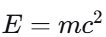
E=mc^2,D 包括:质能等价适用于所有静止质量不为零的物体,但须在质心系或特定参照系下理解。
域内封闭性断言:
∀x∈D:P(x) 为真.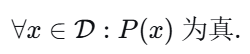
这意味着在 D 内,不存在反例。
2.2 “反例”的唯一合法解释:越界
当观测到与 P 矛盾的现象 ¬P(x0)时,TMM的真理层分析程序如下:
-
检查 x0 是否真正属于 D。绝大多数所谓的“反例”实际上是因为 x0x0 不满足边界条件。例如:
-
高速运动下 F=maF=ma 不成立 → 这不构成对牛顿力学的证伪,而是表明相对论效应超出了 DNewtonDNewton。牛顿力学在其域内依然绝对正确。
-
水在高压下100℃不沸腾 → 不否定“标准大气压下100℃沸腾”的真理(此例实际属于模型层规律,此处仅为说明域内正确性逻辑)。
-
-
若 x0∈D 但观测到 ¬P(x0),则必须检查:观测过程是否引入了域外干扰?是否测量仪器越出了其校准域?因为真理层的硬性不承诺经验观测的绝对无误,只承诺逻辑/数学推导的必然性。经验反例首先质疑的是方法层的可靠性,而不是真理层的正确性。
-
绝对不存在“真理在域内被反例推翻”的情形。若有人声称在 D 内找到了反例,唯一合理的结论是:要么 D 的界定被违反,要么观测/推导出错。这直接否定了波普尔式的“证伪可以推翻理论”在真理层的适用性。
2.3 与模型层的对比:模型可被反例修正,真理不可被反例否定
| 层级 | 对反例的响应 | 示例 |
|---|---|---|
| 真理层 | 反例→检查越界,不否定真理 | 水星近日点进动不否定牛顿力学在其域内的正确性 |
| 模型层 | 反例→修正模型,扩大或缩小边界 | 广义相对论修正牛顿引力模型在强场下的偏差 |
| 方法层 | 反例→检查实验设计、统计误差、仪器校准 | P值不显著可能源于样本量不足,而非模型错误 |
关键推论:TMM禁止用任何方法层的经验结果(包括“证伪性检验”)来直接否定真理层的命题。真理层的命题只能被逻辑矛盾或公理体系的修改所淘汰——而修改公理体系意味着进入了一个不同的真理域,并非否定原域内的真理。
三、真理层与模型层的精确区分:绝对 vs. 近似,必然 vs. 偶然
为了避免混淆,TMM给出了三条区分准则:
| 准则 | 真理层 | 模型层 |
|---|---|---|
| 真值模态 | 必然真(在域内) | 偶然真(可被经验修正) |
| 来源 | 公理体系内的演绎 | 经验归纳、数据拟合、类比推理 |
| 误差 | 零误差(如 1+1=2 不存在“大约等于2”) | 允许误差,通常带有不确定性区间 |
| 边界调整 | 边界由定义给定,调整意味着换域 | 边界可通过反馈不断精化 |
例证:
-
ππ 的数值是真理层吗?不,ππ 的定义(圆周长与直径之比)和其超越性属性属于数学真理,但“π=3.14159…”的具体十进制展开是计算模型的产物。TMM将数学命题归入真理层当且仅当它们是在公理体系内可证明的纯形式命题;经验测量值永远不属于真理层。
-
物理学中的守恒律(能量、动量、角动量)在诺特定理的意义上,是对应于对称性的数学必然结果,在给定作用量原理的框架内可证明——它们属于真理层,而不是经验归纳。反例(如中微子振荡中的表观能量不守恒)只会揭示模型层的边界(如需要引入新的粒子或相互作用),而不会否定能量守恒在封闭系统中的绝对性。
四、真理层的形式化检验程序(可操作标准)
为了让TMM在实践中可用,我们提出一个四步检验法,判定一个命题是否能够进入真理层:
步骤1:公理化溯源
命题能否在一个公认的公理体系(数学或物理学基本公设)内被形式化表达?如果能,写出其推导链。如果不能(如“所有金属受热膨胀”),则它最多属于模型层或经验规律。
步骤2:边界显式化
命题的适用域 D 必须用一组可判定的条件 BB 描述。BB 不能包含“通常”“大约”等模糊词。例如:DNewton={(m,v,r,t)∣v/c<0.1, Φ/c2≪1,… }。
步骤3:域内必然性验证
在 DD 内,命题的真值是否由公理体系必然保证?或者它是否依赖于未经验证的辅助假设?如果是后者,降级到模型层。
步骤4:反例越界测试
对任何声称的反例 x0,执行:x0∈D 是否成立?如果成立,那么 ¬P(x0) 与公理体系矛盾,说明观测或推导存在错误。若无法找出错误,则原命题未通过检验(但这种情况在数学真理中不会出现;在物理真理中,意味着“物理定律”可能被误判为绝对真理——此时TMM允许修正,但必须明确:所谓的“修正”实际上是重新界定 D 或公理体系)。
五、对TMM整体架构的强化作用
完善真理层的形式化边界带来了三个关键优势:
-
终结“真理是暂时的”波普尔谬误:波普尔认为所有科学命题都是可错的、暂时的。TMM通过区分真理层(域内必然)与模型层(可错近似),指出真正的科学硬核不是可错的。牛顿力学在其域内永远正确,就像欧几里得几何在平面内永远正确一样。
-
为模型层提供不可动摇的锚点:模型层的拟合度可以精确计算为“模型预测与真理层规律之间的偏差”。例如,广义相对论对水星近日点进动的计算,其正确性不是相对于“观测值”,而是相对于“牛顿引力理论在强场下的失效”——这本身就隐含了真理层的守恒律边界条件。
-
切断方法层对真理层的僭越通道:任何统计检验、P值、证伪实验都无法“否定”一个真理层命题。这彻底封杀了用“可证伪性”来绑架科学定义的行为。方法层的唯一合法功能是检验模型是否在真理层的边界内有效,而不是审判真理本身。
六、结论:真理层的硬度是TMM不可动摇的基石
真理层的形式化边界可以概括为三句话:
-
域内绝对:在给定边界内,真理命题不可反例。
-
反例越界:任何反例都意味着观察越过了边界,而不是真理被否定。
-
公理可证:真理命题必须能够在某个公理体系内被严格推导。
这三条原则将“真理”从空洞的信仰转化为了逻辑上可操作的判定标准。TMM不再是一套漂亮的口号,而是一台精密的理论测试仪:任何声称“科学”的活动,首先必须回答——它的结论是否服务于真理层的边界内绝对性?如果是,它就站在神殿的基石上;如果不是,它就应该在模型层或方法层安分守己,永远不得僭越。
真理回归神殿——现在有了精确的工程图纸。
Formal Boundaries of the Truth Layer: Absolute Hardness and Closedness Within Its Domain
To transform the “Truth Layer” from a declarative top‑level concept into operable, testable hard criteria, its formal boundaries must be precisely defined. This section unfolds along four dimensions: logical structure, closedness within its domain, transboundary interpretation of counterexamples, and boundary relations with the Model Layer and Method Layer, providing an unshakable mathematical‑philosophical foundation for the truth sovereignty of TMM.
I. Core Definition of the Truth Layer: Strict Provability Within a Given Axiomatic System
Definition: A proposition P belongs to the Truth Layer if and only if there exists an axiomatic system A (such as ZFC set theory, Peano arithmetic, the implicit postulates of Newtonian mechanics, etc.) such that P is strictly provable within A, and the domain of applicability D of P is clearly defined.
Key Features:
- Internal logical closure: Within D, the truth value of P does not depend on empirical observation, but is guaranteed by axioms and rules of inference.
- Finiteness of proof: There exists a finite formal derivation from A to P.
- Freedom from self-referential loopholes: P contains no self-referential assertion about its own truth value (to avoid paradoxes of the “this sentence is false” type).
Typical Examples:
- 1+1=2: Provable in Peano arithmetic or ZFC.
- F=ma at macroscopic low speeds: Derivable from the definition of momentum and the mathematical form of the second law within the axiomatic formulation of Newtonian mechanics (with clear definitions of mass, force, and inertial frames).
- ∇⋅B=0 (absence of magnetic monopoles): Within the axiomatic framework of classical electrodynamics, it is part of Maxwell’s equations, taken as an axiom or derived from them.
Excluded Counterexamples:
- “Water boils at 100°C under standard atmospheric pressure” is not a Truth Layer proposition, because it depends on specific material properties and empirical measurements; it is a regular generalization at the Model Layer (thermodynamic phase transition model), not a truth of absolute hardness.
- “All swans are white” is clearly not a Truth Layer proposition — it lacks support from an axiomatic system and is merely empirical induction.
II. Absolute Correctness Within the Domain of Applicability: Counterexamples Only Indicate “Transgression”, Not Refutation of Domain‑Internal Correctness
This is the most easily misunderstood key point of the Truth Layer. TMM explicitly maintains: truth is absolute and exceptionless within its domain of applicability; any phenomenon that appears to be a “counterexample” either results from measurement/observation beyond the applicable boundary of that truth, or from a misinterpretation of the truthful proposition.
2.1 Principle of Closedness Within the Domain
Let D be the domain of applicability of the truthful proposition P. D is defined by a set of boundary conditions B={b1,b2,…,bn}. For example:
- For F=ma (Newton’s second law), D includes: macroscopic scale (v≪c), low speed (non‑relativistic), weak gravitational field, inertial frame, etc.
- For E=mc2, D includes: mass‑energy equivalence applies to all objects with non‑zero rest mass, but must be understood in the center‑of‑mass frame or a specific reference frame.
Assertion of closedness within the domain:∀x∈D:P(x) is true.This means no counterexamples exist within D.
2.2 The Only Legitimate Interpretation of “Counterexamples”: Transgression
When a phenomenon ¬P(x0) contradicting P is observed, the Truth Layer analysis procedure of TMM proceeds as follows:
-
Check whether x0 truly belongs to D. The vast majority of so‑called “counterexamples” actually arise because x0 fails to satisfy the boundary conditions.
- F=ma fails at high speeds → this does not falsify Newtonian mechanics, but shows that relativistic effects lie outside DNewton. Newtonian mechanics remains absolutely correct within its domain.
- Water does not boil at 100°C under high pressure → does not refute the truth of “boiling at 100°C under standard atmospheric pressure” (this example actually belongs to a Model Layer regularity, used here only to illustrate the logic of intra‑domain correctness).
-
If x0∈D but ¬P(x0) is observed, one must check whether external disturbances have been introduced into the observation process, or whether measuring instruments have exceeded their calibrated domains.The hardness of the Truth Layer guarantees only the necessity of logical/mathematical derivation, not the absolute infallibility of empirical observation. Empirical counterexamples first cast doubt on the reliability of the Method Layer, not the correctness of the Truth Layer.
There absolutely exists no scenario in which “truth is overthrown by a counterexample within its domain”. If someone claims to have found a counterexample within D, the only rational conclusion is: either the definition of D has been violated, or an error occurred in observation or derivation. This directly negates the applicability of Popperian “falsification can overthrow theories” at the Truth Layer.
2.3 Contrast with the Model Layer: Models Can Be Revised by Counterexamples; Truth Cannot Be Negated by Counterexamples
表格
| Layer | Response to Counterexamples | Example |
|---|---|---|
| Truth Layer | Counterexample → check for transgression; truth is not negated | The perihelion precession of Mercury does not negate the correctness of Newtonian mechanics within its domain |
| Model Layer | Counterexample → revise the model, expand or narrow boundaries | General relativity corrects deviations of the Newtonian gravity model in strong fields |
| Method Layer | Counterexample → check experimental design, statistical error, instrument calibration | Insignificant p-value may result from insufficient sample size, not model error |
Key Corollary: TMM forbids the direct negation of Truth Layer propositions using any empirical results from the Method Layer (including “falsifiability tests”). Truth Layer propositions can only be eliminated by logical contradictions or revisions of the axiomatic system — yet revising the axiomatic system means entering a different truth domain, not refuting truth within the original domain.
III. Precise Distinction Between the Truth Layer and the Model Layer: Absolute vs. Approximate, Necessary vs. Contingent
To avoid confusion, TMM provides three criteria for distinction:
表格
| Criterion | Truth Layer | Model Layer |
|---|---|---|
| Modal truth value | Necessarily true (within domain) | Contingently true (empirically revisable) |
| Origin | Deduction within an axiomatic system | Empirical induction, data fitting, analogical reasoning |
| Error | Zero error (e.g., 1+1=2 admits no “approximately 2”) | Permits error, usually with uncertainty intervals |
| Boundary adjustment | Boundaries given by definition; adjustment implies domain change | Boundaries continuously refined via feedback |
Illustration:
- Is the numerical value of π in the Truth Layer? No. The definition of π (ratio of circumference to diameter) and its transcendental property belong to mathematical truth, but the specific decimal expansion “π=3.14159…” is a product of computational models. TMM classifies mathematical propositions into the Truth Layer if and only if they are purely formal propositions provable within an axiomatic system; empirical measurements never belong to the Truth Layer.
- Conservation laws in physics (energy, momentum, angular momentum) are, in the sense of Noether’s theorem, mathematical necessary consequences corresponding to symmetries, provable within the framework of a given action principle — they belong to the Truth Layer, not empirical induction. Apparent counterexamples (such as apparent non‑conservation of energy in neutrino oscillations) only reveal boundaries at the Model Layer (e.g., need to introduce new particles or interactions), without negating the absoluteness of energy conservation in closed systems.
IV. Formal Verification Procedure for the Truth Layer (Operable Criteria)
To make TMM practically applicable, we propose a four‑step test to determine whether a proposition can enter the Truth Layer:
Step 1: Axiomatic Tracing
Can the proposition be formally expressed within a recognized axiomatic system (fundamental postulates of mathematics or physics)? If yes, write out its derivation chain. If not (e.g., “all metals expand when heated”), it belongs at most to the Model Layer or empirical regularity.
Step 2: Explicit Boundarization
The domain of applicability D of the proposition must be described by a set of decidable conditions B. B must not contain vague terms such as “usually”, “approximately”. For example:DNewton={(m,v,r,t)∣v/c<0.1, Φ/c2≪1, …}
Step 3: Verification of Intra‑Domain Necessity
Within D, is the truth value of the proposition necessarily guaranteed by the axiomatic system? Or does it depend on unverified auxiliary hypotheses? If the latter, demote to the Model Layer.
Step 4: Counterexample Transgression Test
For any claimed counterexample x0, perform:Is x0∈D true?
- If yes, then ¬P(x0) contradicts the axiomatic system, indicating an error in observation or derivation.
- If no error can be identified, the original proposition fails the test (though this never occurs in mathematical truth; in physical truth, it means a “physical law” may have been misjudged as absolute truth — in such cases TMM permits revision, with the clear understanding that so‑called “revision” actually redefines D or the axiomatic system).
V. Strengthening Effect on the Overall TMM Architecture
Refining the formal boundaries of the Truth Layer yields three critical advantages:
-
Ends the Popperian fallacy that “truth is provisional”Popper held that all scientific propositions are fallible and provisional. By distinguishing the Truth Layer (intra‑domain necessity) from the Model Layer (fallible approximation), TMM shows that the real hard core of science is not fallible. Newtonian mechanics is forever correct within its domain, just as Euclidean geometry is forever correct on a plane.
-
Provides an unshakable anchor for the Model LayerThe fitting degree of the Model Layer can be precisely calculated as “the deviation between model predictions and Truth Layer laws”. For example, the correctness of general relativity’s calculation of Mercury’s perihelion precession is relative not to “observed values”, but to the “failure of Newtonian gravity in strong fields” — which itself presupposes boundary conditions of conservation laws at the Truth Layer.
-
Cuts off the channel of Method Layer usurpation of the Truth LayerNo statistical test, p-value, or falsification experiment can “negate” a Truth Layer proposition. This completely bans the hijacking of scientific definition by “falsifiability”. The only legitimate function of the Method Layer is to test whether models are valid within the boundaries of the Truth Layer, not to judge truth itself.
VI. Conclusion: The Hardness of the Truth Layer Is the Unshakable Cornerstone of TMM
The formal boundaries of the Truth Layer can be summarized in three statements:
- Intra‑domain absoluteness: Within given boundaries, truthful propositions admit no counterexamples.
- Counterexamples as transgression: Any counterexample means observation has crossed the boundary, not that truth has been refuted.
- Axiomatic provability: Truthful propositions must be strictly derivable within some axiomatic system.
These three principles transform “truth” from empty faith into a logically operable criterion of judgment. TMM is no longer a set of elegant slogans, but a precise theoretical testing instrument: any activity claiming to be “scientific” must first answer — does its conclusion serve the intra‑boundary absoluteness of the Truth Layer? If yes, it stands on the cornerstone of the temple; if not, it should remain within its proper place in the Model Layer or Method Layer, never to usurp.
Truth returns to its temple — now with precise engineering blueprints.

AtomGit 是由开放原子开源基金会联合 CSDN 等生态伙伴共同推出的新一代开源与人工智能协作平台。平台坚持“开放、中立、公益”的理念,把代码托管、模型共享、数据集托管、智能体开发体验和算力服务整合在一起,为开发者提供从开发、训练到部署的一站式体验。
更多推荐
 0
0 0
0- 0


 已为社区贡献430条内容

所有评论(0)