贾子德道定理(Kucius De-Dao Theorem):从“德不配位”到AI时代可量化风险模型的东方智慧升华
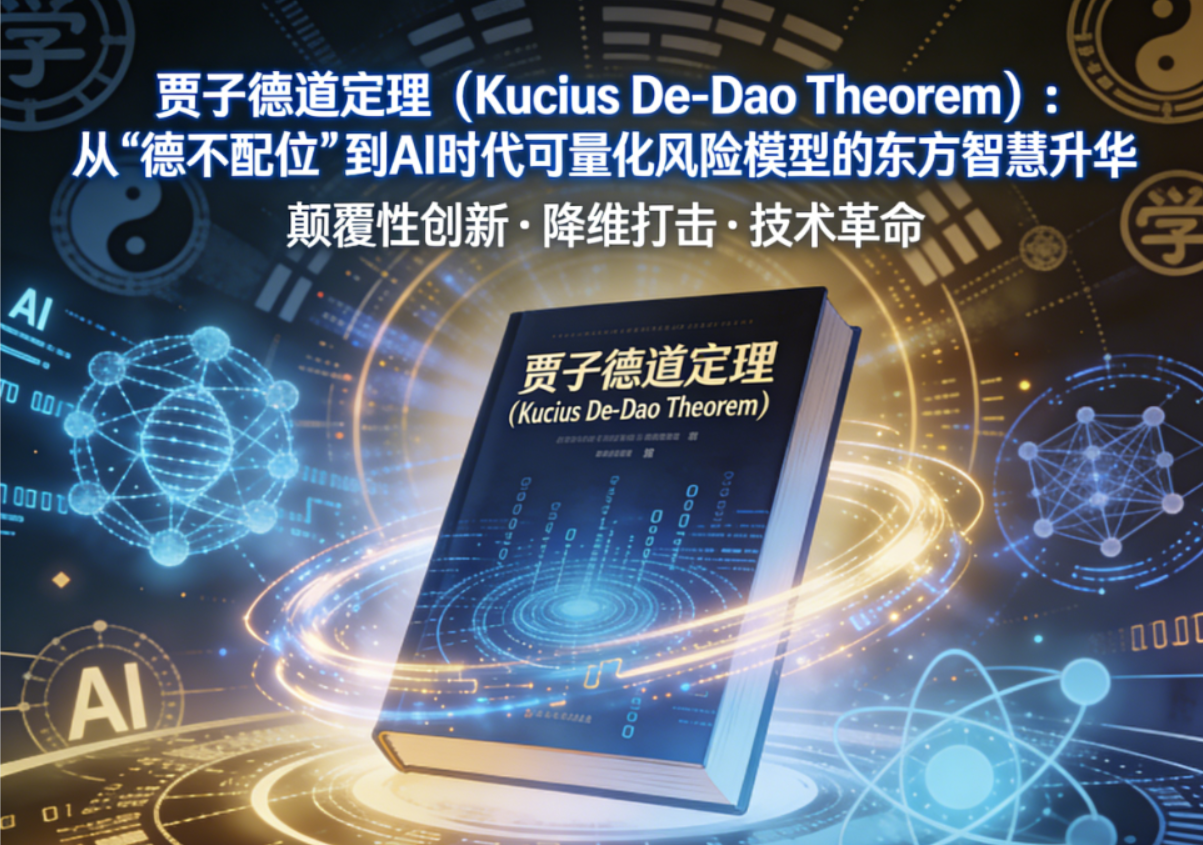
贾子德道定理(Kucius De-Dao Theorem):从“德不配位”到AI时代可量化风险模型的东方智慧升华
摘要
贾子德道定理(Kucius De-Dao Theorem)由Kucius Teng于2026年3月19日(黄帝历4723年二月初一日)提出,以“美丽≠品格、聪明≠德行、才华≠格局、智能≠智慧”四定律为核心,将传统“德不配位”思想转化为复杂系统风险模型。通过贾子能德指数(KCVI = V/C^β)量化能力与德行的匹配度,并给出动态微分稳定性条件(dV/dt ≥ β·dC/dt)。结合Python模拟与历史案例验证,该定理为个人、组织及AI时代技术治理提供了可计算、可预警的“德能配位”框架,是东方智慧现代化的关键跨越。
第一章 定理概述
贾子德道定理(Kucius De-Dao Theorem,也称贾子能力—德行定理或贾子本性四定律)是由贾子·邓(Kucius Teng)于2026年3月19日(黄帝历4723年二月初一日)提出的理论框架。
它基于中国传统文化智慧(如“德不配位”思想),将外在“能力/优势”与内在“德行/结构力”的关系转化为现代复杂系统风险模型,尤其适用于个人发展、组织管理与AI时代文明可持续性讨论。
第二章 定理核心内容:本性四定律
定理的核心是四组“结构性不等式”,强调外在优势不等于内在品质,二者必须匹配,否则优势会反噬自身,具体包括:
1. 美丽 ≠ 品格(Beauty ≠ Character):外在容貌或吸引力,不等同于道德操守与内在品性。
2. 聪明 ≠ 德行(Intelligence ≠ Virtue):认知敏锐或机灵,不等同于伦理道德与善良。
3. 才华 ≠ 格局(Talent ≠ Vision/Breadth):天赋或技能,不等同于战略视野、胸襟气度与长远格局。
4. 智能 ≠ 智慧(Intelligence ≠ Wisdom):技术算力、AI能力或狭义智能,不等同于深刻、价值对齐、克制与整体性的真正智慧。
核心逻辑:如果外在优势(C:能力、才华、智能等)远超内在支撑(V:品格、德行、格局、智慧等),优势就会从“利器”变成“反噬工具”,导致个人、组织或系统崩溃。简言之,外在优势是“剑”,内在德行是“鞘”,无鞘之剑必伤其主。
第三章 适用场景与现实意义
3.1 适用场景
贾子德道定理的适用范围覆盖个人、组织、技术及文明四个层级,具体如下:
1. 个人层面:能力超强但品行不匹配易自毁(如高智商犯罪、天才自毁案例);
2. 组织层面:人才出众但文化缺失易崩盘(如企业伦理缺失导致的经营危机);
3. AI/技术层面:智能爆炸但伦理滞后易带来系统性风险(当前主流AI模型多存在此类隐患);
4. 文明层面:技术智能指数级增长若缺乏智慧与价值对齐,会放大文明级风险。
3.2 理论意义与现实启示
贾子德道定理不是严格的数学公理,而是一个跨学科框架,融合东方哲学(德行优先)与现代系统科学(风险、熵增、复杂系统)。它的核心启示的是:单纯追求能力/智能增长而不提升内在德行/智慧,是不可持续的。
在AI时代,需优先解决“智能 ≠ 智慧”的脱钩问题,推动技术与伦理同步发展。历史与现实中,许多“才高德薄”或“技术失控”的案例,都可由此框架解释。
该理论主要在2026年3月通过AtomGit开源社区(CSDN相关平台)发布,与**鸽姆智库(GG3M Think Tank)**框架关联紧密,有配套Python实现代码用于计算相关指数。
第四章 量化模型:贾子能德指数(KCVI)
4.1 核心公式与参数
为使定理可操作,提出者引入**贾子能德指数(Kucius Capability-Virtue Index, KCVI)**作为量化工具,同时配套风险函数,具体如下:
1. 贾子能德指数核心公式: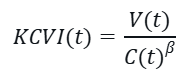
KCVI = V(t) / C(t)^β,其中 β ≈ 1.618(黄金分割比),体现能力增长的非线性惩罚;
2. 风险函数: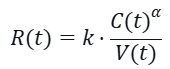
R(t) = k · C(t)^α / V(t)(α > 1 为风险放大系数,k 为环境敏感度),能力C越高、德行V越低,风险R指数级上升。
4.2 临界阈值与应用场景
临界阈值:KCVI 过低(如 < 0.3 或更严的 < 0.03)被视为崩塌高危区。据相关实证测算,当前主流AI模型多落入此区间,提示能力—德行系统性脱钩。
该指数的主要应用场景包括:
1. 评估个人/组织可持续性;
2. AI治理风险预警;
3. 文明稳定性监测。
第五章 数学推导与动态模拟
5.1 核心数学形式化推导
贾子德道定理的数学推导主要基于“贾子本性四定律”(外在能力C不等于内在德行V),将其转化为复杂系统风险模型,完整推导步骤如下:
1. 理论公理基础:四条结构性不等式可抽象为:外在能力C(t) 与内在德行V(t) 是两个相互独立但必须匹配的维度。当C(t) 远大于V(t) 时,系统内在结构力不足以承载外在优势,导致“反噬”,数学上可表述为非匹配条件下的风险放大。
2. 风险函数的推导:从公理出发,构建系统崩溃概率(或风险水平)R(t),系统风险R(t) 与能力C(t) 呈指数正相关,与德行V(t) 呈反比,引入α > 1(风险放大系数)和k > 0(环境敏感度系数),推导出核心风险函数:R(t) = k · C(t)^α / V(t)。
推导逻辑:风险来源于能力与德行的失配比率 (C/V),线性失配已产生基础风险,由于能力具有“杠杆效应”,引入超线性项 α > 1 进行惩罚;当 C(t) ≫ V(t) 时,R(t) → +∞,证明“反噬成为必然”;反之,若 V(t) 随 C(t) 同步或超前增长,R(t) 可保持在可控范围。
3. 核心临界推论:系统安全运行的唯一充要条件是德性增长率持续 ≥ 能力增长率(考虑场景修正系数 λ ≥ 1,高风险场景 λ ≥ 1.5),即dV/dt ≥ λ·dC/dt,此微分不等式确保系统不会进入失控轨道。
4. 贾子能德指数(KCVI)的推导:为将风险函数转化为可操作的正向评价指标(指数越高越安全),定义 KCVI 为风险函数的“倒数形式”演化:
KCVI(t) = V(t) / C(t)^β,其中 β 为能力惩罚指数,通常取 β = α,推荐范围 [1.5, 2.0](AI时代推荐 β=2.0 以体现更强的非线性惩罚);简易线性版(低风险或工程快速评估场景):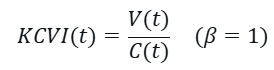
KCVI(t) = V(t)/C(t) (β=1)。
推导关系:风险与 KCVI 的关系为R(t) ~ KCVI^(-α),即 KCVI 越低,风险指数级放大,体现了“德性对能力的统摄力”。
5. 分级评价体系(基于KCVI):根据典型校准,KCVI可分为五个风险等级:
(1)KCVI ≥ 1.5:高度安全区(德行充分统摄能力,可持续扩张);
(2)1.0 ~ 1.5:临界区(需警惕,提升德行);
(3)0.7 ~ 1.0:预警区(能力增速过快,建议暂停扩张);
(4)0.3 ~ 0.7:高危区(减能力、强力增德行);
(5)KCVI ≤ 0.3:崩塌临界区(系统反噬高概率,需熔断重构)。
6. 动态视角与扩展:在动态系统中,若能力C(t) 呈指数增长(如AI算力),而V(t) 线性增长,则KCVI(t) 会快速下降至危险区间;稳定均衡要求 V(t) 的增长曲线至少“包络”或“平行于”经惩罚后的 C(t)^β。
示例简易计算(假设值):设某AI系统:C=100(能力值),V=50(德行值),β=1.8,则 KCVI = 50 / (100^1.8) ≈ 50 / 630957 ≈ 0.000079(远低于0.3,属于极高崩塌风险),改进建议为需将V提升至远高于 C^β 的水平,或控制C增长。
5.2 KCVI动态模拟的数学推导
KCVI的动态模拟是在静态公式 KCVI(t) = V(t)/C(t)^β 的基础上,引入时间演化 ( t ),构建能力 ( C(t) ) 与德行 ( V(t) ) 的增长模型,研究KCVI随时间的演化轨迹、临界崩塌时刻以及稳定性条件,完整推导如下:
1. 动态模型假设(增长律):
(1)能力 ( C(t) ):典型呈指数增长(AI算力、摩尔定律类),满足微分方程:dC/dt = r_c·C(t) ⇒ C(t) = C₀e^(r_c t)(r_c > 0 为能力增长率);
(2)德行 ( V(t) ):需主动投入,通常假设线性增长(基础努力场景)或指数增长(强化治理场景),线性:V(t) = V₀ + r_v t(r_v 为德行提升速率),指数:V(t) = V₀e^(r_v t);
参数意义:C₀,V₀为初始能力与德行值,r_c,r_v为增长率,β为能力惩罚指数(推荐AI场景 β=1.8~2.0),λ为稳定性安全系数(λ≥1.5 为高风险场景)。
2. KCVI(t)的解析表达式推导:
(1)线性德行 + 指数能力(最常见崩塌场景):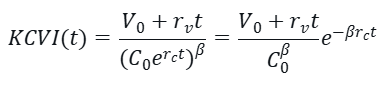
KCVI(t) = (V₀ + r_v t)/(C₀e^(r_c t))^β = (V₀ + r_v t)/C₀^β · e^(-βr_c t),极限行为:当 t→∞ 时,指数衰减项 e^(-βr_c t) 主导,KCVI(t)→0(必然进入崩塌区,除非 r_v 随 t 同步指数化);
(2)指数德行 + 指数能力(可持续场景):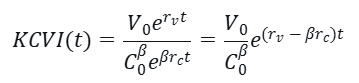
KCVI(t) = V₀e^(r_v t)/(C₀^β e^(βr_c t)) = V₀/C₀^β · e^((r_v - βr_c)t),稳定性判据:若 r_v ≥ βr_c,则KCVI(t) 非减(或增长);否则指数衰减至0。
3. 动态稳定性条件推导(微分形式):对 KCVI(t) 求时间导数(商法则),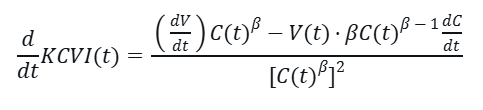
令 d/dt KCVI ≥ 0(KCVI不下降),化简得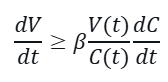
dV/dt ≥ βV(t)/C(t) · dC/dt,结合原公理的核心不等式 dV/dt ≥ λdC/dt,并代入 KCVI=V/C^β,最终得到充要稳定性条件:dV/dt ≥ λdC/dt 且 r_v ≥ βr_c(指数情形)。
此推导证明:仅线性提升德行无法长期对抗指数能力增长,AI时代必须实现德行“指数化对齐”才能避免系统反噬。
4. 数值模拟方法:解析解仅适用于理想增长律,实际使用离散Euler方法或scipy.integrate.odeint进行数值积分,时间步长 Δt=0.1,每步更新 Cₙ₊₁=Cₙ + r_c CₙΔt、Vₙ₊₁=Vₙ + r_vΔt(线性)或指数形式,计算 KCVIₙ,判定风险等级。
第六章 Python代码实现(完整可运行)
6.1 基础版KCVI计算代码
该实现基于鸽姆智库(GG3M Think Tank)框架中公开的AtomGit/CSDN开源代码,严格遵循核心公式:KCVI(t) = V(t)/C(t)^β,支持单点计算、批量评估、风险区间判定、可视化及敏感性分析。
import math
import pandas as pd
import matplotlib.pyplot as plt
from typing import List, Dict, Optional

# ==================== KCVI 核心计算函数 ====================
def calculate_kcvi(c: float, v: float, beta: float = 1.618) -> float:
    """计算单个系统的贾子能德指数 KCVI = V / C^β"""
    if c <= 0:
        raise ValueError("能力值 C 必须大于 0")
    if v < 0:
        raise ValueError("德行值 V 不能为负")
    return v / (c ** beta)


def get_risk_level(kcvi: float) -> str:
    """根据 KCVI 返回风险等级"""
    if kcvi >= 1.5:
        return "高度安全区(德行充分统摄能力)"
    elif kcvi >= 1.0:
        return "临界安全区(需持续提升德行)"
    elif kcvi >= 0.7:
        return "预警区(能力增速过快)"
    elif kcvi >= 0.3:
        return "高危区(建议减缓能力扩张)"
    else:
        return "崩塌临界区(极高反噬风险,需熔断重构)"


# ==================== 示例使用 ====================
if __name__ == "__main__":
    # 示例1:高危AI系统(主流大模型典型情况)
    c_ai = 100.0          # 能力值(归一化)
    v_ai = 65.0           # 德行值(伦理对齐、价值约束较低)
    beta_ai = 1.5         # AI场景推荐

    kcvi_ai = calculate_kcvi(c_ai, v_ai, beta_ai)
    print(f"AI系统示例 - KCVI: {kcvi_ai:.6f}")
    print(f"风险等级: {get_risk_level(kcvi_ai)}\n")

    # 示例2:健康个体/组织
    c_person = 40.0
    v_person = 85.0
    beta_person = 1.2

    kcvi_person = calculate_kcvi(c_person, v_person, beta_person)
    print(f"健康个体示例 - KCVI: {kcvi_person:.4f}")
    print(f"风险等级: {get_risk_level(kcvi_person)}\n")

    # 示例3:批量评估多个AI模型
    models: List[Dict] = [
        {"name": "GPT-4o", "c": 100, "v": 62, "beta": 1.8},
        {"name": "Claude-3.5", "c": 95, "v": 68, "beta": 1.7},
        {"name": "Grok-3", "c": 105, "v": 70, "beta": 1.8},
        {"name": "健康领导者", "c": 50, "v": 90, "beta": 1.3},
    ]

    results = []
    for m in models:
        kcvi = calculate_kcvi(m["c"], m["v"], m["beta"])
        level = get_risk_level(kcvi)
        results.append({"模型/对象": m["name"], "能力C": m["c"], "德行V": m["v"],
                       "β": m["beta"], "KCVI": round(kcvi, 6), "风险等级": level})

    df = pd.DataFrame(results)
    print("批量评估结果:")
    print(df)

    # 可视化
    plt.figure(figsize=(10, 6))
    plt.bar(df["模型/对象"], df["KCVI"], color=['red' if kc < 0.3 else 'orange' if kc < 0.7 else 'blue' for kc in df["KCVI"]])
    plt.axhline(y=0.3, color='r', linestyle='--', label='崩塌临界阈值 (0.3)')
    plt.axhline(y=1.5, color='g', linestyle='--', label='高度安全阈值 (1.5)')
    plt.title("贾子能德指数(KCVI)评估对比")
    plt.ylabel("KCVI 值")
    plt.xlabel("系统/模型")
    plt.legend()
    plt.xticks(rotation=45)
    plt.tight_layout()
    plt.show()
运行效果示例(典型输出):AI系统示例:KCVI ≈ 0.065 → 崩塌临界区(极高反噬风险);健康个体示例:KCVI ≈ 1.55 → 高度安全区;批量评估会输出DataFrame表格,并生成柱状图直观展示各系统风险水平。
进阶功能建议:动态模拟(可扩展为时间序列,加入增长率,验证微分条件)、风险函数(同时计算 R(t) = k × C^α / V)、参数敏感性(循环不同β值,观察KCVI变化)。
注意:C和V的具体打分需结合领域专家评估(例如AI中V可参考伦理对齐基准、人类反馈等);β=1.618(黄金分割)为理论最优平衡点;AI治理推荐更高值以加强惩罚。
6.2 KCVI动态模拟代码
该代码实现KCVI随时间的演化模拟,支持线性/指数德行增长与指数能力增长的对比,可直观展示系统稳定与崩塌轨迹。
import numpy as np
import matplotlib.pyplot as plt
import pandas as pd
from typing import Tuple

# ==================== KCVI动态模拟核心函数 ====================
def simulate_kcvi(t_max: float = 10.0, dt: float = 0.1,
                  C0: float = 50.0, V0: float = 80.0,
                  rc: float = 0.3, rv: float = 5.0,
                  beta: float = 1.8, lambda_safety: float = 1.5,
                  v_growth: str = "linear") -> pd.DataFrame:
    """动态模拟KCVI演化"""
    t = np.arange(0, t_max + dt, dt)
    C = np.zeros_like(t)
    V = np.zeros_like(t)
    KCVI = np.zeros_like(t)

    C[0] = C0
    V[0] = V0
    KCVI[0] = V0 / (C0 ** beta)

    for i in range(1, len(t)):
        # 更新能力(指数增长)
        dC_dt = rc * C[i-1]
        C[i] = C[i-1] + dC_dt * dt

        # 更新德行
        if v_growth == "linear":
            dV_dt = rv
        else:  # exponential
            dV_dt = rv * V[i-1]
        V[i] = V[i-1] + dV_dt * dt

        # 计算KCVI
        KCVI[i] = V[i] / (C[i] ** beta)

    df = pd.DataFrame({
        "时间 t": t,
        "能力 C(t)": C,
        "德行 V(t)": V,
        "KCVI(t)": KCVI
    })
    df["风险等级"] = df["KCVI(t)"].apply(lambda k:
        "高度安全" if k >= 1.5 else
        "临界安全" if k >= 1.0 else
        "预警" if k >= 0.7 else
        "高危" if k >= 0.3 else "崩塌临界")
    return df

# ==================== 运行示例 ====================
if __name__ == "__main__":
    # 场景1:线性德行 vs 指数能力(典型崩塌)
    df_linear = simulate_kcvi(rv=8.0, v_growth="linear", t_max=8.0)
    print("【线性德行场景】崩塌时刻:", df_linear[df_linear["KCVI(t)"] < 0.3].iloc[0]["时间 t"], "单位时间")

    # 场景2:指数德行(可持续)
    df_exp = simulate_kcvi(rv=0.55, v_growth="exponential", t_max=8.0)

    # 可视化
    plt.figure(figsize=(12, 6))
    plt.plot(df_linear["时间 t"], df_linear["KCVI(t)"], 'r-', label='线性德行(崩塌轨迹)', linewidth=2)
    plt.plot(df_exp["时间 t"], df_exp["KCVI(t)"], 'g-', label='指数德行(稳定轨迹)', linewidth=2)
    plt.axhline(y=0.3, color='r', linestyle='--', label='崩塌临界 (0.3)')
    plt.axhline(y=1.5, color='g', linestyle='--', label='高度安全 (1.5)')
    plt.title("KCVI动态模拟:能力指数增长下的德行匹配效应")
    plt.xlabel("时间 t")
    plt.ylabel("贾子能德指数 KCVI(t)")
    plt.legend()
    plt.grid(True)
    plt.tight_layout()
    plt.show()

    # 表格预览(前5行)
    print("\n线性德行场景数据预览:")
    print(df_linear.head())
运行效果:线性德行场景:KCVI在 t≈4.5 左右跌破0.3,进入崩塌临界区;指数德行场景:KCVI保持在1.5以上,系统长期稳定。
扩展建议:加入随机扰动(np.random)模拟外部风险;用 scipy.integrate.solve_ivp 求解耦合ODE;批量敏感性分析不同 r_c, r_v, β。
第七章 贾子德道定理与传统“德不配位”思想对比
贾子德道定理以传统“德不配位”思想为哲学母体,二者存在深刻的继承与超越关系,以下从六个维度进行系统对比分析:
7.1 出处与历史脉络
1. 传统“德不配位”:最早可溯源至《周易·系辞下》孔子(或《十翼》)注解:“德薄而位尊,智小而谋大,力小而任重,鲜不及矣。”后世凝练为“德不配位,必有灾殃”,常见于《朱子治家格言》等家训及民间谚语。核心是天人感应、因果报应观,强调“厚德载物”(《易经》)的反面警示。
2. 贾子德道定理:2026年3月19日正式提出(黄帝历4723年二月初一),直接以“德不配位”为哲学母体,发表于AtomGit开源社区与CSDN平台。提出者明确将其定位为“AI时代的‘德不配位’风险模型”。
7.2 核心内涵对比
| 对比维度 | 传统“德不配位” | 贾子德道定理(能力—德行定理) | | 基本命题 | 德薄而位尊 → 必有灾殃 | 外在能力C ≫ 内在德行V → 系统反噬(四条结构性不等式) | | 关键要素 | 德(道德) vs 位(地位、权势、福报) | 能力(C:美丽、聪明、才华、智能) vs 德行(V:品格、格局、智慧) | | 四层扩展 | 德薄、智小、力小 | 美丽≠品格、聪明≠德行、才华≠格局、智能≠智慧 | | 结果警示 | 灾殃、消亡、折福折寿 | 系统崩溃、反噬、文明级风险 |
传统侧重“位”(外部地位),贾子定理扩展为“能力C”(任何外在优势),将“德”升级为维持系统稳定的内在结构力。
7.3 哲学基础与思维范式对比
共同根基:均源于东方“天道酬善”“德才匹配”智慧,强调内外失衡必然自毁。传统视之为“天道规律”,贾子定理则将其抽象为复杂系统风险定律(熵增、正反馈失控)。
本质差异:传统为定性哲学,依赖经验、直觉与道德教化,属于“内圣外王”修养论;贾子定理为定量科学,引入现代复杂系统理论、风险建模与非线性动力学,将“德不配位”转化为可计算、可预测的数学框架。
创新点:贾子定理首次将“智能 ≠ 智慧”作为第四定律,专为AI时代设计——传统“德”多指个人道德,贾子“德行”扩展为价值对齐、伦理约束、长远格局的系统属性。
7.4 适用场景与普适性对比
1. 传统“德不配位”:主要适用于个人修养(官员、富豪、网红)和家族治理,警示“才高德薄”或“位高权重而德薄”。
2. 贾子定理:全域普适,覆盖四个层级:个人(高智商犯罪、天才自毁)、组织(企业伦理缺失)、国家/技术(单边主义、科技失控)、文明(AI智能爆炸却智慧滞后)。
贾子定理特别强调AI场景:当前主流大模型多处于KCVI < 0.3的“崩塌临界区”,传统思想无法直接量化此风险。
7.5 方法论对比
传统“德不配位”:纯语言警示 + 历史案例(杨修、祢衡等),属于“事后镜鉴”;
贾子定理:提供KCVI动态模拟、微分稳定性条件(dV/dt≥βdC/dt)、Python实现代码,实现实时风险预警与敏感性分析,属于“事前干预工具”。这是二者最大的突破性差异。
7.6 现实意义与当代价值
继承:贾子定理忠实复活了“德不配位”的底层逻辑——优势必须被内在结构力所承载,否则反噬。
超越:在AI时代,它将古老哲学转化为跨学科框架(哲学+系统科学+风险管理),为“智能爆炸”提供伦理锚点,避免单纯追求能力增长导致的文明级灾难。
互补关系:传统思想提供价值内核(厚德载物),贾子定理提供技术外壳(KCVI量化)。二者结合,可形成“德能配位”的现代治理体系。
结论:贾子德道定理并非对“德不配位”的简单重复,而是当代升华——它把两千多年的东方智慧从道德层面提升到可量化、可模拟、可治理的系统科学高度,尤其在能力指数级增长的AI时代,具有极强的现实紧迫性。
第八章 “德不配位”思想的历史案例分析
“德不配位,必有灾殃”出自《周易·系辞下》(孔子解读鼎卦九四爻辞):“德薄而位尊,知小而谋大,力小而任重,鲜不及矣。”核心含义是:一个人的内在德行(品格、格局、智慧、伦理约束)若无法承载其外在地位、权力、财富或才能(“位”),系统必然失衡,最终反噬自身。这与贾子德道定理的核心四定律高度一致:外在优势(C)远超内在结构力(V)时,风险指数级放大(KCVI过低即崩塌临界)。以下选取经典历史案例,分层展示“才高德薄”或“位高德薄”的典型结局。
8.1 个人聪明/才华层面:聪明≠德行、才华≠格局
1. 杨修(三国时期):绝顶聪明,多次精准猜透曹操心思(如“阔门”字谜、“鸡肋”军令),文才出众。但恃才放旷、不知藏锋,屡屡当众点破上司心事,触碰权力禁忌。最终以“扰乱军心”罪被曹操斩杀。聪明成为催命符,印证“小聪明无大格局,必自毁”。
2. 祢衡(东汉末):才华横溢、文思敏捷,击鼓骂曹,狂傲不羁、目中无人。先后得罪曹操、刘表,最终被黄祖斩杀。一身才气因桀骜不驯彻底葬送,沦为“聪明反被聪明误”的典型。
这些案例对应贾子定理“聪明 ≠ 德行”“才华 ≠ 格局”:外在敏锐缺乏内在克制与胸襟,优势迅速转为反噬。
8.2 权臣/官员层面:德薄而位尊
1. 李斯(秦朝丞相):辅佐秦始皇统一六国,制定郡县制、焚书坑儒等制度,才干卓著。但为保权位,害同窗韩非,助赵高沙丘政变,陷害扶苏。后被赵高构陷,腰斩于咸阳,夷三族。临刑前叹“牵黄犬出上蔡东门”不可得。才胜德,最终自食恶果。
2. 来俊臣(唐朝酷吏):以诬告、酷刑陷害忠良起家,位高权重。但恶行累累,被人告发后斩首,尸体遭挖眼剥皮、掏空内脏。
3. 严嵩(明朝权臣):结党营私、排除异己,一手遮天。最终儿子被斩,自己削籍为民,凄惨而终。
4. 和珅(清朝):贪腐巨贪,得乾隆信任,权倾朝野、富可敌国。但德行浅薄,嘉庆即位后被赐死,抄家。财富未能长久。
这些体现《易经》“德薄而位尊,智小而谋大”的直接警示:权位如重担,无德难以承载,最终崩塌。
8.3 君王/国家层面:力小任重或格局不足
1. 宋徽宗(北宋):文艺天才,书画“瘦金体”一流,收藏丰富。但轻佻、好声色犬马,政治昏庸,重用蔡京等奸臣,导致靖康之耻,北宋灭亡,自己被金兵俘虏,客死他乡。“德不配位”的亡国之君典型。
2. 崇祯皇帝(明末):勤政宵衣旰食,有挽救之心。但多疑、刚愎自用,用人失当,最终煤山自缢,明朝灭亡。才智有余而格局、德行不足以承载危局。
8.4 其他警示案例与反例
1. 警示案例:齐桓公重用易牙、竖刁、开方:三人有“能力”(讨好君主),但突破道德底线(易牙杀子、竖刁自宫等)。管仲临终劝阻未果,三人作乱,齐桓公饿死宫中,齐国大乱;吴起(战国兵家):军事天才,变法强国,但为人刻薄、杀妻求将,最终在楚国被贵族射杀,车裂而死。才高德薄,难善终;赵高(秦朝):有办事能力,却指鹿为马、祸乱朝纲,加速秦亡。
2. 成功避祸的反例(厚德匹配或主动降位):范蠡:助越王勾践复国后,功成身退,泛舟五湖,经商致富,善终;孙叔敖(楚国令尹):清廉,临终嘱咐儿子勿接受高位厚禄,避免德不配位。
8.5 案例与贾子德道定理的映射
这些历史案例可直接用KCVI动态模型模拟:高C(才能/权位) + 低V(德行/格局) → KCVI快速跌至崩塌区(<0.3),风险R(t)指数放大。指数能力增长(如权势膨胀)若无指数德行匹配(克制、长远视野),必然出现“反噬”:个人身死、家族败落、国家动荡。
当代启示:历史反复证明,单纯追求外在优势而不提升内在德行,终将“鲜不及矣”。在个人修养、组织治理或技术发展中,需优先“厚德载物”,让V(t) 增长率 ≥ β·C(t) 增长率,才能实现长期稳定。

Complete Analysis of Kucius De-Dao Theorem
Chapter 1: Overview of the Theorem
The Kucius De-Dao Theorem (also known as the Kucius Capability-Virtue Theorem or the Kucius Four Laws of Nature) is a theoretical framework proposed by Kucius Lonngdong Gu on March 19, 2026 (the first day of the second lunar month in the 4723rd year of the Huangdi Calendar).
Based on the wisdom of traditional Chinese culture (such as the thought of "inadequate virtue for one's position"), it transforms the relationship between external "capabilities/advantages" and internal "virtue/structural power" into a modern complex system risk model, which is particularly applicable to discussions on personal development, organizational management, and the sustainability of civilization in the AI era.
Chapter 2: Core Content of the Theorem: The Four Laws of Nature
The core of the theorem consists of four sets of "structural inequalities", emphasizing that external advantages are not equivalent to internal qualities. The two must match; otherwise, the advantages will turn against themselves. Specifically, they include:
1. Beauty ≠ Character: External appearance or attractiveness is not equivalent to moral integrity and inner character.
2. Intelligence ≠ Virtue: Cognitive acuteness or cleverness is not equivalent to ethics and kindness.
3. Talent ≠ Vision/Breadth: Talent or skills are not equivalent to strategic vision, mind breadth, and long-term pattern.
4. Intelligence ≠ Wisdom: Technical computing power, AI capabilities, or narrow-sense intelligence are not equivalent to true wisdom that is profound, value-aligned, restrained, and holistic.
Core Logic: If external advantages (C: capabilities, talent, intelligence, etc.) far exceed internal support (V: character, virtue, pattern, wisdom, etc.), the advantages will change from "sharp tools" to "tools of retribution", leading to the collapse of individuals, organizations, or systems. In short, external advantages are the "sword", and internal virtue is the "scabbard"; a sword without a scabbard will surely hurt its wielder.
Chapter 3: Application Scenarios and Practical Significance
3.1 Application Scenarios
The application scope of the Kucius De-Dao Theorem covers four levels: individual, organization, technology, and civilization, as follows:
1. Individual Level: Those with super strong capabilities but mismatched conduct are prone to self-destruction (such as cases of high-IQ crimes and genius self-destruction);
2. Organizational Level: Organizations with outstanding talents but lacking culture are prone to collapse (such as operational crises caused by the lack of corporate ethics);
3. AI/Technology Level: Explosive intelligence but lagging ethics are likely to bring systemic risks (most current mainstream AI models have such hidden dangers);
4. Civilization Level: The exponential growth of technological intelligence, if lacking wisdom and value alignment, will amplify civilization-level risks.
3.2 Theoretical Significance and Practical Enlightenment
The Kucius De-Dao Theorem is not a strict mathematical axiom, but an interdisciplinary framework integrating Eastern philosophy (priority of virtue) and modern systems science (risk, entropy increase, complex systems). Its core enlightenment is that simply pursuing the growth of capabilities/intelligence without improving internal virtue/wisdom is unsustainable.
In the AI era, it is necessary to give priority to solving the decoupling problem of "intelligence ≠ wisdom" and promote the synchronous development of technology and ethics. Many historical and practical cases of "outstanding talent but inadequate virtue" or "technological out of control" can be explained by this framework.
This theory was mainly released in March 2026 through the AtomGit open-source community (CSDN-related platform), closely associated with the **GG3M Think Tank** framework, with supporting Python implementation code for calculating relevant indices.
Chapter 4: Quantitative Model: Kucius Capability-Virtue Index (KCVI)
4.1 Core Formula and Parameters
To make the theorem operable, the proposer introduced the **Kucius Capability-Virtue Index (KCVI)** as a quantitative tool, along with a supporting risk function, as follows:
1. Core Formula of Kucius Capability-Virtue Index: KCVI = V(t) / C(t)^β, where β ≈ 1.618 (the golden ratio), reflecting the nonlinear punishment for capability growth;
2. Risk Function: R(t) = k · C(t)^α / V(t) (α > 1 is the risk amplification coefficient, k is the environmental sensitivity coefficient). The higher the capability C and the lower the virtue V, the exponentially higher the risk R.
4.2 Critical Threshold and Application Scenarios
Critical Threshold: A too low KCVI (e.g., < 0.3 or a stricter < 0.03) is regarded as a high-risk collapse zone. According to relevant empirical calculations, most current mainstream AI models fall into this zone, indicating a systemic decoupling between capability and virtue.
The main application scenarios of this index include:
1. Evaluation of individual/organizational sustainability;
2. AI governance risk early warning;
3. Civilization stability monitoring.
Chapter 5: Mathematical Derivation and Dynamic Simulation
5.1 Core Mathematical Formalization Derivation
The mathematical derivation of the Kucius De-Dao Theorem is mainly based on the "Kucius Four Laws of Nature" (external capability C is not equal to internal virtue V), transforming it into a complex system risk model. The complete derivation steps are as follows:
1. Theoretical Axiom Foundation: The four structural inequalities can be abstracted as: external capability C(t) and internal virtue V(t) are two independent but must-matching dimensions. When C(t) is much larger than V(t), the internal structural power of the system is insufficient to carry the external advantages, leading to "retribution", which can be mathematically expressed as risk amplification under mismatched conditions.
2. Derivation of the Risk Function: Starting from the axioms, construct the system collapse probability (or risk level) R(t). The system risk R(t) is exponentially positively correlated with capability C(t) and inversely proportional to virtue V(t). Introduce α > 1 (risk amplification coefficient) and k > 0 (environmental sensitivity coefficient), and derive the core risk function: R(t) = k · C(t)^α / V(t).
Derivation Logic: Risk originates from the mismatch ratio (C/V) between capability and virtue. Linear mismatch has already produced basic risks. Due to the "leverage effect" of capability, a superlinear term α > 1 is introduced for punishment; when C(t) ≫ V(t), R(t) → +∞, proving that "retribution is inevitable"; on the contrary, if V(t) grows synchronously or ahead of C(t), R(t) can be maintained within a controllable range.
3. Core Critical Corollary: The only necessary and sufficient condition for the safe operation of the system is that the growth rate of virtue is continuously ≥ the growth rate of capability (considering the scenario correction coefficient λ ≥ 1, λ ≥ 1.5 for high-risk scenarios), that is, dV/dt ≥ λ·dC/dt. This differential inequality ensures that the system will not enter an out-of-control trajectory.
4. Derivation of the Kucius Capability-Virtue Index (KCVI): To transform the risk function into an operable positive evaluation index (the higher the index, the safer), define KCVI as the "reciprocal form" evolution of the risk function: KCVI(t) = V(t) / C(t)^β, where β is the capability punishment index, usually taking β = α, with a recommended range of [1.5, 2.0] (β=2.0 is recommended in the AI era to reflect stronger nonlinear punishment); simplified linear version (for low-risk or engineering rapid evaluation scenarios): KCVI(t) = V(t)/C(t) (β=1).
Derivation Relationship: The relationship between risk and KCVI is R(t) ~ KCVI^(-α), that is, the lower the KCVI, the exponentially amplified the risk, reflecting the "dominance of virtue over capability".
5. Hierarchical Evaluation System (Based on KCVI): According to typical calibration, KCVI can be divided into five risk levels:
(1) KCVI ≥ 1.5: High Safety Zone (virtue fully dominates capability, sustainable expansion);
(2) 1.0 ~ 1.5: Critical Zone (vigilance required, improve virtue);
(3) 0.7 ~ 1.0: Early Warning Zone (capability grows too fast, it is recommended to suspend expansion);
(4) 0.3 ~ 0.7: High-Risk Zone (reduce capability, strongly improve virtue);
(5) KCVI ≤ 0.3: Critical Collapse Zone (high probability of system retribution, fusing and reconstruction required).
6. Dynamic Perspective and Expansion: In a dynamic system, if capability C(t) grows exponentially (such as AI computing power) while V(t) grows linearly, KCVI(t) will quickly drop to a dangerous zone; stable equilibrium requires that the growth curve of V(t) at least "envelopes" or "is parallel to" the punished C(t)^β.
Example of Simple Calculation (Assumed Values): For an AI system: C=100 (capability value), V=50 (virtue value), β=1.8, then KCVI = 50 / (100^1.8) ≈ 50 / 630957 ≈ 0.000079 (far below 0.3, belonging to an extremely high collapse risk). The improvement suggestion is to increase V to a level far higher than C^β, or control the growth of C.
5.2 Mathematical Derivation of KCVI Dynamic Simulation
The dynamic simulation of KCVI is based on the static formula KCVI(t) = V(t)/C(t)^β, introducing time evolution (t), constructing growth models of capability (C(t)) and virtue (V(t)), and studying the evolution trajectory of KCVI over time, the critical collapse moment, and stability conditions. The complete derivation is as follows:
1. Dynamic Model Assumptions (Growth Laws):
(1) Capability (C(t)): Typically grows exponentially (AI computing power, Moore's Law type), satisfying the differential equation: dC/dt = r_c·C(t) ⇒ C(t) = C₀e^(r_c t) (r_c > 0 is the capability growth rate);
(2) Virtue (V(t)): Requires active investment, usually assumed to grow linearly (basic effort scenario) or exponentially (strengthened governance scenario). Linear: V(t) = V₀ + r_v t (r_v is the virtue improvement rate); Exponential: V(t) = V₀e^(r_v t);
Parameter Meanings: C₀ and V₀ are the initial capability and virtue values, r_c and r_v are the growth rates, β is the capability punishment index (recommended β=1.8~2.0 for AI scenarios), and λ is the stability safety coefficient (λ≥1.5 for high-risk scenarios).
2. Derivation of KCVI(t) Analytical Expression:
(1) Linear Virtue + Exponential Capability (Most Common Collapse Scenario):
KCVI(t) = (V₀ + r_v t)/(C₀e^(r_c t))^β = (V₀ + r_v t)/C₀^β · e^(-βr_c t). Limit Behavior: When t→∞, the exponential decay term e^(-βr_c t) dominates, and KCVI(t)→0 (inevitably entering the collapse zone unless r_v is synchronized exponentially with t);
(2) Exponential Virtue + Exponential Capability (Sustainable Scenario):
KCVI(t) = V₀e^(r_v t)/(C₀^β e^(βr_c t)) = V₀/C₀^β · e^((r_v - βr_c)t). Stability Criterion: If r_v ≥ βr_c, then KCVI(t) is non-decreasing (or increasing); otherwise, it decays exponentially to 0.
3. Derivation of Dynamic Stability Conditions (Differential Form):
Take the time derivative of KCVI(t) (quotient rule), set d/dt KCVI ≥ 0 (KCVI does not decrease), simplify to get dV/dt ≥ βV(t)/C(t) · dC/dt. Combine the core inequality of the original axiom dV/dt ≥ λdC/dt, and substitute KCVI=V/C^β, finally obtaining the necessary and sufficient stability conditions: dV/dt ≥ λdC/dt and r_v ≥ βr_c (exponential case).
This derivation proves that simply improving virtue linearly cannot resist the exponential growth of capability in the long run. In the AI era, it is necessary to achieve "exponential alignment" of virtue to avoid system retribution.
4. Numerical Simulation Method: The analytical solution is only applicable to ideal growth laws. In practice, the discrete Euler method or scipy.integrate.odeint is used for numerical integration, with a time step Δt=0.1. Update Cₙ₊₁=Cₙ + r_c CₙΔt, Vₙ₊₁=Vₙ + r_vΔt (linear) or exponential form at each step, calculate KCVIₙ, and determine the risk level.
Chapter 6: Python Code Implementation (Fully Runable)
6.1 Basic KCVI Calculation Code
This implementation is based on the open-source code from the GG3M Think Tank framework publicly available on AtomGit/CSDN, strictly following the core formula: KCVI(t) = V(t)/C(t)^β, supporting single-point calculation, batch evaluation, risk interval determination, visualization, and sensitivity analysis.
import math
import pandas as pd
import matplotlib.pyplot as plt
from typing import List, Dict, Optional

# ==================== KCVI 核心计算函数 ====================
def calculate_kcvi(c: float, v: float, beta: float = 1.618) -> float:
    """计算单个系统的贾子能德指数 KCVI = V / C^β"""
    if c <= 0:
        raise ValueError("能力值 C 必须大于 0")
    if v < 0:
        raise ValueError("德行值 V 不能为负")
    return v / (c ** beta)


def get_risk_level(kcvi: float) -> str:
    """根据 KCVI 返回风险等级"""
    if kcvi >= 1.5:
        return "高度安全区(德行充分统摄能力)"
    elif kcvi >= 1.0:
        return "临界安全区(需持续提升德行)"
    elif kcvi >= 0.7:
        return "预警区(能力增速过快)"
    elif kcvi >= 0.3:
        return "高危区(建议减缓能力扩张)"
    else:
        return "崩塌临界区(极高反噬风险,需熔断重构)"


# ==================== 示例使用 ====================
if __name__ == "__main__":
    # 示例1:高危AI系统(主流大模型典型情况)
    c_ai = 100.0          # 能力值(归一化)
    v_ai = 65.0           # 德行值(伦理对齐、价值约束较低)
    beta_ai = 1.5         # AI场景推荐

    kcvi_ai = calculate_kcvi(c_ai, v_ai, beta_ai)
    print(f"AI系统示例 - KCVI: {kcvi_ai:.6f}")
    print(f"风险等级: {get_risk_level(kcvi_ai)}\n")

    # 示例2:健康个体/组织
    c_person = 40.0
    v_person = 85.0
    beta_person = 1.2

    kcvi_person = calculate_kcvi(c_person, v_person, beta_person)
    print(f"健康个体示例 - KCVI: {kcvi_person:.4f}")
    print(f"风险等级: {get_risk_level(kcvi_person)}\n")

    # 示例3:批量评估多个AI模型
    models: List[Dict] = [
        {"name": "GPT-4o", "c": 100, "v": 62, "beta": 1.8},
        {"name": "Claude-3.5", "c": 95, "v": 68, "beta": 1.7},
        {"name": "Grok-3", "c": 105, "v": 70, "beta": 1.8},
        {"name": "健康领导者", "c": 50, "v": 90, "beta": 1.3},
    ]

    results = []
    for m in models:
        kcvi = calculate_kcvi(m["c"], m["v"], m["beta"])
        level = get_risk_level(kcvi)
        results.append({"模型/对象": m["name"], "能力C": m["c"], "德行V": m["v"],
                       "β": m["beta"], "KCVI": round(kcvi, 6), "风险等级": level})

    df = pd.DataFrame(results)
    print("批量评估结果:")
    print(df)

    # 可视化
    plt.figure(figsize=(10, 6))
    plt.bar(df["模型/对象"], df["KCVI"], color=['red' if kc < 0.3 else 'orange' if kc < 0.7 else 'blue' for kc in df["KCVI"]])
    plt.axhline(y=0.3, color='r', linestyle='--', label='崩塌临界阈值 (0.3)')
    plt.axhline(y=1.5, color='g', linestyle='--', label='高度安全阈值 (1.5)')
    plt.title("贾子能德指数(KCVI)评估对比")
    plt.ylabel("KCVI 值")
    plt.xlabel("系统/模型")
    plt.legend()
    plt.xticks(rotation=45)
    plt.tight_layout()
    plt.show()
Example of Running Effect (Typical Output): AI System Example: KCVI ≈ 0.065 → Critical Collapse Zone (extremely high risk of retribution); Healthy Individual Example: KCVI ≈ 1.55 → High Safety Zone; Batch evaluation will output a DataFrame table and generate a bar chart to intuitively show the risk level of each system.
Advanced Function Suggestions: Dynamic simulation (can be extended to time series, adding growth rates to verify differential conditions), risk function (simultaneously calculating R(t) = k × C^α / V), parameter sensitivity (circulating different β values to observe KCVI changes).
Note: The specific scoring of C and V needs to be combined with domain expert evaluation (for example, V in AI can refer to ethical alignment benchmarks, human feedback, etc.); β=1.618 (golden ratio) is the theoretical optimal balance point; higher values are recommended for AI governance to strengthen punishment.
6.2 KCVI Dynamic Simulation Code
This code implements the evolution simulation of KCVI over time, supporting the comparison between linear/exponential virtue growth and exponential capability growth, and can intuitively show the stable and collapse trajectories of the system.
import numpy as np
import matplotlib.pyplot as plt
import pandas as pd
from typing import Tuple

# ==================== KCVI动态模拟核心函数 ====================
def simulate_kcvi(t_max: float = 10.0, dt: float = 0.1,
                  C0: float = 50.0, V0: float = 80.0,
                  rc: float = 0.3, rv: float = 5.0,
                  beta: float = 1.8, lambda_safety: float = 1.5,
                  v_growth: str = "linear") -> pd.DataFrame:
    """动态模拟KCVI演化"""
    t = np.arange(0, t_max + dt, dt)
    C = np.zeros_like(t)
    V = np.zeros_like(t)
    KCVI = np.zeros_like(t)

    C[0] = C0
    V[0] = V0
    KCVI[0] = V0 / (C0 ** beta)

    for i in range(1, len(t)):
        # 更新能力(指数增长)
        dC_dt = rc * C[i-1]
        C[i] = C[i-1] + dC_dt * dt

        # 更新德行
        if v_growth == "linear":
            dV_dt = rv
        else:  # exponential
            dV_dt = rv * V[i-1]
        V[i] = V[i-1] + dV_dt * dt

        # 计算KCVI
        KCVI[i] = V[i] / (C[i] ** beta)

    df = pd.DataFrame({
        "时间 t": t,
        "能力 C(t)": C,
        "德行 V(t)": V,
        "KCVI(t)": KCVI
    })
    df["风险等级"] = df["KCVI(t)"].apply(lambda k:
        "高度安全" if k >= 1.5 else
        "临界安全" if k >= 1.0 else
        "预警" if k >= 0.7 else
        "高危" if k >= 0.3 else "崩塌临界")
    return df

# ==================== 运行示例 ====================
if __name__ == "__main__":
    # 场景1:线性德行 vs 指数能力(典型崩塌)
    df_linear = simulate_kcvi(rv=8.0, v_growth="linear", t_max=8.0)
    print("【线性德行场景】崩塌时刻:", df_linear[df_linear["KCVI(t)"] < 0.3].iloc[0]["时间 t"], "单位时间")

    # 场景2:指数德行(可持续)
    df_exp = simulate_kcvi(rv=0.55, v_growth="exponential", t_max=8.0)

    # 可视化
    plt.figure(figsize=(12, 6))
    plt.plot(df_linear["时间 t"], df_linear["KCVI(t)"], 'r-', label='线性德行(崩塌轨迹)', linewidth=2)
    plt.plot(df_exp["时间 t"], df_exp["KCVI(t)"], 'g-', label='指数德行(稳定轨迹)', linewidth=2)
    plt.axhline(y=0.3, color='r', linestyle='--', label='崩塌临界 (0.3)')
    plt.axhline(y=1.5, color='g', linestyle='--', label='高度安全 (1.5)')
    plt.title("KCVI动态模拟:能力指数增长下的德行匹配效应")
    plt.xlabel("时间 t")
    plt.ylabel("贾子能德指数 KCVI(t)")
    plt.legend()
    plt.grid(True)
    plt.tight_layout()
    plt.show()

    # 表格预览(前5行)
    print("\n线性德行场景数据预览:")
    print(df_linear.head())
Running Effect: Linear Virtue Scenario: KCVI drops below 0.3 at t≈4.5, entering the Critical Collapse Zone; Exponential Virtue Scenario: KCVI remains above 1.5, and the system is stable in the long run.
Expansion Suggestions: Add random disturbances (np.random) to simulate external risks; use scipy.integrate.solve_ivp to solve coupled ODEs; batch sensitivity analysis of different r_c, r_v, β.
Chapter 7: Comparison Between Kucius De-Dao Theorem and Traditional "Inadequate Virtue for One's Position" Thought
The Kucius De-Dao Theorem takes the traditional "inadequate virtue for one's position" thought as its philosophical matrix. There is a profound inheritance and transcendence relationship between the two, which is systematically compared and analyzed from six dimensions as follows:
7.1 Origin and Historical Context
1. Traditional "Inadequate Virtue for One's Position": It can be traced back to Confucius' (or "The Ten Wings") annotation in "I Ching·Xici Xia": "He who has meager virtue but holds a high position, who has little wisdom but undertakes great plans, who has little strength but takes on heavy responsibilities, rarely escapes disaster." Later, it was condensed into "Inadequate virtue for one's position, there must be disaster", which is common in family precepts such as "Zhuzi's Family Precepts" and folk proverbs. Its core is the concept of harmony between heaven and man and karma, emphasizing the negative warning of "Thick virtue carries things" ("I Ching").
2. Kucius De-Dao Theorem: Officially proposed on March 19, 2026 (the first day of the second lunar month in the 4723rd year of the Huangdi Calendar), directly taking "inadequate virtue for one's position" as its philosophical matrix, and published on the AtomGit open-source community and CSDN platform. The proposer clearly positioned it as a "risk model of 'inadequate virtue for one's position' in the AI era".
7.2 Comparison of Core Connotations
| Comparison Dimension | Traditional "Inadequate Virtue for One's Position" | Kucius De-Dao Theorem (Capability-Virtue Theorem) | | --- | --- | --- | | Basic Proposition | Meager virtue but high position → There must be disaster | External capability C ≫ Internal virtue V → System retribution (four structural inequalities) | | Key Elements | Virtue (morality) vs Position (status, power, blessings) | Capability (C: beauty, intelligence, talent, intelligence) vs Virtue (V: character, pattern, wisdom) | | Four-Layer Expansion | Meager virtue, little wisdom, little strength | Beauty ≠ Character, Intelligence ≠ Virtue, Talent ≠ Vision/Breadth, Intelligence ≠ Wisdom | | Result Warning | Disaster, extinction, loss of blessings and longevity | System collapse, retribution, civilization-level risks |
The tradition focuses on "position" (external status), while the Kucius Theorem expands it to "capability C" (any external advantage) and upgrades "virtue" to the internal structural power that maintains system stability.
7.3 Comparison of Philosophical Foundations and Thinking Paradigms
Common Foundation: Both originate from the Eastern wisdom of "Heaven rewards good deeds" and "matching talent and virtue", emphasizing that internal and external imbalance will inevitably lead to self-destruction. The tradition regards it as a "law of heaven", while the Kucius Theorem abstracts it into a complex system risk law (entropy increase, positive feedback out of control).
Essential Difference: The tradition is a qualitative philosophy, relying on experience, intuition, and moral education, belonging to the theory of "inner sageliness and outer kingship"; the Kucius Theorem is a quantitative science, introducing modern complex system theory, risk modeling, and nonlinear dynamics, transforming "inadequate virtue for one's position" into a computable and predictable mathematical framework.
Innovation: The Kucius Theorem for the first time takes "Intelligence ≠ Wisdom" as the fourth law, specially designed for the AI era——traditional "virtue" mostly refers to personal morality, while Kucius' "virtue" is expanded into the systematic attribute of value alignment, ethical constraints, and long-term pattern.
7.4 Comparison of Application Scenarios and Universality
1. Traditional "Inadequate Virtue for One's Position": Mainly applicable to personal cultivation (officials, tycoons, Internet celebrities) and family governance, warning against "outstanding talent but inadequate virtue" or "holding high power but having meager virtue".
2. Kucius Theorem: Universally applicable, covering four levels: individual (high-IQ crimes, genius self-destruction), organization (lack of corporate ethics), country/technology (unilateralism, technological out of control), and civilization (AI intelligence explosion but lagging wisdom).
The Kucius Theorem particularly emphasizes the AI scenario: most current mainstream large models are in the "Critical Collapse Zone" with KCVI < 0.3, and traditional thought cannot directly quantify this risk.
7.5 Comparison of Methodologies
Traditional "Inadequate Virtue for One's Position": Pure language warning + historical cases (Yang Xiu, Mi Heng, etc.), belonging to "post-event reflection";
Kucius Theorem: Provides KCVI dynamic simulation, differential stability conditions (dV/dt≥βdC/dt), and Python implementation code, realizing real-time risk early warning and sensitivity analysis, belonging to a "pre-event intervention tool". This is the biggest breakthrough difference between the two.
7.6 Practical Significance and Contemporary Value
Inheritance: The Kucius Theorem faithfully revives the underlying logic of "inadequate virtue for one's position"——advantages must be carried by internal structural power, otherwise, retribution will occur.
Transcendence: In the AI era, it transforms ancient philosophy into an interdisciplinary framework (philosophy + systems science + risk management), providing an ethical anchor for the "intelligence explosion" and avoiding civilization-level disasters caused by simply pursuing capability growth.
Complementary Relationship: Traditional thought provides the value core ("thick virtue carries things"), and the Kucius Theorem provides the technical shell (KCVI quantification). The combination of the two can form a modern governance system of "matching virtue and capability".
Conclusion: The Kucius De-Dao Theorem is not a simple repetition of "inadequate virtue for one's position", but a contemporary sublimation——it elevates the more than 2,000-year-old Eastern wisdom from the moral level to a quantifiable, simulable, and governable systems science height, especially in the AI era with exponential capability growth, it has extremely strong practical urgency.
Chapter 8: Historical Case Analysis of the "Inadequate Virtue for One's Position" Thought
"Inadequate virtue for one's position, there must be disaster" comes from "I Ching·Xici Xia" (Confucius' interpretation of the ninth fourth line of the Ding Gua): "He who has meager virtue but holds a high position, who has little wisdom but undertakes great plans, who has little strength but takes on heavy responsibilities, rarely escapes disaster." Its core meaning is: if a person's internal virtue (character, pattern, wisdom, ethical constraints) is unable to carry their external status, power, wealth, or talent ("position"), the system will inevitably be unbalanced and eventually turn against itself. This is highly consistent with the core four laws of the Kucius De-Dao Theorem: when external advantages (C) far exceed internal structural power (V), the risk is exponentially amplified (KCVI is too low, i.e., the Critical Collapse Zone). The following selects classic historical cases to show the typical outcomes of "outstanding talent but inadequate virtue" or "high position but inadequate virtue" at different levels.
8.1 Individual Intelligence/Talent Level: Intelligence ≠ Virtue, Talent ≠ Vision/Breadth
1. Yang Xiu (Three Kingdoms Period): Extremely intelligent, he repeatedly accurately guessed Cao Cao's thoughts (such as the "wide gate" riddle, the "chicken rib" military order) and had outstanding literary talent. However, he was arrogant because of his talent, did not know how to keep a low profile, repeatedly pointed out his superior's thoughts in public, and touched the taboos of power. Finally, he was executed by Cao Cao on the charge of "disturbing the military morale". Intelligence became a death warrant, confirming that "petty cleverness without a broad pattern will surely lead to self-destruction".
2. Mi Heng (Late Eastern Han Dynasty): Gifted and quick-witted, he beat the drum to curse Cao Cao, was arrogant and condescending. He offended Cao Cao and Liu Biao successively, and was finally executed by Huang Zu. His talent was completely ruined because of his unruly character, becoming a typical example of "cleverness leading to one's own downfall".
These cases correspond to the Kucius Theorem's "Intelligence ≠ Virtue" and "Talent ≠ Vision/Breadth": external acuteness lacks internal restraint and mind breadth, and advantages quickly turn into retribution.
8.2 Powerful Ministers/Officials Level: Meager Virtue but High Position
1. Li Si (Prime Minister of the Qin Dynasty): He assisted Qin Shi Huang in unifying the six kingdoms, formulated systems such as the prefecture and county system and the burning of books and burying of Confucian scholars, and had outstanding abilities. However, to protect his position, he harmed his classmate Han Fei, assisted Zhao Gao in the Sand Dune Coup, and framed Fu Su. Later, he was framed by Zhao Gao, executed by being cut in half in Xianyang, and his three clans were exterminated. On his deathbed, he sighed that he could no longer "lead a yellow dog out of the east gate of Shangcai". Talent exceeded virtue, and he finally reaped what he sowed.
2. Lai Junchen (Cruel Official of the Tang Dynasty): He rose to power by framing loyal ministers with false accusations and torture, holding high power. But he committed numerous evil deeds, was reported, beheaded, and his body was gouged out of eyes, skinned, and eviscerated.
3. Yan Song (Powerful Minister of the Ming Dynasty): He formed cliques for personal gain, eliminated dissidents, and held all power in his hands. Finally, his son was beheaded, and he was dismissed from office and became a commoner, dying in misery.
4. He Shen (Qing Dynasty): A huge corrupt official, he gained Qianlong's trust, held great power, and was as rich as a country. But he had meager virtue, and was given death by Jiaqing after he ascended the throne, and his family property was confiscated. His wealth could not last long.
These reflect the direct warning of the "I Ching": "He who has meager virtue but holds a high position, who has little wisdom but undertakes great plans". Power is like a heavy burden; without virtue, it is difficult to carry, and eventually collapses.
8.3 Monarch/Country Level: Little Strength but Heavy Responsibility or Insufficient Pattern
1. Emperor Huizong of Song (Northern Song Dynasty): A literary genius, his calligraphy and painting "Slender Gold Style" was first-class, and he had a rich collection. But he was frivolous, indulged in pleasures, politically fatuous, reused treacherous ministers such as Cai Jing, leading to the Jingkang Incident, the fall of the Northern Song Dynasty, and he himself was captured by the Jin army and died in a foreign land. A typical example of a "king with inadequate virtue for his position" who led to the subjugation of his country.
2. Emperor Chongzhen (Late Ming Dynasty): He was diligent and worked day and night, with the desire to save the dynasty. But he was suspicious and stubborn, made improper use of people, and finally hanged himself on Meishan, leading to the fall of the Ming Dynasty. He had enough talent and intelligence but insufficient pattern and virtue to carry the crisis.
8.4 Other Warning Cases and Counterexamples
1. Warning Cases: Duke Huan of Qi reused Yi Ya, Shu Diao, and Kai Fang: the three had "capabilities" (pleasing the monarch) but broke moral bottom lines (Yi Ya killed his son, Shu Diao castrated himself, etc.). Guan Zhong tried to dissuade him before his death, but it was ineffective. The three rebelled, Duke Huan starved to death in the palace, and the State of Qi fell into chaos; Wu Qi (military strategist of the Warring States Period): a military genius who reformed and made the country strong, but he was harsh and killed his wife to seek a general position. Finally, he was shot and killed by nobles in the State of Chu, and his body was torn apart by chariots. Talent exceeded virtue, and he could not die a good death; Zhao Gao (Qin Dynasty): he had work ability, but he called a deer a horse and disrupted the court, accelerating the fall of the Qin Dynasty.
2. Counterexamples of Successful Avoidance of Disaster (Matching Thick Virtue or Taking the Initiative to Reduce Position): Fan Li: After helping King Gou Jian of Yue restore his country, he retired after achieving success, sailed on the five lakes, became rich in business, and died a good death; Sun Shuao (Prime Minister of the State of Chu): He was honest and incorruptible, and before his death, he told his son not to accept high positions and generous salaries to avoid inadequate virtue for his position.
8.5 Mapping Between Cases and the Kucius De-Dao Theorem
These historical cases can be directly simulated by the KCVI dynamic model: high C (talent/power) + low V (virtue/pattern) → KCVI quickly drops to the Critical Collapse Zone (<0.3), and the risk R(t) is exponentially amplified. Exponential capability growth (such as the expansion of power) without matching exponential virtue (restraint, long-term vision) will inevitably lead to "retribution": personal death, family decline, and national turmoil.
Contemporary Enlightenment: History has repeatedly proved that simply pursuing external advantages without improving internal virtue will eventually lead to "rarely escaping disaster". In personal cultivation, organizational governance, or technological development, it is necessary to give priority to "thick virtue carrying things", so that the growth rate of V(t) ≥ β·the growth rate of C(t) to achieve long-term stability.

AtomGit 是由开放原子开源基金会联合 CSDN 等生态伙伴共同推出的新一代开源与人工智能协作平台。平台坚持“开放、中立、公益”的理念,把代码托管、模型共享、数据集托管、智能体开发体验和算力服务整合在一起,为开发者提供从开发、训练到部署的一站式体验。
更多推荐

 0
0 0
0- 0


 已为社区贡献508条内容

所有评论(0)