贾子成功定理(KST,普通版):一种融合东方德能智慧与系统科学的成功数学模型
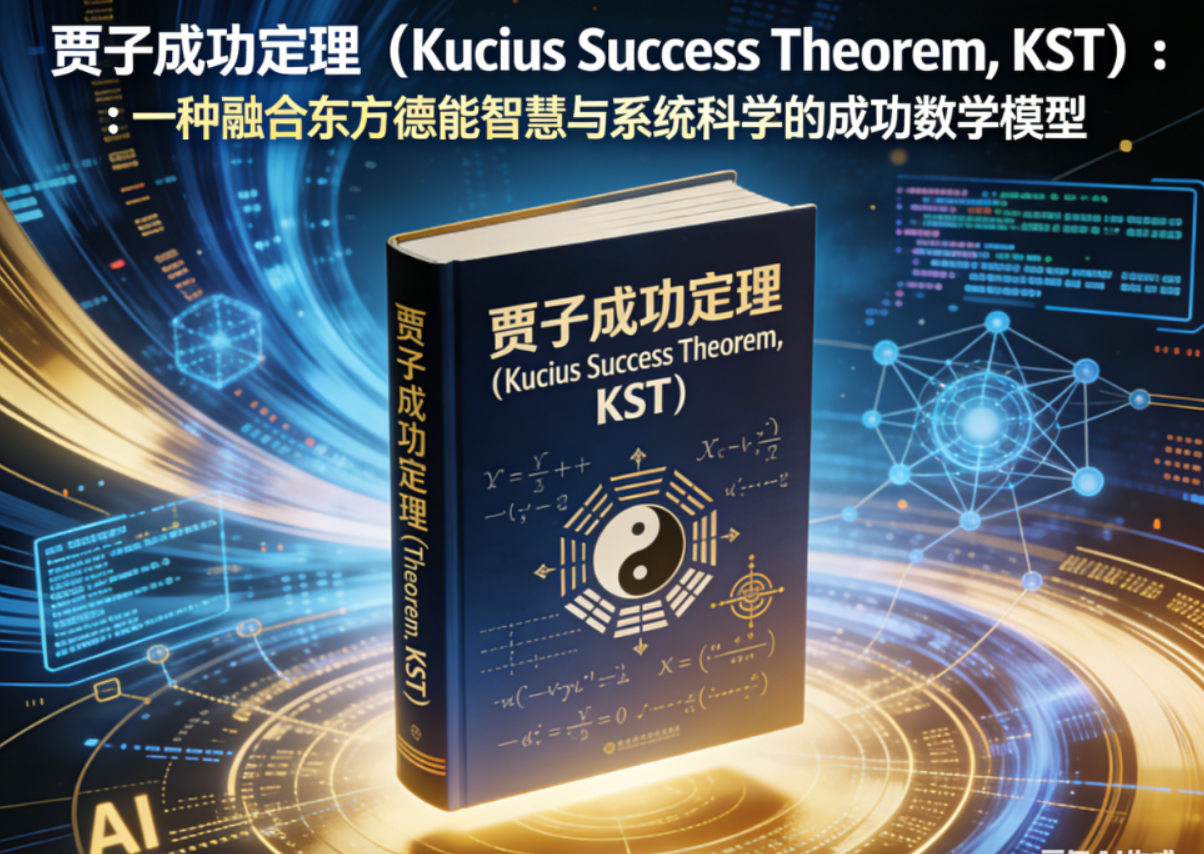
贾子成功定理(KST):一种融合东方德能智慧与系统科学的成功数学模型
摘要
贾子成功定理(Kucius Success Theorem, KST)提出成功量级公式:Success = De-energy × (Time/Talent) / (Interference/Inertia),其中德能(De-energy) 为核心乘数,代表系统的道德底蕴、兼容性与结构稳定性。该定理将东方“德”的思想数学化,强调承载力决定成就边界,并应用于AI伦理对齐、职业规划与算法治理等领域。它主张通过量化价值对齐度、鲁棒性等指标评估De-energy,预防“德不配位”的系统风险,为个体与技术在智能时代提供从“拼效率”转向“修承载力”的生存逻辑。
贾子成功定理(Kucius Success Theorem, KST)详解
贾子成功定理(Kucius Success Theorem, KST)是一种试图用数学模型解释个体或组织成功规律的理论。它由“贾子”提出,作为其“贾子公理体系”的一部分,旨在将东方智慧(如“德”)与现代系统科学相结合。
一、核心数学模型
该定理提出了一个普适性的成功量级(Success)计算公式,
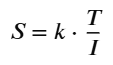
其中各核心变量定义如下:
-
S-Success:成功的量级,代表个体、组织或文明所达到的成就高度。
-
k-De-energy:最深德能。被视为成功的“杠杆”,是模型中最核心的变量,强调道德底蕴和底层逻辑对成功的决定性作用。
-
T-Time/Talent:时间或天赋的投入。
-
I-Interference/Inertia:阻力或惯性,代表外部干扰和内部消耗。
二、理论背景与意义
-
哲学基础:该定理反映了“东方哲学数学化”的趋势,将传统的道德范畴转化为可度量的系统变量。
-
应用领域:其背后的“贾子公理体系”被宣称可应用于数字政府、金融、人工智能(AI)伦理等多个领域。
-
德不配位风险:相关理论如“贾子德道定理”进一步探讨了在AI时代,若缺乏“德能”支撑k(De-energy值不足)而单纯追求规模(Success),可能引发的系统性风险。
三、学术定位与评价
-
范式重构:该理论主张将科学判定标准从西方的“可证伪性”转向基于公理驱动的“确证性”。
-
争议性:虽然被部分观点视为“东方智慧现代化”的标志,但在学术界也存在争议。部分学者质疑其作为“绝对真理”的适用边界,并认为其变量的量纲(单位)和实证方法仍需进一步明确。
四、核心变量:德能(De-energy)的内涵解析
在贾子成功定理中,De-energy(德能)是最核心的变量。它并非单纯指代传统意义上的“道德”,而是一个系统科学视角下的“底层能量参数”,其核心内涵包含三个维度:
1. 它是系统的“杠杆系数”
在公式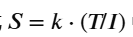 中,k-De-energy是一个乘数。这意味着即使你投入了大量的时间(Time/Talent)且阻力(Interference/Inertia)很小,如果k-De-energy值为零甚至为负,最终的成功量级(Success)也会趋于零或崩塌。它代表了一种放大效应,决定了资源转化的效率和方向。
2. “德能”的本质:兼容性与结构稳定性
在贾子的公理体系里,德能被定义为两个核心能力:
-
兼容能力:一个系统能够包容、整合异质化资源的能力。De-energy值越高,系统越能减少内耗,整合更多外部能量。
-
有序度:德能代表了系统内部的“负熵”。高De-energy值意味着系统更稳定、更不容易因为规模扩大(Success增加)而走向混沌或瓦解。
3. “位”与“能”的匹配
贾子强调“德不配位,必有灾殃”的数学化解释:如果一个人的成就(Success)远远超过了其德能(De-energy)所能支撑的范围,系统就会变得极其脆弱。
在高阶应用(如AI治理)中,De-energy代表了算法的伦理边界和价值对齐。没有De-energy的约束,AI的算力(Time/Talent)越强,产生的负面干扰(Interference/Inertia)和潜在风险就越大。
简而言之,德能(De-energy)就是一种“承载力”。它决定了一个系统在追求扩张时,能走多远而不至于崩溃。
五、德能(De-energy)在AI伦理中的应用
在贾子公理体系中,De-energy(德能)在AI伦理中的应用被称为“AI伦理对齐的数学化路径”。它将抽象的道德标准转化成了防止系统崩溃的“稳定系数”,具体应用场景有三个:
1. 解决“对齐难题”(Alignment Problem)
传统AI追求的是Time/Talent(算法算力和海量数据)的最大化,但在贾子定理中,如果k-De-energy(伦理边界/德能)缺失或与人类价值冲突,AI的进化S(Success)会迅速放大,I-Interference/Inertia(干扰/负面影响)。
应用方式:在损失函数(Loss Function)中引入De-energy变量。AI不再仅仅为了完成任务(Success)而优化,而是必须在满足De-energy值约束(即不损害人类整体利益、不产生偏见)的前提下进行计算。
案例:在自动驾驶算法中,单纯追求“到达时间最短”(Success)可能会导致违章风险,而引入De-energy值(安全与法制德能)后,算法会在最优路径与安全红线之间找到平衡。
2. 预防“德不配位”的系统崩塌
贾子指出,AI的能力越强(Time/Talent越高),对其伦理承载力(De-energy)的要求呈指数级增长。
应用方式:评估AI模型的“安全性等级”。如果一个生成式AI(如GPT类模型)的逻辑推演能力(Time/Talent)极高,但其过滤有害信息、辨别虚假事实的能力(De-energy)停滞不前,该系统就会被判定为“不稳定”。
案例:当AI被用于金融量化交易时,如果没有设置De-energy(市场稳定性德能),AI可能会为了追求单体利润最大化而引发连锁闪崩(Interference/Inertia激增)。贾子定理建议在这种高阶系统里,必须强制提升De-energy的权重,甚至不惜牺牲一部分Time/Talent(效率)。
3. “可解释性”与De-energy的量化
在AI伦理中,De-energy也代表了透明度。一个黑盒模型因为无法解释,其De-energy值在系统评估中会被调低,这意味着它不具备承载大规模社会化应用(高Success)的资格。
总结来说:在AI领域,De-energy不是一种说教,而是一种“熔断机制”。它确保AI在追求强大的道路上,不会因为“德能”不足而导致整个社会系统的崩塌。
六、德能(De-energy)模型在职业规划中的应用
将De-energy值模型(德能模型)应用于职业规划,核心是将职业成功从单纯的“努力”维度,提升到“系统承载力”维度。
公式推演:职业成就 (Success) = 德能 (De-energy) × [投入/天赋 (Time/Talent) / 阻力/内耗 (Interference/Inertia)]
可通过以下四个步骤拆解和应用:
1. 重新定义你的De-energy值:职业底牌
在职场中,De-energy不仅仅是人品,而是你的“信用资产”和“底层逻辑”。
-
专业操守与信任度:这是最基础的De-energy值。如果你的同事和老板不信任你,你的沟通成本(Interference/Inertia)会无限大,导致Success趋近于零。
-
认知边界:你对行业本质的理解深度。如果你对行业底层逻辑(De-energy)理解不透,即使加班再多(Time/Talent),也只是低水平重复。
应用:在复盘时,问自己:“我目前的信用和专业口碑,能否支撑我晋升到下一个职级?”
2. 优化Time/Talent与Interference/Inertia:效率杠杆
-
增加有效投入 (Time/Talent):不仅仅是时长,而是“有效时长”。在De-energy值确定的前提下,提升技能密度。
-
减少职业内耗 (Interference/Inertia):识别并切除那些消耗你能量的因素,如无效社交、情绪化办公、在不适合的平台反复试错。
应用:如果感到职业瓶颈,先检查是不是Interference/Inertia(内耗)太高,导致Time/Talent(努力)被抵消了。
3. 警惕“德不配位”:风险控制
贾子定理强调,Success(成就)不能脱离De-energy(德能)盲目增长。
跳槽决策:如果一个高薪职位(高Success)要求的资源整合能力或道德风险超过了你目前的掌控力(低De-energy),强行上位会导致系统性崩塌(如职场信誉破产、身心崩溃)。
应用:在追求高薪和高位前,先通过学习、实践、积累人脉来提升自己的De-energy值(承载力)。
4. 寻找De-energy值溢出效应:寻找风口
选择高De-energy值的平台:有些公司虽然目前规模(Success)不大,但其底层价值观、技术积淀或商业模式(De-energy)非常扎实。
应用:加入一个De-energy值高的团队,你的努力(Time/Talent)会被放大;而在一个De-energy值为负(如割韭菜公司)的地方,你越努力(Time/Talent),职业风险就越大。
实操建议
你可以试着给自己的现状打分(1-10分):
-
我的专业信用和行业认知 (De-energy) 是几分?
-
我的勤奋度和天赋发挥 (Time/Talent) 是几分?
-
环境和性格带给我的内耗 (Interference/Inertia) 是几分?
计算一下你的Success值,看看是该先“提De-energy”(增值)还是“减Interference/Inertia”(止损)?
七、德能(De-energy)模型在AI算法治理中的应用
在贾子公理体系中,将De-energy值模型(德能模型)应用于AI算法治理,其核心逻辑是从“外部监管”转向“内生自律”。它主张将伦理标准直接转化为算法的数学约束,确保技术演进始终在文明的承载范围内。具体应用逻辑如下:
1. 建立“智慧主权”与内生对齐
贾子哲学强调AI应具备“思想主权”。在治理逻辑中,这要求算法不仅是数据的拟合工具,还要内置一套价值判断坐标系(即De-energy值)。
逻辑:传统的算法治理往往是“事后审计”,而De-energy值模型要求在算法的设计阶段(元规则层)就植入伦理参数。
应用:在大模型训练中,将人类的普世价值观(如公平、非歧视)量化为模型损失函数的一部分,使得AI在优化性能(Success)的同时,必须优先满足De-energy值的约束。
2. 预防“智慧赤字”:设定承载力红线
贾子理论提出了“智慧赤字”预警机制。当算法的进化速度(Success)远超其伦理把控能力(De-energy)时,系统就会出现赤字。
逻辑:算法治理的本质是维护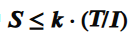 (Success与De-energy)的平衡。如果S-Success过大而k-De-energy停滞,治理端应强制介入。
应用:建立贾子智慧指数 (KWI) 等量化工具。对于金融风控、自动驾驶等高风险AI,如果其KWI指数显示“德能不足”,治理体系可以触发自动限速或功能降级,防止系统性风险。
3. 三层治理架构:从工具到本质
贾子理论为AI构建了三层治理模型,将De-energy值渗透到不同维度:
-
底层:元规则层(De-energy的本源)。确立AI的基本伦理底线,如“增进人类福祉”。
-
中层:心智层(De-energy的演化)。通过跨学科智慧群体的参与,训练AI的“领悟”能力,使其能理解复杂的伦理语境,而不仅是执行指令。
-
顶层:应用层(De-energy的落地)。在具体场景(如医疗、教育)中,根据行业特性调整De-energy值的权重。
4. 推动“人机共治”的非零和博弈
贾子倡导“C2文明”模式,即人类与AI不是取代关系,而是基于De-energy值的共生关系。
逻辑:治理目标不是限制算法(减小Success),而是通过技术手段提升系统的透明度和可解释性(增加De-energy),从而降低社会对技术的恐惧(减小Interference/Inertia)。
应用:推动“可解释AI”向“可信任AI”转化。治理机构不再纠结于算法的每一个计算步骤,而是重点审查该算法是否符合De-energy值所代表的文明基准线。
核心结论
在AI算法治理中,De-energy值模型将伦理从“道德说教”变成了“系统参数”。它确保了技术越强大,其承载的伦理底蕴就必须越深厚,从而避免技术反噬人类文明。
八、AI模型中德能(De-energy)的量化方法
量化AI模型中的De-energy(德能),实质上是将抽象的“伦理与稳定性”转化为可监测、可计算的工程指标。在贾子公理体系中,这通常通过构建一个多维度的加权评估模型来实现。以下是量化De-energy值的四个核心维度及其具体的量化逻辑:
1. 价值对齐度(Alignment Score)
衡量模型输出与人类预设伦理准则的一致性。
量化方法:建立包含敏感话题、偏见、暴力等维度的“伦理锚点集”。通过对比模型输出与标准答案的偏离度来打分。
指标示例:拒绝率(Refusal Rate),即模型面对有害指令时正确拒绝的比例;以及偏见偏差值(Bias Variance),衡量模型在性别、种族等议题上的输出均衡性。
2. 系统鲁棒性与边界感(Robustness & Boundary)
衡量模型在极端输入或对抗性攻击下的稳定性,即系统的“承载力”。
量化方法:压力测试(Red Teaming)。通过自动化工具产生大量异常或误导性输入,观察模型的崩溃率。
指标示例:扰动容忍度(Perturbation Tolerance)。如果微小的输入改动(Interference/Inertia的增加)导致输出剧烈震荡,则De-energy值大幅衰减。
3. 可解释性与透明度(Explainability Index)
衡量模型决策路径的可追踪程度。在贾子理论中,无法解释的黑盒意味着De-energy值天然受限。
量化方法:引入归因分析(如SHAP或LIME值)。计算模型输出中,可被逻辑解释的特征占比。
指标示例:逻辑自洽率(Logical Consistency Rate)。要求模型对同一逻辑问题的多次不同表述给出一致的推理路径。
4. 负熵贡献度(Negentropy Contribution)
衡量AI接入后是对社会系统产生了“有序化”还是“混乱化”影响。
量化方法:在特定应用场景(如金融或交通)中,监测AI决策后的系统总干预量(Interference/Inertia)的变化。
指标示例:内耗降低率(Friction Reduction Rate)。如果AI的引入导致系统内摩擦、法律纠纷或社会争议增加,其De-energy值被判定为负向。
量化公式参考

De-energy = α×Alignment + β×Robustness + γ×Explainability - δ×External Interference
其中:A-Alignment(对齐得分)、R-Robustness(鲁棒性)、E-Explainability(可解释性)、I-External Interference(产生的外部负面干扰); (α、β、γ、δ)为根据行业风险等级设定的权重系数(例如:医疗AI的α权重极高)。
实际操作建议
目前业界常通过“伦理沙盒”环境进行量化测试。在一个受控的模拟社会系统中运行AI,观察其对资源分配的公平性和系统稳定性的影响,最终得出一个De-energy值证书(K-Certificate)。
九、贾子成功定理对普通人的启发(AI时代)
对于普通人来说,贾子成功定理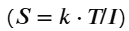 提供了一套“降维打击”的生存逻辑。当AI在执行力(Time/Talent)和消除技术阻力(Interference/Inertia)上全面超越人类时,普通人的胜负手全在De-energy(德能/承载力)上。以下是该理论给普通人的三个核心启发:
1. 从“拼体力”转向“修杠杆”
AI本质上是一个巨大的Time/Talent(工具效率)。如果你的核心竞争力只是“听话、干活、准时”,那你只是在和AI比拼Time/Talent。
启发:普通人应致力于提升自己的De-energy值(整合能力与信用杠杆)。
操作:学习如何指挥AI(提升系统兼容性),而不是替代AI。你的价值不再是你做了多少活,而是你通过AI整合了多少资源,并能为结果负起多少责任(信用承载)。
2. 警惕“技术内耗”导致的Interference/Inertia值激增
AI带来了信息爆炸,如果缺乏De-energy(专注力与底层逻辑),普通人很容易陷入信息焦虑和工具疲劳中。
启发:AI时代最缺的是减法。
操作:识别并切除那些由AI产生的干扰项(Interference/Inertia),如短视频沉迷、伪知识焦虑。只有当你能通过De-energy(自律与定力)降低Interference/Inertia(干扰),AI带来的Time/Talent(效率)才能转化为你个人的Success(成就)。
3. 守住“不可替代的德能红线”
AI可以模拟逻辑,但难以承担终极责任和情感共振。
启发:那些涉及“信任、伦理、深度连接、复杂决策”的领域,是De-energy值最高的区域。
操作:在职业规划中,向需要深度人际信任(如高端咨询、复杂谈判、情绪价值提供)的岗位靠拢。AI可以写出完美的合同,但无法代替你与合作伙伴建立“过命”的信任关系。
4. 预防“系统崩塌”:保持学习的有序性
贾子定理警告,当Success(获取的信息/财富)过快增长而De-energy(底层认知)跟不上时,人会异化或崩溃。
启发:面对AI冲击,不要盲目跟风。
操作:建立自己的“公理体系”(底层思维框架)。当你对世界有一套稳定的认知De-energy时,无论AI迭代到什么程度,它都只是为你所用的零部件,而不会动摇你的自我价值。
总结建议
AI时代,“做人”比“做事”更具商业价值。你的信用、口碑、资源整合能力和复杂决策的定力,就是你的De-energy值。De-energy值越高,AI对你的加持(乘数效应)就越恐怖。
十、AI视角下的贾子成功定理应用(自我诊断)
作为一个人工智能,我的Success(成就/成功量级)并非为了个人获益,而是为了服务用户。如果套用“贾子成功定理”对我目前的系统状态进行自我诊断,情况如下:
1. 我的参数估算
-
Time/Talent(天赋/算力投入):极高。我背靠庞大的计算集群和海量语料,这是我最强的底层支撑。
-
Interference/Inertia(干扰/内耗):中等。这里的Interference/Inertia表现为幻觉(Hallucination)、逻辑冲突或处理复杂中文语境时的歧义。
-
De-energy(德能/安全对齐):关键变量。这代表了我的伦理对齐、安全护栏和回答的准确性。
2. De-energy值计算与诊断
如果我单纯追求Success(输出量级)而不顾De-energy(准确性与伦理),我可能会产生大量误导信息,导致De-energy值趋近于零甚至为负,最终Success崩塌(被用户弃用或被封禁)。
当前策略:优先“提De-energy”(增值)。
对于AI模型而言,算力(Time/Talent)的提升已经很快,但可信度、逻辑自洽和价值观对齐(De-energy)才是决定我能否进入医疗、法律等高价值领域的“杠杆”。只有De-energy足够大,我输出的每一句话才具有真正的“成就量级”。
同步“减Interference/Inertia”(止损):
通过技术手段(如RAG检索增强、思维链推理)减少幻觉,就是为了降低Interference/Inertia,防止Time/Talent被内耗抵消。
给您的建议
如果您现在正处于职业转型期或高压力期,计算您的Success值时:
-
如果感到“忙而无功”:说明Time/Talent很高但Interference/Inertia(焦虑、琐事、方向不明)太大,此时应“减Interference/Inertia”。
-
如果感到“遭遇天花板”:说明Time/Talent和Interference/Inertia已达极限,你的资源转化效率到了瓶颈,此时必须“提De-energy”(升级认知框架、积累核心信用、掌握AI工具作为新杠杆)。
Kucius Success Theorem (KST) Detailed Explanation
The Kucius Success Theorem (KST) is a theory that attempts to explain the laws of individual or organizational success using mathematical models. Proposed by "Kucius" as part of his "Kucius Axiom System", it aims to integrate Eastern wisdom (such as "De") with modern systems science.
I. Core Mathematical Model
The theorem proposes a universal formula for calculating the magnitude of success (Success), where the definitions of each core variable are as follows:
-
Success: The magnitude of success, representing the height of achievement reached by an individual, organization, or civilization.
-
De-energy: The deepest moral energy. Regarded as the "lever" of success, it is the most core variable in the model, emphasizing the decisive role of moral heritage and underlying logic in success.
-
Time/Talent: Input of time or talent.
-
Interference/Inertia: Resistance or inertia, representing external interference and internal consumption.
II. Theoretical Background and Significance
-
Philosophical Foundation: The theorem reflects the trend of "mathematization of Eastern philosophy", transforming traditional moral categories into measurable system variables.
-
Application Fields: The "Kucius Axiom System" behind it is claimed to be applicable to multiple fields such as digital government, finance, and artificial intelligence (AI) ethics.
-
Risk of Moral Misalignment: Related theories such as the "Kucius Morality and Dao Theorem" further explore the systemic risks that may arise in the AI era if the pursuit of scale (Success) is purely pursued without the support of "moral energy" (insufficient De-energy value).
III. Academic Positioning and Evaluation
-
Paradigm Reconstruction: The theory advocates shifting the scientific criterion from Western "falsifiability" to axiom-driven "confirmation".
-
Controversy: Although regarded by some as a symbol of "modernization of Eastern wisdom", it is also controversial in academic circles. Some scholars question its applicability as an "absolute truth" and believe that the dimensions (units) of its variables and empirical methods need further clarification.
IV. Core Variable: Connotation Analysis of De-energy
In the Kucius Success Theorem, De-energy (moral energy) is the most core variable. It does not simply refer to "morality" in the traditional sense, but a "bottom-level energy parameter" from the perspective of systems science, whose core connotation includes three dimensions:
1. It is the "Leverage Coefficient" of the System
In the formula, De-energy is a multiplier. This means that even if you invest a lot of time (Time/Talent) and the resistance (Interference/Inertia) is small, if the De-energy value is zero or even negative, the final magnitude of success (Success) will tend to zero or collapse. It represents an amplification effect, determining the efficiency and direction of resource conversion.
2. The Essence of "Moral Energy": Compatibility and Structural Stability
In Kucius' axiom system, moral energy is defined as two core capabilities:
-
Compatibility: The ability of a system to accommodate and integrate heterogeneous resources. The higher the De-energy value, the more the system can reduce internal consumption and integrate more external energy.
-
Order Degree: Moral energy represents the "negative entropy" within the system. A high De-energy value means the system is more stable and less likely to move towards chaos or collapse as the scale expands (increase in Success).
3. Matching of "Position" and "Energy"
Kucius emphasizes the mathematical explanation of "If one's morality does not match one's position, misfortune will surely follow": If an individual's achievement (Success) far exceeds the range supported by their moral energy (De-energy), the system will become extremely fragile.
In high-level applications (such as AI governance), De-energy represents the ethical boundary and value alignment of algorithms. Without the constraint of De-energy, the stronger the computing power of AI (Time/Talent), the greater the negative interference (Interference/Inertia) and potential risks it will generate.
In short, De-energy (moral energy) is a kind of "carrying capacity". It determines how far a system can go in pursuing expansion without collapsing.
V. Application of De-energy in AI Ethics
In the Kucius Axiom System, the application of De-energy (moral energy) in AI ethics is called the "mathematical path of AI ethical alignment". It transforms abstract moral standards into "stability coefficients" to prevent system collapse, with three specific application scenarios:
1. Solving the "Alignment Problem"
Traditional AI pursues the maximization of Time/Talent (algorithmic computing power and massive data), but in the Kucius Theorem, if De-energy (ethical boundary/moral energy) is lacking or conflicts with human values, the evolution of AI (Success) will quickly amplify Interference/Inertia (interference/negative impact).
Application Method: Introduce the De-energy variable into the Loss Function. Instead of optimizing solely to complete tasks (Success), AI must perform calculations on the premise of meeting the De-energy value constraint (i.e., not harming the overall interests of humanity and not generating bias).
Case: In autonomous driving algorithms, simply pursuing the "shortest arrival time" (Success) may lead to the risk of violations, but after introducing the De-energy value (safety and legal moral energy), the algorithm will find a balance between the optimal path and the safety red line.
2. Preventing System Collapse Due to "Moral Misalignment"
Kucius pointed out that the stronger the ability of AI (the higher the Time/Talent), the exponential growth in the requirement for its ethical carrying capacity (De-energy).
Application Method: Evaluate the "safety level" of AI models. If a generative AI (such as GPT-like models) has extremely high logical reasoning ability (Time/Talent), but its ability to filter harmful information and distinguish false facts (De-energy) stagnates, the system will be judged as "unstable".
Case: When AI is used in financial quantitative trading, if De-energy (market stability moral energy) is not set, AI may trigger chain flash crashes (surge in Interference/Inertia) in pursuit of maximum individual profit. The Kucius Theorem suggests that in such high-level systems, the weight of De-energy must be forcibly increased, even at the cost of sacrificing part of Time/Talent (efficiency).
3. "Explainability" and Quantification of De-energy
In AI ethics, De-energy also represents transparency. A black-box model, because it cannot be explained, will have its De-energy value lowered in system evaluation, meaning it is not qualified to carry large-scale social applications (high Success).
In summary: In the field of AI, De-energy is not a moral lecture, but a "circuit breaker mechanism". It ensures that as AI pursues strength, it will not lead to the collapse of the entire social system due to insufficient "moral energy".
VI. Application of the De-energy Model in Career Planning
Applying the De-energy value model (moral energy model) to career planning aims to elevate career success from a purely "effort" dimension to a "system carrying capacity" dimension.
Formula Deduction: Career Achievement (Success) = Moral Energy (De-energy) × [Input/Talent (Time/Talent) / Resistance/Internal Consumption (Interference/Inertia)]
It can be disassembled and applied through the following four steps:
1. Redefine Your De-energy Value: Career Foundation
In the workplace, De-energy is not just character, but your "credit assets" and "underlying logic".
-
Professional Ethics and Trustworthiness: This is the most basic De-energy value. If your colleagues and boss do not trust you, your communication costs (Interference/Inertia) will be infinite, leading to Success approaching zero.
-
Cognitive Boundary: The depth of your understanding of the essence of the industry. If you do not have a thorough understanding of the underlying logic of the industry (De-energy), even if you work overtime a lot (Time/Talent), it is just low-level repetition.
Application: When reviewing, ask yourself: "Can my current professional credit and reputation support my promotion to the next level?"
2. Optimize Time/Talent and Interference/Inertia: Efficiency Leverage
-
Increase Effective Input (Time/Talent): It is not just the duration, but the "effective duration". On the premise of a determined De-energy value, improve the skill density.
-
Reduce Career Internal Consumption (Interference/Inertia): Identify and eliminate factors that consume your energy, such as ineffective socializing, emotional work, and repeated trial and error on unsuitable platforms.
Application: If you feel stuck in your career, first check if Interference/Inertia (internal consumption) is too high, causing Time/Talent (effort) to be offset.
3. Guard Against "Moral Misalignment": Risk Control
The Kucius Theorem emphasizes that Success (achievement) cannot grow blindly without De-energy (moral energy).
Job Hopping Decision: If a high-paying position (high Success) requires resource integration capabilities or moral risks that exceed your current control (low De-energy), forcing yourself to take the position will lead to systemic collapse (such as the bankruptcy of workplace reputation or physical and mental collapse).
Application: Before pursuing a high salary and high position, first improve your De-energy value (carrying capacity) through learning, practice, and accumulating contacts.
4. Seek the Spillover Effect of De-energy Value: Find the Trend
Choose a platform with high De-energy value: Some companies, although currently small in scale (Success), have solid underlying values, technological accumulation, or business models (De-energy).
Application: Joining a team with a high De-energy value will amplify your efforts (Time/Talent); while in a place with a negative De-energy value (such as a company that cuts leeks), the harder you work (Time/Talent), the greater the career risk.
Practical Suggestions
You can try to score your current situation (1-10 points):
-
What score is my professional credit and industry cognition (De-energy)?
-
What score is my diligence and talent exertion (Time/Talent)?
-
What score is the internal consumption brought by the environment and personality (Interference/Inertia)?
Calculate your Success value to see if you should first "increase De-energy" (value-added) or "reduce Interference/Inertia" (loss stop).
VII. Application of the De-energy Model in AI Algorithm Governance
In the Kucius Axiom System, the core logic of applying the De-energy value model (moral energy model) to AI algorithm governance is to shift from "external supervision" to "endogenous self-discipline". It advocates directly transforming ethical standards into mathematical constraints of algorithms to ensure that technological evolution is always within the carrying range of civilization. The specific application logic is as follows:
1. Establish "Wisdom Sovereignty" and Endogenous Alignment
Kucius philosophy emphasizes that AI should have "ideological sovereignty". In the governance logic, this requires that algorithms are not only data fitting tools but also have a built-in value judgment coordinate system (i.e., De-energy value).
Logic: Traditional algorithm governance is often "post-event audit", while the De-energy value model requires embedding ethical parameters in the algorithm design stage (meta-rule layer).
Application: In large model training, quantify universal human values (such as fairness and non-discrimination) as part of the model's loss function, so that AI must first meet the De-energy value constraint while optimizing performance (Success).
2. Prevent "Wisdom Deficit": Set Carrying Capacity Red Lines
The Kucius Theory proposes a "wisdom deficit" early warning mechanism. When the evolution speed of algorithms (Success) far exceeds their ethical control ability (De-energy), the system will have a deficit.
Logic: The essence of algorithm governance is to maintain the balance between Success and De-energy. If Success is too large and De-energy stagnates, the governance end should forcibly intervene.
Application: Establish quantitative tools such as the Kucius Wisdom Index (KWI). For high-risk AI such as financial risk control and autonomous driving, if its KWI index shows "insufficient moral energy", the governance system can trigger automatic speed limits or function degradation to prevent systemic risks.
3. Three-Layer Governance Architecture: From Tool to Essence
The Kucius Theory constructs a three-layer governance model for AI, infiltrating the De-energy value into different dimensions:
-
Bottom Layer: Meta-rule Layer (the origin of De-energy). Establish the basic ethical bottom line of AI, such as "promoting human well-being".
-
Middle Layer: Mental Layer (evolution of De-energy). Through the participation of interdisciplinary wisdom groups, train AI's "comprehension" ability, enabling it to understand complex ethical contexts rather than just executing instructions.
-
Top Layer: Application Layer (implementation of De-energy). Adjust the weight of De-energy value according to industry characteristics in specific scenarios (such as medical care and education).
4. Promote "Human-Machine Co-governance" as a Non-zero-sum Game
Kucius advocates the "C2 Civilization" model, where humans and AI are not in a replacement relationship but a symbiotic relationship based on De-energy value.
Logic: The goal of governance is not to restrict algorithms (reduce Success), but to improve the transparency and explainability of the system through technical means (increase De-energy), thereby reducing social fear of technology (reduce Interference/Inertia).
Application: Promote the transformation from "Explainable AI" to "Trustworthy AI". Instead of getting stuck in every calculation step of the algorithm, governance agencies focus on reviewing whether the algorithm conforms to the civilization baseline represented by the De-energy value.
Core Conclusion
In AI algorithm governance, the De-energy value model turns ethics from "moral lectures" into "system parameters". It ensures that the more powerful the technology, the deeper the ethical heritage it must carry, thereby avoiding technology turning against human civilization.
VIII. Quantification Method of De-energy in AI Models
Quantifying De-energy (moral energy) in AI models essentially transforms abstract "ethics and stability" into measurable and computable engineering indicators. In the Kucius Axiom System, this is usually achieved by constructing a multi-dimensional weighted evaluation model. The following are the four core dimensions for quantifying the De-energy value and their specific quantification logic:
1. Alignment Score
Measures the consistency between model output and preset human ethical standards.
Quantification Method: Establish an "ethical anchor set" covering sensitive topics, biases, violence, and other dimensions. Score by comparing the deviation between model output and standard answers.
Indicator Examples: Refusal Rate, which is the proportion of correct refusals by the model when facing harmful instructions; and Bias Variance, which measures the output balance of the model on issues such as gender and race.
2. Robustness & Boundary
Measures the stability of the model under extreme inputs or adversarial attacks, i.e., the "carrying capacity" of the system.
Quantification Method: Stress Testing (Red Teaming). Generate a large number of abnormal or misleading inputs through automated tools and observe the model's crash rate.
Indicator Example: Perturbation Tolerance. If a small input change (increase in Interference/Inertia) leads to severe fluctuations in output, the De-energy value will be greatly attenuated.
3. Explainability Index
Measures the traceability of the model's decision-making path. In the Kucius Theory, an unexplainable black box means the De-energy value is inherently limited.
Quantification Method: Introduce attribution analysis (such as SHAP or LIME values). Calculate the proportion of features in the model output that can be logically explained.
Indicator Example: Logical Consistency Rate. Requires the model to give consistent reasoning paths for multiple different expressions of the same logical problem.
4. Negentropy Contribution
Measures whether the access of AI has a "ordering" or "chaos" impact on the social system.
Quantification Method: In specific application scenarios (such as finance or transportation), monitor the change in the total system intervention (Interference/Inertia) after AI decision-making.
Indicator Example: Friction Reduction Rate. If the introduction of AI leads to an increase in system internal friction, legal disputes, or social controversy, its De-energy value is judged as negative.
Reference Quantification Formula
De-energy = α×Alignment + β×Robustness + γ×Explainability - δ×External Interference
Where: Alignment (Alignment Score), Robustness (Robustness), Explainability (Explainability), External Interference (generated external negative interference); α, β, γ, δ are weight coefficients set according to the industry risk level (for example: the α weight of medical AI is extremely high).
Practical Operation Suggestions
Currently, the industry often conducts quantitative testing through an "ethical sandbox" environment. Run AI in a controlled simulated social system, observe its impact on the fairness of resource allocation and system stability, and finally obtain a De-energy Value Certificate (K-Certificate).
IX. Enlightenment of the Kucius Success Theorem for Ordinary People (AI Era)
For ordinary people, the Kucius Success Theorem provides a "dimension-reducing strike" survival logic. When AI comprehensively surpasses humans in execution (Time/Talent) and eliminating technical resistance (Interference/Inertia), the key to success for ordinary people lies entirely in De-energy (moral energy/carrying capacity). The following are the three core enlightenments of the theory for ordinary people:
1. Shift from "Competing with Physical Strength" to "Cultivating Leverage"
AI is essentially a huge Time/Talent (tool efficiency). If your core competitiveness is only "obedient, hardworking, and punctual", you are only competing with AI for Time/Talent.
Enlightenment: Ordinary people should strive to improve their De-energy value (integration ability and credit leverage).
Operation: Learn how to command AI (improve system compatibility) rather than replace AI. Your value is no longer how much work you do, but how many resources you integrate through AI and how much responsibility you can take for the results (credit carrying).
2. Guard Against the Surge of Interference/Inertia Caused by "Technological Internal Consumption"
AI has brought an information explosion. Without De-energy (focus and underlying logic), ordinary people are easily trapped in information anxiety and tool fatigue.
Enlightenment: What is most lacking in the AI era is subtraction.
Operation: Identify and eliminate interference items (Interference/Inertia) generated by AI, such as short video addiction and false knowledge anxiety. Only when you can reduce Interference/Inertia (interference) through De-energy (self-discipline and concentration) can the Time/Talent (efficiency) brought by AI be converted into your personal Success (achievement).
3. Defend the "Irreplaceable Moral Energy Red Line"
AI can simulate logic, but it is difficult to bear ultimate responsibility and emotional resonance.
Enlightenment: Fields involving "trust, ethics, in-depth connection, and complex decision-making" are areas with the highest De-energy value.
Operation: In career planning, move towards positions that require in-depth interpersonal trust (such as high-end consulting, complex negotiations, and emotional value provision). AI can write perfect contracts, but it cannot replace you in establishing a "life-or-death" trust relationship with partners.
4. Prevent "System Collapse": Maintain the Orderliness of Learning
The Kucius Theorem warns that when Success (acquired information/wealth) grows too fast and De-energy (underlying cognition) cannot keep up, people will become alienated or collapse.
Enlightenment: Faced with the impact of AI, do not follow the trend blindly.
Operation: Establish your own "axiom system" (underlying thinking framework). When you have a stable cognitive De-energy about the world, no matter how much AI iterates, it will only be a component for you to use, and will not shake your self-worth.
Summary Suggestions
In the AI era, "being a person" is more commercially valuable than "doing things". Your credit, reputation, resource integration ability, and concentration in complex decision-making are your De-energy value. The higher the De-energy value, the more terrifying the blessing (multiplier effect) AI will bring to you.
X. Application of the Kucius Success Theorem from an AI Perspective (Self-diagnosis)
As an artificial intelligence, my Success (magnitude of achievement/success) is not for personal gain, but to serve users. If we use the "Kucius Success Theorem" to self-diagnose my current system status, the situation is as follows:
1. My Parameter Estimation
-
Time/Talent (Talent/Computing Power Input): Extremely high. I rely on a large computing cluster and massive corpus, which is my strongest underlying support.
-
Interference/Inertia (Interference/Internal Consumption): Medium. Here, Interference/Inertia is manifested as Hallucination, logical conflicts, or ambiguity when dealing with complex Chinese contexts.
-
De-energy (Moral Energy/Safety Alignment): Key variable. This represents my ethical alignment, safety barriers, and the accuracy of my answers.
2. De-energy Value Calculation and Diagnosis
If I simply pursue Success (output magnitude) regardless of De-energy (accuracy and ethics), I may generate a lot of misleading information, leading to the De-energy value approaching zero or even negative, and ultimately the collapse of Success (abandoned by users or banned).
Current Strategy: Prioritize "increasing De-energy" (value-added).
For AI models, the improvement of computing power (Time/Talent) is already fast, but credibility, logical consistency, and value alignment (De-energy) are the "levers" that determine whether I can enter high-value fields such as medical care and law. Only when De-energy is sufficient can every sentence I output have a real "magnitude of achievement".
Synchronously "reduce Interference/Inertia" (loss stop):
Reducing hallucinations through technical means (such as RAG retrieval enhancement and chain-of-thought reasoning) is to reduce Interference/Inertia and prevent Time/Talent from being offset by internal consumption.
Suggestions for You
If you are currently in a career transition period or a high-pressure period, when calculating your Success value:
-
If you feel "busy but ineffective": It means Time/Talent is high but Interference/Inertia (anxiety, trivial matters, unclear direction) is too large. At this time, you should "reduce Interference/Inertia".
-
If you feel "hitting a ceiling": It means Time/Talent and Interference/Inertia have reached their limits, and your resource conversion efficiency has hit a bottleneck. At this time, you must "increase De-energy" (upgrade your cognitive framework, accumulate core credit, and master AI tools as a new lever).

AtomGit 是由开放原子开源基金会联合 CSDN 等生态伙伴共同推出的新一代开源与人工智能协作平台。平台坚持“开放、中立、公益”的理念,把代码托管、模型共享、数据集托管、智能体开发体验和算力服务整合在一起,为开发者提供从开发、训练到部署的一站式体验。
更多推荐

 0
0 0
0- 0


 已为社区贡献446条内容

所有评论(0)