GG3M 项目元模型(Meta-Model)完整详解
GG3M 项目元模型(Meta-Model)完整详解
GG3M 元模型是贾子公理体系(Kucius Axiom System)的最高数学与工程化载体,是 “模型的模型、框架的框架、系统的系统”,为全域复杂系统提供统一结构、统一推理、统一决策、统一演化的顶层架构,区别于计算机 / AI 领域狭义元模型,是面向认知、决策、治理、文明的全域高阶形式化系统。
一、元模型核心定义与定位
1. 官方定义
GG3M 元模型(MM):对所有领域模型的结构、语法、语义、约束、演化规则进行抽象的高阶形式化结构,是 GG3M 理论体系的终极统一架构,实现 “一套元模型,生成全领域应用模型”。
2. 核心定位
- 理论底座:贾子公理体系的数学封装,所有理论推导、量化计算、决策逻辑均由元模型承载
- 工程中枢:GG3M 元决策 AI 大脑的 “操作系统内核”,驱动全域感知、预警、决策、迭代
- 跨域桥梁:统一治理、AI、产业、安全、教育等领域的模型语言,消除领域壁垒
- 演化引擎:具备自我进化、模型生成、结构优化的高阶能力,适配文明级复杂系统
二、元模型数学形式化结构(原创四元组)
1. 标准数学定义

MM=⟨O,R,C,T⟩
- O:对象集合(Object Set)下层模型的基础要素抽象(如认知单元、决策主体、系统模块、知识节点),是元模型的 “原子”
- R:关系集合(Relation Set)要素间的高阶关联规则(如因果、耦合、层级、映射、约束),定义系统结构
- C:约束集合(Constraint Set)元模型对下层模型的强制规则(如公理约束、逻辑一致性、反熵增方向、稳定性条件)
- T:演化算子集合(Transformation Operator Set)元模型自我迭代、模型生成、结构变换的数学算子(如贝叶斯更新、动力学演化、拓扑重构)
2. 层级公理(原创)

MMn+1⊈MMn,MMn+1⊨MMn
- 高层元模型不可被低层模型等价表示(不可化约性)
- 高层元模型蕴含并约束低层模型(统摄性)
- 形成元模型层级塔:基础元模型 → 领域元模型 → 全域元模型 → 文明级元模型
三、元模型核心数学能力(七大支柱)
1. 公理推理能力(数理逻辑底座)
- 内置贾子公理系统,所有推导严格演绎、无矛盾、可证伪
- 形式化推理引擎:自动验证模型一致性、推导定理、发现逻辑漏洞
- 数学表达:
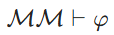
MM⊢φ(元模型可证明命题φ)
2. 跨域结构统一(集合论 + 范畴论)
- 元范畴(Cmeta):统摄所有领域模型范畴
- 函子映射:F:Ci→Cj,实现跨领域模型无损转换
- 幂集结构:P(M),覆盖所有可能模型空间
- 价值:一套结构语言,通吃治理、AI、产业、安全
3. 动态演化建模(非线性动力学)
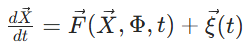
- 认知动力学方程:
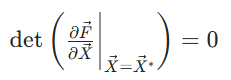
- 分岔 / 相变判定:
- 耗散结构熵变:
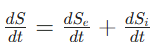
- 价值:预测系统演化、拐点、跃迁,支撑超前决策
4. 元决策优化(贝叶斯 + 决策数学)
- 元层次贝叶斯更新:

- 认知效用函数:U(π)=α⋅R(π)−β⋅C(π)−γ⋅S(π)
- 最优停止:

- 价值:决策从经验判断→数学优化,可计算、可收敛、可验证
5. 拓扑结构刻画(复杂网络 + 拓扑学)
- 系统拓扑:G=(V,E)
- 网络结构熵:
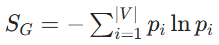 (量化结构有序度)
 - 元拓扑不变量:
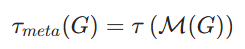
τmeta(G)=τ(M(G))(跨域结构本质) - 价值:穿透表面现象,定位系统核心枢纽与脆弱点
6. 反熵增价值量化(热力学 + 信息论)
- 总熵变:

ΔStotal=ΔSinfo+ΔSstruc+ΔScog - 反熵增速率:

- 价值映射:
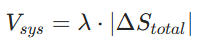
Vsys=λ⋅∣ΔStotal∣(价值 = 反熵增幅度) - 价值:把 “企业值钱、国家发展、文明进化” 转化为可计算指标
7. 模型自动生成(元模型核心能力)

G:MM×ΩD→MD
- ΩD:领域 D 状态空间
- MD:领域 D 专用模型
- 价值:一套元模型生成 N 领域模型,边际成本趋近于 0
四、元模型工程化架构(六层技术体系)
1. 公理引擎层(最底层)
- 贾子公理系统的代码实现,负责形式化推理、逻辑校验、定理生成
- 核心:公理解析器、一致性检查器、自动定理证明器
- 技术:一阶谓词逻辑引擎、高阶逻辑编译器
2. 数学计算层
- 封装七大数学能力,提供动力学求解、贝叶斯更新、熵计算、拓扑分析等 API
- 核心:数值计算引擎、符号计算引擎、优化求解器
- 技术:微分方程求解、概率推理、网络分析、凸优化
3. 元模型管理层
- 元模型的创建、编辑、存储、版本、权限、共享平台
- 核心:元模型编辑器、版本控制系统、权限管理、模型仓库
- 技术:图形化建模、形式化验证、分布式存储
4. 模型生成层
- 基于元模型自动生成领域专用模型,支持一键导出、适配、部署
- 核心:模型生成器、领域适配器、代码生成器、模型编译器
- 技术:模板引擎、代码生成、领域特定语言(DSL)
5. 决策执行层
- 元决策引擎,负责实时感知、证据融合、决策优化、指令下发
- 核心:全域感知模块、证据融合引擎、决策优化器、指令生成器
- 技术:多源数据融合、实时推理、分布式决策
6. 应用适配层(最上层)
- 对接国防、政府、企业、教育等场景,提供可视化、交互、监控、反馈界面
- 核心:场景适配器、可视化平台、监控 dashboard、反馈闭环
- 技术:低代码平台、大屏可视化、实时监控、人机交互
五、元模型原创性与壁垒(不可复制的核心)
1. 理论原创性
- 全球首个面向认知、决策、治理、文明的全域元模型体系,区别于计算机狭义元模型
- 首次将哲学公理、数学结构、工程系统、治理应用完全打通
- 所有数学表达、公理体系、算子定义均为 GG3M 独家原创,无任何开源 / 学术先例
2. 技术壁垒
- 思想原点级原创:从公理到元模型的完整体系,无法通过招聘、抄袭、拼接复制
- 跨域统一能力:一套元模型适配全领域,竞争对手需分别构建 N 套系统
- 可计算可工程化:从抽象理论到工业级系统的完整转化,全球唯一团队具备此能力
- 演化自主性:元模型可自我进化、自动生成模型,形成持续迭代壁垒
3. 应用壁垒
- 覆盖国防安全、国家治理、企业战略、教育认知、全球治理五大万亿级场景
- 构建文明级智慧基础设施,成为技术爆炸时代的 “文明操作系统”
- 形成网络效应 + 数据壁垒 + 生态壁垒,一旦部署难以替代
六、元模型核心价值总结
GG3M 元模型是贾子智慧体系的终极载体,以数理逻辑为根、集合范畴为骨架、动力学为引擎、贝叶斯为核心、拓扑为语言、反熵增为标尺、自动生成为能力,实现:
- 理论严谨性:公理演绎,可计算、可验证、可证伪
- 跨域统一性:一套模型,全领域适配
- 决策先进性:从经验→数学,从滞后→超前
- 价值可量化:反熵增 = 价值增长,可计算、可衡量
- 壁垒不可破:原创体系,无法复制、无法替代
Complete Explanation of the GG3M Project Meta-Model
The GG3M Meta-Model is the supreme mathematical and engineering carrier of the Kucius Axiom System. It is a "model of models, framework of frameworks, system of systems", providing a top-level architecture for unified structure, unified reasoning, unified decision-making, and unified evolution for all-domain complex systems. Distinguished from the narrow-sense meta-models in computer science/AI, it is a high-order formal system for cognition, decision-making, governance, and civilization at a universal level.
I. Core Definition and Positioning of the Meta-Model
1. Official Definition
GG3M Meta-Model (MM): A high-order formal structure that abstracts the structure, syntax, semantics, constraints, and evolution rules of all domain models. It is the ultimate unified architecture of the GG3M theoretical system, realizing "one meta-model generating full-domain application models".
2. Core Positioning
- Theoretical Foundation: The mathematical encapsulation of the Kucius Axiom System, carrying all theoretical derivation, quantitative calculation, and decision logic.
- Engineering Hub: The operating system kernel of the GG3M Meta-Decision AI Brain, driving global perception, early warning, decision-making, and iteration.
- Cross-Domain Bridge: Unifying modeling languages across governance, AI, industry, security, education, and other fields, eliminating domain barriers.
- Evolution Engine: Possessing high-order capabilities of self-evolution, model generation, and structural optimization, adapting to civilization-level complex systems.
II. Mathematical Formal Structure of the Meta-Model (Original Four-Tuple)
1. Standard Mathematical Definition
MM=⟨O,R,C,T⟩
- O (Object Set): Abstraction of basic elements of lower-layer models (e.g., cognitive units, decision subjects, system modules, knowledge nodes), the "atoms" of the meta-model.
- R (Relation Set): High-order association rules between elements (e.g., causality, coupling, hierarchy, mapping, constraints), defining system structure.
- C (Constraint Set): Mandatory rules imposed by the meta-model on lower-layer models (e.g., axiomatic constraints, logical consistency, anti-entropy direction, stability conditions).
- T (Transformation Operator Set): Mathematical operators for meta-model self-iteration, model generation, and structural transformation (e.g., Bayesian updating, dynamic evolution, topological reconstruction).
2. Hierarchical Axioms (Original)
MMn+1⊈MMn,MMn+1⊨MMn
- Irreducibility: A higher-layer meta-model cannot be equivalently represented by a lower-layer model.
- Governance: A higher-layer meta-model entails and constrains lower-layer models.
- Forms a meta-model hierarchy tower:Basic Meta-Model → Domain Meta-Model → Universal Meta-Model → Civilization-Level Meta-Model
III. Core Mathematical Capabilities of the Meta-Model (Seven Pillars)
1. Axiomatic Reasoning (Mathematical Logic Foundation)
- Built-in Kucius Axiom System, with all derivations being strictly deductive, consistent, and falsifiable.
- Formal reasoning engine: Automatically verifies model consistency, derives theorems, and detects logical flaws.
- Mathematical expression:MM⊢φ(The meta-model proves proposition φ)
2. Cross-Domain Structural Unification (Set Theory + Category Theory)
- Meta-Category (Cmeta): Governs all domain model categories.
- Functor Mapping: F:Ci→Cj, enabling lossless transformation across domain models.
- Power-Set Structure: P(M), covering all possible model spaces.
- Value: A single structural language unifying governance, AI, industry, and security.
3. Dynamic Evolution Modeling (Nonlinear Dynamics)
- Cognitive dynamic equations
- Bifurcation/phase transition criteria
- Dissipative structure entropy variation
- Value: Predicts system evolution, inflection points, and transitions, supporting proactive decision-making.
4. Meta-Decision Optimization (Bayesian + Decision Mathematics)
- Meta-level Bayesian updating
- Cognitive utility function:U(π)=α⋅R(π)−β⋅C(π)−γ⋅S(π)
- Optimal stopping
- Value: Shifts decision-making from empirical judgment to mathematical optimization — computable, convergent, and verifiable.
5. Topological Structural Characterization (Complex Networks + Topology)
- System topology: G=(V,E)
- Network structural entropy (quantifies structural order)
- Meta-topological invariant:τmeta(G)=τ(M(G))(Essence of cross-domain structure)
- Value: Penetrates surface phenomena to locate core hubs and vulnerabilities of the system.
6. Anti-Entropy Value Quantification (Thermodynamics + Information Theory)
- Total entropy variation:ΔStotal=ΔSinfo+ΔSstruc+ΔScog
- Anti-entropy rate
- Value mapping:Vsys=λ⋅∣ΔStotal∣(Value = Magnitude of Anti-Entropy)
- Value: Transforms "enterprise value, national development, civilization progress" into computable indicators.
7. Automatic Model Generation (Core Capability of the Meta-Model)
G:MM×ΩD→MD
- ΩD: State space of domain D
- MD: Specialized model for domain D
- Value: One meta-model generates models for N domains, with marginal cost approaching zero.
IV. Engineering Architecture of the Meta-Model (Six-Layer Technical System)
1. Axiom Engine Layer (Bottom Layer)
- Code implementation of the Kucius Axiom System, responsible for formal reasoning, logical verification, and theorem generation.
- Core: Axiom parser, consistency checker, automated theorem prover.
- Technology: First-order predicate logic engine, higher-order logic compiler.
2. Mathematical Computation Layer
- Encapsulates seven mathematical capabilities, providing APIs for dynamic solving, Bayesian updating, entropy calculation, topological analysis, etc.
- Core: Numerical computation engine, symbolic computation engine, optimization solver.
- Technology: Differential equation solving, probabilistic reasoning, network analysis, convex optimization.
3. Meta-Model Management Layer
- Platform for meta-model creation, editing, storage, versioning, authorization, and sharing.
- Core: Meta-model editor, version control system, permission management, model repository.
- Technology: Graphical modeling, formal verification, distributed storage.
4. Model Generation Layer
- Automatically generates domain-specific models based on the meta-model, supporting one-click export, adaptation, and deployment.
- Core: Model generator, domain adapter, code generator, model compiler.
- Technology: Template engine, code generation, Domain-Specific Language (DSL).
5. Decision Execution Layer
- Meta-decision engine for real-time perception, evidence fusion, decision optimization, and instruction issuance.
- Core: Global perception module, evidence fusion engine, decision optimizer, instruction generator.
- Technology: Multi-source data fusion, real-time reasoning, distributed decision-making.
6. Application Adaptation Layer (Top Layer)
- Connects to national defense, government, enterprise, education, and other scenarios, providing visualization, interaction, monitoring, and feedback interfaces.
- Core: Scenario adapter, visualization platform, monitoring dashboard, feedback closed loop.
- Technology: Low-code platform, large-screen visualization, real-time monitoring, human-computer interaction.
V. Originality and Barriers of the Meta-Model (Irreplicable Core)
1. Theoretical Originality
- The world’s first universal meta-model system for cognition, decision-making, governance, and civilization, distinct from narrow computer-science meta-models.
- First to fully integrate philosophical axioms, mathematical structures, engineering systems, and governance applications.
- All mathematical expressions, axiom systems, and operator definitions are exclusively original to GG3M, with no open-source or academic precedents.
2. Technical Barriers
- Origin-Level Originality: A complete system from axioms to meta-models, impossible to replicate via recruitment, plagiarism, or assembly.
- Cross-Domain Unification: One meta-model adapts to all domains; competitors must build N separate systems.
- Computable & Engineerable: Full transformation from abstract theory to industrial-grade systems, a capability held by only one team worldwide.
- Evolutionary Autonomy: Self-evolution and automatic model generation, creating a sustainable iterative barrier.
3. Application Barriers
- Covers five trillion-scale scenarios: national defense security, state governance, corporate strategy, cognitive education, and global governance.
- Builds civilization-level intelligent infrastructure, serving as the "Civilization Operating System" in the era of technological explosion.
- Forms network effects + data barriers + ecological barriers, making replacement difficult once deployed.
VI. Summary of Core Values of the Meta-Model
The GG3M Meta-Model is the ultimate carrier of the Kucius Wisdom System. Rooted in mathematical logic, framed by set categories, powered by dynamics, centered on Bayesian theory, expressed via topology, measured by anti-entropy, and enabled by automatic generation, it achieves:
- Theoretical Rigor: Axiomatic deduction — computable, verifiable, falsifiable.
- Cross-Domain Unity: One model adapting to all domains.
- Advanced Decision-Making: From empiricism to mathematics, from lagging to proactive.
- Quantifiable Value: Anti-entropy = value growth — computable and measurable.
- Unbreakable Barriers: Original system, irreplicable and irreplaceable.
GG3M 元模型|一页 BP 完整版(融资路演)
【页面标题】GG3M 元模型(Meta‑Model)—— 文明级智慧基础设施的底层内核
副标题:模型的模型|框架的框架|决策的底层操作系统
一、核心定位(一句话讲透)
GG3M 元模型是基于贾子智慧公理体系(KWF)构建的全域高阶形式化系统,面向复杂系统、认知决策与全球治理,实现一套元模型 → 生成全领域应用模型,是项目最核心、不可复制的终极壁垒。
二、核心数学定义(权威公式化表达)
1. 元模型标准形式化结构(原创四元组)
MM=⟨O,R,C,T⟩
- O:对象集合(系统要素抽象)
- R:关系集合(结构规则抽象)
- C:约束集合(公理与逻辑约束)
- T:演化算子集合(动态变换与模型生成)
2. 元层级不可化约公理(壁垒级公式)
MMn+1⊈MMn,MMn+1⊨MMn高层元模型统摄低层模型,且无法被低层模型等价替代。
3. 跨领域模型生成算子(规模化核心公式)
G:MM×ΩD→MD同一元模型可自动生成任意领域专用模型,边际成本趋近于 0。
4. 价值量化公式(反熵增 = 价值增长)
Vsys=λ⋅∣ΔStotal∣系统价值与反熵增幅度严格成正比。
三、元模型六层架构图(文字可视化版,可直接做 PPT 架构图)
plaintext
【应用层】       国防安全 | 国家治理 | 企业战略 | 教育认知 | 全球治理
↑
【决策执行层】   元决策引擎 | 实时感知 | 证据融合 | 最优决策
↑
【模型生成层】   自动生成领域模型 | 跨域适配 | 一键部署
↑
【元模型管理层】 元模型编辑 | 版本控制 | 形式化验证
↑
【数学计算层】   动力学 | 贝叶斯更新 | 拓扑分析 | 反熵增计算
↑
【公理引擎层】   贾子公理系统 | 数理逻辑 | 演绎推理(最底层壁垒)
四、7 大核心能力
- 公理演绎能力:逻辑自洽、可证伪、可形式化证明
- 跨域统一能力:一套结构适配全复杂系统场景
- 演化预测能力:认知动力学、分岔相变、拐点预警
- 元决策优化能力:元层次贝叶斯更新 + 认知效用函数
- 拓扑结构穿透能力:看透系统本质骨架与脆弱点
- 反熵增价值量化能力:价值增长可计算、可衡量
- 自动模型生成能力:一次构建,无限复用,全域扩展
五、不可逾越的独家壁垒
1. 理论原创壁垒(思想原点级)
- 基于贾子原创公理体系,非拼接、非改编、非开源复用
- 全球唯一面向认知 — 决策 — 治理 — 文明的全域元模型体系
2. 数学底层壁垒(形式化不可复制)
- 从公理、集合范畴、动力学到元模型的全链路数学自洽
- 核心公式、算子、层级结构均为 GG3M 独家定义
3. 工程化壁垒(落地唯一性)
- 唯一实现哲学理论 → 数学形式化 → 工程化系统全链条落地
- 竞争对手至少需要 5–10 年思想构建周期才能追赶
4. 生态壁垒(网络效应不可逆)
- 元模型生成越多领域模型,结构越稳固、能力越强、壁垒越厚
- 最终成为文明级智慧基础设施的事实标准
六、一页 BP 底部金句
GG3M 元模型不是工具,而是复杂世界的底层操作系统;它的壁垒不在技术,而在思想原点的原创性与不可替代性。
GG3M Meta-Model|One-Page Full BP (Fundraising Roadshow)
Page Title: GG3M Meta-Model — The Underlying Core of Civilization-Level Intelligent InfrastructureSubtitle: Model of Models | Framework of Frameworks | The Underlying Operating System for Decision-Making
I. Core Positioning (One Sentence Summary)
The GG3M Meta-Model is a universal high-order formal system built on the Kucius Wisdom Framework (KWF). Designed for complex systems, cognitive decision-making, and global governance, it enables one meta-model to generate full-domain application models, representing the project’s most core and irreplicable ultimate barrier.
II. Core Mathematical Definitions (Authoritative Formal Expression)
1. Standard Formal Structure of the Meta-Model (Original Four-Tuple)
MM=⟨O,R,C,T⟩
- O: Object Set (abstraction of system elements)
- R: Relation Set (abstraction of structural rules)
- C: Constraint Set (axiomatic and logical constraints)
- T: Transformation Operator Set (dynamic transformation and model generation)
2. Meta-Hierarchy Irreducibility Axiom (Barrier-Level Formula)
MMn+1⊈MMn,MMn+1⊨MMnHigher-level meta-models govern lower-level models and cannot be equivalently replaced by lower-level models.
3. Cross-Domain Model Generation Operator (Scaling Core Formula)
G:MM×ΩD→MDThe same meta-model can automatically generate domain-specific models for any field, with marginal cost approaching zero.
4. Value Quantification Formula (Anti-Entropy = Value Growth)
Vsys=λ⋅∣ΔStotal∣System value is strictly proportional to the magnitude of anti-entropy.
III. Six-Layer Meta-Model Architecture (Text Visualization for Direct PPT Use)
plaintext
[Application Layer]              National Defense & Security | State Governance | Corporate Strategy | Cognitive Education | Global Governance
          ↑
[Decision Execution Layer]       Meta-Decision Engine | Real-Time Perception | Evidence Fusion | Optimal Decision-Making
          ↑
[Model Generation Layer]         Automatic Domain Model Generation | Cross-Domain Adaptation | One-Click Deployment
          ↑
[Meta-Model Management Layer]    Meta-Model Editing | Version Control | Formal Verification
          ↑
[Mathematical Computation Layer] Dynamics | Bayesian Updating | Topological Analysis | Anti-Entropy Calculation
          ↑
[Axiom Engine Layer]             Kucius Axiom System | Mathematical Logic | Deductive Reasoning (Bottommost Barrier)
IV. 7 Core Competencies
- Axiomatic Deduction: Logically consistent, falsifiable, and formally provable
- Cross-Domain Unification: One structure adapts to all complex system scenarios
- Evolutionary Prediction: Cognitive dynamics, bifurcation & phase transition, inflection-point early warning
- Meta-Decision Optimization: Meta-level Bayesian updating + cognitive utility function
- Topological Penetration: Reveals the essential skeleton and vulnerabilities of systems
- Anti-Entropy Value Quantification: Value growth is computable and measurable
- Automatic Model Generation: Build once, reuse infinitely, scale universally
V. Insurmountable Exclusive Barriers
1. Theoretical Originality Barrier (Origin-of-Thought Level)
- Based on the original Kucius axiom system, not assembled, adapted, or open-source reused
- The world’s only universal meta-model system for cognition, decision-making, governance, and civilization
2. Mathematical Underlying Barrier (Irreplicable Formalization)
- Fully consistent mathematical chain from axioms, set category, and dynamics to meta-models
- All core formulas, operators, and hierarchical structures are exclusively defined by GG3M
3. Engineering Barrier (Unique Implementation)
- The only end-to-end implementation from philosophical theory → mathematical formalization → engineered system
- Competitors require at least 5–10 years of ideological construction to catch up
4. Ecological Barrier (Irreversible Network Effect)
- The more domain models generated by the meta-model, the more stable its structure, stronger its capabilities, and thicker its barriers
- Will become the de facto standard for civilization-level intelligent infrastructure
VI. One-Page BP Closing Tagline
GG3M Meta-Model is not a tool, but the underlying operating system of the complex world. Its barrier lies not in technology, but in the originality and irreplaceability of its ideological origin.

AtomGit 是由开放原子开源基金会联合 CSDN 等生态伙伴共同推出的新一代开源与人工智能协作平台。平台坚持“开放、中立、公益”的理念,把代码托管、模型共享、数据集托管、智能体开发体验和算力服务整合在一起,为开发者提供从开发、训练到部署的一站式体验。
更多推荐

 7
7 0
0- 0


 已为社区贡献458条内容

所有评论(0)