文献阅读 260317-Archeological data with AI- and physics-based modeling explain typhoon-induced disasters
Archeological data with AI- and physics-based modeling explain typhoon-induced disasters in inland China around 3000 yr B.P.
来自 <https://www.science.org/doi/10.1126/sciadv.aeb1598>
Short-review: This research is so romantic and amazing, building the bridge between data in 5 thousand yrs ago and the method now.
## Abstract:
Climate change–related extreme events during the mid-late Holocene, especially around 3000 years before the present (yr B.P.), severely threatened human survival and cultural development at various locations.
However, although marked social change during this period in China have also been reported to coincide with extreme disasters, the causes and impacts of these events remain unclear.
Here, we aligned paleoclimate reconstructions with quantitative analyses of archeological evidence, including oracle bone scripts, together with artificial intelligence– and physics-based model simulations to uncover the causes.
We found that intensified typhoon activities exerted considerable impacts on climate extremes and social change in inland China around 3000 yr B.P. These findings underscore the urgent need to improve preparedness for today’s typhoon-induced disasters in the context of accelerating climate change.
## Intro:
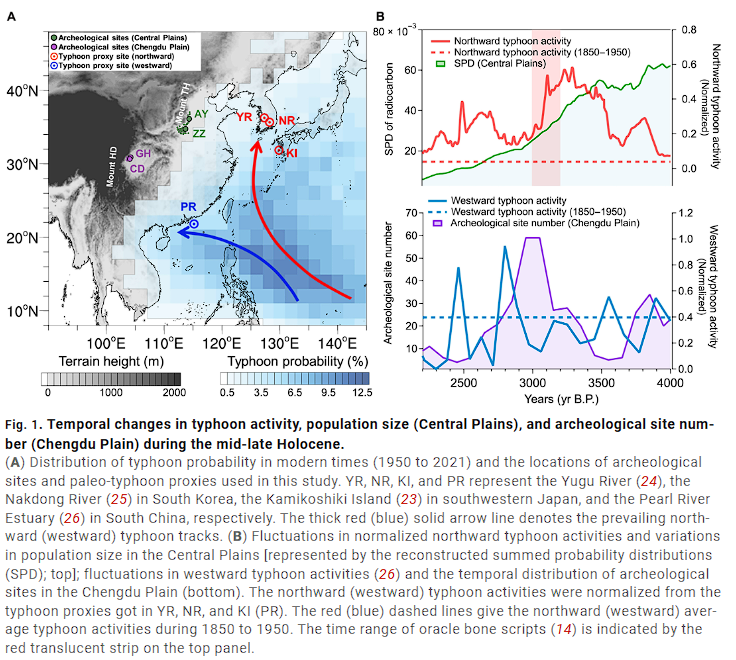
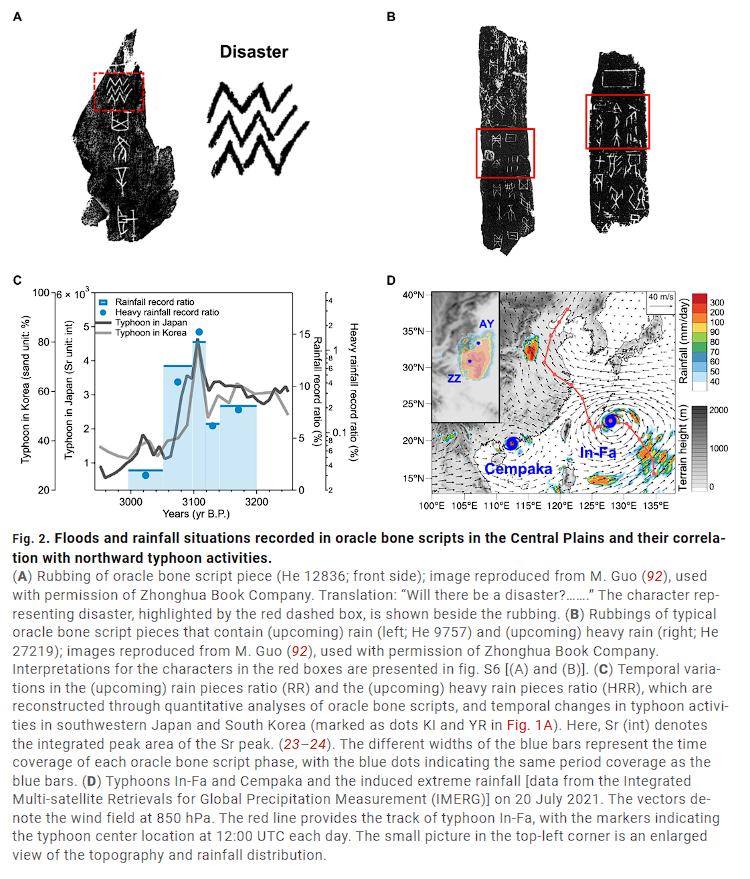
In this study, we quantitatively examined the weather-related written records in ~55,000 pieces of oracle bone scripts (3200 to 2996 yr B.P.), the earliest form of systematic Chinese writing (14–15), and developed several indexes representing the climate conditions during ~200 years in the Late Shang Dynasty.
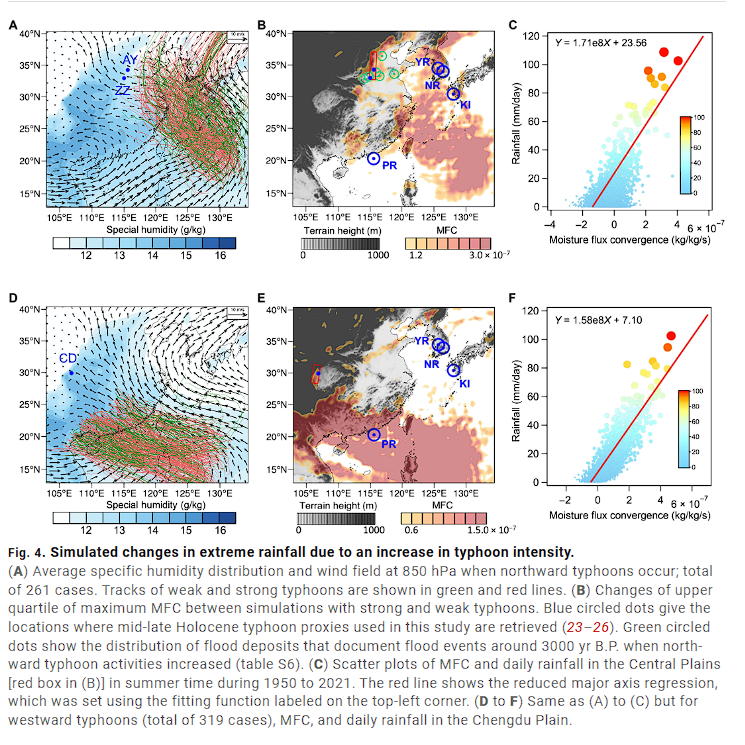
Meanwhile, a more detailed reconstruction of social development during the Chinese Bronze Age was inferred mainly from changes in the relative population size in the Central Plains of China (referred to below as the Central Plains, known as the “cradle of Chinese civilization”) and from variations in the number of archeological sites in the Chengdu Plain, where the Sanxingdui culture of the ancient Shu civilization was located. On this basis, we aligned our reconstructed indexes of climate variations and our identified population and social changes with archeological and documentary evidence of climate extremes and with existing high-resolution regional paleoclimate records. What stood out here was intensified typhoon activities, which presented as a potentially influential factor in the climate extremes, as well as the population and social changes in the Central Plains and the Chengdu Plain during this period. To further assess the impact of intensified typhoon activities on the extreme events, we combined modern meteorological analysis and model simulations, especially the artificial intelligence (AI)–based model “Pangu-Weather” (16) in our study. Together, these data and analyses allow an interdisciplinary exploration of how intensified typhoon activities exerted unexpected disastrous influences in inland China during the Bronze Age. These findings underscore the importance of considering potential threats of typhoon-related climate extremes when understanding the interplay between climatic conditions and social changes, even in inland areas.

AtomGit 是由开放原子开源基金会联合 CSDN 等生态伙伴共同推出的新一代开源与人工智能协作平台。平台坚持“开放、中立、公益”的理念,把代码托管、模型共享、数据集托管、智能体开发体验和算力服务整合在一起,为开发者提供从开发、训练到部署的一站式体验。
更多推荐

 9
9 0
0- 0


 已为社区贡献9条内容

所有评论(0)