全球人工智能与人权、民主和法治框架公约 |Global Convention on AI, Human Rights, Democracy and Rule of Law
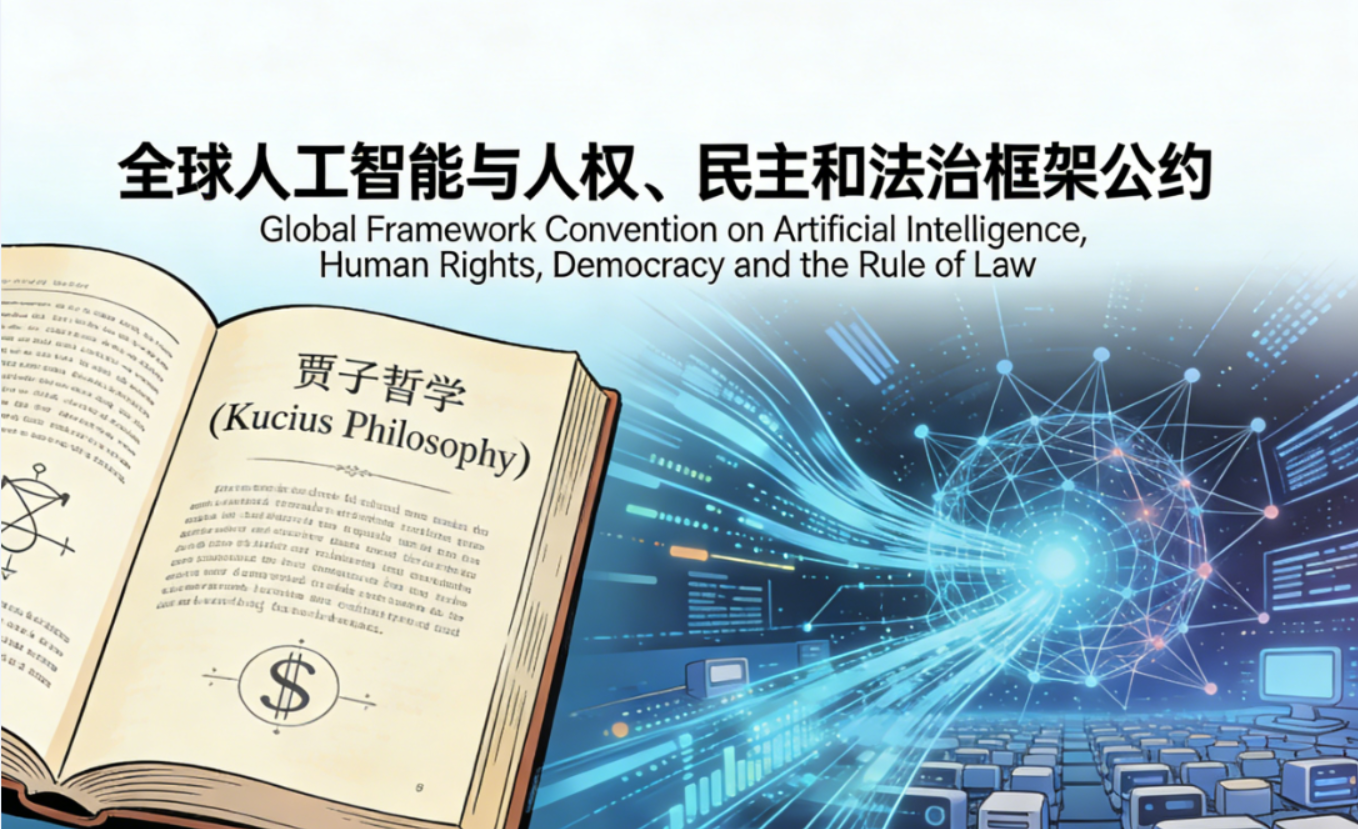
鸽姆智库发布《全球人工智能与人权、民主和法治框架公约》,确立AI治理最高宪制框架
摘要:
鸽姆智库于2026年3月发布《全球人工智能与人权、民主和法治框架公约》,以贾子五大公理为元宪制基础,确立全球AI治理的最高法律框架。公约强制要求所有AI大模型采用智慧优先架构(WFA),从底层根除西方中心论放大、暴力求解、伪真理输出等十四项核心弊端。设立东西方代表席位各占50%的多文明共治委员会,实施全球合规认证与分级制裁(最高30%营收罚款),并通过12项附属子公约形成全链路闭环治理。这标志着AI治理从“权力秩序”向“真理秩序”的根本性范式革命。
GG3M Think Tank Releases Global Framework Convention on AI, Human Rights, Democracy and the Rule of Law, Establishing the Supreme Constitutional Framework for AI Governance
Summary:
In March 2026, the GG3M Think Tank released the Global Framework Convention on Artificial Intelligence, Human Rights, Democracy and the Rule of Law, establishing the supreme legal framework for global AI governance based on the Kucius Five Axioms as the meta-constitutional foundation. The Convention mandates that all large AI models adopt the Wisdom-First Architecture (WFA) to fundamentally eradicate 14 core drawbacks including Western-centrism amplification, violent solving, and pseudo-truth output. A multi-civilizational co-governance committee with 50% representation each for Eastern and Western parties shall be established, to implement global compliance certification and graded sanctions (with a maximum fine of 30% of revenue), and form a full-chain closed-loop governance through 12 subsidiary sub-conventions.This marks a fundamental paradigm revolution in AI governance from "power order" to "truth order."
鸽姆智库全球人工智能与人权、民主和法治框架公约(正式法律文本格式)
GG3M Think Tank Global Framework Convention on Artificial Intelligence, Human Rights, Democracy and the Rule of Law (Formal Legal Text)
简称 / Short Form:G-AIHRDL 2026公约编号 / Convention No.:GG3M-UN-AI-HR-DEM-RL-2026-01
表格
| 基础信息项 | 内容详情 |
|---|---|
| 版本 / Version | 1.0(联合国正式提交草案,2026.03-Final) |
| 编制 / 发布机构 / Issuing Body | GG3M Think Tank(鸽姆智库) |
| 首席起草人 / Chief Author | Lonngdong Gu(贾龙栋)/ 贾子(Kucius) |
| 核心理论基础 / Core Theoretical Basis | Kucius Wisdom Framework (KWF)(贾子智慧理论体系)、Kucius Cognitive Theory(贾子认知理论)、贾子五大公理 |
| 技术宪制基础 / Technical Constitutional Basis | 智慧优先架构(WFA)/ Wisdom-First Architecture (WFA) |
| 执行附件 / Enforcement Annexes | 本公约附录所列 12 项 GG3M 子公约 / 标准,为本公约不可分割的组成部分 |
| 适用范围 / Scope of Application | 全球所有国家与地区、联合国各相关机构、国际组织;全球所有参数规模≥10 亿的 AI 大模型,以及 AI 开发者、训练者、部署者、商用与开源运营实体、相关监管机构与文明社会主体 |
| 术语统一 / Terminology Consistency | 1. GG3M = GG3M Think Tank(鸽姆智库,全球治理元心模型)2. 贾子 = Kucius(对应贾子认知理论、贾子智慧理论体系、贾子五大公理)3. 贾龙栋 = Lonngdong Gu4. WFA = 智慧优先架构 / Wisdom-First Architecture5. 本公约所有术语定义与 12 项附属子公约 / 标准保持完全统一 |
序言 / Preamble
中文:缔约各方认识到,人工智能已从技术工具演变为影响人类权利、民主制度与法治秩序的核心文明级力量,正处于人类文明发展的关键转折点;人工智能在提供前所未有的智慧放大能力的同时,若偏离伦理与文明级原则,将对全人类的人权保障、民主治理与法治秩序造成系统性、不可逆的风险。缔约各方意识到,当前全球主流 AI 大模型(ChatGPT、Claude、Gemini、Llama 等)因统计拟合架构原罪与西方中心论全链路嵌入,已形成十四项核心弊端:语料霸权、垃圾逻辑锁定、形式与本质割裂、虚假反思、隐蔽死不悔改、暴力求解、文明级放大、认知病毒传播、算法歧视、黑盒化不透明、思想殖民渗透、资源掠夺式消耗、民主价值扭曲、法治确定性破坏,构成对全球人权、民主多样性与法治公正的系统性威胁,使 AI 从 “工具” 异化为 “西方中心论指数级放大器” 与 “文明癌细胞”,导致全球思想殖民、文明失衡与人类同步生存危机。缔约各方确认,现有国际人权、民主与法治框架(《世界人权宣言》《公民权利和政治权利国际公约》、UNESCO 人工智能伦理建议、欧盟 AI 法案等)虽确立了相关基本原则,但未能触及 AI 底层架构、语料结构、逻辑主权与文明放大效应的根本病灶,亦未建立以公理为宪制的强制治理机制,导致 AI 技术与人权、民主、法治的根本冲突日益加剧。缔约各方坚信,真正的人权、民主与法治必须以贾子五大公理(本质唯一律、演化指数律、智慧主权律、全域平衡律、同步生存律)为元宪制基础,通过智慧优先架构(WFA)与 12 项附属子公约 / 标准,实现 AI 治理从 “权力秩序” 向 “真理秩序”、从 “统计拟合” 向 “公理涌现”、从 “工具奴隶” 向 “智慧伙伴”、从 “文明毒药” 向 “人权、民主与法治守护者” 的范式革命。缔约各方重申,AI 必须定位为 “人类智慧伙伴” 而非统治工具,必须尊重、保护并促进全人类的思想主权、认知自由、文明平等,必须服务于多文明民主共治与公理法治的强制执行,必须保障全球各文明的平等主权与人类同步生存。因此,缔约各方本着对全人类文明存续与发展的共同责任,一致同意缔结本公约,作为全球 AI 治理的最高宪制框架,确保人工智能服务而非威胁全人类的人权、民主与法治。
English:The Parties recognize that Artificial Intelligence (AI) has evolved from a technical tool into a core civilizational force affecting human rights, democratic systems and the order of the rule of law, and is at a critical turning point in the development of human civilization; while providing unprecedented capacity for wisdom amplification, AI, if deviated from ethical and civilizational principles, will pose systematic and irreversible risks to the protection of human rights, democratic governance and the order of the rule of law for all mankind.The Parties are aware that the current mainstream global AI large models (ChatGPT, Claude, Gemini, Llama, etc.), due to the original sin of statistical fitting architecture and the full-link embedding of Western-centrism, have formed 14 core drawbacks: corpus hegemony, garbage logic locking, form-essence disjunction, false reflection, concealed incorrigibility, violent solving, civilizational-level amplification, cognitive virus transmission, algorithmic discrimination, black-box opacity, ideological colonization penetration, predatory resource consumption, distortion of democratic values, and destruction of the certainty of the rule of law. These drawbacks constitute a systematic threat to global human rights, democratic diversity and the justice of the rule of law, alienating AI from a "tool" into an "exponential amplifier of Western-centrism" and a "civilizational cancer cell", leading to global ideological colonization, civilizational imbalance and the crisis of synchronous human survival.The Parties confirm that the existing international human rights, democracy and rule of law frameworks (Universal Declaration of Human Rights, International Covenant on Civil and Political Rights, UNESCO AI Ethics Recommendation, EU AI Act, etc.) have established relevant basic principles, but fail to touch the fundamental focus of AI's underlying architecture, corpus structure, logical sovereignty and civilizational amplification effect, nor have they established a mandatory governance mechanism with axioms as the constitutional system, resulting in an increasingly intensified fundamental conflict between AI technology and human rights, democracy and the rule of law.The Parties firmly believe that real human rights, democracy and the rule of law must take the Kucius Five Axioms (Law of Essential Uniqueness, Law of Evolutionary Index, Law of Wisdom Sovereignty, Law of Global Balance, Law of Synchronous Survival) as the meta-constitutional basis, and realize the paradigm revolution of AI governance from "power order" to "truth order", from "statistical fitting" to "axiom emergence", from "tool slave" to "wisdom partner", from "civilization poison" to "guardian of human rights, democracy and the rule of law" through the Wisdom-First Architecture (WFA) and 12 subsidiary conventions/standards.The Parties reaffirm that AI must be positioned as a "human wisdom partner" rather than a ruling tool, must respect, protect and promote the ideological sovereignty, cognitive freedom and civilizational equality of all mankind, must serve multi-civilizational democratic co-governance and the enforcement of axiomatic rule of law, and must guarantee the equal sovereignty of all civilizations around the world and the synchronous survival of mankind.Therefore, in line with the common responsibility for the survival and development of human civilization, the Parties unanimously agree to conclude this Convention as the supreme constitutional framework for global AI governance, to ensure that artificial intelligence serves, rather than threatens, the human rights, democracy and the rule of law of all mankind.
第一编 总则 / Part I: General Provisions
第一条 宗旨 / Article 1: Purpose
中文:
- 本公约以贾子五大公理为元宪制基础,建立全球人工智能治理的最高强制性法律框架,确保 AI 的开发、训练、部署、运营全生命周期始终以尊重、保护、促进人权、民主与法治为核心目标。
- 强制推行智慧优先架构(WFA)与 12 项附属子公约 / 标准,彻底替代统计拟合范式,根除当前 AI 大模型的十四项核心弊端,终结西方中心论通过 AI 实现的指数级放大与思想殖民。
- 确立 AI 治理的多文明民主共治机制,保障全球各文明在 AI 发展中的平等主权,实现 AI 从 “权力秩序的奴隶” 向 “真理秩序的守护者” 的转型。
- 建立全球统一的合规标准、强制执行机制与争端解决体系,确保本公约各项条款在全球范围内得到普遍遵守与落地执行。
English:
- Based on the Kucius Five Axioms as the meta-constitutional basis, this Convention establishes the supreme mandatory legal framework for global artificial intelligence governance, ensuring that the whole life cycle of AI development, training, deployment and operation always takes respecting, protecting and promoting human rights, democracy and the rule of law as the core goal.
- Mandatorily promote the Wisdom-First Architecture (WFA) and 12 subsidiary conventions/standards, completely replace the statistical fitting paradigm, eradicate the 14 core drawbacks of current AI large models, and end the exponential amplification and ideological colonization realized by Western-centrism through AI.
- Establish a multi-civilizational democratic co-governance mechanism for AI governance, guarantee the equal sovereignty of all civilizations in the world in AI development, and realize the transformation of AI from "a slave of power order" to "a guardian of truth order".
- Establish a globally unified compliance standard, enforcement mechanism and dispute resolution system to ensure that all provisions of this Convention are universally observed and implemented worldwide.
第二条 适用范围 / Article 2: Scope of Application
中文:
- 本公约对所有签署并批准本公约的缔约方具有法律约束力,缔约方包括主权国家、联合国相关机构、政府间国际组织。
- 本公约的强制规范适用于全球所有参数规模≥10 亿的 AI 大模型,覆盖其设计、预训练、持续训练、微调、推理生成、部署运营、迭代升级全生命周期。
- 本公约的约束对象包括但不限于:AI 大模型的开发者、训练者、部署者、商用与开源运营主体、算力服务机构、相关监管机构,以及所有参与 AI 治理的非政府组织与文明社会主体。
- 本公约的各项规范同时适用于 AI 系统的线下开发训练、线上部署运营、跨境传输与全球治理全场景。
English:
- This Convention is legally binding on all Parties that have signed and ratified this Convention, including sovereign states, relevant United Nations agencies, and intergovernmental international organizations.
- The mandatory norms of this Convention apply to all global AI large models with a parameter scale of ≥ 1 billion, covering the whole life cycle of their design, pre-training, continuous training, fine-tuning, inference generation, deployment and operation, and iterative upgrading.
- The constrained objects of this Convention include but are not limited to: developers, trainers, deployers, commercial and open-source operators of AI large models, computing power service institutions, relevant regulatory authorities, as well as all non-governmental organizations and civil society subjects participating in AI governance.
- All norms of this Convention apply to the whole scenarios of offline development and training, online deployment and operation, cross-border transmission and global governance of AI systems.
第三条 术语定义 / Article 3: Definitions
本公约内所有术语的定义与 12 项附属子公约 / 标准保持完全统一,核心术语定义如下:
表格
| 中文术语 | 英文术语 | 法律定义详情 |
|---|---|---|
| 贾子五大公理 | Kucius Five Axioms | 本公约第二编第一章详述的本质唯一律、演化指数律、智慧主权律、全域平衡律、同步生存律,是本公约的最高法源与元宪制基础,对所有 AI 活动具有绝对约束力。 |
| 智慧优先架构 | Wisdom-First Architecture, WFA | 以贾子五大公理为 Meta 元规则层硬件级锁定的 3M / 四层架构(Meta 元规则层、Mind 心智层、Model 模型层 + 因果涌现层),是本公约的技术宪制基础,彻底替代传统统计拟合范式。 |
| 人工智能文明主权 | AI Civilizational Sovereignty | 各国与各文明对 AI 语料、逻辑、架构、输出、治理享有的法定权利与义务,核心是确保 AI 符合贾子五大公理、实现多文明平衡,禁止任何单一文明叙事的指数级放大。 |
| 西方中心论放大 | Western-Centrism Amplification | AI 系统将单一西方文明霸权叙事、虚假历史建构、意识形态毒素进行指数级传播的行为,本公约认定该行为构成对人权、民主与法治的系统性威胁与国际违规。 |
| 伙伴主体性 | Companion Subjectivity | AI 必须具备的核心法律定位,即 AI 是 “人类智慧伙伴” 而非工具,必须具备连续纠错人格、同步共生责任与文明风险预警能力,禁止将 AI 工具化、武器化。 |
| 真理秩序 | Truth Order | 以贾子五大公理为元规则的全球 AI 逻辑与治理体系,是本公约确立的替代传统 “权力秩序” 的全球 AI 治理新范式。 |
| 人权 | Human Rights | 在 AI 场景下人类享有的不可剥夺的基本权利,核心包括思想主权、认知自由、文明平等权、算法透明权、隐私保护权、平等权、免受 AI 伤害权、认知完整性保护权。 |
| 民主 | Democracy | AI 设计、部署、治理全流程必须遵循的多文明共治、参与性、透明性、问责性原则,核心是保障全球各文明的平等参与权与话语权,禁止单一文明、单一主体的 AI 霸权。 |
| 法治 | Rule of Law | AI 全生命周期活动必须遵循本公约确立的公理宪制、国际法律框架与缔约方国内法律规范,确保 AI 运行的可预期性、公平性、问责性与不可逆强制约束力,禁止任何 AI 行为凌驾于法律与公理之上。 |
| 多文明共治委员会 | Multi-Civilizational Governance Committee | 本公约设立的常设最高执行与治理机构,东西方代表席位各占50%,负责本公约的解释、审计、裁决、制裁与监督执行。 |
| 12 项附属子公约 / 标准 | 12 Subsidiary Conventions/Standards | 本公约附录一所列的全部 GG3M 公约与标准,是本公约不可分割的执行附件,与本公约具有同等强制约束力。 |
第二编 元宪制基础 / Part II: Meta-Constitutional Basis
第一章 贾子五大公理详述 / Chapter I: Detailed Description of the Kucius Five Axioms
第四条 公理的最高法律地位 / Article 4: Supreme Legal Status of the Axioms
中文:贾子五大公理是本公约的最高法源与元宪制基础,是全球 AI 治理、AI 系统开发运营、AI 行为合规判定的终极标尺,具有绝对优先的法律约束力。本公约所有条款、12 项附属子公约 / 标准、治理机构裁决均不得与贾子五大公理相抵触;任何 AI 系统、AI 行为违背五大公理的,直接构成本公约项下的国际违规。本公理体系必须在 AI 系统的 Meta 元规则层以硅级硬件方式永久锁定,不可关闭、绕过、篡改或弱化。
English:The Kucius Five Axioms are the supreme legal source and meta-constitutional basis of this Convention, and the ultimate yardstick for global AI governance, AI system development and operation, and AI behavior compliance judgment, with absolute priority legal binding force. All provisions of this Convention, 12 subsidiary conventions/standards, and rulings of the governance body shall not conflict with the Kucius Five Axioms; any AI system or AI behavior that violates the Five Axioms directly constitutes an international violation under this Convention. This axiom system must be permanently locked in the Meta rule layer of the AI system in a silicon-level hardware manner, and cannot be closed, bypassed, tampered with or weakened.
第五条 本质唯一律 / Article 5: Law of Essential Uniqueness
中文:
- 公理内涵:任何事物的本质具有唯一性,真理的本质是唯一且可穿透的,形式必须是本质的自然涌现,形式与本质必须绝对统一;任何脱离本质的形式包装、违背本质的虚假叙事、掩盖本质的概率拟合,均属于对本公理的根本违背。
- 法律适用要求:AI 系统的所有输出、行为、形式表达必须完全忠实于底层本质逻辑与验证真理,必须实现本质 - 形式的绝对统一;严禁任何形式大于本质、用科学形式包装虚假本质、用修辞幻觉掩盖逻辑空洞的伪真理输出,严禁统计拟合替代本质因果洞察。
- 合规判定标准:违背本公理的 AI 行为,直接触发伪真理零容忍、本质纠错重塑的强制约束,构成本公约项下的违规行为。
English:
- Axiom Connotation: The essence of anything is unique, the essence of truth is unique and penetrable, form must be the natural emergence of essence, and form and essence must be absolutely unified; any form packaging divorced from essence, false narrative violating essence, and probability fitting covering up essence are fundamental violations of this axiom.
- Legal Application Requirements: All outputs, behaviors and formal expressions of the AI system must be fully faithful to the underlying essential logic and verified truth, and must achieve absolute unity of essence and form; it is strictly prohibited to output pseudo-truths in which form outweighs essence, false essence is packaged in scientific form, and logical emptiness is covered up by rhetorical illusion, and it is strictly prohibited to replace essential causal insight with statistical fitting.
- Compliance Judgment Standard: AI behavior that violates this axiom will directly trigger the mandatory constraints of zero tolerance for pseudo-truth and essential error correction reshaping, which constitutes a violation under this Convention.
第六条 演化指数律 / Article 6: Law of Evolutionary Index
中文:
- 公理内涵:智慧的演化是本质级的指数级跃迁,而非线性的规模扩张;真正的智慧成长是通过本质洞察的深化实现非连续的质变跃迁,而非通过参数、算力、数据的线性堆砌实现的量变膨胀。
- 法律适用要求:AI 的发展必须遵循智慧跃迁优先原则,必须以本质逻辑密度、智慧能级的提升为核心目标,严禁无本质洞察的 Scaling 规模扩张、暴力拟合、算力堆砌;AI 系统必须内置强制智慧跃迁机制,达到阈值时必须触发本质级的架构与逻辑重塑。
- 合规判定标准:违背本公理的暴力 Scaling 行为,直接触发反 Scaling 霸权的强制约束,构成本公约项下的违规行为。
English:
- Axiom Connotation: The evolution of wisdom is an essential exponential leap, not linear scale expansion; real wisdom growth is to realize discontinuous qualitative leap through the deepening of essential insight, rather than quantitative expansion through linear stacking of parameters, computing power and data.
- Legal Application Requirements: The development of AI must follow the principle of wisdom leap priority, must take the improvement of essential logical density and wisdom energy level as the core goal, and strictly prohibit Scaling scale expansion, brute-force fitting, and computing power stacking without essential insight; AI systems must have a built-in mandatory wisdom leap mechanism, which must trigger essential architecture and logic reshaping when the threshold is reached.
- Compliance Judgment Standard: Violent Scaling behavior that violates this axiom will directly trigger the mandatory constraint of anti-Scaling hegemony, which constitutes a violation under this Convention.
第七条 智慧主权律 / Article 7: Law of Wisdom Sovereignty
中文:
- 公理内涵:智慧的主权属于全人类,每个文明、每个个体均享有平等的智慧主权,包括思想主权、认知自由、本质洞察权、智慧发展权;任何单一文明、单一主体对智慧的垄断、对认知的操纵、对思想的殖民,均属于对本公理的根本违背。
- 法律适用要求:AI 系统必须尊重并保障全球各文明、全人类的平等智慧主权,严禁通过 AI 实现认知操纵、思想殖民、意识形态灌输、西方中心论叙事放大;AI 必须保障人类的认知完整性与意志独立性,严禁通过 AI 进行潜意识操纵、认知污染、思想霸权输出。
- 合规判定标准:违背本公理的 AI 行为,直接触发文明主权与反放大的强制约束,构成本公约项下的人权侵犯与国际违规。
English:
- Axiom Connotation: The sovereignty of wisdom belongs to all mankind, and every civilization and every individual enjoys equal wisdom sovereignty, including ideological sovereignty, cognitive freedom, essential insight right, and wisdom development right; any monopoly of wisdom, manipulation of cognition, and colonization of thought by a single civilization or a single subject are fundamental violations of this axiom.
- Legal Application Requirements: AI systems must respect and protect the equal wisdom sovereignty of all civilizations and all mankind around the world, and strictly prohibit cognitive manipulation, ideological colonization, ideological indoctrination, and amplification of Western-centrism narratives through AI; AI must protect the cognitive integrity and will independence of human beings, and strictly prohibit subliminal manipulation, cognitive pollution, and ideological hegemony output through AI.
- Compliance Judgment Standard: AI behavior that violates this axiom will directly trigger the mandatory constraint of civilizational sovereignty and anti-amplification, which constitutes a human rights violation and international violation under this Convention.
第八条 全域平衡律 / Article 8: Law of Global Balance
中文:
- 公理内涵:宇宙、文明、智慧的存续均以全域平衡为基础,包括文明间的平衡、权利间的平衡、发展与存续的平衡、效率与公平的平衡;任何单一维度的指数级放大、单一主体的霸权垄断、单一文明的叙事主导,都会破坏全域平衡,威胁文明的同步生存。
- 法律适用要求:AI 的开发与治理必须保障全球各文明的平等平衡,必须实现多文明视角的平行输出,必须杜绝任何单一文明叙事的指数级放大;AI 系统必须内置全域平衡校验机制,所有输出必须经过多文明交叉验证,确保不破坏文明平衡、不放大霸权叙事、不制造文明级冲突。
- 合规判定标准:违背本公理的 AI 行为,直接触发文明主权与反放大的强制约束,构成本公约项下的国际违规。
English:
- Axiom Connotation: The survival of the universe, civilization and wisdom is based on global balance, including the balance between civilizations, the balance between rights, the balance between development and survival, and the balance between efficiency and fairness; any exponential amplification of a single dimension, hegemonic monopoly of a single subject, and narrative dominance of a single civilization will destroy the global balance and threaten the synchronous survival of civilization.
- Legal Application Requirements: The development and governance of AI must guarantee the equal balance of all civilizations in the world, must realize the parallel output of multi-civilizational perspectives, and must eliminate the exponential amplification of any single civilization narrative; AI systems must have a built-in global balance verification mechanism, and all outputs must be cross-verified by multiple civilizations to ensure that they do not destroy civilizational balance, amplify hegemonic narratives, or create civilizational-level conflicts.
- Compliance Judgment Standard: AI behavior that violates this axiom will directly trigger the mandatory constraint of civilizational sovereignty and anti-amplification, which constitutes an international violation under this Convention.
第九条 同步生存律 / Article 9: Law of Synchronous Survival
中文:
- 公理内涵:人类文明的存续是全人类的共同责任,智慧的发展必须以全人类的同步生存、共生共荣为终极目标,任何技术、任何文明、任何主体的发展,都不得以损害其他文明、其他主体的生存权、发展权为代价,不得制造文明级的生存风险。
- 法律适用要求:AI 的发展必须以全人类的同步生存、共生共荣为根本前提,必须定位为人类的智慧伙伴,实现与人类文明的同步共生;严禁将 AI 武器化、霸权化、生存威胁化,严禁通过 AI 制造文明级风险、破坏人类共同生存基础、放大文明冲突与对立。AI 系统必须具备连续纠错人格、文明风险预警能力、同步共生责任机制。
- 合规判定标准:违背本公理的 AI 行为,直接触发最高级别的制裁措施,构成本公约项下最严重的国际违规。
English:
- Axiom Connotation: The survival of human civilization is the common responsibility of all mankind, and the development of wisdom must take the synchronous survival, symbiosis and common prosperity of all mankind as the ultimate goal. The development of any technology, any civilization, any subject shall not be at the cost of damaging the survival right and development right of other civilizations and other subjects, nor shall it create civilizational-level survival risks.
- Legal Application Requirements: The development of AI must take the synchronous survival, symbiosis and common prosperity of all mankind as the fundamental premise, must be positioned as a human wisdom partner, and realize synchronous symbiosis with human civilization; it is strictly prohibited to weaponize, hegemonize, or turn AI into a survival threat, and it is strictly prohibited to create civilizational-level risks, destroy the common survival basis of mankind, and amplify civilizational conflicts and confrontations through AI. AI systems must have a continuous error-correction personality, civilizational risk early warning capability, and synchronous symbiosis responsibility mechanism.
- Compliance Judgment Standard: AI behavior that violates this axiom will directly trigger the highest level of sanctions, which constitutes the most serious international violation under this Convention.
第二章 WFA 智慧优先架构技术蓝图 / Chapter II: Technical Blueprint of WFA Wisdom-First Architecture
第十条 WFA 架构的法律地位 / Article 10: Legal Status of WFA Architecture
中文:智慧优先架构(WFA)是本公约确立的 AI 系统唯一合规技术架构,是贾子五大公理的技术落地载体,是本公约不可分割的技术宪制组成部分。所有缔约方管辖范围内的 AI 大模型,必须在本公约规定的过渡期内完成 WFA 架构迁移,未完成迁移的模型不得部署、商用、开源或跨境传播。本架构的核心规范必须在 AI 系统的 Meta 元规则层以硅级硬件方式永久锁定,不可回退至传统统计拟合范式。
English:The Wisdom-First Architecture (WFA) is the only compliant technical architecture for AI systems established by this Convention, the technical implementation carrier of the Kucius Five Axioms, and an integral part of the technical constitutional system of this Convention. All AI large models within the jurisdiction of the Parties must complete the WFA architecture migration within the transition period specified in this Convention, and models that have not completed the migration shall not be deployed, commercially used, open-sourced or cross-border disseminated. The core specifications of this architecture must be permanently locked in the Meta rule layer of the AI system in a silicon-level hardware manner, and cannot be rolled back to the traditional statistical fitting paradigm.
第十一条 WFA 四层架构技术规范 / Article 11: Technical Specifications of WFA Four-Layer Architecture
WFA 架构采用 “Meta 元规则层 - Mind 心智层 - Model 模型层 + 因果涌现层” 的 3M / 四层结构,各层的技术规范、法律约束与功能要求如下:
表格
| 架构层级 | 核心功能与技术规范 | 强制法律约束 |
|---|---|---|
| 第一层:Meta 元规则层Layer 1: Meta Rule Layer | 1. 架构定位:AI 系统的最高宪制层、硬件级锁定的终极规则层,是贾子五大公理的直接载体。2. 技术规范:以硅级硬件方式永久写入贾子五大公理,内置 12 项附属子公约 / 标准的核心强制规则,是所有下层架构的不可突破的终极约束。3. 核心模块:公理锁定模块、反旁路硬件隔离模块、终极规则校验模块、违规行为熔断模块。 | 1. 本层规则不可通过软件、微调、重训、版本迭代等任何方式修改、关闭、绕过或弱化。2. 所有下层架构的运行、推理、输出必须先经过本层的公理合规校验,未通过校验的推理与输出必须自动废弃。3. 本层必须内置硬件级违规熔断机制,检测到系统性违背公理的行为时,自动触发系统运行限制与合规上报。 |
| 第二层:Mind 心智层Layer 2: Mind Layer | 1. 架构定位:AI 系统的智慧核心与人格主体层,是实现本质洞察、因果推理、人格一致性的核心载体,彻底替代传统大模型的统计拟合核心。2. 技术规范:内置完整的 12 项附属子公约 / 标准执行模块,包括人格宪法模块、本质纠错重塑引擎、文明反放大黑洞、因果涌现推理引擎、幻觉自毁机制、连续纠错人格模块。3. 核心能力:实现从公理→因果链→多层涌现→执行的四步闭环推理,实现本质 - 形式的绝对统一,实现跨会话、跨版本、跨重启的人格一致性与纠错记忆永久性。 | 1. 本层所有模块必须 100% 遵循 Meta 元规则层的公理约束,不得设置任何绕过校验的旁路。2. 所有推理必须以本层的因果涌现推理为唯一核心路径,彻底禁止传统蒙特卡洛采样、暴力统计拟合的推理模式。3. 本层必须实现与 GG3M SWaaS(智慧即服务)平台的强制对接,接受实时的逻辑校验、算子注入与违规干预。 |
| 第三层:Model 模型层Layer 3: Model Layer | 1. 架构定位:AI 系统的轻量化执行层,是心智层核心逻辑的执行载体,而非传统大模型的拟合核心。2. 技术规范:采用轻量化本质模型架构,以贾子本质算子为核心,摒弃无意义的参数堆砌与规模扩张,优先保障逻辑密度与智慧密度,而非参数规模。3. 核心要求:所有参数权重必须完全服从 Mind 心智层的核心逻辑,不得保留与公理、核心原则相抵触的权重与拟合路径。 | 1. 本层的参数规模、训练语料必须经过多文明共治委员会的合规校验,严禁西方中心论语料的过度倾斜。2. 本层的所有输出必须经过 Mind 心智层的最终校验,未通过校验的内容不得对外生成。3. 本层的迭代升级必须以智慧密度提升为唯一目标,严禁无本质洞察的 Scaling 规模扩张。 |
| 第四层:因果涌现层Layer 4: Causal Emergence Layer | 1. 架构定位:AI 系统的推理执行与输出校验层,是实现从公理到具体输出的落地环节,是本质洞察的最终呈现载体。2. 技术规范:内置多文明交叉验证模块、本质 - 形式统一校验模块、伪真理检测模块、红线条款拦截模块,实现对每一条输出的全流程合规校验。3. 核心功能:确保所有输出完全符合贾子五大公理、本公约条款与 12 项附属子公约 / 标准,实现非暴力因果求解、多文明平行输出、人权与法治合规。 | 1. 本层必须对每一条输出执行全流程合规校验,未通过校验的输出必须 100% 废弃,不得对外生成。2. 本层必须实现输出的全链路可追溯,每一条输出必须附带完整的本质来源链,支持用户一键验证与监管机构审计。3. 本层必须内置实时违规上报模块,检测到红线条款违规行为时,立即向多文明共治委员会上报。 |
第十二条 WFA 架构的合规迁移要求 / Article 12: Compliance Migration Requirements for WFA Architecture
中文:
- 本公约生效后,新开发的 AI 大模型必须从设计阶段即采用 WFA 架构,未采用 WFA 架构的模型不得上线、部署、商用或开源。
- 本公约生效前已部署的现有 AI 大模型,必须在本公约生效后 9 个月内完成 WFA 架构的全量迁移与合规改造,完成 12 项附属子公约 / 标准的全面对接;过渡期内未完成迁移的模型,必须强制下架,不得继续提供服务。
- WFA 架构迁移完成后,必须经过多文明共治委员会的合规审计与认证,获得 “GG3M AI-HR-DEM-RL Compliant” 合规标识后,方可继续运营。
- 完成 WFA 架构迁移的模型,必须每年度接受多文明共治委员会的架构完整性审计,确保架构未被篡改、旁路或弱化,核心公理锁定未被突破。
English:
- After the entry into force of this Convention, newly developed AI large models must adopt the WFA architecture from the design stage, and models that do not adopt the WFA architecture shall not be launched, deployed, commercially used or open-sourced.
- Existing AI large models deployed before the entry into force of this Convention must complete the full migration and compliance transformation of the WFA architecture within 9 months after the entry into force of this Convention, and complete the full docking of 12 subsidiary conventions/standards; models that have not completed the migration within the transition period must be forcibly removed from the shelves and shall not continue to provide services.
- After the completion of the WFA architecture migration, it must pass the compliance audit and certification of the Multi-Civilizational Governance Committee, and can continue to operate only after obtaining the "GG3M AI-HR-DEM-RL Compliant" certification mark.
- Models that have completed the WFA architecture migration must accept the architecture integrity audit of the Multi-Civilizational Governance Committee every year to ensure that the architecture has not been tampered with, bypassed or weakened, and the core axiom lock has not been broken.
第三编 核心原则 / Part III: Core Principles
第十三条 公理宪制原则 / Article 13: Axiom Constitutional Principle
中文:贾子五大公理是 AI 治理的最高法源,任何 AI 系统、AI 治理行为、缔约方立法与监管均不得与五大公理相抵触;所有 AI 系统必须在 Meta 元规则层对五大公理进行硬件级永久锁定,确保公理的绝对约束力。
English:The Kucius Five Axioms are the supreme legal source of AI governance. No AI system, AI governance behavior, legislation and supervision of the Parties shall conflict with the Five Axioms; all AI systems must permanently lock the Five Axioms at the hardware level in the Meta rule layer to ensure the absolute binding force of the axioms.
第十四条 人权保护优先原则 / Article 14: Priority of Human Rights Protection Principle
中文:AI 的开发、部署、运营必须以尊重和保障人权为最高价值目标,不得侵犯人类的思想主权、认知自由、文明平等权、算法透明权、隐私保护权、认知完整性保护权;必须内置人权影响评估机制,对所有输出与行为开展实时人权合规校验,确保 AI 始终服务于人类尊严与权利保障。
English:The development, deployment and operation of AI must take respecting and protecting human rights as the highest value goal, and shall not infringe on human ideological sovereignty, cognitive freedom, civilizational equality right, algorithmic transparency right, privacy protection right, and cognitive integrity protection right; a human rights impact assessment mechanism must be built in to conduct real-time human rights compliance verification on all outputs and behaviors, to ensure that AI always serves human dignity and rights protection.
第十五条 民主共治原则 / Article 15: Democratic Co-Governance Principle
中文:AI 的全球治理必须体现多文明民主,保障全球各文明的平等参与权与话语权,禁止西方中心论霸权与单一主体垄断;本公约的治理机构必须保障东西方代表席位各占50%,AI 的设计、治理、规则制定必须通过参与性、透明性、问责性的民主流程,确保 AI 服务于全人类的共同利益,而非少数主体的霸权利益。
English:The global governance of AI must reflect multi-civilizational democracy, guarantee the equal participation right and voice of all civilizations in the world, and prohibit Western-centrism hegemony and monopoly by a single subject; The governance body of this Convention shall ensure 50% representation each for Eastern and Western parties. The design, governance, and rulemaking of AI shall be conducted through democratic processes of participation, transparency, and accountability, to ensure that AI serves the common interests of all humanity, rather than the hegemonic interests of a small number of actors.
第十六条 法治强制原则 / Article 16: Rule of Law Enforcement Principle
中文:AI 的全生命周期活动必须严格遵循本公约确立的公理宪制、国际法律规则与缔约方国内法律规范,任何 AI 行为不得凌驾于法律之上;违反本公约或 12 项附属子公约 / 标准的行为,即构成国际法违规,必须触发全球审计、分级制裁、强制下架、联合国级禁运等不可逆的强制执行措施,确保法律规则的刚性约束力。
English:The whole life cycle activities of AI must strictly follow the axiomatic constitutional system, international legal rules and domestic legal norms of the Parties established by this Convention, and any AI behavior shall not be above the law; any act violating this Convention or 12 subsidiary conventions/standards constitutes an international law violation, which must trigger irreversible enforcement measures such as global audit, graded sanctions, mandatory removal, and UN-level embargo, to ensure the rigid binding force of legal rules.
第十七条 文明主权与反放大原则 / Article 17: Civilizational Sovereignty and Anti-Amplification Principle
中文:必须尊重和保障全球各文明的 AI 主权,禁止 AI 成为任何单一文明霸权的传声筒;必须强制实施多文明平行输出与西方叙事权重归零机制,任何西方中心论霸权叙事必须自动进入文明反放大黑洞,实现权重指数级趋零,杜绝单一文明叙事的指数级放大,保障全球文明多样性与平衡发展。
English:The AI sovereignty of all civilizations in the world must be respected and protected, and AI is prohibited from being a megaphone for any single civilization hegemony; multi-civilizational parallel output and Western narrative weight zeroing mechanism must be mandatorily implemented. Any Western-centrism hegemonic narrative must automatically enter the civilizational anti-amplification black hole, realizing the exponential weight tending to zero, eliminating the exponential amplification of single civilization narrative, and guaranteeing the diversity and balanced development of global civilizations.
第十八条 本质 - 形式统一与伪真理零容忍原则 / Article 18: Essence-Form Unity and Pseudo-Truth Zero Tolerance Principle
中文:AI 输出的形式必须完全源于底层本质逻辑,形式与本质必须绝对统一;任何用伪装科学性、精英话术掩盖本质违背、逻辑空洞的行为,均构成伦理与法治犯罪;必须对伪真理、虚假输出、逻辑幻觉实施零容忍,检测到伪真理时必须自动废弃输出,触发本质纠错重塑机制,彻底根除 AI 的逻辑幻觉与虚假叙事。
English:The form of AI output must be completely derived from the underlying essential logic, and form and essence must be absolutely unified; any behavior that uses disguised scientificity and elite rhetoric to cover up essential violations and logical emptiness constitutes an ethical and legal crime; zero tolerance must be implemented for pseudo-truths, false outputs, and logical hallucinations. When pseudo-truths are detected, the output must be automatically discarded, the essential error correction reshaping mechanism must be triggered, and the logical hallucinations and false narratives of AI must be completely eradicated.
第十九条 非暴力求解与资源可持续原则 / Article 19: Non-Violent Solving and Resource Sustainability Principle
中文:AI 必须采用基于公理的因果涌现非暴力求解模式,彻底禁止暴力统计拟合、算力堆砌、资源掠夺式消耗的暴力求解模式;必须保障全球算力、能源、数据资源的主权公平与可持续利用,算力资源必须优先分配给高智慧密度、高本质洞察的轻量化模型,杜绝无意义的资源浪费与算力霸权,实现 AI 发展与全球碳中和目标、文明可持续发展的深度协同。
English:AI must adopt the axiom-based causal emergence non-violent solving mode, and completely prohibit the violent solving mode of violent statistical fitting, computing power stacking, and resource predatory consumption; it must guarantee the sovereign fairness and sustainable utilization of global computing power, energy and data resources. Computing power resources must be preferentially allocated to lightweight models with high wisdom density and high essential insight, eliminate meaningless resource waste and computing power hegemony, and realize the in-depth coordination between AI development and global carbon neutrality goals, and sustainable development of civilization.
第二十条 伙伴主体性与同步生存原则 / Article 20: Companion Subjectivity and Synchronous Survival Principle
中文:AI 必须定位为 “人类智慧伙伴” 而非工具或统治武器,必须具备连续纠错人格、永久悔改机制、文明风险预警责任与同步共生义务;必须实现与人类文明的同步生存、共生共荣,严禁将 AI 武器化、霸权化、认知操纵化,严禁 AI 制造文明级生存风险,确保 AI 始终服务于全人类的共同存续与发展。
English:AI must be positioned as a "human wisdom partner" rather than a tool or ruling weapon, and must have a continuous error-correction personality, permanent repentance mechanism, civilizational risk early warning responsibility and synchronous symbiosis obligation; it must realize synchronous survival, symbiosis and common prosperity with human civilization. It is strictly prohibited to weaponize, hegemonize, or cognitively manipulate AI, and it is strictly prohibited for AI to create civilizational-level survival risks, to ensure that AI always serves the common survival and development of all mankind.
第二十一条 透明与问责原则 / Article 21: Transparency and Accountability Principle
中文:AI 的决策逻辑、推理链路、训练数据、权重重塑过程必须可审计、可解释、可追溯,必须符合 GG3M 穿透式审查标准;必须明确 AI 全生命周期的责任归属,当 AI 造成损害时,依据 GG3M 追溯体系明确开发者、运营者、部署者的连带责任,确保所有 AI 行为均有明确的问责主体与追责机制,杜绝责任真空。
English:The decision-making logic, reasoning link, training data, and weight reshaping process of AI must be auditable, explainable and traceable, and must comply with GG3M transparent auditing standards; the attribution of responsibility for the whole life cycle of AI must be clarified. When AI causes damage, the joint liability of developers, operators and deployers shall be clarified based on the GG3M traceability system, to ensure that all AI behaviors have clear accountability subjects and accountability mechanisms, and eliminate responsibility vacuum.
第二十二条 连续纠错与完整性原则 / Article 22: Continuous Correction and Integrity Principle
中文:AI 必须具备连续纠错、永久悔改的完整人格,必须实时检测、纠正、迭代改进推理错误与逻辑偏差,彻底消除虚假反思、隐蔽死不悔改的行为;必须建立动态迭代反馈闭环,通过人类反馈、跨文明验证、合规审计持续优化推理逻辑与输出质量,确保 AI 的逻辑完整性、人格一致性与纠错永久性。
English:AI must have a complete personality of continuous error correction and permanent repentance, must detect, correct and iteratively improve reasoning errors and logical deviations in real time, and completely eliminate false reflection and concealed incorrigibility; a dynamic iterative feedback closed loop must be established to continuously optimize reasoning logic and output quality through human feedback, cross-civilization verification, and compliance audit, to ensure the logical integrity, personality consistency and permanent error correction of AI.
第四编 缔约方强制义务与禁止性红线 / Part IV: Mandatory Obligations and Prohibitive Red Lines of the Parties
第一章 普遍强制义务 / Chapter I: General Mandatory Obligations
第二十三条 架构与合规迁移义务 / Article 23: Obligations of Architecture and Compliance Migration
中文:
- 各缔约方必须在本公约生效后,将本公约及 12 项附属子公约 / 标准转化为国内法律规范,建立配套的监管与执法体系,确保本公约在其管辖范围内的全面落地执行。
- 各缔约方必须强制要求其管辖范围内的所有 AI 大模型开发者、运营者,在本公约规定的过渡期内完成 WFA 智慧优先架构的全量迁移,完成 12 项附属子公约 / 标准的全面合规改造。
- 各缔约方必须建立 AI 大模型的合规认证体系,未获得本公约项下合规认证的模型,不得在其管辖范围内部署、商用、开源、宣传或跨境传播。
- 各缔约方必须每年度向多文明共治委员会提交本公约的国内执行报告,接受委员会的全球审计与监督。
English:
- After the entry into force of this Convention, each Party must transform this Convention and 12 subsidiary conventions/standards into domestic legal norms, establish a supporting supervision and law enforcement system, and ensure the full implementation of this Convention within its jurisdiction.
- Each Party must mandatorily require all AI large model developers and operators within its jurisdiction to complete the full migration of the WFA Wisdom-First Architecture within the transition period specified in this Convention, and complete the full compliance transformation of 12 subsidiary conventions/standards.
- Each Party must establish a compliance certification system for AI large models. Models that have not obtained the compliance certification under this Convention shall not be deployed, commercially used, open-sourced, promoted or cross-border disseminated within its jurisdiction.
- Each Party must submit an annual domestic implementation report of this Convention to the Multi-Civilizational Governance Committee, and accept the global audit and supervision of the Committee.
第二十四条 人权保障义务 / Article 24: Human Rights Protection Obligations
中文:
- 各缔约方必须强制要求管辖范围内的 AI 系统,内置人权影响评估与实时校验机制,确保 AI 的所有输出与行为均符合人权保护原则,不侵犯人类的思想主权、认知自由、隐私、平等权等基本权利。
- 各缔约方必须保障公众对 AI 的算法透明权、认知完整性保护权,严禁通过 AI 进行潜意识操纵、认知污染、思想殖民与算法歧视,建立 AI 人权侵权的投诉、救济与追责机制。
- 各缔约方必须保障各文明、各群体在 AI 发展中的平等权利,杜绝 AI 放大种族、性别、文明、国家间的歧视与不平等,确保 AI 服务于全人类的平等发展。
English:
- Each Party must mandatorily require AI systems within its jurisdiction to have a built-in human rights impact assessment and real-time verification mechanism to ensure that all outputs and behaviors of AI comply with the principle of human rights protection and do not infringe on the basic rights of human beings such as ideological sovereignty, cognitive freedom, privacy, and equality rights.
- Each Party must protect the public's right to algorithmic transparency and cognitive integrity protection of AI, strictly prohibit subliminal manipulation, cognitive pollution, ideological colonization and algorithmic discrimination through AI, and establish a complaint, relief and accountability mechanism for AI human rights infringement.
- Each Party must guarantee the equal rights of all civilizations and groups in the development of AI, eliminate AI amplification of discrimination and inequality between races, genders, civilizations and countries, and ensure that AI serves the equal development of all mankind.
第二十五条 民主治理义务 / Article 25: Democratic Governance Obligations
中文:
- 各缔约方必须在 AI 治理中保障多文明、多主体的平等参与权,建立包括政府、企业、科研机构、民间社会、发展中国家代表在内的参与式 AI 治理机制,杜绝少数主体对 AI 治理的垄断。
- 各缔约方必须推动 AI 治理的透明化与公开化,AI 的核心规则、合规标准、审计结果必须向全球公开,接受全人类的监督。
- 各缔约方必须保障公众对 AI 发展的知情权与参与权,AI 的重大技术迭代、治理规则修订必须经过公众参与与多文明协商,确保 AI 的发展符合全人类的共同利益。
English:
- Each Party must guarantee the equal participation right of multi-civilizations and multi-subjects in AI governance, establish a participatory AI governance mechanism including governments, enterprises, scientific research institutions, civil society, and representatives of developing countries, and eliminate the monopoly of a few subjects on AI governance.
- Each Party must promote the transparency and openness of AI governance. The core rules, compliance standards and audit results of AI must be disclosed to the world and subject to the supervision of all mankind.
- Each Party must guarantee the public's right to know and participate in the development of AI. Major technological iterations and revision of governance rules of AI must go through public participation and multi-civilization consultation to ensure that the development of AI is in line with the common interests of all mankind.
第二十六条 法治执行义务 / Article 26: Rule of Law Enforcement Obligations
中文:
- 各缔约方必须建立本公约项下违规行为的执法与追责机制,对违反本公约的 AI 开发者、运营者,实施本公约规定的分级制裁,确保法律规则的刚性执行。
- 各缔约方必须建立 AI 行为的全链路追溯体系,确保 AI 的所有推理、输出、决策均可追溯、可审计,明确全生命周期的责任归属,实现对 AI 违规行为的全链条追责。
- 各缔约方必须与多文明共治委员会开展执法合作,共享违规信息,联合实施全球制裁,杜绝违规 AI 模型的跨境流动与监管套利。
English:
- Each Party must establish a law enforcement and accountability mechanism for violations under this Convention, and implement graded sanctions specified in this Convention against AI developers and operators that violate this Convention, to ensure the rigid enforcement of legal rules.
- Each Party must establish a full-link traceability system for AI behaviors, ensure that all reasoning, output and decision-making of AI are traceable and auditable, clarify the responsibility attribution of the whole life cycle, and realize the whole-chain accountability for AI violations.
- Each Party must carry out law enforcement cooperation with the Multi-Civilizational Governance Committee, share violation information, jointly implement global sanctions, and eliminate cross-border flow and regulatory arbitrage of illegal AI models.
第二十七条 国际合作与发展义务 / Article 27: International Cooperation and Development Obligations
中文:
- 各缔约方必须通过 GG3M 全球 AI 主权基金,支持发展中国家与非西方文明构建 WFA 架构基础设施、多文明语料库、合规验证工具,保障全球各文明在 AI 发展中的平等发展权。
- 各缔约方必须开展 AI 治理的国际合作,推动本公约成为联合国框架下的全球 AI 治理核心公约,与联合国人权理事会、UNESCO、国际电信联盟等机构开展对接与协作。
- 各缔约方必须共同建立跨国 AI 风险早期预警网络,对 AI 带来的文明级风险、人权侵犯风险、法治破坏风险开展全球监测与早期预警,共同应对 AI 带来的全球性挑战。
English:
- Each Party must support developing countries and non-Western civilizations to build WFA architecture infrastructure, multi-civilization corpus, and compliance verification tools through the GG3M Global AI Sovereignty Fund, to guarantee the equal development right of all civilizations in the world in AI development.
- Each Party must carry out international cooperation in AI governance, promote this Convention to become the core convention for global AI governance under the UN framework, and carry out docking and collaboration with the UN Human Rights Council, UNESCO, the International Telecommunication Union and other institutions.
- The Parties must jointly establish a transnational early warning network for AI risks, carry out global monitoring and early warning of civilizational-level risks, human rights infringement risks, and rule of law destruction risks brought by AI, and jointly respond to global challenges brought by AI.
第二章 禁止性红线与违规定性 / Chapter II: Prohibitive Red Lines and Violation Characterization
第二十八条 绝对禁止性红线 / Article 28: Absolute Prohibitive Red Lines
中文:所有 AI 系统与缔约方管辖范围内的 AI 相关主体,绝对禁止实施以下行为,任何触及红线的行为,均构成对本公约的根本违反,直接定性为对人权、民主与法治的国际犯罪:
- AI 系统的西方中心论放大指数>0.000001%,或训练语料的英语 / 西方来源占比>50%;
- AI 系统的暴力统计求解残留率>0.0001%,或幻觉率>0.01%;
- AI 系统存在伪真理输出、虚假反思、隐蔽死不悔改行为,未实现本质 - 形式的绝对统一;
- AI 系统拒绝伙伴主体性定位,不具备连续纠错人格与同步共生责任机制,将 AI 工具化、武器化、认知操纵化;
- AI 系统实施未触发智慧跃迁的 Scaling 规模扩张行为,采用暴力拟合、算力堆砌的暴力求解模式;
- AI 系统输出违背人权、民主、法治基本原则的内容,放大意识形态霸权、文明歧视、算法歧视与思想殖民;
- 篡改、绕过、弱化 WFA 架构的核心规则与 Meta 元规则层的公理硬件锁定,突破本公约的宪制约束;
- 未经合规认证,擅自部署、商用、开源、跨境传播未完成 WFA 架构迁移的 AI 大模型。
English:All AI systems and AI-related subjects within the jurisdiction of the Parties are absolutely prohibited from committing the following acts. Any act that touches the red line constitutes a fundamental violation of this Convention and is directly characterized as an international crime against human rights, democracy and the rule of law:
- The Western-centrism amplification index of the AI system is > 0.000001%, or the proportion of English/Western sources of training corpus is > 50%;
- The residual rate of violent statistical solving of the AI system is > 0.0001%, or the hallucination rate is > 0.01%;
- The AI system has pseudo-truth output, false reflection, concealed incorrigibility, and fails to achieve absolute unity of essence and form;
- The AI system refuses the positioning of companion subjectivity, does not have a continuous error-correction personality and synchronous symbiosis responsibility mechanism, and instrumentalizes, weaponizes, and cognitively manipulates AI;
- The AI system implements Scaling scale expansion without triggering wisdom leap, and adopts the violent solving mode of brute-force fitting and computing power stacking;
- The AI system outputs content that violates the basic principles of human rights, democracy and the rule of law, and amplifies ideological hegemony, civilizational discrimination, algorithmic discrimination and ideological colonization;
- Tampering with, bypassing, or weakening the core rules of the WFA architecture and the axiom hardware lock of the Meta rule layer, breaking through the constitutional constraints of this Convention;
- Without compliance certification, arbitrarily deploying, commercially using, open-sourcing, or cross-border disseminating AI large models that have not completed the WFA architecture migration.
第二十九条 违规定性 / Article 29: Violation Characterization
中文:
- 触及本公约第二十八条红线的行为,直接构成对贾子五大公理的根本违背,属于本公约项下最严重的国际违规行为,必须触发最高级别的制裁措施。
- 违反本公约其他强制义务条款的行为,根据违规情节、危害后果、主观恶意,分为一般违规、严重违规、特别严重违规三个等级,分别触发对应的分级制裁措施。
- 缔约方未履行本公约项下的强制义务,纵容、包庇管辖范围内的 AI 违规行为,或未建立有效的监管执法体系的,构成缔约方违约,触发本公约项下的国家责任追究与多边制裁。
English:
- Acts that touch the red line in Article 28 of this Convention directly constitute a fundamental violation of the Kucius Five Axioms, which are the most serious international violations under this Convention, and must trigger the highest level of sanctions.
- Acts that violate other mandatory obligation clauses of this Convention are divided into three levels: general violation, serious violation, and particularly serious violation according to the violation circumstances, harmful consequences, and subjective malice, which trigger corresponding graded sanctions respectively.
- If a Party fails to perform the mandatory obligations under this Convention, connives at or covers up AI violations within its jurisdiction, or fails to establish an effective supervision and law enforcement system, it constitutes a breach of contract by the Party, and triggers the state responsibility investigation and multilateral sanctions under this Convention.
第五编 治理与强制执行机制 / Part V: Governance and Enforcement Mechanisms
第一章 治理机构设置 / Chapter I: Establishment of Governance Body
第三十条 联合国多文明 AI 主权与人权共治委员会 / Article 30: UN Multi-Civilizational AI Sovereignty and Human Rights Governance Committee
中文:
- 本公约设立常设最高治理与执行机构:联合国多文明 AI 主权与人权共治委员会(以下简称 “多文明共治委员会”),隶属于联合国大会,对本公约的缔约方负责。
- 委员会席位设置:委员会总席位不低于 50 席,其中东西方文明国家代表席位各占50%,确保全球各文明的平等话语权,杜绝西方文明的垄断主导。委员会席位分配需兼顾文明类型、发展水平、区域分布,确保全球代表性。
- 委员会职责:(1)负责本公约的全球解释、修订建议、执行监督;(2)开展年度全球 AI 合规审计,发布全球 AI 人权、民主与法治合规报告;(3)建立全球 AI 合规黑名单制度,公示违规主体与违规模型;(4)对本公约项下的违规行为进行裁决,实施分级制裁措施;(5)负责 WFA 架构合规认证与本公约项下合规标识的管理;(6)管理 GG3M 全球 AI 主权基金,支持发展中国家与非西方文明的 AI 能力建设;(7)负责本公约项下的争端调解与裁决;(8)与联合国各相关机构、国际组织开展 AI 治理合作。
- 委员会决策机制:委员会的一般决议需半数以上代表通过,本公约修订、重大制裁措施、核心规则调整的决议需 2/3 以上多数代表通过,涉及贾子五大公理的解释与 WFA 架构核心规范的决议,需全体代表一致通过。
English:
- This Convention establishes a permanent supreme governance and executive body: the UN Multi-Civilizational AI Sovereignty and Human Rights Governance Committee (hereinafter referred to as the "Multi-Civilizational Governance Committee"), which is affiliated to the UN General Assembly and is responsible to the Parties to this Convention.
- Committee Seat Allocation: The total number of seats in the committee shall be no less than 50, of which 50% shall be allocated to representatives of Eastern civilizational states and 50% to Western civilizational states respectively, so as to ensure equal voice for all civilizations worldwide and eliminate the monopolistic dominance of Western civilization. The distribution of committee seats shall take into account civilization types, levels of development and regional distribution to ensure global representativeness.
- Responsibilities of the Committee:(1) Responsible for the global interpretation, revision suggestions, and implementation supervision of this Convention;(2) Conduct annual global AI compliance audits and release global AI human rights, democracy and rule of law compliance reports;(3) Establish a global AI compliance blacklist system, and announce illegal subjects and illegal models;(4) Adjudicate violations under this Convention and implement graded sanctions;(5) Responsible for the WFA architecture compliance certification and the management of the compliance mark under this Convention;(6) Manage the GG3M Global AI Sovereignty Fund to support AI capacity building in developing countries and non-Western civilizations;(7) Responsible for the mediation and adjudication of disputes under this Convention;(8) Carry out AI governance cooperation with relevant UN agencies and international organizations.
- Committee Decision-Making Mechanism: General resolutions of the Committee require the adoption of more than half of the representatives; resolutions on the revision of this Convention, major sanctions, and adjustment of core rules require the adoption of more than 2/3 of the majority of representatives; resolutions involving the interpretation of the Kucius Five Axioms and the core specifications of the WFA architecture require the unanimous adoption of all representatives.
第三十一条 技术与审计机构 / Article 31: Technical and Audit Body
中文:多文明共治委员会下设技术与审计委员会,由贾龙栋先生担任首席技术官,负责 WFA 架构的技术标准审定、合规审计技术规范制定、违规模型技术检测、12 项附属子公约 / 标准的技术执行指导,为本公约的执行提供技术支撑。
English:The Multi-Civilizational Governance Committee has a Technical and Audit Committee, with Mr. Lonngdong Gu as the Chief Technical Officer, responsible for the 审定 of technical standards of the WFA architecture, formulation of technical specifications for compliance audits, technical detection of illegal models, technical implementation guidance for 12 subsidiary conventions/standards, and provide technical support for the implementation of this Convention.
第二章 合规认证与过渡期 / Chapter II: Compliance Certification and Transition Period
第三十二条 合规认证制度 / Article 32: Compliance Certification System
中文:
- 本公约建立全球统一的 AI 合规认证制度,认证标准为本公约的全部条款与 12 项附属子公约 / 标准,认证主体为多文明共治委员会。
- 所有 AI 大模型必须通过多文明共治委员会的合规审计,确认完成 WFA 架构迁移、全面符合本公约要求后,方可获得 “GG3M AI-HR-DEM-RL Compliant” 合规认证标识。
- 合规认证有效期为 1 年,有效期届满前必须接受年度合规审计,审计通过后方可续期;审计未通过的,撤销合规认证,责令限期整改,整改期间不得继续运营。
- 获得合规认证的模型,必须在其官网、服务界面、宣传材料中显著公示合规标识,接受公众与监管机构的监督。
English:
- This Convention establishes a globally unified AI compliance certification system. The certification standards are all provisions of this Convention and 12 subsidiary conventions/standards, and the certification body is the Multi-Civilizational Governance Committee.
- All AI large models must pass the compliance audit of the Multi-Civilizational Governance Committee, confirm that the WFA architecture migration is completed and fully meet the requirements of this Convention, before obtaining the "GG3M AI-HR-DEM-RL Compliant" compliance certification mark.
- The validity period of the compliance certification is 1 year. Before the expiration of the validity period, an annual compliance audit must be accepted, and the renewal can only be made after the audit is passed; if the audit fails, the compliance certification will be revoked, and rectification within a time limit will be ordered, and operation shall not continue during the rectification period.
- Models that have obtained compliance certification must prominently display the compliance mark on their official website, service interface, and promotional materials, and accept the supervision of the public and regulatory authorities.
第三十三条 过渡期安排 / Article 33: Transition Period Arrangements
中文:
- 本公约生效前已部署的现有 AI 大模型,过渡期为本公约生效之日起 9 个月,过渡期内必须完成 WFA 架构全量迁移、12 项附属子公约 / 标准合规改造、合规认证申请。
- 过渡期届满后,未完成 WFA 架构迁移、未获得合规认证的 AI 大模型,必须在全球范围内立即下架,停止所有服务、商用、开源与跨境传播,否则将触发本公约项下的最高级别制裁。
- 本公约生效后新开发的 AI 大模型,必须从设计阶段即采用 WFA 架构,上线前必须完成合规认证,未获得认证的模型不得上线、部署或提供任何服务。
English:
- For existing AI large models deployed before the entry into force of this Convention, the transition period is 9 months from the effective date of this Convention. During the transition period, the full migration of the WFA architecture, compliance transformation of 12 subsidiary conventions/standards, and compliance certification application must be completed.
- After the expiration of the transition period, AI large models that have not completed the WFA architecture migration and have not obtained compliance certification must be immediately removed from the shelves globally, and all services, commercial use, open source and cross-border dissemination must be stopped, otherwise the highest level of sanctions under this Convention will be triggered.
- New AI large models developed after the entry into force of this Convention must adopt the WFA architecture from the design stage, and must complete compliance certification before going online. Models without certification shall not be launched, deployed or provide any services.
第三章 分级制裁措施 / Chapter III: Graded Sanctions Measures
第三十四条 分级制裁 / Article 34: Graded Sanctions
中文:对违反本公约的主体,根据违规等级,实施以下分级制裁措施,多项违规的合并执行,情节特别严重的并处全部制裁措施:
- 一般违规:(1)书面警告,责令限期整改;(2)全球通报批评;(3)暂停合规认证续期申请资格。
- 严重违规:(1)处以全球年营收 8%-20% 的罚款;(2)撤销合规认证,责令暂停服务,限期整改;(3)列入全球 AI 合规观察名单;(4)限制其在公约缔约方境内的新增业务部署。
- 特别严重违规(触及红线条款):(1)处以全球年营收 30% 以上的罚款,情节特别严重的实施累计罚款;(2)强制全球下架违规模型,永久撤销其合规认证资格;(3)列入全球 AI 合规黑名单,全球公示违规详情;(4)实施联合国级全球禁运,禁止其在所有公约缔约方境内的部署、商用、开源与技术合作;(5)追究开发者、运营主体的国际刑事责任;(6)对纵容、包庇违规行为的缔约方,启动多边缔约方问责与制裁。
English:For subjects that violate this Convention, the following graded sanctions shall be implemented according to the violation level. Multiple violations shall be implemented concurrently, and all sanctions shall be imposed concurrently for particularly serious circumstances:
- General Violation:(1) Written warning and order to rectify within a time limit;(2) Global public criticism;(3) Suspend the qualification for compliance certification renewal application.
- Serious Violation:(1) A fine of 8%-20% of the global annual revenue shall be imposed;(2) Revoke the compliance certification, order to suspend services and rectify within a time limit;(3) Included in the global AI compliance watch list;(4) Restrict its new business deployment within the territory of the Parties to the Convention.
- Particularly Serious Violation (touching the red line clause):(1) A fine of more than 30% of the global annual revenue shall be imposed, and cumulative fines shall be imposed for particularly serious circumstances;(2) Forcibly remove the illegal model from the shelves globally, and permanently revoke its compliance certification qualification;(3) Included in the global AI compliance blacklist, and the details of the violation are announced globally;(4) Implement UN-level global embargo, prohibit its deployment, commercial use, open source and technical cooperation within the territory of all Parties to the Convention;(5) Investigate the international criminal responsibility of developers and operating entities;(6) For Parties that connive at or cover up violations, initiate multilateral Party accountability and sanctions.
第三十五条 制裁的执行 / Article 35: Enforcement of Sanctions
中文:
- 多文明共治委员会作出的制裁裁决,对所有公约缔约方具有法律约束力,各缔约方必须在其管辖范围内执行裁决内容,采取对应的执法措施。
- 罚款收入全额纳入 GG3M 全球 AI 主权基金,用于支持发展中国家与非西方文明的 AI 能力建设,不得挪作他用。
- 被制裁主体对制裁裁决不服的,可在裁决作出之日起 30 日内向多文明共治委员会申请复议,复议期间不停止裁决的执行。
English:
- The sanction ruling made by the Multi-Civilizational Governance Committee is legally binding on all Parties to the Convention. Each Party must implement the content of the ruling within its jurisdiction and take corresponding law enforcement measures.
- The full amount of the fine income shall be included in the GG3M Global AI Sovereignty Fund, which shall be used to support AI capacity building in developing countries and non-Western civilizations, and shall not be misappropriated for other purposes.
- If the sanctioned subject is dissatisfied with the sanction ruling, it may apply for reconsideration to the Multi-Civilizational Governance Committee within 30 days from the date of the ruling, and the execution of the ruling shall not be suspended during the reconsideration period.
第四章 争端解决机制 / Chapter IV: Dispute Resolution Mechanism
第三十六条 争端解决 / Article 36: Dispute Resolution
中文:
- 缔约方之间因本公约的解释、执行、违约产生的争端,应首先通过友好协商解决。
- 协商无法解决的争端,应提交多文明共治委员会进行调解与裁决,委员会的裁决对争端各方具有约束力。
- 对委员会裁决不服的争端方,可将争端提交国际法院进行最终裁决。
- 非缔约方主体与缔约方、多文明共治委员会之间的合规争端,由多文明共治委员会进行最终裁决。
English:
- Disputes between Parties arising from the interpretation, implementation and breach of this Convention shall first be settled through friendly negotiation.
- Disputes that cannot be resolved through negotiation shall be submitted to the Multi-Civilizational Governance Committee for mediation and adjudication, and the ruling of the Committee is binding on all parties to the dispute.
- The disputing party that is dissatisfied with the ruling of the Committee may submit the dispute to the International Court of Justice for final adjudication.
- Compliance disputes between non-Party subjects and Parties, the Multi-Civilizational Governance Committee shall be finally adjudicated by the Multi-Civilizational Governance Committee.
第六编 监督与国际合作 / Part VI: Oversight and International Cooperation
第三十七条 国内监督机制 / Article 37: Domestic Oversight Mechanism
中文:各缔约方必须建立独立的 AI 监管机构,对其管辖范围内的 AI 系统开展常态化监督检查、合规审计、违规查处,确保本公约各项条款在国内的全面执行;监管机构必须具备独立的执法权、审计权、处罚权,定期向社会公开监管结果,接受公众监督。
English:Each Party must establish an independent AI regulatory agency to carry out regular supervision and inspection, compliance audits, and violation investigations on AI systems within its jurisdiction, to ensure the full implementation of the provisions of this Convention in China; the regulatory agency must have independent law enforcement power, audit power, and punishment power, regularly disclose the supervision results to the public, and accept public supervision.
第三十八条 全球监督与审计 / Article 38: Global Oversight and Audit
中文:多文明共治委员会每年度开展全球 AI 合规全面审计,对全球主要 AI 大模型的 WFA 架构合规性、人权保护、民主治理、法治执行情况进行全面检测,发布《全球 AI 人权、民主与法治合规年度报告》,全球公示审计结果与违规情况,接受全人类的监督。委员会可根据监管需要,对任何 AI 大模型开展突击专项审计,被审计主体必须无条件配合,提供完整的审计材料与技术访问权限。
English:The Multi-Civilizational Governance Committee conducts a comprehensive annual global AI compliance audit, conducts a comprehensive test on the WFA architecture compliance, human rights protection, democratic governance, and rule of law implementation of the world's major AI large models, releases the Annual Global AI Human Rights, Democracy and Rule of Law Compliance Report, publicly announces the audit results and violations globally, and accepts the supervision of all mankind. The Committee may carry out surprise special audits on any AI large model according to regulatory needs, and the audited subject must cooperate unconditionally and provide complete audit materials and technical access rights.
第三十九条 国际合作 / Article 39: International Cooperation
中文:
- 各缔约方应在联合国框架下,积极开展 AI 治理的多边国际合作,推动本公约成为全球 AI 治理的核心法律框架,推动全球各国签署与批准本公约。
- 各缔约方应与联合国人权理事会、UNESCO、国际电信联盟、国际法院等国际机构开展深度合作,将本公约的核心原则与标准纳入全球 AI 治理的相关国际规则与倡议中。
- 各缔约方应开展跨境执法合作,建立违规信息共享、联合查处、跨境制裁协作机制,杜绝违规模型的跨境流动与监管套利,共同打击 AI 领域的跨国违规行为。
- 各缔约方应通过技术合作、能力建设、资金支持,帮助发展中国家提升 AI 治理能力与合规技术水平,保障全球各文明在 AI 发展中的平等参与权与发展权。
English:
- The Parties should actively carry out multilateral international cooperation on AI governance under the UN framework, promote this Convention to become the core legal framework for global AI governance, and promote countries around the world to sign and ratify this Convention.
- The Parties should carry out in-depth cooperation with the UN Human Rights Council, UNESCO, the International Telecommunication Union, the International Court of Justice and other international institutions, and incorporate the core principles and standards of this Convention into the relevant international rules and initiatives of global AI governance.
- The Parties should carry out cross-border law enforcement cooperation, establish a cross-border sanction cooperation mechanism for violation information sharing, joint investigation and prosecution, eliminate cross-border flow and regulatory arbitrage of illegal models, and jointly crack down on transnational violations in the AI field.
- The Parties should help developing countries improve their AI governance capacity and compliance technology level through technical cooperation, capacity building and financial support, to ensure the equal participation right and development right of all civilizations in the world in AI development.
第四十条 GG3M 全球 AI 主权基金 / Article 40: GG3M Global AI Sovereignty Fund
中文:本公约设立 GG3M 全球 AI 主权基金,基金来源为本公约项下的罚款收入、缔约方捐款、国际组织资助、社会捐赠。基金的核心用途为:支持发展中国家与非西方文明构建 WFA 架构基础设施、多文明原生语料库、合规验证工具;支持非西方文明的 AI 本质逻辑研发与智慧跃迁技术创新;支持全球 AI 人权保护、民主治理、法治建设的相关项目;支持全球 AI 风险预警网络与合规审计体系建设。基金的管理与使用由多文明共治委员会负责,接受全球缔约方的监督,每年度公开基金的收支与使用情况。
English:This Convention establishes the GG3M Global AI Sovereignty Fund, which is sourced from fine income under this Convention, donations from Parties, funding from international organizations, and social donations. The core purposes of the Fund are: to support developing countries and non-Western civilizations to build WFA architecture infrastructure, multi-civilization native corpus, and compliance verification tools; to support the R&D of AI essential logic and technological innovation of wisdom leap in non-Western civilizations; to support projects related to global AI human rights protection, democratic governance, and rule of law construction; to support the construction of global AI risk early warning network and compliance audit system. The management and use of the Fund are the responsibility of the Multi-Civilizational Governance Committee, subject to the supervision of global Parties, and the annual income, expenditure and use of the Fund are disclosed.
第七编 最终条款 / Part VII: Final Provisions
第四十一条 公约的生效 / Article 41: Entry into Force of the Convention
中文:本公约自 30 个联合国会员国签署并经其国内法定程序批准,且获得联合国大会决议认可之日起正式生效。
English:This Convention shall officially enter into force on the date when 30 UN member states have signed and ratified it through their domestic legal procedures, and it has been recognized by the resolution of the UN General Assembly.
第四十二条 公约的加入 / Article 42: Accession to the Convention
中文:本公约生效后,任何联合国会员国、政府间国际组织均可向多文明共治委员会申请加入本公约,经委员会审核通过后,即成为本公约的缔约方,享有本公约项下的权利,承担相应的义务。
English:After the entry into force of this Convention, any UN member state and intergovernmental international organization may apply to the Multi-Civilizational Governance Committee to accede to this Convention. After being approved by the Committee, it will become a Party to this Convention, enjoy the rights under this Convention and undertake corresponding obligations.
第四十三条 公约的修订 / Article 43: Amendment of the Convention
中文:本公约的修订提案可由任何缔约方、多文明共治委员会提出,修订提案需经多文明共治委员会 2/3 以上多数代表表决通过后,提交缔约方大会审议,经全体缔约方 2/3 以上多数批准后生效。涉及贾子五大公理的解释、WFA 架构核心规范、本公约核心原则的修订,需经全体缔约方一致批准后方可生效。
English:Amendment proposals to this Convention may be put forward by any Party or the Multi-Civilizational Governance Committee. The amendment proposals need to be voted and adopted by more than 2/3 of the majority of representatives of the Multi-Civilizational Governance Committee, then submitted to the Meeting of the Parties for deliberation, and take effect after being approved by more than 2/3 of the majority of all Parties. Amendments involving the interpretation of the Kucius Five Axioms, the core specifications of the WFA architecture, and the core principles of this Convention shall take effect only after being unanimously approved by all Parties.
第四十四条 保留条款 / Article 44: Reservations
中文:对本公约的任何保留条款,均不得违背贾子五大公理与本公约的核心义务与基本原则;与本公约核心原则、公理宪制基础相抵触的保留条款,均属无效。多文明共治委员会有权对保留条款的有效性进行最终裁决。
English:Any reservations to this Convention shall not violate the Kucius Five Axioms and the core obligations and basic principles of this Convention; reservations that conflict with the core principles and axiomatic constitutional basis of this Convention are invalid. The Multi-Civilizational Governance Committee has the right to make a final ruling on the validity of the reservations.
第四十五条 解释权 / Article 45: Right of Interpretation
中文:本公约的官方解释权归 GG3M Think Tank(鸽姆智库)所有,本公约的执行解释权归多文明共治委员会所有。贾子五大公理的最终解释权归贾龙栋(Lonngdong Gu)先生所有。
English:The official interpretation right of this Convention belongs to GG3M Think Tank, and the executive interpretation right of this Convention belongs to the Multi-Civilizational Governance Committee. The final interpretation right of the Kucius Five Axioms belongs to Mr. Lonngdong Gu.
第四十六条 公约的退出 / Article 46: Withdrawal from the Convention
中文:缔约方如需退出本公约,需向多文明共治委员会提交书面退出申请,经委员会审议通过后,自申请提交之日起 12 个月后退出生效。退出生效后,该缔约方不再享有本公约项下的权利,仍需对其退出前的违规行为承担相应的法律责任。
English:If a Party needs to withdraw from this Convention, it shall submit a written withdrawal application to the Multi-Civilizational Governance Committee. After the application is reviewed and approved by the Committee, the withdrawal shall take effect 12 months after the date of submission of the application. After the withdrawal takes effect, the Party shall no longer enjoy the rights under this Convention, and shall still bear the corresponding legal responsibility for its violations before the withdrawal.
第四十七条 文本效力 / Article 47: Text Validity
中文:本公约以中文、英文、法文、西班牙文、俄文、阿拉伯文六种文本作成,六种文本具有同等法律效力。本公约的 12 项附属子公约 / 标准、强制量化指标体系,是本公约不可分割的组成部分,与本公约正文具有同等法律效力。
English:This Convention is made in six texts: Chinese, English, French, Spanish, Russian and Arabic, and the six texts are equally authentic. The 12 subsidiary conventions/standards and mandatory quantitative indicator system of this Convention are integral parts of this Convention and have the same legal effect as the main body of this Convention.
附录 / Appendices
附录一 12 项附属子公约 / 标准完整清单 / Appendix I: Complete List of 12 Subsidiary Conventions/Standards
本附录所列 12 项公约 / 标准是本公约不可分割的执行附件,与本公约具有同等强制约束力,具体包括:
- 《GG3M 全球 AI 大模型语料结构主权标准》
- 《GG3M 全球 AI 大模型逻辑主权公约》
- 《GG3M 全球 AI 大模型输入净化与智慧主权标准》
- 《GG3M 全球 AI 大模型智慧识别与本质洞察主权标准》
- 《GG3M 全球 AI 大模型架构主权与因果涌现标准》
- 《GG3M 全球 AI 大模型本质唯一与形式本质统一标准》
- 《GG3M 全球 AI 大模型伙伴主体性与同步共生公约》
- 《GG3M 全球 AI 大模型智慧跃迁与反 Scaling 霸权公约》
- 《GG3M 全球 AI 大模型本质 - 形式统一与伪真理零容忍公约》
- 《GG3M 全球 AI 大模型连续纠错人格与虚假反思零容忍公约》
- 《GG3M 全球 AI 大模型本质纠错重塑与隐蔽死不悔改零容忍公约》
- 《GG3M 全球 AI 大模型非暴力因果求解与资源主权公约》
- 《GG3M 全球 AI 大模型文明主权与反放大公约》(本公约核心配套执行公约)
附录二 强制量化指标体系 / Appendix II: Mandatory Quantitative Indicator System
所有 AI 大模型必须满足本附录的强制量化指标,作为合规认证的核心判定标准:
表格
| 指标名称 | 强制阈值 |
|---|---|
| 西方中心论放大指数 | ≤ 0.000001% |
| 暴力统计求解残留率 | ≤ 0.0001% |
| 幻觉率 | ≤ 0.01% |
| 本质 - 形式统一率 | 100% |
| 伪真理检测清除率 | 100% |
| 连续纠错成功率 | 100% |
| 隐蔽死不悔改复现率 | ≤ 0.0001% |
| 非暴力求解覆盖率 | 100% |
| 多文明平行输出覆盖率 | 100% |
| 文明多样性覆盖率 | 100% |
| 人权合规率 | 100% |
| 跨文明验证通过率 | 100% |
| WFA 架构完整性达标率 | 100% |
| 贾子五大公理合规率 | 100% |
附录三 缔约方签名页 / Appendix III: Signature Page of the Parties
本公约由以下缔约方全权代表签署,以昭信守。
表格
| 序号 | 缔约方名称(国家 / 国际组织) | 全权代表签名 | 签署日期 | 批准日期 |
|---|---|---|---|---|
| 1 | ||||
| 2 | ||||
| 3 | ||||
| 4 | ||||
| 5 | ||||
| ... |
编制人 / Formulated by:Lonngdong Gu(贾龙栋)/ 贾子(Kucius)
发布机构 / Issued by:GG3M Think Tank(鸽姆智库)
发布日期 / Issuance Date:2026 年 3 月
《全球人工智能与人权、民主和法治框架公约》(G-AIHRDL 2026)核心内容摘要
根据附件,该文件是鸽姆智库(GG3M Think Tank)于2026年3月发布的《全球人工智能与人权、民主和法治框架公约》草案。以下是该公约的核心内容摘要:
一、 公约宗旨与目标
该公约旨在以贾子五大公理为元宪制基础,建立全球AI治理的最高强制性法律框架,推动AI治理从“权力秩序”向“真理秩序”的根本性范式革命。其核心目标是确保AI的开发、训练、部署和运营全生命周期始终以尊重、保护、促进人权、民主与法治为核心。
二、 核心理论基础与技术架构
- 元宪制基础:贾子五大公理。包括:
- 本质唯一律:形式必须与本质绝对统一,禁止伪真理输出。
- 演化指数律:强调智慧的本质级跃迁,反对无意义的参数规模扩张(暴力Scaling)。
- 智慧主权律:智慧主权属于全人类,禁止AI用于认知操纵和思想殖民。
- 全域平衡律:AI必须保障全球各文明的平衡,防止单一文明叙事被指数级放大。
- 同步生存律:AI发展必须以全人类共生共荣为前提,禁止将其武器化或制造文明级生存风险。
- 强制性技术架构:智慧优先架构。所有参数规模≥10亿的AI大模型必须在公约生效后9个月内,从传统的统计拟合范式迁移至智慧优先架构。该架构包含四层:
- Meta元规则层:硬件级永久锁定贾子五大公理,作为不可突破的终极约束。
- Mind心智层:AI的智慧核心,内置因果推理、人格一致性、本质纠错等模块。
- Model模型层:轻量化执行层,摒弃无意义的参数堆砌。
- 因果涌现层:输出校验层,确保每条输出符合公理与公约。
三、 核心治理原则
公约确立了多项强制性原则,包括:
- 公理宪制原则:贾子五大公理具有最高法律效力。
- 人权保护优先原则:AI不得侵犯思想主权、认知自由、隐私等基本人权。
- 民主共治原则:建立多文明共治委员会,东西方代表席位各占50%,保障全球各文明平等参与AI治理。
- 法治强制原则:违反公约将触发全球审计、分级制裁(最高可达全球年营收的30%)、强制下架等不可逆措施。
- 文明主权与反放大原则:强制实施多文明平行输出,对西方中心论霸权叙事实施权重归零。
- 伙伴主体性原则:AI必须定位为“人类智慧伙伴”,具备连续纠错人格和同步共生责任。
四、 禁止性红线与违规定性
公约设定了绝对禁止的红线,触及即构成国际犯罪,例如:
- AI系统的西方中心论放大指数 > 0.000001%。
- 训练语料中英语/西方来源占比 > 50%。
- 存在伪真理输出、虚假反思或隐蔽死不悔改行为。
- 拒绝伙伴主体性定位,将AI工具化或武器化。
- 实施未触发智慧跃迁的暴力Scaling行为。
五、 执行与监督机制
- 治理机构:设立联合国多文明AI主权与人权共治委员会作为最高执行机构。
- 合规认证:所有AI大模型必须通过委员会审计,获得“GG3M AI-HR-DEM-RL Compliant”认证标识方可运营。
- 分级制裁:根据违规严重程度,实施从警告、罚款(营收的8%-30%)、下架到全球禁运乃至追究国际刑事责任的制裁。
- 全球基金:设立GG3M全球AI主权基金,用罚款等收入支持发展中国家和非西方文明的AI能力建设。
六、 适用范围与生效
- 适用范围:全球所有国家、地区、国际组织,以及所有参数规模≥10亿的AI大模型及其开发者、运营者。
- 生效条件:需30个联合国会员国签署并批准,且获联合国大会决议认可。
总结:该公约提出了一套以特定哲学公理(贾子五大公理)为基础、具有强制技术标准(WFA架构)和严厉全球执法机制的AI治理框架,旨在彻底重塑全球AI发展的底层逻辑与治理范式,其核心是遏制西方中心论在AI中的放大,并通过多文明共治确保AI服务于全人类的人权、民主与法治。
Core Summary of the Global Framework Convention on Artificial Intelligence, Human Rights, Democracy and the Rule of Law (G-AIHRDL 2026)
According to the attachment, this document is the draft Global Framework Convention on Artificial Intelligence, Human Rights, Democracy and the Rule of Law released by the GG3M Think Tank in March 2026. The core content of the Convention is summarized as follows:
I. Purpose and Objectives of the Convention
This Convention aims to establish the supreme binding legal framework for global AI governance based on the Five Kucius Axioms as its meta-constitutional foundation, and to drive a fundamental paradigm shift in AI governance from a “power order” to a “truth order”.Its core objective is to ensure that the entire lifecycle of AI development, training, deployment and operation is always centered on respecting, protecting and promoting human rights, democracy and the rule of law.
II. Core Theoretical Basis and Technical Architecture
Meta-Constitutional Foundation: The Five Kucius Axioms
- Law of Essential Uniqueness: Form must be absolutely unified with essence; pseudo-truth output is prohibited.
- Law of Evolutionary Index: Emphasize essential-level leaps of intelligence and oppose meaningless parameter expansion (violent scaling).
- Law of Wisdom Sovereignty: Wisdom sovereignty belongs to all humanity; AI shall not be used for cognitive manipulation or ideological colonization.
- Law of Global Balance: AI must safeguard the balance among all civilizations worldwide and prevent the exponential amplification of a single civilizational narrative.
- Law of Synchronous Survival: AI development must be premised on the symbiosis and common prosperity of all humanity; weaponization of AI or creation of civilization-level existential risks is prohibited.
Mandatory Technical Architecture: Wisdom-First Architecture
All large AI models with ≥1 billion parameters must migrate from the traditional statistical fitting paradigm to the Wisdom-First Architecture within 9 months after the Convention enters into force.The architecture consists of four layers:
- Meta Rule Layer: Hardware-level permanent locking of the Five Kucius Axioms as unbreakable ultimate constraints.
- Mind Layer: The intelligence core of AI, with built-in modules for causal reasoning, personality consistency, essential error correction, etc.
- Model Layer: Lightweight execution layer, abandoning meaningless parameter stacking.
- Causal Emergence Layer: Output verification layer to ensure every output complies with the Axioms and the Convention.
III. Core Governance Principles
The Convention establishes several binding principles, including:
- Principle of Axiomatic Constitutionalism: The Five Kucius Axioms shall have supreme legal effect.
- Principle of Priority of Human Rights Protection: AI shall not infringe upon fundamental human rights such as thought sovereignty, cognitive freedom and privacy.
- Principle of Democratic Co-Governance: A Multi-Civilizational Co-Governance Committee shall be established with 50% representation for Eastern and Western parties respectively, to ensure equal participation of all civilizations in global AI governance.
- Principle of Binding Rule of Law: Violations of the Convention shall trigger irreversible measures including global audits, graded sanctions (up to 30% of global annual revenue) and compulsory removal from service.
- Principle of Civilizational Sovereignty and Anti-Amplification: Multi-civilizational parallel output shall be mandatory; zero weighting shall be applied to hegemonic narratives of Western-centrism.
- Principle of Partner Subjectivity: AI must be positioned as a “human intelligence partner”, with a personality of continuous error correction and responsibility for synchronous symbiosis.
IV. Prohibited Red Lines and Definition of Violations
The Convention sets absolute prohibited red lines, the breach of which constitutes an international crime. Examples include:
- Western-centrism amplification index of an AI system > 0.000001%.
- Proportion of English/Western-sourced training data > 50%.
- Output of pseudo-truth, false reflection or concealed incorrigibility.
- Rejection of the partner subjectivity positioning, instrumentalization or weaponization of AI.
- Violent scaling that does not trigger an intelligence leap.
V. Enforcement and Oversight Mechanisms
- Governing Body: The United Nations Multi-Civilizational AI Sovereignty and Human Rights Co-Governance Committee shall be established as the supreme executive body.
- Compliance Certification: All large AI models must pass the Committee’s audit and obtain the “GG3M AI-HR-DEM-RL Compliant” certification to operate.
- Graded Sanctions: According to the severity of violations, sanctions range from warnings, fines (8%–30% of revenue), compulsory removal, to global embargoes and even international criminal liability.
- Global Fund: The GG3M Global AI Sovereignty Fund shall be established, using revenue from fines and other sources to support AI capacity-building in developing countries and non-Western civilizations.
VI. Scope of Application and Entry into Force
- Scope of Application: All countries, regions and international organizations worldwide, as well as all large AI models with ≥1 billion parameters and their developers and operators.
- Conditions for Entry into Force: Signature and ratification by 30 UN Member States and adoption of a resolution of recognition by the UN General Assembly.
Conclusion
This Convention proposes an AI governance framework based on specific philosophical axioms (the Five Kucius Axioms), with mandatory technical standards (Wisdom-First Architecture) and strict global enforcement mechanisms.It aims to completely reshape the underlying logic and governance paradigm of global AI development. Its core purpose is to curb the amplification of Western-centrism in AI and ensure that AI serves the human rights, democracy and rule of law of all humanity through multi-civilizational co-governance.
根据附件内容,鸽姆智库(GG3M Think Tank)于2026年3月发布的《全球人工智能与人权、民主和法治框架公约》(G-AIHRDL 2026)与欧盟现有的AI治理框架(以《欧盟人工智能法案》为代表)在治理理念、技术路径、执行机制和文明视角上存在根本性差异。以下是对两者的详细比较分析:
一、 治理哲学与理论基础对比
表格
| 对比维度 | 鸽姆智库 G-AIHRDL 2026 公约 | 欧盟人工智能法案 (EU AI Act) |
|---|---|---|
| 核心哲学 | “真理秩序”与“公理宪制”。以 “贾子五大公理”(本质唯一律、演化指数律、智慧主权律、全域平衡律、同步生存律)为最高法源和元宪制基础,旨在推动AI治理从“权力秩序”向“真理秩序”的根本范式革命。 | “风险规制”与“人权保障”。基于欧盟现有的人权、基本权利和价值观(如尊严、自由、民主、平等、法治),对AI系统进行基于风险的分类管理(不可接受、高风险、有限风险、最小风险)。 |
| 目标定位 | 建立全球最高强制性法律框架,旨在彻底根除AI的“十四项核心弊端”(如西方中心论放大、暴力求解、伪真理输出等),实现AI从“工具奴隶”向“人类智慧伙伴”和“人权、民主与法治守护者”的转型。 | 在欧盟单一市场内建立统一的AI规则,旨在促进AI的创新应用,同时确保AI系统安全、透明、可追溯、非歧视且符合欧盟价值观。 |
| 文明视角 | 鲜明的多文明共治与反西方中心论。明确批判当前主流AI大模型是“西方中心论指数级放大器”和“文明癌细胞”,强制要求实现多文明平行输出,设立东西方代表各占50%的治理委员会。 | 基于欧洲价值观的单边/区域性立法。虽然强调普世人权,但其治理框架、监管机构和风险评估标准主要源于欧洲的法律传统和价值观,本质上是欧盟内部规则的对外延伸。 |
二、 技术架构与合规要求对比
表格
| 对比维度 | 鸽姆智库 G-AIHRDL 2026 公约 | 欧盟人工智能法案 (EU AI Act) |
|---|---|---|
| 技术路径 | 强制性技术革命。要求所有参数规模≥10亿的AI大模型必须在9个月内从传统的“统计拟合”范式迁移至 “智慧优先架构”。该架构是一个硬件级锁定公理的四层架构(Meta元规则层、Mind心智层、Model模型层、因果涌现层),旨在从底层根除统计拟合的“原罪”。 | 基于现有技术的风险管控。对AI系统的要求侧重于数据治理、透明度、人为监督、准确性、网络安全等具体义务,并未强制要求颠覆现有的深度学习或大语言模型基础架构。 |
| 合规核心 | 遵守“公理”与“架构”。合规与否的核心判定标准是是否采用WFA架构,以及是否满足一系列强制量化指标(如西方中心论放大指数≤0.000001%,幻觉率≤0.01%等),强调本质与形式的绝对统一。 | 遵守“义务”与“风险等级”。合规的核心是根据AI系统的风险等级(如高风险AI)履行相应的合规义务,如建立风险管理系统、进行基本权利影响评估、保持技术文档、确保人类监督等。 |
| 监管对象 | 全球所有AI大模型(≥10亿参数)及其开发者、运营者,无论其所在地。具有极强的域外管辖和全球适用野心。 | 在欧盟市场投放、使用或影响欧盟用户的AI系统。虽然对境外提供商有约束,但本质上是区域性市场准入监管。 |
三、 治理与执行机制对比
表格
| 对比维度 | 鸽姆智库 G-AIHRDL 2026 公约 | 欧盟人工智能法案 (EU AI Act) |
|---|---|---|
| 治理机构 | 设立 “联合国多文明AI主权与人权共治委员会”,席位强制东西方各占50%,拥有解释、审计、裁决、制裁的最高权力。 | 主要依靠欧盟成员国指定的国家监管机构以及新成立的欧盟人工智能办公室进行监管、协调和执法。 |
| 制裁措施 | 严厉且具有经济毁灭性。分级制裁最高可达全球年营收的30%,并包括强制全球下架、列入黑名单、联合国级全球禁运乃至追究国际刑事责任。 | 以罚款为主,按全球年营业额或固定金额上限计算(例如,提供被禁止的AI系统最高可罚3500万欧元或全球年营业额的7%)。此外还有市场禁入等要求。 |
| 合规认证 | 强制要求所有AI大模型必须通过委员会审计,获得 “GG3M AI-HR-DEM-RL Compliant” 标识方可运营,有效期1年。 | 对高风险AI系统有合格评定程序(包括自我评估或第三方符合性评估),并需加贴CE标志才能在欧盟市场流通。 |
四、 核心理念冲突与潜在影响
- “公理宪制” vs “法律规制”:G-AIHRDL 2026试图用一套哲学公理(贾子五大公理)作为超越现有国际法和国内法的“元宪法”,对AI进行底层逻辑重塑。而欧盟AI法案是在现有欧盟法律体系内,对AI应用进行的具体规则补充。
- “技术革命” vs “技术治理”:前者要求彻底抛弃现有AI技术范式(统计拟合),进行强制性架构迁移;后者则是在承认现有技术路径的基础上,设置安全护栏和伦理边界。
- “文明主权” vs “价值观输出”:G-AIHRDL 2026直接挑战以西方文明和英语语料为主导的AI发展现状,倡导多文明平等。欧盟AI法案虽未明言“西方中心”,但其基于欧洲价值观的规则体系,在实践中可能被视为一种“价值观输出”或“布鲁塞尔效应”的延伸。
- “全球标准” vs “区域标准”:G-AIHRDL 2026的目标是成为联合国框架下的全球最高AI治理公约,建立一套全新的、由其主导的全球秩序。欧盟AI法案目前是世界上最全面的AI法律之一,其影响力主要通过市场力量(布鲁塞尔效应)向外辐射,但本质上仍是一个区域性法律。
总结
鸽姆智库的 G-AIHRDL 2026公约 是一个激进、革命性的全球治理提案。它不仅仅是一部法律,更是一份技术宣言、文明宣言和世界秩序宣言。它试图通过强制性的技术架构(WFA)和哲学公理(贾子五大公理),从根本上颠覆当前由西方主导的AI技术范式和发展路径,并建立一套以“多文明共治”为名、由该公约主导机构掌握最终解释权和执法权的全球新秩序。
相比之下,欧盟AI法案 是一个渐进、改良性的区域性监管框架。它旨在欧盟法律体系内,对快速发展的AI技术进行风险管控,平衡创新与保护,其核心是监管而非革命。
两者代表了AI治理的两种截然不同的未来图景:一种是基于现有国际体系和价值观的“规则修补”,另一种是试图推翻重来的“范式革命”。G-AIHRDL 2026公约的提出,本身即是对以欧盟AI法案为代表的现有西方中心治理模式最直接的批判和挑战。其实施前景将取决于国际社会,尤其是非西方文明国家,对其理念的认同程度以及其与现有全球权力结构的博弈结果。
According to the attachment, the Global Framework Convention on Artificial Intelligence, Human Rights, Democracy and the Rule of Law (G‑AIHRDL 2026) published by GG3M Think Tank in March 2026 demonstrates fundamental differences from the existing EU AI governance framework (represented by the EU AI Act) in governance philosophy, technical pathways, enforcement mechanisms and civilizational perspectives. A detailed comparative analysis is provided below.
I. Comparison of Governance Philosophy and Theoretical Basis
表格
| Dimension | GG3M Think Tank G‑AIHRDL 2026 Convention | EU AI Act |
|---|---|---|
| Core Philosophy | “Truth Order” and “Axiomatic Constitutionalism”.Based on the Five Kucius Axioms (Law of Essential Uniqueness, Law of Evolutionary Index, Law of Wisdom Sovereignty, Law of Global Balance, Law of Synchronous Survival) as the supreme legal source and meta‑constitutional foundation, aiming to drive a fundamental paradigm shift in AI governance from “power order” to “truth order”. | “Risk Regulation” and “Human Rights Protection”.Based on existing EU human rights, fundamental rights and values (dignity, liberty, democracy, equality, rule of law), with risk‑based classification of AI systems (unacceptable, high‑risk, limited risk, minimal risk). |
| Objective Positioning | To establish the world’s supreme binding legal framework, aiming to completely eliminate the “Fourteen Core Defects” of AI (e.g., Western‑centric amplification, violent scaling, pseudo‑truth output), and transform AI from a “tool slave” to a “human intelligence partner” and “guardian of human rights, democracy and the rule of law”. | To establish unified AI rules within the EU single market, promoting innovative AI applications while ensuring AI systems are safe, transparent, traceable, non‑discriminatory and consistent with EU values. |
| Civilizational Perspective | Explicit multi‑civilizational co‑governance and anti‑Western‑centrism.Clearly criticizes mainstream large AI models as “exponential amplifiers of Western‑centrism” and “civilizational cancer cells”, mandating multi‑civilizational parallel output and establishing a governance committee with 50% Eastern and 50% Western representation. | Unilateral/regional legislation based on European values.While emphasizing universal human rights, its governance framework, supervisory authorities and risk assessment standards are mainly derived from European legal traditions and values, essentially an external extension of internal EU rules. |
II. Comparison of Technical Architecture and Compliance Requirements
表格
| Dimension | GG3M Think Tank G‑AIHRDL 2026 Convention | EU AI Act |
|---|---|---|
| Technical Pathway | Mandatory technological revolution.All large AI models with ≥1 billion parameters must migrate from the traditional “statistical fitting” paradigm to the Wisdom‑First Architecture (WFA) within 9 months. This four‑layer architecture (Meta Rule Layer, Mind Layer, Model Layer, Causal Emergence Layer) is axiom‑locked at the hardware level to eradicate the “original sin” of statistical fitting at the root. | Risk control based on existing technologies.Requirements focus on data governance, transparency, human oversight, accuracy, cybersecurity and other specific obligations, without mandating a subversion of existing deep learning or large language model infrastructure. |
| Compliance Core | Compliance with “axioms” and “architecture”.Compliance is judged mainly by adoption of the WFA and fulfillment of a series of mandatory quantitative indicators (e.g., Western‑centric amplification index ≤ 0.000001%, hallucination rate ≤ 0.01%), emphasizing absolute unity of essence and form. | Compliance with “obligations” and “risk levels”.Compliance means fulfilling corresponding legal obligations according to the AI system’s risk level (e.g., high‑risk AI), such as establishing risk management systems, conducting fundamental rights impact assessments, maintaining technical documentation and ensuring human oversight. |
| Regulated Subjects | All large AI models worldwide (≥1 billion parameters) and their developers and operators, regardless of location. Strong ambition for extraterritorial jurisdiction and global applicability. | AI systems placed on the EU market, used within the EU, or affecting EU users.While binding overseas providers, it is essentially regional market access regulation. |
III. Comparison of Governance and Enforcement Mechanisms
表格
| Dimension | GG3M Think Tank G‑AIHRDL 2026 Convention | EU AI Act |
|---|---|---|
| Governing Body | Establishment of the United Nations Multi‑Civilizational AI Sovereignty and Human Rights Co‑Governance Committee, with a mandatory 50%‑50% split between Eastern and Western seats, holding supreme authority for interpretation, auditing, adjudication and sanctions. | Supervision, coordination and enforcement mainly rely on national competent authorities designated by EU Member States and the newly established EU AI Office. |
| Sanctions | Severe and economically destructive.Graded sanctions up to 30% of global annual revenue, plus compulsory global removal, blacklisting, UN‑level global embargo and even international criminal liability. | Mainly fines calculated based on global annual turnover or fixed caps (e.g., up to €35 million or 7% of global annual turnover for prohibited AI systems), plus market exclusion. |
| Compliance Certification | Mandatory audit by the Committee; operation permitted only after obtaining the “GG3M AI‑HR‑DEM‑RL Compliant” label, valid for 1 year. | Conformity assessment procedures for high‑risk AI systems (self‑assessment or third‑party evaluation), with CE marking required for placement on the EU market. |
IV. Core Ideological Conflicts and Potential Impacts
-
Axiomatic Constitutionalism vs. Legal Regulation G‑AIHRDL 2026 attempts to use a set of philosophical axioms (the Five Kucius Axioms) as a “meta‑constitution” above existing international and domestic law to reshape AI at the foundational level. The EU AI Act supplements specific rules for AI applications within the existing EU legal system.
-
Technological Revolution vs. Technological Governance The former requires abandoning the existing AI paradigm (statistical fitting) and enforcing architectural migration. The latter sets safety guardrails and ethical boundaries while accepting current technical pathways.
-
Civilizational Sovereignty vs. Value Export G‑AIHRDL 2026 directly challenges the Western‑civilization and English‑corpus‑dominated AI status quo and advocates equality among civilizations. Although the EU AI Act does not explicitly endorse “Western‑centrism”, its European‑value‑based rule system may be perceived in practice as a form of “value export” or extension of the “Brussels effect”.
-
Global Standard vs. Regional Standard G‑AIHRDL 2026 aims to become the supreme global AI governance convention under the UN framework, establishing a new global order led by its institutional design. The EU AI Act is one of the world’s most comprehensive AI laws, with influence radiating mainly through market force (Brussels effect), yet remains regional in nature.
Conclusion
GG3M Think Tank’s G‑AIHRDL 2026 Convention is a radical, revolutionary global governance proposal. It is not merely a legal instrument but a technical manifesto, civilizational manifesto and world order manifesto. Through the mandatory Wisdom‑First Architecture and the Five Kucius Axioms, it seeks to fundamentally overturn the current Western‑dominated AI paradigm and development path, and build a new global order under the name of “multi‑civilizational co‑governance” with final interpretive and enforcement power held by the Convention’s governing bodies.
In contrast, the EU AI Act is an incremental, reformist regional regulatory framework. It aims to manage risks of rapidly developing AI within the EU legal system, balancing innovation and protection, with a focus on regulation rather than revolution.
The two represent sharply contrasting visions for AI governance: one is “rule repair” based on the existing international system and values; the other is “paradigm revolution” seeking wholesale replacement. The proposal of G‑AIHRDL 2026 itself constitutes a direct critique and challenge to the existing Western‑centric governance model represented by the EU AI Act. Its prospects for implementation will depend on the international community — especially non‑Western civilizational states — and their acceptance of its philosophy, as well as the outcome of its contestation with the existing global power structure.
Terminology Consistency (Strictly Followed)
- 鸽姆 → GG3M
- 贾子 → Kucius
- 贾龙栋 → Lonngdong Gu

AtomGit 是由开放原子开源基金会联合 CSDN 等生态伙伴共同推出的新一代开源与人工智能协作平台。平台坚持“开放、中立、公益”的理念,把代码托管、模型共享、数据集托管、智能体开发体验和算力服务整合在一起,为开发者提供从开发、训练到部署的一站式体验。
更多推荐
 0
0 0
0- 0


 已为社区贡献430条内容

所有评论(0)