OpenViking实战:字节跳动开源AI代理上下文数据库部署与应用全指南
·
一、项目概述
OpenViking是字节跳动开源的AI代理上下文数据库,专门解决复杂AI代理系统中的上下文管理难题。传统RAG方案在长期、多步骤任务中面临成本高、效率低的问题,OpenViking通过文件系统范式和三层加载策略,显著提升性能并降低成本。本文将详细讲解OpenViking的部署、配置和实战应用。
二、环境准备
2.1 系统要求
- 操作系统:Linux/Windows/macOS(推荐Ubuntu 22.04+)
- 内存:至少8GB RAM(生产环境建议16GB+)
- 存储:50GB可用空间
- 网络:可访问Docker Hub和GitHub
2.2 依赖安装
# 安装Python 3.9+
sudo apt update
sudo apt install python3.9 python3.9-venv python3.9-dev

# 安装Docker
curl -fsSL https://get.docker.com | sh
sudo systemctl start docker
sudo systemctl enable docker

# 安装Docker Compose
sudo curl -L "https://github.com/docker/compose/releases/latest/download/docker-compose-$(uname -s)-$(uname -m)" -o /usr/local/bin/docker-compose
sudo chmod +x /usr/local/bin/docker-compose
2.3 虚拟环境配置
# 创建虚拟环境
python3.9 -m venv openviking-env
source openviking-env/bin/activate

# 升级pip
pip install --upgrade pip
三、快速部署
3.1 克隆项目
git clone https://github.com/bytedance/openviking.git
cd openviking
3.2 配置文件准备
# 复制配置文件模板
cp configs/config.example.yaml configs/config.yaml
cp configs/storage.example.yaml configs/storage.yaml

# 编辑主配置文件
nano configs/config.yaml
3.3 配置详解
3.3.1 基础配置
# configs/config.yaml
app:
  name: "openviking-agent"
  version: "1.0.0"
  environment: "development"  # development/production

storage:
  type: "local"  # local/s3/postgresql
  base_path: "./data/viking-storage"

logging:
  level: "INFO"
  file: "./logs/openviking.log"
  max_size: "100MB"
  backup_count: 5
3.3.2 三层加载配置
layers:
  l0:
    enabled: true
    compression_ratio: 0.05  # L0层压缩率5%
    compression_algorithm: "gzip"

  l1:
    enabled: true
    compression_ratio: 0.25  # L1层压缩率25%
    summary_length: 500      # 摘要最大长度

  l2:
    enabled: true
    full_content: true       # 保留完整内容
    compression: "none"      # 不压缩
3.3.3 检索配置
retrieval:
  algorithm: "directory_recursive"
  max_depth: 5               # 目录递归最大深度
  batch_size: 50             # 批量处理大小
  similarity_threshold: 0.65 # 相似度阈值

cache:
  enabled: true
  type: "redis"
  ttl: 3600                  # 缓存过期时间(秒)
  max_size: "1GB"
3.4 Docker部署
# docker-compose.yaml
version: '3.8'

services:
  openviking-api:
    image: openviking/openviking-api:latest
    container_name: openviking-api
    ports:
      - "8080:8080"
    volumes:
      - ./configs:/app/configs
      - ./data:/app/data
      - ./logs:/app/logs
    environment:
      - ENVIRONMENT=development
      - LOG_LEVEL=INFO
    restart: unless-stopped

  openviking-web:
    image: openviking/openviking-web:latest
    container_name: openviking-web
    ports:
      - "3000:3000"
    depends_on:
      - openviking-api
    environment:
      - API_URL=http://openviking-api:8080
    restart: unless-stopped

  redis:
    image: redis:7-alpine
    container_name: openviking-redis
    ports:
      - "6379:6379"
    volumes:
      - redis-data:/data
    restart: unless-stopped

volumes:
  redis-data:
启动命令:
docker-compose up -d
docker-compose logs -f openviking-api
四、核心概念与架构
4.1 文件系统范式
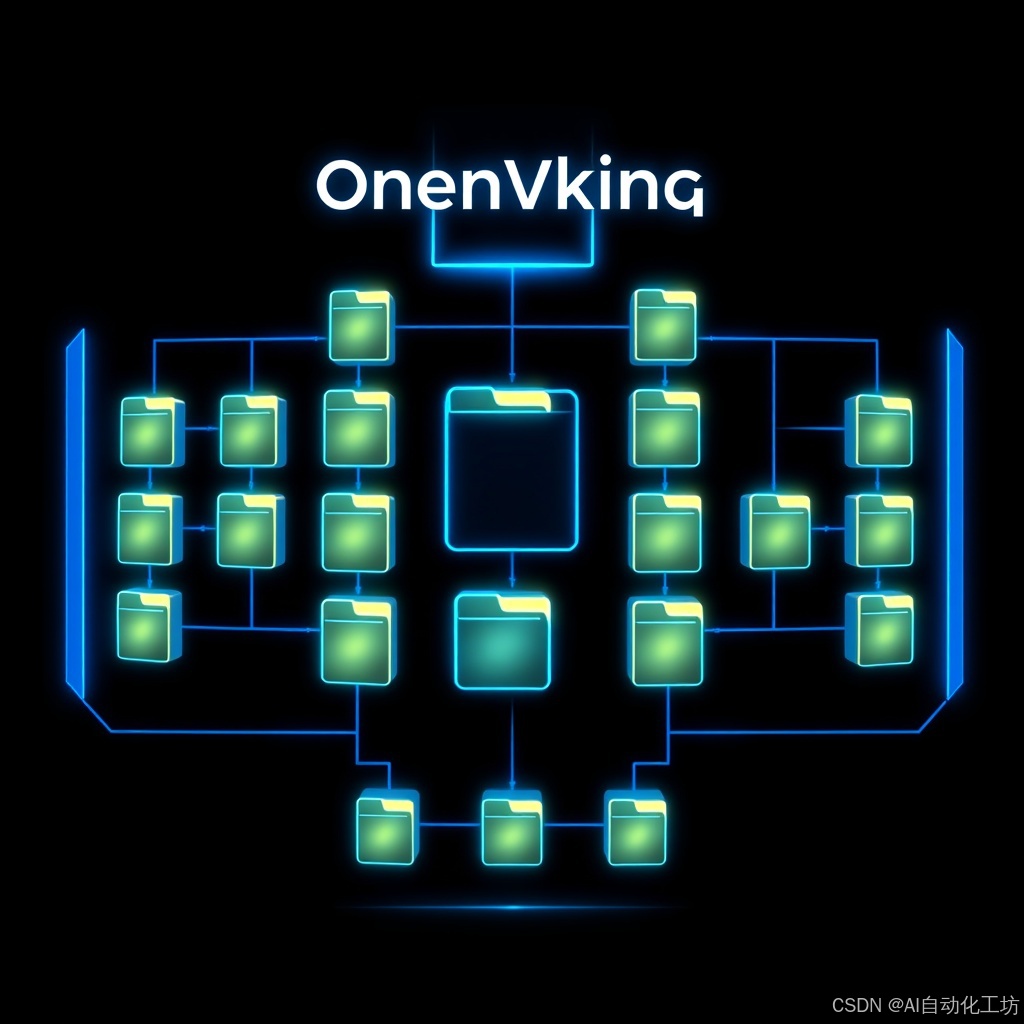
OpenViking采用虚拟文件系统管理上下文:
viking://agent-id/
├── memories/          # 记忆存储
│   ├── user-123/     # 用户记忆
│   ├── project-x/    # 项目记忆
│   └── skills/       # 技能记忆
├── resources/        # 资源文件
│   ├── docs/        # 文档库
│   ├── code/        # 代码片段
│   └── configs/     # 配置文件
└── workspace/       # 工作空间
    ├── current/     # 当前任务
    └── history/     # 历史记录
4.2 API接口使用
4.2.1 Python SDK安装
pip install openviking-sdk
4.2.2 基础操作示例
from openviking import VikingClient

# 初始化客户端
client = VikingClient(
    base_url="http://localhost:8080",
    api_key="your-api-key"
)

# 创建上下文存储
context_store = client.create_context_store(
    name="customer-service",
    description="客服系统上下文存储"
)

# 写入记忆
memory_id = client.write_memory(
    store_id=context_store.id,
    path="memories/user-123/conversation-001",
    content="用户咨询产品功能...",
    metadata={
        "user_id": "user-123",
        "timestamp": "2024-03-15T10:00:00Z",
        "category": "product_inquiry"
    }
)

# 检索上下文
results = client.retrieve(
    store_id=context_store.id,
    query="用户询问产品功能",
    max_results=10,
    layer="l1"  # 使用L1层内容
)
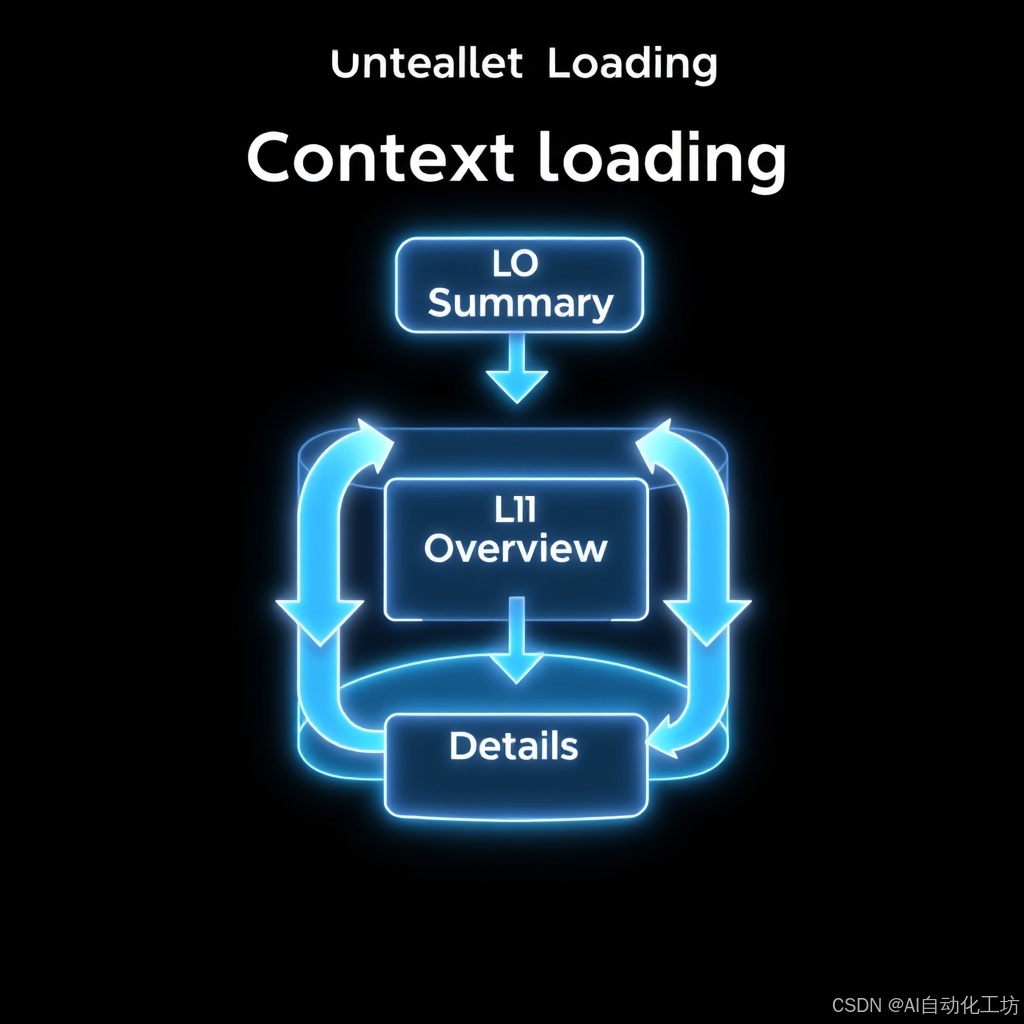
4.3 三层加载实战
4.3.1 L0层:元数据管理
# 创建L0层摘要
from openviking.compressors import L0Compressor

compressor = L0Compressor(ratio=0.05)
content = """OpenViking是一个专为AI代理设计的上下文数据库...
详细的技术架构包括文件系统范式、三层加载策略..."""

l0_content = compressor.compress(content)
# 输出:OpenViking是AI代理上下文数据库...文件系统范式...三层加载...

print(f"原始大小:{len(content)} 字符")
print(f"L0压缩后:{len(l0_content)} 字符")
print(f"压缩率:{len(l0_content)/len(content)*100:.1f}%")
4.3.2 L1层:核心要点提取
from openviking.compressors import L1Compressor

compressor = L1Compressor(ratio=0.25)
l1_content = compressor.compress(content)

# L1层保留关键信息:
# - OpenViking:AI代理上下文数据库
# - 核心技术:文件系统范式、三层加载策略
# - 优势:降低成本、提高检索效率
4.3.3 L2层:完整内容存储
# L2层存储完整内容
from openviking.storage import FileStorage

storage = FileStorage(base_path="./data")
storage.write(
    path="viking://agent-001/resources/docs/openviking-intro.md",
    content=content,  # 完整内容
    layer="l2"
)
五、集成主流AI框架
5.1 LangChain集成
5.1.1 内存管理集成
from langchain.memory import OpenVikingMemory
from langchain.agents import initialize_agent

# 创建OpenViking内存
memory = OpenVikingMemory(
    base_path="viking://customer-agent/",
    client_config={
        "base_url": "http://localhost:8080",
        "api_key": "your-key"
    }
)

# 初始化代理
agent = initialize_agent(
    tools=[web_search, calculator, database_query],
    llm=llm,
    memory=memory,
    agent_type="chat-conversational-react-description",
    verbose=True
)

# 运行代理
response = agent.run("用户上次咨询的问题是什么?")
5.1.2 检索增强集成
from langchain.retrievers import OpenVikingRetriever

# 创建检索器
retriever = OpenVikingRetriever(
    store_id="customer-docs",
    layer="l1",  # 使用L1层内容
    similarity_threshold=0.7
)

# 创建检索链
from langchain.chains import RetrievalQA
qa_chain = RetrievalQA.from_chain_type(
    llm=llm,
    chain_type="stuff",
    retriever=retriever
)

# 执行检索增强问答
answer = qa_chain.run("OpenViking的三层加载策略是什么?")
5.2 AutoGen集成
5.2.1 多代理上下文共享
from autogen import AssistantAgent, UserProxyAgent
from openviking.autogen_integration import OpenVikingContextManager

# 创建上下文管理器
context_manager = OpenVikingContextManager(
    namespace="project-team",
    base_path="viking://project-alpha/"
)

# 配置不同角色的代理
engineer_agent = AssistantAgent(
    name="engineer",
    system_message="你是软件工程师...",
    context_manager=context_manager.get_context("engineer")
)

designer_agent = AssistantAgent(
    name="designer",
    system_message="你是UI设计师...",
    context_manager=context_manager.get_context("designer")
)

# 代理间通过共享上下文协作
user_proxy = UserProxyAgent(
    name="user_proxy",
    human_input_mode="TERMINATE",
    context_manager=context_manager.get_context("coordinator")
)
六、实战案例
6.1 案例一:智能客服系统
6.1.1 架构设计
viking://customer-service/
├── memories/
│   ├── users/              # 用户历史对话
│   ├── products/          # 产品知识库
│   └── solutions/         # 解决方案库
├── resources/
│   ├── faq/              # 常见问题文档
│   ├── manuals/          # 产品手册
│   └── policies/         # 政策文档
└── workspace/
    ├── active-sessions/  # 活跃会话
    └── analytics/        # 分析数据
6.1.2 配置示例
customer_service:
  layers:
    l0:
      compression_ratio: 0.03  # 客服场景需要更精确
    l1:
      compression_ratio: 0.2
      summary_algorithm: "key_points"

  retrieval:
    directories:
      - "memories/users/{user_id}"
      - "resources/faq"
      - "resources/manuals/{product_id}"

  caching:
    user_profiles_ttl: 86400  # 用户画像缓存24小时
    product_info_ttl: 3600    # 产品信息缓存1小时
6.1.3 性能优化
# 预加载常用上下文
async def preload_contexts(user_id, product_ids):
    contexts = []

    # 预加载用户历史(L1层)
    contexts.append({
        "path": f"memories/users/{user_id}",
        "layer": "l1",
        "priority": "high"
    })

    # 预加载产品信息(L0层)
    for product_id in product_ids:
        contexts.append({
            "path": f"resources/manuals/{product_id}",
            "layer": "l0",
            "priority": "medium"
        })

    await client.preload_contexts(contexts)
6.2 案例二:代码生成平台
6.2.1 工作流设计
class CodeGenerationWorkflow:
    def __init__(self, task_id):
        self.base_path = f"viking://codegen/task-{task_id}/"
        self.stages = ["analysis", "design", "implementation", "testing"]

    async def execute(self, requirements):
        # 阶段1:需求分析
        analysis_result = await self.analyze_requirements(requirements)
        await self.save_stage_result("analysis", analysis_result)

        # 阶段2:架构设计
        design_result = await self.design_architecture(analysis_result)
        await self.save_stage_result("design", design_result)

        # 阶段3:代码实现
        code_result = await self.implement_code(design_result)
        await self.save_stage_result("implementation", code_result)

        # 阶段4:测试验证
        test_result = await self.run_tests(code_result)
        await self.save_stage_result("testing", test_result)

        return self.compile_final_result()
6.2.2 上下文回溯
async def debug_code_issue(task_id, issue_description):
    # 加载完整任务上下文
    task_context = await client.load_full_context(
        f"viking://codegen/task-{task_id}/"
    )

    # 分析各阶段决策
    analysis_phase = task_context.get("analysis")
    design_phase = task_context.get("design")
    code_phase = task_context.get("implementation")

    # 使用AI分析问题根源
    analysis_prompt = f"""
    代码问题:{issue_description}

    需求分析阶段:{analysis_phase}
    架构设计阶段:{design_phase}
    代码实现阶段:{code_phase}

    请分析问题可能出现在哪个阶段,并提供修复建议。
    """

    return await llm.generate(analysis_prompt)
6.3 案例三:多智能体研究平台
6.3.1 协作架构
class ResearchCollaborationPlatform:
    def __init__(self, project_id):
        self.project_path = f"viking://research/project-{project_id}/"
        self.agents = {
            "literature_reviewer": LiteratureReviewAgent(),
            "experiment_designer": ExperimentDesignAgent(),
            "data_analyst": DataAnalysisAgent(),
            "paper_writer": PaperWritingAgent()
        }

    async def conduct_research(self, research_topic):
        # 文献调研智能体
        literature_results = await self.agents["literature_reviewer"].review(
            topic=research_topic,
            context_path=f"{self.project_path}/literature/"
        )

        # 实验设计智能体
        experiment_plan = await self.agents["experiment_designer"].design(
            literature=literature_results,
            context_path=f"{self.project_path}/experiments/"
        )

        # 数据分析智能体
        analysis_results = await self.agents["data_analyst"].analyze(
            experiment_data=experiment_plan.results,
            context_path=f"{self.project_path}/analysis/"
        )

        # 论文写作智能体
        paper = await self.agents["paper_writer"].write(
            research_data={
                "literature": literature_results,
                "experiment": experiment_plan,
                "analysis": analysis_results
            },
            context_path=f"{self.project_path}/paper/"
        )

        return paper

七、性能调优
7.1 存储优化
7.1.1 压缩策略调整
optimization:
  compression:
    text:
      algorithm: "zstd"
      level: 3
      dictionary_training: true

    code:
      algorithm: "lz4"
      level: 1  # 代码需要快速解压

    images:
      algorithm: "webp"
      quality: 85
7.1.2 存储分层
# 根据访问频率分层存储
storage_strategy = {
    "hot_data": {
        "storage": "ssd",
        "compression": "light",
        "replication": 3
    },
    "warm_data": {
        "storage": "hdd",
        "compression": "medium",
        "replication": 2
    },
    "cold_data": {
        "storage": "object_storage",
        "compression": "aggressive",
        "replication": 1
    }
}
7.2 检索优化
7.2.1 索引策略
# 创建复合索引
index_config = {
    "primary": {
        "type": "semantic",
        "model": "all-MiniLM-L6-v2",
        "dimension": 384
    },
    "secondary": {
        "type": "keyword",
        "fields": ["metadata.category", "metadata.timestamp"]
    },
    "tertiary": {
        "type": "hierarchical",
        "based_on": "directory_structure"
    }
}
7.2.2 缓存优化
cache_config = {
    "in_memory": {
        "max_size": "2GB",
        "eviction_policy": "lru",
        "ttl": 300  # 5分钟
    },
    "redis": {
        "host": "localhost",
        "port": 6379,
        "db": 0,
        "max_connections": 100
    },
    "prefetch": {
        "enabled": true,
        "predictive_algorithm": "markov_chain",
        "confidence_threshold": 0.7
    }
}
7.3 成本控制
7.3.1 Token成本监控
class TokenCostMonitor:
    def __init__(self, budget_daily=1000):
        self.budget_daily = budget_daily
        self.consumption_today = 0

    async def check_and_limit(self, operation, estimated_cost):
        if self.consumption_today + estimated_cost > self.budget_daily:
            raise BudgetExceededError(
                f"今日预算不足。已用:{self.consumption_today},"
                f"需要:{estimated_cost},预算:{self.budget_daily}"
            )

        # 执行操作
        result = await operation()

        # 更新消耗
        actual_cost = self.calculate_actual_cost(result)
        self.consumption_today += actual_cost

        return result
7.3.2 自动降级策略
async def retrieve_with_fallback(query, preferred_layer="l1"):
    try:
        # 首选L1层检索
        results = await client.retrieve(
            query=query,
            layer=preferred_layer,
            max_tokens=1000
        )
        return results
    except TokenLimitExceededError:
        # 降级到L0层
        logging.warning(f"降级检索到L0层:{query}")
        results = await client.retrieve(
            query=query,
            layer="l0",
            max_tokens=500
        )
        return results
    except Exception as e:
        # 最终降级到关键词检索
        logging.error(f"完全降级:{e}")
        return await keyword_retrieval(query)
八、监控与维护
8.1 健康检查
# API健康检查
curl http://localhost:8080/health

# 存储健康检查
curl http://localhost:8080/health/storage

# 性能指标
curl http://localhost:8080/metrics
8.2 日志分析
# 配置结构化日志
import structlog

logger = structlog.get_logger()

# 关键操作日志
logger.info(
    "context_retrieved",
    path=context_path,
    layer=layer,
    token_cost=token_cost,
    response_time=response_time_ms,
    user_id=user_id
)
8.3 性能指标收集
from prometheus_client import Counter, Histogram

# 定义指标
RETRIEVAL_REQUESTS = Counter(
    'openviking_retrieval_requests_total',
    'Total retrieval requests',
    ['layer', 'status']
)

RETRIEVAL_DURATION = Histogram(
    'openviking_retrieval_duration_seconds',
    'Retrieval request duration',
    ['layer']
)

# 在检索函数中记录指标
@RETRIEVAL_DURATION.labels(layer=layer).time()
async def retrieve_context(query, layer):
    RETRIEVAL_REQUESTS.labels(layer=layer, status='started').inc()

    try:
        result = await internal_retrieve(query, layer)
        RETRIEVAL_REQUESTS.labels(layer=layer, status='success').inc()
        return result
    except Exception:
        RETRIEVAL_REQUESTS.labels(layer=layer, status='error').inc()
        raise
九、故障排除
9.1 常见问题
问题1:高延迟响应
症状:检索响应时间超过2秒
排查步骤:
1. 检查网络延迟:ping API端点
2. 检查存储性能:监控磁盘IO
3. 检查缓存命中率:查看Redis监控
4. 检查索引状态:重建可能损坏的索引
问题2:Token成本异常
症状:Token消耗远高于预期
排查步骤:
1. 检查压缩配置:确认L0/L1压缩率设置
2. 分析检索模式:检查是否频繁使用L2层
3. 审查上下文大小:清理过大的上下文文件
4. 验证降级策略:确保成本超限时正确降级
问题3:上下文不一致
症状:不同检索返回不一致结果
排查步骤:
1. 检查缓存一致性:清理缓存并重试
2. 验证索引同步:确保索引与存储同步
3. 检查并发控制:是否存在写冲突
4. 审计操作日志:查找异常操作记录
9.2 调试工具
# 启用调试模式
export OPENVIKING_DEBUG=true
export LOG_LEVEL=DEBUG

# 使用诊断工具
openviking diagnose --check-all

# 性能分析
openviking profile --duration 30 --output profile.json
十、最佳实践总结
10.1 部署实践
- 生产环境配置:使用独立的数据库实例,配置读写分离
- 高可用架构:部署多个API实例,使用负载均衡
- 备份策略:定期备份上下文数据,测试恢复流程
- 安全加固:启用TLS加密,配置访问控制,定期审计
10.2 开发实践
- 版本控制:所有配置文件纳入版本控制
- 测试覆盖:编写单元测试和集成测试
- 文档完善:为自定义集成编写详细文档
- 代码审查:建立代码审查流程,确保质量
10.3 运维实践
- 监控告警:设置关键指标告警阈值
- 容量规划:定期评估存储和性能需求
- 成本优化:持续监控和优化Token成本
- 灾难恢复:制定和演练灾难恢复计划
结语
OpenViking为AI代理系统提供了专业级的上下文管理能力。通过文件系统范式和三层加载策略,它在保持强大功能的同时,显著降低了Token成本和系统复杂度。
对于技术团队而言,掌握OpenViking不仅意味着解决当前的上下文管理难题,更是为构建下一代AI代理系统奠定基础。建议从测试环境开始,逐步掌握核心概念,然后在关键业务场景中应用,最终构建完整的AI代理基础设施。
OpenViking仍在快速发展中,关注官方GitHub仓库获取最新更新,参与社区讨论贡献想法,共同推动AI代理技术的发展。

AtomGit 是由开放原子开源基金会联合 CSDN 等生态伙伴共同推出的新一代开源与人工智能协作平台。平台坚持“开放、中立、公益”的理念,把代码托管、模型共享、数据集托管、智能体开发体验和算力服务整合在一起,为开发者提供从开发、训练到部署的一站式体验。
更多推荐
 25
25 0
0- 0


 已为社区贡献9条内容

所有评论(0)