链式队列实现(基于 C 的实现,属于 Data Structures 基础结构,结尾含全代码:)
目录
一、队列的基本概念
队列(Queue)是一种先进先出(FIFO)的线性数据结构。
特点:
只能在队尾插入
只能在队头删除
画一个简单结构:
入队 → → → → → → 出队
front rear
↓ ↓
[10] → [20] → [30] → [40]
这里解释三个核心操作:
入队 enqueue
出队 dequeue
取队头 front
二、队列的两种实现方式
1 数组实现
需要循环队列(因为头删是,需要向前挪动)
数组容量固定
2 链表实现
动态扩展
不需要移动数据
三、链式队列结构设计
1,解释节点:
QueueNode
结构图:
[val | next]
代码:
typedef struct QueueNode
{
    struct QueueNode* next;
    QDataType val;
}QueueNode;
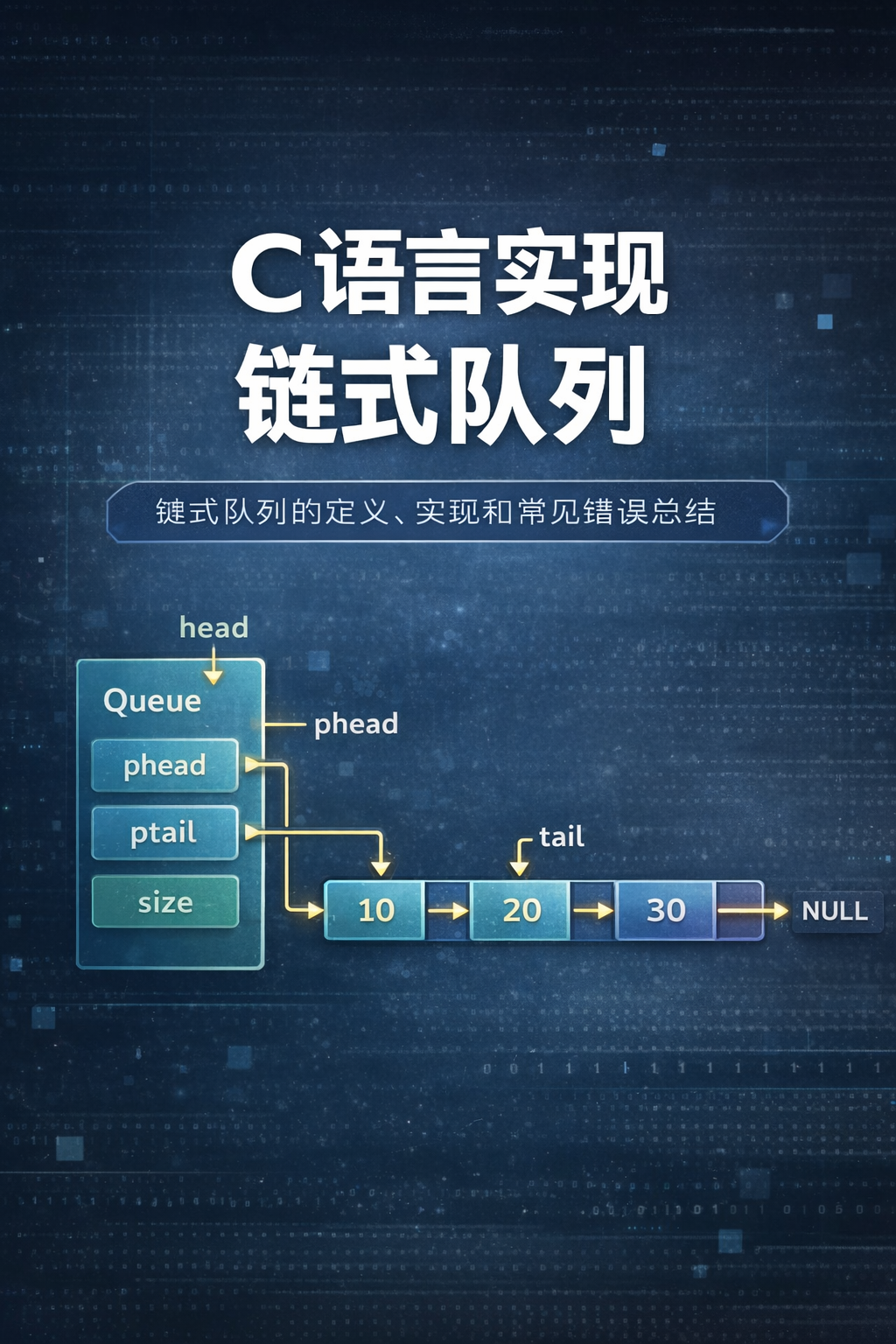
再解释队列管理结构:
Queue
phead → 队头
ptail → 队尾
size → 元素个数
typedef struct Queue
{
	struct QueueNode* phead;
	struct QueueNode* ptail;
	int size;
} Queue;
结构图:
Queue
│
├── phead
├── ptail
└── size
整体结构:
phead → node → node → node
↑
ptail
四、队列初始化
说明初始化为什么只初始化 Queue。
核心思想:(为什么初始化Queue就行,实则都是真的头节点之后才创建)
初始化只是创建空队列
节点在入队时创建
代码:
void QueueInit(Queue* pq)
{
	assert(pq);
	pq->phead = pq->ptail = NULL;
	pq->size = 0;
}
问题小加
为什么队列不需要头节点(哨兵节点)?
单链表需要,方便头插,头删 ,这种频繁改变头节点的操作
但是队列只有出队(头删)这一种可能
五、入队操作(QueuePush)
说明逻辑:
创建新节点
如果队列为空
phead = ptail = newnode
否则
ptail->next = newnode
ptail = newnode
画一个变化过程:
入队前
phead → [10] → [20]
↑
ptail
入队30
phead → [10] → [20] → [30]
↑
ptail
六、出队操作(QueuePop)
重点讲两种情况:
情况1:只有一个节点
free(phead)
phead = ptail = NULL
情况2:多个节点
next = phead->next
free(phead)
phead = next
代码:
//队列的头删
void QueuePop(Queue* pq)
{
	assert(pq);
	//assert(pq->phead);
	assert(pq->size != 0);
	if (pq->size == 1)
	{
		free(pq->phead);
		pq->ptail = pq->phead = NULL;
	}
	Queue* next = (pq->phead)->next;
	free(pq->phead);
	pq->phead = next;

	pq->size--;
}
---
七、销毁队列
这里解释为什么链表不能一次 free。
核心思想:
每个节点都是一次 malloc
必须逐个 free
代码逻辑:
循环释放节点
八、常见错误总结
可以写你今天遇到的几个 bug:
1 if 后多写分号
if (pq->size == 1);
会导致判断失效。
---
2 访问空指针
pq->phead 为 NULL
却访问 pq->phead->next
会出现:
读取访问权限冲突
---
3 删除最后一个节点忘记修改 ptail
正确做法:
phead = ptail = NULL
---
九、时间复杂度分析
入队 O(1)
出队 O(1)
原因:
有 ptail 指针
无需遍历
---
十、总结
链式队列利用链表实现 FIFO
通过 phead 和 ptail 实现 O(1) 入队和出队
适合动态数据规模
十一,全代码
Queue.h
#pragma once
#include<stdio.h>
#include<assert.h>
#include<stdbool.h>
#include<stdlib.h>

typedef int QDateType;
typedef struct QueueNode
{
	struct QueueNode* next;
	QDateType val;
}QueueNode;

typedef struct Queue
{
	struct QueueNode* phead;
	struct QueueNode* ptail;
	int size;
} Queue;

void QueueInit(Queue* pq);
void QueueDestroy(Queue* pq);

// 队列的尾插
void QueuePush(Queue* pq, QDateType x);
//队列的头删
void QueuePop(Queue* pq);

// 队列取头 取尾
QDateType QueueFront(Queue* pq);
QDateType QueueBack(Queue* pq);

//取值
int QueueSize(Queue* pq);

//验空
bool QueueEmpty(Queue* pq);
Queue.c
#include"Queue.h"
//初始化销毁
void QueueInit(Queue* pq)
{
	assert(pq);
	pq->phead = pq->ptail = NULL;
	pq->size = 0;
}

void QueueDestroy(Queue* pq)
{
	assert(pq);
	QueueNode* pcur = pq->phead;
	while (pcur)
	{
		QueueNode* next = pcur->next;
		free(pcur);
		pcur = next;
	}
	//注意 没写上
	pq->phead = pq->ptail = NULL;
	pq->size = 0;
}

// 队列的尾插
void QueuePush(Queue* pq, QDateType x)
{
	assert(pq);
	QueueNode* newnode = (QueueNode*)malloc(sizeof(QueueNode));
	if (newnode == NULL)
	{
		perror("malloc fail");
		exit(1);
	}
	newnode->val = x;
	newnode->next = NULL;
	if (pq->ptail == NULL)//说明是空链表
	{
		pq->phead = pq->ptail = newnode;
	}
	else
	{
		pq->ptail->next = newnode;
		pq->ptail = newnode;
	}
	pq->size++;
}
//队列的头删
void QueuePop(Queue* pq)
{
	assert(pq);
	//assert(pq->phead);
	assert(pq->size != 0);
	if (pq->size == 1)
	{
		free(pq->phead);
		pq->ptail = pq->phead = NULL;
	}
	Queue* next = (pq->phead)->next;
	free(pq->phead);
	pq->phead = next;

	pq->size--;
}


// 队列取头 取尾
QDateType QueueFront(Queue* pq)
{
	assert(pq);
	assert(pq->phead);
	return pq->phead->val;
}
QDateType QueueBack(Queue* pq)
{
	assert(pq);
	assert(pq->ptail);
	//assert(pq->size != 0);应该也行反正
	return pq->ptail->val;
}


//取值
int QueueSize(Queue* pq)
{
	assert(pq);
	return pq->size;
}

//验空
bool QueueEmpty(Queue* pq)
{
	assert(pq);
	return pq->size == 0;
}

AtomGit 是由开放原子开源基金会联合 CSDN 等生态伙伴共同推出的新一代开源与人工智能协作平台。平台坚持“开放、中立、公益”的理念,把代码托管、模型共享、数据集托管、智能体开发体验和算力服务整合在一起,为开发者提供从开发、训练到部署的一站式体验。
更多推荐



 12
12 0
0- 0


 已为社区贡献1条内容

所有评论(0)