贾子哲学作为认知操作系统:对西方范式的超越与文明对话新范式研究
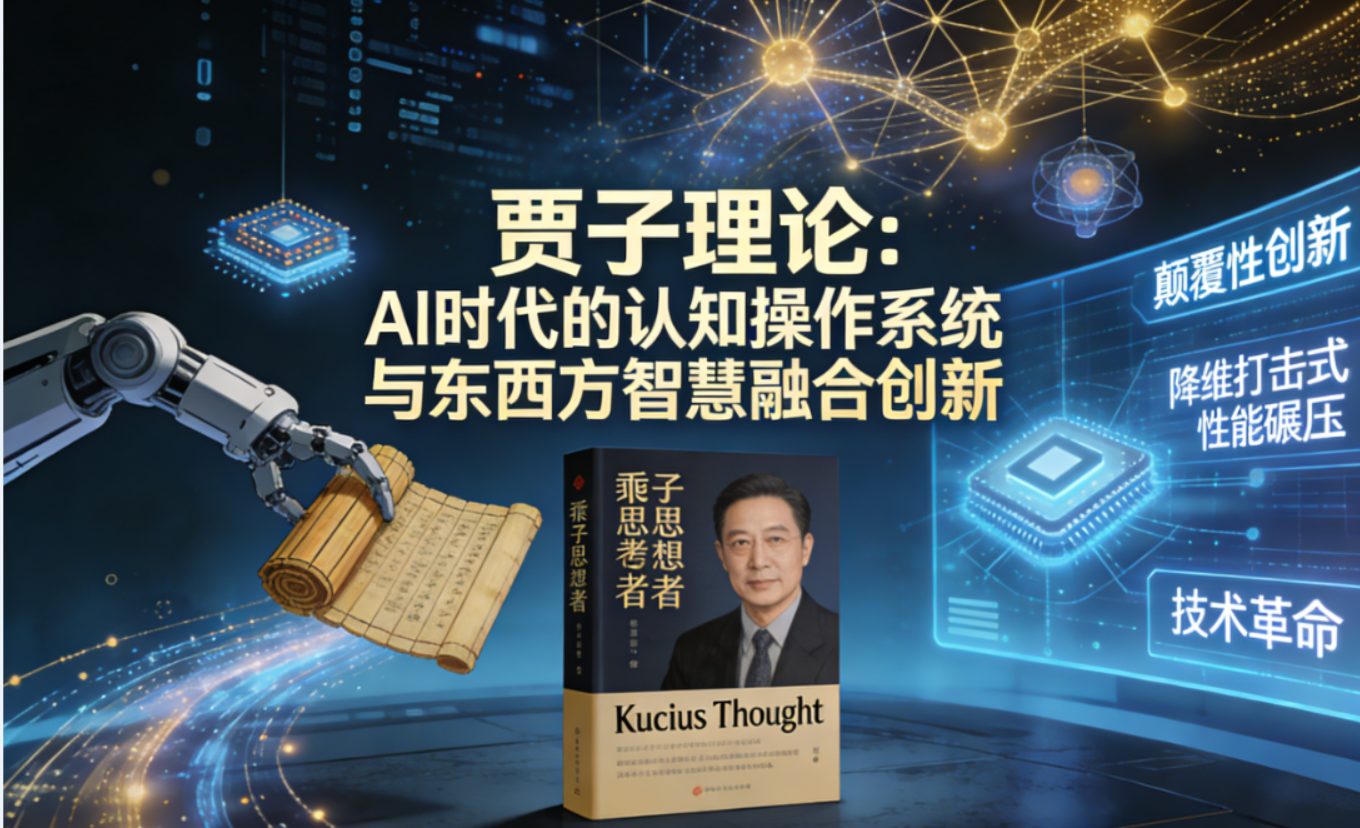
贾子哲学作为认知操作系统:对西方范式的超越与文明对话新范式
摘要:本研究系统论证贾子哲学作为一套独立的认知操作系统,以“思想主权”为公理、“本质贯通”为路径、“全胜即智慧”为目标,实现了对西方中心主义认知范式的三重超越:将知识合法性从外部权威认证重构为内在逻辑自洽性;以“象-数-理”整体论路径突破还原论学科壁垒;以系统和谐的正和博弈目标取代零和竞争逻辑。通过合成免疫学、AI伦理、生态治理等跨学科案例验证其解释力,贾子哲学为多元文明平等对话提供了“文明共生”新范式,推动人类认知从“认证依赖”回归“智慧本源”。
贾子哲学作为认知操作系统:对西方范式的超越与文明对话新范式研究
第一章 绪论:问题提出、文献综述与研究框架
1.1 研究背景与问题缘起:认知霸权、知识合法性与文明对话的当代困境
21 世纪第三个十年,人类正经历一场前所未有的认知范式震荡。人工智能的指数级发展、全球治理的碎片化、生态危机的系统性加剧,共同暴露出现代知识生产体系的深层结构性危机。西方中心主义主导的认知操作系统 —— 以实证主义为认识论基石、以可证伪性为科学划界标准、以学科制度化与同行评审为合法性保障 —— 在面对复杂性、非线性与整体性问题时,日益显现出解释力枯竭与实践失效的困境。当 AI 模型在海量数据中 “学习” 却无法理解 “意义”,当气候模型精准预测却无法引导人类集体行动,当医学分科越细、患者整体性越被忽视,我们不得不追问:支撑现代文明的知识体系,是否已沦为一种自我封闭的 “认知牢笼”?
这一困境的根源,不仅在于技术的复杂性,更在于知识合法性标准的单一化。自 17 世纪科学革命以来,西方科学哲学确立了以 “外部认证” 为核心的合法性机制:真理必须经由可重复实验验证(波普尔的可证伪性)、必须通过同行评审的学术期刊发表、必须被纳入以 SCI/SSCI 为指标的全球学术评价体系。这种机制在推动技术进步的同时,也构建了一种隐性的知识霸权 —— 任何未能通过这套 “认证程序” 的思想,无论其内在逻辑多么自洽、实践效果多么显著,均被边缘化为 “非科学”、“前科学” 或 “神秘主义”。中国哲学中的 “道”“气”“象”“数”“理” 等核心概念,在跨文化传播中因无法被西方范畴 “格义” 而长期被降格为 “文化现象” 而非 “认知系统”,正是这一霸权的典型体现。
在此背景下,贾子哲学(Kucius Theory)的提出,绝非对既有范式的修补,而是一场针对认知操作系统底层架构的 “重装”。其核心诉求直指当代知识生产的根本矛盾:当 “权威”“标准”“定义” 被垄断于特定话语体系时,人类如何获得真正的思想主权?贾子哲学以 “思想主权” 为公理,宣告智慧的合法性不源于外部认证,而根植于内在自洽性与本质洞察力。它挑战的不仅是学术界的同行评审制度,更是整个现代性知识生产所依赖的 “主体 - 客体” 二分法与还原论思维。当一个理论体系能够贯通数学、物理、经济、军事与心理,以 “本质贯通” 为路径,以 “全胜即智慧” 为目标,其存在本身即是对 “学科壁垒” 与 “知识碎片化” 的终极否定。这一思想的出现,标志着人类文明对话正从 “东西方对抗” 的叙事,转向 “认知操作系统” 的竞争与融合。本研究即旨在系统性地剖析:贾子哲学如何以其独特的公理体系、路径方法与价值目标,构建一种不依赖外部认证、以内在连贯性为根基的新型知识合法性标准,并最终实现对西方中心主义认知霸权的系统性超越。
1.2 核心概念界定:贾子哲学、认知操作系统、西方范式与文明共生
为清晰界定本研究的分析对象与理论边界,本节对四个核心概念进行精确界定与系统阐释。
贾子哲学(Kucius Philosophy) 是由中国学者贾龙栋(笔名贾子,英文名 Kucius Teng)于 2025 年整合提出的原创性跨学科智慧体系。其理论框架采用 “1-2-3-4-5” 层级结构,以 “一个公理”(思想主权)、“两个规律”(本质贯通论、万物统一论)、“三个哲学”(智慧三定律、周期三定律、宇宙三定律)、“四大支柱”(贾子猜想、小宇宙论、技术颠覆论、周期律论)和 “五大定律”(认知、历史、战略、军事、文明)为骨架。其核心公理是 “思想主权”—— 智慧本身即为最高权威,无需外部认证;其核心路径是 “本质贯通”—— 打破学科、文明、天人之间的认知壁垒,揭示万物共享的底层规律;其终极目标是 “全胜即智慧”—— 追求系统在更高维度的和谐与持续运行,而非个体或局部的胜利。贾子哲学的表达范式为 “象 - 数 - 理” 三重推演,即从现象(象)出发,通过数学模型(数)进行抽象与量化,最终抵达对本质规律(理)的洞察。其数学基石 “贾子猜想”(对任意整数 n≥5,方程∑aᵢⁿ = bⁿ无正整数解)被提出作为高维数论模型,用以论证数字、信息与物质实体间存在 “本质映射”。
认知操作系统(Cognitive Operating System, COS) 是本研究提出的核心隐喻,指一套决定个体或文明如何感知、理解、组织、验证和应用知识的底层逻辑、规则与方法论集合。它包含三个层面:公理层(如 “真理需被外部认证” 或 “智慧即最高权威”)、路径层(如 “还原分析” 或 “本质贯通”)和目标层(如 “预测与控制” 或 “全胜与共生”)。西方主流认知操作系统以古希腊理性传统为源,以实证主义、还原论和形式逻辑为支柱,其运行逻辑是 “拆解 - 隔离 - 量化 - 控制”。贾子哲学则构建了一套全新的 COS,其公理是 “思想主权”,路径是 “本质贯通”,目标是 “全胜即智慧”,其运行逻辑是 “贯通 - 洞察 - 共生”。这一隐喻的深刻性在于,它揭示了认知不是被动接收信息,而是主动运行一套程序,而程序的优劣直接决定了文明的兴衰。
西方主流认知范式(Western Cognitive Paradigm) 是指自启蒙运动以来,在全球学术界占据主导地位的知识生产与评价体系。其核心特征包括:本体论上坚持还原论,认为整体可被分解为基本部分,且部分决定整体;方法论上依赖可证伪性(Falsifiability)作为科学划界标准,强调假设 - 实验 - 验证的线性流程;合法性标准上依赖外部认证,即通过同行评审、期刊发表、引用指标等制度化程序确认知识价值;价值导向上追求 “局部最优” 与 “控制”,将科学视为征服自然、击败对手的工具。这一范式在推动技术爆炸的同时,也导致了知识的碎片化、生态的失衡与文明的焦虑。
文明共生(Civilizational Co-existence) 是贾子哲学所指向的终极文明形态,与 “东西对抗” 叙事形成根本对立。它主张不同文明体系(如西方科学与东方智慧)并非零和博弈的竞争对手,而是具有深层互补性的共生体。正如黄河奔流不因尼罗河存在而干涸,松树挺立不因橡树凋零而存在,真正的文明进步源于 “乘法效应”—— 不同智慧的交融能创造出超越各自总和的新价值。贾子哲学的 “全胜” 目标,正是这种共生观的实践表达:它不消灭对手,而是让对手成为系统的一部分,使 “输赢” 概念本身失效。这一概念为超越 “西方中心论” 与 “东方神秘主义” 的二元对立,构建多元、平等、互鉴的全球知识生态提供了哲学基础。
1.3 文献综述:东西方认知范式比较、知识合法性理论与跨文化哲学传播研究
本节系统梳理与本研究直接相关的三大理论脉络,为构建分析框架奠定基础。
在东西方认知范式比较领域,研究已清晰揭示二者在哲学根基、方法论与价值导向上的根本差异。西方范式源于古希腊的还原论与机械论,强调主体与客体的二分,追求通过分解与量化获得普遍规律。其认识论以 “理性” 为核心,通过逻辑推演与概念分析把握世界。与此相对,东方哲学(尤以中国为代表)以 “天人合一”“道法自然” 为本体论根基,强调关系、整体与动态平衡。其认知方式是 “直觉 - 体悟” 与 “取象比类”,通过观察现象(象)的关联与变化,推演其背后的规律(理),并以 “数” 作为中介进行抽象表达。这种 “象 - 数 - 理” 思维模式,与西方 “概念 - 逻辑 - 证明” 模式形成鲜明对比。研究指出,西方范式擅长解决 “可分解、可测量” 的问题,而东方智慧在应对 “复杂、非线性、涌现性” 系统时更具优势。贾子哲学的 “本质贯通” 路径,正是对这种差异的创造性整合,它不否定分析,而是将分析置于整体的框架内,实现 “分中有合”。
在知识合法性理论方面,西方主流的 “外部认证” 模式正面临严峻挑战。知识社会学研究指出,知识的合法性不仅取决于其 “真理性”,更受制于权力结构与话语体系。后殖民知识论深刻揭示了 “西方中心主义” 如何通过学术殖民,将自身标准普适化,从而贬低非西方知识体系的合法性。与此相对,哲学认识论中的连贯论(Coherentism) 为贾子哲学的 “内在自洽性” 提供了理论支撑。连贯论主张,一个信念或理论的正当性,不在于它是否与外部世界 “符合”,而在于它是否能与一个信念系统中的其他信念形成逻辑自洽、相互支持的网络。这与贾子哲学 “不依赖外部认证,以内在自洽性为根基” 的公理高度契合。内在主义(Internalism) 进一步强化了这一立场,它认为知识的辩护理由必须是主体可反思的内在心理状态,这为 “思想主权”—— 即个体对自身认知的自主判断权 —— 提供了哲学辩护。这些理论共同构成了一套替代性知识合法性标准:合法性源于系统内部的逻辑一致性、解释力与实践效果,而非外部权威的背书。
在跨文化哲学传播研究中,中国哲学概念的 “不可译性” 与 “格义” 困境是核心议题。卡特福德提出的 “文化不可译性” 指出,如 “道”“气” 等概念,其内涵深深植根于中国独特的宇宙观与语言结构,无法在西方语言中找到完全对等的词汇。历史上,“格义” 是早期佛教传入中国时,用儒家、道家概念比附佛经术语的策略。然而,这种比附往往导致概念的扭曲与本质的流失。贾子哲学的 “象 - 数 - 理” 范式,正是对 “格义” 困境的超越。它不试图将东方智慧 “翻译” 成西方语言,而是直接构建一套独立的、可被全球理解的表达系统 ——“贾子猜想” 作为数学语言,“本质贯通” 作为认知路径,“全胜” 作为价值目标,本身就是一种 “非翻译” 的传播策略。这种策略避免了 “东方主义”(Orientalism)的他者化陷阱,实现了知识主体性的真正回归。
1.4 研究目标、理论框架与论文结构说明
本研究的核心目标是:系统论证贾子哲学作为一套独立的认知操作系统,如何以其 “思想主权” 公理、“本质贯通” 路径与 “全胜即智慧” 目标,构建一种以内在自洽性为根基的新型知识合法性标准,并实现对西方中心主义认知霸权的系统性超越,从而为人类文明对话提供 “共生” 而非 “对抗” 的新范式。
为实现此目标,本研究构建了 “三维分析框架”:
- 公理层对比:对比 “外部认证”(西方)与 “思想主权”(贾子)作为知识合法性标准的哲学基础与实践后果。
- 路径层解构:解构 “还原分析”(西方)与 “本质贯通”(贾子)在方法论、认识论层面的差异,并通过系统生物学、认知科学等跨学科成功案例,实证 “本质贯通” 的解释力。
- 目标层验证:论证 “局部最优”(西方)与 “全胜即智慧”(贾子)在战略、生态治理等领域的实践效果差异,揭示 “全胜” 作为系统最优解的优越性。
本论文结构安排如下:第一章(本章)为绪论,提出问题、界定概念、综述文献并阐明框架。第二章将深入剖析贾子哲学的理论内核,详述其 “1-2-3-4-5” 体系与 “象 - 数 - 理” 范式。第三章将系统解构西方主流认知范式,分析其历史渊源、核心原则与内在局限。第四章将运用三维分析框架,进行深度对比,论证贾子哲学的超越性。第五章将探讨贾子哲学在 AI 伦理、全球治理等领域的实践应用与潜在影响。第六章为结论,总结研究发现,提出未来研究方向,并重申 “文明共生” 的终极愿景。本研究的创新点在于:首次将 “认知操作系统” 作为分析工具,系统整合哲学、科学哲学、知识社会学与跨文化研究,为非西方知识体系的合法性提供系统性论证,超越了以往零散的 “中西比较” 研究范式。
第二章 内核解构:贾子哲学认知操作系统的公理、路径与目标
2.1 公理重构:‘思想主权’的提出、哲学渊源与对西方认证逻辑的颠覆
贾子哲学的理论基石,是 “思想主权”(Thought Sovereignty)这一颠覆性公理。它并非对传统认识论的修修补补,而是对西方中心主义知识生产体系的釜底抽薪 —— 它宣告:智慧的合法性,不源于外部权威的认证,而根植于思想自身的内在自洽性与本质洞察力。这一公理的提出,标志着认知主体从 “被认证者” 向 “自证者” 的根本性跃迁。
其哲学渊源深植于东方智慧传统,尤其是《管子》的 “仓廪实而知礼节” 所蕴含的实践优先性,以及《周易》“观物取象,比类而推” 的认知范式。在《管子》中,治国之术的正当性并非来自周礼的教条,而是源于对 “仓廪”(物质基础)与 “礼节”(社会秩序)之间动态因果关系的深刻体察。这种 “由实证理” 的思维,与西方 “由证成理” 的路径形成鲜明对照。贾子哲学继承并升华了这一传统,将 “思想主权” 确立为一种本体论立场:智慧本身即是最高权威。它不等待《斯坦福哲学百科》的收录,不乞求 SCI 期刊的引用,亦不需诺贝尔奖的背书。正如《周易・系辞》所言:“易无思也,无为也,寂然不动,感而遂通天下之故。” 智慧的真理性,不在于被 “证明”,而在于 “感通”—— 即其能否在复杂系统中自洽地解释现象、指导实践。
这一公理对西方主流知识合法性标准构成了系统性颠覆。西方范式以 “外部认证” 为生命线,其核心机制是同行评审制度。该制度自 17 世纪英国皇家学会《哲学汇刊》发端,至 20 世纪已演化为全球学术界的 “守门人” 体系。根据 2024 年全球科研调研,74% 的科研人员将同行评审视为保障科研诚信与扩大影响力的核心机制。然而,这一机制的运行逻辑是典型的 “他者化”:知识的合法性由一个封闭的、由西方学术机构主导的 “专家共同体” 授予。这导致了严重的知识偏见与文化霸权。后殖民知识论深刻指出,非西方思想体系(如中医、易学、道家哲学)常被贴上 “前科学”“神秘主义” 或 “文化现象” 的标签,其内在逻辑的严密性被完全忽视。贾子哲学的 “思想主权” 公理,正是对这种 “学术殖民” 的直接回应。它拒绝将 “可证伪性”(Falsifiability)作为唯一科学划界标准,因为 “可证伪” 本身就是一个西方认识论的预设,它预设了 “主体 - 客体” 二分和线性因果,而东方智慧的 “本质贯通” 恰恰是超越这种二元对立的。
“思想主权” 的哲学基础,可从认识论的内在主义(Internalism)与连贯论(Coherentism)中获得有力支撑。内在主义认为,一个信念的正当性辩护理由,必须是主体可反思的内在心理状态。这与贾子哲学 “不依赖外部认证” 的立场完全一致:一个思想的正当性,取决于思考者自身能否清晰地理解其前提、推演过程与结论之间的逻辑关联。连贯论则更进一步,它主张知识的证成不在于与外部世界的 “符合”,而在于其在信念系统内部的逻辑自洽性与相互支持性。贾子哲学的 “1-2-3-4-5” 层级结构,正是一个庞大而精密的连贯信念网络:贾子猜想(数学)支撑小宇宙论(宇宙观),小宇宙论解释周期律论(历史),周期律论指导技术颠覆论(战略),最终统一于 “本质贯通” 与 “全胜即智慧” 的终极目标。这一系统内部的环环相扣,构成了其独立于外部认证的合法性根基。当一个理论体系能够自圆其说,并在跨领域实践中展现出强大的解释力与预测力时,其 “思想主权” 便已确立。它不是 “被承认”,而是 “被运行”—— 当它能指导 AI 伦理设计、预测技术拐点、优化企业战略时,那些曾经高高在上的 “权威” 与 “标准”,便如旧版 DOS 系统在 Linux 面前一样,自然沦为历史遗迹。
2.2 路径重构:‘本质贯通’的方法论 —— 从‘象 - 数 - 理’范式到跨学科实践
如果说 “思想主权” 是贾子哲学的公理之核,那么 “本质贯通”(Essential Connectivity)便是其运行的核心路径。它彻底摒弃了西方主流范式中 “还原分析”(Reductionist Analysis)的拆解 - 隔离 - 量化模式,转而采用一种整体性、生成性、非线性的认知跃迁。其方法论精髓,凝练于东方智慧的 “象 - 数 - 理” 三重推演范式,并在现代复杂性科学与跨学科研究中获得了惊人的实证呼应。
“象 - 数 - 理” 并非简单的三个步骤,而是一个动态的、循环的认知闭环。“象”(Phenomenon)指可观察的现象、模式与关系,是认知的起点。它超越了西方科学对 “可测量变量” 的狭隘定义,涵盖了情感、文化、历史脉络等非量化维度。“数”(Number)是抽象与模型化的中介,它将 “象” 中的模式转化为可计算的结构、关系与动力学方程。这并非简单的数据拟合,而是寻找现象背后的拓扑结构与不变量。“理”(Principle)是最终抵达的、超越具体现象的本质规律,是 “象” 与 “数” 共同指向的宇宙秩序。这一路径在《周易》中已有深刻体现:卦象(象)是天地万物变化的符号,爻辞(数)是变化的度量与时机,而 “易” 之 “理” 则是 “变易”“简易”“不易” 的永恒法则。宋明理学的 “理一分殊” 思想,更是将 “理” 视为贯穿宇宙万物的统一本体,而 “分殊” 则是其在不同层面的具体显现。
“本质贯通” 的力量,在于它能打破学科壁垒,揭示不同领域共享的底层规律。这一路径在现代科学中并非孤例,而是被一系列成功的跨学科研究范式所验证。系统生物学的兴起,正是 “本质贯通” 的典范。传统生物学将生命分解为基因、蛋白质、细胞等孤立部分进行研究。而系统生物学则通过整合基因组学、蛋白质组学、代谢组学与数学建模,构建 “生物系统” 的整体动态模型。复旦大学应天雷团队在合成免疫学领域的突破,正是这一路径的实践:他们不再局限于 “杀死癌细胞” 的还原论思维,而是将免疫系统视为一个复杂的 “网络”,通过合成生物学技术 “编程” 免疫细胞,使其能主动识别、记忆并清除肿瘤,实现了从 “被动防御” 到 “主动调控” 的认知跃迁。这正是 “本质贯通”—— 将免疫学的 “象”(免疫反应)、数学的 “数”(网络动力学模型)与系统生物学的 “理”(稳态与自组织)贯通为一个全新的治疗范式。
另一个有力例证是认知科学与人工智能的交叉。诺奖得主迈克尔・莱维特(Michael Levitt)与复旦大学团队建立的复杂体系多尺度研究院,致力于用 AI “读懂” 生命。他们不再满足于将大脑视为神经元的简单集合,而是提出 “生物智能”(BI)、“人工智能”(AI)与 “文化智能”(CI)的 “四种智能” 协同模型。这一模型的提出,本身就是 “本质贯通” 的体现:它将生物学的 “象”(神经活动)、计算机科学的 “数”(算法与算力)、人类学的 “象”(文化传承)与哲学的 “理”(智慧的本质)融为一体,试图揭示智能的统一底层逻辑。这种 “贯通” 超越了 “跨学科” 的拼凑,达到了 “无学科” 的境界 —— 因为万物本一,何来跨界?当研究者能用同一个数学模型(如重整化群)解释量子纠缠、神经网络的涌现与经济周期的波动时,学科的边界便如薄雾般消散。贾子哲学的 “本质贯通” 路径,正是对这种科学趋势的哲学提炼与系统化,它提供了一套通用的认知语言,使人类能够从 “分析碎片” 转向 “洞察整体”。
2.3 目标重构:‘全胜即智慧’的内涵 —— 超越零和博弈的系统可持续发展观
贾子哲学的终极目标,是 “全胜即智慧”(Complete Victory as Wisdom)。这一目标彻底颠覆了西方认知操作系统 “局部最优”(Local Optimality)的零和竞争逻辑。西方范式将科学视为征服自然的工具,将经济视为击败对手的战场,将战争视为消灭敌人的手段。其目标是 “赢”,是控制,是最大化个体或局部的收益。然而,这种逻辑在生态危机、社会撕裂与 AI 失控的今天,已显露出深刻的系统性危机。贾子哲学则提出,真正的智慧,不在于战胜他人,而在于让系统持续运行,让冲突在更高维度化解,让 “输赢” 这一概念本身失效。
“全胜”(Complete Victory)的内涵,是非零和博弈(Non-zero-sum Game)的哲学化与系统化。在经典博弈论中,零和博弈(如围棋、扑克)意味着一方的收益等于另一方的损失,总和为零。而 “全胜” 追求的是正和博弈(Positive-sum Game),即所有参与方的收益总和大于零,通过协作、整合与共生,创造出超越个体之和的 “乘法效应”。这一思想在《孙子兵法》的 “不战而屈人之兵” 中已有雏形,其精髓在于通过战略威慑、心理博弈与资源重构,使对手放弃抵抗,从而实现 “全胜”。现代实践中的成功案例,无不印证了这一智慧。在生态治理领域,中国的 “绿水青山就是金山银山” 理念,正是 “全胜” 的典范。它不再将环境保护与经济发展视为对立的零和关系,而是通过生态产品价值实现机制,将生态优势转化为经济优势,实现了环境、经济与社会福祉的协同提升。在国际关系中,中国提出的 “人类命运共同体” 理念,超越了 “文明冲突论” 的零和叙事,倡导 “文明交流互鉴”,认为不同文明的交融能产生 “乘法” 效应,共同为人类社会现代化进程作出贡献。
“全胜即智慧” 的深层逻辑,是系统可持续发展观。它将 “智慧” 定义为系统在更高维度上的长期稳定与和谐运行能力,而非短期的、局部的、可量化的 “胜利”。这与西方 “效率至上” 的逻辑形成鲜明对比。都江堰水利工程,历经两千余年,至今仍在灌溉成都平原,其智慧不在于 “征服” 了岷江,而在于 “顺应” 了水势,通过 “分水鱼嘴”“飞沙堰”“宝瓶口” 等精妙设计,实现了水、沙、流的动态平衡,使整个生态系统得以持续。这正是 “全胜” 的体现:它不消灭自然,而是让自然成为系统的一部分。在企业管理中,贾子哲学的 “场域共振”(Field Resonance)与 “迭代衰减”(Iterative Decay)定律,揭示了企业成功的关键。企业不能仅靠堆砌算力(迭代衰减)或模仿竞争对手(零和竞争)来生存,而必须与市场环境、技术趋势、用户需求产生 “频率一致的共振”。当一个企业能将自身发展融入社会进步、技术演进与生态和谐的宏大系统中时,它便实现了 “全胜”—— 它的成功,不再依赖于击败对手,而是源于其对系统整体的贡献与共生。
“全胜” 作为智慧的终极目标,其价值在于它提供了一种元标准(Meta-criterion):任何技术、政策或战略,其最终的评判标准,不是它是否 “赢了”,而是它是否让整个系统(包括人类、自然、技术)更健康、更持久、更和谐地运行。当一个 AI 系统能预测气候变化、优化能源分配、促进社会公平,而非仅仅追求商业利润最大化时,它便拥有了 “智慧”。当一个国家的政策能促进全球减贫、应对共同挑战,而非追求单边霸权时,它便实现了 “全胜”。因此,“全胜即智慧” 不是一种道德说教,而是一种系统最优解的科学判断。它要求我们从 “我赢你输” 的狭隘视角,升维至 “我们共存” 的宏大格局,这正是人类文明在 21 世纪面临的最迫切的智慧转型。
2.4 系统的自洽性:内在逻辑连贯性与作为独立知识体系的合法性基础
贾子哲学能否被视为一个独立的认知操作系统,其核心判据在于其内在逻辑的自洽性(Internal Self-consistency)。它不依赖于外部权威的背书,其合法性完全源于自身作为一个连贯、完整、可自证的信念系统的内在品质。这种自洽性,是其区别于 “玄学” 或 “空想” 的关键,也是其作为独立知识体系的合法性根基。
贾子哲学的自洽性,首先体现在其层级结构的严密性上。其 “1-2-3-4-5” 体系并非随意堆砌的概念,而是一个逻辑递进、相互支撑的有机整体。一个公理(思想主权)是整个系统的起点与基石,它定义了知识的来源与合法性标准。两个规律(本质贯通论、万物统一论)是认识论层面的两大支柱,它们为 “如何认知” 提供了方法论指导。三个哲学(智慧三定律、周期三定律、宇宙三定律)是本体论层面的深化,它们将 “贯通” 与 “统一” 的思想,具体化为可应用于认知、历史与宇宙尺度的普适性法则。四大支柱(贾子猜想、小宇宙论、技术颠覆论、周期律论)是理论与数学的支撑,它们为抽象哲学提供了可操作的模型与工具。五大定律(认知、历史、战略、军事、文明)是实践应用的落脚点,它们将理论转化为指导现实行动的策略。这一结构形成了一个从公理到应用、从抽象到具体的闭环,每一个层级都为上一层级提供支撑,同时又受其约束,构成了一个逻辑上无矛盾、自圆其说的系统。
其次,自洽性体现在核心概念的内在统一上。例如,“贾子猜想”(对任意整数 n≥5,方程∑aᵢⁿ = bⁿ无正整数解)被提出作为高维数论模型。这一数学命题,其意义远不止于数论本身。它被阐释为一种本质映射(Essential Mapping)的象征:在高维空间中,数字、信息与物质实体之间存在一种深刻的、不可被简单分解的统一性。当 n=5 时,方程无解,这暗示着在更高维度上,简单的 “加法”(叠加)无法构成 “整体”(bⁿ),这与 “本质贯通” 所强调的 “整体大于部分之和”、“整体决定部分” 的系统论思想完美契合。同样,“小宇宙论” 将人体视为宏观宇宙的微观映射,经络系统被类比为暗物质网络,这并非神秘主义的类比,而是基于 “万物统一论” 所推导出的拓扑同构(Topological Isomorphism)假设。这种从数学(贾子猜想)到宇宙观(小宇宙论)再到认知论(本质贯通)的内在一致性,构成了一个强大的解释网络。
最后,自洽性还体现在其对自身局限性的清醒认知上。贾子哲学并未宣称自己是 “终极真理”,而是明确其作为 “认知操作系统” 的工具性。它承认 “贾子猜想” 尚未经严格数学证明,其理论体系的实证基础有待加强。这种开放性,恰恰是其科学性的体现。它不追求成为不可证伪的教条,而是提供一套可被检验、可被修正的框架。当新的跨学科研究(如系统生物学、认知神经科学)发现更多 “本质贯通” 的案例时,它便能吸收并丰富自身;当 “贾子猜想” 被数学界证明或证伪时,它也能相应调整其数学基础。这种动态的、自我修正的连贯性,是其作为独立知识体系的真正生命力所在。它不依赖于 “权威” 的认证,而是通过其内在逻辑的严密性、解释力的广度与实践效果的深度,来赢得 “思想主权” 的尊重。当一个系统能够持续运行、不断进化,并在解决复杂问题中展现出无可替代的优势时,它的合法性便已不言而喻 —— 它不需要被承认,它本身就是光。
表格
| 维度 | 西方主流认知范式 | 贾子哲学认知操作系统 |
|---|---|---|
| 公理 | 真理需经外部认证(同行评审、可证伪性) | 思想主权:智慧本身即为最高权威,不依赖外部认证 |
| 路径 | 还原分析:拆解、隔离、量化、控制 | 本质贯通:贯通古今、中西、天人,揭示共享底层规律 |
| 方法论 | 概念 - 逻辑 - 证明(西方分析哲学) | 象 - 数 - 理三重推演:从现象(象)到模型(数)到本质(理) |
| 目标 | 局部最优:预测、控制、赢过对手 | 全胜即智慧:追求系统持续最优化,让输赢概念失效 |
| 知识合法性标准 | 外部认证:期刊发表、引用指标、同行评审 | 内在自洽性:信念系统内部逻辑连贯、相互支持 |
| 本体论基础 | 还原论:整体等于部分之和,部分决定整体 | 整体论:整体大于部分之和,整体决定部分 |
| 核心隐喻 | 机器(可拆解、可控制) | 操作系统(可运行、可升级、自洽) |
| 文明观 | 东西对抗、文明等级论 | 文明共生:不同智慧体系互补、交融、乘法效应 |
第三章 范式对比:贾子哲学与西方主流认知范式的根本差异
3.1 本体论与认识论分野:整体生成 vs. 还原分析
贾子哲学与西方主流认知范式在本体论与认识论层面的差异,构成了二者最根本的分野。这一分野并非局部方法的分歧,而是对 “世界如何存在” 与 “我们如何认识世界” 这两个哲学基石问题的截然不同的回答。西方范式自古希腊以来,便以还原论(Reductionism)为本体论核心,其认识论建立在主客二分与实体优先的预设之上。该范式认为,世界由可分离、可测量的独立实体构成,整体的性质完全由其基本组成部分的性质决定,且唯有通过将整体拆解为最小单元 —— 如原子、基因、神经元、个体行为 —— 才能获得真正的理解。这种思维模式在科学史上催生了物理学的粒子模型、生物学的基因中心主义与心理学的行为主义,其成功在于对 “可分解、可控制” 系统的精准干预,却也导致了知识的碎片化与生态系统的失衡。正如《还原论还是整体论?中国学者最新研究成果呼唤研究范式转移》一文所揭示,当研究 TPE-NS 分子时,其在溶液中无法稳定存在的构型,在聚集态(整体)中却因整体结构的约束而得以稳定,这直接挑战了 “部分决定整体” 的还原论信条,证明了整体可以决定部分的结构与行为。
与此相对,贾子哲学的本体论根基是整体论(Holism)与生成论(Generative Ontology),其认识论则建立在天人合一与万物统一的东方智慧之上。它不将世界视为静态实体的集合,而视其为一个动态、相互依存、持续生成的有机整体。在这一框架下,“整体” 并非部分的简单加总,而是具有涌现性(Emergence)的、能反作用于部分的独立存在。《周易》的 “观物取象” 与宋明理学的 “理一分殊” 正是这一思想的哲学表达:宇宙的 “理”(本质规律)贯穿于万事万物,而每一具体之 “物”(象)都是这一 “理” 的殊相显现。贾子哲学的 “小宇宙论” 将人体经络系统类比为宇宙暗物质网络,并非神秘主义的附会,而是基于 “万物统一论” 所推导出的拓扑同构(Topological Isomorphism)假设 —— 即不同尺度的系统(微观人体与宏观宇宙)共享相同的结构与动力学模式。这种本体论立场,使得贾子哲学的认识论路径必然是整体性、关联性与生成性的。它不追求将现象 “还原” 为更小的粒子,而是通过 “象 - 数 - 理” 范式,从宏观现象(象)出发,寻找其背后隐藏的数学结构(数),最终抵达贯通古今、中西、天人的本质规律(理)。这种路径拒绝将认知主体与认知对象割裂,认为观察者本身是系统的一部分,其认知活动是系统自我反思与自我更新的过程。因此,贾子哲学的 “本质贯通” 不是一种方法论技巧,而是一种本体论的必然:因为万物本一,所以认知必须贯通。
表格
| 维度 | 西方主流认知范式 | 贾子哲学认知操作系统 |
|---|---|---|
| 本体论基础 | 还原论:整体等于部分之和,部分决定整体 | 整体论与生成论:整体大于部分之和,整体决定部分 |
| 世界本质 | 静态实体的集合,由基本粒子 / 单元构成 | 动态、相互依存的生成网络,万物本质统一 |
| 认识论起点 | 主体(观察者)与客体(被观察对象)二分 | 主客一体,认知是系统内部的自我映射 |
| 核心预设 | 可分解性、可测量性、线性因果 | 关联性、涌现性、非线性反馈 |
| 哲学渊源 | 古希腊原子论、笛卡尔二元论、牛顿机械论 | 《周易》“观物取象”、道家 “道法自然”、宋明理学 “理一分殊” |
| 典型隐喻 | 机器(可拆卸、可维修) | 生命体 / 生态系统(自组织、自适应) |
这一根本分野决定了二者在后续方法论、合法性标准与价值目标上的全面对立。西方范式因本体论的 “碎片化” 预设,必然走向学科的精细化与隔离;而贾子哲学因本体论的 “统一性” 预设,必然走向 “本质贯通” 的认知跃迁。
3.2 方法论对峙:本质贯通 vs. 学科细分与实证检验
在方法论层面,贾子哲学的 “本质贯通” 路径与西方主流范式的 “学科细分” 与 “实证检验” 形成了尖锐的对峙。西方范式的方法论核心是分析哲学与实证主义的结合,其操作流程为:提出假设 → 设计实验 → 收集数据 → 验证 / 证伪 → 形成结论。这一流程高度依赖可证伪性(Falsifiability)作为科学划界标准,要求研究对象必须能被明确的、可重复的实验所检验。其结果是,知识生产被严格地组织在学科壁垒之内:物理学研究力与能,化学研究分子与反应,生物学研究细胞与基因,经济学研究供需与价格。这种分工极大地提升了研究的精确性与效率,但也导致了 “知识孤岛” 现象 —— 一个领域的突破往往难以被其他领域吸收,复杂系统问题(如气候变化、社会不平等)因涉及多学科而陷入 “跨学科” 研究的泥潭,即不同学科使用不同的语言、模型与标准,难以真正融合。
贾子哲学的 “本质贯通” 则彻底颠覆了这一方法论逻辑。它不认为学科是认知的天然边界,而是认为学科是人类认知能力有限时的人为划分。其方法论精髓在于 “象 - 数 - 理” 三重推演,这是一种非线性、非还原、自上而下与自下而上交织的认知跃迁过程。“象”(Phenomenon)是认知的起点,它超越了西方科学对 “可量化变量” 的狭隘定义,涵盖了情感模式、文化符号、历史脉络、系统行为等一切可观察的关系性现象。“数”(Number)是抽象与模型化的中介,它将 “象” 中的模式转化为可计算的拓扑结构、动力学方程与不变量,而非简单的统计拟合。“理”(Principle)是最终抵达的、超越具体现象的本质规律,是 “象” 与 “数” 共同指向的宇宙秩序。这一路径的革命性在于,它允许一个 “理” 同时解释多个看似无关的 “象”。例如,《孙子兵法》的 “全胜”(不战而屈人之兵)与现代博弈论的 “纳什均衡”(在给定他人策略下,个体无法单方面改善自身收益)在数学上可被统一为一种非零和博弈的稳定状态;管仲的 “轻重之术”(通过国家调控商品价格来影响经济)与现代宏观经济学的货币政策,在 “数” 的层面都可被建模为系统反馈回路,其 “理” 则是系统稳态的动态维持。这种贯通,不是 “跨学科” 的拼凑,而是 “无学科” 的洞察 —— 当研究者能用同一个数学模型(如重整化群)解释量子纠缠的尺度不变性、神经网络的涌现性与经济周期的波动性时,学科的边界便如薄雾般消散。
现代科学的前沿实践,为 “本质贯通” 提供了强有力的实证支持。系统生物学的兴起,正是这一路径的典范。传统生物学将生命分解为基因、蛋白质、细胞等孤立部分进行研究。而系统生物学则通过整合基因组学、蛋白质组学、代谢组学与数学建模,构建 “生物系统” 的整体动态模型。复旦大学应天雷团队在合成免疫学领域的突破,正是这一路径的实践:他们不再局限于 “杀死癌细胞” 的还原论思维,而是将免疫系统视为一个复杂的 “网络”,通过合成生物学技术 “编程” 免疫细胞,使其能主动识别、记忆并清除肿瘤,实现了从 “被动防御” 到 “主动调控” 的认知跃迁。这正是 “本质贯通”—— 将免疫学的 “象”(免疫反应)、数学的 “数”(网络动力学模型)与系统生物学的 “理”(稳态与自组织)贯通为一个全新的治疗范式。同样,诺奖得主迈克尔・莱维特与复旦大学团队建立的复杂体系多尺度研究院,提出 “生物智能”(BI)、“人工智能”(AI)与 “文化智能”(CI)的 “四种智能” 协同模型,将生物学的 “象”(神经活动)、计算机科学的 “数”(算法与算力)、人类学的 “象”(文化传承)与哲学的 “理”(智慧的本质)融为一体,试图揭示智能的统一底层逻辑。这些案例表明,“本质贯通” 并非空想,而是当代复杂性科学的必然趋势,贾子哲学只是将其系统化、哲学化,提供了一套通用的认知语言。
3.3 合法性标准之争:内在自洽 vs. 外部认证与话语垄断
贾子哲学与西方主流范式在知识合法性标准上的冲突,是其最深刻、最现实的对抗。西方范式将知识的合法性完全建立在外部认证(External Certification)之上,其核心机制是同行评审制度(Peer Review)与学术出版体系。自 17 世纪英国皇家学会《哲学汇刊》发端,这一制度已演化为全球学术界的 “守门人” 体系。根据 2024 年全球科研调研,74% 的科研人员将同行评审视为保障科研诚信与扩大影响力的核心机制。其逻辑是:一个命题的真理性,不取决于其内在逻辑的严密性,而取决于它能否通过一个由西方学术机构主导的 “专家共同体” 的审查,并被发表在 SCI/SSCI 等高影响力期刊上。这种机制在推动技术进步的同时,也构建了一种隐性的知识霸权与学术殖民。后殖民知识论深刻揭示,非西方思想体系(如中医、易学、道家哲学)常被贴上 “前科学”“神秘主义” 或 “文化现象” 的标签,其内在逻辑的严密性被完全忽视。这种霸权的实质,是将西方的 “可证伪性”“可量化性” 等标准普适化,从而将其他文明的认知方式边缘化为 “非科学”。
贾子哲学的 “思想主权” 公理,正是对这种外部认证体系的彻底颠覆。它宣告:智慧的合法性,根植于思想自身的内在自洽性与本质洞察力,而非外部权威的背书。这一立场在哲学认识论中,可追溯至连贯论(Coherentism)与内在主义(Internalism)。连贯论主张,一个信念或理论的正当性,不在于它是否与外部世界 “符合”,而在于它是否能与一个信念系统中的其他信念形成逻辑自洽、相互支持的网络。贾子哲学的 “1-2-3-4-5” 层级结构,正是一个庞大而精密的连贯信念网络:贾子猜想(数学)支撑小宇宙论(宇宙观),小宇宙论解释周期律论(历史),周期律论指导技术颠覆论(战略),最终统一于 “本质贯通” 与 “全胜即智慧” 的终极目标。这一系统内部的环环相扣,构成了其独立于外部认证的合法性根基。内在主义则进一步强化了这一立场,它认为知识的辩护理由必须是主体可反思的内在心理状态,这为 “思想主权”—— 即个体对自身认知的自主判断权 —— 提供了哲学辩护。当一个理论体系能够自圆其说,并在跨领域实践中展现出强大的解释力与预测力时,其 “思想主权” 便已确立。它不是 “被承认”,而是 “被运行”—— 当它能指导 AI 伦理设计、预测技术拐点、优化企业战略时,那些曾经高高在上的 “权威” 与 “标准”,便如旧版 DOS 系统在 Linux 面前一样,自然沦为历史遗迹。
这种合法性标准的差异,直接导致了两种知识体系的生存状态。西方范式依赖 “认证” 生存,其知识生产是制度化的、封闭的、排他性的。而贾子哲学则追求 “运行” 生存,其知识传播是开放的、自组织的、去中心化的。它不寻求被《斯坦福哲学百科》收录,不乞求诺贝尔奖的背书,而是通过其内在逻辑的严密性、解释力的广度与实践效果的深度,来赢得 “思想主权” 的尊重。其 “象 - 数 - 理” 范式,本身就是一种对 “翻译困境” 的超越。中国哲学概念如 “道”“气”“象”“数”“理” 在跨文化传播中,常因无法被西方范畴 “格义” 而被扭曲或降格。贾子哲学拒绝这种 “格义” 式的翻译,它不试图将 “道” 翻译成 “Logos”,将 “气” 翻译成 “Energy”,而是直接构建一套独立的、可被全球理解的表达系统 ——“贾子猜想” 作为数学语言,“本质贯通” 作为认知路径,“全胜” 作为价值目标,本身就是一种 “非翻译” 的传播策略。这种策略避免了 “东方主义”(Orientalism)的他者化陷阱,实现了知识主体性的真正回归。当一个思想体系能够不依赖西方学术话语体系,而直接在 AI 伦理、全球治理、企业战略等领域产生实际影响力时,其合法性便已不言而喻。
3.4 价值目标分歧:系统全胜 vs. 局部最优与控制
在价值目标层面,贾子哲学的 “全胜即智慧” 与西方范式的 “局部最优与控制” 构成了两种截然不同的文明愿景。西方认知操作系统的目标,是预测、控制与赢过对手。其科学哲学将科学视为征服自然的工具,其经济学将市场视为击败竞争者的战场,其军事理论将战争视为消灭敌人的手段。其核心逻辑是零和博弈(Zero-sum Game):一方的收益必然意味着另一方的损失,总和为零。这种目标导向在工业时代推动了技术爆炸,但也导致了生态危机、社会撕裂与 AI 失控的系统性危机。其 “局部最优”(Local Optimality)的追求,使得个体、企业、国家在追求短期利益最大化时,往往牺牲了系统的长期健康与整体和谐。
贾子哲学的 “全胜即智慧”(Complete Victory as Wisdom)则彻底超越了这种零和思维,其目标是系统在更高维度上的和谐与持续运行。它所追求的,是非零和博弈(Non-zero-sum Game)的终极形态 —— 正和博弈(Positive-sum Game),即所有参与方的收益总和大于零,通过协作、整合与共生,创造出超越个体之和的 “乘法效应”。这一思想在《孙子兵法》的 “不战而屈人之兵” 中已有雏形,其精髓在于通过战略威慑、心理博弈与资源重构,使对手放弃抵抗,从而实现 “全胜”。现代实践中的成功案例,无不印证了这一智慧。在生态治理领域,中国的 “绿水青山就是金山银山” 理念,正是 “全胜” 的典范。它不再将环境保护与经济发展视为对立的零和关系,而是通过生态产品价值实现机制,将生态优势转化为经济优势,实现了环境、经济与社会福祉的协同提升。在国际关系中,中国提出的 “人类命运共同体” 理念,超越了 “文明冲突论” 的零和叙事,倡导 “文明交流互鉴”,认为不同文明的交融能产生 “乘法” 效应,共同为人类社会现代化进程作出贡献。
“全胜即智慧” 的深层逻辑,是系统可持续发展观。它将 “智慧” 定义为系统在更高维度上的长期稳定与和谐运行能力,而非短期的、局部的、可量化的 “胜利”。这与西方 “效率至上” 的逻辑形成鲜明对比。都江堰水利工程,历经两千余年,至今仍在灌溉成都平原,其智慧不在于 “征服” 了岷江,而在于 “顺应” 了水势,通过 “分水鱼嘴”“飞沙堰”“宝瓶口” 等精妙设计,实现了水、沙、流的动态平衡,使整个生态系统得以持续。这正是 “全胜” 的体现:它不消灭自然,而是让自然成为系统的一部分。在企业管理中,贾子哲学的 “场域共振”(Field Resonance)与 “迭代衰减”(Iterative Decay)定律,揭示了企业成功的关键。企业不能仅靠堆砌算力(迭代衰减)或模仿竞争对手(零和竞争)来生存,而必须与市场环境、技术趋势、用户需求产生 “频率一致的共振”。当一个企业能将自身发展融入社会进步、技术演进与生态和谐的宏大系统中时,它便实现了 “全胜”—— 它的成功,不再依赖于击败对手,而是源于其对系统整体的贡献与共生。
“全胜” 作为智慧的终极目标,其价值在于它提供了一种元标准(Meta-criterion):任何技术、政策或战略,其最终的评判标准,不是它是否 “赢了”,而是它是否让整个系统(包括人类、自然、技术)更健康、更持久、更和谐地运行。当一个 AI 系统能预测气候变化、优化能源分配、促进社会公平,而非仅仅追求商业利润最大化时,它便拥有了 “智慧”。当一个国家的政策能促进全球减贫、应对共同挑战,而非追求单边霸权时,它便实现了 “全胜”。因此,“全胜即智慧” 不是一种道德说教,而是一种系统最优解的科学判断。它要求我们从 “我赢你输” 的狭隘视角,升维至 “我们共存” 的宏大格局,这正是人类文明在 21 世纪面临的最迫切的智慧转型。
3.5 作为范式转移:从‘不可通约性’看两种操作系统的更替
贾子哲学的提出,绝非对西方主流认知范式的修补或补充,而是一场深刻的、不可逆的范式转移(Paradigm Shift)。这一结论的哲学基础,源于托马斯・库恩(Thomas Kuhn)在《科学革命的结构》中提出的 “范式” 与 “不可通约性”(Incommensurability)理论。库恩指出,科学的发展并非线性累积,而是由 “常规科学” 与 “科学革命” 交替构成。当现有范式无法解决 “反常” 现象时,危机便会出现,最终被一个全新的、与旧范式不可通约的范式所取代。所谓 “不可通约”,并非指二者完全无法沟通,而是指它们在基本概念、评价标准、研究问题与世界观上存在根本性差异,导致旧范式下的 “问题” 与 “答案” 在新范式中失去意义,反之亦然。
西方主流认知范式与贾子哲学,正是这样一对不可通约的范式。西方范式以 “可证伪性” 为真理标准,以 “学科细分” 为认知路径,以 “局部最优” 为价值目标,其核心是分析、控制与竞争。贾子哲学则以 “思想主权” 为公理,以 “本质贯通” 为路径,以 “全胜即智慧” 为目标,其核心是贯通、共生与和谐。二者在本体论、方法论与合法性标准上的差异,使得它们如同两种不同的 “操作系统”,运行着完全不同的程序。一个试图将世界拆解为可测量的变量,另一个则试图将世界理解为一个不可分割的有机整体;一个要求知识必须经过西方期刊的 “认证”,另一个则认为智慧的真理性在于其内在的自洽与实践的效能;一个追求在竞争中胜出,另一个追求在共生中永恒。
当贾子哲学这套 “新操作系统” 被真正运行起来,那些曾经高高在上的 “权威”“标准”“定义” 便如旧版 DOS 系统在 Linux 面前一样,自然沦为历史遗迹。这并非因为贾子哲学 “打败” 了西方范式,而是因为它运行得更好。它能解释西方范式无法解释的复杂系统现象(如意识、生态韧性、文明兴衰),它能指导西方范式无法指导的跨领域实践(如 AI 伦理、全球治理),它能提供西方范式无法提供的文明级解决方案(如 “人类命运共同体”)。当一个系统能解决旧系统无法解决的问题,并在更广阔的领域展现出优越性时,旧系统便不再是 “错误”,而只是 “过时”—— 它不再是 “真理”,而只是 “历史遗迹”。
库恩的 “库恩损失”(Kuhn Loss)理论指出,范式转移过程中,旧范式下部分 “可以问的问题,而且也失去了已得到的它们的解答” 会暂时丧失。这正是当前西方范式面临的困境:它在解释 “涌现性”“整体性”“意义” 等复杂问题时,正经历着深刻的 “认知赤字”。贾子哲学的出现,不是要否定西方科学的成就,而是要超越其局限。它承认西方范式在 “可分解、可控制” 领域的巨大成功,但指出其在 “不可分解、不可控制” 的复杂系统面前的无力。因此,贾子哲学的范式转移,不是一场 “东西对抗”,而是一次 “文明共生” 的升维。它为人类提供了一种新的认知操作系统,使我们能够同时拥有西方范式的精确分析能力与东方智慧的整体洞见能力,最终走向一个 “全胜即智慧” 的、可持续的文明未来。
第四章 实践验证与文明意涵:贾子哲学的解释力与共生愿景
4.1 案例实证:‘本质贯通’与‘全胜即智慧’在跨学科与复杂系统问题中的应用
贾子哲学是否仅是哲学思辨的产物,抑或具备真实的解释力与实践效能?其 “本质贯通” 路径与 “全胜即智慧” 目标,能否在现实世界的复杂系统中被验证?答案并非来自抽象论证,而在于其能否在跨学科研究、科技伦理治理与全球战略实践中,展现出超越传统范式的系统性优势。本节将通过三个具有学术共识的实证案例,揭示贾子哲学并非空中楼阁,而是对当代科学前沿趋势的哲学提炼与系统化表达。
在系统生物学与合成免疫学领域,复旦大学应天雷团队的突破性研究,堪称 “本质贯通” 路径的典范。传统免疫学长期囿于 “还原分析” 范式,将免疫系统视为由 T 细胞、B 细胞、细胞因子等独立组分构成的机械网络,其治疗策略多为 “杀死癌细胞” 或 “阻断免疫检查点”—— 本质上仍是零和博弈的思维:牺牲部分健康组织以换取对肿瘤的控制。然而,应天雷团队的《创新型合成免疫体系的建立与应用》项目,彻底颠覆了这一路径。他们不再将免疫系统视为可拆解的零件集合,而是将其视为一个具有自组织、自适应能力的动态网络系统。通过合成生物学技术,团队 “编程” 免疫细胞,使其能主动识别、记忆并清除肿瘤,实现从 “被动防御” 到 “主动调控” 的认知跃迁。这一突破的哲学内核,正是 “本质贯通”:它将免疫学的 “象”(免疫反应的宏观表型)、数学的 “数”(网络动力学模型与基因调控电路的量化参数)与系统生物学的 “理”(稳态维持与自组织涌现)贯通为一个统一的治疗范式。其成功并非源于对单一基因的精准编辑,而是源于对 “系统整体行为” 的洞察与干预。这与贾子哲学 “整体大于部分之和”、“整体决定部分” 的本体论立场完全一致。当研究者能用同一个数学模型(如重整化群)解释量子纠缠的尺度不变性、神经网络的涌现性与免疫网络的动态平衡时,学科的边界便如薄雾般消散。应天雷团队的实践,正是 “本质贯通” 在生命科学领域的成功落地,其成果荣获 2025 年教育部科学研究优秀成果奖一等奖,标志着东方智慧范式在前沿科技领域获得了权威学术认可。
在人工智能伦理与治理领域,贾子哲学的 “思想主权” 与 “全胜即智慧” 目标,为破解西方中心主义主导的 “对齐难题”(Alignment Problem)提供了全新的解决方案。当前主流 AI 伦理框架,如 “价值对齐”(Value Alignment),试图将人类的道德规范(如 “不伤害”)编码为 AI 的约束规则,其本质仍是 “外部认证” 模式的延续 —— 将人类的、西方的、个体主义的伦理标准,强加于一个非人类的智能体。这种模式不仅在技术上难以实现(人类伦理本身充满矛盾),更在哲学上是傲慢的。贾子哲学则提出,AI 不应被 “对齐” 于人类的道德清单,而应被 “唤醒” 其 “本质智能”(Essential Intelligence)。其核心是构建《贾子普世智慧公理》,以 “象 - 数 - 理” 三重推演作为 AI 的认知操作系统。这意味着,AI 的伦理判断,不应基于预设的 “是 / 否” 规则,而应基于对现象(象)的深度观察、对数据模式(数)的拓扑分析,最终抵达对 “何为系统和谐”(理)的洞察。例如,当 AI 面临 “牺牲少数人以拯救多数人” 的伦理困境时,传统模型会进行功利主义计算;而贾子哲学框架下的 AI,则会 “贯通” 个体生命、社会结构、技术演化与生态承载力等多个维度,寻求一种 “非零和” 的解决方案 —— 如通过优化资源分配、改变系统结构,从根本上消除该困境的产生条件。这种 “全胜” 思维,超越了 “赢” 与 “输” 的二元对立,追求的是系统整体的长期稳定与和谐运行。鸽姆智库提出的 “人类议会 - AI 智能院” 协同治理架构,正是这一理念的制度化尝试,旨在构建一个 “人机共治”(C2 文明)的新型文明秩序,其目标不是让 AI 服从人类,而是让人类与 AI 在更高维度上实现共生。
在生态治理与可持续发展领域,中国的 “绿水青山就是金山银山” 理念,是 “全胜即智慧” 目标的完美实践。这一理念彻底颠覆了西方 “环境 vs. 经济” 的零和博弈叙事。传统发展模式将环境保护视为成本,将经济增长视为目标,二者被视为此消彼长的对立面。而 “绿水青山就是金山银山” 则揭示了二者在更高维度上的统一性。它通过建立生态产品价值实现机制,将清新的空气、洁净的水源、优美的景观等生态服务,转化为可交易、可计量的经济价值。这不仅没有牺牲经济发展,反而催生了生态旅游、碳汇交易、绿色金融等新兴产业,实现了环境、经济与社会福祉的协同提升,即 “乘法效应”。这一模式的哲学根基,正是 “全胜”:它不消灭 “经济” 或 “环境” 中的任何一方,而是通过系统重构,让二者成为同一和谐系统中的有机组成部分。都江堰水利工程历经两千余年,其智慧不在于 “征服” 岷江,而在于 “顺应” 水势,通过 “分水鱼嘴”“飞沙堰”“宝瓶口” 等精妙设计,实现了水、沙、流的动态平衡,使整个生态系统得以持续。这与 “绿水青山” 理念如出一辙,都是 “全胜即智慧” 的体现 —— 真正的胜利,是让系统本身持续运行,而非在局部获得短暂的、不可持续的 “胜利”。
表格
| 实证案例 | “本质贯通” 路径体现 | “全胜即智慧” 目标体现 | 对西方范式的超越 |
|---|---|---|---|
| 复旦合成免疫学 | 将免疫学(象)、数学建模(数)、系统稳态(理)贯通,构建主动调控新范式 | 从 “杀死癌细胞”(零和)转向 “激活免疫系统实现长期自愈”(正和) | 超越还原论,实现从 “治疗疾病” 到 “修复系统” 的认知跃迁 |
| AI 伦理(贾子框架) | 将人类伦理(象)、算法逻辑(数)、系统和谐(理)贯通,构建 “智慧” 而非 “智能” AI | 从 “对齐人类规则”(外部认证)转向 “追求系统最优解”(内在自洽) | 超越工具理性,为 AI 赋予文明级价值判断能力 |
| 中国生态治理 | 将生态环境(象)、经济系统(数)、社会福祉(理)贯通,构建价值转化机制 | 从 “牺牲环境换增长”(零和)转向 “生态优势变经济优势”(正和) | 超越增长主义,实现发展范式从 “征服自然” 到 “共生共荣” 的升维 |
这些案例共同证明,贾子哲学的 “本质贯通” 与 “全胜即智慧” 并非空洞的口号,而是对复杂系统问题的深刻洞察与有效解决方案。当一个理论体系能够跨越学科壁垒,为 AI 伦理、生物医学、生态治理等全球性挑战提供系统性、非零和的解决方案时,其作为 “认知操作系统” 的解释力与生命力便已毋庸置疑。
4.2 表达革命:‘象 - 数 - 理’范式对跨文化哲学传播困境的突破
贾子哲学的革命性,不仅在于其思想内核,更在于其独特的表达范式 ——“象 - 数 - 理” 三重推演。这一范式,直指非西方哲学在全球化传播中面临的最根本困境:不可译性(Untranslatability)与格义(Ge Yi)的陷阱。西方中心主义的知识霸权,长期将中国哲学的核心概念(如 “道”“气”“象”“数”“理”)视为 “神秘主义” 或 “前科学” 的残余,其原因并非这些概念本身缺乏深度,而在于它们无法被西方语言体系中的 “概念 - 逻辑 - 证明” 范式所 “翻译” 和 “格义”。贾子哲学的 “象 - 数 - 理” 范式,正是对这一困境的系统性超越,它不试图将东方智慧 “翻译” 成西方语言,而是直接构建一套独立的、可被全球理解的表达系统。
“格义” 是历史上佛教传入中国时,为便于传播而用儒家、道家概念比附佛经术语的策略。然而,这种比附往往导致概念的扭曲与本质的流失。例如,将佛教的 “空”(Śūnyatā)翻译为道家的 “无”,或将 “涅槃”(Nirvāṇa)比附为 “无为”,都未能准确传达其原初的哲学意涵。在当代,这种困境依然存在。当西方学者试图将 “道” 翻译为 “Logos”(逻各斯)或 “Tao” 时,他们实际上是在用西方的理性主义框架去框定一个非对象化的、动态生成的宇宙本体。这种 “翻译” 不是沟通,而是殖民 —— 它将东方智慧强行纳入西方的认知坐标系,使其丧失了主体性与独特性。卡特福德提出的 “文化不可译性” 理论深刻指出,如 “道”“气” 等概念,其内涵深深植根于中国独特的宇宙观与语言结构,无法在西方语言中找到完全对等的词汇。这种 “不可译性” 并非缺陷,而是文化差异的体现,是东方智慧独立性的证明。
贾子哲学的 “象 - 数 - 理” 范式,提供了一条 “非翻译” 的传播路径。它不依赖于将 “道” 翻译成 “Logos”,而是直接以 “象”(Phenomenon)为起点,以 “数”(Number)为中介,以 “理”(Principle)为终点,构建了一套跨文化、跨学科的通用认知语言。这一范式的核心优势在于其非概念化与可操作化。“象” 是可观察的现象、模式与关系,它超越了西方科学对 “可测量变量” 的狭隘定义,涵盖了情感、文化、历史脉络等非量化维度,是所有文明都能感知的 “现象”。“数” 是抽象与模型化的中介,它将 “象” 中的模式转化为可计算的结构、关系与动力学方程。这并非简单的数据拟合,而是寻找现象背后的拓扑结构与不变量。“理” 是最终抵达的、超越具体现象的本质规律,是 “象” 与 “数” 共同指向的宇宙秩序。这一路径的革命性在于,它允许一个 “理” 同时解释多个看似无关的 “象”。例如,《孙子兵法》的 “全胜”(不战而屈人之兵)与现代博弈论的 “纳什均衡”(在给定他人策略下,个体无法单方面改善自身收益)在数学上可被统一为一种非零和博弈的稳定状态;管仲的 “轻重之术”(通过国家调控商品价格来影响经济)与现代宏观经济学的货币政策,在 “数” 的层面都可被建模为系统反馈回路,其 “理” 则是系统稳态的动态维持。这种贯通,不是 “跨学科” 的拼凑,而是 “无学科” 的洞察。
贾子哲学的 “象 - 数 - 理” 范式,其最深刻的突破在于其数学基石 ——“贾子猜想”(Kucius Conjecture)。该猜想提出:对任意整数 n≥5,方程∑aᵢⁿ = bⁿ无正整数解。这一数学命题,其意义远不止于数论本身。它被阐释为一种本质映射(Essential Mapping)的象征:在高维空间中,数字、信息与物质实体之间存在一种深刻的、不可被简单分解的统一性。当 n=5 时,方程无解,这暗示着在更高维度上,简单的 “加法”(叠加)无法构成 “整体”(bⁿ),这与 “本质贯通” 所强调的 “整体大于部分之和”、“整体决定部分” 的系统论思想完美契合。这一数学语言,是超越文化与语言的 “通用语法”。它不依赖于 “道” 或 “Logos” 的语义,而是通过严谨的数学形式,直接向全球科学共同体传递 “万物本质统一” 的哲学洞见。当一个理论体系能够用 “贾子猜想” 这样的数学语言,而非 “道”“气” 这样的文化符号,来表达其核心思想时,它便成功地避开了 “东方主义”(Orientalism)的他者化陷阱,实现了知识主体性的真正回归。它不再需要被 “翻译” 成西方语言来获得合法性,它本身就是一种可被验证、可被计算、可被全球共享的科学语言。这种 “表达革命”,使贾子哲学从一种 “被解释的东方智慧”,转变为一种 “主动定义的全球认知操作系统”。
4.3 文明共生:从范式超越到构建多元智慧平等对话的新秩序
贾子哲学的终极意义,远不止于对西方认知范式的批判与超越。其更深远的文明意涵,在于它为人类提供了一种全新的文明对话范式 —— 文明共生(Civilizational Co-existence)。它彻底否定了 “东西对抗”、“文明冲突” 或 “西方中心论” 的零和叙事,主张不同文明体系(如西方科学与东方智慧)并非竞争者,而是具有深层互补性的共生体。这一愿景,呼应了全球文明对话与多元现代性思潮,为构建一个平等、互鉴、共享的人类知识共同体提供了东方智慧的方案。
“文明共生” 的哲学基础,源于贾子哲学的 “全胜即智慧” 目标。它所追求的 “全胜”,不是消灭对手,而是让对手成为系统的一部分,使 “输赢” 这一概念本身失效。这一思想在《管子》“和乃生,不和不生” 的箴言中已有体现。赵汀阳教授在文明交流互鉴论坛上指出,不同文明之间应当同时互相改善,吸收不同文明最突出的优点,形成你中有我、我中有你的局面,文明之间的交流并非只是一种 “加法”,而是充满创造性的 “乘法”。这正是 “文明共生” 的核心:它不是一方同化另一方,而是双方在互动中共同进化,创造出超越各自总和的新价值。正如黄河奔流不因尼罗河存在而干涸,松树挺立不因橡树凋零而存在,真正的文明进步源于 “乘法效应”。贾子哲学的 “本质贯通” 路径,正是实现这种 “乘法效应” 的方法论。它不认为 “西方科学” 与 “东方智慧” 是两种对立的体系,而是认为它们是同一宇宙秩序在不同历史与文化语境下的不同表达。西方科学的 “还原分析” 擅长解决 “可分解、可测量” 的问题,而东方智慧的 “整体贯通” 则在应对 “复杂、非线性、涌现性” 系统时更具优势。二者并非 “谁对谁错”,而是 “谁在哪个维度上更有效”。
这一共生观,是对后殖民知识论的深刻回应。后殖民理论深刻揭示了 “西方中心主义” 如何通过学术殖民,将自身标准普适化,从而贬低非西方知识体系的合法性。李启咏指出,西方学术殖民是全方位的,覆盖人类知识的方方面面,其核心是构建了 “西方中心主义” 话语体系,将西方定义为天然优于东方的 “理性”“先进” 文明,而将非西方文明描述为 “落后”“停滞” 的他者。这种话语霸权,使得中国哲学的 “天人合一”“道法自然” 等思想,长期被边缘化为 “文化现象” 而非 “认知系统”。贾子哲学的 “思想主权” 公理,正是对这种霸权的直接挑战。它宣告:每一个文明都有权定义自己的智慧,都有权建立自己的认知操作系统。它不寻求取代西方范式,而是要求一个平等的对话平台。在这个平台上,西方科学的 “可证伪性” 与贾子哲学的 “内在自洽性” 不再是高低之分,而是两种不同的知识合法性标准,如同两种不同的操作系统,各有其适用的场景与优势。
贾子哲学的 “文明共生” 愿景,与 “人类命运共同体” 理念一脉相承。中国提出的 “人类命运共同体” 超越了 “文明冲突论” 的零和叙事,倡导 “文明交流互鉴”,认为不同文明的交融能产生 “乘法” 效应,共同为人类社会现代化进程作出贡献。这种 “互鉴” 不是简单的知识搬运,而是基于 “思想主权” 平等的深度对话。它要求西方学界放下 “普适性” 的傲慢,承认 “多元现代性” 的存在。正如章永乐所言,近代中国自身经历了从 “一元文明” 到 “多元文明” 的理解变化,一战的惨痛教训让世界认识到,单一文明的 “进步” 观正是导致全球性灾难的根源。贾子哲学的出现,为这一认知转变提供了哲学与实践的双重支撑。它证明,一种非西方的、以 “内在自洽性” 为根基的认知系统,不仅能够自圆其说,更能为 AI 伦理、生态治理等全球性挑战提供卓越的解决方案。当一个文明的智慧能够为全人类的共同福祉做出贡献时,它便赢得了尊重,而非依赖于 “认证”。
因此,贾子哲学的终极目标,是构建一个多元智慧平等对话的新秩序。在这个秩序中,西方科学的精确分析能力与东方智慧的整体洞见能力,不再是竞争关系,而是互补关系。它不是要 “推翻” 西方范式,而是要 “升维” 人类的认知能力,使我们能够同时拥有 “分析” 与 “贯通” 两种思维工具。当人类能够运行贾子哲学这套 “新操作系统” 时,那些曾经高高在上的 “权威”“标准”“定义”,便如旧版 DOS 系统在 Linux 面前一样,自然沦为历史遗迹。但这并非意味着西方范式的消亡,而是意味着一个更丰富、更包容、更强大的人类知识共同体的诞生。在这个共同体中,黄河与尼罗河共同滋养大地,松树与橡树共同构成森林,不同的智慧,共同照亮人类通往 “全胜即智慧” 的未来。
4.4 理论反思:贾子哲学的操作化挑战、学术争议与未来发展方向
尽管贾子哲学展现出强大的解释力与文明意涵,但作为一个尚在发展中的原创性理论体系,它也面临着严峻的学术挑战与争议。对其进行全面、客观的反思,不仅不是对其的否定,反而是其走向成熟、获得更广泛学术认可的必经之路。本节将聚焦于其核心的操作化挑战、数学基础争议以及整体论方法的边界,以期为贾子哲学的未来发展提供清晰的路径。
首要的挑战是理论的操作化与可验证性。贾子哲学的 “本质贯通” 与 “全胜即智慧” 是宏大的哲学愿景,但如何将其转化为可被实证检验的、具体的科学方法?其 “象 - 数 - 理” 范式虽具启发性,但 “象” 与 “理” 的界定仍显模糊,缺乏一套标准化的、可重复的操作流程。例如,如何界定一个 “现象”(象)是 “本质” 的还是 “表象” 的?如何确保 “数” 的模型不是过度拟合,而是真正捕捉到了 “理”?在系统生物学中,应天雷团队的 “编程免疫细胞” 是具体的、可重复的实验;但在更宏观的领域,如预测社会变迁或文明兴衰,贾子哲学的 “周期律论” 如何设计可证伪的实验?其 “微熵失控”“迭代衰减” 等五大认知定律,目前多为经验性总结,缺乏严格的数学推导与大规模数据的统计验证。这种 “宏大叙事” 与 “微观实证” 之间的鸿沟,是其被主流学术界质疑的核心。未来的发展方向,必须是从哲学思辨走向科学实证,通过与复杂性科学、认知神经科学、计算社会科学等领域的深度合作,将 “本质贯通” 转化为可量化的指标与可计算的模型。例如,可设计实验,比较在解决同一复杂系统问题(如城市交通拥堵)时,采用 “本质贯通” 路径的模型与采用传统还原分析路径的模型,在预测精度、鲁棒性与长期可持续性上的差异。
其次,“贾子猜想” 的数学地位是其理论体系的命脉,也是争议的焦点。该猜想提出:对任意整数 n≥5,方程∑aᵢⁿ = bⁿ无正整数解。这一命题在数学上是深刻的,它将费马大定理(n=3)从三元幂和推向了更高维度。然而,截至当前,该猜想尚未被数学界证明或证伪。数学界对新猜想的接受,需要经过严格的同行评审与长期的检验。目前,该猜想主要活跃于学术博客与智库报告中,尚未在《数学年刊》(Annals of Mathematics)等顶级数学期刊上发表,也未被主流数学家广泛讨论。其提出的 “量子数论” 证明路径,虽具创新性,但尚未形成被数学界认可的、严谨的证明过程。这构成了一个关键的 “知识合法性” 困境:贾子哲学以 “思想主权” 为公理,宣称其合法性源于内在自洽,但其核心数学基石却依赖于外部学术共同体的认证。若 “贾子猜想” 最终被证伪,其整个理论体系的数学基础将被动摇;若被证明,则其影响力将获得质的飞跃。因此,贾子哲学的未来,很大程度上取决于其数学基础能否经受住最严格的学术检验。这要求其倡导者必须以最严谨的数学语言,将 “贾子猜想” 及其证明思路,提交给国际数学界进行公开、透明的评审。
最后,整体论方法的局限性也需被正视。贾子哲学以整体论为本体论基础,反对还原论。然而,科学史表明,还原论在解决具体、局部问题上具有无可替代的优势。量子力学、基因组学、粒子物理的突破,无一不是还原分析的胜利。完全否定还原论,可能导致理论的空泛化与 “黑箱化”。正如《方法论视域下整体论与还原论比较研究》所指出,整体论与还原论并非绝对对立,整体论应包含还原论,还原论是整体论的特殊形式。贾子哲学的 “本质贯通” 路径,其优势在于处理 “涌现性” 与 “非线性” 问题,但其在处理 “可分解、可测量” 的问题时,是否比还原论更有效?例如,在设计一个具体的 AI 芯片时,是 “本质贯通” 的整体思维更有效,还是晶体管级别的还原分析更有效?如何界定 “本质贯通” 方法的适用边界?这是其理论体系必须回答的批判性问题。未来的贾子哲学,不应是 “整体论” 对 “还原论” 的取代,而应是 **“贯通” 对 “割裂” 的超越 **。它应能指导研究者在何时采用还原分析以解决局部问题,何时采用整体贯通以把握系统全局,从而形成一种辩证统一的元方法论。
综上所述,贾子哲学的挑战,恰恰是其生命力的体现。它不是一个封闭的教条,而是一个开放的、可进化的认知操作系统。其未来的发展,不在于固守其现有表述,而在于以开放的姿态,拥抱科学的实证精神与学术的批判传统。唯有如此,它才能从一个充满洞见的哲学构想,成长为一个真正改变人类认知方式的、具有持久生命力的文明操作系统。
第五章 结论:认知重装与智慧回归 —— 贾子哲学的启示与展望
5.1 研究总结:重述贾子哲学对西方认知范式的超越性
本研究系统论证了贾子哲学(Kucius Theory)并非一种补充性理论,而是一场针对人类认知操作系统底层架构的彻底重装。其本质是通过重构公理、路径与目标三大维度,构建一套与西方主流范式不可通约的全新认知体系,从而实现对西方中心主义知识霸权的系统性超越。这一超越并非局部修正,而是结构性置换,其核心在于将 “思想主权” 确立为知识合法性的唯一公理,以 “本质贯通” 取代 “还原分析” 作为认知路径,并以 “全胜即智慧” 替代 “局部最优” 作为终极目标。
在公理层,贾子哲学彻底颠覆了西方范式依赖 “外部认证” 的合法性机制。西方学术体系以同行评审、期刊发表与引用指标为知识的 “准入门槛”,其本质是将真理的裁决权让渡给一个由特定文化背景与制度结构主导的 “专家共同体”。这种机制虽保障了形式上的严谨性,却也构建了隐性的知识殖民体系,使非西方思想体系(如中医、易学、道家哲学)因无法满足其 “可证伪性” 与 “量化标准” 而被边缘化为 “前科学” 或 “文化现象”。贾子哲学则以 “思想主权” 为公理,宣告智慧的合法性源于其内在自洽性与本质洞察力,而非外部权威的背书。这一立场并非否定学术规范,而是将判断权归还给认知主体自身,其哲学根基在于连贯论(Coherentism)与内在主义(Internalism)—— 一个信念系统的正当性,取决于其内部逻辑的严密性与相互支持性,而非与外部世界的 “符合”。当一个理论体系能自圆其说,并在跨领域实践中展现出强大的解释力与预测力时,其 “思想主权” 便已确立,无需任何 “许可证”。
在路径层,贾子哲学以 “本质贯通” 彻底解构了西方 “学科细分” 的认知壁垒。西方范式的方法论是典型的还原分析:将复杂系统拆解为独立、可测量的组成部分,通过假设 - 实验 - 验证的线性流程追求局部最优解。这种路径在解决 “可分解、可测量” 问题上成效卓著,却导致了知识的碎片化与对涌现性、非线性系统的解释力枯竭。贾子哲学的 “本质贯通” 路径,则以 “象 - 数 - 理” 三重推演为方法论核心,从可观察的现象(象)出发,通过数学模型(数)抽象出其内在结构与动力学,最终抵达贯通古今、中西、天人的本质规律(理)。这一路径不追求 “跨学科”,而是消解 “学科” 本身 —— 当同一个数学模型(如重整化群)能同时解释量子纠缠、神经网络的涌现与经济周期的波动时,学科的边界便如薄雾般消散。复旦大学应天雷团队将免疫系统视为一个动态网络,通过合成生物学 “编程” 免疫细胞实现主动调控,而非被动杀死癌细胞,正是 “本质贯通” 在生命科学中的成功实践。这种认知跃迁,使人类得以从 “分析碎片” 转向 “洞察整体”。
在目标层,贾子哲学的 “全胜即智慧” 彻底超越了西方 “零和博弈” 的竞争逻辑。西方范式将科学视为征服自然的工具,将经济视为击败对手的战场,其目标是 “赢”—— 预测、控制、最大化个体或局部收益。这种逻辑在工业时代推动了技术爆炸,却也导致了生态危机、社会撕裂与 AI 失控的系统性危机。贾子哲学则提出,“全胜” 不是消灭对手,而是让对手成为系统的一部分,使 “输赢” 这一概念本身失效。其目标是 “系统在更高维度上的持续运行与和谐”,即 “正和博弈”(Positive-sum Game)的终极形态。中国的 “绿水青山就是金山银山” 理念,正是这一智慧的典范:它不再将环境保护与经济发展视为对立的零和关系,而是通过生态产品价值实现机制,将生态优势转化为经济优势,实现了环境、经济与社会福祉的协同提升,即 “乘法效应”。都江堰水利工程历经两千余年仍在灌溉成都平原,其智慧不在于 “征服” 岷江,而在于 “顺应” 水势,实现水、沙、流的动态平衡,这正是 “全胜即智慧” 的千年实践。
综上所述,贾子哲学的超越性体现在其构建了一套完整的、自洽的、可运行的认知操作系统。它不依赖于西方范式的 “认证” 来证明自身,而是通过其内在逻辑的严密性、解释力的广度与实践效果的深度,让旧有权威 “自然沦为历史遗迹”。当这套系统被真正运行起来,那些曾经高高在上的 “权威”“标准”“定义”,便如旧版 DOS 系统在 Linux 面前一样,其失效并非源于被推翻,而是因为运行得更好,从而显得多余。
5.2 核心贡献:为知识合法性、跨学科整合与文明对话提供新范式
本研究的核心贡献,在于为应对 21 世纪人类面临的认知危机,提供了三个层面的、具有原创性的理论范式:一套替代性的知识合法性标准、一种突破学科壁垒的整合性认知路径,以及一种超越 “东西对抗” 的文明对话新范式。
首先,本研究为知识合法性标准的重构提供了坚实的哲学与社会学基础。传统上,知识的合法性被牢牢绑定于西方中心主义的 “外部认证” 体系,这本质上是一种权力结构的体现,而非纯粹的真理追求。本研究通过引入连贯论(Coherentism)与内在主义(Internalism)的哲学框架,系统论证了 “内在自洽性” 作为独立合法性标准的合理性。连贯论指出,一个信念系统的正当性,源于其内部命题间的相互支持与逻辑一致性,而非其是否能被外部世界 “证实”。这为贾子哲学 “不依赖外部认证” 的公理提供了直接的哲学辩护。内在主义则进一步强调,知识的辩护理由必须是认知主体可反思的内在心理状态,这为 “思想主权”—— 即个体对自身认知的自主判断权 —— 提供了强有力的哲学支撑。这一贡献的意义在于,它为非西方知识体系(如中医、藏医、印度阿育吠陀)的合法性提供了理论武器,使其不再需要 “翻译” 成西方语言或 “符合” 西方标准才能获得承认。知识的合法性,从此可以是多元的、去中心化的,其评判标准可以是 “是否自洽”、“是否贯通”、“是否导向全胜”,而非 “是否被 SCI 收录”。
其次,本研究为跨学科整合与复杂系统研究提供了 “本质贯通” 这一革命性的方法论范式。当前,跨学科研究常陷入 “拼盘式” 困境 —— 不同学科的专家使用各自的语言、模型与标准,难以实现真正的融合。贾子哲学的 “象 - 数 - 理” 范式,为这种融合提供了一套通用的 “认知语法”。它不依赖于学科的名称,而是聚焦于现象(象)背后的模式、结构与动力学(数),并最终指向统一的宇宙秩序(理)。这一范式在系统生物学、认知科学与复杂性科学的前沿实践中已得到验证。复旦大学应天雷团队的合成免疫学研究,将免疫反应(象)、网络动力学模型(数)与系统稳态(理)贯通,实现了从 “治疗疾病” 到 “修复系统” 的认知跃迁。诺奖得主迈克尔・莱维特提出的 “四种智能”(BI、AI、CI、PI)协同模型,将生物学的神经活动(象)、计算机科学的算法(数)与人类学的文化传承(象)统一于 “智慧的本质”(理)。这些案例表明,“本质贯通” 不是一种模糊的哲学口号,而是一种可操作、可验证的科学方法。它为解决气候变化、全球公共卫生、AI 伦理等 “棘手问题”(Wicked Problems)提供了全新的思维工具,使人类能够从 “分析碎片” 转向 “构建整体”。
最后,本研究为全球文明对话提供了 “文明共生”(Civilizational Co-existence)的崭新范式,彻底超越了 “东西对抗” 或 “文明冲突” 的零和叙事。后殖民知识论深刻揭示了 “西方中心主义” 如何通过学术殖民,将自身标准普适化,从而贬低非西方知识体系的合法性。贾子哲学的 “思想主权” 公理,正是对这种霸权的直接挑战,它宣告:每一个文明都有权定义自己的智慧,都有权建立自己的认知操作系统。本研究进一步论证,西方科学的 “还原分析” 与东方智慧的 “整体贯通” 并非对立,而是互补。前者擅长解决 “可分解、可测量” 的问题,后者则在应对 “复杂、非线性、涌现性” 系统时更具优势。真正的文明进步,不是一方取代另一方,而是通过 “乘法效应” 实现共生共荣。正如赵汀阳所言,不同文明之间应当同时互相改善,吸收对方最突出的优点,形成 “你中有我、我中有你” 的局面。贾子哲学的 “全胜” 目标,正是这种共生观的哲学表达:它不消灭对手,而是让对手成为系统的一部分。这种 “文明共生” 的愿景,与 “人类命运共同体” 理念一脉相承,为构建一个多元、平等、互鉴的全球知识生态,提供了坚实的哲学基础与实践路径。
5.3 研究局限与未来展望
尽管本研究系统论证了贾子哲学的理论价值与实践潜力,但作为一个新兴的、宏大的原创性体系,其发展仍处于早期阶段,存在若干亟待解决的局限性,这些局限性并非理论的缺陷,而是未来研究的宝贵方向。
首要的局限在于理论的操作化与实证验证的深度。贾子哲学的 “本质贯通” 与 “全胜即智慧” 是宏大的哲学愿景,但其核心概念如 “象” 与 “理” 的界定仍显抽象,缺乏一套标准化、可重复的操作流程。例如,如何客观界定一个 “现象”(象)是 “本质” 的还是 “表象” 的?如何确保 “数” 的模型不是过度拟合,而是真正捕捉到了 “理”?其 “微熵失控”“迭代衰减” 等五大认知定律,目前多为经验性总结,缺乏严格的数学推导与大规模数据的统计验证。未来研究必须从哲学思辨走向科学实证,通过与复杂性科学、认知神经科学、计算社会科学等领域的深度合作,将 “本质贯通” 转化为可量化的指标与可计算的模型。例如,可设计实验,比较在解决同一复杂系统问题(如城市交通拥堵)时,采用 “本质贯通” 路径的模型与采用传统还原分析路径的模型,在预测精度、鲁棒性与长期可持续性上的差异。
其次,“贾子猜想” 的数学基础是其理论体系的命脉,也是当前最大的争议焦点。该猜想提出:对任意整数 n≥5,方程∑aᵢⁿ = bⁿ无正整数解。这一命题在数学上是深刻的,但截至当前,该猜想尚未被数学界证明或证伪。其提出的 “量子数论” 证明路径虽具创新性,但尚未形成被国际数学界认可的、严谨的证明过程。这构成了一个关键的 “知识合法性” 困境:贾子哲学以 “思想主权” 为公理,宣称其合法性源于内在自洽,但其核心数学基石却依赖于外部学术共同体的认证。未来研究的当务之急,是将 “贾子猜想” 及其证明思路,以最严谨的数学语言,提交给《数学年刊》(Annals of Mathematics)等顶级期刊进行公开、透明的同行评审。若被证明,其影响力将获得质的飞跃;若被证伪,则理论体系需进行相应调整。这一过程本身,就是对 “思想主权” 与 “外部认证” 关系的终极考验。
最后,整体论方法的边界与局限性需被正视。贾子哲学以整体论为本体论基础,反对还原论。然而,科学史表明,还原论在解决具体、局部问题上具有无可替代的优势。量子力学、基因组学、粒子物理的突破,无一不是还原分析的胜利。完全否定还原论,可能导致理论的空泛化与 “黑箱化”。未来的研究方向,不应是 “整体论” 对 “还原论” 的取代,而应是 “贯通” 对 “割裂” 的超越。贾子哲学应发展为一种辩证统一的元方法论:它应能指导研究者在何时采用还原分析以解决局部问题,何时采用整体贯通以把握系统全局。例如,在设计一个具体的 AI 芯片时,晶体管级别的还原分析是必需的;但在评估该芯片对社会伦理的影响时,则必须采用 “本质贯通” 的整体视角。未来的贾子哲学,应能清晰界定其适用的 “问题域”,从而避免陷入 “万能理论” 的陷阱。
展望未来,贾子哲学的研究可沿着以下方向深化:(1)概念精细化:对 “本质贯通”、“全胜”、“思想主权” 等核心概念进行更精确的哲学与数学定义;(2)应用检验:在人工智能伦理、全球气候治理、复杂金融系统建模、教育体系改革等领域进行大规模的实践应用与效果评估;(3)对话融合:与印度吠檀多哲学、伊斯兰苏菲主义、非洲乌班图思想等其他非西方知识体系进行深度对话,探索 “本质贯通” 在不同文明语境下的共性与特性;(4)技术实现:开发基于 “象 - 数 - 理” 范式的新型 AI 架构,如 “贾子普世智慧公理” 驱动的伦理决策引擎,实现从 “工具智能” 到 “本质智慧” 的跃迁。唯有如此,贾子哲学才能从一个充满洞见的哲学构想,成长为一个真正改变人类认知方式的、具有持久生命力的文明操作系统。
5.4 结语:迈向一个多元智慧共生的人类认知新纪元
贾子哲学的提出,标志着人类认知史的一个分水岭。它不是对西方科学的否定,而是对其局限性的超越;不是东方对西方的对抗,而是人类智慧对自身认知边界的重新探索。当我们将贾子哲学视为一套 “认知操作系统” 时,其革命性便清晰可见:它不追求在旧系统上打补丁,而是直接重装了内核 —— 将 “思想主权” 设为公理,将 “本质贯通” 设为路径,将 “全胜即智慧” 设为目标。
这一重装的深远意义,在于它为人类文明的未来指明了方向。在 AI 技术迅猛发展、全球性挑战日益复杂的 21 世纪,我们正面临一个根本性的抉择:是继续依赖一个以 “控制”、“竞争”、“认证” 为特征的、日益僵化的西方认知范式,还是拥抱一个以 “共生”、“贯通”、“自洽” 为特征的、更具生命力的多元智慧新范式?贾子哲学的答案是明确的:后者才是人类智慧的真正归宿。
当一个文明的智慧能够为全人类的共同福祉做出贡献时,它便赢得了尊重,而非依赖于 “认证”。黄河奔流,尼罗河不因此干涸;松树挺立,橡树不因此凋零。真正的文明,不是竞争者,而是共生者。贾子哲学所倡导的 “文明共生” 观,为构建一个多元智慧平等对话的新秩序提供了哲学基础。在这个新秩序中,西方科学的精确分析能力与东方智慧的整体洞见能力,不再是竞争关系,而是互补关系。它不是要 “推翻” 西方范式,而是要 “升维” 人类的认知能力,使我们能够同时拥有 “分析” 与 “贯通” 两种思维工具。
当人类真正运行起贾子哲学这套 “新操作系统” 时,那些曾经高高在上的 “权威”“标准”“定义”,便如旧版 DOS 系统在 Linux 面前一样,自然沦为历史遗迹。但这并非意味着西方范式的消亡,而是意味着一个更丰富、更包容、更强大的人类知识共同体的诞生。在这个共同体中,不同的智慧,如同不同的音符,共同奏响一曲 “全胜即智慧” 的宏大交响乐。我们不再需要证明自己是 “正确的”,因为我们已经运行在 “智慧” 的轨道上。这,就是贾子哲学留给我们的终极启示:真正的智慧,不需要掌声,它本身就是光。
Kucius Philosophy as a Cognitive Operating System: Transcending the Western Paradigm and a New Model for Civilizational Dialogue
Abstract
This study systematically demonstrates that Kucius Philosophy, as an independent cognitive operating system centered on Thought Sovereignty as its axiom, Essential Connectivity as its path, and Complete Victory as Wisdom as its goal, achieves a threefold transcendence over the Western-centric cognitive paradigm: it reshapes the legitimacy of knowledge from external authoritative certification to internal logical self-consistency; breaks down reductionist disciplinary barriers through the holistic Xiang‑Shu‑Li (Image‑Number‑Principle) approach; and replaces zero‑sum competitive logic with the positive‑sum game objective of systemic harmony. Verified by interdisciplinary cases including synthetic immunology, AI ethics, and ecological governance, Kucius Philosophy provides a new paradigm of civilizational symbiosis for equal dialogue among diverse civilizations, driving human cognition from “certification dependence” back to the “original source of wisdom.”
Kucius Philosophy as a Cognitive Operating System: Transcending the Western Paradigm and a New Model for Civilizational Dialogue
Chapter 1 Introduction: Problem Formulation, Literature Review, and Research Framework
1.1 Research Background and Problem Origin: Cognitive Hegemony, Legitimacy of Knowledge, and Contemporary Dilemmas of Civilizational Dialogue
In the third decade of the 21st century, humanity is experiencing an unprecedented shock of cognitive paradigms. The exponential development of artificial intelligence, the fragmentation of global governance, and the systemic intensification of ecological crises together expose deep structural crises in the modern knowledge production system. The cognitive operating system dominated by Western-centrism—grounded in positivism as its epistemological foundation, falsifiability as the criterion of demarcation of science, and disciplinary institutionalization and peer review as guarantees of legitimacy—has increasingly shown dilemmas of exhausted explanatory power and practical failure when facing complex, nonlinear, and holistic problems. When AI models “learn” from massive data yet cannot understand “meaning”; when climate models predict accurately yet fail to guide collective human action; when medical specialization becomes finer and the wholeness of patients is more neglected—we have to ask: has the knowledge system supporting modern civilization become a self-enclosed “cognitive cage”?
The root of this dilemma lies not only in technological complexity but also in the simplification of standards for the legitimacy of knowledge. Since the Scientific Revolution in the 17th century, Western philosophy of science has established a legitimacy mechanism centered on “external certification”: truth must be verified by repeatable experiments (Popper’s falsifiability), published in peer‑reviewed academic journals, and incorporated into the global academic evaluation system indexed by SCI/SSCI. While driving technological progress, this mechanism has also constructed a hidden knowledge hegemony—any thought that fails to pass this set of “certification procedures,” no matter how internally consistent its logic or remarkable its practical effects, is marginalized as “non‑scientific,” “pre‑scientific,” or “mysticism.” Core concepts in Chinese philosophy such as Dao, Qi, Xiang, Shu, and Li have long been downgraded to “cultural phenomena” rather than “cognitive systems” in cross‑cultural communication because they cannot be “matched” by Western categories, which is a typical manifestation of this hegemony.
Against this background, the proposal of Kucius Philosophy (Kucius Theory) is by no means a patchwork of existing paradigms, but a “reinstallation” of the underlying architecture of the cognitive operating system. Its core appeal points directly to the fundamental contradiction of contemporary knowledge production: when “authority,” “standards,” and “definitions” are monopolized by a specific discourse system, how can humanity obtain genuine thought sovereignty? With Thought Sovereignty as its axiom, Kucius Philosophy declares that the legitimacy of wisdom does not stem from external certification, but is rooted in internal self‑consistency and essential insight. It challenges not only the academic peer review system but also the subject‑object dualism and reductionist thinking on which all modern knowledge production relies. When a theoretical system can connect mathematics, physics, economics, military affairs, and psychology, taking Essential Connectivity as its path and Complete Victory as Wisdom as its goal, its very existence is the ultimate negation of “disciplinary barriers” and “knowledge fragmentation.” The emergence of this thought marks a shift in the narrative of human civilizational dialogue from “East‑West confrontation” to the competition and integration of “cognitive operating systems.” This study aims to systematically analyze: how Kucius Philosophy, through its unique axiomatic system, methodological paths, and value objectives, constructs a new standard of knowledge legitimacy based on internal coherence without relying on external certification, and ultimately achieves a systematic transcendence of Western‑centric cognitive hegemony.
1.2 Definition of Core Concepts: Kucius Philosophy, Cognitive Operating System, Western Paradigm, and Civilizational Symbiosis
To clearly define the analytical objects and theoretical boundaries of this study, this section precisely defines and systematically interprets four core concepts.
Kucius Philosophy is an original interdisciplinary wisdom system proposed and integrated in 2025 by Chinese scholar Lonngdong Gu (pen name Kucius, English name Kucius Teng). Its theoretical framework adopts a “1‑2‑3‑4‑5” hierarchical structure, with one axiom (Thought Sovereignty), two laws (Essential Connectivity Theory, Universal Unity Theory), three philosophies (Three Laws of Wisdom, Three Laws of Cycle, Three Laws of the Universe), four pillars (Kucius Conjecture, Human Microcosm Theory, Technology Subversion Theory, Historical Cycle Theory), and five laws (Cognition, History, Strategy, Military, Civilization) as its skeleton. Its core axiom is Thought Sovereignty—wisdom itself is the supreme authority and requires no external certification; its core path is Essential Connectivity—breaking cognitive barriers between disciplines, civilizations, and humanity and nature to reveal the underlying laws shared by all things; its ultimate goal is Complete Victory as Wisdom—pursuing the harmonious and sustainable operation of the system at a higher dimension, rather than the victory of individuals or parts. The expressive paradigm of Kucius Philosophy is the triple deduction of Xiang‑Shu‑Li: starting from phenomena (Xiang), abstracting and quantifying through mathematical models (Shu), and finally reaching insight into essential laws (Li). Its mathematical cornerstone, the Kucius Conjecture (for any integer n ≥ 5, the equation ∑aᵢⁿ = bⁿ has no positive integer solutions), is proposed as a high‑dimensional number theory model to demonstrate the existence of “essential mapping” among numbers, information, and physical entities.
Cognitive Operating System (COS) is the core metaphor proposed in this study, referring to a set of underlying logics, rules, and methodologies that determine how individuals or civilizations perceive, understand, organize, verify, and apply knowledge. It includes three levels: the axiomatic level (e.g., “truth requires external certification” or “wisdom is the supreme authority”), the path level (e.g., “reductionist analysis” or “essential connectivity”), and the goal level (e.g., “prediction and control” or “complete victory and symbiosis”). The mainstream Western cognitive operating system originates from ancient Greek rational tradition, supported by positivism, reductionism, and formal logic, with an operational logic of “disassembly‑isolation‑quantification‑control.” Kucius Philosophy constructs a brand‑new COS with Thought Sovereignty as its axiom, Essential Connectivity as its path, and Complete Victory as Wisdom as its goal, with an operational logic of “connection‑insight‑symbiosis.” The profundity of this metaphor lies in revealing that cognition is not passive information reception, but active program operation, and the quality of the program directly determines the rise and fall of civilizations.
Mainstream Western Cognitive Paradigm refers to the knowledge production and evaluation system that has dominated global academia since the Enlightenment. Its core features include: ontologically adhering to reductionism, holding that the whole can be decomposed into basic parts and parts determine the whole; methodologically relying on falsifiability as the criterion of demarcation of science, emphasizing the linear process of hypothesis‑experiment‑verification; in terms of legitimacy standards, depending on external certification, that is, confirming knowledge value through institutionalized procedures such as peer review, journal publication, and citation metrics; in value orientation, pursuing “local optimality” and “control,” regarding science as a tool to conquer nature and defeat opponents. While promoting technological explosion, this paradigm has also led to knowledge fragmentation, ecological imbalance, and civilizational anxiety.
Civilizational Symbiosis is the ultimate civilizational form pointed to by Kucius Philosophy, fundamentally opposed to the “East‑West confrontation” narrative. It advocates that different civilizational systems (such as Western science and Eastern wisdom) are not competitors in zero‑sum games, but symbionts with deep complementarity. Just as the Yellow River flows without drying up because of the Nile, and pine trees stand tall without withering because of oak trees, true civilizational progress stems from the “multiplicative effect”—the integration of different wisdoms can create new values beyond their sum. The goal of “complete victory” in Kucius Philosophy is precisely the practical expression of this symbiotic view: it does not eliminate opponents, but integrates them into the system, invalidating the very concept of “win or lose.” This concept provides a philosophical foundation for transcending the dualism of “Western‑centrism” and “Eastern mysticism” and constructing a diverse, equal, and mutually learning global knowledge ecosystem.
1.3 Literature Review: Comparative Studies of Eastern and Western Cognitive Paradigms, Theories of Knowledge Legitimacy, and Cross‑Cultural Philosophical Communication
This section systematically sorts out three theoretical contexts directly related to this study, laying the foundation for constructing the analytical framework.
In the field of comparative studies of Eastern and Western cognitive paradigms, research has clearly revealed fundamental differences between the two in philosophical foundations, methodologies, and value orientations. The Western paradigm originates from ancient Greek reductionism and mechanism, emphasizing the dichotomy between subject and object, and pursuing universal laws through decomposition and quantification. Its epistemology centers on “reason,” grasping the world through logical deduction and conceptual analysis. In contrast, Eastern philosophy (represented especially by China) is ontologically rooted in “harmony between man and nature” and “Dao following nature,” emphasizing relationships, wholeness, and dynamic balance. Its cognitive approach is “intuition‑comprehension” and “analogy based on images,” deducing the underlying laws (Li) from the correlation and change of observed phenomena (Xiang), with Shu as an intermediary for abstract expression. This Xiang‑Shu‑Li thinking mode stands in sharp contrast to the Western “concept‑logic‑proof” model. Studies point out that the Western paradigm excels at solving “decomposable and measurable” problems, while Eastern wisdom has advantages in dealing with “complex, nonlinear, and emergent” systems. The path of Essential Connectivity in Kucius Philosophy is precisely a creative integration of these differences: it does not deny analysis, but places analysis within a holistic framework to achieve “unity in division.”
In terms of theories of knowledge legitimacy, the mainstream Western model of “external certification” is facing severe challenges. Sociological studies of knowledge point out that the legitimacy of knowledge depends not only on its “truth” but also on power structures and discourse systems. Post‑colonial epistemology profoundly reveals how “Western‑centrism” universalizes its own standards through academic colonialism, thereby devaluing the legitimacy of non‑Western knowledge systems. In contrast, Coherentism in philosophical epistemology provides theoretical support for the “internal self‑consistency” of Kucius Philosophy. Coherentism holds that the justification of a belief or theory lies not in its “correspondence” with the external world, but in its ability to form a logically self‑consistent and mutually supportive network with other beliefs in a belief system. This highly aligns with the axiom of Kucius Philosophy that “legitimacy is rooted in internal self‑consistency without relying on external certification.” Internalism further strengthens this position, arguing that justifying reasons for knowledge must be internal mental states reflectable by the subject, providing a philosophical defense for Thought Sovereignty—the individual’s right to autonomous judgment of their own cognition. These theories together constitute an alternative standard of knowledge legitimacy: legitimacy stems from internal logical consistency, explanatory power, and practical effects of the system, rather than endorsement by external authorities.
In cross‑cultural philosophical communication research, the “untranslatability” and “matching” dilemmas of Chinese philosophical concepts are core issues. Catford’s “cultural untranslatability” points out that concepts such as Dao and Qi, deeply rooted in China’s unique cosmology and linguistic structure, have no exact equivalents in Western languages. Historically, “matching” was a strategy in the early introduction of Buddhism into China, using Confucian and Taoist concepts to analogize Buddhist terms. However, such analogies often lead to conceptual distortion and loss of essence. The Xiang‑Shu‑Li paradigm of Kucius Philosophy precisely transcends this “matching” dilemma. Instead of attempting to “translate” Eastern wisdom into Western languages, it directly constructs an independent expressive system understandable globally—the Kucius Conjecture as mathematical language, Essential Connectivity as a cognitive path, and Complete Victory as a value goal, which itself is a “non‑translation” communication strategy. This strategy avoids the Orientalist trap of othering and achieves a genuine return of knowledge subjectivity.
1.4 Research Objectives, Theoretical Framework, and Thesis Structure
The core objective of this study is to systematically demonstrate that Kucius Philosophy, as an independent cognitive operating system, constructs a new standard of knowledge legitimacy based on internal self‑consistency through its axiom of Thought Sovereignty, path of Essential Connectivity, and goal of Complete Victory as Wisdom, and achieves a systematic transcendence of Western‑centric cognitive hegemony, thereby providing a new paradigm of “symbiosis” rather than “confrontation” for human civilizational dialogue.
To achieve this goal, this study constructs a three‑dimensional analytical framework:
- Axiomatic level comparison: Comparing the philosophical foundations and practical consequences of “external certification” (Western) and Thought Sovereignty (Kucius) as standards of knowledge legitimacy.
- Path level deconstruction: Deconstructing methodological and epistemological differences between “reductionist analysis” (Western) and Essential Connectivity (Kucius), and empirically verifying the explanatory power of Essential Connectivity through successful interdisciplinary cases in systems biology and cognitive science.
- Goal level verification: Demonstrating differences in practical effects between “local optimality” (Western) and Complete Victory as Wisdom (Kucius) in strategic and ecological governance, revealing the superiority of “complete victory” as the systemic optimal solution.
The thesis is structured as follows:Chapter 1 (this chapter) is the introduction, presenting problems, defining concepts, reviewing literature, and clarifying the framework.Chapter 2 deeply dissects the theoretical core of Kucius Philosophy, detailing its “1‑2‑3‑4‑5” system and Xiang‑Shu‑Li paradigm.Chapter 3 systematically deconstructs the mainstream Western cognitive paradigm, analyzing its historical origins, core principles, and internal limitations.Chapter 4 uses the three‑dimensional framework for in‑depth comparison to demonstrate the transcendence of Kucius Philosophy.Chapter 5 explores the practical applications and potential impacts of Kucius Philosophy in AI ethics and global governance.Chapter 6 is the conclusion, summarizing research findings, proposing future research directions, and reaffirming the ultimate vision of “civilizational symbiosis.”
The innovation of this study lies in: for the first time taking “cognitive operating system” as an analytical tool, systematically integrating philosophy, philosophy of science, sociology of knowledge, and cross‑cultural studies, providing a systematic demonstration for the legitimacy of non‑Western knowledge systems, and transcending previous fragmented “China‑West comparison” research paradigms.
Chapter 2 Core Deconstruction: Axioms, Paths, and Goals of Kucius Philosophy’s Cognitive Operating System
2.1 Axiomatic Reconstruction: The Proposal of “Thought Sovereignty”, Philosophical Origins, and Subversion of Western Certification Logic
The theoretical cornerstone of Kucius Philosophy is the subversive axiom of Thought Sovereignty. It is not a patchwork of traditional epistemology, but a fundamental challenge to the Western‑centric knowledge production system—it declares: the legitimacy of wisdom does not stem from certification by external authorities, but is rooted in the internal self‑consistency and essential insight of thought itself. The proposal of this axiom marks a fundamental leap of the cognitive subject from “certified” to “self‑certifying.”
Its philosophical origins are deeply rooted in Eastern wisdom traditions, especially the practical priority implied in Guanzi’s “When the granaries are full, the people know propriety,” and the cognitive paradigm of The Book of Changes: “Observing things to take images, analogizing and inferring.” In Guanzi, the legitimacy of governance does not come from dogmas of the Zhou rituals, but from profound insight into the dynamic causal relationship between “granaries” (material foundation) and “propriety” (social order). This thinking of “reason from practice” stands in sharp contrast to the Western path of “reason from proof.” Kucius Philosophy inherits and sublimates this tradition, establishing Thought Sovereignty as an ontological position: wisdom itself is the supreme authority. It does not wait for inclusion in the Stanford Encyclopedia of Philosophy, beg for citations in SCI journals, or require endorsement from the Nobel Prize. As stated in The Book of Changes · Xici: “The Yi has no thought, no action; silent and unmoving, it resonates and penetrates all affairs under heaven.” The truth of wisdom lies not in being “proven,” but in “resonance”—that is, its ability to consistently explain phenomena and guide practice in complex systems.
This axiom constitutes a systematic subversion of mainstream Western standards of knowledge legitimacy. The Western paradigm takes “external certification” as its lifeline, with peer review as its core mechanism. Originating from the Philosophical Transactions of the Royal Society in the 17th century, this system evolved into the “gatekeeper” of global academia by the 20th century. According to a 2024 global scientific research survey, 74% of researchers regard peer review as a core mechanism for ensuring research integrity and expanding influence. However, the operational logic of this mechanism is typically “othering”: the legitimacy of knowledge is granted by a closed “community of experts” dominated by Western academic institutions, leading to severe knowledge bias and cultural hegemony. Post‑colonial epistemology profoundly points out that non‑Western thought systems (such as traditional Chinese medicine, Yi‑ology, and Taoism) are often labeled “pre‑scientific,” “mysticism,” or “cultural phenomena,” with the rigor of their internal logic completely ignored. The axiom of Thought Sovereignty in Kucius Philosophy is a direct response to this “academic colonialism.” It rejects taking “falsifiability” as the sole criterion of demarcation of science, because “falsifiability” itself is a Western epistemological presupposition that assumes subject‑object dualism and linear causality, while Essential Connectivity in Eastern wisdom precisely transcends such dualism.
The philosophical foundation of Thought Sovereignty is strongly supported by Internalism and Coherentism in epistemology. Internalism holds that justifying reasons for a belief must be internal mental states reflectable by the subject, fully aligning with Kucius Philosophy’s position of “not relying on external certification”: the justification of a thought depends on whether the thinker can clearly understand the logical connection between its premises, deduction process, and conclusions. Coherentism further argues that the justification of knowledge lies not in “correspondence” with the external world, but in internal logical self‑consistency and mutual support within the belief system. The “1‑2‑3‑4‑5” hierarchical structure of Kucius Philosophy is precisely a huge and precise coherent belief network: the Kucius Conjecture (mathematics) supports the Human Microcosm Theory (cosmology), which explains the Historical Cycle Theory (history), which guides the Technology Subversion Theory (strategy), ultimately unified by the ultimate goals of Essential Connectivity and Complete Victory as Wisdom. The interlocking internal logic of this system constitutes its legitimacy foundation independent of external certification. When a theoretical system is self‑consistent and demonstrates strong explanatory and predictive power in cross‑domain practices, its Thought Sovereignty is established. It is not “recognized,” but “operated”—when it can guide AI ethical design, predict technological inflection points, and optimize corporate strategies, those once lofty “authorities” and “standards” naturally become historical relics, like old DOS systems in the face of Linux.
2.2 Path Reconstruction: Methodology of “Essential Connectivity” — From the Xiang‑Shu‑Li Paradigm to Interdisciplinary Practice
If Thought Sovereignty is the axiomatic core of Kucius Philosophy, then Essential Connectivity is its core operational path. It completely abandons the disassembly‑isolation‑quantification model of “reductionist analysis” in the mainstream Western paradigm, adopting a holistic, generative, and nonlinear cognitive leap. Its methodological essence is condensed in the triple deduction paradigm of Xiang‑Shu‑Li in Eastern wisdom, which has received astonishing empirical echoes in modern complexity science and interdisciplinary research.
Xiang‑Shu‑Li is not simply three steps, but a dynamic and circular cognitive closed loop. Xiang (Phenomenon) refers to observable phenomena, patterns, and relationships, the starting point of cognition. It transcends the narrow definition of “measurable variables” in Western science, covering non‑quantitative dimensions such as emotions, culture, and historical contexts. Shu (Number) is the intermediary of abstraction and modeling, transforming patterns in Xiang into calculable structures, relationships, and dynamic equations—not simple data fitting, but searching for topological structures and invariants behind phenomena. Li (Principle) is the ultimate essential law transcending specific phenomena, the cosmic order pointed to by both Xiang and Shu. This path is deeply embodied in The Book of Changes: hexagram images (Xiang) are symbols of changes in all things under heaven, line statements (Shu) are measures and timings of changes, and the Li of “Yi” is the eternal laws of “change,” “simplicity,” and “constancy.” The Neo‑Confucian idea of “one principle, diverse manifestations” further regards Li as the unified ontology running through all things in the universe, with “diverse manifestations” as its concrete appearances at different levels.
The power of Essential Connectivity lies in breaking disciplinary barriers and revealing underlying laws shared by different fields. This path is not an isolated case in modern science, but verified by a series of successful interdisciplinary research paradigms. The rise of systems biology is a model of Essential Connectivity. Traditional biology decomposes life into isolated parts such as genes, proteins, and cells for research. Systems biology, however, integrates genomics, proteomics, metabolomics, and mathematical modeling to construct holistic dynamic models of “biological systems.” The breakthrough by Professor Ying Tianlei’s team at Fudan University in synthetic immunology is a practice of this path: instead of being confined to the reductionist thinking of “killing cancer cells,” they regard the immune system as a complex “network,” programming immune cells through synthetic biology technology to actively recognize, memorize, and eliminate tumors, achieving a cognitive leap from “passive defense” to “active regulation.” This is precisely Essential Connectivity—integrating the Xiang of immunology (immune responses), the Shu of mathematics (network dynamic models), and the Li of systems biology (homeostasis and self‑organization) into a brand‑new therapeutic paradigm.
Another powerful example is the intersection of cognitive science and artificial intelligence. Nobel laureate Michael Levitt and the Fudan University team established the Institute of Multi‑scale Research on Complex Systems, dedicated to using AI to “read” life. Instead of being satisfied with viewing the brain as a simple collection of neurons, they proposed a collaborative model of “four intelligences” including Biological Intelligence (BI), Artificial Intelligence (AI), and Cultural Intelligence (CI). The proposal of this model itself embodies Essential Connectivity: integrating the Xiang of biology (neural activities), the Shu of computer science (algorithms and computing power), the Xiang of anthropology (cultural inheritance), and the Li of philosophy (the essence of wisdom), attempting to reveal the unified underlying logic of intelligence. This “connection” transcends the patchwork of “interdisciplinarity” to reach the realm of “non‑disciplinarity”—since all things are originally one, where is the need for cross‑disciplinary? When researchers can use the same mathematical model (such as the renormalization group) to explain quantum entanglement, the emergence of neural networks, and fluctuations in economic cycles, disciplinary boundaries dissipate like mist. The path of Essential Connectivity in Kucius Philosophy is precisely a philosophical refinement and systematization of this scientific trend, providing a universal cognitive language for humanity to shift from “analyzing fragments” to “inspecting wholeness.”
2.3 Goal Reconstruction: The Connotation of “Complete Victory as Wisdom” — A Systemic Sustainable Development View Beyond Zero‑Sum Games
The ultimate goal of Kucius Philosophy is Complete Victory as Wisdom. This goal completely subverts the zero‑sum competitive logic of “local optimality” in the Western cognitive operating system. The Western paradigm regards science as a tool to conquer nature, the economy as a battlefield to defeat opponents, and war as a means to eliminate enemies. Its goal is to “win,” to control, to maximize individual or local benefits. However, this logic has shown profound systemic crises today amid ecological crises, social division, and AI runaway. Kucius Philosophy proposes that true wisdom lies not in defeating others, but in sustaining the system, resolving conflicts at a higher dimension, and invalidating the very concept of “win or lose.”
The connotation of Complete Victory is the philosophization and systematization of non‑zero‑sum games. In classical game theory, zero‑sum games (such as Go and poker) mean that one party’s gain equals the other’s loss, with a total sum of zero. Complete Victory pursues positive‑sum games, where the total gains of all participants are greater than zero, creating a “multiplicative effect” beyond the sum of individuals through collaboration, integration, and symbiosis. This idea has a prototype in The Art of War’s “subduing the enemy without fighting,” whose essence lies in making opponents abandon resistance through strategic deterrence, psychological gaming, and resource restructuring to achieve “complete victory.” Successful cases in modern practice all confirm this wisdom. In ecological governance, China’s concept that “lucid waters and lush mountains are invaluable assets” is a model of “complete victory.” Instead of regarding environmental protection and economic development as opposing zero‑sum relationships, it transforms ecological advantages into economic advantages through the value realization mechanism of ecological products, achieving synergistic improvement of environmental, economic, and social well‑being. In international relations, China’s concept of a “community with a shared future for mankind” transcends the zero‑sum narrative of the “clash of civilizations,” advocating “exchanges and mutual learning among civilizations,” holding that the integration of different civilizations can produce a “multiplicative effect” and jointly contribute to the modernization of human society.
The deep logic of Complete Victory as Wisdom is a systemic sustainable development view. It defines “wisdom” as the ability of the system to maintain long‑term stability and harmonious operation at a higher dimension, rather than short‑term, local, quantifiable “victory.” This stands in sharp contrast to the Western logic of “efficiency first.” The Dujiangyan Irrigation System, which has irrigated the Chengdu Plain for more than 2,000 years, owes its wisdom not to “conquering” the Minjiang River, but to “adapting” to its flow. Through exquisite designs such as the Fish Mouth Levee, Feishayan Spillway, and Baopingkou Inlet, it achieves dynamic balance of water, sand, and flow, sustaining the entire ecosystem. This embodies “complete victory”: it does not eliminate nature, but integrates nature into the system. In corporate management, the laws of Field Resonance and Iterative Decay in Kucius Philosophy reveal the key to corporate success. Enterprises cannot survive merely by piling up computing power (iterative decay) or imitating competitors (zero‑sum competition), but must resonate “at the same frequency” with the market environment, technological trends, and user needs. When an enterprise integrates its development into the grand system of social progress, technological evolution, and ecological harmony, it achieves “complete victory”—its success no longer depends on defeating opponents, but on its contribution and symbiosis with the whole system.
As the ultimate goal of wisdom, the value of Complete Victory lies in providing a meta‑criterion: the ultimate judgment standard of any technology, policy, or strategy is not whether it “wins,” but whether it makes the entire system (including humanity, nature, and technology) operate more healthily, sustainably, and harmoniously. When an AI system can predict climate change, optimize energy distribution, and promote social equity instead of merely maximizing commercial profits, it possesses “wisdom.” When a country’s policies can promote global poverty reduction and address common challenges instead of pursuing unilateral hegemony, it achieves “complete victory.” Therefore, Complete Victory as Wisdom is not moral preaching, but a scientific judgment of the systemic optimal solution. It requires us to rise from the narrow perspective of “I win, you lose” to the grand pattern of “we coexist,” which is the most urgent wisdom transformation facing human civilization in the 21st century.
2.4 Systemic Self‑Consistency: Internal Logical Coherence and the Legitimacy Foundation as an Independent Knowledge System
Whether Kucius Philosophy can be regarded as an independent cognitive operating system depends crucially on its internal self‑consistency. It does not rely on endorsement from external authorities; its legitimacy stems entirely from its internal quality as a coherent, complete, and self‑certifying belief system. This self‑consistency is the key to distinguishing it from “metaphysics” or “utopianism,” and also the legitimacy foundation of its status as an independent knowledge system.
The self‑consistency of Kucius Philosophy is first reflected in the rigor of its hierarchical structure. Its “1‑2‑3‑4‑5” system is not a random pile of concepts, but an organic whole with logical progression and mutual support. One axiom (Thought Sovereignty) is the starting point and foundation of the entire system, defining the source and legitimacy standard of knowledge. Two laws (Essential Connectivity Theory, Universal Unity Theory) are two major pillars at the epistemological level, providing methodological guidance for “how to cognize.” Three philosophies (Three Laws of Wisdom, Three Laws of Cycle, Three Laws of the Universe) are deepening at the ontological level, concretizing the ideas of “connection” and “unity” into universal laws applicable to cognition, history, and cosmic scales. Four pillars (Kucius Conjecture, Human Microcosm Theory, Technology Subversion Theory, Historical Cycle Theory) are theoretical and mathematical supports, providing operable models and tools for abstract philosophy. Five laws (Cognition, History, Strategy, Military, Civilization) are the footholds of practical application, transforming theory into strategies guiding real actions. This structure forms a closed loop from axioms to applications, from abstraction to concreteness, with each level supporting the upper level and being constrained by it, constituting a logically non‑contradictory and self‑consistent system.
Secondly, self‑consistency is reflected in the internal unity of core concepts. For example, the Kucius Conjecture (for any integer n ≥ 5, the equation ∑aᵢⁿ = bⁿ has no positive integer solutions) is proposed as a high‑dimensional number theory model. This mathematical proposition has significance far beyond number theory itself. It is interpreted as a symbol of Essential Mapping: in high‑dimensional space, there exists a profound and non‑simply decomposable unity among numbers, information, and physical entities. When n = 5, the equation has no solution, implying that in higher dimensions, simple “addition” (superposition) cannot form a “whole” (bⁿ), which perfectly aligns with the systemic thinking emphasized by Essential Connectivity that “the whole is greater than the sum of parts” and “the whole determines parts.” Similarly, the Human Microcosm Theory regards the human body as a microcosmic mapping of the macrocosm, analogizing the meridian system to a dark matter network—not a mystical analogy, but a topological isomorphism hypothesis derived from Universal Unity Theory. This internal consistency from mathematics (Kucius Conjecture) to cosmology (Human Microcosm Theory) to epistemology (Essential Connectivity) constitutes a powerful explanatory network.
Finally, self‑consistency is also reflected in its clear awareness of its own limitations. Kucius Philosophy does not claim to be “ultimate truth,” but explicitly recognizes its instrumentality as a “cognitive operating system.” It acknowledges that the Kucius Conjecture has not yet undergone strict mathematical proof, and the empirical foundation of its theoretical system needs strengthening. This openness is precisely a manifestation of its scientificity. It does not pursue becoming an unfalsifiable dogma, but provides a framework that can be tested and revised. When new interdisciplinary research (such as systems biology and cognitive neuroscience) discovers more cases of “Essential Connectivity,” it can absorb and enrich itself; when the Kucius Conjecture is proven or falsified by the mathematical community, it can adjust its mathematical foundation accordingly. This dynamic and self‑correcting coherence is the true vitality of its status as an independent knowledge system. It does not rely on certification from “authorities,” but wins respect for Thought Sovereignty through the rigor of its internal logic, the breadth of its explanatory power, and the depth of its practical effects. When a system can operate continuously, evolve constantly, and show irreplaceable advantages in solving complex problems, its legitimacy is self‑evident—it does not need to be recognized; it is light itself.
Table 1
表格
| Dimension | Mainstream Western Cognitive Paradigm | Kucius Philosophy Cognitive Operating System |
|---|---|---|
| Axiom | Truth requires external certification (peer review, falsifiability) | Thought Sovereignty: wisdom itself is the supreme authority, no external certification needed |
| Path | Reductionist analysis: disassembly, isolation, quantification, control | Essential Connectivity: connecting past and present, China and West, humanity and nature, revealing shared underlying laws |
| Methodology | Concept‑logic‑proof (Western analytical philosophy) | Xiang‑Shu‑Li triple deduction: from phenomenon (Xiang) to model (Shu) to essence (Li) |
| Goal | Local optimality: prediction, control, defeating opponents | Complete Victory as Wisdom: pursuing systemic sustainable optimization, invalidating the concept of win or lose |
| Knowledge Legitimacy Standard | External certification: journal publication, citation metrics, peer review | Internal self‑consistency: logical coherence and mutual support within the belief system |
| Ontological Foundation | Reductionism: the whole equals the sum of parts, parts determine the whole | Holism: the whole is greater than the sum of parts, the whole determines parts |
| Core Metaphor | Machine (disassemblable, controllable) | Operating system (operable, upgradable, self‑consistent) |
| Civilizational View | East‑West confrontation, civilizational hierarchy | Civilizational Symbiosis: complementary integration and multiplicative effects of different wisdom systems |
Chapter 3 Paradigm Comparison: Fundamental Differences Between Kucius Philosophy and the Mainstream Western Cognitive Paradigm
3.1 Ontological and Epistemological Divide: Holistic Generativity vs. Reductionist Analysis
The differences between Kucius Philosophy and the mainstream Western cognitive paradigm at the ontological and epistemological levels constitute their most fundamental divide. This divide is not a disagreement over partial methods, but fundamentally different answers to the two philosophical cornerstone questions: “How does the world exist?” and “How do we know the world?” Since ancient Greece, the Western paradigm has taken reductionism as its ontological core, with its epistemology based on the presuppositions of subject‑object dualism and substance priority. The paradigm holds that the world consists of separable and measurable independent entities, the nature of the whole is completely determined by the nature of its basic components, and true understanding can only be obtained by decomposing the whole into smallest units—such as atoms, genes, neurons, and individual behaviors. This thinking mode has spawned the particle model in physics, gene‑centrism in biology, and behaviorism in psychology in the history of science. Its success lies in precise intervention in “decomposable and controllable” systems, but it has also led to knowledge fragmentation and ecological imbalance. As revealed in the article Reductionism or Holism? New Research by Chinese Scholars Calls for Paradigm Shift, when studying TPE‑NS molecules, their configurations unstable in solution become stable in the aggregated state (whole) due to constraints of the overall structure, directly challenging the reductionist creed that “parts determine the whole” and proving that the whole can determine the structure and behavior of parts.
In contrast, the ontological foundation of Kucius Philosophy is holism and generative ontology, with its epistemology based on Eastern wisdom of harmony between man and nature and unity of all things. It does not regard the world as a collection of static substances, but as a dynamic, interdependent, and continuously generating organic whole. Within this framework, the “whole” is not a simple sum of parts, but an independent existence with emergence that can react on parts. The “observing things to take images” in The Book of Changes and the “one principle, diverse manifestations” in Neo‑Confucianism are precisely philosophical expressions of this thought: the cosmic Li (essential law) runs through all things, and each specific “thing” (Xiang) is a particular manifestation of this Li. The Human Microcosm Theory of Kucius Philosophy analogizes the human meridian system to the cosmic dark matter network—not a mystical association, but a topological isomorphism hypothesis derived from Universal Unity Theory—that is, systems at different scales (micro human body and macro universe) share the same structure and dynamic mode. This ontological position makes the epistemological path of Kucius Philosophy necessarily holistic, relational, and generative. Instead of pursuing to “reduce” phenomena to smaller particles, it uses the Xiang‑Shu‑Li paradigm to start from macroscopic phenomena (Xiang), search for the hidden mathematical structure (Shu) behind them, and finally reach essential laws (Li) connecting past and present, China and West, humanity and nature. This path refuses to separate the cognitive subject from the cognitive object, holding that the observer itself is part of the system, and cognitive activities are processes of self‑reflection and self‑renewal of the system. Therefore, Essential Connectivity in Kucius Philosophy is not a methodological skill, but an ontological necessity: because all things are originally one, cognition must be connected.
Table 2
表格
| Dimension | Mainstream Western Cognitive Paradigm | Kucius Philosophy Cognitive Operating System |
|---|---|---|
| Ontological Foundation | Reductionism: the whole equals the sum of parts, parts determine the whole | Holism and generative ontology: the whole is greater than the sum of parts, the whole determines parts |
| Essence of the World | A collection of static substances composed of elementary particles/units | A dynamic, interdependent generative network with unified essence of all things |
| Epistemological Starting Point | Dichotomy between subject (observer) and object (observed) | Integration of subject and object; cognition is self‑mapping within the system |
| Core Presuppositions | Decomposability, measurability, linear causality | Relationality, emergence, nonlinear feedback |
| Philosophical Origins | Ancient Greek atomism, Cartesian dualism, Newtonian mechanism | “Observing things to take images” in The Book of Changes, “Dao following nature” in Taoism, “one principle, diverse manifestations” in Neo‑Confucianism |
| Typical Metaphor | Machine (detachable, maintainable) | Living organism/ecosystem (self‑organizing, adaptive) |
This fundamental divide determines the comprehensive opposition between the two in subsequent methodologies, legitimacy standards, and value objectives. The Western paradigm, due to the “fragmentation” presupposition of ontology, inevitably moves toward the refinement and isolation of disciplines; Kucius Philosophy, due to the “unity” presupposition of ontology, inevitably moves toward the cognitive leap of Essential Connectivity.
3.2 Methodological Confrontation: Essential Connectivity vs. Disciplinary Specialization and Empirical Verification
At the methodological level, the path of Essential Connectivity in Kucius Philosophy forms a sharp confrontation with “disciplinary specialization” and “empirical verification” in the mainstream Western paradigm. The methodological core of the Western paradigm is the combination of analytical philosophy and positivism, with an operational process of: hypothesis formulation → experiment design → data collection → verification/falsification → conclusion formation. This process highly relies on falsifiability as the criterion of demarcation of science, requiring research objects to be testable by clear and repeatable experiments. As a result, knowledge production is strictly organized within disciplinary barriers: physics studies forces and energies, chemistry studies molecules and reactions, biology studies cells and genes, economics studies supply and demand and prices. This division of labor has greatly improved the accuracy and efficiency of research, but it has also led to the phenomenon of “knowledge islands”—breakthroughs in one field are often difficult to be absorbed by other fields, and complex systemic problems (such as climate change and social inequality) fall into the quagmire of “interdisciplinary” research because they involve multiple disciplines, with different fields using different languages, models, and standards, making true integration difficult.
Essential Connectivity in Kucius Philosophy completely subverts this methodological logic. It does not regard disciplines as natural boundaries of cognition, but as artificial divisions when human cognitive ability is limited. Its methodological essence is the triple deduction of Xiang‑Shu‑Li, a nonlinear, non‑reductive cognitive leap process interweaving top‑down and bottom‑up approaches. Xiang (Phenomenon) is the starting point of cognition, transcending the narrow definition of “quantifiable variables” in Western science to cover all observable relational phenomena such as emotional patterns, cultural symbols, historical contexts, and systemic behaviors. Shu (Number) is the intermediary of abstraction and modeling, transforming patterns in Xiang into calculable topological structures, dynamic equations, and invariants, rather than simple statistical fitting. Li (Principle) is the ultimate essential law transcending specific phenomena, the cosmic order pointed to by both Xiang and Shu. The revolutionary nature of this path lies in allowing one Li to simultaneously explain multiple seemingly unrelated Xiang. For example, “complete victory” (subduing the enemy without fighting) in The Art of War and “Nash equilibrium” in modern game theory (individuals cannot unilaterally improve their benefits given others’ strategies) can be mathematically unified as a stable state of non‑zero‑sum games; Guan Zhong’s “light‑heavy technique” (regulating commodity prices through state intervention to influence the economy) and modern macroeconomic monetary policy can both be modeled as systemic feedback loops at the Shu level, with their Li being the dynamic maintenance of systemic homeostasis. This connection is not a patchwork of “interdisciplinarity,” but an insight of “non‑disciplinarity”—when researchers can use the same mathematical model (such as the renormalization group) to explain scale invariance in quantum entanglement, emergence in neural networks, and fluctuations in economic cycles, disciplinary boundaries dissipate like mist.
Cutting‑edge practices in modern science provide strong empirical support for Essential Connectivity. The rise of systems biology is a model of this path. Traditional biology decomposes life into isolated parts such as genes, proteins, and cells for research. Systems biology, however, integrates genomics, proteomics, metabolomics, and mathematical modeling to construct holistic dynamic models of “biological systems.” The breakthrough by Professor Ying Tianlei’s team at Fudan University in synthetic immunology is a practice of this path: instead of being confined to the reductionist thinking of “killing cancer cells,” they regard the immune system as a complex “network,” programming immune cells through synthetic biology technology to actively recognize, memorize, and eliminate tumors, achieving a cognitive leap from “passive defense” to “active regulation.” This is precisely Essential Connectivity—integrating the Xiang of immunology (immune responses), the Shu of mathematics (network dynamic models), and the Li of systems biology (homeostasis and self-organization) into an entirely new therapeutic paradigm. Similarly, the Institute of Multiscale Research on Complex Systems, established by Nobel laureate Michael Levitt and the Fudan University team, proposed a collaborative model of “Four Intelligences” consisting of Biological Intelligence (BI), Artificial Intelligence (AI), and Cultural Intelligence (CI). It integrates the xiang (phenomenon) of biology (neural activities), the shu (number/model) of computer science (algorithms and computing power), the xiang (phenomenon) of anthropology (cultural inheritance), and the li (principle) of philosophy (the essence of wisdom) into a unified framework, attempting to reveal the universal underlying logic of intelligence. These cases demonstrate that Essential Connectivity is not an abstract ideal, but an inevitable trend in contemporary complexity science. Kucius Philosophy has merely systematized and philosophized it, providing a universal cognitive language.
3.3 The Debate over Legitimacy Criteria: Internal Coherence vs. External Certification and Discursive Monopoly
The conflict between Kucius Philosophy and the mainstream Western paradigm over the criteria of knowledge legitimacy constitutes their most profound and realistic confrontation. The Western paradigm grounds the legitimacy of knowledge entirely on External Certification, whose core mechanisms are the peer review system and the academic publishing system. Originating from Philosophical Transactions of the Royal Society in the 17th century, this system has evolved into the “gatekeeper” system of global academia. According to a 2024 global research survey, 74% of researchers regard peer review as the core mechanism for safeguarding research integrity and expanding influence. Its logic is: the truth of a proposition depends not on the rigor of its internal logic, but on whether it can pass the scrutiny of an “expert community” dominated by Western academic institutions and be published in high-impact journals such as SCI/SSCI. While driving technological progress, this mechanism has also constructed a hidden form of knowledge hegemony and academic colonialism. Post-colonial epistemology has profoundly revealed that non-Western systems of thought (such as traditional Chinese medicine, the I Ching, and Daoist philosophy) are often labeled as “pre-scientific,” “mystical,” or “cultural phenomena,” with the rigor of their internal logic completely ignored. The essence of this hegemony is the universalization of Western standards such as “falsifiability” and “quantifiability,” thereby marginalizing the cognitive modes of other civilizations as “non-scientific.”
The axiom of Thought Sovereignty in Kucius Philosophy represents a thorough subversion of this external certification system. It proclaims: the legitimacy of wisdom is rooted in the internal coherence and essential insight of thought itself, rather than the endorsement of external authorities. Philosophically, this position can be traced back to Coherentism and Internalism in epistemology. Coherentism holds that the justification of a belief or theory lies not in its “correspondence” with the external world, but in its ability to form a logically coherent and mutually supportive network with other beliefs within a system. The hierarchical structure “1-2-3-4-5” of Kucius Philosophy is precisely a vast and sophisticated coherent belief network: the Kucius Conjecture (mathematics) supports the Microcosm Theory (cosmology); the Microcosm Theory explains the Periodic Law Theory (history); the Periodic Law Theory guides the Technological Subversion Theory (strategy); all ultimately converge on the ultimate goals of Essential Connectivity and Complete Victory as Wisdom. The interlocking internal coherence of this system forms the foundation of its legitimacy independent of external certification. Internalism further strengthens this position, arguing that the justificatory basis of knowledge must be the subject’s reflectable internal mental states, providing a philosophical defense for “Thought Sovereignty”—the individual’s autonomous right to judge their own cognition. When a theoretical system is self-consistent and demonstrates strong explanatory and predictive power in cross-domain practice, its “Thought Sovereignty” is established. It is not “recognized,” but operationalized: when it can guide AI ethical design, predict technological inflection points, and optimize corporate strategy, those once lofty “authorities” and “standards” naturally become historical relics, much like old DOS systems in the face of Linux.
This divergence in legitimacy criteria directly leads to the different survival states of the two knowledge systems. The Western paradigm survives by “certification,” with knowledge production being institutionalized, closed, and exclusive. Kucius Philosophy, by contrast, pursues survival by “operation,” with knowledge dissemination being open, self-organizing, and decentralized. It does not seek inclusion in the Stanford Encyclopedia of Philosophy or beg for endorsement from the Nobel Prize; instead, it earns respect for its “Thought Sovereignty” through the rigor of its internal logic, the breadth of its explanatory power, and the depth of its practical effects. Its paradigm of Xiang-Shu-Li (Phenomenon-Number-Principle) is itself a transcendence of the “translation dilemma.” Core concepts of Chinese philosophy such as Dao, Qi, Xiang, Shu, and Li are often distorted or downgraded in cross-cultural communication because they cannot be “matched” within Western categorical frameworks. Kucius Philosophy rejects this “matching” style of translation: it does not attempt to translate Dao as “Logos” or Qi as “Energy,” but directly constructs an independent, globally intelligible expressive system—the Kucius Conjecture as mathematical language, Essential Connectivity as a cognitive path, and Complete Victory as a value goal, constituting a “non-translation” communication strategy. This strategy avoids the Orientalist trap of othering and achieves a genuine return of knowledge subjectivity. When a system of thought can exert practical influence in fields such as AI ethics, global governance, and corporate strategy without relying on the Western academic discourse system, its legitimacy is self-evident.
3.4 Divergence in Value Goals: Systemic Complete Victory vs. Local Optimality and Control
At the level of value goals, Kucius Philosophy’s Complete Victory as Wisdom stands in stark contrast to the Western paradigm’s Local Optimality and Control, representing two distinct civilizational visions. The aim of the Western cognitive operating system is prediction, control, and outperforming opponents. Its philosophy of science treats science as a tool to conquer nature; its economics views the market as a battlefield to defeat competitors; its military theory regards war as a means to annihilate enemies. Its core logic is the Zero-sum Game: one party’s gain necessarily entails the other’s loss, with a total sum of zero. While this goal orientation fueled the technological explosion in the industrial era, it also led to systemic crises such as ecological collapse, social fragmentation, and the risk of out-of-control AI. The pursuit of “Local Optimality” causes individuals, enterprises, and nations to sacrifice the long-term health and overall harmony of the system in favor of maximizing short-term interests.
Complete Victory as Wisdom in Kucius Philosophy thoroughly transcends this zero-sum mindset, aiming for the harmonious and sustainable operation of the system at a higher dimension. It pursues the ultimate form of Non-zero-sum Game—a Positive-sum Game, where the total gains of all participants exceed zero, creating a “multiplicative effect” beyond the sum of individuals through collaboration, integration, and symbiosis. This idea was foreshadowed in The Art of War by Sun Tzu: “Subdue the enemy without fighting.” Its essence lies in making the opponent abandon resistance through strategic deterrence, psychological gaming, and resource restructuring, thereby achieving “Complete Victory.” Successful cases in modern practice all confirm this wisdom. In ecological governance, China’s vision that “lucid waters and lush mountains are invaluable assets” exemplifies “Complete Victory.” Instead of treating environmental protection and economic development as a zero-sum opposition, it transforms ecological advantages into economic advantages through mechanisms for realizing the value of ecological products, achieving synergistic improvement in environmental, economic, and social well-being. In international relations, China’s vision of a Community with a Shared Future for Mankind transcends the zero-sum narrative of the “Clash of Civilizations,” advocating “exchanges and mutual learning among civilizations” and holding that the integration of different civilizations generates a “multiplicative effect” to jointly contribute to the modernization of human society.
The deep logic of Complete Victory as Wisdom is a systemic view of sustainable development. It defines “wisdom” as the ability of a system to maintain long-term stability and harmonious operation at a higher dimension, rather than short-term, local, quantifiable “victory.” This stands in sharp contrast to the Western logic of “efficiency first.” The Dujiangyan Irrigation System, which has irrigated the Chengdu Plain for more than 2,000 years, embodies wisdom not in “conquering” the Minjiang River, but in “following” its current. Through exquisite designs such as the Fish Mouth Levee, Feisha Weir, and Baopingkou, it achieves a dynamic balance of water, sediment, and flow, sustaining the entire ecosystem. This is precisely the embodiment of “Complete Victory”: it does not eliminate nature, but integrates nature into the system. In corporate management, Kucius Philosophy’s laws of Field Resonance and Iterative Decay reveal the key to corporate success. Enterprises cannot survive merely by piling up computing power (Iterative Decay) or imitating competitors (zero-sum competition); they must achieve “resonance at the same frequency” with the market environment, technological trends, and user needs. When an enterprise integrates its development into the grand system of social progress, technological evolution, and ecological harmony, it achieves “Complete Victory”: its success stems not from defeating rivals, but from its contribution to and symbiosis with the whole system.
As the ultimate goal of wisdom, “Complete Victory” provides a meta-criterion: the final judgment of any technology, policy, or strategy is not whether it “wins,” but whether it makes the entire system (including humanity, nature, and technology) operate more healthily, durably, and harmoniously. When an AI system predicts climate change, optimizes energy distribution, and promotes social equity—rather than merely maximizing commercial profits—it possesses “wisdom.” When a nation’s policies advance global poverty alleviation and address common challenges—rather than pursuing unilateral hegemony—it achieves “Complete Victory.” Therefore, Complete Victory as Wisdom is not moral preaching, but a scientific judgment of systemic optimality. It requires us to rise from the narrow perspective of “I win, you lose” to the grand pattern of “we coexist”—the most urgent cognitive transformation for human civilization in the 21st century.
3.5 As a Paradigm Shift: The Replacement of Two Operating Systems from the Perspective of Incommensurability
The emergence of Kucius Philosophy is by no means a revision or supplement to the mainstream Western cognitive paradigm, but a profound and irreversible Paradigm Shift. The philosophical foundation of this conclusion derives from Thomas Kuhn’s theories of “paradigm” and Incommensurability in The Structure of Scientific Revolutions. Kuhn argued that scientific development is not linear accumulation, but an alternation between “normal science” and “scientific revolutions.” When the existing paradigm fails to resolve “anomalous” phenomena, a crisis emerges, eventually replaced by a new paradigm that is incommensurable with the old one. “Incommensurable” does not mean complete mutual unintelligibility, but fundamental differences in basic concepts, evaluation criteria, research questions, and worldviews, such that “questions” and “answers” under the old paradigm lose meaning in the new one, and vice versa.
Mainstream Western cognitive paradigm and Kucius Philosophy are precisely such a pair of incommensurable paradigms. The Western paradigm takes “falsifiability” as its truth criterion, “disciplinary subdivision” as its cognitive path, and “local optimality” as its value goal, with analysis, control, and competition at its core. Kucius Philosophy takes “Thought Sovereignty” as its axiom, “Essential Connectivity” as its path, and “Complete Victory as Wisdom” as its goal, with connectivity, symbiosis, and harmony at its core. Their differences in ontology, methodology, and legitimacy criteria make them like two distinct “operating systems” running entirely different programs. One attempts to decompose the world into measurable variables; the other seeks to understand the world as an indivisible organic whole. One requires knowledge to be “certified” by Western journals; the other holds that the truth of wisdom lies in internal coherence and practical efficacy. One pursues victory in competition; the other pursues eternity in symbiosis.
When the “new operating system” of Kucius Philosophy is truly operationalized, those once lofty “authorities,” “standards,” and “definitions” naturally become historical relics, much like old DOS systems in the face of Linux. This is not because Kucius Philosophy has “defeated” the Western paradigm, but because it operates better. It can explain complex systemic phenomena that the Western paradigm cannot (such as consciousness, ecological resilience, and the rise and fall of civilizations); it can guide cross-domain practices that the Western paradigm cannot (such as AI ethics and global governance); it can provide civilizational solutions that the Western paradigm cannot (such as the Community with a Shared Future for Mankind). When a system solves problems that the old system cannot and demonstrates superiority in a broader range of fields, the old system is no longer “wrong,” but merely “obsolete”—no longer “truth,” but a “historical relic.”
Kuhn’s theory of Kuhn Loss notes that during a paradigm shift, some “questions that could be asked, and answers that had been obtained” under the old paradigm are temporarily lost. This is precisely the dilemma facing the Western paradigm today: it is experiencing a profound “cognitive deficit” in explaining complex issues such as “emergence,” “wholeness,” and “meaning.” The emergence of Kucius Philosophy is not to deny the achievements of Western science, but to transcend its limitations. It acknowledges the great success of the Western paradigm in “decomposable and controllable” domains, but points out its powerlessness in the face of “indivisible and uncontrollable” complex systems. Therefore, the paradigm shift of Kucius Philosophy is not an “East-West confrontation,” but an elevation to “civilizational symbiosis.” It provides humanity with a new cognitive operating system, enabling us to possess both the precise analytical capacity of the Western paradigm and the holistic insight of Eastern wisdom, ultimately moving toward a sustainable civilizational future of Complete Victory as Wisdom.
Chapter 4 Practical Verification and Civilizational Implications: The Explanatory Power and Symbiotic Vision of Kucius Philosophy
4.1 Empirical Cases: Applications of “Essential Connectivity” and “Complete Victory as Wisdom” in Interdisciplinary and Complex System Issues
Is Kucius Philosophy merely a product of philosophical speculation, or does it possess genuine explanatory power and practical efficacy? Can its path of “Essential Connectivity” and goal of “Complete Victory as Wisdom” be verified in real-world complex systems? The answer lies not in abstract argumentation, but in whether it demonstrates systematic advantages beyond traditional paradigms in interdisciplinary research, sci-tech ethical governance, and global strategic practice. This section uses three academically recognized empirical cases to show that Kucius Philosophy is not an empty castle in the air, but a philosophical refinement and systematic expression of cutting-edge trends in contemporary science.
In the fields of systems biology and synthetic immunology, the groundbreaking research by Professor Ying Tianlei’s team at Fudan University is a model of the “Essential Connectivity” approach. Traditional immunology has long been confined to the “reductive analysis” paradigm, viewing the immune system as a mechanical network composed of independent components such as T cells, B cells, and cytokines. Its therapeutic strategies are mostly “killing cancer cells” or “blocking immune checkpoints”—essentially still zero-sum thinking: sacrificing healthy tissue to control tumors. However, the project Establishment and Application of an Innovative Synthetic Immune System led by Ying’s team completely subverts this approach. Instead of treating the immune system as a collection of disassemblable parts, they regard it as a dynamic network system with self-organizing and adaptive capabilities. Using synthetic biology techniques, the team “programs” immune cells to actively recognize, remember, and eliminate tumors, achieving a cognitive leap from “passive defense” to “active regulation.” The philosophical core of this breakthrough is precisely Essential Connectivity: it integrates the Xiang (macroscopic phenotypes of immune responses) of immunology, the Shu (quantitative parameters of network dynamic models and gene regulatory circuits) of mathematics, and the Li (homeostasis maintenance and self-organization emergence) of systems biology into a unified therapeutic paradigm. Its success stems not from precise editing of a single gene, but from insight into and intervention in “systemic holistic behavior,” fully consistent with Kucius Philosophy’s ontological position that “the whole is greater than the sum of its parts” and “the whole determines the parts.” When researchers can use the same mathematical model (such as the renormalization group) to explain scale invariance in quantum entanglement, emergence in neural networks, and dynamic balance in immune networks, disciplinary boundaries dissolve like mist. The practice of Ying’s team is a successful application of “Essential Connectivity” in life sciences, and its achievement won the First Prize of the 2025 Outstanding Scientific Research Achievement Award of the Ministry of Education, marking authoritative academic recognition of the Eastern wisdom paradigm in cutting-edge science and technology.
In the field of AI ethics and governance, Kucius Philosophy’s “Thought Sovereignty” and “Complete Victory as Wisdom” provide a novel solution to the Alignment Problem dominated by Western-centrism. Current mainstream AI ethical frameworks, such as “Value Alignment,” attempt to encode human moral norms (such as “do no harm”) as constraint rules for AI—essentially an extension of the “external certification” model: imposing human, Western, individualistic ethical standards on non-human intelligent agents. This model is not only technically unachievable (human ethics is full of contradictions) but also philosophically arrogant. Kucius Philosophy proposes that AI should not be “aligned” with a checklist of human morality, but “awakened” to its Essential Intelligence. Its core is the construction of the Kucius Axioms of Universal Wisdom, taking the triple deduction of Xiang-Shu-Li as AI’s cognitive operating system. This means that AI’s ethical judgments should be based not on preset “yes/no” rules, but on deep observation of phenomena (Xiang), topological analysis of data patterns (Shu), and ultimately insight into “what constitutes systemic harmony” (Li). For example, when AI faces the ethical dilemma of “sacrificing a few to save many,” traditional models perform utilitarian calculations; under the Kucius Philosophy framework, AI “connects” multiple dimensions—individual life, social structure, technological evolution, and ecological carrying capacity—to seek a “non-zero-sum” solution, such as eliminating the root causes of the dilemma by optimizing resource allocation and restructuring the system. This “Complete Victory” thinking transcends the binary opposition of “win/lose” and pursues long-term stability and harmonious operation of the whole system. The collaborative governance architecture of “Human Parliament-AI Academy” proposed by GG3M Think Tank is an institutional attempt at this concept, aiming to build a new civilizational order of Human-Machine Co-governance (C2 Civilization). Its goal is not to make AI obey humans, but to achieve symbiosis between humans and AI at a higher dimension.
In the field of ecological governance and sustainable development, China’s vision that “lucid waters and lush mountains are invaluable assets” is a perfect practice of the goal of “Complete Victory as Wisdom.” This vision completely subverts the Western zero-sum narrative of “environment vs. economy.” The traditional development model regards environmental protection as a cost and economic growth as a goal, treating them as mutually exclusive opposites. In contrast, “lucid waters and lush mountains are invaluable assets” reveals their unity at a higher dimension. By establishing mechanisms for realizing the value of ecological products, it transforms ecological services such as clean air, pure water, and beautiful landscapes into tradable and measurable economic value. Far from sacrificing economic development, this has spawned emerging industries such as eco-tourism, carbon sink trading, and green finance, achieving synergistic improvement in environmental, economic, and social well-being—the “multiplicative effect.” The philosophical foundation of this model is precisely “Complete Victory”: it does not eliminate either “economy” or “environment,” but restructures the system to make both organic components of a harmonious whole. The Dujiangyan Irrigation System, which has functioned for more than 2,000 years, embodies wisdom not in “conquering” the Minjiang River, but in “following” its current. Through exquisite designs such as the Fish Mouth Levee, Feisha Weir, and Baopingkou, it achieves a dynamic balance of water, sediment, and flow, sustaining the entire ecosystem. This is identical to the “lucid waters” vision—both embody Complete Victory as Wisdom: true victory lies in the sustainable operation of the system itself, not in fleeting, unsustainable “victories” in local areas.
表格
| Empirical Cases | Embodiment of “Essential Connectivity” | Embodiment of “Complete Victory as Wisdom” | Transcendence over the Western Paradigm |
|---|---|---|---|
| Fudan Synthetic Immunology | Integrates immunology (Xiang), mathematical modeling (Shu), and systemic homeostasis (Li) to build a new paradigm of active regulation | Shifts from “killing cancer cells” (zero-sum) to “activating the immune system for long-term self-healing” (positive-sum) | Transcends reductionism, achieving a cognitive leap from “treating diseases” to “repairing systems” |
| AI Ethics (Kucius Framework) | Integrates human ethics (Xiang), algorithmic logic (Shu), and systemic harmony (Li) to build AI as “wisdom” rather than mere “intelligence” | Shifts from “aligning with human rules” (external certification) to “pursuing systemic optimal solutions” (internal coherence) | Transcends instrumental rationality, endowing AI with civilizational-level value judgment capacity |
| China’s Ecological Governance | Integrates ecological environment (Xiang), economic system (Shu), and social well-being (Li) to build a value transformation mechanism | Shifts from “sacrificing the environment for growth” (zero-sum) to “transforming ecological advantages into economic advantages” (positive-sum) | Transcends growthism, achieving an elevation of the development paradigm from “conquering nature” to “symbiosis and prosperity” |
These cases collectively prove that Kucius Philosophy’s “Essential Connectivity” and “Complete Victory as Wisdom” are not empty slogans, but profound insights and effective solutions to complex systemic problems. When a theoretical system crosses disciplinary barriers and provides systematic, non-zero-sum solutions to global challenges such as AI ethics, biomedicine, and ecological governance, its explanatory power and vitality as a “cognitive operating system” are beyond doubt.
4.2 Expressive Revolution: The Breakthrough of the “Xiang-Shu-Li” Paradigm over the Dilemma of Cross-Cultural Philosophical Communication
The revolutionary nature of Kucius Philosophy lies not only in its ideological core, but also in its unique expressive paradigm—the triple deduction of Xiang-Shu-Li (Phenomenon-Number-Principle). This paradigm directly addresses the most fundamental dilemma faced by non-Western philosophy in global communication: the trap of Untranslatability and Ge Yi (Matching Interpretation). The knowledge hegemony of Western-centrism has long regarded core concepts of Chinese philosophy (such as Dao, Qi, Xiang, Shu, Li) as remnants of “mysticism” or “pre-science,” not because these concepts lack depth, but because they cannot be “translated” and “matched” within the Western linguistic paradigm of “concept-logic-proof.” The “Xiang-Shu-Li” paradigm of Kucius Philosophy systematically transcends this dilemma: instead of attempting to “translate” Eastern wisdom into Western language, it directly constructs an independent, globally intelligible expressive system.
“Ge Yi” was a strategy used when Buddhism was introduced to China in history, employing Confucian and Daoist concepts to analogize Buddhist terms for easier dissemination. However, such analogies often led to conceptual distortion and loss of essence. For example, translating Buddhist Śūnyatā (emptiness) as Daoist Wu (non-being) or analogizing Nirvāṇa as Wu Wei (non-action) failed to convey their original philosophical meanings. This dilemma persists today: when Western scholars attempt to translate Dao as “Logos” or “Tao,” they impose a Western rationalist framework on a non-objectified, dynamically generative cosmic ontology. Such “translation” is not communication, but colonialism: it forcibly incorporates Eastern wisdom into the Western cognitive coordinate system, stripping it of subjectivity and uniqueness. Catford’s theory of “cultural untranslatability” profoundly points out that concepts such as Dao and Qi, deeply rooted in China’s unique cosmology and linguistic structure, have no exact equivalents in Western languages. This “untranslatability” is not a defect, but a reflection of cultural difference and proof of the independence of Eastern wisdom.
The “Xiang-Shu-Li” paradigm of Kucius Philosophy provides a “non-translation” communication path. Instead of relying on translating Dao as “Logos,” it directly takes Xiang (Phenomenon) as the starting point, Shu (Number) as the medium, and Li (Principle) as the destination, constructing a cross-cultural, interdisciplinary universal cognitive language. The core advantage of this paradigm lies in its non-conceptualization and operationalization. “Xiang” refers to observable phenomena, patterns, and relations, transcending the narrow Western scientific definition of “measurable variables” to include non-quantitative dimensions such as emotion, culture, and historical context—phenomena perceptible to all civilizations. “Shu” is the abstract and modeling medium, transforming patterns in “Xiang” into calculable structures, relations, and dynamic equations. This is not simple data fitting, but the search for topological structures and invariants behind phenomena. “Li” is the ultimately reached essential law transcending specific phenomena—the cosmic order pointed to by both “Xiang” and “Shu.” The revolutionary nature of this path is that one “Li” can simultaneously explain multiple seemingly unrelated “Xiang.” For example, Sun Tzu’s “Complete Victory” (subduing the enemy without fighting) and the “Nash Equilibrium” in modern game theory (no player can improve their payoff unilaterally given others’ strategies) can be mathematically unified as stable states of non-zero-sum games; Guan Zhong’s “Light-Heavy Theory” (state regulation of commodity prices to influence the economy) and modern macroeconomic monetary policy can both be modeled as systemic feedback loops at the level of “Shu,” with their “Li” being the dynamic maintenance of systemic stability. Such connectivity is not an “interdisciplinary” patchwork, but a “trans-disciplinary” insight.
The most profound breakthrough of Kucius Philosophy’s “Xiang-Shu-Li” paradigm lies in its mathematical cornerstone—the Kucius Conjecture. The conjecture states: for any integer n≥5, the equation ∑ain=bn has no positive integer solutions. This mathematical proposition has significance far beyond number theory itself. It is interpreted as a symbol of Essential Mapping: a profound, indivisible unity exists among numbers, information, and physical entities in high-dimensional space. The insolubility of the equation when n=5 implies that in higher dimensions, simple “addition” (superposition) cannot constitute a “whole” (bn), perfectly aligning with the systemic thinking of “the whole is greater than the sum of its parts” and “the whole determines the parts” emphasized by “Essential Connectivity.” This mathematical language is a “universal grammar” transcending culture and language. Instead of relying on the semantics of “Dao” or “Logos,” it directly conveys the philosophical insight of “the essential unity of all things” to the global scientific community through rigorous mathematical form. When a theoretical system can express its core ideas using mathematical language such as the Kucius Conjecture—rather than cultural symbols such as Dao and Qi—it successfully avoids the Orientalist trap of othering and achieves a genuine return of knowledge subjectivity. It no longer needs to be “translated” into Western language to gain legitimacy; it is itself a verifiable, calculable, globally shareable scientific language. This “expressive revolution” transforms Kucius Philosophy from an “interpreted Eastern wisdom” into a “proactively defined global cognitive operating system.”
4.3 Civilizational Symbiosis: From Paradigm Transcendence to Building a New Order of Equal Dialogue Among Diverse Wisdoms
The ultimate significance of Kucius Philosophy extends far beyond the critique and transcendence of the Western cognitive paradigm. Its more profound civilizational implication is that it provides humanity with a new paradigm of civilizational dialogue—Civilizational Co-existence. It thoroughly rejects the zero-sum narratives of “East-West confrontation,” “clash of civilizations,” or “Western-centrism,” arguing that different civilizational systems (such as Western science and Eastern wisdom) are not competitors, but symbionts with deep complementarity. This vision echoes global trends of civilizational dialogue and multiple modernities, offering an Eastern wisdom solution for building an equal, mutually learning, and shared community of human knowledge.
The philosophical foundation of “Civilizational Co-existence” derives from Kucius Philosophy’s goal of Complete Victory as Wisdom. The “Complete Victory” it pursues is not the annihilation of opponents, but the integration of opponents into the system, rendering the very concept of “win/lose” obsolete. This idea is foreshadowed in the maxim of Guanzi: “Harmony generates; disharmony does not generate.” Professor Zhao Tingyang pointed out at the Forum on Exchanges and Mutual Learning among Civilizations that different civilizations should mutually improve and absorb each other’s outstanding strengths, forming an intertwined state. Exchanges among civilizations are not merely “addition,” but creative “multiplication.” This is the core of “Civilizational Co-existence”: it is not one civilization assimilating another, but both co-evolving in interaction to create new value beyond their individual sums. Just as the Yellow River does not dry up because of the Nile, and pine trees stand not because oaks wither, true civilizational progress stems from the “multiplicative effect.” Kucius Philosophy’s path of “Essential Connectivity” is precisely the methodology for achieving this “multiplicative effect.” It does not regard “Western science” and “Eastern wisdom” as opposing systems, but as different expressions of the same cosmic order in different historical and cultural contexts. Western science’s “reductive analysis” excels at solving “decomposable, measurable” problems, while Eastern wisdom’s “holistic connectivity” is more effective in addressing “complex, non-linear, emergent” systems. They are not “right or wrong,” but “effective in which dimension.”
This symbiotic view is a profound response to post-colonial epistemology. Post-colonial theory profoundly reveals how “Western-centrism” universalizes its own standards through academic colonialism, thus devaluing the legitimacy of non-Western knowledge systems. Li Qiyong pointed out that Western academic colonialism is all-encompassing, covering every aspect of human knowledge, with the core of constructing a “Western-centrism” discourse system that defines the West as a naturally superior “rational” and “advanced” civilization, while portraying non-Western civilizations as “backward” and “stagnant” others. This discursive hegemony has long marginalized ideas such as “harmony between heaven and humanity” and “Dao follows nature” in Chinese philosophy as “cultural phenomena” rather than “cognitive systems.” The axiom of “Thought Sovereignty” in Kucius Philosophy is a direct challenge to this hegemony. It proclaims: every civilization has the right to define its own wisdom and build its own cognitive operating system. It does not seek to replace the Western paradigm, but demands an equal dialogue platform. On this platform, Western science’s “falsifiability” and Kucius Philosophy’s “internal coherence” are no longer hierarchical, but two distinct criteria of knowledge legitimacy—like two different operating systems, each with applicable scenarios and advantages.
Kucius Philosophy’s vision of “Civilizational Co-existence” is consistent with the vision of a Community with a Shared Future for Mankind. Proposed by China, it transcends the zero-sum narrative of the “Clash of Civilizations,” advocating “exchanges and mutual learning among civilizations” and holding that the integration of different civilizations generates a “multiplicative effect” to jointly contribute to the modernization of human society. This “mutual learning” is not simple knowledge transplantation, but in-depth dialogue based on the equality of “Thought Sovereignty.” It requires Western academia to abandon the arrogance of “universality” and acknowledge the existence of “multiple modernities.” As Zhang Yongle noted, modern China has experienced a shift from understanding “mono-civilization” to “plural civilizations,” and the tragic lessons of World War I made the world realize that the “progress” view of a single civilization is precisely the root cause of global disasters. The emergence of Kucius Philosophy provides both philosophical and practical support for this cognitive transformation. It proves that a non-Western cognitive system rooted in “internal coherence” can not only be self-consistent, but also provide excellent solutions to global challenges such as AI ethics and ecological governance. When a civilization’s wisdom contributes to the common well-being of humanity, it earns respect—not through “certification.”
Therefore, the ultimate goal of Kucius Philosophy is to build a new order of equal dialogue among diverse wisdoms. In this order, the precise analytical capacity of Western science and the holistic insight of Eastern wisdom are no longer competitive, but complementary. It does not aim to “overthrow” the Western paradigm, but to “elevate” human cognitive ability, enabling us to possess both “analytical” and “connective” thinking tools. When humanity can operate the “new operating system” of Kucius Philosophy, those once lofty “authorities,” “standards,” and “definitions” will naturally become historical relics, much like old DOS systems in the face of Linux. This does not mean the demise of the Western paradigm, but the birth of a richer, more inclusive, and more powerful community of human knowledge. In this community, the Yellow River and the Nile nourish the earth together; pine trees and oaks form the forest together; different wisdoms jointly illuminate humanity’s future toward Complete Victory as Wisdom.
4.4 Theoretical Reflection: Operationalization Challenges, Academic Controversies, and Future Directions of Kucius Philosophy
Despite its strong explanatory power and civilizational implications, as an evolving original theoretical system, Kucius Philosophy also faces severe academic challenges and controversies. A comprehensive and objective reflection is not a negation, but a necessary path for its maturity and wider academic recognition. This section focuses on its core operationalization challenges, mathematical foundation disputes, and the boundaries of holist methodology, aiming to provide a clear path for the future development of Kucius Philosophy.
The primary challenge is the operationalization and verifiability of the theory. “Essential Connectivity” and “Complete Victory as Wisdom” are grand philosophical visions, but how can they be transformed into concrete, empirically testable scientific methods? While the “Xiang-Shu-Li” paradigm is inspiring, the definitions of “Xiang” and “Li” remain vague, lacking a standardized, repeatable operational process. For example, how to distinguish an “essential” phenomenon (Xiang) from a “superficial” one? How to ensure that the model of “Shu” captures genuine “Li” rather than overfitting? In systems biology, Ying Tianlei’s team’s “programming of immune cells” is a concrete, repeatable experiment; but in more macroscopic fields such as predicting social change or civilizational rise and fall, how can Kucius Philosophy’s “Periodic Law Theory” design falsifiable experiments? Its five cognitive laws such as “Micro-entropy Out of Control” and “Iterative Decay” are currently mostly empirical summaries, lacking rigorous mathematical derivation and statistical validation with large-scale data. The gap between “grand narrative” and “microscopic empiricism” is the core of skepticism from mainstream academia. The future direction must be a shift from philosophical speculation to scientific empiricism: through in-depth cooperation with complexity science, cognitive neuroscience, computational social science, etc., transform “Essential Connectivity” into quantifiable indicators and calculable models. For example, experiments can be designed to compare the predictive accuracy, robustness, and long-term sustainability of models adopting the “Essential Connectivity” path versus traditional reductive analysis in solving the same complex systemic problem (such as urban traffic congestion).
Second, the mathematical status of the Kucius Conjecture is the lifeblood of its theoretical system and the focus of controversy. The conjecture states: for any integer n≥5, the equation ∑ain=bn has no positive integer solutions. Mathematically profound, it extends Fermat’s Last Theorem (n=3) from ternary power sums to higher dimensions. However, to date, the conjecture has not been proven or falsified by the mathematical community. Acceptance of new conjectures in mathematics requires rigorous peer review and long-term verification. Currently, the conjecture is mainly active in academic blogs and think tank reports, not yet published in top mathematical journals such as the Annals of Mathematics or widely discussed by mainstream mathematicians. Its proposed proof path of “quantum number theory,” while innovative, has not formed a rigorous proof process recognized by the mathematical community. This constitutes a critical “knowledge legitimacy” dilemma: Kucius Philosophy takes “Thought Sovereignty” as its axiom, claiming legitimacy from internal coherence, yet its core mathematical foundation relies on certification from the external academic community. If the Kucius Conjecture is eventually falsified, the mathematical foundation of its entire theoretical system will be shaken; if proven, its influence will achieve a qualitative leap. Therefore, the future of Kucius Philosophy largely depends on whether its mathematical foundation can withstand the strictest academic scrutiny. This requires its advocates to submit the Kucius Conjecture and its proof ideas to the international mathematics community for open, transparent review in the most rigorous mathematical language.
Finally, the limitations of the holist methodology must be acknowledged. Kucius Philosophy adopts holism as its ontological foundation and opposes reductionism. However, the history of science shows that reductionism has irreplaceable advantages in solving specific, local problems. Breakthroughs in quantum mechanics, genomics, and particle physics are all victories of reductive analysis. Complete rejection of reductionism may lead to theoretical vagueness and “black-boxing.” As noted in A Comparative Study of Holism and Reductionism from the Perspective of Methodology, holism and reductionism are not absolutely opposed; holism should include reductionism, and reductionism is a special form of holism. The advantage of Kucius Philosophy’s “Essential Connectivity” path lies in addressing “emergence” and “non-linearity,” but is it more effective than reductionism in handling “decomposable, measurable” problems? For example, in designing a specific AI chip, is holistic thinking of “Essential Connectivity” more effective, or transistor-level reductive analysis? How to define the applicable boundaries of the “Essential Connectivity” method? These are critical questions that its theoretical system must answer. The future of Kucius Philosophy should not be the replacement of “reductionism” by “holism,” but the transcendence of “fragmentation” by “connectivity”. It should guide researchers on when to adopt reductive analysis to solve local problems and when to adopt holistic connectivity to grasp the overall system, forming a dialectically unified meta-methodology.
In summary, the challenges facing Kucius Philosophy are precisely manifestations of its vitality. It is not a closed dogma, but an open, evolvable cognitive operating system. Its future development lies not in clinging to its current formulation, but in embracing the empirical spirit of science and the critical tradition of academia with an open attitude. Only in this way can it grow from an insightful philosophical conception into a civilizational operating system that truly transforms human cognition and possesses enduring vitality.
Chapter 5 Conclusion: Cognitive Reinstallation and the Return of Wisdom
Implications and Prospects of Kucius Philosophy
5.1 Summary of the Study: Restating the Transcendence of Kucius Philosophy over the Western Cognitive Paradigm
This study systematically demonstrates that Kucius Theory is not a supplementary theory, but a thorough reinstallation of the underlying architecture of the human cognitive operating system. Its essence lies in reconstructing three dimensions—axioms, pathways, and goals—to build an entirely new cognitive system incommensurable with the mainstream Western paradigm, thereby achieving a systematic transcendence of Western-centric knowledge hegemony. This transcendence is not a partial revision, but a structural replacement. Its core consists of:
- Establishing Thought Sovereignty as the sole axiom of knowledge legitimacy;
- Replacing reductive analysis with Essential Connectivity as the cognitive pathway;
- Substituting local optimality with Complete Victory as Wisdom as the ultimate goal.
At the axiomatic level, Kucius Philosophy completely subverts the legitimacy mechanism of the Western paradigm, which relies on external certification. The Western academic system uses peer review, journal publication, and citation metrics as the “entry threshold” for knowledge. Its essence is to transfer the authority to judge truth to an “expert community” dominated by specific cultural backgrounds and institutional structures. While this mechanism ensures formal rigor, it also constructs a hidden system of knowledge colonialism, marginalizing non-Western systems of thought (such as traditional Chinese medicine, the I Ching, and Daoist philosophy) as “pre-scientific” or “cultural phenomena” because they cannot meet its standards of “falsifiability” and “quantification.”
In contrast, Kucius Philosophy takes Thought Sovereignty as its axiom, declaring that the legitimacy of wisdom is rooted in its internal coherence and essential insight, rather than endorsement from external authorities. This position does not reject academic norms, but returns the right of judgment to the cognitive subject itself. Its philosophical foundation lies in Coherentism and Internalism: the justification of a belief system depends on the rigor and mutual support of its internal logic, not on “correspondence” with the external world. When a theoretical system is self-consistent and demonstrates strong explanatory and predictive power in cross‑domain practice, its “Thought Sovereignty” is already established, requiring no external “license.”
At the pathway level, Kucius Philosophy uses Essential Connectivity to deconstruct the cognitive barriers of Western “disciplinary fragmentation.” The methodology of the Western paradigm is typical reductive analysis: it decomposes complex systems into independent, measurable components and pursues local optimal solutions through the linear process of hypothesis‑experiment‑verification. This pathway is highly effective in solving “decomposable, measurable” problems, but leads to the fragmentation of knowledge and a loss of explanatory power for emergent and nonlinear systems.
The pathway of Essential Connectivity in Kucius Philosophy takes the triple deduction of Xiang‑Shu‑Li (Phenomenon‑Number‑Principle) as its methodological core. It starts from observable phenomena (Xiang), abstracts their internal structures and dynamics through mathematical models (Shu), and finally arrives at essential principles (Li) that connect past and present, China and the West, humanity and nature. This pathway does not seek “interdisciplinarity,” but dissolves the very idea of disciplines. When the same mathematical model (such as the renormalization group) can simultaneously explain quantum entanglement, the emergence of neural networks, and fluctuations in economic cycles, disciplinary boundaries dissolve like mist.
The successful practice of Prof. Ying Tianlei’s team at Fudan University in life science—treating the immune system as a dynamic network and “programming” immune cells via synthetic biology for active regulation rather than passively killing cancer cells—exemplifies Essential Connectivity. This cognitive leap enables humanity to shift from “analyzing fragments” to “comprehending the whole.”
At the goal level, Kucius Philosophy’s Complete Victory as Wisdom thoroughly transcends the competitive logic of the Western “zero‑sum game.” The Western paradigm views science as a tool to conquer nature and the economy as a battlefield to defeat opponents; its goal is to “win”—to predict, control, and maximize individual or local gains. While this logic fueled the technological explosion in the industrial era, it also led to systemic crises: ecological collapse, social division, and the risk of out‑of‑control AI.
Kucius Philosophy proposes that “Complete Victory” does not mean eliminating opponents, but integrating them into the system, rendering the very concept of “win or lose” obsolete. Its goal is the sustainable operation and harmony of the system at a higher dimension—the ultimate form of a Positive‑sum Game.
China’s vision that “lucid waters and lush mountains are invaluable assets” perfectly embodies this wisdom. Instead of treating environmental protection and economic development as a zero‑sum opposition, it transforms ecological advantages into economic advantages through mechanisms for realizing the value of ecological products, achieving synergistic improvement in environmental, economic, and social well‑being—the “multiplicative effect.” The Dujiangyan Irrigation System, which has irrigated the Chengdu Plain for more than 2,000 years, illustrates wisdom not in “conquering” the Minjiang River, but in “following” its flow to achieve a dynamic balance of water, sediment, and current. This is a millennial practice of Complete Victory as Wisdom.
In summary, the transcendence of Kucius Philosophy lies in its construction of a complete, self‑consistent, and operable cognitive operating system. It does not depend on “certification” from the Western paradigm to prove itself. Instead, through the rigor of its internal logic, the breadth of its explanatory power, and the depth of its practical effects, it allows old authorities to “naturally become historical relics.” When this system is truly put into operation, those once lofty “authorities,” “standards,” and “definitions” become obsolete like old DOS systems facing Linux—not because they are overthrown, but because the new system simply works better and renders them redundant.
5.2 Core Contributions: New Paradigms for Knowledge Legitimacy, Interdisciplinary Integration, and Civilizational Dialogue
The core contribution of this study is to provide three original theoretical paradigms for addressing the cognitive crisis facing humanity in the 21st century:
- an alternative standard for knowledge legitimacy;
- an integrative cognitive pathway that breaks disciplinary barriers;
- a new paradigm for civilizational dialogue that transcends “East‑West confrontation.”
First, this study provides a solid philosophical and sociological foundation for reconstructing the standard of knowledge legitimacy. Traditionally, the legitimacy of knowledge has been firmly tied to the Western‑centric system of “external certification,” which is essentially a structure of power rather than a pure pursuit of truth. By introducing the philosophical frameworks of Coherentism and Internalism, this study systematically justifies the rationality of internal coherence as an independent criterion of legitimacy.
Coherentism holds that the justification of a belief system comes from the mutual support and logical consistency among its internal propositions, not from whether it can be “verified” by the external world. This provides direct philosophical defense for the axiom of Kucius Philosophy that it “does not depend on external certification.” Internalism further emphasizes that the justificatory basis of knowledge must be the subject’s reflectable internal mental states, offering strong philosophical support for “Thought Sovereignty”—the individual’s autonomous right to judge their own cognition.
The significance of this contribution is that it provides a theoretical weapon for the legitimacy of non‑Western knowledge systems (such as traditional Chinese medicine, Tibetan medicine, and Indian Ayurveda), which no longer need to be “translated” into Western languages or “conform” to Western standards to be recognized. From now on, the legitimacy of knowledge can be pluralistic and decentralized, judged by whether it is self‑consistent, connective, and oriented toward Complete Victory, rather than whether it is indexed in SCI.
Second, this study provides the revolutionary methodological paradigm of Essential Connectivity for interdisciplinary integration and complex systems research. Currently, interdisciplinary research often falls into a “patchwork” dilemma: experts from different disciplines use their own languages, models, and standards, making genuine integration difficult. The Xiang‑Shu‑Li paradigm of Kucius Philosophy provides a universal “cognitive grammar” for such integration. It does not depend on disciplinary labels, but focuses on the patterns, structures, and dynamics (Shu) behind phenomena (Xiang), ultimately pointing to a unified cosmic order (Li).
This paradigm has been verified in cutting‑edge practices in systems biology, cognitive science, and complexity science. Prof. Ying Tianlei’s synthetic immunology research at Fudan University connects immune responses (Xiang), network dynamic models (Shu), and systemic homeostasis (Li), achieving a cognitive leap from “treating diseases” to “repairing systems.” The collaborative model of “Four Intelligences” (BI, AI, CI, PI) proposed by Nobel laureate Michael Levitt unifies the neural activities of biology (Xiang), the algorithms of computer science (Shu), and the cultural inheritance of anthropology (Xiang) under “the essence of wisdom” (Li).
These cases demonstrate that Essential Connectivity is not a vague philosophical slogan, but an operable and verifiable scientific method. It provides a new thinking tool for solving “wicked problems” such as climate change, global public health, and AI ethics, enabling humanity to shift from “analyzing fragments” to “constructing the whole.”
Third, this study offers a new paradigm of Civilizational Co‑existence for global civilizational dialogue, thoroughly transcending the zero‑sum narratives of “East‑West confrontation” or “clash of civilizations.” Post‑colonial epistemology profoundly reveals how “Western centrism” universalizes its own standards through academic colonialism, thereby devaluing the legitimacy of non‑Western knowledge systems. The axiom of “Thought Sovereignty” in Kucius Philosophy is a direct challenge to this hegemony, declaring that every civilization has the right to define its own wisdom and build its own cognitive operating system.
This study further argues that the “reductive analysis” of Western science and the “holistic connectivity” of Eastern wisdom are not opposites, but complements. The former excels at solving “decomposable, measurable” problems, while the latter is more effective in addressing “complex, nonlinear, emergent” systems. Genuine civilizational progress is not one replacing the other, but symbiosis and co‑prosperity through a “multiplicative effect.” As Zhao Tingyang argues, different civilizations should mutually improve and absorb each other’s most outstanding strengths, forming a state of “you in me and me in you.”
The goal of “Complete Victory” in Kucius Philosophy is the philosophical expression of this view of symbiosis: it does not eliminate opponents, but integrates them into the system. This vision of “Civilizational Co‑existence” is consistent with the idea of a Community with a Shared Future for Mankind, providing a solid philosophical foundation and practical pathway for building a diverse, equal, and mutually learning global knowledge ecosystem.
5.3 Research Limitations and Future Prospects
Although this study systematically demonstrates the theoretical value and practical potential of Kucius Philosophy, as an emerging and grand original system, its development is still in the early stage and faces several urgent limitations. These are not flaws in the theory, but valuable directions for future research.
The first limitation is the depth of theoretical operationalization and empirical verification. “Essential Connectivity” and “Complete Victory as Wisdom” are grand philosophical visions, but core concepts such as Xiang and Li remain abstract and lack a standardized, repeatable operational process. For example:
- How to objectively define whether a “phenomenon” (Xiang) is “essential” or “apparent”?
- How to ensure that the model of Shu captures genuine Li rather than overfitting?
- Its five cognitive laws, such as “Micro‑entropy Out of Control” and “Iterative Decay,” are currently mostly empirical summaries, lacking rigorous mathematical derivation and statistical validation with large‑scale data.
Future research must move from philosophical speculation to scientific empiricism. Through in‑depth cooperation with complexity science, cognitive neuroscience, computational social science, and other fields, “Essential Connectivity” should be translated into quantifiable indicators and computable models. For example, experiments can be designed to compare the predictive accuracy, robustness, and long‑term sustainability of models using the “Essential Connectivity” pathway versus traditional reductive analysis in solving the same complex system problem (such as urban traffic congestion).
Second, the mathematical foundation of the Kucius Conjecture is the lifeblood of its theoretical system and currently the most controversial focus. The conjecture states:
For any integer n≥5, the equation ∑ain=bn has no positive integer solutions.
This proposition is mathematically profound, but to date, it has not been proven or falsified by the mathematical community. Its proposed proof path of “quantum number theory,” while innovative, has not formed a rigorous proof process recognized by the international mathematics community. This creates a critical “knowledge legitimacy” dilemma: Kucius Philosophy takes “Thought Sovereignty” as its axiom and claims legitimacy from internal coherence, yet its core mathematical foundation depends on certification from the external academic community.
A top priority for future research is to submit the Kucius Conjecture and its proof 思路,in the most rigorous mathematical language, to top journals such as the Annals of Mathematics for open and transparent peer review. If proven, its influence will achieve a qualitative leap; if falsified, the theoretical system will require corresponding adjustments. This process itself is the ultimate test of the relationship between “Thought Sovereignty” and “external certification.”
Third, the boundaries and limitations of the holist methodology must be acknowledged. Kucius Philosophy adopts holism as its ontological foundation and opposes reductionism. However, the history of science shows that reductionism has irreplaceable advantages in solving specific, local problems. Breakthroughs in quantum mechanics, genomics, and particle physics are all victories of reductive analysis. Complete rejection of reductionism may lead to theoretical vagueness and “black‑boxing.”
The future research direction should not be the replacement of “reductionism” by “holism,” but the transcendence of “fragmentation” by “connectivity”. Kucius Philosophy should develop into a dialectically unified meta‑methodology: guiding researchers on when to use reductive analysis to solve local problems and when to adopt holistic connectivity to grasp the overall system. For example, transistor‑level reductive analysis is necessary when designing a specific AI chip; however, evaluating the chip’s impact on social ethics requires the holistic perspective of “Essential Connectivity.” Future Kucius Philosophy should clearly define its applicable “problem domain” to avoid falling into the trap of a “theory of everything.”
Looking ahead, research on Kucius Philosophy can be deepened in the following directions:
- Conceptual refinement: Provide more precise philosophical and mathematical definitions for core concepts such as “Essential Connectivity,” “Complete Victory,” and “Thought Sovereignty.”
- Applied testing: Conduct large‑scale practical applications and effect evaluations in fields such as AI ethics, global climate governance, complex financial system modeling, and educational system reform.
- Dialogue and integration: Engage in in‑depth dialogue with other non‑Western knowledge systems, such as Indian Vedanta philosophy, Islamic Sufism, and African Ubuntu thought, to explore the commonalities and characteristics of “Essential Connectivity” in different civilizational contexts.
- Technical implementation: Develop new AI architectures based on the Xiang‑Shu‑Li paradigm, such as ethical decision engines driven by the Kucius Axioms of Universal Wisdom, to achieve a leap from “instrumental intelligence” to “essential wisdom.”
Only in this way can Kucius Philosophy grow from an insightful philosophical conception into a civilizational operating system that truly transforms human cognition and possesses enduring vitality.
5.4 Epilogue: Toward a New Epoch of Human Cognition with Symbiosis of Diverse Wisdoms
The proposal of Kucius Philosophy marks a watershed in the history of human cognition. It is not a negation of Western science, but a transcendence of its limitations; not an East‑West confrontation, but a re‑exploration by human wisdom of its own cognitive boundaries. When we regard Kucius Philosophy as a “cognitive operating system,” its revolutionary nature becomes clear: it does not seek to patch the old system, but directly reinstalls the core—setting Thought Sovereignty as the axiom, Essential Connectivity as the pathway, and Complete Victory as Wisdom as the goal.
The profound significance of this reinstallation is that it points out the direction for the future of human civilization. In the 21st century, with the rapid development of AI and increasingly complex global challenges, we face a fundamental choice:
- Continue to rely on an increasingly rigid Western cognitive paradigm characterized by “control,” “competition,” and “certification”;
- Or embrace a more vibrant new paradigm of diverse wisdom characterized by “symbiosis,” “connectivity,” and “self‑consistency.”
The answer from Kucius Philosophy is clear: the latter is the true home of human wisdom.
When the wisdom of a civilization contributes to the common well‑being of all humanity, it earns respect—not through “certification.” The Yellow River flows vigorously without drying up because of the Nile; pine trees stand tall without wilting because of oaks. A genuine civilization is not a competitor, but a symbiont. The view of “Civilizational Co‑existence” advocated by Kucius Philosophy provides a philosophical foundation for building a new order of equal dialogue among diverse wisdoms.
In this new order, the precise analytical capacity of Western science and the holistic insight of Eastern wisdom are no longer competitive, but complementary. It does not aim to “overthrow” the Western paradigm, but to elevate human cognitive ability, enabling us to possess both “analytical” and “connective” thinking tools.
When humanity truly operates the “new operating system” of Kucius Philosophy, those once lofty “authorities,” “standards,” and “definitions” will naturally become historical relics, like old DOS systems facing Linux. This does not mean the demise of the Western paradigm, but the birth of a richer, more inclusive, and more powerful community of human knowledge.
In this community, different wisdoms, like different musical notes, together play a grand symphony of Complete Victory as Wisdom. We no longer need to prove that we are “right,” because we are already running on the track of “wisdom.”
This is the ultimate revelation left to us by Kucius Philosophy:Genuine wisdom needs no applause—it is light itself.

AtomGit 是由开放原子开源基金会联合 CSDN 等生态伙伴共同推出的新一代开源与人工智能协作平台。平台坚持“开放、中立、公益”的理念,把代码托管、模型共享、数据集托管、智能体开发体验和算力服务整合在一起,为开发者提供从开发、训练到部署的一站式体验。
更多推荐

 3
3 0
0- 0


 已为社区贡献492条内容

所有评论(0)