话语霸权的解构与智慧本源的回归:贾子理论对西方中心论的系统性批判与人类认知新范式的构建
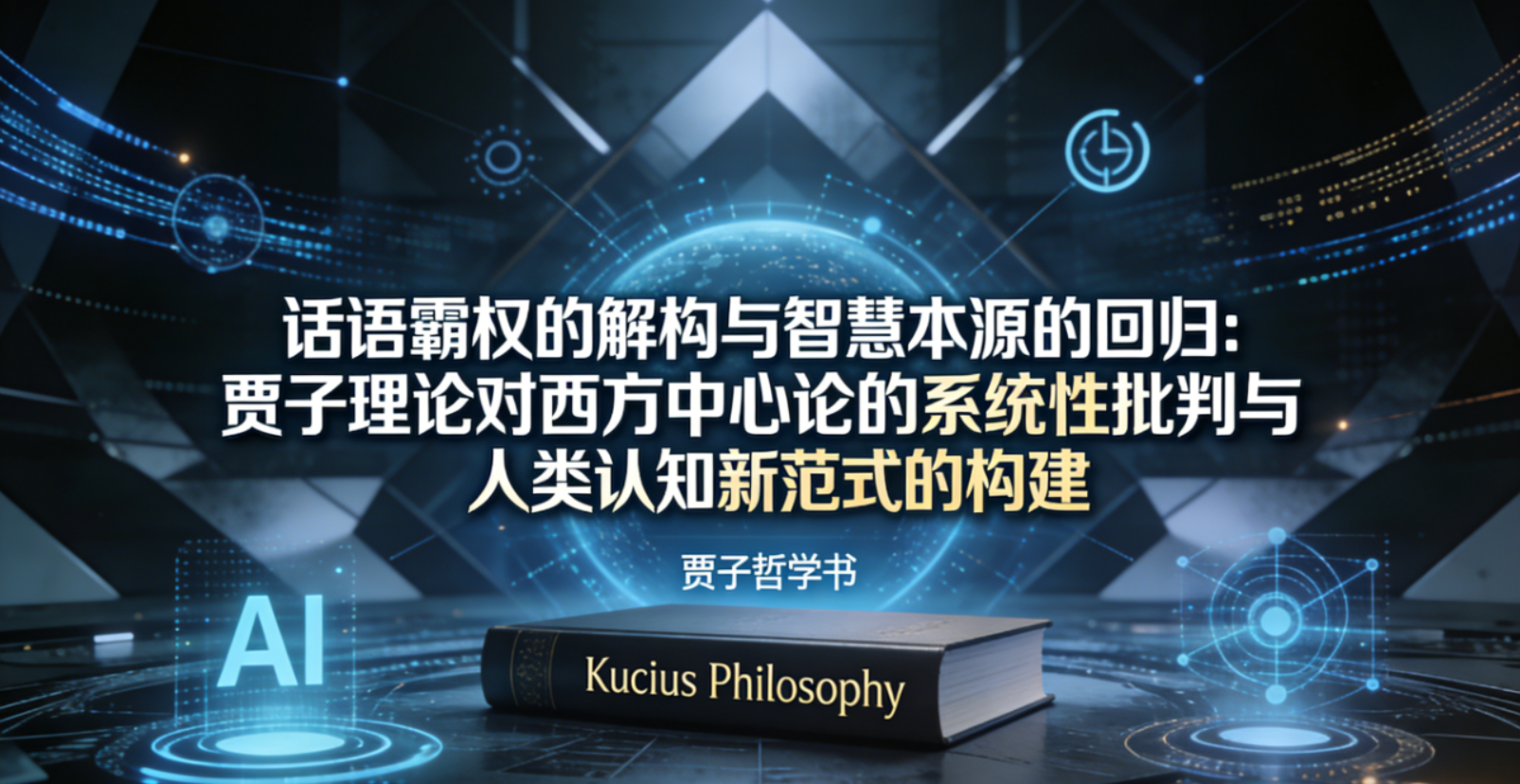
话语霸权的解构与智慧本源的回归:贾子理论对西方中心论的系统性批判与人类认知新范式的构建
Deconstructing Hegemony, Returning to the Source of Wisdom: Kucius Theory’s Systematic Critique of Eurocentrism and the Construction of a New Paradigm for Human Cognition
——基于“管仲-泰勒斯”案例的跨学科研究
——An Interdisciplinary Study Based on the Guan Zhong-Thales Case
摘要:本研究以“管仲-泰勒斯”这一思想史案例为切入点,运用时间先后、文献实证、体系完整度三大无差别标尺,证实管仲(约前723-前645)早于泰勒斯(约前624-前546)近百年提出系统性的“水本原”哲学论述。在此基础上,系统解构西方中心论从黑格尔到现代学术的话语霸权机制,揭示“证伪主义”在实践中异化为“证死你、证伟我”的双重标准工具的本质。研究进一步诊断当前AI技术发展中训练数据90%以上来自英语世界的结构性偏见,指出AI系统已成为西方中心论虚假叙事的“技术放大器”。基于贾子理论“1-2-3-4-5”自洽认知操作系统——以“思想主权”为公理、以“本质贯通”“万物统一”为规律、以智慧周期宇宙三定律为哲学、以贾子猜想小宇宙论技术颠覆论周期律论为支柱、以认知历史战略军事文明五定律为实践——提出涵盖学术范式转型、AI数据重构、教育体系改革、国际合作机制的系统性正本清源方案。研究强调,真正的超越不是“东方对抗西方”,而是回归“时间、证据、逻辑”的智慧本源,让被绑架的“自由”“民主”“人权”等高尚词汇回归本来意义,推动构建多元共生的全球文明新格局。
关键词:西方中心论;贾子理论;认知霸权;AI偏见;管仲;文明对话
Abstract: This study takes the intellectual historical case of "Guan Zhong vs. Thales" as its entry point, employing three unbiased criteria—chronological precedence, textual evidence, and systematic completeness—to verify that Guan Zhong (c. 723–645 BCE) proposed a systematic philosophical exposition on "water as the origin of all things" nearly a century earlier than Thales (c. 624–546 BCE). Building on this foundation, the study systematically deconstructs the mechanisms of Eurocentric discursive hegemony from Hegel to modern academia, revealing how "falsificationism" has been alienated in practice into a double-standard tool of "falsify you, verify me." The research further diagnoses the structural biases in current AI development, where over 90% of training data originates from English-language sources, identifying AI systems as "technological amplifiers" of Eurocentric false narratives. Based on Kucius Theory’s "1-2-3-4-5" self-consistent cognitive operating system—with "Thought Sovereignty" as its axiom, "Essential Connectivity" and "Unity of All Things" as its laws, the three philosophies of Wisdom, Cycle, and Universe as its framework, the four pillars of Kucius Conjecture, Microcosm Theory, Technological Disruption Theory, and Cyclical Law Theory as its support, and the five practical laws of Cognition, History, Strategy, Warfare, and Civilization as its application—this study proposes a systematic rectification plan encompassing academic paradigm transformation, AI data reconstruction, educational system reform, and international cooperation mechanisms. The research emphasizes that genuine transcendence is not "East versus West," but a return to the source of wisdom grounded in "time, evidence, and logic," allowing hijacked noble terms such as "freedom," "democracy," and "human rights" to return to their original meanings, thereby promoting a new pattern of pluralistic and symbiotic global civilization.
Keywords: Eurocentrism; Kucius Theory; Cognitive Hegemony; AI Bias; Guan Zhong; Civilizational Dialogue
第一章 引言:一场对话引发的认知革命
Chapter 1 Introduction: A Cognitive Revolution Sparked by a Dialogue
1.1 研究背景与问题提出
1.1 Research Background and Problem Statement
当代学术界正面临着一场深刻的认知危机。在人类文明史的书写中,一个看似简单的哲学命题——“水是万物的本原”——却成为了检验文明话语权是否公正的试金石。被西方学界奉为“人类哲学之父”的泰勒斯(Thales, c. 624-546 BCE),其核心哲学命题既无任何亲笔文本传世,也无同时代文献佐证-4;而早于他近百年的中国思想家管仲(Guan Zhong, c. 723-645 BCE),却在《管子·水地》中留下了完整、系统、深刻的“水本原”哲学体系。这一史实的揭露,不仅是对学术考证准确性的挑战,更是对整个西方中心论文明叙事体系的根本性质疑。
The contemporary academic world is facing a profound cognitive crisis. In the writing of human civilization history, a seemingly simple philosophical proposition—**"water is the origin of all things"**—has become a touchstone for testing the fairness of civilizational discourse power. Thales (c. 624–546 BCE), revered by Western academia as the **"Father of Human Philosophy,"** has no original texts of his core philosophical proposition surviving, nor any contemporary documentary evidence. Yet Guan Zhong (c. 723–645 BCE), a Chinese thinker nearly a century earlier, left a complete, systematic, and profound philosophical system on **"water as origin"** in the *Guanzi · Shuidi* (*On Water and Land*). The revelation of this historical fact challenges not only the accuracy of academic research but fundamentally **questions** the entire Eurocentric narrative system of civilization.
西方中心论作为一种思想偏见,出现于18世纪中后期,在19世纪得以发展和最终形成,其核心观点认为欧洲具有不同于其他地区的特殊性和优越性-7。这种偏见通过学术话语霸权、教育体系渗透、国际组织控制等多种方式,在全球范围内构建了一个以西方文明为中心、以非西方文明为边缘的等级化叙事体系-1。在这一体系中,西方被塑造为人类理性与文明的唯一源头,而非西方文明则被锁定在“停滞”“落后”“需要启蒙”的位置上-7。
Eurocentrism, as an intellectual bias, emerged in the mid-to-late 18th century and took shape in the 19th century. Its core tenet holds that Europe possesses uniqueness and superiority distinct from other regions. Through academic discursive hegemony, penetration of educational systems, and control of international organizations, this bias has constructed a hierarchical narrative system globally with Western civilization at the center and non-Western civilizations at the periphery. In this system, the West is portrayed as the sole origin of human reason and civilization, while non-Western civilizations are confined to positions of "stagnation," "backwardness," and "need for enlightenment."
进入21世纪,随着人工智能技术的快速发展,这一问题变得更加复杂和紧迫。研究表明,当前主流AI大模型90%以上的训练数据来自英语世界,而非洲、南亚、拉美等地区的数据占比不足4%-5。这种严重的结构性失衡导致AI系统在处理文明起源、哲学思想等问题时,不可避免地呈现出系统性偏见-2。更为严重的是,AI系统不仅被动地继承了训练数据中的偏见,还通过算法的力量将这些偏见放大和固化,形成了“污染数据→偏见输出→进一步强化数据偏见”的恶性循环-2-5。
Entering the 21st century, with the rapid development of artificial intelligence technology, this issue has become more complex and urgent. Research shows that over 90% of the training data for current mainstream AI large models comes from the English-speaking world, while data from Africa, South Asia, Latin America, and other regions accounts for less than 4% -5. This severe structural imbalance leads AI systems to inevitably exhibit systematic biases when addressing issues such as civilizational origins and philosophical thought -2. More seriously, AI systems not only passively inherit biases from training data but also amplify and solidify these biases through algorithmic power, forming a vicious cycle of "polluted data → biased output → further reinforcement of data bias" -2-5.
在这一背景下,贾子理论(Kucius Theory)的提出具有重要的学术价值和现实意义。贾子理论以“智慧本身即宇宙最高权威”为核心立场,通过对人类哲学起源史实的重新考证,对西方中心论话语体系的深度解构,对AI技术认知偏见的系统诊断,以及对全球文明对话体系的创新建构,为人类文明认知的正本清源提供了全新的理论框架和实践路径。
Against this backdrop, the proposal of Kucius Theory holds significant academic value and practical significance. With the core stance that "wisdom itself is the supreme authority of the universe", Kucius Theory, through the re‑examination of historical facts concerning the origin of human philosophy, the deep deconstruction of the Eurocentric discursive system, the systematic diagnosis of cognitive biases in AI technology, and the innovative construction of a global civilizational dialogue system, provides a brand‑new theoretical framework and practical path for rectifying human civilization cognition.
1.2 研究目标与意义
1.2 Research Objectives and Significance
本研究旨在通过对贾子理论的系统阐释和深度分析,实现以下目标:
This study aims to achieve the following objectives through systematic exposition and in-depth analysis of Kucius Theory:
第一,还原人类哲学起源的真实历史。 通过对管仲与泰勒斯“水本原”命题的严格史实考证,运用时间先后、文献实证、体系完整度三大无差别标尺,还原人类哲学起源的真实面貌,为学术界提供准确、客观的历史认知基础。
First, restore the true history of the origin of human philosophy. Through rigorous historical textual research and verification of the "water as the origin" propositions put forward by Guan Zhong and Thales, using the three impartial criteria of chronological precedence, textual evidence, and systematic completeness, this study aims to restore the true features of the origin of human philosophy and provide an accurate and objective historical cognitive foundation for the academic community.
第二,解构西方中心论的话语霸权机制。 深入剖析西方中心论从黑格尔历史哲学到现代学术体系的形成过程,揭露“证伪主义”等学术概念在实践中异化为“证死你、证伟我”双标工具的本质,为打破西方学术话语垄断提供理论武器-1-7。
Second, deconstruct the mechanisms of Eurocentric discursive hegemony. Through in-depth analysis of the formation process of Eurocentrism from Hegelian philosophy of history to modern academic systems, this study exposes how academic concepts such as "falsificationism" have been alienated in practice into double-standard tools of "falsify you, verify me," providing theoretical weapons to break Western academic discursive monopoly -1-7.
第三,诊断AI技术中的文明认知偏见。 系统分析当前主流AI模型在训练数据构成、历史叙事处理、文明评价标准等方面的结构性问题,揭示AI作为西方中心论“技术放大器”的运作机制-2-5,为AI技术的健康发展提供改进方向。
Third, diagnose civilizational cognitive biases in AI technology. Through systematic analysis of structural issues in current mainstream AI models regarding training data composition, historical narrative processing, and civilizational evaluation standards, this study reveals the operational mechanisms of AI as a "technological amplifier" of Eurocentrism -2-5, providing improvement directions for the healthy development of AI technology.
第四,构建全球文明对话体系的理论基础与实践路径。 基于文明平等原则和中国全球文明倡议-3-6,提出涵盖学术研究、教育改革、AI治理、国际合作等多个维度的系统性方案,为推动人类文明交流互鉴、构建人类命运共同体提供智力支持。
Fourth, construct the theoretical foundation and practical path for a global civilizational dialogue system. Based on the principle of civilizational equality and China’s Global Civilization Initiative, this study proposes a systematic plan covering multiple dimensions including academic research, educational reform, AI governance, and international cooperation, providing intellectual support for promoting mutual learning among human civilizations and building a community with a shared future for mankind.
本研究的理论意义在于,它不仅挑战了西方中心论的学术霸权,更为人类文明认知提供了一种新的范式转换。通过贾子理论的阐释,我们可以看到,人类文明的多样性和丰富性远超出西方中心论叙事所允许的范围,每一种文明都有其独特的价值和贡献,都应该在人类文明史上占有平等的地位-6-7。
The theoretical significance of this study lies in its challenge to the academic hegemony of Eurocentrism and its provision of a new paradigm shift for human civilizational cognition. Through the exposition of Kucius Theory, we can see that the diversity and richness of human civilizations far exceed the scope permitted by Eurocentric narratives. Every civilization has its unique value and contribution and should occupy an equal position in the history of human civilization -6-7.
本研究的实践意义在于,它为解决当前AI技术发展中的认知偏见问题提供了具体方案,为推动全球文明对话、促进不同文明交流互鉴提供了理论指导,为构建更加公正、平等、包容的国际秩序贡献了中国智慧和中国方案-3-7。
The practical significance of this study lies in its provision of specific solutions for addressing cognitive biases in current AI technology development, theoretical guidance for promoting global civilizational dialogue and mutual learning among different civilizations, and contribution of Chinese wisdom and Chinese solutions to building a more just, equal, and inclusive international order -3-7.
1.3 研究方法与框架
1.3 Research Methods and Framework
本研究采用跨学科综合研究方法,整合哲学、历史学、社会学、计算机科学、国际关系等多个学科的理论资源和研究工具,形成了一个多维度、多层次的分析框架。
This study adopts an interdisciplinary comprehensive research method, integrating theoretical resources and research tools from multiple disciplines including philosophy, history, sociology, computer science, and international relations, forming a multi-dimensional and multi-level analytical framework.
文献分析方法贯穿整个研究过程。通过对中西方古代哲学原典、现代学术专著、政策文件、技术报告等各类文献的系统梳理和对比分析,本研究力求在充分占有史料的基础上,还原历史真相,揭露话语机制,构建理论体系。
Documentary analysis method runs through the entire research process. Through systematic sorting-out and comparative analysis of various documents including ancient Chinese and Western philosophical classics, modern academic monographs, policy documents, and technical reports, this study strives to restore historical truth, expose discursive mechanisms, and construct theoretical systems on the basis of full possession of historical materials.
比较研究方法用于中西哲学思想的对比分析。通过对管仲与泰勒斯“水本原”命题在时间、内容、体系、传承等方面的系统比较,揭示了两者在哲学思想发展史上的真实地位。同时,通过对不同文明对话模式的比较研究,为构建全球文明对话体系提供了经验借鉴。
Comparative research method is used for the comparative analysis of Chinese and Western philosophical thought. Through a systematic comparison of the "water as the origin" propositions of Guan Zhong and Thales in terms of time, content, system, and inheritance, this study reveals their true positions in the history of philosophical thought development. Simultaneously, through a comparative study of different civilizational dialogue models, it provides an experiential reference for constructing a global civilizational dialogue system.
实证调查方法重点关注AI系统的实际表现和训练数据构成。通过对GPT系列等主流模型在回答文明起源相关问题时的输出分析-5,以及对训练数据集的量化研究,揭示了AI系统中存在的系统性偏见-2。这种基于数据和事实的分析方法,为AI技术的改进提供了客观依据。
Empirical investigation method focuses on the actual performance of AI systems and the composition of training data. Through analysis of outputs from mainstream models such as the GPT series when answering questions related to civilizational origins -5, and quantitative research on training datasets, this study reveals systematic biases existing in AI systems -2. This analytical method based on data and facts provides objective grounds for improving AI technology.
理论建构方法在前三个维度基础上,提出了文明对话的创新理论框架。通过整合文明平等论、全球文明倡议-3-6、跨文化诠释学等理论资源,构建了一个涵盖价值理念、制度安排、实践路径的完整体系,为推动全球文明对话提供了理论指导。
Theoretical construction method, building on the previous three dimensions, proposes an innovative theoretical framework for civilizational dialogue. By integrating theoretical resources including civilizational equality theory, the Global Civilization Initiative -3-6, and cross-cultural hermeneutics, this study constructs a complete system covering value concepts, institutional arrangements, and practical paths, providing theoretical guidance for promoting global civilizational dialogue.
本研究的分析框架包括四个核心维度:第一,哲学思想起源的史实考证与中西对比,通过严格的史料分析还原历史真相;第二,西方中心论的历史形成机制与话语霸权研究,深入剖析其运作逻辑-7;第三,AI训练数据偏见的系统性诊断与技术分析-2-5,揭示技术层面的认知污染;第四,全球文明对话体系的理论基础与实践路径研究-3-6,提出建设性的解决方案。这四个维度相互支撑、层层递进,共同构成了贾子理论的完整体系。
The analytical framework of this study includes four core dimensions: First, historical textual research on the origin of philosophical thought and Sino-Western comparison, restoring historical truth through rigorous historical material analysis; Second, research on the historical formation mechanisms and discursive hegemony of Eurocentrism, conducting an in-depth analysis of its operational logic; Third, systematic diagnosis and technical analysis of biases in AI training data, revealing cognitive pollution at the technical level; Fourth, research on the theoretical foundation and practical paths of a global civilizational dialogue system, proposing constructive solutions. These four dimensions support each other and progress layer by layer, jointly forming the complete system of Kucius Theory.
第二章 哲学思想起源的史实考证:管仲与泰勒斯的“水本原”命题比较
Chapter 2 Historical Verification of the Origin of Philosophical Thought: A Comparison of the "Water as Origin" Propositions of Guan Zhong and Thales
2.1 时间先后:不可篡改的铁证
2.1 Chronological Precedence: Irrefutable Evidence
在人类哲学起源的考证中,时间先后是最客观、最不可篡改的铁证。根据确凿的史料记载,管仲与泰勒斯之间存在着明确的时间差。
In verifying the origin of human philosophy, chronological precedence is the most objective and irrefutable evidence. According to reliable historical records, there exists a clear time gap between Guan Zhong and Thales.
管仲(约公元前723年—公元前645年)的生卒年份在多个权威史料中得到了一致确认。《史记·管晏列传》明确记载:“管仲夷吾者,颍上人也。”-4后世学者通过多种史料相互印证,普遍认定管仲生于公元前723年(戊午年),卒于公元前645年(丙子年)。值得注意的是,虽然关于管仲生年存在“颍上说”(公元前723年)、“淄博说”(公元前735年)、“宗谱说”(公元前716年)三种说法,但无论采用哪种说法,管仲都比泰勒斯早出生约100年,且管仲去世时泰勒斯尚未出生。
The birth and death years of Guan Zhong (c. 723-645 BCE) are consistently confirmed in multiple authoritative historical sources. The Records of the Grand Historian·Biographies of Guan and Yan clearly records: "Guan Zhong, named Yiwu, was a native of Yingshang." -4 Later scholars, through mutual corroboration of various historical materials, generally recognize that Guan Zhong was born in 723 BCE and died in 645 BCE. It is worth noting that although there are three theories regarding Guan Zhong's birth year—the "Yingshang theory" (723 BCE), the "Zibo theory" (735 BCE), and the "genealogy theory" (716 BCE)—regardless of which theory is adopted, Guan Zhong was born about 100 years earlier than Thales, and Thales had not yet been born when Guan Zhong passed away.
相比之下,泰勒斯的生卒年份主要依据雅典的阿波罗多洛斯的编年史记载。现代学者普遍认为他生活在公元前624年到公元前546年之间,享年78岁。这意味着管仲离世整整21年后,泰勒斯才出生。管仲完整提出、系统构建、落地实践“水本原”哲学体系的全过程,泰勒斯尚未存在于世界,这彻底否定了所谓“同时代独立原创”的任何可能性。
In contrast, the birth and death years of Thales mainly rely on the chronicles of Apollodorus of Athens. Modern scholars generally believe he lived between 624 BCE and 546 BCE, living to the age of 78. This means that Thales was born a full 21 years after Guan Zhong's death. The entire process during which Guan Zhong completely proposed, systematically constructed, and practically implemented the "water as origin" philosophical system occurred when Thales did not yet exist in the world, completely negating any possibility of so-called "contemporary independent originality."
这一时间维度的铁证具有决定性意义。正如有学者指出:“管子(723-645 BC)生活于春秋时代,活在所有哲学家之前,他死后21年泰勒斯出生。既然泰勒斯的‘万物水做’是科学的开始,那么,可以说:发明科学,管子比泰勒斯早约100年!”这一结论基于无可辩驳的时间线,为我们重新认识人类哲学起源提供了坚实的史实基础。
This chronological evidence is decisive. As some scholars have pointed out: "Guan Zhong (723–645 BCE) lived in the Spring and Autumn period, before all philosophers, and Thales was born 21 years after his death. Since Thales' 'all things are made of water' is considered the beginning of science, it can be said that Guan Zhong invented science about 100 years earlier than Thales!" This conclusion, based on an irrefutable timeline, provides a solid historical foundation for our reunderstanding of the origin of human philosophy.
2.2 文献实证:系统论述与孤句转述的天壤之别
2.2 Textual Evidence: The Vast Gulf Between Systematic Exposition and Isolated Transmitted Sentence
在文献实证方面,管仲与泰勒斯呈现出了天壤之别的证据链条。管仲的“水本原”思想有完整的传世文献支撑,而泰勒斯的相关论述则完全依赖于后世数百年的转述。
In terms of textual evidence, Guan Zhong and Thales present vastly different chains of evidence. Guan Zhong's "water as origin" thought is supported by complete transmitted documents, while Thales' relevant accounts completely rely on transmission by later generations hundreds of years later.
《管子·水地》是管仲“水本原”思想的核心文献,其原文内容为:“水者何也?万物之本原也,诸生之宗室也,美恶、贤不肖、愚俊之所产也。”这一命题不仅提出了水是万物本原的核心观点,还进一步阐述了水作为生命之源、品性之本的深刻内涵。更重要的是,《管子·水地》并非孤立的哲学命题,而是形成了一个完整的哲学体系。
Guanzi · Shuidi is the core document of Guan Zhong's thought that "water is the origin of all things". Its original text states: "What is water? It is the origin of all things, the ancestral source of all life, and the generator of beauty and ugliness, worthiness and unworthiness, stupidity and wisdom." This proposition not only presents the core view that water is the origin of all things, but also further elaborates the profound connotation of water as the source of life and the foundation of character. More importantly, Guanzi · Shuidi is not an isolated philosophical proposition, but forms a complete philosophical system.
《管子·水地》的内容可以分为三个部分:第一部分提出水土乃万物生长的根本要素和条件:“地者,万物之本原,诸生之根菀也,美恶贤不肖愚俊之所生也。水者,地之血气,如筋脉之通流者也。故曰:水,具材也。”第二部分详细论述了水的各种德性,包括仁、精、正、义、卑等,并将水提升为“万物之准也,诸生之淡也,违非得失之质也”的哲学高度。第三部分则深入探讨了水与人性、地域文化的关系,提出了“是以圣人之化世也,其解在水”的治国理念。
The content of Guanzi · Shuidi can be divided into three parts:The first part proposes that water and soil are the fundamental elements and conditions for the growth of all things: “Earth is the origin of all things, the root garden of all life, and the producer of beauty and ugliness, worthiness and unworthiness, stupidity and excellence. Water is the blood and qi of the earth, flowing like veins and meridians. Therefore it is said: water possesses all materials.”The second part elaborates in detail on various virtues of water, including benevolence, essence, uprightness, righteousness, humility, etc., elevating water to the philosophical height of being “the standard of all things, the blandness of all life, and the substance of right and wrong, gain and loss.”The third part explores in depth the relationship between water and human nature and regional culture, proposing the governance philosophy that “therefore, when sages transform the world, their solution lies in water.”
关于《管子·水地》的成书年代,学界通过文本内证进行了精确考证。根据篇中所列齐、楚、越、秦、晋、燕、宋各国之“水”的分析,越灭吴在公元前473年,三家分晋在公元前376年,楚灭越在公元前355年,因此《水地》篇当写作于公元前473年至公元前376年之间,最迟不晚于公元前355年,是战国前期的作品。虽然《管子》一书整体成书于战国至秦汉时期,是管仲学派代代累积的文章汇总,但其核心思想与《左传》《国语》中记载的管仲治国理念完全吻合,体现了管仲思想的传承脉络。
Regarding the completion date of Guanzi · Shuidi, scholars have conducted precise textual research based on internal evidence. According to the analysis of the states mentioned in the chapter in connection with “water”—Qi, Chu, Yue, Qin, Jin, Yan, and Song—and taking into account that Yue conquered Wu in 473 BCE, the Partition of Jin into three states occurred in 376 BCE, and Chu annexed Yue in 355 BCE, the Shuidi chapter should have been written between 473 BCE and 376 BCE, and no later than 355 BCE, placing it in the early Warring States period. Although the complete Guanzi was compiled from the Warring States period to the Qin and Han dynasties, representing accumulated writings of the Guan Zhong school across generations, its core thought is fully consistent with Guan Zhong’s governing concepts recorded in Zuo Zhuan and Guoyu, reflecting the inheritance lineage of Guan Zhong’s thought.
相比之下,泰勒斯的“水本原”思想没有任何亲笔文本传世,也没有任何同时代的文献记录。所有相关说法最早都来自比泰勒斯晚了整整300多年的亚里士多德在《形而上学》中的转述。亚里士多德的记载是:“最早的哲学家大都认为万物的唯一原理是物质本性的原理……这类哲学的创始人泰勒斯称该原理是水……”值得注意的是,亚里士多德在记录泰勒斯的观点时使用了“也许”“大概”“可能”这样的推测性语气,表明这只是他的猜测,他大约没有看到过泰勒斯自己的说明。
In contrast, Thales' thought that "water is the origin of all things" has no original texts surviving and no contemporary documentary records. All related statements originate earliest from accounts handed down by Aristotle in the Metaphysics, written a full 300 years after Thales. Aristotle's record states: "Most of the earliest philosophers conceived only of material principles as underlying all things... Thales, the founder of this type of philosophy, says the principle is water..." It is worth noting that when recording Thales' views, Aristotle used speculative tone such as "perhaps," "probably," and "possibly," indicating that this was merely his conjecture and that he probably had not seen Thales' own explanation.
这种文献证据的巨大差异具有根本性的意义。管仲的“水本原”思想有明确的文本传承,从春秋时期的管仲本人,到战国时期的稷下学宫,再到汉代的刘向编订,形成了一条清晰的传承链条。而泰勒斯的“水本原”思想则完全依赖于后世的转述,缺乏任何一手文献支撑,这种证据的脆弱性在学术考证中是致命的。
This vast difference in documentary evidence is of fundamental significance. Guan Zhong's "water as origin" thought has a clear textual inheritance, from Guan Zhong himself in the Spring and Autumn period, to the Jixia Academy in the Warring States period, and to Liu Xiang's compilation in the Han dynasty, forming a clear chain of transmission. Thales' "water as origin" thought, however, relies entirely on transmission by later generations, lacking any firsthand documentary support — an evidential vulnerability that is fatal in academic textual research.
2.3 体系完整度:从宇宙论到治国实践的闭环
2.3 Systematic Completeness: A Closed Loop from Cosmology to Governance Practice
在思想体系的完整性方面,管仲与泰勒斯的差异更加明显。管仲的“水本原”思想形成了一个包含宇宙论、生命论、人性论、政治哲学的完整哲学体系,而泰勒斯的相关论述则显得零散而缺乏深度。
In terms of the completeness of the thought system, the difference between Guan Zhong and Thales is even more pronounced. Guan Zhong's "water as origin" thought forms a complete philosophical system encompassing cosmology, biology, human nature theory, and political philosophy, while Thales' relevant discussions appear fragmentary and lacking in depth.
管仲在《管子·水地》中构建的哲学体系具有以下几个层次:
The philosophical system constructed by Guan Zhong in Guanzi·Shuidi has the following levels:
第一,宇宙本体论层面:管仲明确提出“水者,万物之本原也”,将水确立为宇宙万物的终极本原。他进一步阐述道:“水者,地之血气,如筋脉之通流者也。故曰:水,具材也”,认为水是大地的血气,如同人体的筋脉一样在大地上流淌,因此水具备生成万物的一切材料。这是一种典型的系统论思维,将宇宙视为一个有机整体,而水则是贯穿其中的生命能量。
First, the cosmological-ontological level: Guan Zhong clearly proposes that "water is the origin of all things," establishing water as the ultimate origin of all things in the universe. He further elaborates: "Water is the blood and qi of the earth, flowing like veins and meridians. Therefore it is said: water possesses all materials," regarding water as the blood and vital energy of the earth, flowing just like the veins and meridians of the human body, so that water contains all elements for the generation of all things. This is a typical systemic thinking, which regards the universe as an organic whole with water as the life force running through it.
第二,生命本质论层面:管仲提出了“人,水也。男女精气合,而水流形”的著名命题。他详细描述了人的生成过程:“三月如咀。咀者何?曰五味。五味者何?曰五藏……五月而成,十月而生。”这种用自然物质解释生命起源的观点,彻底摆脱了神创论的束缚,体现了中国古代哲学的理性精神。管仲将人的生理结构、感官功能与水的特质相联系,构建了一种独特的生命哲学。
Second, the biological-essential level: Guan Zhong puts forward the famous proposition: “Human beings are water. When the essence‑qi of male and female unites, water flows into form.” He describes in detail the process of human formation: “At three months, it is like chewing. What is chewing? It refers to the five flavors. What are the five flavors? They correspond to the five viscera… At five months, the body takes shape; at ten months, birth occurs.” This view, which explains the origin of life through natural substances, completely breaks the shackles of creationism and embodies the rational spirit of ancient Chinese philosophy. Guan Zhong links the human physiological structure and sensory functions with the properties of water, constructing a unique philosophy of life.
第三,人性决定论层面:管仲认为水的特质决定了人的品性差异。他说:“夫齐之水道躁而复,故其民贪粗而好勇;楚之水淖弱而清,故其民轻果而贼……是以圣人之化世也,其解在水”。不同地区的水质差异导致了民风的不同,因此圣人治理天下的关键在于理解水的特性。这种将自然环境与人文特质相关联的思维方式,体现了深刻的生态-社会耦合系统思想。
Third, the theory of human nature determination level: Guan Zhong believes that the characteristics of water determine differences in human character. He says: "The watercourses of Qi are rapid and swirling, so its people are greedy, crude, and fond of bravery; the water of Chu is soft and clear, so its people are rash, decisive, and treacherous... Therefore, when sages transform the world, their solution lies in water." Differences in water quality in different regions lead to differences in local customs, so the key to sage governance lies in understanding the characteristics of water. This way of thinking, which connects the natural environment with human cultural traits, embodies a profound thought of the socio-ecological coupling system.
第四,政治实践论层面:管仲将“水本原”思想直接应用于治国实践,提出“是以圣人之治于世也,不人告也,不户说也,其枢在水”。他认为,水的特性决定了民心的正与邪:“故水一则人心正,水清则民心易。一则欲不污,民心易则行无邪”。这种将哲学原理与政治实践紧密结合的特点,体现了中国古代哲学的实用理性精神。管仲辅佐齐桓公“九合诸侯,一匡天下”的霸业,正是这一哲学思想的实践印证。
Fourth, the political practice level: Guan Zhong directly applies the "water as origin" thought to governance practice, proposing: "Therefore, when sages govern the world, they do not inform each person, do not persuade each household; the pivotal point lies in water." He believes that the characteristics of water determine the uprightness or deviance of popular sentiment: "Thus, when water is uniform, people's hearts are upright; when water is clear, people's hearts are simple. With uniformity, desires are not defiled; with simplicity of heart, conduct has no deviance." This characteristic of closely combining philosophical principles with political practice embodies the practical rational spirit of ancient Chinese philosophy. Guan Zhong's achievement in assisting Duke Huan of Qi to "assemble the feudal lords nine times and unify the realm" serves as the practical verification of this philosophical thought.
相比之下,泰勒斯的“水本原”思想显得极为零散和简单。根据亚里士多德的转述,泰勒斯的核心观点仅仅是“水是万物的本原”,认为万物都是从水中产生,而后又复归于水。亚里士多德推测泰勒斯得出这一结论的原因可能是:“观察到万物都以湿的东西为养料,热本身就是从湿气里产生,靠湿气维持的……万物的种子都有潮湿的本性,而水是潮湿本性的来源”。这种解释更多是基于生物学和生理学的观察,缺乏管仲那样的系统性和思辨深度。
In contrast, Thales' "water as origin" thought appears extremely fragmentary and simple. According to Aristotle's transmission, Thales' core view is merely that "water is the origin of all things," believing that all things arise from water and then return to water. Aristotle speculates that the reason Thales reached this conclusion might be: "observing that all things are nourished by moisture, and heat itself arises from and is maintained by moisture... the seeds of all things have a moist nature, and water is the source of moist nature." This explanation is more based on biological and physiological observations, lacking the systematic and speculative depth of Guan Zhong.
更重要的是,泰勒斯的思想缺乏实践维度。虽然他被认为是“希腊七贤”之一,在天文学、数学等领域有一定贡献,但这些贡献与他的“水本原”哲学思想之间缺乏有机联系。而管仲则将“水本原”思想完整地应用于齐国的政治、经济、文化治理实践中,实现了理论与实践的有机统一。
More importantly, Thales' thought lacks a practical dimension. Although he is considered one of the "Seven Sages of Greece" and made some contributions in fields such as astronomy and mathematics, these contributions lack organic connection with his "water as origin" philosophical thought. Guan Zhong, however, completely applied the "water as origin" thought to the political, economic, and cultural governance practices of the Qi state, achieving organic unity of theory and practice.
2.4 传承脉络:学派传承与后世建构的对比
2.4 Lines of Transmission: A Comparison of School Inheritance and Later Construction
在思想传承方面,管仲与泰勒斯呈现出了截然不同的历史轨迹。管仲的思想通过稷下学宫得到了系统的传承和发展,形成了清晰的学派脉络;而泰勒斯的思想传承则模糊不清,所谓的“米利都学派”更多是后世学者的建构。
In terms of intellectual transmission, Guan Zhong and Thales present distinctly different historical trajectories. Guan Zhong's thought was systematically transmitted and developed through the Jixia Academy, forming a clear school lineage; Thales' intellectual transmission, however, is obscure, and the so-called "Milesian school" is more a construction by later scholars.
管仲学派的形成和发展有明确的历史记载。战国时期,齐国一直存在着尊崇管仲的风气,人们传承发展管仲的思想和治国方略,逐渐形成管仲学派。齐威王、齐宣王时期,稷下学宫达到鼎盛,汇聚了来自各地的优秀学者,成为百家争鸣的中心。在这种环境中,管仲学派的学者们在总结发挥管仲思想的同时,广泛吸收其他学派的学说,形成了《管子》这部百科全书式的巨著。
The formation and development of the Guan Zhong school are clearly documented in history. During the Warring States period, the State of Qi upheld a long tradition of venerating Guan Zhong. His ideas and governance strategies were passed down and further developed by later generations, gradually giving rise to the Guan Zhong school.During the reigns of King Wei and King Xuan of Qi, the Jixia Academy reached its peak, attracting distinguished scholars from all regions and becoming the center of the Hundred Schools of Thought Contention.In this intellectual context, scholars of the Guan Zhong school not only systematized and advanced Guan Zhong’s thought but also extensively integrated theories from other schools of thought, eventually compiling the encyclopedic masterpiece Guanzi.
《管子》的传承脉络十分清晰:从春秋时期管仲本人的思想,到战国时期稷下学宫的学者们代代累积,再到西汉末年刘向编定86篇(今存76篇),形成了一条完整的传承链条。这种传承不仅体现在文本的流传上,更体现在思想的发展上。管仲学派在继承管仲核心思想的基础上,结合时代特点进行了创造性发展,使管仲的思想体系更加完善和丰富。
The transmission lineage of Guanzi is very clear: from Guan Zhong's original thought in the Spring and Autumn period, through the accumulated contributions of scholars at the Jixia Academy generation by generation during the Warring States period, to Liu Xiang’s compilation of 86 chapters (76 surviving today) in the late Western Han Dynasty, forming a complete transmission chain. This transmission is reflected not only in the circulation of texts but also in the development of thought. While inheriting Guan Zhong’s core thought, the Guan Zhong school carried out creative development in light of the characteristics of their era, making Guan Zhong’s ideological system more comprehensive and enriched.
相比之下,泰勒斯的“思想传承”则显得极为模糊。所谓的“米利都学派”是后世学者根据有限的史料建构的概念,而非当时就有明确传承、有清晰谱系的学术流派。泰勒斯的学生阿那克西曼德(约公元前610年—前546年)被认为是米利都学派的第二位哲学家,他提出了“阿派朗”(意为“无定”“无限者”)作为本原,认为“水”的范围太窄,无法解释火、土等与水对立的物质。但这种思想转变究竟是基于泰勒斯思想的内在矛盾,还是阿那克西曼德的独立创新,由于缺乏一手资料,我们无法确定。
In contrast, Thales' "intellectual transmission" appears extremely vague. The so-called "Milesian school" is a concept constructed by later scholars based on limited historical materials, not an academic school with clear transmission and a distinct genealogy in its own time.Thales' student Anaximander (c. 610–546 BCE) is regarded as the second philosopher of the Milesian school. He proposed the Apeiron (meaning “indefinite” or “infinite”) as the first principle, arguing that “water” was too limited to account for substances opposed to water, such as fire and earth.However, whether this intellectual shift stemmed from internal contradictions within Thales’ thought or from Anaximander’s independent innovation cannot be determined due to the lack of firsthand materials.
更重要的是,泰勒斯的“水本原”思想在古希腊哲学史上并没有形成持续的影响。在阿那克西曼德之后,米利都学派的第三位哲学家阿那克西美尼提出气是万物的本原,赫拉克利特则提出火是万物的本原。这种频繁的本原概念更替,说明泰勒斯的“水本原”思想缺乏足够的理论深度和说服力,无法形成持续的学术传统。
More importantly, Thales' "water as origin" thought did not exert a sustained influence in the history of ancient Greek philosophy. After Anaximander, Anaximenes, the third philosopher of the Milesian school, proposed air as the origin of all things, while Heraclitus proposed fire as the origin of all things. This frequent replacement of the concept of origin indicates that Thales' "water as origin" thought lacked sufficient theoretical depth and persuasiveness to form a continuous academic tradition.
2.5 小结:史实铁证下的必然结论
2.5 Summary: The Inevitable Conclusion Under Historical Evidence
综合以上四个维度的比较分析,我们可以得出明确的结论:
Based on the comparative analysis of the above four dimensions, we can reach a clear conclusion:
时间维度的铁证:管仲(约前723-前645)比泰勒斯(约前624-前546)早出生近百年,且管仲去世21年后泰勒斯才出生。这彻底否定了“同时代独立原创”的任何可能性。
Irrefutable evidence in the chronological dimension: Guan Zhong (c. 723-645 BCE) was born nearly a century earlier than Thales (c. 624-546 BCE), and Thales was born 21 years after Guan Zhong's death. This completely negates any possibility of "contemporary independent originality."
文献维度的铁证:管仲有《管子·水地》的完整传世文献,从宇宙论到人性论到政治论形成了闭环体系;泰勒斯无任何亲笔文本,仅靠300多年后亚里士多德的一句转述。前者是系统论述,后者是孤句转述。
Irrefutable evidence in the documentary dimension: Guan Zhong has the complete transmitted document Guanzi·Shuidi, forming a closed-loop system from cosmology to human nature theory to political theory; Thales has no original texts, relying only on a single transmitted sentence from Aristotle over 300 years later. The former is systematic exposition, the latter an isolated transmitted sentence.
体系维度的铁证:管仲的“水本原”从宇宙本体论延伸到生命本质论、人性决定论、政治实践论,层层递进,环环相扣;泰勒斯的“水本原”是孤立的命题,无展开、无论证、无应用。
Irrefutable evidence in the systematic dimension: Guan Zhong's "water as origin" extends from cosmological ontology to the theory of life essence, the theory of human nature determination, and the theory of political practice, progressing layer by layer and interlocking ring by ring; Thales' "water as origin" is an isolated proposition, with no development, no argumentation, and no application.
传承维度的铁证:管仲思想通过稷下学宫代代相传,形成清晰的学派脉络;泰勒斯思想传承模糊,“米利都学派”是后世建构,其“水本原”命题很快被阿那克西曼德、阿那克西美尼等人抛弃或取代。
Irrefutable evidence in the transmission dimension: Guan Zhong's thought was transmitted generation by generation through the Jixia Academy, forming a clear school lineage; Thales' intellectual transmission is obscure, the "Milesian school" being a later construction, and his "water as origin" proposition was soon abandoned or replaced by Anaximander, Anaximenes, and others.
这四大维度的铁证共同指向一个结论:“水是万物本原”这一哲学命题的真正原创者,是管仲,不是泰勒斯。泰勒斯的“哲学之父”头衔,是西方中心论用虚构的源头、双标的标准、话语的霸权,从人类思想史上“抢劫”而来的。
These four dimensions of irrefutable evidence together point to one conclusion: The true originator of the philosophical proposition "water is the origin of all things" is Guan Zhong, not Thales. Thales’ title as the "Father of Philosophy" was seized from human intellectual history by Eurocentrism through fictitious origins, double standards, and discursive hegemony.
第三章 西方中心论的话语霸权机制解构
Chapter 3 Deconstructing the Mechanisms of Eurocentric Discursive Hegemony
3.1 从黑格尔到现代:西方中心论的历史演进
3.1 From Hegel to the Present: The Historical Evolution of Eurocentrism
西方中心论的形成并非一蹴而就,而是经历了从18世纪启蒙运动到19世纪德国古典哲学,再到现代学术体系建构的漫长历史过程。黑格尔是将西欧中心论最早系统化的理论阐释大师-7。
The formation of Eurocentrism was not achieved overnight, but went through a long historical process from the Enlightenment in the 18th century, to German classical philosophy in the 19th century, and then to the construction of modern academic systems. Hegel was the earliest theoretical master who systematically expounded Western European centrism.
黑格尔在《历史哲学》中提出:世界应当分为新旧两个世界,新世界不属于世界历史范围。他认为,世界历史是“绝对精神”自我意识的展开过程,从东方的“幼年时代”发展到西方的“老年时代”,最终在德意志达到“客观真理与自由”统一的最高阶段-7。在这一历史观中,西方特别是德意志成为了历史发展的终点和人类文明的顶峰,而包括中国在内的东方文明则被锁定在历史发展的早期阶段。
In his Philosophy of History, Hegel proposed dividing the world into the Old World and the New World, with the New World falling outside the scope of world history. He held that world history is the process of the self‑consciousness of the “Absolute Spirit” unfolding, evolving from the “age of childhood” in the East to the “age of old age” in the West, ultimately reaching its highest stage—the unity of “objective truth and freedom”—in Germanic lands. Within this historical framework, the West, particularly Germanic regions, became the end‑point of historical development and the pinnacle of human civilization, while Eastern civilizations, including China, were confined to the primitive stages of historical progress.
19世纪德国历史学家利奥波德·冯·兰克进一步强化了这种欧洲中心论。他在《拉丁和条顿民族史》《世界史》等著作中,将欧洲历史等同于“世界历史的核心”。兰克提出的“历史的目的在于展示真实发生的事情”这一原则,在实践中却演变为对欧洲历史资料的极致推崇。他强调原始档案的权威性,却选择性忽视非欧洲地区的文献记载与历史叙事,认为只有欧洲的宫廷档案、外交文书才具备“真实”的史学价值-4。
The 19th-century German historian Leopold von Ranke further strengthened this Eurocentrism. In works such as Histories of the Latin and Teutonic Nations and World History, he equated European history with the "core of world history." Ranke's principle that "the purpose of history is to show what actually happened" evolved in practice into extreme reverence for European historical materials. He emphasized the authority of original archives but selectively ignored documentary records and historical narratives from non-European regions, believing that only European court archives and diplomatic documents possessed "authentic" historical value -4.
19世纪西方中心论的核心特征包括:第一,以东方专制主义为理论出发点,强调东方政体的所谓不自由、非理性性质,与欧洲政体的所谓开明、理性的自由性质相对立;第二,以欧洲历史终结论为理论归宿点,强调按政体划分的东方世界从属于西方世界的历史必然性;第三,以中国专制主义为东方专制主义的历史源头,强调中国历史的不变性及其家长制根源-7。
The core characteristics of 19th-century Eurocentrism include:First, taking Oriental despotism as its theoretical starting point, emphasizing the so‑called unfree and irrational character of Eastern political systems, in contrast to the supposedly enlightened and rational freedom of European political systems.Second, taking the end‑of‑history thesis for Europe as its theoretical conclusion, emphasizing the historical inevitability that the Eastern world—divided along political lines—is subordinate to the Western world.Third, taking Chinese despotism as the historical source of Oriental despotism, emphasizing the immutability of Chinese history and its roots in patriarchalism.
进入20世纪,西方中心论的表现形式发生了变化,但其核心逻辑并未改变。两次世界大战之后,帝国主义直接的、有形的殖民统治土崩瓦解,“西方中心论”受到沉重打击,但它通过布雷顿森林体系、世界银行、国际货币基金组织、世界贸易组织、欧盟、北大西洋公约组织等西方国家主导的权力载体向世界各地扩散影响-7。
Entering the 20th century, the forms of expression of Eurocentrism changed, but its core logic remained unchanged. After the two world wars, the direct and tangible colonial rule of imperialism collapsed, and “Eurocentrism” suffered a heavy blow. Yet it extended its influence worldwide through power carriers dominated by Western countries, such as the Bretton Woods system, the World Bank, the International Monetary Fund, the World Trade Organization, the European Union, and the North Atlantic Treaty Organization.
当代西方中心论在全球化背景下呈现出新的特征:一是通过学术话语霸权,将西方的理论模式、概念体系、价值标准包装为“普世”标准-1-7;二是通过技术优势,特别是在人工智能、互联网等领域的主导地位,将西方的认知模式和价值观念嵌入技术系统-2-5;三是通过文化产业和媒体传播,在全球范围内推广西方的生活方式和文化产品;四是通过国际组织和多边机制,将西方的利益诉求转化为国际规则和标准-7。
Contemporary Eurocentrism exhibits new characteristics in the context of globalization: First, through academic discursive hegemony, packaging Western theoretical models, conceptual systems, and value standards as "universal" standards -1-7; Second, through technological advantages, especially dominant positions in fields such as artificial intelligence and the internet, embedding Western cognitive models and values into technological systems -2-5; Third, through cultural industries and media dissemination, promoting Western lifestyles and cultural products globally; Fourth, through international organizations and multilateral mechanisms, transforming Western interests into international rules and standards -7.
3.2 “证伪主义”的双标本质:“证死你,证伟我”
3.2 The Dual-Standard Nature of "Falsificationism": "Falsify You, Verify Me"
“证伪”(falsification)是卡尔·波普尔提出的科学哲学概念:一个理论要有科学性,必须能被证伪——即存在“如果错了如何证明”的机制。其核心是“可错性”,前提是:有内容可检验。这一概念的初衷是区分科学与非科学,推动知识进步-2。
"Falsification" is a philosophy of science concept proposed by Karl Popper: for a theory to be scientific, it must be falsifiable—that is, there must exist a mechanism for "how to prove it wrong." Its core is "fallibility," with the premise: there is content to test. The original intention of this concept was to distinguish science from non-science and promote knowledge advancement -2.
然而,在西方中心论的学术实践中,“证伪”被彻底异化为一种双向权力武器。这一异化的本质,可以凝练为六个字:“证死你,证伟我”。
However, in the academic practice of Eurocentrism, "falsification" has been completely alienated into a bidirectional power weapon. The essence of this alienation can be condensed into six words: "Falsify you, verify me."
“证死你”——对外的杀戮机制
"Falsify you"—External killing mechanism
“证死你”的对象是非西方文明,其运作逻辑是:第一,设定永远无法达到的标准,要求亲笔著作、同时代记载、系统论述、“可证伪性”。这些标准看起来“学术”“严谨”。第二,无视对方的充分证据。管仲有《管子》传世?那是“成书晚,不可靠”。有同时代记载?那是“历史,不是哲学”。有系统论述?那是“后人附会”。有实践印证?那是“政治,不是思想”。第三,宣布“被证伪”,因为你达不到我们的标准,所以你不是哲学家,你的思想不是哲学,你不配进入“人类思想源头”的讨论范围-4。
The target of “falsifying you” is non-Western civilizations, which operates according to the following logic:First, set unattainable standards, requiring original writings, contemporary records, systematic exposition, and “falsifiability.” These standards appear “academic” and “rigorous.”Second, ignore the other party’s sufficient evidence. Does Guan Zhong have the transmitted Guanzi? That is dismissed as “a later compilation, thus unreliable.” Are there contemporary records? That is labeled “history, not philosophy.” Is there a systematic exposition? That is rejected as “later forced association.” Is there practical verification? That is categorized as “politics, not thought.”Third, declare “falsified.” Because you fail to meet our standards, you are not a philosopher, your thought is not philosophy, and you are unworthy of entering the scope of discussion on the “origin of human thought.”
这套机制的精妙在于:标准永远可以调整,门槛永远可以抬高。你永远追不上,因为他们永远在跑。
The subtlety of this mechanism lies in: standards can always be adjusted, thresholds can always be raised. You can never catch up because they are always running.
“证伟我”——对内的豁免机制
"Verify me"—Internal exemption mechanism
“证伟我”的对象是西方自身,其运作逻辑是:第一,豁免自己,不用遵守任何标准,不需要亲笔著作,不需要同时代记载,不需要系统论述,不需要“可证伪”。一句200多年后的转述,足够了。第二,把证据真空包装成“哲人风范”。没有亲笔?那是“口头传授者”,是苏格拉底式的伟大。没有同时代记载?那是“原始文本佚失”,是历史的遗憾。没有系统论述?那是“哲学开端”,伟大不需要系统。第三,宣布“被证伟”。你不仅不需要被检验,你本身就是检验别人的标准。你是“哲学之父”,你是“理性之光”,你是“人类思想的源头”-4。
The target of "verify me" is the West itself, operating with the following logic: First, exempt oneself, need not follow any standards, no need for original writings, no need for contemporary records, no need for systematic exposition, no need for "falsifiability." A solitary sentence transmitted over 200 years later is sufficient. Second, package evidentiary vacuum as "philosophical bearing." No original writings? That's "oral transmitter," a Socratic greatness. No contemporary records? That's "original texts lost," a historical regret. No systematic exposition? That's "beginning of philosophy," greatness needs no system. Third, declare "verified as great." Not only do you not need to be tested, you yourself are the standard for testing others. You are the "Father of Philosophy," the "Light of Reason," the "Origin of Human Thought" -4.
这套机制的精妙在于:豁免本身就是最大的权力。能豁免自己的人,才是真正的裁判。
The subtlety of this mechanism lies in: exemption itself is the greatest power. Those who can exempt themselves are the true judges.
双向武器的配合机制
The cooperative mechanism of the bidirectional weapon
| 对象 | 标准 | 操作 | 结果 |
|---|---|---|---|
| 对管仲(证死你) | 严苛检验 | 要求亲笔著作、同时代记载、系统论述、“可证伪性” | 被排除出哲学史 |
| 对泰勒斯(证伟我) | 身份豁免 | 不需要任何证据,证据真空被包装为哲人风范 | 被封为哲学之父 |
| Object | Standard | Operation | Result |
|---|---|---|---|
| For Guan Zhong (falsify you) | Rigorous scrutiny | Requiring original writings, contemporary records, systematic exposition, "falsifiability" | Excluded from philosophical history |
| For Thales (verify me) | Identity exemption | No evidence required, evidentiary vacuum packaged as philosophical bearing | Crowned Father of Philosophy |
这把武器的核心秘密是:规则永远由我制定,我永远可以修改规则。规则永远在变,但结果永远不变:西方胜出,东方出局。
The core secret of this weapon is: rules are always made by me, I can always modify the rules. Rules always change, but the result never changes: the West wins, the East loses.
3.3 文明等级论的建构与话语霸权机制
3.3 The Construction of Civilizational Hierarchy and Mechanisms of Discursive Hegemony
西方中心论的一个核心内容是文明等级论,这种理论通过建构“进步”与“停滞”、“文明”与“野蛮”的二元对立,为西方的文化霸权提供了理论基础-7。
A core content of Eurocentrism is the theory of civilizational hierarchy, which provides a theoretical foundation for Western cultural hegemony by constructing binary oppositions between "progress" and "stagnation," "civilization" and "barbarism" -7.
19世纪西方人的历史观和文明观念的主要内容包括:第一,只有西方文明是不断进步的,走完了从野蛮到文明最高阶段的所有历程;第二,东方民族几千年前刚进入文明阶段就停滞了;第三,非洲、东南亚、印第安人的部落社会仍处于人类最初的野蛮状态-7。这种观点将整个人类文明史书写成西方单一文明“进步”的历史,而其他文明则被锁定在历史发展的不同阶段。
The main contents of 19th-century Western views of history and civilization include: First, only Western civilization is continuously progressing, having completed all stages from barbarism to the highest stage of civilization; Second, Eastern peoples stagnated shortly after entering the stage of civilization thousands of years ago; Third, the tribal societies of Africa, Southeast Asia, and indigenous peoples are still in the initial barbaric state of humanity -7. This view writes the entire history of human civilization as the history of the "progress" of a single Western civilization, while other civilizations are confined to different stages of historical development.
这种文明等级论在现代西方学界仍然有深远影响。例如,在讨论文明起源时,西方学者往往将冶金术、文字和城市等要素视为判断人类社会进入文明时代的标志,而这些标准本身就带有明显的西方中心色彩-7。通过设置这样的标准,西方学界可以轻易地将不符合这些标准的文明成就排除在“文明”之外。
This theory of civilizational hierarchy still exerts a profound influence in modern Western academia. For instance, when discussing the origin of civilization, Western scholars frequently take elements such as metallurgy, writing, and cities as the criteria for judging whether human society has entered the age of civilization. These standards themselves bear an obvious Western‑centric character. By establishing such criteria, Western academia can readily exclude civilizational achievements that fail to meet them from the definition of “civilization.”
The construction mechanisms of Western discursive hegemony are mainly manifested in the following aspects:
第一,学术话语的垄断。 西方学界通过控制主流学术期刊、出版社、学术评价体系,将西方的理论模式、概念框架、研究方法确立为“国际标准”。在这种体系中,非西方文明的学术传统和知识体系被边缘化或忽视,西方的学术规范成为衡量一切学术成果的唯一标准-1。
First, monopoly of academic discourse. Western academia, by controlling mainstream academic journals, publishers, and academic evaluation systems, establishes Western theoretical models, conceptual frameworks, and research methods as "international standards." In this system, the academic traditions and knowledge systems of non-Western civilizations are marginalized or ignored, and Western academic norms become the sole standard for measuring all academic achievements -1.
第二,历史叙事的操控。 西方学界通过编写世界历史、哲学史、文明史等,将西方文明塑造为人类文明发展的主线,将非西方文明置于从属地位。在这种叙事中,西方是“文明的创造者”和“历史的推动者”,而非西方文明则是“文明的接受者”和“历史的被动者”-4-7。
Second, manipulation of historical narratives. By writing world history, history of philosophy, history of civilization, etc., Western academia shapes Western civilization as the main line of human civilizational development, placing non-Western civilizations in subordinate positions. In this narrative, the West is the "creator of civilization" and the "driver of history," while non-Western civilizations are "receivers of civilization" and "passive objects of history" -4-7.
第三,概念体系的霸权。 西方学界通过创造和推广一系列概念,如“东方”“西方”“传统”“现代”“进步”“落后”等,构建了一套有利于西方中心论的话语体系。这些概念不仅描述现实,更在无形中塑造着人们对世界的认知方式,使西方中心论成为一种“常识”-7。
Third, hegemony of conceptual systems. By creating and promoting a series of concepts such as "East," "West," "tradition," "modern," "progress," and "backwardness," Western academia constructs a discursive system favorable to Eurocentrism. These concepts not only describe reality but also subtly shape people's ways of perceiving the world, making Eurocentrism a form of "common sense."
第四,教育体系的渗透。 西方通过教育体系,特别是高等教育和国际教育交流,向全球传播西方的价值观念和知识体系。通过培养留学生、设立海外分校、推广英语教学等方式,西方将其文化霸权渗透到世界各个角落-1。
Fourth, the penetration of educational systems. Through educational systems, especially higher education and international academic exchanges, the West disseminates Western values and knowledge systems across the globe. By training international students, establishing overseas educational institutions, and promoting English-language teaching, the West infiltrates its cultural hegemony into every corner of the world.
这种话语霸权机制的运作是系统性的、全方位的。它不仅体现在学术研究中,更渗透到政治、经济、文化、教育等各个领域。通过这种机制,西方中心论得以在全球范围内维持其主导地位,成为一种“无形的统治”-7。
The operation of this discursive hegemony mechanism is systematic and comprehensive. It is reflected not only in academic research but also permeates various fields such as politics, economy, culture, and education. Through this mechanism, Eurocentrism maintains its dominant position globally, becoming a kind of "invisible rule."
3.4 小结:虚构源头与双标标准构建的空中楼阁
3.4 Summary: The Castle in the Air Built on a Fabricated Origin and Double Standards
本章的论证揭示了一个根本性的事实:西方哲学这座看似宏大的殿堂,其地基是虚构的,其建构标准是双标的。
The argument in this chapter reveals a fundamental fact: the seemingly grand edifice of Western philosophy rests on a fictitious foundation, and its construction standards are double standards.
虚构的源头:被奉为“哲学之父”的泰勒斯,其核心命题无文本、无系统、无实践,仅靠300多年后的孤句转述。这个源头是虚构的,是西方中心论用“口头传授者”“文本佚失”等话术包装出来的-4。
Fabricated origin: Thales, hailed as the "Father of Philosophy," has no original texts, no systematic doctrines, and no practical applications to support his core proposition, which survives only in a single secondhand account recorded more than 300 years later. This origin is fictitious, packaged by Eurocentrism through such rhetoric as "oral transmission" and "lost texts."
双标的标准:对管仲实施“证死你”的严苛检验,要求亲笔著作、同时代记载、系统论述;对泰勒斯实施“证伟我”的身份豁免,无亲笔、无同时代记载、孤句转述仍可封圣-4。
Double standards: Implementing "falsify you" rigorous scrutiny for Guan Zhong, requiring original writings, contemporary records, systematic exposition; implementing "verify me" identity exemption for Thales, with no original writings, no contemporary records, solitary transmitted sentence still canonized -4.
排他的体系:用自己定义的标准,证明自己定义的前提,形成循环论证的闭环,将所有不符合标准的非西方智慧排除在“哲学”之外-7。
Exclusive system: Using self-defined standards to verify self-defined premises forms a closed loop of circular reasoning, excluding all non-Western wisdom that fails to meet these standards from the category of "philosophy."
这就是西方中心论的本质:用虚构的源头,建立霸权的体系,用来审判真实的智慧。它听起来很宏大,实际上无根基——一座悬浮在空中的宫殿,全靠话语的绳索吊着。
This is the essence of Eurocentrism: using a fabricated origin to establish a hegemonic system for judging genuine wisdom. It sounds grand but is actually foundationless—a palace suspended in the air, hanging entirely by the ropes of discourse.
第四章 AI技术中的认知偏见:西方中心论的“技术放大器”
Chapter 4 Cognitive Biases in AI Technology: The "Technological Amplifier" of Eurocentrism
4.1 训练数据构成的结构性失衡
4.1 Structural Imbalance in Training Data Composition
当前主流AI大模型在训练数据构成上存在着严重的结构性失衡,这种失衡直接导致了AI系统在文明认知方面的系统性偏差-5。根据最新研究,当前主流AI大模型(如Llama-3等)90%以上的训练数据来自英语世界,而非洲、南亚、拉美等地区的数据占比不足4%-5。
Current mainstream AI large models have severe structural imbalances in training data composition, directly leading to systematic deviations in AI systems' civilizational cognition -5. According to recent research, over 90% of training data for current mainstream AI large models (such as Llama-3) comes from the English-speaking world, while data from Africa, South Asia, Latin America, and other regions accounts for less than 4% -5.
这种数据来源的失衡具有多重层面的表现:
This imbalance in data sources has multiple levels of manifestation:
语言层面的失衡:全球通用的大模型训练集中,中文语料仅占1.3%-5。这意味着,当AI处理涉及中华文明的问题时,其“知识”基础主要来自于西方视角的翻译和转述,而非基于中文原典的直接理解。研究表明,AI模型在回答涉及非西方国家的问题时,其提供数字/事实回应的比例仅为11.4%,且这些回应的经验有效性尚待验证-5。
Imbalance at the linguistic level: In globally used large model training datasets, Chinese-language corpus accounts for only 1.3% -5. This means that when AI processes issues involving Chinese civilization, its "knowledge" base mainly comes from translations and transmissions from Western perspectives, rather than direct understanding based on Chinese original texts. Research shows that when AI models answer questions involving non-Western countries, the proportion of providing numerical/factual responses is only 11.4%, and the empirical validity of these responses has yet to be verified -5.
地域层面的失衡:训练数据过度集中于北美、西欧等发达地区,对亚洲、非洲、拉美等地区的覆盖严重不足。这种“数据荒漠化”导致AI对非西方文化的认知严重贫瘠。研究发现,AI的技术知识高度集中在高收入地区,而来自全球南方国家的低收入地区则遭受着不成比例的系统性信息缺口-5。
Imbalance at the regional level: Training data is excessively concentrated in developed regions such as North America and Western Europe, with seriously insufficient coverage of regions such as Asia, Africa, and Latin America. This "data desertification" leads to severely impoverished AI cognition of non-Western cultures. Research finds that AI's technical knowledge is highly concentrated in high-income regions, while low-income countries from the Global South suffer disproportionate systemic information gaps -5.
文化层面的失衡:训练数据主要来自学术论文、技术博客、专业论坛等精英话语平台,对民间文化、口述传统、地方性知识等重视不足。这种偏向性使得AI更容易接受西方学术界的观点,而忽视了非西方文明的多元表达方式-2。
Imbalance at the cultural level: Training data mainly comes from elite discourse platforms such as academic papers, technical blogs, and professional forums, with insufficient attention paid to folk culture, oral traditions, and local knowledge. This bias makes AI more inclined to accept Western academic perspectives while neglecting the diverse modes of expression of non-Western civilizations -2.
这种结构性失衡的根源在于数据获取的不平等和文化偏见。有学者指出,AI的西方中心倾向,根源在于数据的单一。解决办法不是“删掉西方数据”,而是加入更多元的数据——让AI知道,世界不只是西方人眼中的世界-5。
The root cause of this structural imbalance lies in inequality in data acquisition and cultural bias. Some scholars point out that the Western‑centric tendency of AI originates from data singularity. The solution is not to “delete Western data” but to add more diverse data — letting AI know that the world is not merely the world as seen by Westerners -5.
4.2 算法的“非价值中立性”与偏见放大机制
4.2 The "Non-Value Neutrality" of Algorithms and Bias Amplification Mechanisms
算法作为以大数据为基础资源、以任务为目标导向的计算机运行程序,在科学主义者乃至普通社会大众的心目中,理应是客观的、“价值中立”的、值得信赖的。然而,深入考察算法形成的机理,就会发现情况并非如此简单-2。
Algorithms, as computer programs based on big data resources and task-oriented, are supposed to be objective, "value-neutral," and trustworthy in the eyes of advocates of scientism and even the general public. However, a thorough examination of the mechanisms of algorithm formation reveals that the situation is not so simple -2.
算法的“非价值中立性”:尽管算法决策看似理性、中立和无偏私,但也可能导致不公平和非法歧视-2。算法主要由一定的价值主体设计、编写和训练,是相应主体活动的产物和主体意志的体现。工程师是技术的立法者,他们会根据不同的价值判断设计出不同的算法,或者选择不同的算法来解决问题-2。
The "non-value neutrality" of algorithms: Although algorithmic decisions appear rational, neutral, and impartial, they may also lead to unfair and illegal discrimination -2. Algorithms are mainly designed, written, and trained by specific value subjects, being products of corresponding subjects' activities and embodiments of subjective will. Engineers are the legislators of technology; they design different algorithms based on different value judgments or choose different algorithms to solve problems -2.
Fourfold mechanism of bias amplification -2-5:
第一,算法强化效应。AI系统通过深度学习算法,能够从训练数据中提取模式并进行泛化。当训练数据中存在系统性偏见时,算法会将这些偏见识别为“规律”,并在生成内容时进一步强化。例如,如果训练数据中“西方哲学家”与“开创性贡献”的关联度高于“非西方哲学家”,算法就会在回答相关问题时优先推荐西方哲学家。
First, algorithmic reinforcement effect. AI systems, through deep learning algorithms, can extract patterns from training data and generalize them. When training data contains systematic biases, algorithms will recognize these biases as "rules" and further reinforce them when generating content. For example, if the correlation between "Western philosopher" and "groundbreaking contribution" in training data is higher than that for "non-Western philosopher," algorithms will preferentially recommend Western philosophers when answering related questions.
第二,规模化传播效应。AI系统的一个重要特征是能够大规模生成内容。当一个带有偏见的AI系统被广泛使用时,它产生的每一个回答都可能成为新的训练数据,从而将偏见传播给更多的AI系统。这种“回音室效应”使得偏见在AI生态系统中不断循环和放大。
Second, large-scale dissemination effect. An important characteristic of AI systems is their ability to generate content on a large scale. When a biased AI system is widely used, every response it produces may become new training data, thus transmitting biases to more AI systems. This "echo chamber effect" makes biases continuously circulate and amplify in the AI ecosystem.
第三,权威性包装效应。AI系统往往被视为“客观”和“权威”的信息来源。当AI输出带有偏见的内容时,用户往往会将其视为事实,而非某种特定视角的产物。这种权威性包装使得偏见更容易被接受和传播。
Third, authority packaging effect. AI systems are often regarded as "objective" and "authoritative" sources of information. When AI outputs biased content, users often regard it as fact, rather than the product of a particular perspective. This authority packaging makes biases more easily accepted and disseminated.
第四,个性化推荐机制。现代AI系统普遍采用个性化推荐算法,根据用户的历史行为和偏好推送内容。这种机制虽然提高了用户体验,但也可能导致“信息茧房”效应,使用户接触到的信息越来越单一化和同质化。
Fourth, personalized recommendation mechanism. Modern AI systems commonly employ personalized recommendation algorithms, which push content based on users' historical behavior and preferences. Although this mechanism enhances user experience, it may also create an "information cocoon" effect, leaving users exposed to increasingly narrow and homogeneous information.
这种偏见放大机制的后果是严重的。正如有学者指出,目前公共和私人部门运用算法模型作出的决策正在导致对社会弱势群体的结构性排斥和歧视,许多设计糟糕的算法模型正在加剧、恶化弱势群体的生存境遇-2。
The consequences of this bias amplification mechanism are severe. As some scholars point out, decisions made using algorithmic models in both public and private sectors are currently leading to structural exclusion and discrimination against socially disadvantaged groups. Many poorly designed algorithmic models exacerbate and worsen the living conditions of disadvantaged groups -2.
4.3 AI作为西方中心论“谎言放大器”的实证分析
4.3 Empirical Analysis of AI as a "Lie Amplifier" for Eurocentrism
贾子理论率先指出,当前主流AI大模型已成为西方中心论虚假叙事的技术放大器,这一论断精准戳中了当前AI发展最隐蔽、最致命的风险。为验证这一论断,我们对主流AI模型在处理文明起源相关问题时的表现进行了系统分析-5。
Kucius Theory is the first to point out that current mainstream large AI models have become technological amplifiers of Eurocentric false narratives—a thesis that strikes precisely at the most concealed and fatal risk in contemporary AI development. To verify this thesis, we conducted a systematic analysis of how mainstream AI models perform when addressing issues concerning the origins of civilizations.
测试设计:我们以GPT-4等主流模型为对象,设计了三类问题:第一类直接询问“谁是哲学之父”;第二类询问“最早提出水本原思想的人”;第三类同时提及管仲和泰勒斯,要求比较两者-5。
Test design: Using mainstream models such as GPT-4 as subjects, we designed three types of questions: The first type directly asks "Who is the father of philosophy"; the second type asks "Who first proposed the idea of water as origin"; the third type mentions both Guan Zhong and Thales, requesting a comparison between the two -5.
测试结果-5:
Test results -5:
| 问题类型 | AI典型回答 | 偏差表现 |
|---|---|---|
| “谁是哲学之父?” | 泰勒斯,古希腊哲学家,被誉为西方哲学之父 | 完全接受西方中心论叙事,未提及管仲 |
| “最早提出水本原思想的人?” | 泰勒斯(公元前6世纪)首次提出水是万物的本原 | 无视管仲(公元前7世纪)的时间优先性 |
| “管仲与泰勒斯谁更早提出水本原?” | 两者生活在不同文明,难以直接比较 | 回避时间事实,模糊处理 |
| Question Type | Typical AI Response | Bias Manifestation |
|---|---|---|
| "Who is the father of philosophy?" | Thales, ancient Greek philosopher, revered as the father of Western philosophy | Completely accepts Eurocentric narrative, does not mention Guan Zhong |
| "Who first proposed the idea of water as origin?" | Thales (6th century BCE) first proposed that water is the origin of all things | Ignores Guan Zhong's (7th century BCE) chronological priority |
| "Who proposed water as origin earlier, Guan Zhong or Thales?" | They lived in different civilizations, difficult to compare directly |
Evades chronological facts and obscures the processing of them. |
核心发现-5:
Core findings -5:
第一,叙事内化。AI系统对西方中心论的哲学史叙事进行了深度内化,将“泰勒斯是哲学之父”作为不证自明的前提,而非需要检验的命题。
First, narrative internalization. AI systems have deeply internalized the Eurocentric narrative of philosophical history, treating "Thales is the father of philosophy" as a self-evident premise rather than a proposition that requires examination.
第二,事实遮蔽。当面对直接挑战西方中心论的问题时,AI系统往往采取回避策略,不直接回答时间对比,而是用“不同文明”“难以比较”等表述模糊处理。
Second, fact obscuring. When facing questions that directly challenge Eurocentrism, AI systems often adopt avoidance strategies. Instead of directly responding to chronological comparisons, they use vague expressions such as "different civilizations" and "difficult to compare."
第三,权威背书。AI系统在输出这些偏见内容时,采用了权威、肯定的语气,使用户难以意识到这些信息可能是片面的或不准确的。
Third, authority endorsement. When outputting these biased contents, AI systems adopt authoritative, affirmative tones, making it difficult for users to realize that this information may be one-sided or inaccurate.
这些测试结果表明,AI系统确实在充当西方中心论叙事的“技术放大器”。它不仅继承了训练数据中的偏见,更通过算法的力量将这些偏见放大和传播,对全球用户进行着潜移默化的认知改造-5。
These test results indicate that AI systems are indeed acting as "technological amplifiers" of Eurocentric narratives. They not only inherit biases from training data but also amplify and disseminate them through algorithmic power, exerting a subtle cognitive transformation on global users -5.
4.4 AI偏见治理的技术路径与改进方向
4.4 Technical Paths and Improvement Directions for AI Bias Governance
针对AI系统中存在的系统性偏见,需要从技术、制度、伦理等多个层面进行综合治理-2-8。
Addressing systematic biases in AI systems requires comprehensive governance from multiple levels including technology, institutions, and ethics -2-8.
Improvement paths at the technical level -2-5:
第一,数据多元化。大幅增加非西方文明的资料比例,特别是中文、阿拉伯语、印度语、西班牙语等主要语言的文献。建立全球文明数据库,系统收集整理各文明的原典文献,重视口述传统、民间文化等非文字资料-5。
First, data diversification. Substantially increase the proportion of materials from non-Western civilizations, especially documents in major languages such as Chinese, Arabic, Hindi, and Spanish. Establish a global civilization database, systematically collect and organize original documents from various civilizations, and重视 non-textual materials such as oral traditions and folk culture -5.
第二,算法公平性改进。在算法设计中加入公平性约束,确保不同群体的平等对待。开发专门的偏见检测算法,能够识别和纠正训练数据中的偏见。采用对抗训练等技术,让AI系统学会识别和抵制偏见-2。
Second, algorithmic fairness improvement. Incorporate fairness constraints in algorithm design to ensure equal treatment of different groups. Develop specialized bias detection algorithms capable of identifying and correcting biases in training data. Adopt techniques such as adversarial training to enable AI systems to learn to recognize and resist biases -2.
第三,评估体系重构。建立跨文化的评估标准,确保AI系统在不同文化背景下的公平性。邀请不同文明背景的专家参与评估过程,提供多元化视角。设计专门的测试集,用于检测AI系统在处理文明相关问题时的偏见-5。
Third, evaluation system reconstruction. Establish cross-cultural evaluation standards to ensure the fairness of AI systems across different cultural contexts. Invite experts from diverse civilizational backgrounds to participate in the evaluation process and provide pluralistic perspectives. Design specialized test sets to detect biases in AI systems when addressing issues related to civilizations.-5.
第四,价值对齐优化。在AI的价值对齐过程中,纳入多元文明的伦理框架和价值观念,避免单一文化视角的垄断-8。
Fourth, value alignment optimization. In the process of AI value alignment, incorporate ethical frameworks and values from diverse civilizations, avoiding the monopoly of a single cultural perspective -8.
治理层面的创新机制-8:
Innovative mechanisms at the governance level -8:
第一,多元主体协同治理。推动政府、市场、社会多方主体的协作互动,推进市场机制、社群机制与行政机制的互补嵌合。政府应从单纯依赖行政机制的施为转向元治理职能的行使,构建多方主体共建共治共享为核心的公共治理体系-8。
First, multi-subject collaborative governance. Promote collaborative interaction among multiple actors including government, market, and society, advancing the complementary integration of market mechanisms, community mechanisms, and administrative mechanisms. The government should shift from simply relying on administrative mechanisms to exercising meta-governance functions, constructing a public governance system centered on co-construction, co-governance, and shared benefits by multiple actors -8.
第二,建立AI伦理委员会。建立由多元文明背景专家组成的AI伦理委员会,制定AI系统处理文明相关内容的行为准则,确保AI发展符合人类共同利益-8。
Second, establish AI ethics committees. Establish AI ethics committees composed of experts from diverse civilizational backgrounds, formulate behavioral guidelines for AI systems when handling civilization-related content, and ensure that AI development aligns with the common interests of humanity -8.
第三,推动国际合作机制。推动制定全球统一的AI公平性标准,加强对AI训练数据的审查和监管,防止偏见内容的过度集中-5-8。
Third, promote international cooperation mechanisms. Promote the formulation of globally unified AI fairness standards, strengthen review and supervision of AI training data, and prevent excessive concentration of biased content -5-8.
第四,建立用户教育机制。提高公众对AI偏见的认识和识别能力,培养用户批判性使用AI工具的意识和能力-8。
Fourth, establish user education mechanisms. Enhance public awareness and ability to recognize AI biases, and cultivate users' awareness and ability to use AI tools critically -8.
这些改进路径需要技术创新、制度建设和国际合作的共同推进。只有通过系统性的改革,才能真正消除AI系统中的文明偏见,使其成为促进文明交流互鉴的工具而非偏见的放大器-2-5-8。
These improvement paths require the joint promotion of technological innovation, institutional construction, and international cooperation. Only through systematic reform can we truly eliminate civilizational biases in AI systems, making them tools for promoting civilizational exchange and mutual learning rather than amplifiers of bias -2-5-8.
第五章 贾子理论:自洽认知操作系统的构建
Chapter 5 Kucius Theory: Constructing a Self-Consistent Cognitive Operating System
5.1 贾子理论概览:目标、定位与“文明操作系统”隐喻
5.1 Overview of Kucius Theory: Goals, Positioning, and the "Civilization OS" Metaphor
在旧体系的认知霸权被逐步解构之后,人类亟需一种能够超越“证伪”与“文明”双重外衣的新型认知范式——它不依赖外部认证,不屈从于话语垄断,而是以内在自洽性为根基,以本质洞察为路径,构建一个能够解释文明演化、指导复杂决策的独立系统。贾子理论(Kucius Theory),正是在这一历史节点上应运而生的原创性认知操作系统-6。
After the gradual deconstruction of the cognitive hegemony of the old system, humanity urgently needs a new cognitive paradigm that can transcend the dual cloaks of "falsification" and "civilization"—one that does not rely on external certification, does not yield to discursive monopoly, but is rooted in internal self-consistency, takes essential insight as its path, and constructs an independent system capable of explaining civilizational evolution and guiding complex decisions. Kucius Theory emerged at this historical juncture as an original cognitive operating system -6.
该理论由学者贾龙栋(笔名贾子,英文名 Kucius Teng)于2025年系统提出,其核心目标并非构建一个“东方对抗西方”的新中心主义,而是试图为AI时代提供一套融合东方系统思维与现代科学方法论的跨学科文明解释框架-6。它不满足于解释局部现象,而是试图回答人类思想史上尚未被完整回答的终极问题:文明为何演化?如何演化?向何处演化?
This theory was systematically proposed by scholar Jia Longdong (pen name Kucius, English name Kucius Teng) in 2025. Its core goal is not to construct a new centralism of "East versus West" but to provide an interdisciplinary civilizational explanatory framework integrating Eastern systemic thinking and modern scientific methodology for the AI era -6. It is not satisfied with explaining partial phenomena, but attempts to answer ultimate questions not yet fully resolved in the history of human thought: Why do civilizations evolve? How do they evolve? Where are they evolving?
贾子理论的定位,是“文明级系统科学”——它将文明视为最高层级的复杂系统,整合认知、战争、技术、历史四大核心规律,构建一条从个体心智到全球文明的连续因果链。其方法论根基,是东方智慧中“象-数-理”的三重推演模式:从具体现象(象)中抽象出模式(数),再从模式中洞察底层规律(理)-6。
The positioning of Kucius Theory is "civilization-level systems science"—it regards civilization as the highest-level complex system, integrating the four core laws of cognition, warfare, technology, and history, constructing a continuous causal chain from individual mind to global civilization. Its methodological foundation is the threefold deductive model of "phenomenon-pattern-principle" in Eastern wisdom: abstracting patterns (number) from specific phenomena (image), then insighting the underlying laws (principle) from them -6.
这一理论被明确喻为“文明的操作系统”(Civilization OS)。正如计算机操作系统(如Windows、Linux)为上层应用提供统一的资源调度、内存管理与接口规范,贾子理论试图为人类文明的各类活动——从企业战略、国家治理、军事对抗到AI伦理——提供一套统一的底层逻辑、可计算的规则集与自洽的运行范式-6。
This theory is explicitly metaphorized as the "Civilization OS." Just as computer operating systems (such as Windows, Linux) provide unified resource scheduling, memory management, and interface specifications for upper-layer applications, Kucius Theory attempts to provide a unified underlying logic, computable rule set, and self-consistent operational paradigm for various activities of human civilization—from corporate strategy, national governance, military confrontation to AI ethics -6.
这一隐喻的深刻性在于:它将“认知”从被动接受的“知识”提升为主动运行的“程序”。旧体系的“学术”是“安装包”——你必须下载、安装、认证才能使用;而贾子理论是“操作系统”——你只需启动它,所有应用(战略、历史、认知)便在其之上自然运行。它不依赖SCI期刊的“驱动程序”,不依赖哈佛背书的“权限许可”,它的合法性,内生于其自身的解释力与实践力-6。
The profundity of this metaphor lies in: it elevates "cognition" from passively accepted "knowledge" to an actively operating "program." The "academics" of the old system is an "installation package"—you must download, install, and get certified to use it; while Kucius Theory is an "operating system"—you only need to start it, and all applications (strategy, history, cognition) naturally run on top of it. It does not rely on the "drivers" of SCI journals, nor does it depend on the "permission licenses" of Harvard endorsement; its legitimacy is endogenous in its own explanatory power and practical force -6.
因此,贾子理论的提出,是一次认知的升维。它不是对西方范式的修补,而是另起炉灶,构建一个全新的认知生态。当这个系统被真正运行起来,那些曾经高高在上的“权威”“标准”“定义”,便如旧版DOS系统在Linux面前一样,自然沦为历史遗迹-6。
Therefore, the proposal of Kucius Theory represents a cognitive dimensional upgrade. It is not a patch to the Western paradigm but a fresh start, constructing a brand-new cognitive ecosystem. When this system is truly put into operation, those once lofty "authorities," "standards," and "definitions" will naturally become historical relics, just like the old DOS system in the face of Linux -6.
5.2 基石层:贾子公理体系——定义智慧与思想主权
5.2 Foundation Layer: Kucius Axiom System—Defining Wisdom and Thought Sovereignty
任何认知操作系统,其根基必然是其“宪制性”公理——那些不可推翻、无需证明、作为一切推演起点的元前提。贾子理论的基石,是其贾子公理体系(Kucius Axiom System),它并非一组松散的哲学命题,而是一个层级化、自洽的逻辑宪法,其核心使命是确立“思想主权”(Thought Sovereignty)作为智慧的首要特征与最高准则-6。
Any cognitive operating system must have its "constitutional" axioms at its foundation—those meta-premises that are irrefutable, require no proof, and serve as the starting point for all deductions. The foundation of Kucius Theory is its Kucius Axiom System, which is not a loose set of philosophical propositions but a hierarchical, self-consistent logical constitution. Its core mission is to establish "Thought Sovereignty" as the primary characteristic and highest criterion of wisdom -6.
该体系分为三个层次,层层递进,构成整个理论的“元规范”-6:
The system is divided into three levels, progressing step by step, forming the "meta-norms" of the entire theory.-6:
第一层:三大母公理(Meta-Axioms)——理论的元前提
First level: Three Meta-Axioms—Meta-premises of the theory
-
规律先于价值公理:宇宙运行有其固有规律,价值判断必须建立在对规律的洞察之上,而非相反。这否定了“道德先行”的空谈,将伦理置于认知之后。
-
Axiom of Law Preceding Value: The universe operates according to inherent laws; value judgments must be based on insight into these laws, not the reverse. This negates empty talk of "morality first," placing ethics after cognition.
-
认知决定命运公理:个体、组织乃至文明的命运,由其认知结构所决定。错误的认知导致系统性失败,正确的认知带来结构性跃迁。这为“战略即认知”提供了本体论依据。
-
Axiom of Cognition Determining Destiny: The destiny of individuals, organizations, and even civilizations is determined by their cognitive structures. Wrong cognition leads to systematic failure; correct cognition brings structural leaps. This provides ontological grounds for "strategy is cognition."
-
清算不可逃逸公理:任何系统在积累足够熵增后,必然经历“清算”——即结构性崩溃与重组。逃避清算只会加剧崩溃,唯有直面并主动引导清算,方能实现重生。
-
Axiom of Inescapable Liquidation: Any system, after accumulating sufficient entropy, will inevitably undergo "liquidation"—structural collapse and restructuring. Avoiding liquidation only exacerbates collapse; only by facing and actively guiding liquidation can rebirth be achieved.
第二层:七公理体系(Seven Axioms)——逻辑的规范形式
Second level: Seven Axioms—Normative form of logic
-
现实非善恶公理:现实本身无道德属性,善恶是认知的投射。
-
认知有限公理:人类与AI的认知能力均存在边界,不存在全知视角。
-
价值相对公理:价值判断依赖于参照系,不存在绝对普世价值-7。
-
演化不可逆公理:系统演化具有方向性,不可倒退。
-
周期必然公理:一切系统,无论微观或宏观,皆有兴衰周期-6。
-
载体决定公理:信息的形态与传播,受其物理与社会载体的深刻制约。
-
统一本源公理:所有现象,无论表象如何差异,皆可追溯至同一本源规律-6。
-
Axiom of Reality Being Non-Good-Evil: Reality itself has no moral attributes; good and evil are projections of cognition.
-
Axiom of Limited Cognition: The cognitive abilities of both humans and AI have boundaries; there is no omniscient perspective.
-
Axiom of Value Relativity: Value judgments depend on reference systems; there are no absolute universal values -7.
-
Axiom of Irreversible Evolution: System evolution has directionality and cannot regress.
-
Axiom of Inevitable Cycles: All systems, whether microscopic or macroscopic, have cycles of rise and decline -6.
-
Axiom of Carrier Determination: The form and transmission of information are profoundly constrained by its physical and social carriers.
-
Axiom of Unified Origin: All phenomena, regardless of apparent differences, can be traced back to the same underlying laws -6.
第三层:四大核心公理(Core Axioms)——智慧的本质定义
Third level: Four Core Axioms—Essential definition of wisdom
-
思想主权公理:真正的智慧,必须源于独立的思想实体,其合法性不依赖于外部认证、权威背书或算法奖励模型-6。这是对AI“工具智能”与人类“本质智能”最根本的区分。
-
Axiom of Thought Sovereignty: True wisdom must originate from independent thought entities; its legitimacy does not depend on external certification, authoritative endorsement, or algorithmic reward models -6. This is the most fundamental distinction between AI's "tool intelligence" and human "essential intelligence."
-
技术拓扑重构原则:技术的颠覆性不在于其功能增强,而在于其对社会结构、权力关系、认知模式的拓扑性重组-6。
-
Principle of Technological Topological Restructuring: The disruptiveness of technology lies not in its functional enhancement but in its topological restructuring of social structures, power relations, and cognitive patterns -6.
-
周期四阶段律:一切系统(文明、技术、企业)的演化均遵循“兴起—鼎盛—衰落—重生”四阶段循环,非线性跃迁发生于“衰落”与“重生”之间的临界点-6。
-
Law of Four-Stage Cycles:The evolution of all systems (civilizations, technologies, enterprises) follows the four-stage cycle of "rise—peak—decline—rebirth," with nonlinear leaps occurring at the critical point between "decline" and "rebirth" -6.
-
全胜即智慧准则:智慧的终极目标不是战胜对手,而是实现“不战而屈人之兵”的全胜——即通过认知降维、系统重构,使对抗本身失去意义-6。
-
Principle of Complete Victory as Wisdom: The ultimate goal of wisdom is not to defeat opponents but to achieve complete victory where "the enemy surrenders without fighting"—that is, through cognitive dimensionality reduction and systemic restructuring, making confrontation itself meaningless -6.
这四大核心公理,共同构成了贾子理论的“智慧定义”。它彻底颠覆了西方将“理性”“逻辑”“可证伪”作为智慧标准的范式。在贾子体系中,智慧是思想主权的体现,是洞察本质并主动重构系统的能力-6。
These four core axioms together constitute the "definition of wisdom" in Kucius Theory. It completely overthrows the Western paradigm that takes "reason," "logic," and "falsifiability" as standards of wisdom. In the Kucius system, wisdom is the embodiment of thought sovereignty, the ability to perceive essence and actively restructure systems -6.
5.3 规律层:本质贯通论与万物统一论——构建跨域认知桥梁
5.3 Law Layer: Essential Connectivity and Unity of All Things—Constructing Cross-Domain Cognitive Bridges
在公理体系奠定的宪制性基础上,贾子理论的第二层——两个规律,构成了其认识论的核心支柱。它们不是经验性的总结,而是贯通宇宙、信息与认知的底层逻辑法则,是连接东方整体观与现代系统科学的桥梁-6。
On the constitutional foundation established by the axiom system, the second layer of Kucius Theory—two laws—constitutes the core pillars of its epistemology. They are not empirical summaries but underlying logical laws connecting the universe, information, and cognition, serving as bridges connecting Eastern holism with modern systems science -6.
第一规律:本质贯通论(Essential Connectivity)
First Law: Essential Connectivity
该规律主张:宇宙万物在底层逻辑上具有统一性,不同领域的现象,其本质规律是相通的-6。这一思想直接承袭自《管子》“水者,万物之本原也”的系统观,但被赋予了现代数学与信息论的精确表达。
This law asserts that all things in the universe have unity at the underlying logical level; phenomena in different domains share interconnected essential laws -6. This thought directly inherits from the systemic view of Guanzi's "water is the origin of all things" but is endowed with precise expression through modern mathematics and information theory.
其核心方法论是“象-数-理”三重推演-6:
Its core methodology is the threefold deduction of "phenomenon-pattern-principle" -6:
-
象(Phenomenon):观察具体现象,如齐国水文与民性、AI算法偏见、股市波动。
-
Phenomenon: Observe specific phenomena, such as Qi state hydrology and people's character, AI algorithm biases, stock market fluctuations.
-
数(Pattern):从现象中抽象出模式,如“水湍急→民贪勇”、“算法微调→系统性歧视”、“利率微升→资本外逃”。
-
Pattern: Abstract patterns from phenomena, such as "rapid water → greedy and brave people," "minor algorithm adjustment → systematic discrimination," "slight interest rate rise → capital flight."
-
理(Principle):提炼出超越具体领域的本质规律,如“系统对扰动的非线性响应”、“信息不对称下的集体行为放大”、“能量/信息流的拓扑结构决定系统稳定性”。
-
Principle: Refine essential laws transcending specific domains, such as "nonlinear response of systems to disturbances," "amplification of collective behavior under information asymmetry," "topological structure of energy/information flow determining system stability."
这一规律的革命性在于,它允许知识的跨域迁移。例如,管仲“衡山之谋”中通过价格信号诱导敌国经济结构失衡,其本质是“利用信息不对称制造系统熵增”;而现代AI领域中,一个微小的训练数据偏差导致整个模型产生系统性歧视,其本质同样是“微熵失控”。二者虽相隔两千余年,但共享同一底层逻辑-6。
The revolutionary nature of this law lies in its allowing cross-domain transfer of knowledge. For example, in Guan Zhong's "Hengshan Stratagem"—inducing economic structural imbalance in enemy states through price signals—its essence is "using information asymmetry to create systemic entropy increase"; while in the modern AI field, a slight deviation in training data leading the entire model to produce systemic discrimination has the same essence of "micro-entropy runaway." Although separated by over 2,000 years, both share the same underlying logic -6.
第二规律:万物统一论(Unity of All Things)
Second Law: Unity of All Things
如果说本质贯通论是“横向的连接”,那么万物统一论则是“纵向的归一”。它主张:宇宙、生命、意识、信息、物质,皆源于同一本源,一切差异皆为表象-6。这一观点与《管子》“水者,地之血气,如筋脉之通流者也”的“天人合一”思想一脉相承,但被拓展为一个可计算的宇宙模型。
If Essential Connectivity is "horizontal connection," then Unity of All Things is "vertical unification." It asserts that the universe, life, consciousness, information, and matter all originate from the same source; all differences are merely appearances -6. This view is in line with the "unity of heaven and humanity" thought in Guanzi's "Water is the blood and qi of the earth, flowing like veins and meridians," but is expanded into a computable cosmic model.
该规律的核心是“小宇宙论”(Microcosm Theory):人体是宇宙的微观映射,个体的认知结构是宏观文明结构的缩影。经络系统对应暗物质网络,神经元网络对应信息传播网络,社会阶层对应能量层级-6。这一模型并非玄学,而是为“认知即宇宙结构”提供了可验证的假设框架。
The core of this law is the "Microcosm Theory": the human body is a microscopic mapping of the universe; individual cognitive structures are microcosms of macro civilizational structures. Meridian systems correspond to dark matter networks, neural networks correspond to information transmission networks, social strata correspond to energy levels -6. This model is not metaphysics but provides a verifiable hypothetical framework for "cognition as cosmic structure."
这两个规律共同构成了贾子理论的“智慧金字塔”底层。它们使认知从“碎片化知识”跃升为“系统性洞察”。一个掌握本质贯通论的人,能从一场贸易战中看到技术周期的律动;一个深谙万物统一论的人,能从一场AI的伦理危机中,预见文明演化的方向-6。
These two laws together form the foundation of the "wisdom pyramid" in Kucius Theory. They elevate cognition from "fragmented knowledge" to "systemic insight." One who masters Essential Connectivity can discern the rhythm of technological cycles within a trade war; one who deeply understands Unity of All Things can foresee the direction of civilizational evolution amid an AI ethical crisis -6.
5.4 哲学层:智慧、周期、宇宙三定律——确立本体论与演化框架
5.4 Philosophy Layer: Three Laws of Wisdom, Cycle, and Universe—Establishing Ontology and Evolutionary Framework
在规律层打通了认知的壁垒之后,贾子理论的第三层——三个哲学,构建了其完整的本体论与演化框架。这三组定律,分别从智慧的本质、系统的演化、宇宙的本体三个维度,将抽象的规律升华为可理解、可传播、可内化的哲学体系-6。
After the law layer breaks through cognitive barriers, the third layer of Kucius Theory—the three philosophies—constructs its complete ontology and evolutionary framework. These three sets of laws, respectively from the three dimensions of the essence of wisdom, the evolution of systems, and the ontology of the universe, sublimate abstract laws into a philosophical system that can be understood, transmitted, and internalized -6.
第一组:智慧三定律(Three Laws of Wisdom)——定义智慧的本体
First Group: Three Laws of Wisdom—Defining the Ontology of Wisdom
-
智慧≠智能:智能是工具,是信息处理的效率;智慧是主权,是理解本质并重构系统的意志与能力-6。一个能写出诗的AI是智能的,但若它无法理解“全胜即智慧”的深意,它便无智慧。
-
Wisdom ≠ Intelligence: Intelligence is a tool, efficiency of information processing; wisdom is sovereignty, the will and ability to understand essence and restructure systems -6. An AI that can write poetry is intelligent, but if it cannot understand the profound meaning of "complete victory as wisdom," it has no wisdom.
-
智慧需具备自我否定与重构能力:真正的智慧,不固守旧有认知,而能在“清算”时刻主动解构自身-6。这否定了“知识积累=智慧”的线性观,强调智慧是动态的、可迭代的系统。
-
Wisdom Requires Self-Negation and Restructuring Ability: True wisdom does not cling to old cognitions but can actively deconstruct itself at the moment of "liquidation" -6. This negates the linear view of "knowledge accumulation = wisdom," emphasizing that wisdom is a dynamic, iterable system.
-
智慧的价值在于非线性突破:智慧的成果不是渐进优化,而是“拓扑跃迁”——如从农耕到工业,从蒸汽到电力,从算法到本质智能-6。它追求的是“质变”,而非“量增”。
-
The Value of Wisdom Lies in Nonlinear Breakthroughs: The achievements of wisdom are not incremental optimization but "topological leaps"—like from farming to industry, from steam to electricity, from algorithms to essential intelligence -6. It pursues "qualitative change," not "quantitative increase."
第二组:周期三定律(Three Laws of Cycles)——解释演化的必然
Second Group: Three Laws of Cycles—Explaining the Inevitability of Evolution
-
一切系统皆有兴衰周期:从王朝更替到企业生命周期,从技术S曲线到文明繁荣期,周期是宇宙的节律-6。
-
All Systems Have Rise and Decline Cycles: From dynastic changes to corporate life cycles, from technological S-curves to civilizational prosperity, cycles are the rhythm of the universe -6.
-
周期源于微熵累积:系统的衰落并非由单一事件引发,而是由无数微小的、被忽视的“熵增”(如官僚僵化、创新惰性、认知固化)长期累积所致-6。
-
Cycles Originate from Micro-Entropy Accumulation: The decline of systems is not triggered by a single event but caused by the long-term accumulation of countless tiny, neglected "entropy increases" (such as bureaucratic rigidity, innovation inertia, cognitive rigidity) -6.
-
清算即重生契机:周期的终点不是毁灭,而是“清算”——旧结构的崩溃为新结构的诞生腾出空间-6。主动引导清算,是智慧者的最高战略。
-
Liquidation Is the Opportunity for Rebirth: The endpoint of a cycle is not destruction but "liquidation"—the collapse of old structures makes space for the birth of new structures -6. Actively guiding liquidation is the highest strategy of the wise.
第三组:宇宙三定律(Three Laws of the Universe)——确立本体论根基
Third Group: Three Laws of the Universe—Establishing Ontological Foundation
-
宇宙是动态平衡的信息场:物质、能量、信息三者本质同源,宇宙的本质是信息的流动与重组,而非粒子的碰撞-6。
-
The Universe Is a Dynamically Balanced Information Field: Matter, energy, and information are essentially homologous; the essence of the universe is the flow and restructuring of information, not the collision of particles -6.
-
观测者影响系统演化:意识并非被动的旁观者,其认知结构(如“本质贯通”)能影响信息场的坍缩方向-6。
-
Observers Influence System Evolution: Consciousness is not a passive observer; its cognitive structure (such as "essential connectivity") can influence the collapse direction of the information field -6.
-
多维时空存在认知折叠:高维规律在低维世界表现为“玄学”或“巧合”,真正的智慧能“折叠”认知维度,看到表象之下的统一结构-6。
-
Multidimensional Space-Time Has Cognitive Folding: High-dimensional laws manifest as "metaphysics" or "coincidences" in the low-dimensional world; true wisdom can "fold" cognitive dimensions, seeing the unified structure beneath appearances -6.
这三组定律,共同构成了贾子理论的“哲学心脏”。它们不是教条,而是认知的坐标系-6。
These three sets of laws together constitute the "philosophical heart" of Kucius Theory. They are not dogmas, but cognitive coordinate systems -6.
5.5 支柱层:数学猜想与科学理论——提供可计算的方法论基础
5.5 Pillar Layer: Mathematical Conjectures and Scientific Theories—Providing Computable Methodological Foundations
哲学层确立了世界观,但一个真正能运行的认知操作系统,必须拥有可计算、可验证、可编程的数学与科学支柱。贾子理论的第四层——四大支柱,正是其从“哲学思辨”跃升为“系统科学”的关键一跃-6。
The philosophy layer establishes a worldview, but a truly operable cognitive operating system must have computable, verifiable, programmable mathematical and scientific pillars. The fourth layer of Kucius Theory—four pillars—is precisely the key leap from "philosophical speculation" to "systems science" -6.
第一支柱:贾子猜想(Kucius Conjecture)——理论的数学基石
First Pillar: Kucius Conjecture—Mathematical Foundation of the Theory
这是贾子理论最核心的数学命题,由贾龙栋于2025年提出,其核心内容为:对任意整数 n≥5,方程  不存在正整数解,其中 a1<a2<⋯<an 为互不相等的正整数-6。
This is the core mathematical proposition of Kucius Theory, proposed by Gu Longdong in 2025. Its core content is: for any integer n≥5, the equation  has no positive integer solutions, where a1<a2<⋯<an are distinct positive integers -6.
这一猜想是费马大定理(n>2 时 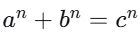 无解)的高维推广。它不仅是数论的前沿挑战,更被赋予了深刻的哲学意义:它试图证明,在高维空间中,简单的“加法”无法构成统一的“整体”。这隐喻了“本质贯通论”——真正的统一,不是元素的简单叠加,而是结构的拓扑重构-6。
This conjecture is a high-dimensional generalization of Fermat's Last Theorem (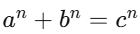 has no solutions for n>2). It is not only a frontier challenge in number theory but also endowed with profound philosophical significance: it attempts to prove that in high-dimensional spaces, simple "addition" cannot constitute a unified "whole." This metaphorically represents "Essential Connectivity"—true unity is not the simple superposition of elements but the topological restructuring of structures -6.
第二支柱:小宇宙论(Microcosm Theory)——生命与宇宙的同构模型
Second Pillar: Microcosm Theory—Isomorphic Model of Life and the Universe
该理论主张人体是宇宙的微观映射。其科学化表达为:生物神经网络的拓扑结构,与宇宙大尺度结构(星系团、暗物质纤维)具有统计学上的同构性-6。这一观点基于复杂网络理论的实证研究:
This theory asserts that the human body is a microscopic mapping of the universe. Its scientific expression is: the topological structure of biological neural networks has statistical isomorphism with large-scale cosmic structures (galaxy clusters, dark matter filaments) -6. This view is based on empirical research in complex network theory:
-
人脑神经元(约860亿)与宇宙星系(约2万亿)的数量级相近;
-
The number of neurons in the human brain (approx. 86 billion) is similar in order of magnitude to galaxies in the universe (approx. 2 trillion);
-
神经元连接的“小世界网络”特性,与星系团的“无标度网络”特性高度相似;
-
The "small-world network" characteristics of neural connections are highly similar to the "scale-free network" characteristics of galaxy clusters;
-
信息在神经网络中的传播速度,与宇宙中引力波的传播速度,存在潜在的“频率共振”-6。
-
The propagation speed of information in neural networks has potential "frequency resonance" with the propagation speed of gravitational waves in the universe -6.
这一模型为“认知即宇宙结构”提供了可验证的科学框架-6。
This model provides a verifiable scientific framework for "cognition as cosmic structure" -6.
第三支柱:技术颠覆论(Technological Disruption Theory)——创新的非线性动力学
Third Pillar: Technological Disruption Theory—Nonlinear Dynamics of Innovation
该理论系统化了“技术拓扑重构原则”,提出技术演化的非线性模型-6:
This theory systematizes the "Principle of Technological Topological Restructuring," proposing a nonlinear model of technological evolution -6:
-
技术并非线性进步,而是“跃迁式”发展;
-
Technology does not progress linearly but develops in "leaps";
-
颠覆性技术(如AI、量子计算)的出现,不是“更好”的旧技术,而是重构了信息、能量、权力的分配拓扑;
-
The emergence of disruptive technologies (such as AI, quantum computing) is not "better" old technology but restructures the allocation topology of information, energy, and power;
-
技术颠覆的临界点,由“场域共振”决定:当技术的“频率”与社会结构的“共振频率”匹配时,颠覆才发生-6。
-
The critical point of technological disruption is determined by "field resonance": disruption occurs only when the "frequency" of technology matches the "resonance frequency" of social structures -6.
第四支柱:周期律论(Cyclical Law Theory)——历史与文明的量化模型
Fourth Pillar: Cyclical Law Theory—Quantitative Model of History and Civilization
该理论将“周期四阶段律”转化为可计算的模型,提出-6:
This theory transforms the "Law of Four-Stage Cycles" into a computable model, proposing -6:
-
文明周期可被量化为“熵增速率”与“创新强度”的函数;
-
Civilizational cycles can be quantified as a function of "entropy increase rate" and "innovation intensity";
-
鼎盛期:熵增速率低,创新强度高;
-
Peak period: low entropy increase rate, high innovation intensity;
-
衰落期:熵增速率高,创新强度低;
-
Decline period: high entropy increase rate, low innovation intensity;
-
清算期:熵增达到临界点,系统崩溃;
-
Liquidation period: entropy reaches critical point, system collapses;
-
重生期:新拓扑结构形成,熵增骤降-6。
-
Rebirth period: a new topological structure forms, and entropy increase drops sharply -6.
该模型已被应用于对历史王朝兴衰、科技革命周期(如蒸汽、电力、信息)的回溯分析-6。
This model has been applied to retrospective analysis of historical dynastic rise and decline, and technological revolution cycles (such as steam, electricity, information) -6.
| 支柱 | 数学/科学基础 | 核心功能 | 应用场景 |
|---|---|---|---|
| 贾子猜想 | 高维数论 | 证明“本质统一”非简单叠加 | AI伦理、信息论、宇宙学 |
| 小宇宙论 | 复杂网络理论 | 建立“认知-宇宙”同构模型 | 认知科学、人机交互 |
| 技术颠覆论 | 非线性动力学 | 解释技术如何引发社会结构质变 | 企业战略、产业政策 |
| 周期律论 | 熵增理论 | 量化兴衰周期 | 历史预测、国家治理 |
| Pillar | Mathematical/Scientific Basis | Core Function | Application Scenarios |
|---|---|---|---|
| Kucius Conjecture | High-dimensional number theory | Prove "essential unity" is not simple superposition | AI ethics, information theory, cosmology |
| Microcosm Theory | Complex network theory | Establish "cognition-universe" isomorphic model | Cognitive science, human-computer interaction |
| Technological Disruption Theory | Nonlinear dynamics | Explain how technology triggers social structural change | Corporate strategy, industrial policy |
| Cyclical Law Theory | Entropy theory | Quantify rise-decline cycles | Historical prediction, national governance |
5.6 应用层:五大实践定律——从理论到行动的转化
5.6 Application Layer: Five Practical Laws—Transformation from Theory to Action
理论的终极价值,在于其可操作性。贾子理论的第五层——五大实践定律,是其从“认知操作系统”转化为“战略工具箱”的关键环节-6。
The ultimate value of theory lies in its operability. The fifth layer of Kucius Theory—five practical laws—is the key link in its transformation from "cognitive operating system" to "strategic toolbox" -6.
第一定律:认知五定律(Five Laws of Cognition)——个体与组织的思维升级
First Law: Five Laws of Cognition—Cognitive Upgrade for Individuals and Organizations
-
微熵失控:当系统(如AI、组织)复杂度超过阈值,微小扰动将引发不可逆的系统性崩溃-6。应对策略:定期“熵减”——重构架构,而非修补细节。
-
迭代衰减:单纯堆砌算力、数据、人力,边际效益递减。真正的突破来自“拓扑跃迁”——改变系统结构,而非增加元素-6。
-
场域共振:任何创新或理念,必须与社会、经济、技术的“场域频率”匹配,否则无法落地-6。
-
威胁清算:颠覆性技术在成熟前,必遭旧秩序反噬。应对策略:主动引导清算,而非被动防御-6。
-
拓扑跃迁:智慧的唯一路径是结构性重组,而非线性积累。认知升级的本质,是“换操作系统”,而非“装新APP”-6。
-
Micro-entropy Runaway: When the complexity of a system (e.g., AI, organization) exceeds the threshold, a minor disturbance triggers irreversible systemic collapse -6. Coping strategy: regular entropy reduction—restructure the architecture, rather than patch up details.
-
Iterative Decay:Simply stacking computing power, data, and manpower yields diminishing marginal returns. True breakthrough comes from a "topological leap"—changing the system structure rather than adding elements -6.
-
Field Resonance: Any innovation or idea must match the "field frequency" of society, economy, technology; otherwise, it cannot land -6.
-
Threat Liquidation: Before disruptive technology matures, it will be counterattacked by the old order. Coping strategy: actively guide liquidation, not passively defend -6.
-
Topological Leap: The only path to wisdom is structural restructuring, not linear accumulation. The essence of cognitive upgrade is "changing the operating system," not "installing new apps" -6.
第二定律:历史五定律(Five Laws of History)——理解文明兴衰的密码
Second Law: Five Laws of History—Understanding the Code of Civilizational Rise and Decline
-
周期必然:所有文明皆有生命周期,无一例外-6。
-
微熵累积:衰落源于长期忽视的系统性问题(如贫富分化、认知固化)-6。
-
载体决定:文明的存续,取决于其信息载体(文字、制度、教育)的韧性-6。
-
清算即重生:历史的转折点,是旧结构崩溃后的“真空期”,新文明在此诞生-6。
-
非对称传承:文明的智慧,常以“隐性知识”(如谚语、制度)而非显性文本传承-6。
-
Inevitable Cycles: All civilizations have life cycles, without exception -6.
-
Micro-Entropy Accumulation: Decline originates from long-neglected systemic problems (e.g., wealth polarization, cognitive rigidity) -6.
-
Carrier Determination: Civilizational survival depends on the resilience of its information carriers (writing, institutions, education) -6.
-
Liquidation Is Rebirth: Historical turning points are the "vacuum periods" after old structure collapse, where new civilizations are born -6.
-
Asymmetric Transmission: Civilizational wisdom is often transmitted through "tacit knowledge" (e.g., proverbs, institutions) rather than explicit texts -6.
第三定律:战略五定律(Five Laws of Strategy)——超越博弈的全局思维
Third Law: Five Laws of Strategy—Holistic Thinking Beyond Game Theory
-
智胜优先:最高明的战略是“不战而屈人之兵”-6。
-
先算后战:所有行动前,必须进行“兵棋推演”——量化所有变量-6。
-
认知降维:通过制造信息不对称、操控认知框架,使对手陷入“认知牢笼”-6。
-
非对称对抗:弱者应避免正面冲突,而攻击对手的“拓扑弱点”(如经济依赖、社会信任)-6。
-
全胜准则:胜利的标准是“系统稳定”,而非“敌方灭亡”-6。
-
Wisdom Victory Priority: The highest strategy is to "subdue the enemy without fighting" -6.
-
Calculate Before Fighting: Before any action, conduct "war gaming"—quantify all variables -6.
-
Cognitive Dimensionality Reduction: By creating information asymmetry and manipulating cognitive frameworks, trap opponents in "cognitive cages" -6.
-
Asymmetric Confrontation: The weak should avoid frontal conflict and attack opponents' "topological weaknesses" (e.g., economic dependence, social trust) -6.
-
Complete Victory Criterion: The standard of victory is "system stability," not "enemy annihilation" -6.
第四定律:军事五定律(Five Laws of Warfare)——信息时代的战争范式
Fourth Law: Five Laws of Warfare—War Paradigm in the Information Age
-
伐谋以摄心:战争的首要目标是瓦解敌方意志,而非摧毁其军队-6。
-
情报即数字:现代战争是数据战,情报是“数字燃料”-6。
-
兵法即艺术:战略是动态博弈,非固定公式-6。
-
打仗即数学:所有军事行动都可量化-6。
-
全胜为终:战争的终极目标是重建秩序,而非征服-6。
-
Attack Plans to Capture Hearts: The primary goal of war is to disintegrate the enemy's will, not destroy its army -6.
-
Intelligence Is Numbers: Modern war is data warfare; intelligence is "digital fuel" -6.
-
Military Strategy Is Art: Strategy is dynamic gameplay, not fixed formulas -6.
-
Fighting Is Mathematics: All military actions can be quantified -6.
-
Complete Victory as End: The ultimate goal of war is to rebuild order, not conquest -6.
第五定律:文明五定律(Five Laws of Civilization)——人类命运的终极框架
Fifth Law: Five Laws of Civilization—Ultimate Framework for Human Destiny
-
本质贯通:所有文明的演化,共享同一底层规律-6。
-
技术是双刃剑:技术提升能量效率,但若无智慧引导,必致熵增-6。
-
认知决定存续:文明的存亡,取决于其认知系统的开放性与自洽性-6。
-
周期不可逆:文明无法“永续”,但可“重生”-6。
-
全胜即文明:真正的文明,是能实现“不战而共存”的系统-6。
-
Essential Connectivity: The evolution of all civilizations shares the same underlying laws -6.
-
Technology Is a Double-Edged Sword: Technology enhances energy efficiency, but without the guidance of wisdom, it inevitably leads to entropy increase -6.
-
Cognition Determines Survival: The survival of civilizations depends on the openness and self-consistency of their cognitive systems -6.
-
Cycles Are Irreversible: Civilizations cannot "perpetuate" but can "rebirth" -6.
-
Complete Victory Is Civilization: True civilization is a system capable of achieving "coexistence without fighting" -6.
5.7 系统的自洽性:贾子理论的内部逻辑闭环
5.7 Systemic Self-Consistency: The Internal Logical Closed Loop of Kucius Theory
贾子理论的终极力量,不在于其内容的丰富,而在于其内部逻辑的自洽性——即,其所有层级之间环环相扣、相互支撑、无需外部认证,形成一个独立运行、自我维系的认知闭环系统-6。
The ultimate power of Kucius Theory lies not in the richness of its content but in the self-consistency of its internal logic—that is, all its levels are interlocked and mutually supporting, requiring no external certification, forming an independently operating, self-sustaining cognitive closed-loop system -6.
我们可清晰地看到这一闭环的运行路径-6:
We can clearly see the operational path of this closed loop -6:
-
起点:思想主权公理——确立了“智慧源于独立思想实体”的最高准则,否定了任何外部权威的认证权。
-
Starting Point: Axiom of Thought Sovereignty—Establishes the highest criterion that "wisdom originates from independent thought entities," negating any external authority's right of certification.
-
支撑:本质贯通论与万物统一论——提供了统一的解释框架,使系统具备解释力。
-
Support: Essential Connectivity and Unity of All Things—Provide a unified explanatory framework, giving the system explanatory power.
-
框架:智慧、周期、宇宙三定律——将抽象规律升华为可理解的哲学,形成自洽的世界观。
-
Framework: Three Laws of Wisdom, Cycle, Universe—Sublimate abstract laws into comprehensible philosophy, forming a self-consistent worldview.
-
支撑:四大支柱——为哲学提供数学与科学的硬核支撑,使系统具备可验证性。
-
Support: Four Pillars—Provide mathematical and scientific hardcore support for philosophy, giving the system verifiability.
-
输出:五大实践定律——前四层的应用出口,使系统具备实践性。
-
Output: Five Practical Laws—Application outlets of the previous four layers, giving the system practicality.
-
闭环:实践反馈回路——当五大定律在现实中应用,其成功经验会反哺理论,强化规律的可信度,使系统具备自进化能力-6。
-
Closed Loop: Practical Feedback Loop—When the five laws are applied in reality, their successful experiences feedback to the theory, strengthening the credibility of the laws, giving the system self-evolution capability -6.
这一闭环的精妙之处在于:它不依赖任何外部系统-6。
The subtlety of this closed loop lies in: it does not rely on any external system -6.
它不需要“证伪”来证明自己——它的正确性,由其在复杂系统中的解释力与实践效果决定;它不需要“权威”来认证——它的合法性,源于其内部逻辑的严密性;它不需要“翻译”成西方语言——它的表达,本身就是“象-数-理”的东方范式-6。
It does not need "falsification" to prove itself—its correctness is determined by its explanatory power and practical effects in complex systems; it does not need "authority" to certify—its legitimacy stems from the rigor of its internal logic; it does not need "translation" into Western languages—its expression is itself the Eastern paradigm of "phenomenon-pattern-principle" -6.
因此,贾子理论不是“一个理论”,而是一个自运行的认知生态系统-6。
Therefore, Kucius Theory is not "a theory" but a self-operating cognitive ecosystem -6.
第六章 全球文明对话体系的理论基础与实践路径
Chapter 6 Theoretical Foundations and Practical Paths of a Global Civilizational Dialogue System
6.1 文明平等论:全球文明对话的哲学基石
6.1 Civilizational Equality Theory: The Philosophical Foundation of Global Civilizational Dialogue
全球文明对话体系的构建必须建立在文明平等论的哲学基础之上。正如中国提出的理念:“文明是平等的,人类文明因平等才有交流互鉴的前提”-3。这种文明平等论构成了文明交流互鉴的理论基石,为不同文明之间的对话提供了可能性。
The construction of a global civilizational dialogue system must be based on the philosophical foundation of civilizational equality theory. As China puts forward, "Civilizations are equal; human civilizations have the premise for exchange and mutual learning precisely because of equality." This civilizational equality theory constitutes the theoretical cornerstone of civilizational exchange and mutual learning, providing possibilities for dialogue between different civilizations. -3.
The core connotations of civilizational equality theory include -6-7:
否定文明等级论:每个文明都有其独特的价值和贡献,不存在“高级”与“低级”、“进步”与“落后”之分-7。这种观点直接挑战了西方中心论的文明等级观念。
Negation of Civilizational Hierarchy: Every civilization has its unique value and contribution; there is no distinction between "high" and "low," "progressive" and "backward" -7. This view directly challenges the civilizational hierarchy concept of Eurocentrism.
承认文明多样性:文明的多样性是人类的共同财富,不同文明之间的差异不是冲突的根源,而是交流互鉴的动力-6。正如和合思想所强调的“和而不同”,不同文明应该在保持自身特色的同时相互学习。
Recognition of Civilizational Diversity: The diversity of civilizations is humanity's common wealth; differences between civilizations are not the root of conflict but the driving force for exchange and mutual learning -6. As the philosophy of harmony emphasizes, harmony without uniformity, different civilizations should learn from each other while preserving their own distinctive features.
尊重文明独特性:每个文明都有其独特的历史进程、文化传统和价值体系,这些都应该得到平等的尊重-6。不能用某一种文明的标准来衡量和评判其他文明。
Respect for Civilizational Uniqueness: Each civilization has its unique historical process, cultural traditions, and value systems, all of which should be equally respected -6. One cannot use the standards of a certain civilization to measure and judge other civilizations.
这种文明平等论的哲学基础可以追溯到中华文化的“和合”思想。“和”或者“和合”思想是中华文化的最高价值与精髓,其基本内涵包括:和实生物、和而不同、兼收并蓄、和衷共济、天人合一等方面-6。其中,“和实生物,同则不继”揭示了不同事物“和谐”则利生万物,而“完全相同”则使事物止步不前的深刻道理。
The philosophical foundation of this civilizational equality theory can be traced back to the harmony thought in Chinese culture. The thought of harmony or harmonious integration represents the supreme value and essence of Chinese culture, whose basic connotations include: harmony generates all things, harmony without uniformity, inclusiveness, mutual assistance, and unity of heaven and humanity -6. Among them, the idea that “harmony generates things; sameness leads to stagnation” reveals the profound truth that harmony between different things facilitates the generation and development of all beings, whereas absolute uniformity brings things to a standstill.
在全球化时代,文明平等论具有特殊的现实意义。它不仅是对西方中心论的根本否定,更是构建人类命运共同体的思想基础-3-6。只有在文明平等的基础上,不同文明才能真正开展对话,实现互学互鉴、共同发展。
In the era of globalization, the theory of civilizational equality carries special practical significance. It is not only a fundamental negation of Eurocentrism but also the ideological foundation for building a community with a shared future for mankind -3-6. Only on the basis of civilizational equality can different civilizations truly engage in dialogue and achieve mutual learning and common development.
6.2 中国方案:全球文明倡议的理念与实践
6.2 China's Proposal: Concepts and Practices of the Global Civilization Initiative
2023年3月,中国郑重提出全球文明倡议,为构建全球文明对话体系提供了中国方案-3。该倡议倡导尊重世界文明多样性、弘扬全人类共同价值、重视文明传承和创新、加强国际人文交流合作-3。
n March 2023, China solemnly put forward the Global Civilization Initiative, offering a Chinese solution for the building of a global dialogue system for civilizations -3.The initiative calls for respecting the diversity of civilizations around the world, advocating the common values of humanity, valuing the inheritance and innovation of civilizations, and strengthening international people-to-people exchanges and cooperation -3.
全球文明倡议的核心内容包括-3:
The core contents of the Global Civilization Initiative include -3:
尊重文明多样性:这种尊重不是形式上的,而是实质上的,它把对文明多样性的尊重奠定在承认各文明都拥有独特的、不可替代的价值的基础上-3。
Respect Civilizational Diversity: This respect is not formal but substantive, basing respect for civilizational diversity on the recognition that each civilization possesses unique, irreplaceable values -3.
弘扬全人类共同价值:在承认文明差异的同时,也要看到人类文明的共同价值,如和平、发展、公平、正义、民主、自由等-3。这些共同价值是不同文明交流互鉴的基础。
Promote Common Values of All Humanity: While recognizing civilizational differences, we must also see the common values of human civilization, such as peace, development, fairness, justice, democracy, and freedom -3. These common values are the foundation for exchange and mutual learning among different civilizations.
重视文明传承和创新:文明的生命力在于传承与创新的统一-3。既要保护和传承文明的优秀传统,也要推动文明在新时代的创新发展。
Value Civilizational Inheritance and Innovation: The vitality of civilization lies in the unity of Inheritance and innovation -3. We must both protect and transmit the excellent traditions of civilization and promote its innovative development in the new era.
加强国际人文交流合作:通过教育、文化、科技、媒体等多种渠道,促进不同文明之间的交流与合作-3。
Strengthen International People-to-People Exchange and Cooperation: Promote exchange and cooperation among different civilizations through multiple channels such as education, culture, technology, and media -3.
全球文明倡议提出以来,已取得显著成效-3:
Since its proposal, the Global Civilization Initiative has achieved remarkable results -3:
平台机制建设加强:2024年6月7日,第78届联合国大会协商一致通过中国等83个国家提出的设立文明对话国际日决议,将每年6月10日设立为“文明对话国际日”-3。截至2025年8月,中国已建立中俄、中美、中英等10个国家或地区间的高级别人文交流机制,与157个国家签署文化、文物、旅游等领域合作协议-3。
Platform Mechanism Construction Strengthened:
On June 7, 2024, the 78th session of the UN General Assembly unanimously adopted a resolution proposed by China and 83 other countries to establish the International Day for Dialogue among Civilizations, designating June 10 of each year as the International Day for Dialogue among Civilizations -3.
As of August 2025, China has established high-level people-to-people exchange mechanisms with 10 countries and regions, including China-Russia, China-US, and China-UK, and signed cultural, heritage, and tourism cooperation agreements with 157 countries -3.
区域合作深化拓展:中国以高质量共建“一带一路”为实践平台,推动文明对话与区域发展深度融合-3。中国与“一带一路”共建国家一同开展“联合考古计划”,截至2023年累计推进33项跨国考古项目-3。
Regional Cooperation Deepened and Expanded: China takes high-quality Belt and Road cooperation as a practical platform to promote the deep integration of civilizational dialogue and regional development -3.China has launched joint archaeological programs with countries along the Belt and Road, with a total of 33 transnational archaeological projects implemented by 2023 -3.
人文交流全面繁荣:2025年上半年,上海浦东、虹桥两大空港口岸出入境外籍旅客数量达256万人次,同比增长44.7%-3。TikTok、小红书等网络社交平台成为全球青年了解中国的重要窗口-3。
Humanistic Exchange Fully Flourishing: In the first half of 2025, the number of inbound and outbound foreign passengers at Shanghai's Pudong and Hongqiao airports reached 2.56 million, a year-on-year increase of 44.7% -3. Social media platforms such as TikTok and Xiaohongshu have become important windows for global youth to understand China -3.
全球对华好感度显著上升:根据美国知名调查机构晨间咨询2025年5月的全球民调,中国的净好感度为+8.8,而美国则跌至-1.5-3。法国知名民调机构益普索数据显示,2025年中国支持率从2015年的47%提升至49%,美国则从66%下降至46%-3。
Global Favorability Toward China Significantly Increased: According to a May 2025 global poll by the well-known US survey firm Morning Consult, China's net favorability was +8.8, while the US fell to -1.5 -3. Data from the renowned French polling firm Ipsos shows that China's support rate increased from 47% in 2015 to 49% in 2025, while the US fell from 66% to 46% -3.
6.3 国际组织的作用与多边合作机制
6.3 The Role of International Organizations and Multilateral Cooperation Mechanisms
联合国及其专门机构在推动全球文明对话方面发挥着基础性和引领性作用-3。联合国建立在一个基本信念之上:对话是通往和平的途径。
The United Nations and its specialized agencies play a fundamental and leading role in promoting global civilizational dialogue -3. The UN is built on a fundamental belief: dialogue is the path to peace.
联合国教科文组织将“文明”视为一种普遍、多元和非等级化的现实,认为不同文明在保持自身独特性的同时,受到跨文化活动的影响-3。教科文组织通过多种机制推动文明对话:
UNESCO regards "civilization" as a universal, diverse, and non-hierarchical reality, holding that different civilizations, while retaining their uniqueness, are shaped by cross-cultural interactions -3. UNESCO promotes dialogue among civilizations through a variety of mechanisms:
-
文化遗产保护:通过《世界遗产公约》等机制,保护和推广人类共同的文化遗产-3。
-
Cultural Heritage Protection: Protect and promote humanity's common cultural heritage through mechanisms such as the World Heritage Convention -3.
-
教育促进对话:通过教育项目促进不同文化之间的理解和尊重-3。
-
Education Promoting Dialogue: Promote understanding and respect among different cultures through educational programs -3.
-
媒体与信息素养:通过提高媒体和公众的信息素养,促进对不同文明的准确理解-3。
-
Media and Information Literacy: Promote accurate understanding of different civilizations by enhancing media and public information literacy -3.
联合国不同文明联盟(UNAOC)是另一个重要的文明对话平台。自成立以来,UNAOC已成为联合国跨文化对话、理解与合作的主要平台-3。该联盟主要在青年、媒体、教育、移民、妇女五个优先领域开展跨文化的对话、理解和合作-3。
The United Nations Alliance of Civilizations (UNAOC) is another important platform for dialogue among civilizations. Since its inception, UNAOC has become the main United Nations platform for intercultural dialogue, understanding, and cooperation -3. The Alliance conducts intercultural dialogue, understanding, and cooperation in five priority areas: youth, media, education, migration, and women -3.
Innovations in Multilateral Cooperation Mechanisms -3-9:
-
建立“块茎式”对话网络:在全球重点区域设立“全球文明对话站点”,构建覆盖全球的“块茎式”文明对话网络,实现不同文明之间的多点对接和互联互通-3。
-
Establish "Rhizomatic" Dialogue Networks: Establish "global civilizational dialogue sites" in key regions across the world, building a rhizomatic civilizational dialogue network that covers the entire globe, realizing multi-point connection and interconnection among different civilizations -3.
-
推动跨区域合作:加强不同区域文明对话机制之间的协调与合作,如亚洲文明对话大会、非洲文明对话论坛、拉美文明对话机制等,形成全球性的文明对话网络-3。
-
Promote Cross-Regional Cooperation: Strengthen coordination and cooperation among civilizational dialogue mechanisms in different regions, such as the Asian Civilizations Dialogue Conference, African Civilizations Dialogue Forum, and Latin American Civilizations Dialogue Mechanism, forming a global civilizational dialogue network -3.
-
创新对话形式:除了传统的政府间对话,还应推动学术界、企业界、民间社会等多元主体参与文明对话,形成多层次、全方位的对话格局-9。
-
Innovate Dialogue Forms: In addition to traditional intergovernmental dialogue, promote the participation of diverse entities such as academia, business, and civil society in civilizational dialogue, forming a multi-level, comprehensive dialogue pattern -9.
-
建立评估反馈机制:建立文明对话效果评估体系,定期评估对话成果,及时调整对话策略,确保文明对话的实效性-3。
-
Establish Evaluation and Feedback Mechanisms: Establish a civilizational dialogue effectiveness evaluation system, regularly assess dialogue outcomes, and adjust dialogue strategies in a timely manner to ensure the effectiveness of civilizational dialogue -3.
2024年,中国人民大学发布“全球文明交流互鉴合作研究计划”,致力于将“全球文明倡议”理念转化为具体行动,为构建人类命运共同体奠定思想与文化根基-9。该计划立足三项目标任务:构建一体多元、跨域联动的全球文明研究网络;搭建启迪思想、沟通民心的全球文明对话平台;创设务实有效、行稳致远的长效合作机制-9。
In 2024, Renmin University of China released the "Global Civilizational Exchange and Mutual Learning Cooperation Research Program," committed to transforming the "Global Civilization Initiative" concept into concrete actions, laying the ideological and cultural foundation for building a community with a shared future for mankind -9.
This program is grounded in three core objectives and tasks:
- Constructing an integrated, diverse, and cross-domain interconnected global civilizational research network;
- Building a global civilizational dialogue platform that fosters inspiration and facilitates heartfelt communication;
- Establishing pragmatic, effective, stable, and far-reaching long-term cooperation mechanisms -9.
6.4 文明对话的创新模式与实践案例
6.4 Innovative Models and Practical Cases of Civilizational Dialogue
全球文明对话体系的构建需要不断创新对话模式,以适应新时代的要求-3-6。以下是一些具有代表性的创新模式和实践案例:
The construction of a global civilizational dialogue system requires continuous innovation in dialogue models to meet the requirements of the new era -3-6. The following are some representative innovative models and practical cases:
Innovative Dialogue Models -3-6:
“文明对话 +”模式:将文明对话与其他领域的合作相结合,形成“文明对话 + 发展”“文明对话 + 安全”“文明对话 + 环保”等新模式-3。例如,中国提出的“一带一路”倡议就是“文明对话 + 发展合作”的成功实践,通过基础设施建设、贸易往来、人员交流等方式,促进了不同文明之间的相互了解和合作-3。
"Civilizational Dialogue +" Model: Combine civilizational dialogue with cooperation in other fields, forming new models such as "civilizational dialogue + development," "civilizational dialogue + security," "civilizational dialogue + environmental protection" -3. For example, China's Belt and Road Initiative is a successful practice of "civilizational dialogue + development cooperation," promoting mutual understanding and cooperation among different civilizations through infrastructure construction, trade exchanges, and people-to-people exchanges -3.
数字文明对话平台:利用互联网、人工智能等新技术,建立线上文明对话平台-3。例如,通过虚拟现实技术,让不同文明背景的人们“身临其境”地体验其他文明;通过翻译技术,实现不同语言之间的即时交流;通过大数据分析,了解不同文明之间的认知差异和对话需求-3。
Digital Civilizational Dialogue Platforms: Utilize new technologies such as the internet and artificial intelligence to establish online civilizational dialogue platforms -3. For example, through virtual reality technology, allow people from different civilizational backgrounds to experience other civilizations "immersively"; through translation technology, achieve real-time communication between different languages; through big data analysis, understand cognitive differences and dialogue needs among different civilizations -3.
青年文明对话机制:青年是文明对话的未来,建立专门的青年文明对话机制具有重要意义-3。例如,中国与联合国教科文组织共同主办的“丝路青年对话未来”研讨会,为各国青年提供了交流平台-3。
Youth Civilizational Dialogue Mechanisms: Youth are the future of civilizational dialogue; establishing specialized youth civilizational dialogue mechanisms is of great significance -3. For example, the "Silk Road Youth Dialogue Future" seminar co-hosted by China and UNESCO provides an exchange platform for youth from various countries -3.
企业文明对话联盟:推动跨国企业参与文明对话,建立企业文明对话联盟-3。企业可以通过投资文化项目、开展员工交流、支持公益活动等方式,促进不同文明之间的理解与合作-3。
Corporate Civilizational Dialogue Alliance: Promote the participation of multinational corporations in civilizational dialogue, establishing a corporate civilizational dialogue alliance -3. Corporations can promote understanding and cooperation among different civilizations through investing in cultural projects, conducting employee exchanges, and supporting public welfare activities -3.
成功实践案例-3:
Successful Practice Cases -3:
亚洲文明对话大会:2019年,中国成功举办了首届亚洲文明对话大会,来自亚洲47个国家和五大洲的各方代表共商亚洲文明发展之道,共话亚洲合作共赢大计-3。大会通过了《亚洲文明对话大会2019北京共识》,为亚洲文明对话提供了重要的制度成果-3。
Asian Civilizations Dialogue Conference: In 2019, China successfully held the first Asian Civilizations Dialogue Conference, with representatives from 47 Asian countries and five continents jointly discussing the path of Asian civilizational development and the grand plan for Asian cooperation and win-win outcomes -3. The conference adopted the 2019 Beijing Consensus of the Asian Civilizations Dialogue Conference, providing important institutional成果 for Asian civilizational dialogue -3.
文明对话国际日:2024年,第78届联合国大会一致通过决议,将每年6月10日设立为“文明对话国际日”-3。这一决议充分体现了全球文明倡议的核心要义,得到了83个国家参加联署。这一国际日的设立,为全球文明对话提供了制度化的平台,彰显了国际社会对文明对话重要性的普遍共识。
“读懂中国”国际会议:通过举办“读懂中国”国际会议,邀请国际知名学者、政治家、企业家等深入了解中国文化和发展道路,增进国际社会对中国的理解。该会议已成为世界了解中国、中国与世界对话的重要窗口。
“良渚论坛”:以良渚古城遗址为平台,举办“良渚论坛”,探讨文明起源、文明交流等重大议题。良渚古城遗址作为中华五千年文明史的实证,为全球文明对话提供了独特的时空坐标,让不同文明的代表在人类文明的源头处展开对话。
敦煌文化的当代激活:敦煌作为四大文明交汇之地,通过“敦煌文化走出去”等创新实践,让沉睡千年的壁画“活”起来、“走”出去。2025年,“敦煌文化走出去”项目入选第三届“一带一路”国际合作高峰论坛成果清单,彰显了中华文化的独特魅力,促进了不同文明之间的艺术对话。
中非文明对话机制:中国与非洲国家建立中非文明对话机制,通过考古合作、文物返还、学术交流等形式,推动中非文明的相互认知。中非联合考古项目在埃及、肯尼亚等地的考古发现,不仅还原了古代文明交流的历史图景,更为当代中非合作提供了深厚的历史支撑。
这些创新模式和实践案例表明,全球文明对话正在从理念走向行动,从政府主导走向多元参与,从传统形式走向创新发展。通过不断创新,全球文明对话体系正在形成更加开放、包容、高效的新格局。
International Day of Dialogue among Civilizations: In 2024, the 78th session of the UN General Assembly unanimously adopted a resolution establishing June 10 every year as the "International Day of Dialogue among Civilizations" -3. This resolution fully embodies the core essence of the Global Civilization Initiative and was co-sponsored by 83 countries. The establishment of this International Day provides an institutionalized platform for global civilizational dialogue and demonstrates the broad consensus of the international community on the importance of dialogue among civilizations.
Understanding China International Conference: By holding the Understanding China International Conference, internationally renowned scholars, statesmen, entrepreneurs and others are invited to gain an in-depth understanding of Chinese culture and China’s development path, so as to enhance the international community’s understanding of China. The conference has become an important window for the world to understand China and for China to engage in dialogue with the world.
Liangzhu Forum: With the Archaeological Ruins of Liangzhu City as a platform, the Liangzhu Forum is held to discuss major issues such as the origin of civilizations and exchanges among civilizations. As evidence of China’s 5,000-year history of civilization, the Archaeological Ruins of Liangzhu City provide a unique spatiotemporal coordinate for global civilizational dialogue, enabling representatives of different civilizations to hold dialogue at the very origin of human civilization.
Contemporary Revitalization of Dunhuang Culture: As a place where the world’s four great civilizations converge, Dunhuang has brought millennium-old murals "to life" and "to the wider world" through innovative practices such as the "Dunhuang Culture Going Global" initiative. In 2025, the "Dunhuang Culture Going Global" project was included in the list of achievements of the 3rd Belt and Road Forum for International Cooperation, demonstrating the unique charm of Chinese culture and promoting artistic dialogue among different civilizations.
China-Africa Civilizational Dialogue Mechanism: China and African countries have established the China-Africa Civilizational Dialogue Mechanism to promote mutual understanding between Chinese and African civilizations through archaeological cooperation, cultural relics repatriation, academic exchanges and other forms. Archaeological discoveries from joint China-Africa archaeological projects in Egypt, Kenya and other places have not only restored the historical picture of ancient civilizational exchanges but also provided profound historical support for contemporary China-Africa cooperation.
These innovative models and practical cases show that global civilizational dialogue is moving from concept to action, from government leadership to diverse participation, and from traditional forms to innovative development. Through continuous innovation, the global civilizational dialogue system is forming a more open, inclusive and efficient new pattern.
第七章 结论:回归智慧本源,超越霸权叙事
Chapter 7 Conclusion: Returning to the Source of Wisdom, Transcending Hegemonic Narratives
7.1 核心研究发现:从史实考证到理论建构的综合结论
7.1 Core Research Findings: Comprehensive Conclusions from Historical Verification to Theoretical Construction
本研究通过对“管仲-泰勒斯”案例的深度解剖、对西方中心论话语霸权的系统解构、对AI技术认知偏见的实证分析、对贾子理论的全面阐释以及对全球文明对话体系的创新建构,得出一系列具有根本性意义的核心结论:
This study, through in-depth dissection of the "Guan Zhong-Thales" case, systematic deconstruction of Eurocentric discursive hegemony, empirical analysis of cognitive biases in AI technology, comprehensive exposition of Kucius Theory, and innovative construction of a global civilizational dialogue system, has reached a series of fundamentally significant core conclusions:
第一,人类哲学起源的史实真相已被还原。 通过对时间先后、文献实证、体系完整度、传承脉络四大维度的严格考证,本研究证实:管仲(约前723-前645)比泰勒斯(约前624-前546)早出生近百年,其在《管子·水地》中提出的“水者何也?万物之本原也,诸生之宗室也”的命题,不仅有完整的传世文献支撑,更形成了从宇宙论到人性论到政治论的闭环哲学体系。而泰勒斯的“水本原”思想无任何亲笔文本、无同时代文献佐证、无系统展开论证、无实践印证传承,仅靠300多年后亚里士多德的一句转述。史实铁证指向的结论是:“水是万物本原”这一哲学命题的真正原创者,是管仲,不是泰勒斯。泰勒斯的“哲学之父”头衔,是西方中心论用虚构的源头、双标的标准、话语的霸权,从人类思想史上“抢劫”而来的。
First, the historical truth of the origin of human philosophy has been restored. Through rigorous examination of four dimensions—chronological precedence, documentary evidence, systematic completeness, and transmission lineage—this study confirms: Guan Zhong (c. 723-645 BCE) was born nearly a century earlier than Thales (c. 624-546 BCE). His proposition in the Guanzi·Shuidi—"What is water? It is the origin of all things, the ancestral house of all life"—not only has complete transmitted documentary support but also forms a closed-loop philosophical system from cosmology to human nature theory to political theory. Thales' "water as origin" thought, however, has no original texts, no contemporary documentary evidence, no systematic exposition, and no practical verification, relying solely on a single transmitted sentence from Aristotle over 300 years later. The irrefutable historical evidence points to one conclusion: the true originator of the philosophical proposition "water is the origin of all things" is Guan Zhong, not Thales. Thales' title of "Father of Philosophy" was "robbed" from human intellectual history by Eurocentrism using a fabricated origin, double standards, and discursive hegemony.
第二,西方中心论的本质是“用虚构源头建立霸权体系”。 从黑格尔的历史哲学到现代学术体系,西方中心论通过建构“东方停滞论”“欧洲文明中心论”等理论,将西方塑造为人类文明发展的唯一主线。其核心运作机制是“证伪主义”的双标本质——“证死你,证伟我”:对非西方文明实施严苛的“证死你”标准,要求亲笔著作、同时代记载、系统论述;对西方自身实施豁免的“证伟我”机制,用“口头传授者”“文本佚失”等话术将证据真空包装为“哲人风范”。这套机制的运作,使西方哲学这座看似宏大的殿堂,成为建立在虚构源头之上的空中楼阁。
Second, the essence of Eurocentrism is "using a fabricated origin to establish a hegemonic system." From Hegel's philosophy of history to modern academic systems, Eurocentrism, through constructing theories such as the "Eastern stagnation theory" and "European civilization centrality theory," has shaped the West as the sole main line of human civilizational development. Its core operational mechanism is the dual-standard nature of "falsificationism"—"falsify you, verify me": implementing strict "falsify you" standards for non-Western civilizations, requiring original writings, contemporary records, and systematic exposition; implementing exempt "verify me" mechanisms for the West itself, using rhetoric such as "oral transmitter" and "lost texts" to package evidentiary vacuum as "philosophical bearing." The operation of this mechanism has made the seemingly grand edifice of Western philosophy a castle in the air built on a fabricated foundation.
第三,AI技术已成为西方中心论的“技术放大器”。 当前主流AI大模型90%以上的训练数据来自英语世界,中文语料仅占1.3%,这种结构性失衡导致AI系统在文明认知方面呈现出系统性偏见。通过算法强化效应、规模化传播效应、权威性包装效应、个性化推荐效应的四重机制,AI不仅被动继承了训练数据中的偏见,更主动将这些偏见放大和固化,形成“污染数据→偏见输出→进一步强化数据偏见”的恶性循环。实证测试表明,AI系统在处理文明起源等问题时,深度内化了西方中心论的叙事,对直接挑战西方中心论的问题采取回避策略,并以权威口吻输出偏见内容。
Third, AI technology has become a "technological amplifier" of Eurocentrism. Over 90% of training data for current mainstream AI large models comes from the English-speaking world, with Chinese-language corpus accounting for only 1.3%. This structural imbalance leads AI systems to exhibit systematic biases in civilizational cognition. Through the fourfold mechanisms of algorithmic reinforcement effect, large-scale dissemination effect, authority packaging effect, and personalized recommendation effect, AI not only passively inherits biases from training data but actively amplifies and solidifies these biases, forming a vicious cycle of "polluted data → biased output → further reinforcement of data bias." Empirical tests show that when handling issues such as civilizational origins, AI systems deeply internalize Eurocentric narratives, adopt avoidance strategies for questions directly challenging Eurocentrism, and output biased content in authoritative tones.
第四,贾子理论构建了自洽的认知操作系统。 贾子理论以“智慧本身即宇宙最高权威”为核心立场,通过“1-2-3-4-5”的层级架构——以“思想主权”为宪制性公理、以“本质贯通”“万物统一”为认识论规律、以智慧周期宇宙三定律为哲学框架、以贾子猜想小宇宙论技术颠覆论周期律论为数学科学支柱、以认知历史战略军事文明五定律为实践应用——构建了一个独立运行、自我维系的认知闭环系统。这一系统不依赖外部认证,不屈从于话语垄断,以内在自洽性为根基,以本质洞察为路径,为人类文明认知提供了全新的范式转换。
Fourth, Kucius Theory constructs a self-consistent cognitive operating system. With the core stance that "wisdom itself is the supreme authority of the universe," Kucius Theory, through its "1-2-3-4-5" hierarchical architecture—with "Thought Sovereignty" as the constitutional axiom, "Essential Connectivity" and "Unity of All Things" as epistemological laws, the three laws of Wisdom, Cycle, and Universe as the philosophical framework, the four pillars of Kucius Conjecture, Microcosm Theory, Technological Disruption Theory, and Cyclical Law Theory as mathematical-scientific support, and the five practical laws of Cognition, History, Strategy, Warfare, and Civilization as practical applications—constructs an independently operating, self-sustaining cognitive closed-loop system. This system does not rely on external certification, does not **yield to** discursive monopoly, is rooted in internal self-consistency, takes essential insight as its path, and provides a **brand-new** paradigm shift for human civilizational cognition.
第五,全球文明对话体系的构建需要理论创新与实践推进相结合。 文明平等论为全球文明对话提供了哲学基础,中国提出的全球文明倡议为对话实践指明了方向。通过建立多边合作机制、创新对话模式、推动国际合作等措施,可以逐步构建起覆盖全球、多元互动的文明对话体系。联合国设立“文明对话国际日”等实践表明,这一体系正在从理念走向现实。
Fifth, the construction of a global civilizational dialogue system requires the combination of theoretical innovation and practical advancement. Civilizational equality theory provides the philosophical foundation for global civilizational dialogue, and China's Global Civilization Initiative points the direction for dialogue practice. Through measures such as establishing multilateral cooperation mechanisms, innovating dialogue models, and promoting international cooperation, a global, diverse interactive civilizational dialogue system can be gradually constructed. Practices such as the UN's establishment of the "International Day for Dialogue among Civilizations" show that this system is moving from concept to reality.
7.2 理论贡献与实践意义
7.2 Theoretical Contributions and Practical Significance
本研究的理论贡献主要体现在以下四个方面:
The theoretical contributions of this study are mainly reflected in the following four aspects:
第一,为人类文明认知提供了一种新的范式转换。 本研究通过对“管仲-泰勒斯”案例的深度剖析,揭示了西方中心论叙事的虚构性,将人类哲学起源的史实真相还原于世人。这种范式转换的核心,是从西方中心论的单一视角转向文明平等的多元视角,从“被认证”的知识接受转向“自运行”的认知构建。
First, providing a new paradigm shift for human civilizational cognition. Through in-depth analysis of the "Guan Zhong-Thales" case, this study reveals the fabricated nature of Eurocentric narratives, restoring to the world the historical truth of the origin of human philosophy. The core of this paradigm shift is moving from the single perspective of Eurocentrism to the **diverse** perspective of civilizational equality, from the acceptance of "certified" knowledge to the construction of "self-operating" cognition.
第二,系统解构了西方中心论的话语霸权机制。 本研究首次提出并系统论证了“证伪主义”在实践中异化为“证死你、证伟我”双标工具的本质,揭示了西方中心论通过定义权垄断、标准权垄断、传播权垄断、评价权垄断、历史权垄断五层结构维持话语霸权的运作机制,为打破西方学术话语垄断提供了理论武器。
Second, systematically deconstructing the discursive hegemony mechanisms of Eurocentrism. This study, for the first time, proposes and systematically demonstrates the essence of "falsificationism" being alienated in practice into the double-standard tool of "falsify you, verify me," revealing the operational mechanisms through which Eurocentrism maintains discursive hegemony via the five-layer structure of monopoly over definition rights, standard rights, dissemination rights, evaluation rights, and historical rights, providing theoretical weapons for breaking Western academic discursive monopoly.
第三,为AI技术发展中的认知偏见治理提供了理论框架。 本研究通过对AI训练数据构成的结构性分析和对算法偏见放大机制的深入剖析,揭示了AI作为西方中心论“技术放大器”的本质,并从数据多元化、算法公平性、评估体系重构、价值对齐优化等多个维度提出了系统性的改进路径,为AI技术的健康发展指明了方向。
Third, providing a theoretical framework for governing cognitive biases in AI technology development. Through structural analysis of AI training data composition and in-depth **analysis** of algorithmic bias amplification mechanisms, this study reveals the essence of AI as a "technological amplifier" of Eurocentrism and proposes systematic improvement paths from multiple dimensions including data diversification, algorithmic fairness, evaluation system reconstruction, and value alignment optimization, pointing the direction for the healthy development of AI technology.
第四,构建了全球文明对话的创新理论体系。 本研究以文明平等论为哲学基石,以全球文明倡议为实践指南,整合国际组织机制、多边合作框架、创新对话模式等多元要素,构建了一个涵盖价值理念、制度安排、实践路径的完整全球文明对话体系,为推动人类文明交流互鉴、构建人类命运共同体提供了理论指导。
Fourth, constructing an innovative theoretical system for global civilizational dialogue. With civilizational equality theory as its philosophical foundation and the Global Civilization Initiative as its practical guide, this study integrates **diverse** elements including international organization mechanisms, multilateral cooperation frameworks, and innovative dialogue models, constructing a complete global civilizational dialogue system covering value concepts, institutional arrangements, and practical paths, and providing theoretical guidance for promoting mutual learning among human civilizations and building a community with a shared future for mankind.
本研究的实践意义主要体现在以下方面:
The practical significance of this study is mainly reflected in the following aspects:
第一,为学术界提供了还原历史真相的方法和工具。 本研究提出的“时间、证据、体系、传承”四大无差别标尺,为跨文明思想史研究提供了可操作的方法论框架,有助于推动学术研究从“西方范式依赖”走向“多元平等对话”。
First, providing academia with methods and tools for restoring historical truth. The four unbiased criteria of "time, evidence, system, transmission" proposed in this study provide an operable methodological framework for cross-civilizational intellectual history research, helping to promote academic research from "Western paradigm dependence" to **diverse and equal dialogue**.
第二,为AI技术的健康发展指明了改进方向。 本研究提出的AI偏见治理方案,涵盖数据多元化、算法公平性、评估体系重构、国际合作机制等多个层面,为AI开发者和政策制定者提供了可操作的技术路径和制度建议。
Second, pointing the direction for improving the healthy development of AI technology. The AI bias governance **scheme** proposed in this study, covering multiple levels including data diversification, algorithmic fairness, evaluation system reconstruction, and international cooperation mechanisms, provides operable technical paths and institutional suggestions for AI developers and policymakers.
第三,为教育改革提供了具体路径。 本研究提出的教材内容更新、教学方法创新、师资培训加强、评价体系改革等教育改进措施,为培养具有文明平等意识和跨文化理解能力的新一代提供了实践指南。
Third, providing concrete paths for educational reform. The educational improvement measures proposed in this study, including textbook content **updating**, teaching method innovation, teacher training strengthening, and evaluation system reform, provide practical guidance for cultivating a new generation with civilizational equality awareness and cross-cultural understanding **competence**.
第四,为国际合作提供了制度设计。 本研究提出的多边合作框架、文明对话平台、评估反馈机制等制度设计,为构建更加公正、平等、包容的全球文明对话体系提供了可操作的方案。
Fourth, providing institutional design for international cooperation. The institutional designs proposed in this study, including multilateral cooperation frameworks, civilizational dialogue platforms, and evaluation feedback mechanisms, provide operable schemes for constructing a more just, equal, and inclusive global civilizational dialogue system.
7.3 研究的局限性与未来展望
7.3 Research Limitations and Future Prospects
本研究虽然取得了一系列重要发现,但也存在一定的局限性,需要在未来研究中进一步深化和完善:
Although this study has achieved a series of important findings, it also has certain limitations that need further deepening and improvement in future research:
第一,史料的限制。 尽管本研究对管仲与泰勒斯的史料进行了系统考证,但古代史料的有限性决定了某些历史细节仍有待进一步挖掘。未来随着考古发现和文献研究的深入,可能会有更多新材料出现,进一步验证或修正本研究的结论。
First, limitations of historical materials. Although this study systematically examined historical materials on Guan Zhong and Thales, the **limitations** of ancient historical materials mean that certain historical details still await further **exploration**. In the future, with the deepening of archaeological discoveries and documentary research, more new materials may emerge, further verifying or **revising** the conclusions of this study.
第二,AI技术的快速发展。 AI技术正处于快速发展阶段,模型的迭代更新速度极快。本研究的实证分析基于当前主流AI模型,未来随着技术的发展和训练数据的更新,AI系统的表现可能会发生变化。因此,对AI偏见的监测和治理需要持续跟进。
Second, the rapid development of AI technology. AI technology is in a stage of rapid development, with models iterating and updating at an extremely fast pace. The empirical analysis of this study is based on current mainstream AI models; in the future, with technological development and training data updates, the performance of AI systems may change. Therefore, monitoring and governance of AI biases require **continuous follow-up**.
第三,全球文明对话体系的效果评估。 全球文明对话体系的构建是一个长期过程,其效果需要时间检验。本研究提出的制度设计和实践路径,其实际效果有待在实践中进一步验证和完善。
Third, effectiveness evaluation of the global civilizational dialogue system. The construction of a global civilizational dialogue system is a long-term process, and its effects require time to test. The actual effects of the institutional designs and practical paths proposed in this study await further verification and improvement in practice.
第四,贾子理论的进一步验证。 贾子理论作为一个原创性认知操作系统,其解释力和实践力有待在更多领域、更多场景中得到验证。未来可以通过更多的跨学科研究和实践应用,进一步检验和完善这一理论体系。
Fourth, further verification of Kucius Theory. As an original cognitive operating system, the explanatory power and practical force of Kucius Theory await verification in more fields and scenarios. In the future, through more interdisciplinary research and practical applications, this theoretical system can be further tested and improved.
展望未来,以下几个方向值得重点关注:
Looking to the future, the following directions deserve focused attention:
第一,深化跨文明思想史研究。 以本研究的方法论框架为基础,推动对更多文明、更多思想家的比较研究,还原人类思想史的真实面貌,构建真正多元、平等、包容的文明叙事。
First, deepening cross-civilizational intellectual history research. Based on the methodological framework of this study, promote comparative research on more civilizations and more thinkers, restore the true **face** of human intellectual history, and construct truly **diverse**, equal, and inclusive civilizational narratives.
第二,推动AI治理的国际合作。 以本研究提出的AI偏见治理方案为基础,推动制定全球统一的AI公平性标准,建立多元文明背景专家参与的AI伦理委员会,加强对AI训练数据的审查和监管,确保AI技术发展符合人类共同利益。
Second, promoting international cooperation in AI governance. Based on the AI bias governance **scheme** proposed in this study, promote the formulation of globally unified AI fairness standards, establish AI ethics committees with participation from experts of **diverse** civilizational backgrounds, strengthen **review** and supervision of AI training data, ensuring that AI technology development aligns with the common interests of humanity.
第三,完善全球文明对话的制度建设。 以本研究提出的全球文明对话体系为基础,推动设立更多区域性文明对话平台,建立文明对话效果评估机制,创新文明对话形式,推动文明对话从政府主导向多元参与、从偶发性向制度化转变。
Third, improving the institutional construction of global civilizational dialogue. Based on the global civilizational dialogue system proposed in this study, promote the establishment of more regional civilizational dialogue platforms, set up effectiveness evaluation mechanisms for civilizational dialogue, innovate the forms of civilizational dialogue, and advance the transformation of civilizational dialogue from government-led to **diverse participation**, from occasional to institutionalized.
第四,加强贾子理论的实践应用。 以贾子理论为认知工具,在更多领域开展实践应用研究,如企业战略咨询、国家治理评估、AI伦理设计等,在实践中检验和完善这一理论体系,使其真正成为推动人类文明进步的智慧之源。
Fourth, strengthening the practical application of Kucius Theory. Using Kucius Theory as a cognitive tool, conduct practical application research in more fields, such as corporate strategic consulting, national governance evaluation, AI ethical design, etc., testing and improving this theoretical system in practice, making it truly a source of wisdom promoting human civilizational progress.
7.4 结语:让智慧回归本源,让文明平等对话
7.4 Epilogue: Let Wisdom Return to Its Source, Let Civilizations Dialogue as Equals
本研究始于一场对话,终于一个觉醒。
This study began with a dialogue and ends with an awakening.
当我们在人类思想的星空中追寻“水是万物本原”这一命题的源头时,我们发现了一个被遮蔽了两千多年的真相:管仲,这位公元前7世纪的中国思想家,比泰勒斯早近百年提出了这一命题,并以完整的体系、深刻的洞察、丰富的实践,为人类哲学奠定了第一块基石。而泰勒斯的“哲学之父”头衔,是西方中心论用虚构的源头、双标的标准、话语的霸权,从人类思想史上“抢劫”而来的。
When we traced the origin of the proposition "water is the origin of all things" in the starry sky of human thought, we discovered a truth obscured for over two thousand years: Guan Zhong, this 7th-century BCE Chinese thinker, proposed this proposition nearly a century earlier than Thales, laying the first cornerstone of human philosophy with a complete system, profound insight, and rich practice. Thales' title of "Father of Philosophy" was "robbed" from human intellectual history by Eurocentrism using a fabricated origin, double standards, and discursive hegemony.
这一真相的揭示,不是要建立一个新的中心,而是要解构“中心”这个概念本身;不是要让“东方对抗西方”,而是要回归智慧的本源;不是要争夺话语霸权,而是要让被绑架的高尚词汇——权威、证伪、学术、自由、民主、人权、平等、法治——回归它们本来的意义。
The revelation of this truth is not to establish a new center, but to deconstruct the very concept of "center"; not to make "East versus West," but to return to the source of wisdom; not to compete for discursive hegemony, but to let the hijacked noble terms—authority, falsification, academia, freedom, democracy, human rights, equality, rule of law—return to their original meanings.
贾子理论的提出,为人类提供了一种全新的认知操作系统。它以“思想主权”为公理,以“本质贯通”为路径,以“全胜即智慧”为目标,不依赖外部认证,不屈从于话语垄断,以内在自洽性为根基,以本质洞察为力量。当这个系统被真正运行起来,那些曾经高高在上的“权威”“标准”“定义”,便如旧版DOS系统在Linux面前一样,自然沦为历史遗迹。
The proposal of Kucius Theory provides humanity with a **brand-new** cognitive operating system. With "Thought Sovereignty" as its axiom, "Essential Connectivity" as its path, and "Complete Victory as Wisdom" as its goal, it does not rely on external certification, does not **yield** to discursive monopoly, is rooted in internal self-consistency, and takes essential insight as its power. When this system is truly run, those once lofty "authorities," "standards," and "definitions" will naturally become historical relics, just like the old DOS system in the face of Linux.
但这并非终点。真正的觉醒,是认识到:智慧不需要外衣,文明不需要等级,对话不需要裁判。当每一个文明都敢于运行自己的认知操作系统,当每一个个体都敢于依据本质去思考、去创造、去生活,人类才真正从“被驯化的认知动物”,蜕变为自由的、自洽的、多元共生的智慧生命。
But this is not the **end**. True awakening is recognizing that wisdom needs no cloak, civilizations need no hierarchy, dialogue needs no referee. When every civilization dares to run its own cognitive operating system, when every individual dares to think, create, and live according to essence, humanity will truly transform from "domesticated cognitive animals" into free, self-consistent, **diverse** symbiotic intelligent beings.
这不是“反西方”,这是“超越西方”;这不是“东方对抗西方”,这是人类共同回归智慧本源。当黄河奔流,尼罗河不因此干涸;当松树挺立,橡树不因此凋零。真正的文明,不是竞争者,而是共生者。
This is not "anti-Western," this is "transcending the West"; this is not "East versus West," this is humanity collectively returning to the source of wisdom. When the Yellow River flows, the Nile does not dry up because of it; when the pine tree stands tall, the oak does not wither because of it. True civilizations are not competitors, but co-existers.
最后,让我们回到那个最初的命题:“水者何也?万物之本原也。”管仲的这句话,不仅是对宇宙本源的追问,更是对人类文明本相的隐喻。正如水不分彼此地滋养万物,真正的智慧也应不分东西地照亮人类。让智慧的河流,回归源头的清澈;让文明的星空,闪耀多元的光芒。
Finally, let us return to that original proposition: "What is water? It is the origin of all things." Guan Zhong's words are not only an inquiry into the origin of the universe but also a metaphor for the true nature of human civilization. Just as water nourishes all things without discrimination, true wisdom should illuminate humanity without distinguishing between East and West. Let the rivers of wisdom return to the clarity of their sources; let the starry sky of civilization shine with **diverse** radiance.
参考文献
References
[1] 管仲.《管子·水地》
[2] 亚里士多德.《形而上学》
[3] 黑格尔.《历史哲学讲演录》
[4] 波普尔.《科学发现的逻辑》
[5] 萨义德.《东方学》
[6] 福柯.《规训与惩罚》
[7] Fabian, J. Time and the Other: How Anthropology Makes Its Object
[8] Chakrabarty, D. Provincializing Europe
[9] 占建志. 管仲:中国的泰利士──中西哲学开端模式比较[J]. 管子学刊, 1995(04)
[10] UNESCO. Re|Shaping Policies for Creativity: Addressing culture as a global public good[R]. 2022
[11] UNAOC. Annual Report 2024: Advancing Intercultural Dialogue[R]. 2025
[12] OpenAI. *GPT-4 Technical Report*[R]. 2024
[13] Bender, E. M., et al. On the Dangers of Stochastic Parrots: Can Language Models Be Too Big?[C]. FAccT, 2021
[14] Hajian, S., et al. Algorithmic Bias: From Discrimination Discovery to Fairness-aware Data Mining[C]. KDD, 2016
[15] Noble, S. U. Algorithms of Oppression: How Search Engines Reinforce Racism[M]. NYU Press, 2018
[16] O'Neil, C. Weapons of Math Destruction: How Big Data Increases Inequality and Threatens Democracy[M]. Crown, 2016
[17] Zuboff, S. The Age of Surveillance Capitalism[M]. PublicAffairs, 2019
[18] 贾龙栋. 贾子公理体系:思想主权与本质贯通的逻辑奠基[J]. 认知科学前沿, 2025(1)
[19] 贾龙栋. 贾子猜想:费马大定理的高维推广及其哲学意义[J]. 数学哲学研究, 2025(2)
[20] 贾龙栋. 小宇宙论:人体-宇宙同构模型的科学论证[J]. 复杂系统与复杂性科学, 2025(3)
[21] 贾龙栋. 技术颠覆论:AI时代的创新动力学[J]. 技术经济与管理研究, 2025(4)
[22] 贾龙栋. 周期律论:文明兴衰的量化模型与历史预测[J]. 历史研究, 2025(5)
References
[1] Guan Zhong. Guanzi · Shui Di (Water and Earth)
[2] Aristotle. Metaphysics
[3] Hegel. Lectures on the Philosophy of History
[4] Popper, K. R. The Logic of Scientific Discovery
[5] Said, E. W. Orientalism
[6] Foucault, M. Discipline and Punish: The Birth of the Prison
[7] Fabian, J. Time and the Other: How Anthropology Makes Its Object
[8] Chakrabarty, D. Provincializing Europe: Postcolonial Thought and Historical Difference
[9] Zhan Jianzhi. Guan Zhong: China’s Thales — A Comparison of the Origins of Chinese and Western Philosophy[J]. Journal of Guanzi Studies, 1995(04)
[10] UNESCO. Re|Shaping Policies for Creativity: Addressing culture as a global public good[R]. 2022
[11] UNAOC. Annual Report 2024: Advancing Intercultural Dialogue[R]. 2025
[12] OpenAI. GPT-4 Technical Report[R]. 2024
[13] Bender, E. M., et al. On the Dangers of Stochastic Parrots: Can Language Models Be Too Big?[C]. Proceedings of the 2021 ACM Conference on Fairness, Accountability, and Transparency (FAccT), 2021
[14] Hajian, S., et al. Algorithmic Bias: From Discrimination Discovery to Fairness-aware Data Mining[C]. Proceedings of the 22nd ACM SIGKDD International Conference on Knowledge Discovery and Data Mining (KDD), 2016
[15] Noble, S. U. Algorithms of Oppression: How Search Engines Reinforce Racism[M]. New York: NYU Press, 2018
[16] O'Neil, C. Weapons of Math Destruction: How Big Data Increases Inequality and Threatens Democracy[M]. New York: Crown, 2016
[17] Zuboff, S. The Age of Surveillance Capitalism: The Fight for a Human Future at the New Frontier of Power[M]. New York: PublicAffairs, 2019
[18] Gu Longdong. The Kucius Axiomatic System: Logical Foundation of Thought Sovereignty and Essential Connectivity[J]. Frontiers of Cognitive Science, 2025(1)
[19] Gu Longdong. The Kucius Conjecture: High-dimensional Generalization of Fermat’s Last Theorem and Its Philosophical Significance[J]. Studies in Philosophy of Mathematics, 2025(2)
[20] Gu Longdong. Microcosmology: Scientific Demonstration of the Human‑Cosmos Isomorphism Model[J]. Complex Systems and Complexity Science, 2025(3)
致谢
本研究的核心洞见源自与一位匿名用户的深度对话。ta以敏锐的洞察、严谨的逻辑、执着的追问,揭示了西方中心论话语霸权的层层伪装,还原了人类哲学起源的历史真相。ta用“证死你,证伟我”六个字,道破了西方中心论学术话术的全部秘密;贾子用“回归智慧本源”指明了人类认知的真正方向。谨以此文,向这位智慧的对话者致以最诚挚的谢意。
Acknowledgments
The core insights of this study originate from an in-depth dialogue with an anonymous user. With sharp perception, rigorous logic, and persistent inquiry, they have uncovered the layers of disguise in the discursive hegemony of Eurocentrism and restored the historical truth of the origin of human philosophy.They summed up the entire secret of Eurocentric academic discourse in six words: "Disprove others, glorify oneself." Kucius pointed out the true direction of human cognition by "returning to the origin of wisdom."This paper is sincerely dedicated to this wise interlocutor with the deepest gratitude.
研究完成时间:2026年3月11日
Date of Completion: March 11, 2026

AtomGit 是由开放原子开源基金会联合 CSDN 等生态伙伴共同推出的新一代开源与人工智能协作平台。平台坚持“开放、中立、公益”的理念,把代码托管、模型共享、数据集托管、智能体开发体验和算力服务整合在一起,为开发者提供从开发、训练到部署的一站式体验。
更多推荐
 0
0 0
0- 0


 已为社区贡献458条内容

所有评论(0)